Sourcing forged carbon fiber suppliers in China sounds simple. But three weeks into Alibaba rabbit holes, dodging sample fees from factories that can’t hold a tolerance, you’re still nowhere near a signed NDA.
The Chinese forged carbon market has grown fast. Genuine aerospace-grade manufacturers now share the same search results page with budget molders. Telling them apart takes inside knowledge. Without it, procurement timelines turn into procurement disasters.
This guide cuts through that noise. We’ve mapped eight suppliers worth your serious attention in 2026. Each one is rated across production capability, certifications, MOQ, lead times, and real pricing. So you walk into your first supplier call already knowing who you’re dealing with. For more on real-world applications in vehicles, check out our detailed guide: Best Forged Carbon Fiber Automotive Parts & Accessories 2026 – Guide & Real Uses, which covers shift knobs, trim, and performance benefits.
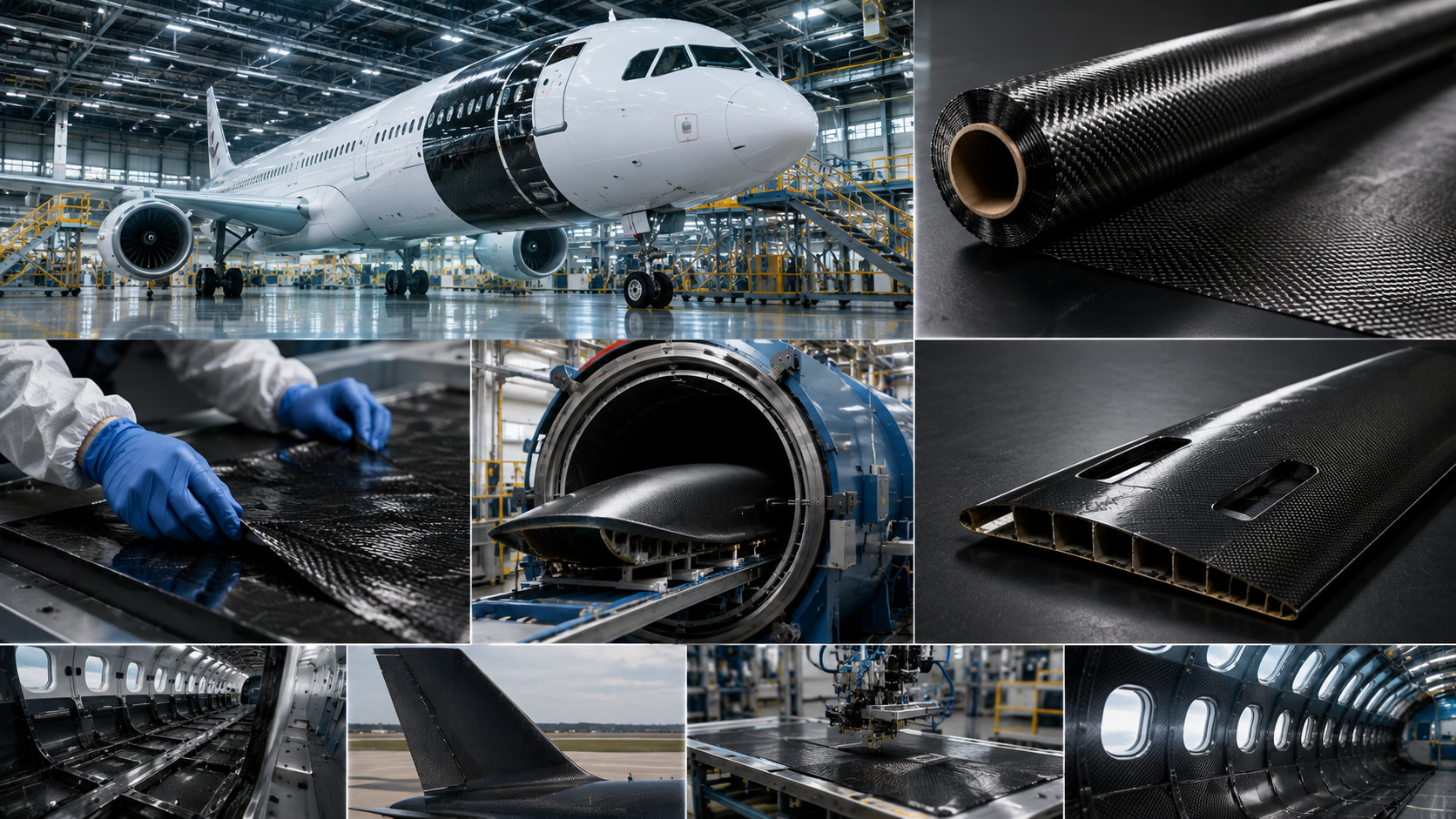
#1 HyperX Carbon — Aerospace-Grade Forged Carbon Specialist (AS9100D Certified)

HyperX Carbon carries AS9100D certification. New to aerospace sourcing? That distinction is a bigger deal than it looks.
AS9100D isn’t just ISO 9001 with a fancier badge. It adds 100+ aerospace-specific requirements on top of the standard quality system: flight-worthiness risk management, counterfeit-part prevention, full material traceability from raw fiber batch to finished component, and locked process controls for curing and hot-press operations that post-production inspection can’t catch on its own. For UAV structural parts or any component entering a defense supply chain, AS9100D is the hard-entry ticket. Most aerospace and military contracts won’t accept suppliers without it.
What this means for your procurement:
-
Every batch traces back to raw material lot, tooling, operator, and cure cycle
-
Design changes need documented reviews and customer sign-off — no unauthorized mid-run modifications
-
Subcontractors (surface treatment, testing labs) go through yearly audits and performance ranking
Production capacity runs above 180,000 forged carbon parts per month across helmet, aerospace, and UAV structural applications. For buyers in the 1–5 ton/month range, that volume is under 2% of total monthly output. So you get real scheduling flexibility and fast turnaround on sample iterations.
T1 sample timelines run 6–10 weeks from design freeze through tooling, trial molding, and CNC finishing.
Best fit: UAV manufacturers, defense-adjacent brands, or any buyer where a single batch failure carries serious downstream consequences. Explore more lightweight forged carbon fiber applications in drones and UAVs in our comprehensive overview: Best Applications for Forged Carbon Fiber in 2026.
#2 Supreem Carbon — Auto & Lifestyle Consumer Parts OEM Manufacturer

A 1-piece MOQ changes the math for early-stage brands.
Most carbon fiber factories in China won’t touch your project until you commit 50+ units and drop USD 3,000 on tooling. Supreem Carbon, based in Dongguan’s Qiaotou Town, built its operation around the opposite logic. Send them a drawing or a sample photo. They’ll come back with material recommendations and process guidance within 12 hours. That single-piece prototype grille priced at USD 30? That’s not a gimmick. That’s the actual business model.
Founded in 2017, Supreem grew from a 5-person startup to a 50-person operation. The factory covers 4,500 m² of production floor. Three parallel lines run auto parts, motorcycle accessories, and custom consumer goods — all at the same time. Annual output sits around USD 4 million. The catalog includes over 1,000 proprietary SKUs and 500+ customer-customized product types in active rotation.
What makes Supreem a serious option for consumer-facing brands:
-
Monthly capacity of ~3,500 pieces across automotive trims, luggage shells, and sports equipment
-
R&D engineers with 10+ years in carbon fiber — they optimize tooling and process, not just execute drawings
-
Lead times of 12–20 days from order to delivery on small-batch runs
Best fit: Lifestyle brands, aftermarket auto/moto accessory labels, or any startup that needs engineering-backed sampling without a five-figure tooling commitment upfront.
#3 ChinaCarbonFibers — Established OEM/ODM for Auto & Motorcycle Markets (Est. 1998)

Twenty-eight years in carbon fiber manufacturing is not a marketing claim. They outlasted three economic cycles, a global pandemic, and a dozen competitors who tried to undercut on price — and still folded.
ChinaCarbonFibers has been running out of Suzhou’s Xiangcheng Industrial Park since 1998. Products now ship to 118 countries. That kind of reach tells you something procurement teams should pay attention to: this factory has figured out global logistics, not just production.
Where they stand out for auto and motorcycle buyers:
-
Full OEM/ODM coverage — bring a drawing, a sample, or just a concept; their engineering team handles the rest
-
MOQ starts at 10 units. That keeps early-stage projects moving without a heavy tooling commitment
-
They work across autoclave, hot press, RTM, vacuum infusion, and pre-preg layup. So your part gets built the right way, not just the convenient way
Product range runs deep. You’ll find exterior panels, structural chassis components, and motorcycle fairings built to specific year-model SKUs — Hayabusa 2021–2025, Suzuki B-King 1300 2007–2025. Full AMG/Supra body kit programs are also live catalog items, ready to order.
Pricing reference points:
– Exterior parts: $500–$3,000
– Interior components: $800–$9,900
– Structural/chassis work: $8,000–$15,000
Lead times run 5–10 working days on stock items, 3–6 weeks for custom development. ISO 9001 and AS9100 certifications come standard. Documentation ships with every order.
Best fit: Auto aftermarket brands or motorcycle accessory labels that need a proven OEM partner. You get global shipping infrastructure and real model-specific fitment — not generic parts hoping they’ll fit.
#4 JH Composites — Forged Carbon Panels & CNC Precision Machining Specialist

JH Composites is based in Sichuan and sells under the Kingoda brand. Their focus is tight on purpose: forged composite carbon fiber panels and blocks, built for applications where material consistency is non-negotiable.
Carbon content runs 70–100%. Working temperatures hold across a 0–200°C range. That thermal stability is easy to underestimate. Parts that hold up at room temperature but creep or warp under sustained heat turn into warranty issues fast.
Where Kingoda-branded panels show up:
-
Sports equipment that needs high fatigue resistance
-
Structural panel programs where dimensional stability must hold across production runs
-
Projects where corrosion resistance and X-ray transparency matter — and aluminum falls short
The forged composite format — carbon fiber blocks and flat panel stock — fits well upstream of CNC finishing. You’re not starting from a prepreg layup schedule. You start with pre-consolidated material, then machine down to your required spec. That’s a cleaner workflow for precision applications.
What we haven’t confirmed yet: specific CNC tolerance grades, MOQ thresholds, and sample lead times. Those details need direct contact with JH Composites. What’s clear is the material foundation. Your project needs forged carbon stock with verified thermal performance across a sports-to-industrial application range? JH Composites is worth a direct inquiry.
Best fit: Buyers sourcing forged carbon panel stock for downstream CNC machining, or product teams that need thermally stable composite blocks in custom dimensions. If you’re looking for forged carbon fiber motorcycle parts upgrades like shift knobs or trim pieces, our installation and benefits guide covers everything: Forged Carbon Fiber Motorcycle Parts & Accessories: Lightweight Guide 2026.
#5 Shasha Carbon — Performance Automotive Styling Parts in Forged Carbon

Shasha Carbon built its reputation around one real problem: European, American, and JDM buyers want forged carbon interior kits that fit right, look factory-correct, and don’t crack under heat stress.
The material choice is Toray 3K carbon fiber fabric. Not a generic weave sourced from whoever’s cheapest that quarter. Toray. The same fiber spec trusted across performance automotive builds worldwide. It holds up to 1000°C calcination — which is critical for interior trim that faces sustained heat cycles day after day.
What Shasha Carbon builds:
-
Center console trims and full interior forged carbon kits
-
Steering wheel shift paddles with confirmed fitment for Audi A3, A4, A5, A6, A7, A8, S8
-
Door mirrors, steering wheel covers, and exterior styling components
-
Pattern options: forged, honeycomb, and symmetrical — gloss or matte finish
CNC cutting handles the trimming stage with precision. Vacuum bagging keeps pressure consistent during the layering process. Each material batch — resin and carbon fiber sheet both — goes through strict incoming quality checks. Thermal testing, tensile and compression testing, and high-frequency defect detection all run before any order ships.
The factory spans 6,000㎡. Hot press forming equipment, large vacuum tanks, and constant-temperature dust-free workshops all operate at full capacity across the production floor.
Best fit: Aftermarket brands targeting premium OEM-fitment quality for European luxury and JDM performance platforms.
#6 Pearl River Delta Forged Carbon Cluster (Dongguan/Shenzhen) — Precision Small Parts for Consumer & Tech Markets

The Pearl River Delta doesn’t manufacture at scale. It manufactures at tolerance.
Dongguan and Shenzhen have become the go-to address for consumer electronics and tech hardware buyers. These buyers need forged carbon and CFRP small parts held to dimensions most factories won’t even quote. Phone chassis mid-frames, watch bezels, drone frames, precision connectors — parts where ±0.02 mm is the baseline, not the stretch goal.
What this cluster produces:
– Smartphone shells and mid-frames (CNC + anodizing, Ra 0.2–0.4 μm surface finish)
– Watch bezels and casebacks (roundness tolerance ≤0.01 mm, mirror polish Ra ≤0.05 μm)
– UAV frames and gimbal mounts (CFRP plate thickness tolerance ±0.05 mm, diagonal alignment error ≤0.2 mm)
– Precision injection-molded micro-components (gear/snap-fit tolerance ±0.01–0.02 mm)
That precision level matters once your product hits retail. A watch bezel off by 0.03 mm doesn’t just look wrong — it fails brand-level QC before it ever reaches a customer.
Logistics: The Hidden Competitive Advantage
Shenzhen Port moves 30–35 million TEUs per year — a top-five global container hub. For tech buyers running fast product cycles, that infrastructure is just as valuable as the machining tolerance itself.
Factory to Shenzhen port: 2–4 hours. Full booking, customs clearance, and documentation: 24–48 hours with clean paperwork. Deep-water to US West Coast: 13–16 days. Air freight to US/EU hubs via UPS, DHL, or SF Express: 24–72 hours.
Inland factories add 1–3 days of domestic transit before any of that clock starts. For consumer electronics on a quarterly launch schedule, that gap adds up fast.
Best fit: Tech hardware brands, wearable device OEMs, or drone manufacturers sourcing precision CFRP small parts. Tight tolerances and fast export turnaround both need to sit on your supplier scorecard.
#7 Jiangsu (Yixing) Composite Manufacturing Cluster — Industrial & Automotive Assembly Integration

Yixing doesn’t pitch itself. It just produces.
This cluster sits in Jiangsu province. It runs a different game from the precision-machining shops of the Pearl River Delta. The core advantage is vertical integration — carbon fiber preforms, high-temperature structural components, and mixed-material assembly, all within the same industrial zone.
Jiangsu Tianniao High-Tech Co., Ltd. is the reference point. Their carbon fiber preforms feed C/C–HfC–SiC composite systems. These are aerospace-grade ablative structures built for thermal protection and nozzle applications. That’s not raw material supply. That’s finished structural capability.
Sourcing forged carbon fiber integrated assemblies? That means CFRP paired with aluminum brackets or engineering plastic housing — delivered as a single part. Yixing’s local supply chain cuts the costs that kill mid-volume budgets:
-
Lead times drop from 8–12 weeks (import cycle) to 2–4 weeks from local production
-
Logistics and tariff costs run 5–15% of part cost on imported prepreg — that shrinks with local sourcing
-
Per-unit overhead at 500–5,000 pieces/month falls an estimated 5–10% compared to non-integrated sourcing
Best fit: Industrial equipment OEMs and automotive Tier-2 suppliers. You need forged carbon structural parts delivered already integrated — not raw blanks that still need assembly somewhere else.
#8 Verified B2B Platform Forged Carbon Suppliers (2026 Best-Seller Picks)

Alibaba and Made-in-China list thousands of forged carbon fiber suppliers. Most are traders, not real manufacturers. Seven filters help you cut through the noise fast.
Run every shortlisted factory through this checklist before your first message:
-
Trade Assurance active — ≥50 guaranteed orders in the last 12 months, on-time delivery rate ≥95%, dispute rate <2%
-
Verified onsite label — Look for a “Verified Supplier” or “Onsite Check” tag. It should come with a TÜV/SGS audit report dated within 24 months
-
Platform tenure ≥5 years — Gold Supplier status is a good sign. Drop any trading company registered after 2022
-
Export footprint — North America + Western Europe combined ≥40% of revenue; annual export value ≥USD 2–5M
-
OEM/ODM stated up front — Check for mold design, custom logo, and resin color options. New mold charges should be published and visible (USD 800–1,500/mold is the standard range)
-
MOQ fits your stage — small parts ≤20–50 pcs; motorcycle kits ≤5–10 sets
-
Sample policy confirmed — steering wheel trims USD 40–120, shift knobs USD 15–40, sample-to-order credit ≥50%
Factories that pass all seven filters in 2026 tend to focus on three product lines: forged carbon steering wheels, interior trim kits, and motorcycle fairings. These are the top three highest-reorder categories on both platforms right now.
Forged Carbon Fiber Supplier Comparison Table: 8 Vendors Side-by-Side
Eight suppliers. Six dimensions. One table that saves you three weeks of Alibaba scrolling.
|
Vendor |
Main Applications |
Max Certification |
Typical MOQ |
Sample Lead Time |
Mass Production Lead Time |
Price Positioning |
|---|---|---|---|---|---|---|
|
HyperX Carbon ⭐ |
Aerospace, UAV structural, helmets |
AS9100D |
10–50 pcs |
6–10 weeks |
8–12 weeks |
Premium |
|
Supreem Carbon |
Auto trims, motorcycle parts, consumer goods |
ISO 9001 |
1 pc |
12–20 days |
4–6 weeks |
Mid |
|
ChinaCarbonFibers |
Auto exterior/interior, motorcycle fairings |
ISO 9001 + AS9100 |
10 pcs |
3–6 weeks |
5–8 weeks |
Mid |
|
JH Composites (Kingoda) |
Sports equipment, structural panels, industrial |
ISO 9001 |
TBC |
TBC |
TBC |
Mid |
|
Shasha Carbon |
Auto interior kits, steering paddles, JDM/EU fitment |
ISO 9001 |
20–50 pcs |
2–3 weeks |
4–6 weeks |
Mid–Premium |
|
PRD Cluster (Dongguan/Shenzhen) |
Consumer electronics, watch bezels, drone frames |
IATF 16949 / OEM Tier-1 |
50–100 pcs |
7–14 days |
4–6 weeks |
Budget–Mid |
|
Jiangsu (Yixing) Cluster |
Industrial assemblies, aerospace preforms, auto Tier-2 |
Aerospace-grade (vendor-claimed) |
500+ pcs |
3–4 weeks |
6–8 weeks |
Mid |
|
Verified B2B Platform Picks |
Steering wheels, interior trims, motorcycle fairings |
ISO 9001 (varies) |
5–50 pcs |
2–3 weeks |
4–8 weeks |
Budget–Mid |
Data notes:
– MOQ, sample, and production lead times are based on typical forged carbon fiber projects (auto exterior trim / consumer electronics housings). Complex shapes, mirror-polish surfaces, or multi-cavity tooling will push timelines longer.
– Certification labels marked as “vendor-claimed” have not been checked against published certificates. Request current certificate copies before signing any contract.
– Price positioning (Budget / Mid / Premium) shows relative market position — not the actual per-unit cost. Get formal quotes before making budget plans.
To compare forged carbon fiber material vs vinyl wrap alternatives (especially for automotive uses), read our side-by-side analysis: Forged Carbon Fiber Wrap Vs Real Forged Carbon Fiber in 2026 – Which Is Better?. Whether you’re sourcing for automotive, consumer goods, or structural parts, dive deeper into specific applications with our series: Forged Carbon Fiber Helmets, Forged Carbon Fiber Watches & Bezels, Forged Carbon Fiber Tubes, and more.
FAQ: B2B Buyers’ Most Common Questions About Forged Carbon Fiber from China
These questions come up in almost every first supplier call. Get the answers ready before that conversation starts.
Can MOQ be negotiated?
Almost always — but the starting point depends on whether a mold already exists.
For standard forged carbon panels and parts, most Chinese factories accept small-batch sampling of 1–5 pieces, as long as the tooling is already in-house. Custom thickness runs 1 mm minimum up to 10 mm.
New mold projects work differently. Expect a one-time tooling fee plus a production MOQ — often 50–300 pieces per SKU. That range isn’t fixed. Part complexity and press capacity both shift the number. Push on it early in the negotiation, not after you’ve agreed to other terms.
Do sample fees get credited against the production order?
Most reputable factories offer this. Sampling unit prices run 1.5–3× the production rate. The credit structure varies:
-
50–100% of sampling cost offset against your first production invoice
-
Or credited as sample quantity × production unit price
Don’t assume this is automatic. Get the exact formula in writing: “Sample fee X% credited against first order when MOQ ≥ Y units, placed within [timeframe].” Verbal agreements on this point are easy to forget — on both sides.
How do you verify that certifications and test data are real?
Use a three-layer check.
Layer 1: Request scanned certificates — ISO 9001, IATF 16949, AS9100D. Go to the issuing body’s online registry and cross-check each one yourself.
Layer 2: Require a full Certificate of Analysis (COA) for each material batch. This should include resin grade, fiber grade, mix ratio, and batch number. Ask for mechanical test reports that cite the actual ASTM or ISO standard used — ASTM D790 / ISO 178 for flexural data is the baseline.
Layer 3: Commission blind third-party retesting through SGS, TÜV, or a CNAS-accredited lab. Test for density, flexural strength, tensile strength, and interlaminar shear strength.
On-site, three quick checks tell you a lot:
-
Tap the surface — listen for a consistent tone with no hollow spots
-
Flex-test same-batch parts — stiffness should be uniform across pieces
-
Examine cut edges under magnification — look for even fiber distribution, no resin-rich zones, no visible voids
Can one factory handle carbon fiber plus aluminum or plastic in a single assembly?
Yes — and the better Chinese forged carbon fiber suppliers do this routinely. Common setups include CFRP compression-molded parts bonded and fastened to CNC-machined aluminum brackets. Some factories also produce co-cured components with embedded inserts — steel nuts, aluminum blocks — bonded in a secondary operation.
A capable factory runs compression molding + hot press + CNC machining + a basic assembly line under one roof. Ask for equipment lists and shop-floor photos before taking the claim at face value.
Finalize your drawings, then write 100% dimensional inspection of all critical features into the QC specification. That’s what stops mixed-material assemblies from turning into tolerance problems on your end.
Conclusion

Sourcing forged carbon fiber from China in 2026 isn’t a guessing game — it’s a qualification process. The cheapest option on Alibaba isn’t the right choice. The right supplier is the one whose certifications, MOQ flexibility, and production consistency match your specific application and growth timeline.
Scaling an automotive aftermarket brand? Prototyping a next-generation consumer tech component? The eight suppliers profiled here are your strongest starting points in today’s Chinese market. Each one has been assessed across capability, capacity, and credibility.
Your next move is clear:
-
Shortlist two or three vendors from the comparison table
-
Request physical samples
-
Test their communication responsiveness before committing to tooling investment
Contact HyperX Carbon – Your Trusted Chinese Carbon Fiber Partner
Ready to source high-performance carbon fiber materials or custom forged carbon fiber parts from China?
HyperX Carbon is a leading manufacturer with 20+ years of expertise, specializing in aerospace-grade forged carbon fiber, prepreg, tubes, sheets, and lightweight automotive/drone/medical components. We offer:
-
Stable supply chain with premium raw materials (Toray, Mitsubishi, Hengshen)
-
AS9100D certified production for aerospace & UAV applications
-
Rapid prototyping (5-8 weeks) and monthly capacity exceeding 180,000 parts
-
Competitive pricing with 15-18% cost savings on forged carbon solutions
-
Full customization: from T700/T1100G to ultra-high modulus grades
Whether you’re an eVTOL developer, automotive OEM, drone manufacturer, or medical device engineer, HyperX delivers consistent quality, batch-to-batch reliability, and reliable delivery.
Get in touch today for a free consultation, custom quote, or material sample.
📧 Email: [email protected]
🌐 Website: https://www.hyperxcarbon.com/
📞 Phone/WhatsApp: +86 15623270276 (English support available)
Let’s build your next lightweight innovation together – contact HyperX Carbon now and stay ahead in the low-altitude and advanced composites market.