Your car loses 2-3% of its performance potential for every 100 pounds of extra weight it carries. That’s not opinion — it’s physics.
Aluminum had its moment. Woven prepreg carbon fiber built a loyal fanbase among track-day purists. But something more capable has been taking over the serious builds of 2026.
Forged carbon fiber is compression molded from chopped carbon fiber composite. It’s built to handle complex 3D shapes that traditional weave patterns can’t touch. You’ll find it showing up in EV battery enclosures, exotic car door panels, and more. The performance data behind it is hard to ignore.
This guide cuts through the marketing noise. You get real specs, honest comparisons, and the exact parts worth your money this year.
See the full guide here about the best forged carbon fiber applications in 2026.
Best Forged Carbon Fiber Body Panels & Exterior Parts in 2026

Exterior parts take the most punishment. Road debris, temperature swings, aerodynamic stress at speed — your panels earn every dollar you spend on them.
Forged carbon fiber holds up. Here’s what’s worth buying in 2026.
Front Lips & Splitters
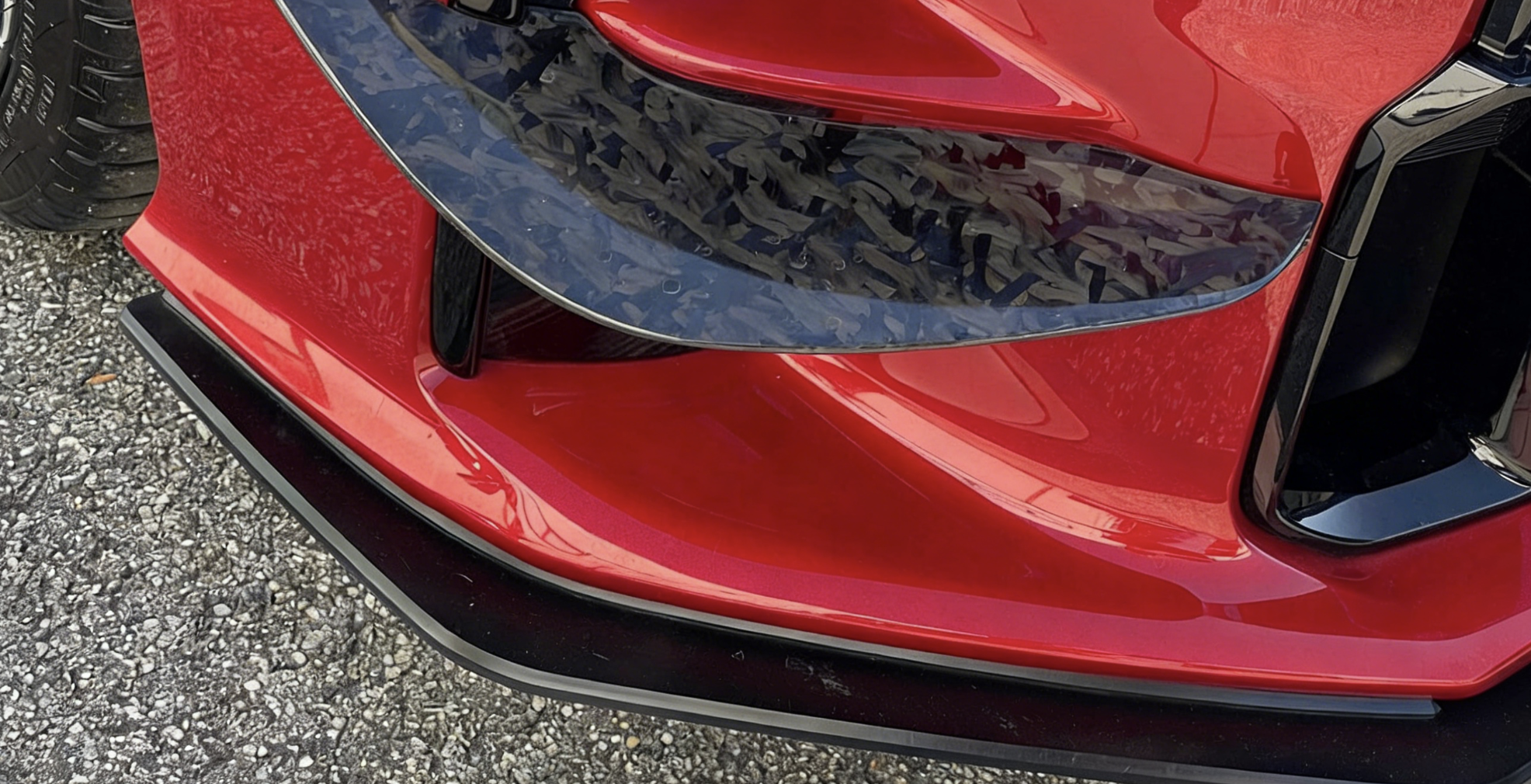
The Mustang GT350 fitment ($200–$2,500) is the clearest proof point. Matched molds hold tolerances under 0.05mm. That precision feeds straight into downforce. You get consistent airflow management that a sloppy fitment simply can’t deliver. Structural load capacity sits at 1,000 psi. It doesn’t flex at speed. It works.
Hoods & Door Panels

EV owners face a real problem: battery packs add 500+ kg to the platform. A forged carbon hood cuts 20–40% weight versus OEM steel. On a Tesla or Rivian, that weight comes off the front axle — right where balance matters most. Random fiber orientation spreads the load across three dimensions. No single stress point takes over.
Rear Wings, Diffusers & Spoilers

|
Model |
Price |
Aero Gain |
Install |
|---|---|---|---|
|
Golf Mk7 |
€1,250+ |
+15–25% downforce |
Bolt-on |
|
Audi TT 8S |
€1,600+ |
+20–30% downforce |
Medium trim fit |
Mirror Covers & Entry Upgrades

Start here if budget is tight. For $100–$500, you get forged carbon mirror covers with 30–50% weight savings over plastic. The pre-mix process keeps void content under 3%. The marbled finish from 12mm chopped fiber looks sharper than plastic. Plus, it outlasts plastic by years.
Top 10 Best Forged Carbon Fiber Automotive Parts Manufacturers
The carbon fiber manufacturers below didn’t make this list by accident. Each one earned a spot by shipping parts that hold tight tolerances, survive real roads, and beat the competition on measurable specs.
Here’s who’s leading the forged carbon fiber market in 2026 — ranked by capability, output, and buyer fit.
|
Rank |
Manufacturer |
HQ |
Standout Parts |
Best For |
|---|---|---|---|---|
|
1 |
Toray Industries |
Japan |
OEM panels, forged composite hoods |
High-volume OEM supply |
|
2 |
Teijin Limited |
Japan |
Engineered forged components, resins |
Integrated material production |
|
3 |
Hexcel Corporation |
USA/France |
High-temp structural aero parts |
Aerospace-grade structural builds |
|
4 |
HyperX Carbon |
China |
Forged brake discs, structural composites |
Certified performance components |
|
5 |
Seibon Carbon |
USA |
Hoods, fenders, trunks, spoilers, body kits |
Aftermarket fitment + custom runs |
|
6 |
Vorsteiner |
USA |
Forged aero kits, hoods, trunks |
Luxury and supercar upgrades |
|
7 |
APR Performance |
USA |
Wings, splitters, diffusers |
Track-validated aero |
|
8 |
3D Carbon |
USA |
Bolt-on panels, trim pieces |
Wide catalog, fast turnaround |
|
9 |
Plasan Carbon Composites |
Israel |
Structural and armor-grade panels |
High-reliability certified builds |
|
10 |
Supreem Carbon |
China |
Body panels, forged accessories |
Small-to-medium custom batches |
What Separates the Top Tier
Seibon Carbon runs ISO 9001 mold calibration on domestic Korean carbon. Their 10th-gen Civic fitments set the standard for mid-tier reliability. Parts bolt on clean. No shimming. No grinding.
1016 Industries plays in a different league. They build forged aero kits for Lamborghini, Ferrari, McLaren, and Porsche. The process combines prepreg material with 3D modeling. Low volume. High precision. Zero shortcuts.
Anderson Composites is a verified Ford Performance supplier. They produce forged hoods, trunks, and rockers that clear OEM validation cycles. That’s not a marketing claim. That’s a real purchase order from a major automaker.
HyperX Carbon uses micron-level CNC cutting instead of hand-layup. The result is tighter dimensional consistency across every piece. Output runs over 2,000 parts per month, all built with Toray fiber, and the full lineup carries CE certification.
Matching the Manufacturer to Your Build
Not every build needs aerospace-grade parts. Here’s a straight breakdown by use case:
|
Build Type |
Go-To Manufacturers |
Typical MOQ |
|---|---|---|
|
OEM / High-Volume Production |
Toray, Teijin, SGL, HyperX |
1,000+ pieces |
|
Aftermarket Street & Track |
Seibon, Vorsteiner, APR |
Catalog + custom |
|
Luxury / Supercar Kits |
1016 Industries, APR |
Low-volume custom |
|
Budget Builds & Custom Trim |
HyperX, Supreem |
1–2,000 pcs/month |
Know your volume. Know your tolerances. Then pick the right manufacturer for your build.
Best Forged Carbon Fiber Interior Parts & Accessories in 2026
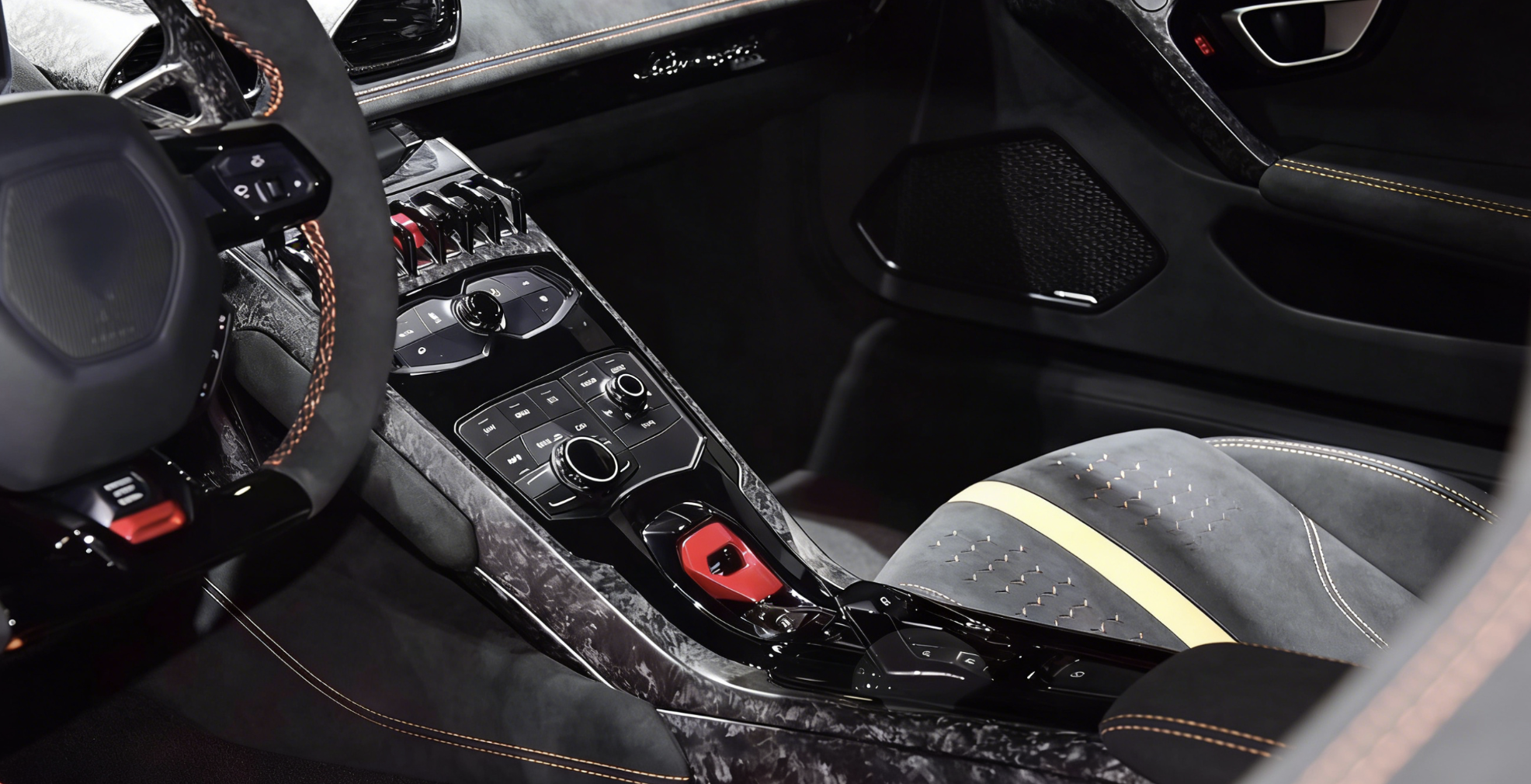
Most builds stop thinking about weight once you step inside the cabin. That’s a mistake.
Interior trim isn’t just decoration. Every panel, every shell, every surface you touch adds weight your drivetrain has to push. Forged carbon fiber interior parts cut that weight from the inside. They also look far better than anything plastic can offer.
The C8 Corvette forged carbon fiber overlay kit shows exactly what this material can do inside a car. Here’s what you get:
-
Three-piece system
-
100% forged carbon
-
No drilling required
-
No cutting required
It sits right on top of existing OEM trim using the factory mounting points. The marbled, random-fiber pattern doesn’t copy what the factory gives you. It replaces it with something that looks handmade — because the compression molding process makes each piece come out a little different from the last.
Ford Mustang interior trim panels use automotive-grade forged CF. The clear coat has UV inhibitors built in. Sun exposure yellows plastic over time. This material holds its color.
Forged carbon fiber interior parts belong in any real build in 2026. Start with what you touch most. Then work outward from there.
Forged Carbon Fiber Parts Price Guide 2026: What Should You Pay?

Price confusion kills more carbon fiber builds than bad fitment does.
Here’s the honest breakdown — category by category, tier by tier — so you know what the market charges and what that money gets you.
Part-by-Part Pricing
Front Splitters: $200–$2,500+
Wet layup starts at $200. Switch to forged carbon construction and expect a 50–100% price jump over that baseline. That gap is real. For functional fitments — the ones that change front-axle behavior — it’s worth paying. Cosmetic-only splitters sit at the low end for a reason.
Rear Spoilers: $300–$3,000+
Standard wet carbon runs $300–$1,000. Track-spec pre-preg, autoclave-cured units run 2–3x that number. The cost difference is structural — not decorative. Under real downforce loads, that gap matters.
Hoods: $600–$2,500
Three tiers exist. Each one behaves differently:
– Budget ($600–$1,100): Thinner layup, inconsistent finish, fitment risk
– Mid-tier ($1,100–$1,800): Vacuum infusion, UV protection, solid clear coat
– Premium ($1,800–$2,500+): Pre-preg construction, show-ready finish, warranty included
Plan for $2,100–$3,750 all-in on a mid-to-premium hood install.
Side Skirts: $400–$4,000
Standard builds land between $400–$2,000. Full widebody premium kits push past $4,000. The 1016 Industries Range Rover widebody — twill carbon, full coverage — runs $35,000. That’s not a typo. That’s what a complete aerodynamic transformation costs at the top end.
Diffusers: $150–$2,000+
Simple fitments start at $150. Serious aero applications climb to $1,000–$2,000+. Range Rover narrow-body rear diffuser setups with tips run $21,000–$29,500 in full configuration.
Mirror Caps: $155–$200
Steering Wheels: $899+
Platform Reference Pricing
|
Platform |
Price Range |
|---|---|
|
MINI R55–R61 full custom carbon |
€900+ |
|
VW Golf Mk7 |
€1,250+ |
|
Toyota GR Yaris |
€1,050+ |
|
BMW LCI G-series |
€1,290+ |
|
Audi TT 8S |
€1,600+ |
|
JDMuscle custom (Twill/Honeycomb/Forged) |
$599 (6–8 week lead time) |
Bundle vs. Separate Purchase
Two kits worth knowing:
-
Lotus Emira CT Design Full Kit — $3,899: Pre-preg splitter, skirts, diffuser, spoiler. You save around 20% compared to buying each piece on its own. Shipping is included.
-
1016 Industries Range Rover Widebody — $35,000: Lip, skirts, arches, diffuser, spoiler in twill carbon. That’s around 15% below equivalent OEM+ separate pricing.
Where Forged Carbon Fits on Cost
Forged carbon sits at a medium cost position — but that label needs context. For complex, curved parts, forged carbon can undercut traditional weave construction on price. Less material waste and simpler tooling offset the raw material cost. Pre-preg fabric runs $30–$200/m² versus $8–$50/m² for standard dry fabric. For flat structural panels, traditional weave wins on price. For parts with compound geometry, forged carbon competes harder than most buyers expect.
The rule is straightforward: match the material to the shape. Then match the price tier to your real performance needs. Paying a premium for a cosmetic part is a budget mistake. Buying budget for a structural part is a safety mistake.
How to Choose the Right Forged Carbon Fiber Parts for Your Car (Buyer’s Decision Framework)

The wrong part doesn’t fail with a bang. It just never performs — and you won’t know until after you’ve paid.
Three questions cut through the noise: What’s your goal? Does it fit? Can the supplier prove what they’re selling?
Match the Part to Your Goal
Performance builds — chassis links, suspension components — need real numbers. Forged carbon delivers: 192 MPa tensile strength, 35.5 GPa flexural modulus, 1.5 g/cm³ density. That means 220 kg load resistance in a 3-point bend test. Aluminum 6082-T6 tops out at 120 kg. For aero components — hoods, spoilers — woven prepreg wins on directional stiffness. Know the difference before you order.
Aesthetics is where forged carbon stands alone. Every compression-molded piece has a unique marbled pattern. No two look the same. Steering wheels, interior covers, exterior trims — the 3D shaping opens up forms that woven CF can’t produce with clean results.
EV owners get the clearest math: 44% lower density than aluminum, doubled strength-to-weight ratio in bending. Non-structural panels come off the car lighter. Range goes up. It’s that simple.
Before You Buy: Fitment Checklist
-
Confirm chassis code and model year against OEM dimensions
-
Verify bolt-on vs. install-requiring-modification
-
Check that mold geometry matches your exact part — not just the platform
Demand These Before Handing Over Money
A legitimate forged carbon supplier gives you documentation up front — no need to ask. Request these:
-
Tensile strength reports (192 MPa benchmark)
-
Flexural modulus data
-
ISO/ASTM certifications
-
Resin specs
Then check the physical part. Look for 6–12mm chopped fiber, no dry spots, no delamination, clean edges. Tap it — solid sound. Flex it — stiff feel. Weigh it against spec. Numbers off? The part is off.
One non-negotiable: 100% dimensional inspection per batch, full material traceability, and a supplier with 10+ years in compression-molded composites. That experience gap shows up in every tight tolerance.
FAQ: Forged Carbon Fiber Automotive Parts — Real Questions Answered
Six questions keep coming up. Here are the straight answers.
Is forged carbon fiber stronger than traditional weave?
It’s a different kind of strong. Traditional prepreg carbon is directional — stiff along the fiber axis, weak off it. Forged carbon packs short strands (10–50mm) in random directions, compressed at 1,000 psi. That gives you equal resistance in every direction. For parts that take hits from multiple angles, forged carbon wins.
Will it crack or fade over time?
Compression molding at 1,000 psi pushes out voids before they turn into cracks. Epoxy-resin matrices hold their color. The surface stays solid under heat and pressure — no splintering, even during CNC trimming.
Can I run forged carbon parts on track?
Yes. The curing process runs in stages — low heat first, then a ramp-up. This builds real structural integrity that clears race-grade quality control. CNC cuts are tight and clean, so edges don’t go brittle. These parts take punishment. They’re not made for show.
Why does a forged carbon steering wheel cost $900+?
Here’s what goes into it:
– Custom aluminum molds
– Hand-weighed chopped fiber
– Resin mix scraped and measured by hand
– Multi-part compression at 1,000 psi
It’s labor-heavy. That process is the reason the part holds up.
Is forged carbon safe for EV battery enclosures?
Vacuum bagging combined with compression clears out voids across the whole part. The short fibers run in every direction, so crash energy spreads out evenly — no single weak spot. Heat-hardened resin absorbs impact loads that aluminum simply can’t take.
Will forged carbon fiber be recyclable?
Current epoxy thermoset versions are not recyclable. That’s a real limitation. The shift to thermoplastic carbon fiber changes things — that transition is picking up speed heading into 2026. Thermoplastic matrices can re-melt and be reshaped. Full recyclability is where the market is headed.
Conclusion
Forged carbon fiber isn’t chasing headlines. It’s a real materials shift that’s already changing what’s possible in automotive performance. And 2026 is the year it goes mainstream.
Think about who benefits most:
-
EV owners cutting every kilogram to extend range
-
Track-day drivers who need structural strength that holds under load
-
Luxury build enthusiasts who won’t accept a standard weave pattern
Forged carbon fiber car upgrades now offer a proven, data-backed option. Aluminum and traditional prepreg can’t compete across the same range of demands.
The smartest move right now? Pick one component. A door panel. A hood. An interior trim piece. Start there and see the difference for yourself.
Contact HyperX Carbon – Your Trusted Chinese Carbon Fiber Partner
Ready to source high-performance carbon fiber materials or custom forged carbon fiber parts from China?
HyperX Carbon is a leading manufacturer with 20+ years of expertise, specializing in aerospace-grade forged carbon fiber, prepreg, tubes, sheets, and lightweight automotive/drone/medical components. We offer:
-
Stable supply chain with premium raw materials (Toray, Mitsubishi, Hengshen)
-
AS9100D certified production for aerospace & UAV applications
-
Rapid prototyping (5-8 weeks) and monthly capacity exceeding 180,000 parts
-
Competitive pricing with 15-18% cost savings on forged carbon solutions
-
Full customization: from T700/T1100G to ultra-high modulus grades
Whether you’re an eVTOL developer, automotive OEM, drone manufacturer, or medical device engineer, HyperX delivers consistent quality, batch-to-batch reliability, and reliable delivery.
Get in touch today for a free consultation, custom quote, or material sample.
📧 Email: [email protected]
🌐 Website: https://www.hyperxcarbon.com/
📞 Phone/WhatsApp: +86 15623270276 (English support available)
Let’s build your next lightweight innovation together – contact HyperX Carbon now and stay ahead in the low-altitude and advanced composites market.