Every gram matters. Every structural failure is unacceptable. These two facts drive material selection in the most demanding industries on the planet.
Aerospace cabins cruise at 35,000 feet. Formula 1 chassis absorb 5G cornering forces. EV battery enclosures push every ounce of range possible. In all three, carbon fiber prepreg has become the go-to material for serious engineers — and for good reason.
The challenge? Dozens of resin systems, cure processes, and fiber architectures are on the table. Picking the right one — and applying it well — is not simple.
This guide maps the most critical carbon fiber prepreg applications across aerospace, automotive, motorsports, defense, and beyond. You’ll get real-world performance data to benchmark against, a clear look at manufacturing tradeoffs, and the context you need to make sharper material decisions.
Carbon Fiber Prepreg in Aerospace: The Dominant Application Driving 36.4% Market Share
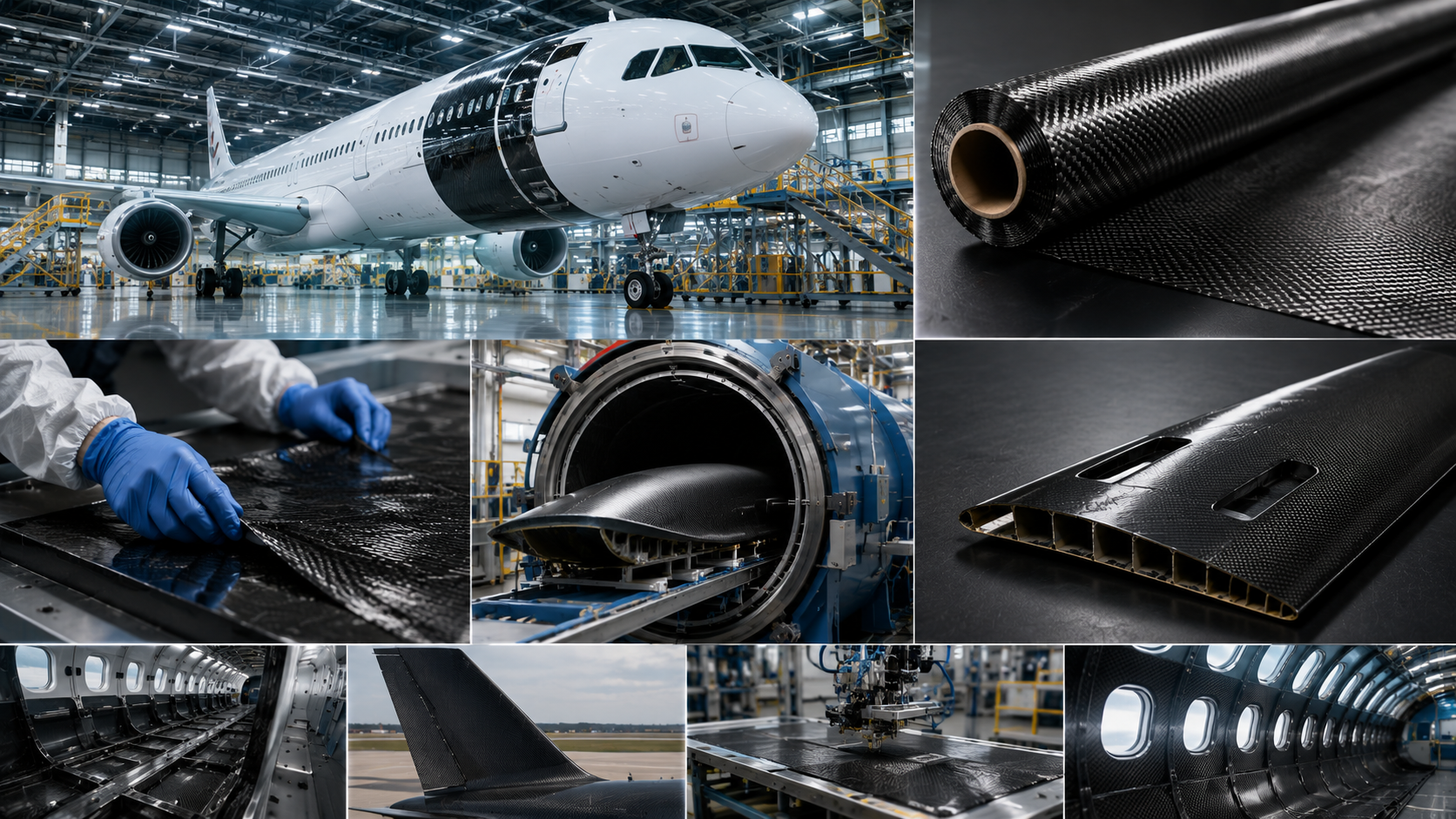
Aerospace didn’t adopt carbon fiber prepreg because it was trendy. It adopted it because nothing else survived the math.
The numbers say it all. Aerospace and defense hold between 36.4% and 44.0% of the global carbon prepreg market, depending on the source. Grand View Research puts it at 36.4% for 2025. IMARC and Fact.MR project closer to 43–44% by 2026. The global market stands at USD 6.20 billion in 2025, heading toward USD 12.14 billion by 2036 at a 6.3% CAGR. The aerospace segment alone is forecast to reach USD 6.4 billion by 2030, growing at 11.3% per year.
That growth isn’t speculative. It’s structural.
Why Aerospace Runs on Prepreg
The Boeing 787 Dreamliner and Airbus A350 XWB are two of the most closely watched commercial aircraft programs in history. Both cross the 50% composite content threshold by airframe weight. Hexcel holds the primary structure prepreg supply contract for the A350 XWB. These aren’t pilot programs. They’re full production commitments. They redefined what “standard materials” means at 35,000 feet.
Prepreg shows up across a wide range of structures:
-
Fuselage sections
-
Wing structures
-
Control surfaces
-
Empennage assemblies
Both primary load-bearing elements and secondary structures rely on it. Consistent performance isn’t optional here — it’s required.
Epoxy-based resin systems lead the market, holding 72% of market share in 2026. BMI, PEEK, and thermoplastic variants cover specialized high-temperature needs. Here’s what the material specs look like for structural use:
-
Fiber volume fractions run 55–65%
-
Void content stays below 3% for primary structures
-
Out-time stability windows reach 6–12 months under controlled storage
These specs make procurement and quality control predictable. That matters at scale.
The Certification Lock-In Effect
The market share data doesn’t show the full picture up front. Aerospace qualification cycles run multiple years before a material touches a production airframe. FAA and EASA certification demands batch-level traceability, damage tolerance validation, and fatigue crack propagation testing. Once a prepreg system clears that process, switching costs become too high to ignore.
So suppliers like Hexcel, Solvay, Toray, and 3M build deep OEM relationships with Boeing, Airbus, Bombardier, and Lockheed Martin. The qualification barrier isn’t a flaw in the system. It’s what separates serious suppliers from the rest of the market.
North America holds 35.4% of global market share. Boeing, Lockheed Martin, and Northrop Grumman drive that position. Asia-Pacific accounts for 32.8%, pushed by expanding commercial aircraft production. Europe adds steady volume through aerospace and defense modernization programs covering aircraft components and missile structures.
The 2026–2036 incremental opportunity sits at USD 5.55 billion in new value. Aerospace and defense are expected to capture 40–45% of that growth. Emissions regulations, defense platform upgrades, and post-pandemic commercial aircraft production ramp-ups all point the same direction.
For engineers evaluating aerospace carbon fiber prepreg at the material selection stage — the industry’s adoption isn’t a reference point. It’s the baseline you’re already starting from.
Carbon Fiber Prepreg in Electric Vehicles: Lightweighting Strategy for Extended Range
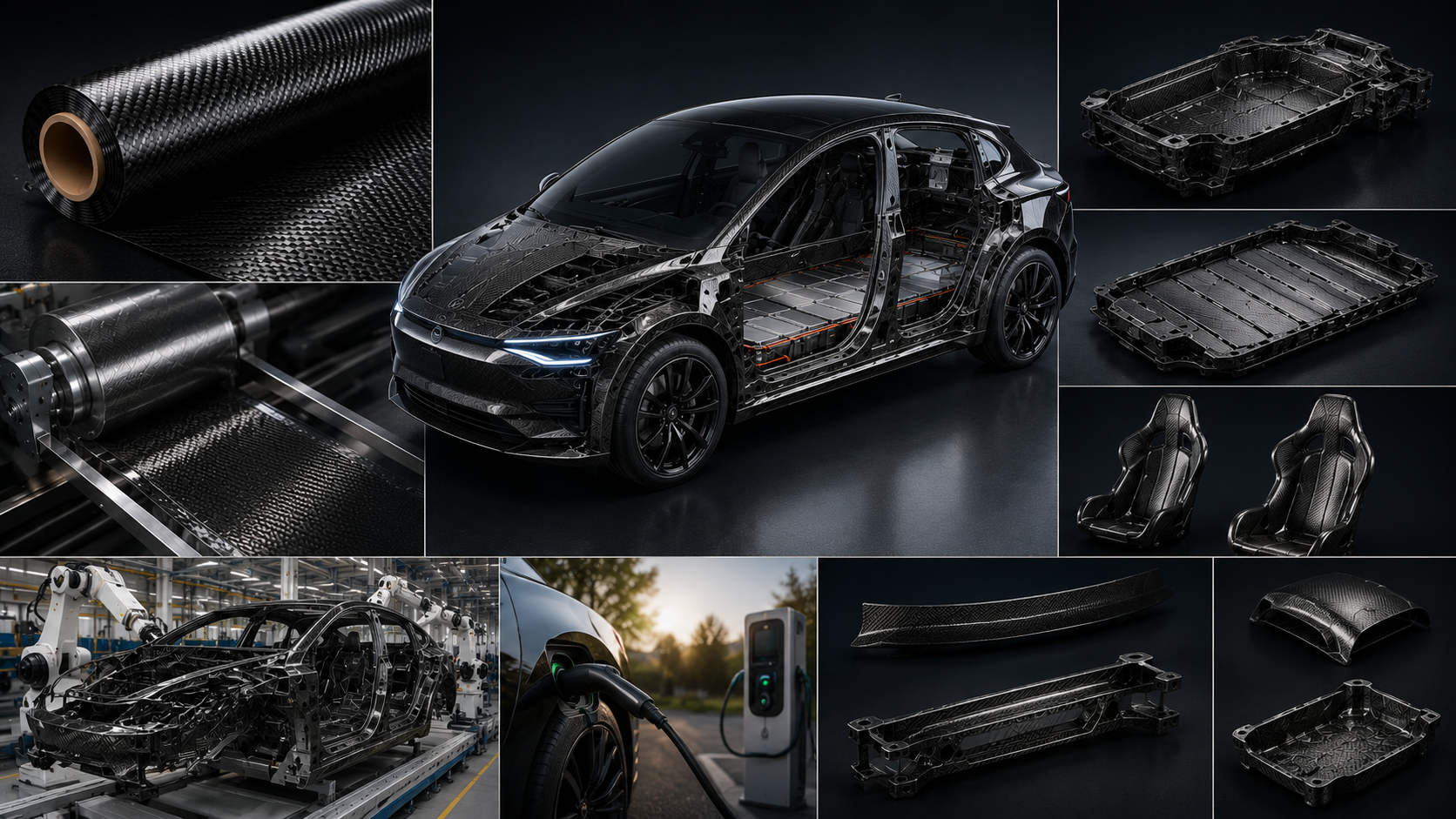
Range anxiety isn’t solved by bigger batteries alone — it starts with carrying less weight.
EV engineers have run the numbers, and the result is consistent. Every 10% reduction in vehicle weight delivers a 6–8% gain in driving range — no battery upgrades needed. Push that to a 50% weight reduction, and the DOE puts the efficiency gain at 35%. That’s not a small tweak. That’s a fundamental shift in how a platform performs.
Carbon fiber prepreg composite makes those numbers real. CFRP is up to 70% lighter than steel and 40% lighter than aluminum. Its strength-to-weight ratio reaches 6,000 MPa. Consider what that means for specific components:
-
Battery enclosures built from prepreg come in 40% lighter than aluminum versions — with no loss in structural protection during impact
-
Carbon fiber wheels cut unsprung mass enough to deliver 12% more highway range on their own
-
Motor rotors wound with CFRP add up to 50 km of extra range per charge
Real programs back this up. The Lotus Evija — 1,972 hp, 3,700 lbs — uses a full carbon fiber monocoque chassis and body panels. That stiffness feeds straight into acceleration response and cornering precision. Volvo took a different angle. Their structural work swapped conventional steel panels for power-storing CFRP body panels, folding the battery function directly into the body structure.
That Volvo approach points to where this technology is heading. Structural battery integration uses prepreg composite carbon fiber to carry load and store energy at the same time. A separate battery housing becomes unnecessary. The DOE’s target puts strategic CFRP deployment at a total vehicle weight cut of up to 70%.
For EV programs that want more range without growing the battery pack, unidirectional carbon fiber prepreg and woven architectures give you a cleaner, more efficient path to get there.
Motorsports & Formula 1: Where Carbon Fiber Prepreg Performance Has No Compromise
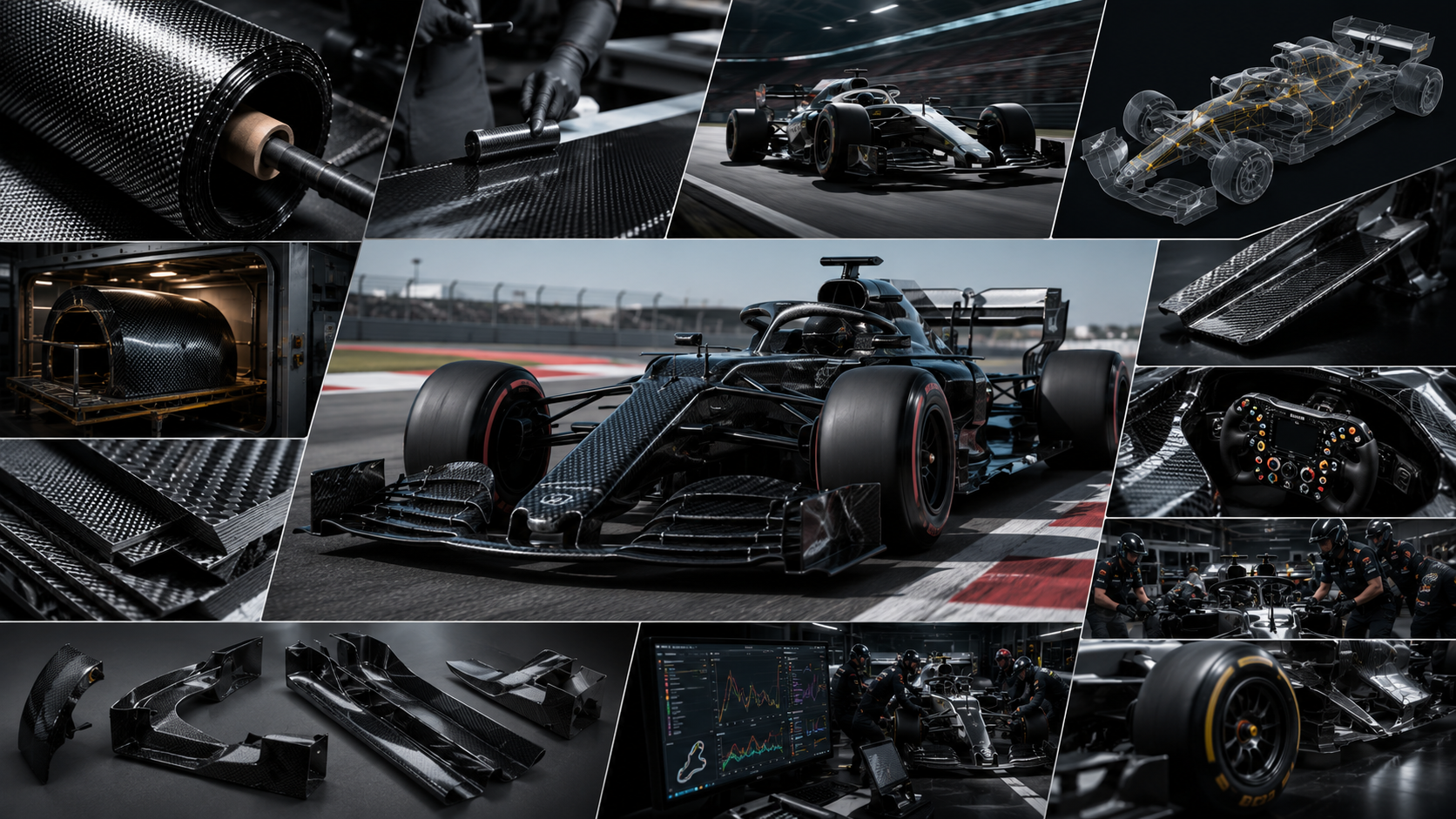
September 13, 1981. Monza. John Watson walks away from a wreck that should have ended him. The McLaren MP4/1’s carbon fiber monocoque held — and it changed motorsport forever.
That crash wasn’t just a safety story. It was a proof of concept. Within a decade, carbon fiber prepreg had become the structural backbone of Formula 1. By 1992, the Williams FW14B claimed the World Championship on a carbon chassis. The material hadn’t just entered the sport — it had taken over.
Today, a modern F1 car runs at 70% carbon fiber by structure. Up to 85% of components by volume — yet just ~20% of total weight. That ratio is the whole point. Less weight means faster acceleration, harder braking, and higher cornering loads.
How Prepreg Layup Builds a Championship Chassis
Building an F1 monocoque demands a level of precision most production programs never reach. Layers of epoxy prepreg materials go down at specific angles. Each angle is chosen to balance mechanical performance across every load direction the chassis faces during a race weekend.
Two formats dominate:
-
Woven carbon prepreg fabric (twill weave) — handles complex curves and tight-radius body sections
-
Unidirectional carbon fiber prepreg (UD) tows from creels — delivers maximum stiffness along primary load paths
Resin content stays under strict control. Suppliers like TenCate engineer low-resin prepregs cleared for chassis use. Every extra gram of resin is a gram the car has to carry — so engineers cut it out.
Race weekends can demand fast aero changes. Toray’s AmberTool® HX56 tooling prepreg gets a complete carbon fiber component done in 45 hours. That’s fast enough to respond to mid-season regulation changes or crash damage without missing a race.
The outcome speaks for itself. Prepreg composite carbon fiber gives you precise stiffness, aerodynamic flexibility, and impact resistance — all in one integrated structure. That’s what high-performance carbon composites are built to deliver.
Sporting Goods & High-Performance Equipment: Woven Carbon Prepreg Fabric in Action
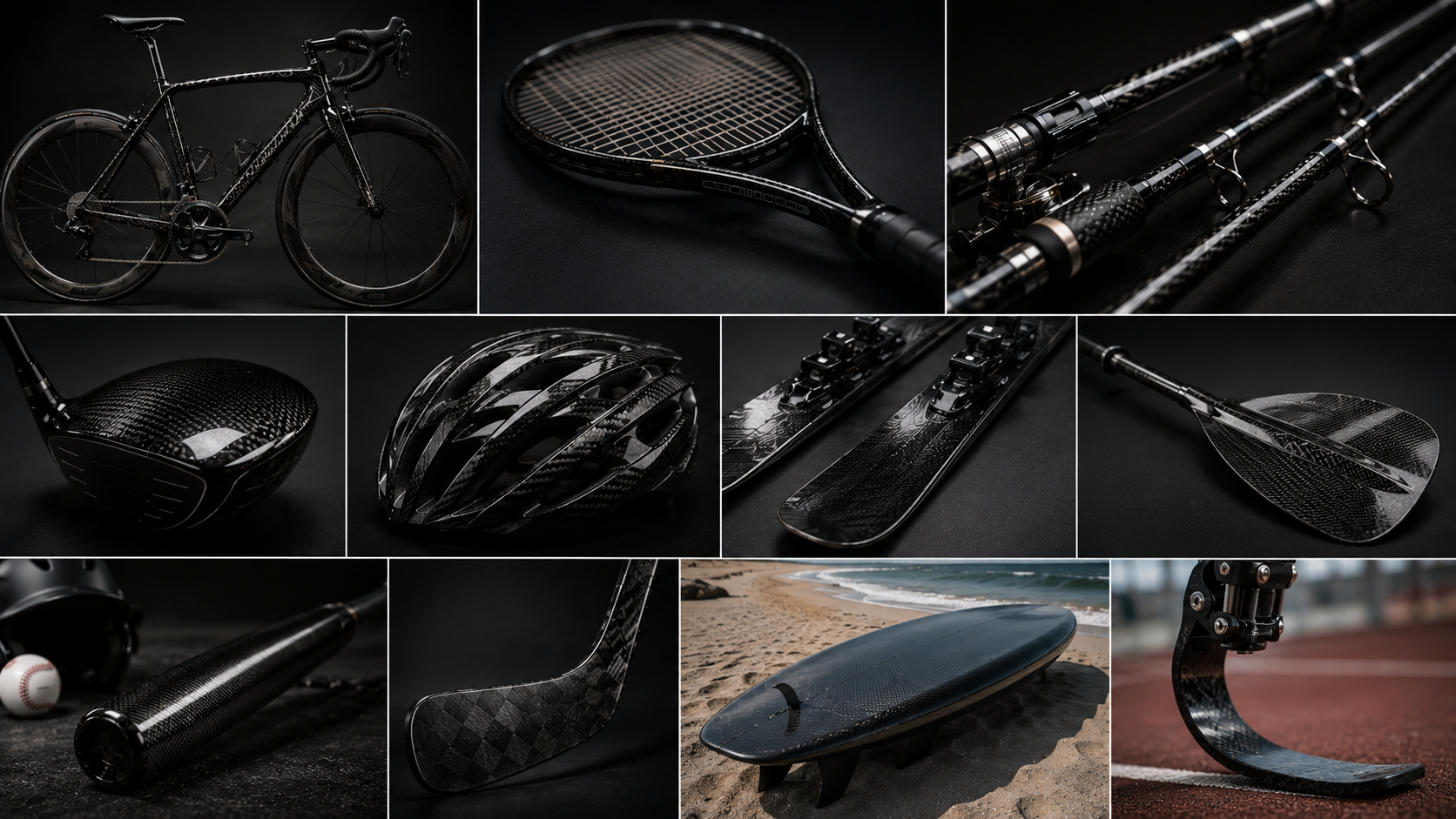
Elite athletes don’t accept material compromise. The gear built for them reflects that standard — no exceptions.
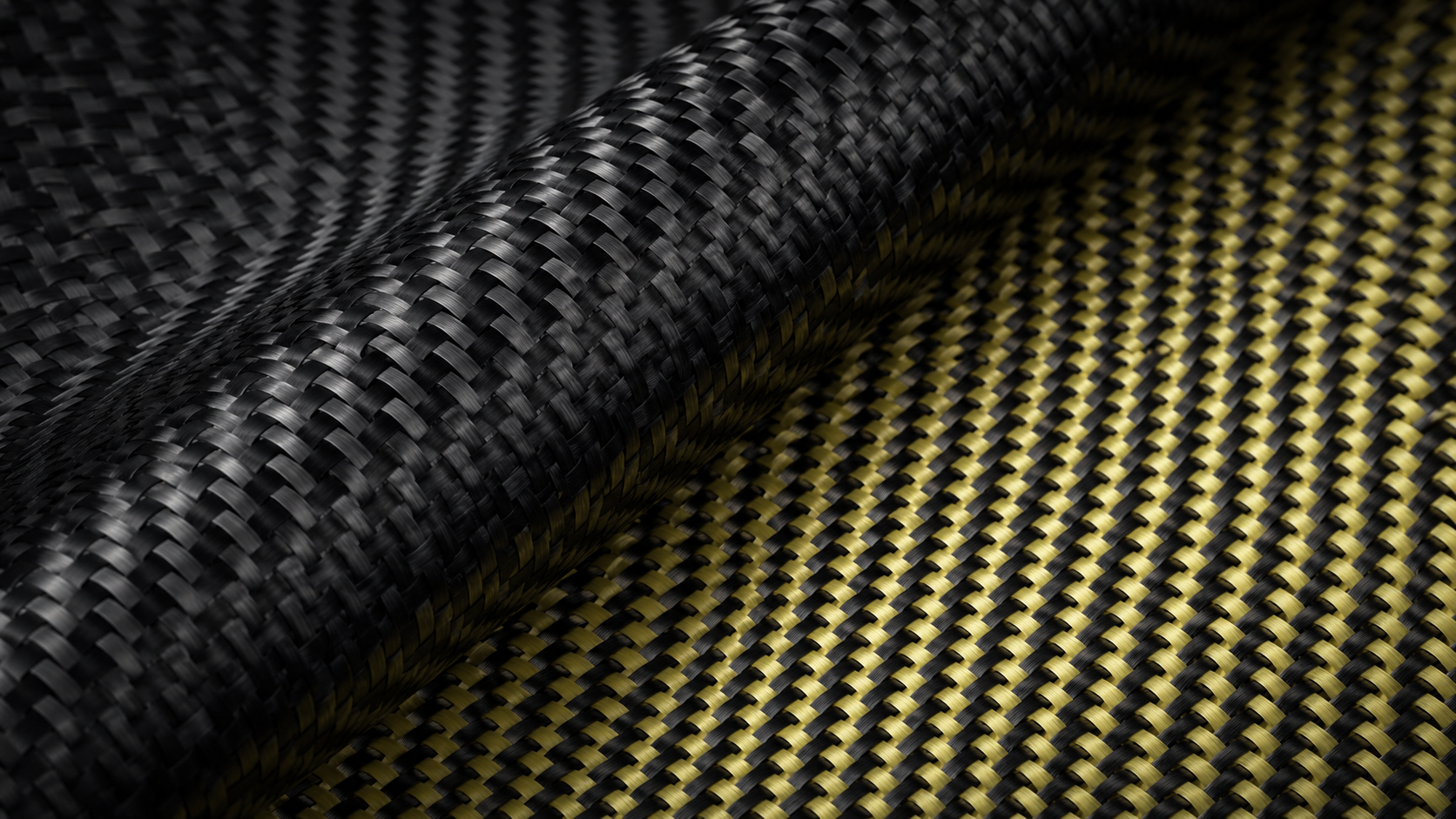
Woven carbon prepreg fabric — in plain weave and twill patterns — sets the performance ceiling across bicycles, tennis rackets, golf club shafts, hockey sticks, and skis. The weave structure delivers strength in multiple directions. UD fabric alone can’t match that. Plus, the resin comes pre-impregnated at the factory. This removes the voids and weight inconsistencies that wet layup processes tend to create.
Tow size drives precision. 3K tows give you the fine surface finish and flexibility that high-end bicycle frames and golf shafts need. 6K–12K tows suit hockey sticks and sports prosthetics, where raw structural toughness comes first.
Fabric weight follows part function:
-
100–200 gsm — ultralight bike components and racket skins
-
200–400 gsm — helmets, ski laminates, and club heads
Fiber volume fractions reach 55–65%. That’s well above wet layup’s 40–55% range. Higher fiber volume keeps racket frames stable under repeated impact. It also keeps golf shafts vibration-free at full swing load. The payoff: 20–30% weight reduction over metal parts, with fatigue resistance that holds up across thousands of stress cycles.
Defense & Military Applications: Carbon Fiber Prepreg in Mission-Critical Structures
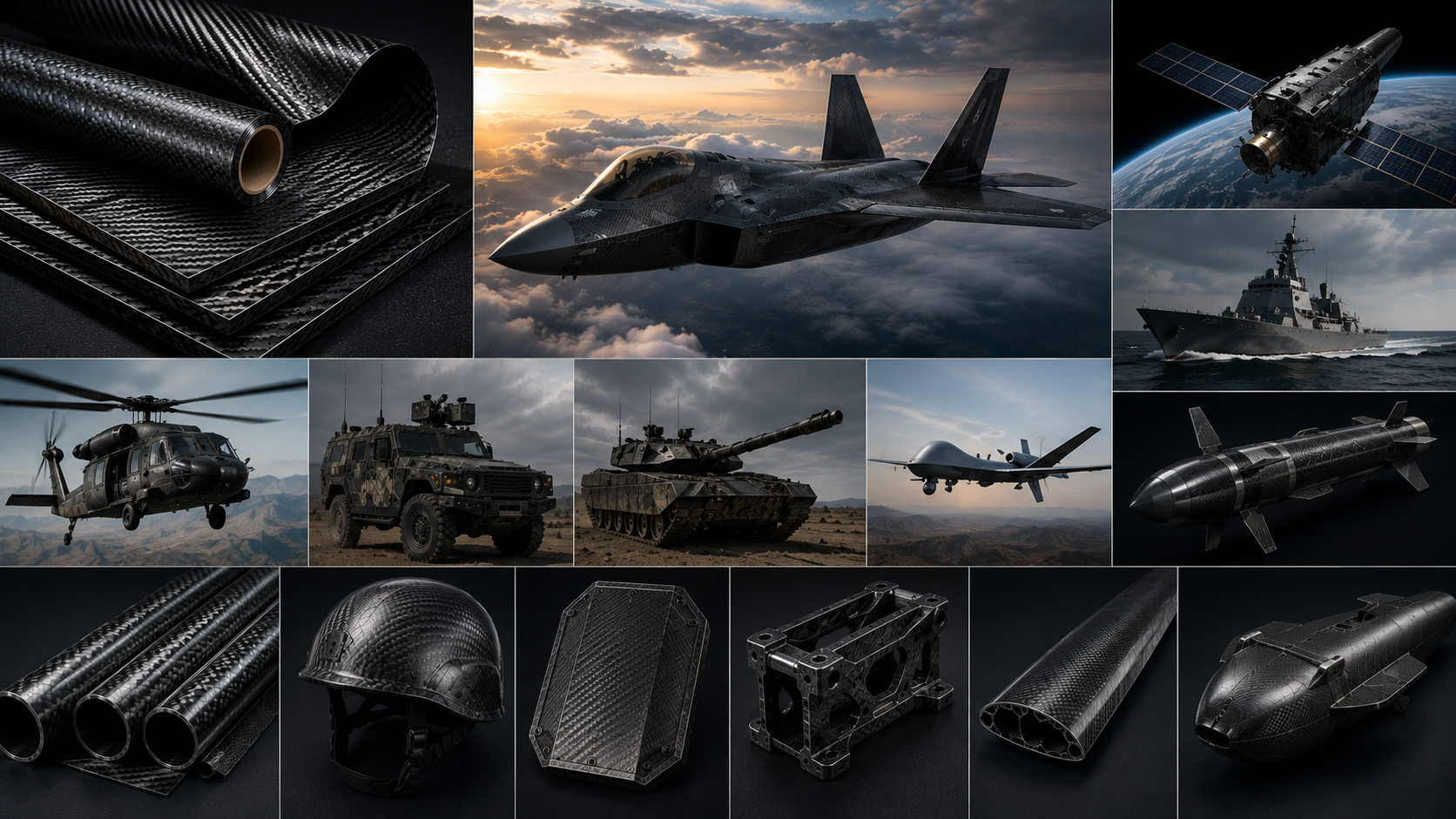
Defense programs don’t get second chances. The materials they choose reflect that pressure.
Carbon fiber prepreg now serves as the go-to structural material across airframes, UAVs, missiles, satellites, and armor panels. Why? Because weight, strength, and durability all matter — and none of them can be sacrificed. The performance data makes this clear.
Hexcel’s HexTow® HM63 pairs with boron fiber through Specialty Materials’ Hy-Bor® system. The results are hard to ignore:
-
More than 2× improvement in 0° compression strength
-
More than 2× improvement in open-hole compression strength
-
More than 2× improvement in flexural strength
All of this comes at equivalent fiber volume — outperforming carbon-only composites across the board. A DLA SBIR contract drove development of this system for airframes, missiles, and satellites. This isn’t lab data. It’s real, fielded performance.
Toray’s intermediate modulus, toughened-resin prepreg composite carbon fiber systems have backed defense programs for over 20 years. You get higher payload capacity and extended operational range through real weight reduction — all without losing impact damage resistance. That’s a straightforward trade-off that defense engineers keep coming back to.
SGL Carbon’s CFRP prepregs cover the full needs of UAV reconnaissance platforms:
-
Reduced weight compared to steel and aluminum
-
High rigidity
-
Corrosion resistance
-
Low fatigue on rotor blades and structural springs
3D-woven carbon fiber prepregs push these benefits further. Armor panels and molded fighter jet components rely on them for high impact resistance under harsh field conditions and elevated temperatures. That level of performance isn’t optional — it’s a hard requirement.
Maintenance costs matter just as much as performance. Fiber reinforced polymer prepreg systems carry built-in corrosion and fatigue resistance. This cuts lifecycle servicing costs — a genuine factor in the long-term economics of any defense platform.
Marine & Wind Energy: Carbon Fiber Prepreg in Large-Scale Structural Applications
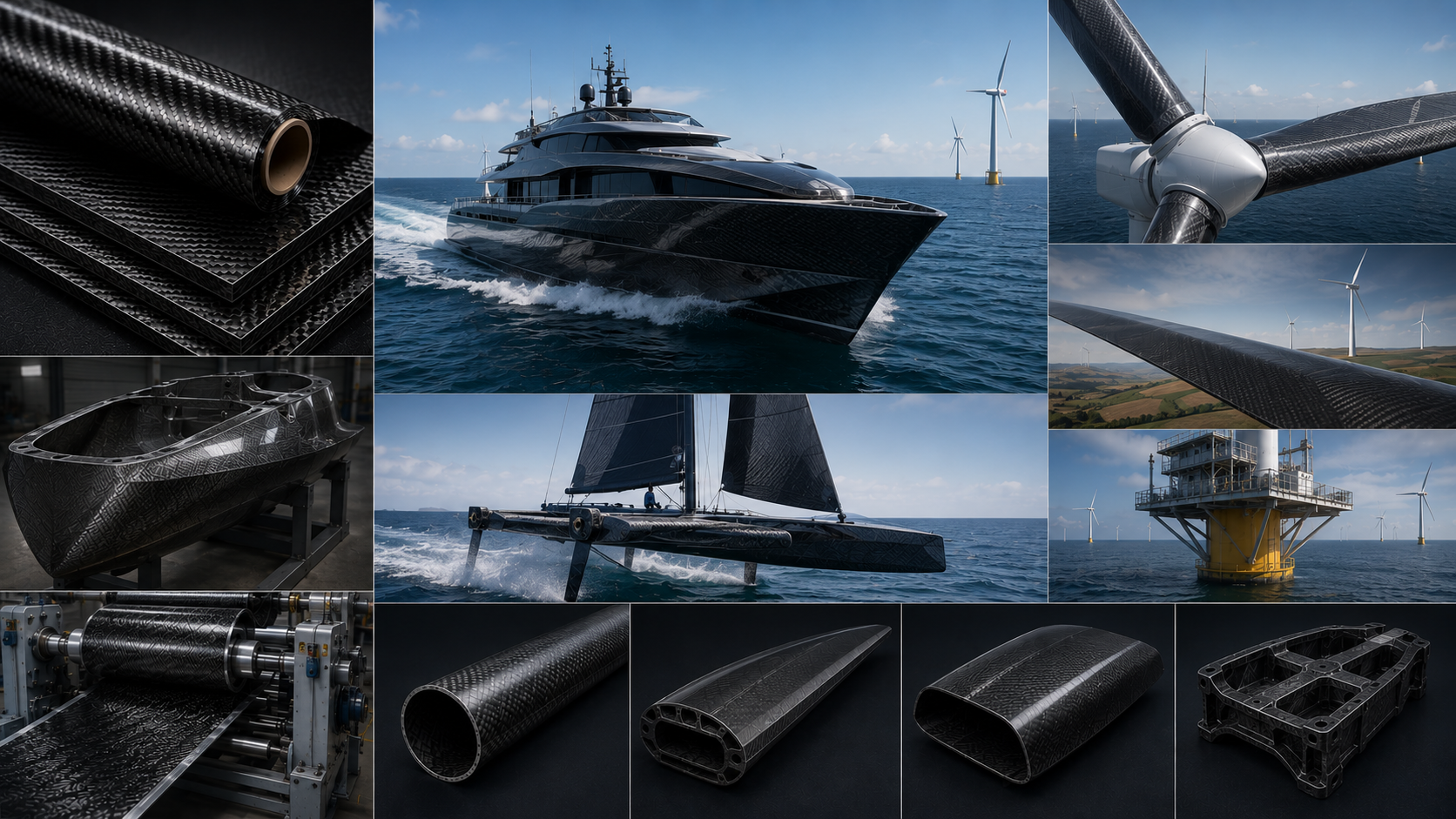
Scale changes everything. A 100-meter wind turbine blade isn’t just a bigger version of a smaller one — it’s a completely different engineering problem. At that length, conventional materials buckle under their own weight before the wind even plays a role.
Carbon fiber prepreg solves this. Its high strength-to-weight ratio makes blades beyond 100 meters both buildable and viable for real commercial projects. Offshore wind projects across Australia are already pushing demand hard, with the regional prepreg market running at a 9.2% CAGR through 2035.
A consistent fiber-to-resin ratio keeps blade manufacturing repeatable at scale. Here’s how different prepreg types divide the work:
-
Unidirectional carbon fiber prepreg carries the primary spanwise loads along the blade length
-
Woven carbon prepreg fabric handles torsional forces at the root
-
Hybrid carbon/glass architectures with SiC-reinforced epoxy matrices boost tensile and impact performance — especially in vertical-axis urban turbines where space is tight and fatigue cycles run high
Marine applications follow the same logic. Racing yachts in events like the Tour de France à la Voile use flexible-cure prepreg composite carbon fiber for hulls that stay light without giving up structural strength. Toray — the largest carbon fiber and prepreg producer in North America — supplies both sectors at industrial scale.
The common thread across both industries: fatigue resistance. A turbine blade cycles through millions of load reversals. A racing hull pounds through open ocean for days. Fiber reinforced polymer prepreg systems hold up in both cases. Conventional materials don’t — at least not for long.
Industrial & Medical: Emerging Applications of Structural Composite Materials
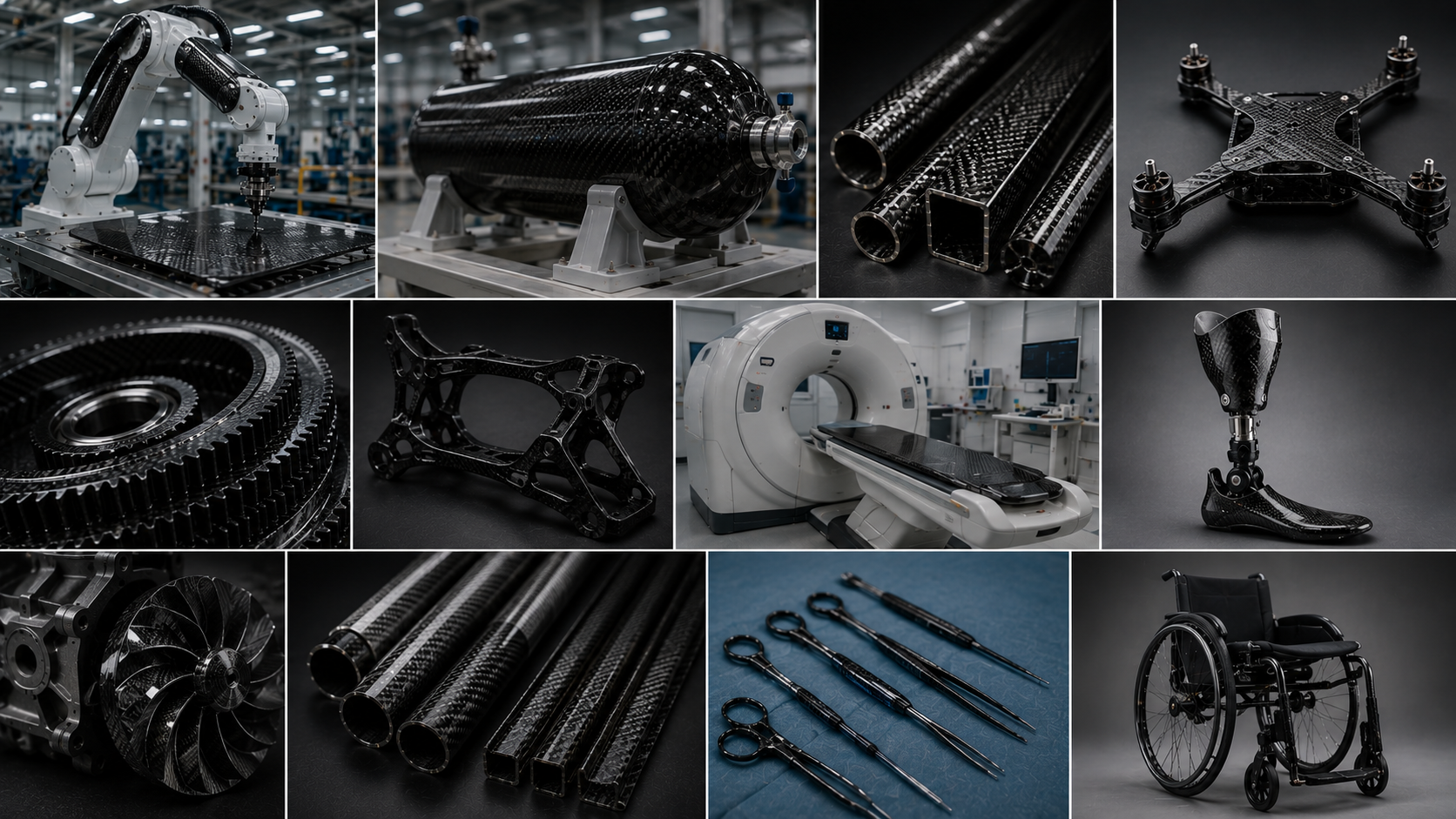
Carbon fiber’s most consequential frontier isn’t in the sky or on the track — it’s inside the human body.
Structural composite materials are reshaping orthopedics, prosthetics, and surgical tooling fast. Most engineers outside the medical space haven’t caught up yet. CFRP’s radiolucency makes it X-ray and CT compatible — a hard requirement for spinal surgery and oncology imaging. PEEK-based fiber reinforced polymer prepreg systems hit a modulus of 10–20 GPa. That range matches cortical bone closely, which cuts the stress-shielding that metal implants cause.
Magnolia Trinity PEEK — launched in 2023 — combines carbon fiber, hydroxyapatite, and PEEK. You get a joint replacement material that pushes bone growth while standing up to wear. Carbon fiber prosthetic limbs deliver 50–70% weight reduction versus metal. Plus, embedded sensors now give users temperature and touch feedback.
Different applications call for different manufacturing methods:
-
Compression molding — used for high-volume devices
-
Continuous fiber placement — built for structural implants
-
Patient-specific 3D printing — produces custom implant geometry with graded porosity gradients
Industrial composite demand is climbing at the same time. Pressure vessels, robotic arms, and exoskeletons all draw from the same high-performance carbon composites supply chain. That shared demand is putting pressure on production capacity across sectors.
How to Select the Right Carbon Fiber Prepreg for Your Application: A Specification Guide

Selection mistakes don’t show up on paper — they show up in the field, under load, at the worst possible moment.
The decision tree is simpler than the material catalog makes it look. Four variables drive everything: fiber type, resin system, cure process, and part geometry. Get those aligned, and the rest follows.
Match Fiber Type to Structural Demand
High Modulus (HM) fibers deliver exceptional stiffness at minimal weight. That makes them the right call for satellite structures, aerospace panels, and high-end bicycle frames where deflection is the enemy. High Strength (HS) fibers shift priority to tensile stress and impact resistance. That’s what automotive structures and sporting goods need under real load cycles.
The distinction matters. Specifying HM fiber on a high-impact application is a specification error. It’s not a materials upgrade.
Resin System and Cure Temperature
-
Mid-temp cure systems cover the widest range of applications. You get manufacturing flexibility without giving up mechanical performance.
-
High-temp cure systems (autoclave-dependent, 350°F/177°C range) deliver maximum structural performance for primary aerospace components.
-
Phenolic and cyanate ester resins handle sustained high-temperature environments where epoxy systems break down.
-
Polyimide-based prepregs sit at the top for thermal resistance. Check glass transition temperature and oxidation resistance before specifying.
Out-of-autoclave options like XPREG XC110 cure at 120°C with a two-stage post-cure cycle. Fiber areal weights run 210 g/m² for 3K surface plies and 450 g/m² for 12K structural plies. One processing detail that catches engineers off guard: avoid vinylester molds with XC110. Pinhole risk is real. Use epoxy tooling prepreg or high-temp epoxy gelcoat instead.
The Four-Step Selection Process
-
Define end-use load conditions. High impact demands HS fiber. Sustained heat demands phenolic or polyimide systems. Rigidity demands HM fiber.
-
Assess weight sensitivity by component. Body panels prioritize low weight with adequate strength. Chassis elements need high-strength, high-modulus combinations.
-
Match to available manufacturing equipment. Autoclave access opens up high-temp cure options. Oven-only setups point to OOA systems at 121–177°C ramp/soak profiles.
-
Run real-world validation. Test tensile strength numbers, bend-without-cracking behavior, and moisture resistance under actual use conditions. Datasheet review alone is not enough.
For surface finish priority, specify a defect-free 2×2 twill weave. For maximum stiffness along a primary load path, unidirectional carbon fiber prepreg tape wins every time. Let the part geometry — and the stress map underneath it — drive that call.
Conclusion
Carbon fiber prepreg isn’t a single material — it’s a performance decision. Are you building a next-generation aircraft fuselage? Pushing lap times in Formula 1? Extending EV range without sacrificing structural integrity? The right carbon fiber prepreg application starts with knowing what your design demands: fiber architecture, resin system, cure pathway, and end-use environment.
The industries covered here — aerospace, automotive, motorsport, defense, marine, and beyond — all share one thing: they chose prepreg composite carbon fiber because the margin for error is zero. The cost of weight is real.
Now the question is yours. What does your application need — and can your material supplier actually meet that specification?
Evaluating carbon fiber prepreg for a structural or high-performance project? Talk to the HyperXCarbon engineering team. Bring your specs. We’ll bring the answers.
The right material, chosen for the right reason, doesn’t just perform — it wins.
Contact HyperX Carbon – Your Trusted Chinese Carbon Fiber Customization Partner
Ready to develop high-performance carbon fiber materials or custom forged carbon fiber parts tailored specifically for your project?
HyperX Carbon is your long-term strategic partner with over 20 years of expertise in advanced composites. We specialize in delivering aerospace-grade forged carbon fiber custom solutions, along with fully personalized prepreg, tubes, sheets, and lightweight carbon fiber structural components for automotive, drone, eVTOL, and medical applications.
We don’t just supply materials — we provide end-to-end customization support:
-
Stable premium supply chain using Toray, Mitsubishi, and Hengshen raw materials
-
AS9100D certified production tailored for aerospace and UAV requirements
-
Rapid prototyping carbon fiber component in just 5-8 weeks, with monthly capacity over 180,000 parts
-
Competitive pricing with 15-18% cost savings on forged carbon solutions
-
Full customization flexibility: from T700 and T1100G to ultra-high modulus grades, with tailored layups, finishes, and performance specifications
Whether you’re an eVTOL developer, automotive OEM, drone manufacturer, or medical device engineer, HyperX Carbon delivers bespoke material selection, structural optimization, and manufacturing solutions that match your exact technical and performance needs — with consistent batch-to-batch quality and reliable delivery.
Get in touch today for a free technical consultation, personalized quote, or custom material samples.
📧 Email: [email protected] 🌐 Website: https://www.hyperxcarbon.com/ 📞 Phone/WhatsApp: +86 15623270276 (English support available)
Let’s co-create your next lightweight innovation together. Contact HyperX Carbon now and stay ahead in the low-altitude economy and advanced composites market.
HyperX Carbon – Not just a supplier, but your dedicated carbon fiber customization expert.