Choosing the wrong structural tube is costly. It grounds aircraft, fails load tests, and derails project timelines.
Engineers and procurement teams comparing forged carbon fiber tubes to conventional alternatives face real consequences. The data they need is often buried under manufacturer marketing.
Forged carbon fiber composite technology has changed what’s possible in lightweight structural tubing. It delivers near-isotropic strength profiles that woven layups can’t match. Most sourcing guides stop short of covering this.
This guide cuts through that. You’ll get hard mechanical data, straight material comparisons, custom fabrication parameters, and a clear decision framework — built for engineers and buyers who spec these components. See more applications at forged carbon fiber applications 2026 guide. If you’re looking for the complete forged carbon fiber manufacturing process, check out our detailed Forged Carbon Fiber Manufacturing Process: Step-by-Step Explained.
Forged Carbon Fiber Tube Strength Data: What the Numbers Mean

The spec sheet looks impressive. The real question is whether those numbers hold up once your application puts load on the tube.
Here are the baseline mechanical properties for forged carbon fiber composite at 60% fiber volume fraction, using Toray 250°F epoxy. All values are tested to ASTM standards:
-
Tensile Strength: 270 ksi (1,860 MPa) — ASTM D-3039
-
Compressive Strength: 215 ksi (1,482 MPa) — ASTM D-695
-
Flexural Strength: 260 ksi (1,793 MPa) — ASTM D-790
-
Flexural Modulus: 18.0 Msi (124 GPa) — ASTM D-790
-
Interlaminar Shear Strength: 14 ksi (96 MPa) — ASTM D-2344
These are axial numbers. Keep that in mind — it matters a great deal.
Optimized Forged vs. Aluminum: The Weight-Strength Gap
A direct cross-section comparison makes the performance gap clear:
|
Material |
Weight (g) |
Tensile Yield (MPa) |
Flexural Modulus (GPa) |
|---|---|---|---|
|
Forged Carbon (Optimized) |
25.2 |
875 |
61.1 |
|
Forged Carbon (Standard) |
24.7 |
192 |
35.5 |
|
Aluminum |
46.7 |
304 |
51.9 |
Optimized forged carbon beats aluminum’s flexural modulus — 61.1 GPa vs. 51.9 GPa — at close to half the weight. Compare it against 4130 chromoly steel and the gap grows wider. Carbon fiber sits near 1.6 g/cm³. Steel sits at 7.85 g/cm³. That difference delivers 4x higher specific strength at 80% less weight.
The Number Most Spec Sheets Omit
Off-axis performance is where forged carbon fiber tubes fail procurement reviews. The material itself is not the problem. Engineers spec it without accounting for load direction.
At 0° axial orientation, tensile strength peaks at 1,860 MPa. Rotate the load to 90°, and that number falls to 76 MPa — a 97% drop.
The practical rule: derate 70% for multi-directional load environments. Layups with ±45° and 90° orientations are required for tubes that handle combined bending, torsion, or off-axis tension. Skip this step and your design targets numbers that do not reflect real load conditions.
Wall thickness brings in another variable. Thicker walls raise flexural stiffness, but they also reduce fiber efficiency. Once resin volume climbs, expect tensile strength to drop 20–30%. High-modulus fiber (500+ GPa) recovers that loss for bending and axial tension applications. It pushes tensile performance up toward 2,700 MPa.
The data is solid. Use it with the right context.
Custom Forged Carbon Fiber Tubes: Specifications, Wall Thickness & Geometry Options

Standard catalog sizes cover maybe half of real engineering problems. The other half sits in the gap between what’s on the shelf and what your build needs.
That’s where custom forged carbon fiber fabrication comes in. Today’s specification ranges are broad enough to cover most structural applications — and flexible enough to handle the edge cases too.
Dimensional Range: What’s Achievable
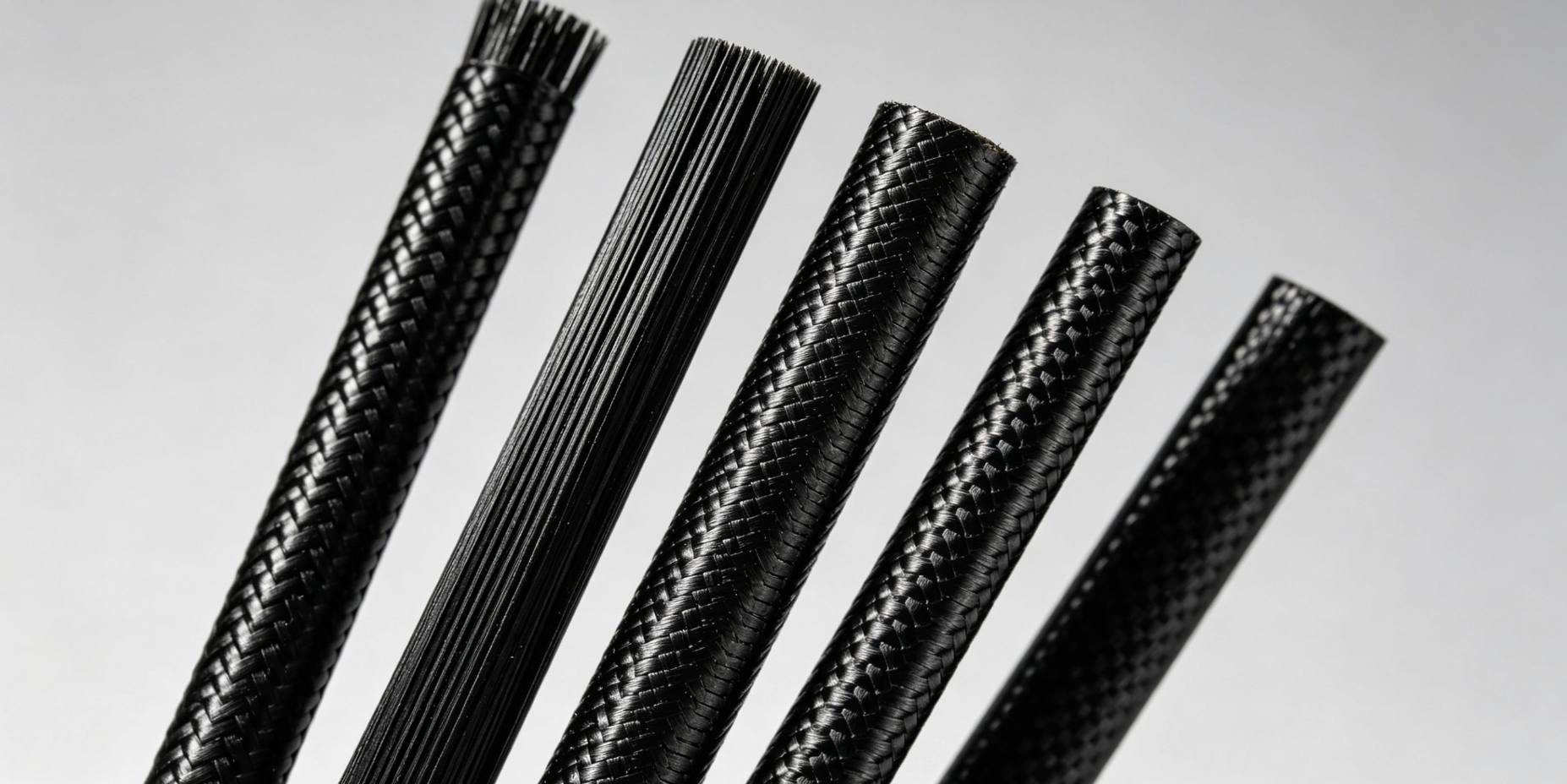
Outer diameter runs from 4mm up to 500mm. Inner diameter covers 3.5mm to 180mm in standard custom ranges. Specialized manufacturers can support spans from 2.5mm to 1,000mm. Wall thickness starts at 0.3mm on the precision end and goes up to 100mm for heavy structural sections.
Length is less restricted than most buyers expect. Minimum is 30 inches. Standard production tops out at 90 inches. Extended options go beyond 8,000mm for long-run structural work.
Cross-section is not limited to round. You get a solid range of profile options:
-
Round, Square, Rectangle — the workhorse geometries
-
Oval, Elliptical, Hexagonal, Octagon — for specialized load paths or tight fit constraints
-
Custom profiles — for cases where no standard shape works
Standard square tube sizes come in 6mm, 10mm, 14mm, 20mm, 25mm, 30mm, 40mm, plus common imperial equivalents.
Fiber Grade & Modulus Selection
Carbon fiber grade sets where the part lands on the performance curve. Three grades cover most structural applications:
|
Grade |
Modulus Range |
Best Use |
|---|---|---|
|
T300 |
15–16 msi (standard) |
General structural, cost-sensitive |
|
T700/T800 |
20–21 msi (intermediate) |
Performance-critical components |
|
M-series |
30–32 msi (high modulus) |
Stiffness-driven aerospace/industrial |
Filament count options — 1K, 3K, and 6K — affect surface resolution and weight per unit area. Finer counts work best for visual surface applications. Higher counts cut layup time in production.
Surface Finish & Machining Tolerances
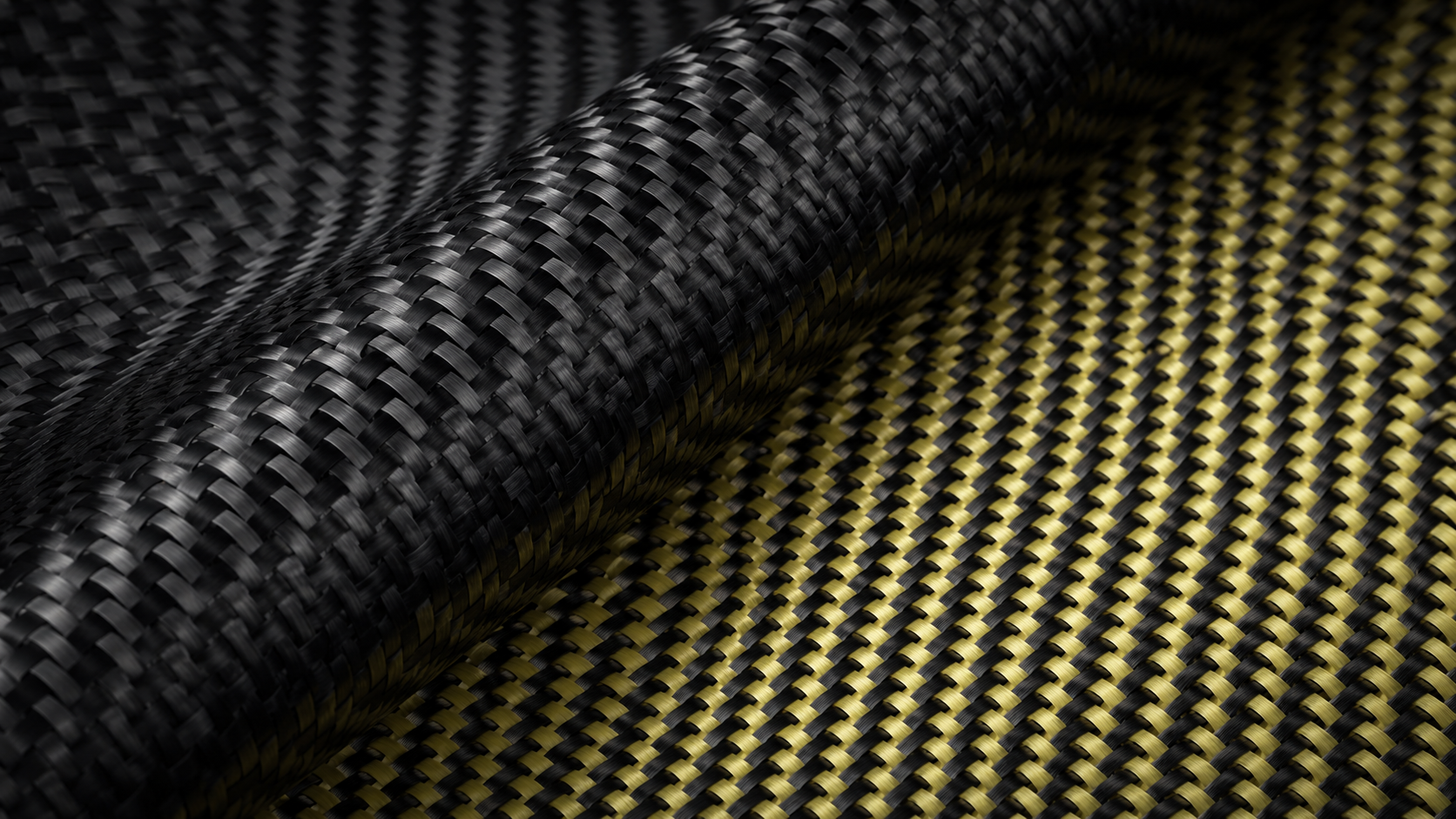
Surface options include glossy clear coat, matte clear coat, unidirectional fabric, forged carbon texture, and custom color finishes. There’s a finish option for most end-use requirements.
Tolerances tighten with secondary processing:
-
Standard cut tolerance: ±0.030″
-
Sanded OD — uni-directional tubing: ±0.003″
-
Sanded OD — fabric tubing: ±0.006″
Post-production operations include CNC cutting, precision carbon-to-carbon bonding, carbon-to-metal bonding, and logo printing. These steps let you bring parts closer to final spec before delivery.
Tooling & Lead Time
Mold material choices — aluminum, steel, fiberglass, or carbon fiber — each carry different precision and cost trade-offs. Steel molds give you the tightest dimensional accuracy. Aluminum molds balance cost and turnaround well for medium-volume runs.
Mold fabrication takes 25–30 days. Sample production adds another 7–10 days. Non-standard geometries need custom mold work before any production volume starts — build that into your project timeline from the start.
To get a quote, suppliers need a Step/STP/X_T format drawing, your target quantity, and surface specification. The standard resin Tg is 250°F dry. Mechanical properties start dropping before that threshold. Testing under your service conditions is your responsibility — don’t skip it.
For real structural performance gains in cars, see our guide to best forged carbon fiber automotive parts.
Industry Applications: Where Forged Carbon Fiber Structural Parts Deliver Real ROI

The forged composites market hit $128 million in 2024. It’s headed to $163 million by 2030. That capital doesn’t move without real results behind it.
Here’s where those results are coming from.
Aerospace & UAV: Structural Weight That Matters
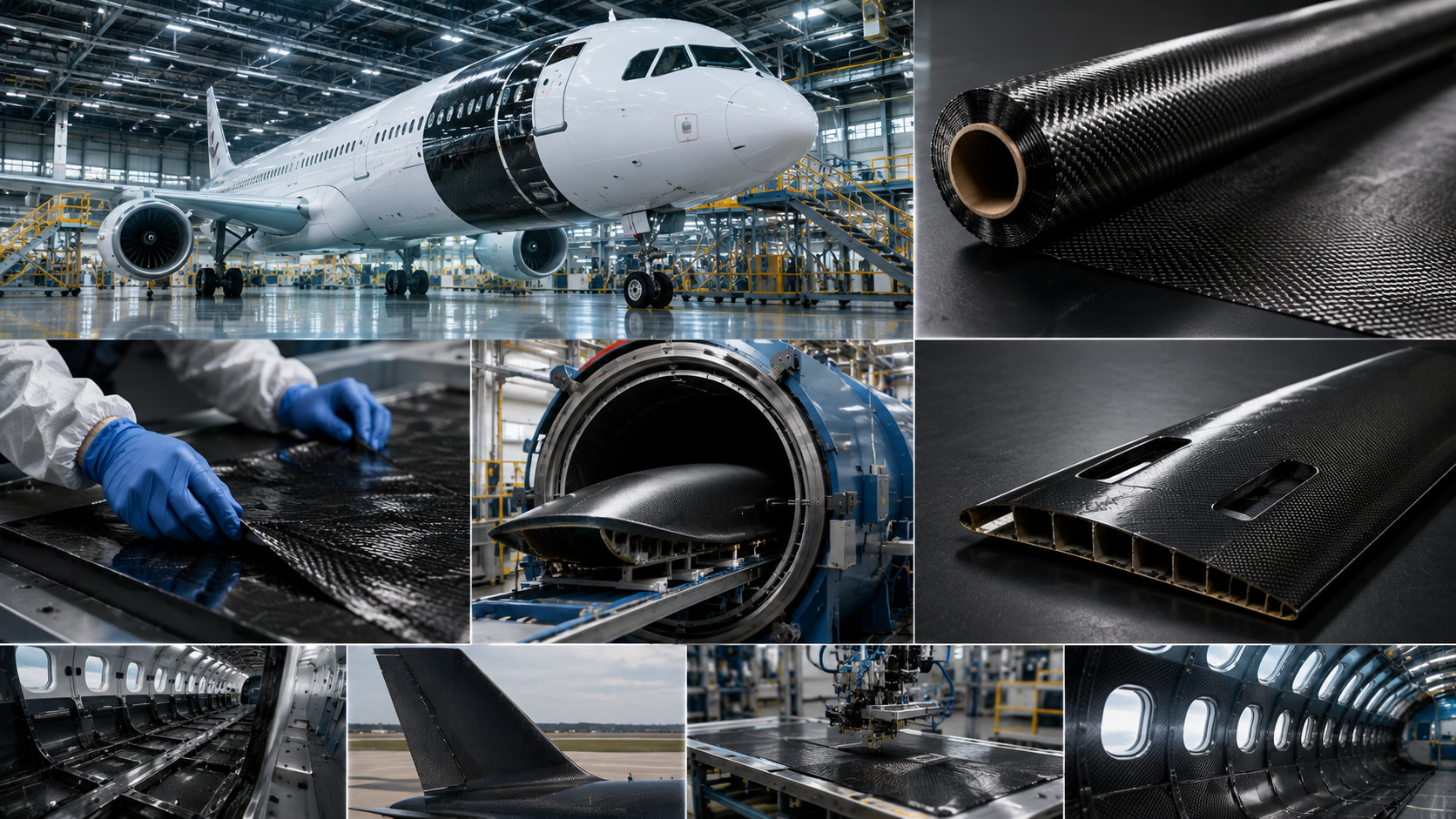
Aerospace and defense claimed 26.6% of the carbon fiber market in 2024 — and for good reason. Forged carbon fiber is 44% less dense than aluminum 6082-T6. In UAV frames, landing gear, and propulsion brackets, that density gap turns into more payload capacity, longer range, and lower fuel burn.
CFRTP aerospace tonnage grew at a 9.48% CAGR. Additive-processed brackets come in 60% lighter than machined aluminum equivalents. On long-haul aircraft, weight reduction at this scale delivers $2.9 million in annual fuel savings per airframe at 3,000 flight hours.
Automotive & Racing: Surviving the Crash, Winning the Lap
In 3-point flexural testing, forged carbon structural tubes held 220 kg of load versus 120 kg for aluminum. That’s close to double the resistance at lower weight. This advantage plays out in two very different situations:
-
Absorbing crash energy in production EVs
-
Keeping chassis tubes intact through a full race weekend
PAN-based fiber holds 84.7% of automotive revenue share. EV battery enclosures and lightweight chassis structures push automotive CFRP growth at 8.9% CAGR. The isotropic strength profile of forged composites fits well here. Random short fibers take on impact loads that unidirectional layups struggle to handle.
Industrial Robotics: Stiffness Drives Precision
High-modulus pitch-based carbon fiber is growing at 8.7% CAGR. The reason is straightforward — robotics needs stiffness, not just strength. In torque tubes and arm links, specific stiffness controls positioning accuracy and response speed. These two metrics define system performance in automated manufacturing lines.
Compression molding covers 39.61% of production volume. It delivers up to 60% fiber volume fraction with six-sigma dimensional repeatability. That’s the consistency level robotic integrators need before they’ll approve a material for a production line.
Construction & Seismic Retrofit: Less Material, More Strength
Germany’s CUBE building showed 50% material savings versus steel reinforcement using carbon fiber structural elements. Compared to steel rebar, carbon fiber carries 4× the specific tensile strength. You get lighter sections that lower the overall structural load while still meeting or exceeding seismic retrofit requirements.
That weight reduction isn’t cosmetic. Lighter retrofit components cut installation complexity and reduce crane requirements on-site. In urban seismic upgrades, that difference in workload often decides whether a project is feasible at all.
ROI Summary
|
Application |
Key Metric |
Result |
|---|---|---|
|
Aerospace/UAV |
Weight vs. aluminum |
−44% density |
|
Automotive/Racing |
Flexural load resistance |
220 kg vs. 120 kg (Al) |
|
Industrial Robotics |
Fiber volume in molding |
Up to 60% |
|
Construction Retrofit |
Material savings vs. steel |
Up to 50% |
|
Market Growth |
Forged composites CAGR |
4.0% through 2030 |
Want genuine forged carbon fiber instead of wrap? Explore more in our full best forged carbon fiber applications in 2026.
How to Select the Right Forged Carbon Fiber Tube: An Engineer’s Decision Framework

Four variables determine whether your tube selection holds up under real load — or falls apart in review before production starts. Work through them in order.
Step 1: Identify your load type. Tension, compression, torsion, bending, or multi-axial combined? This one decision shapes everything that follows. Forged carbon fiber composite uses short fibers oriented in random directions. That gives you near-isotropic strength — meaning it handles multi-directional and complex load environments better than any unidirectional layup can. Your tube sees load from multiple angles at once? Start with forged.
Step 2: Define the operating environment. Temperature cycling, humidity, and chemical exposure all attack the resin matrix — not the fiber. Forged carbon fiber tubing stays stable across wide temperature swings due to its low thermal expansion. But the resin system has to match your service environment. Get it wrong and the matrix degrades before the fiber ever reaches design load.
Step 3: Run the weight calculation. Forged carbon sits at 1.5–1.58 g/cm³. Aluminum sits at 2.73 g/cm³. Steel is heavier still — forged carbon runs 70% lighter. Your weight budget is tight? The density numbers settle the question fast.
Step 4: Factor in production cost. For medium-to-high volume runs, forged carbon composite comes in 20–40% cheaper than woven CFRP. That gap adds up across a full production program. You’re specifying components at scale — that difference is real money.
Forged vs. Unidirectional CFRP: Where Each Wins
|
Criterion |
Forged Carbon |
Unidirectional CFRP |
|---|---|---|
|
Load Direction |
Multi-axial, isotropic |
Strong on-axis, weak off-axis |
|
Shape Complexity |
Curves, undercuts, intricate geometry |
Limited by layup constraints |
|
Production Efficiency |
Compression molding, batch-ready |
Labor-intensive layup and cure |
Wall Thickness, Connections & Safety Factors
Your connection method has a direct effect on wall thickness spec. Adhesive bonding spreads stress across the joint — thinner walls stay viable. Mechanical fastening creates stress concentration around holes. To compensate, increase wall thickness by 20–30%. Interference fits need a moderate thickness increase to handle radial pressure.
Use a safety factor of 1.5–2.5 for multi-axial load environments. Push that number higher for impact-dominated applications.
The Selection Errors That Kill Projects
Three mistakes show up again and again in failed specifications:
-
Chasing ultra-high modulus fiber for bending stiffness — and overlooking the impact toughness drop that comes with it. Forged composites use a random fiber structure. That layout manages toughness better by letting fibers redistribute load through the part.
-
Ignoring fiber length — milled fibers at the micron scale add almost no strength. Continuous fibers cause molding failure. The right choice is short chopped tow, in the 5–10 μm diameter range. That’s the range that balances flow and performance.
-
Specifying unidirectional CFRP for torsion or multi-axial loads — off-axis stiffness drops fast, and the part fails in ways a forged tube would have handled cleanly. This is one of the most common and most avoidable mismatches in composite specification.
The performance case for CFRP structural components is strong. The limitations are real. Both facts belong in your material selection process. The same premium forged texture works beautifully on smaller items — explore it in forged carbon fiber phone cases or forged carbon fiber wallets.
FAQ: Technical Questions Buyers Ask Before Ordering Forged Carbon Fiber Tubes
Procurement stalls at the same five questions every time. Here are the answers — with the numbers.
How thin can the wall go?
Minimum wall thickness is 0.006 inches per ply. A typical structural tube at 0.060 inches uses 9–10 plies. Most production tubes run around 0.070 inches. Go below that, and you’re giving up structural strength for a slimmer profile. The numbers won’t work in your favor.
Can I drill or cut it after delivery?
Yes. Forged carbon fiber composite machines better than unidirectional layups. The random fiber structure cuts down on breakout at drill exits. You can do secondary cutting and drilling after sanding. It’s not as fragile as some buyers think.
What’s the real thermal ceiling?
Glass transition temperature sits at 225–249°F (Tg). Long-term continuous service should stay at or below 120°C. The thermal expansion numbers are where forged carbon stands out: CTE runs at −0.41 × 10⁻⁶/°C — compared to aluminum’s ~23 × 10⁻⁶/°C. That gap creates stress at metal-to-carbon joints. Fix it with ±45° plies or metal inserts. Skip that step, and the joint fails before the tube does.
What layup handles torsion without compromising bending stiffness?
An 11-ply setup covering 0°, ±45°, and 90° orientations is the standard answer. Here’s how each layer works:
– 0° plies carry bending load
– ±45° plies absorb torsion
– 90° plies build crush resistance
Tell your supplier the primary load direction upfront. That decides which orientation leads the stack.
What tolerances should I expect?
For tubes between 6–100mm OD: +0.05 to +0.2mm. Tubes up to 300mm OD and under 2,000mm length hold +0.5mm tolerance. Standard dimensional references: ID 0.79″, OD 0.92″, length 88″ — those are your production anchors.
Submit ID, OD, length, layup requirement, and load conditions for a quote.
Conclusion
Forged carbon fiber tubes don’t just outperform traditional materials on a spec sheet. They redefine what’s possible — even when weight, strength, and complex geometry all have to work together in one component.
The numbers back this up:
-
Superior tensile strength
-
Near-isotropic mechanical behavior
-
A strength-to-weight ratio that puts aluminum and steel tubes in a completely different league
On top of that, you get real fabrication flexibility. Wall thickness tolerances, non-standard geometries, custom shapes — all of it is on the table. That’s why forged carbon fiber composite tubes earn their place in aerospace, UAV, robotics, and motorsport builds.
Contact HyperX Carbon – Your Trusted Chinese Carbon Fiber Partner
Ready to source high-performance carbon fiber materials or custom forged carbon fiber parts from China?
HyperX Carbon is a leading manufacturer with 20+ years of expertise, specializing in aerospace-grade forged carbon fiber, prepreg, tubes, sheets, and lightweight automotive/drone/medical components. We offer:
-
Stable supply chain with premium raw materials (Toray, Mitsubishi, Hengshen)
-
AS9100D certified production for aerospace & UAV applications
-
Rapid prototyping (5-8 weeks) and monthly capacity exceeding 180,000 parts
-
Competitive pricing with 15-18% cost savings on forged carbon solutions
-
Full customization: from T700/T1100G to ultra-high modulus grades
Whether you’re an eVTOL developer, automotive OEM, drone manufacturer, or medical device engineer, HyperX delivers consistent quality, batch-to-batch reliability, and reliable delivery.
Get in touch today for a free consultation, custom quote, or material sample.
📧 Email: [email protected]
🌐 Website: https://www.hyperxcarbon.com/
📞 Phone/WhatsApp: +86 15623270276 (English support available)
Let’s build your next lightweight innovation together – contact HyperX Carbon now and stay ahead in the low-altitude and advanced composites market.