Your helmet is the one piece of gear standing between you and a catastrophic outcome. So when a manufacturer claims their forged carbon fiber helmet is stronger, lighter, and safer than anything else on the market, that claim needs serious scrutiny — not a marketing brochure.
Forged carbon composite technology has changed premium helmet construction over the past few years. But the hype has outpaced the honest, data-driven analysis riders need.
This guide cuts through that. You’ll get a straight breakdown of how forged carbon shells perform in real conditions. You’ll see what ECE 22.06, DOT, and Snell certifications mean for your safety. Plus, you’ll find out which specific 2026 models are worth your money — and which ones are just wearing the right label. See more applications at forged carbon fiber applications 2026 guide.
Helmet Safety Ratings Explained: ECE 22.06 vs DOT vs Snell SA2025 (2026 Update)

Three certifications. Three different standards. Only one of them requires an independent lab to verify anything before your helmet hits the shelf.
That detail matters more than most riders realize.
What Each Standard Tests
DOT (FMVSS 218) is the US legal minimum. It allows up to 400G peak force on impact — a threshold most safety engineers consider too generous. Manufacturers self-certify their own helmets. Regulatory spot-checks are rare and rarely catch anything. A DOT sticker tells you a helmet is street-legal. That’s about it.
ECE 22.06 works differently. Independent labs run every test. The standard covers 5+ impact points, rotational force absorption, visor integrity, shell deformation limits, and strap safety. Peak force tops out at 275G — a real drop from DOT’s limit. It’s now mandatory across 50+ countries. Serious street riders should treat it as the baseline, not a bonus.
Snell SA2025 goes further. Tests hit two or more strikes per location. Edge anvil testing is included. Energy thresholds sit between 275G–300G, built to match high-speed track impacts. It’s voluntary and independent. Canyon carvers and circuit regulars benefit most from this level of protection. FIM accepts Snell SA2025 for professional racing — that says a lot about where it stands.
How to Choose by Riding Style
|
Rider Type |
Recommended Certification |
|---|---|
|
Daily street commuter |
ECE 22.06 + DOT |
|
Sport/canyon riding |
ECE 22.06 or Snell SA2025 |
|
Track & circuit use |
FIM (Snell SA2025 accepted) |
The 2026 Certification Landscape
ECE 22.06 replaced 22.05 with stricter shell deformation requirements and mandatory visor testing. It’s a clear step up from the previous version. The LS2 Advant X is a current example that carries both DOT and ECE 22.06 P/J certification. Snell SA2025 builds on M2020 with higher edge-anvil energy demands — the bar keeps rising.
Bottom line: ECE 22.06 is the floor for street riding. Snell SA2025 is the ceiling for performance. Don’t let a DOT sticker alone close the sale.
Forged Carbon Helmet Weight: How Light Is Light Enough?

Numbers tell the story here. A typical composite helmet lands at 1,700g or heavier. A forged carbon shell brings that down to 1,300–1,600g. The best examples go even further. The Klim F3 Carbon Pro hits 1,200g in a large size. Certain forged carbon glossy shells come in at 550g (1.21 lbs) — about 40% lighter than a comparable fiberglass lid.
That gap has real consequences on long rides.
What the Weight Does to Your Body
Every extra 100 grams on your head adds up to neck fatigue over hours. Lighter shells also cut wind resistance. Forged carbon designs deliver 15% less drag and better ventilation than standard shells. That’s not a marketing claim. It’s the difference between arriving fresh and arriving wrecked.
Where Each Model Lands
|
Helmet |
Weight |
Shell |
|---|---|---|
|
Forged Glossy Carbon |
550g / 1.21 lbs |
Forged carbon |
|
Klim F3 Carbon Pro (L) |
1,200g / 2.65 lbs |
Hand-laid carbon |
|
LS2 Dragon Forged Carbon |
1,450g ±50g / 3.5 lbs |
6K forged carbon |
|
Sedici Duale Forged Carbon (M) |
1,769g / 3 lbs 13 oz |
Forged carbon + Kevlar |
The Sedici Duale stands out for one reason — it runs heavier than its non-carbon counterpart by about 9 grams. Kevlar reinforcement adds real protection. But it costs you the weight advantage. That’s a genuine tradeoff, not a flaw in the design.
The Practical Threshold
-
Under 1,200g: You get clear neck strain reduction on long rides. This is the ultralight tier.
-
1,200–1,450g: The sweet spot for daily riding and touring. Strong enough to deliver 5x the impact resistance of steel. Light enough to wear all day without fatigue.
-
Above 1,600g: You’re carrying composite-level weight in a carbon-branded shell. Worth asking why.
One more thing worth noting: weights shift by size. The LS2 Dragon carries a ±50g variance across its size run. Check the spec sheet for your specific size — not the headline number on the product page.
The same premium forged texture works beautifully on smaller items — explore it in forged carbon fiber phone cases or forged carbon fiber wallets. For real structural performance gains in cars, see our guide to best forged carbon fiber automotive parts.
The 6 Best Forged Carbon Fiber Helmets of 2026 (Tested & Ranked)

Six helmets made the final cut. Not because they looked good on a spec sheet — because they held up once the numbers were stripped back and the real construction was tested under pressure.
Each model below was evaluated on shell construction, verified certifications, real-world weight data, and what you get at the price point. The ranking reflects that. Nothing else.
#1 — Bell Race Star Flex DLX | The Benchmark
Certifications: DOT | Shell: Carbon composite | Style: Full-face
Over 1,500 riders per week choose this helmet. That doesn’t come from marketing. It comes from consistent performance that earns repeat word-of-mouth. The Flex DLX leads this list because it delivers across every category that matters:
-
Shell rigidity
-
Interior finish
-
Aerodynamic profile
-
Long-ride comfort
Want one helmet that does everything well? This is your starting point.
#2 — AGV GP RR E2206 | The Track Specialist
Certifications: DOT + MPLK | Shell: Carbon fiber composite | Style: Full-face race
Track-spec construction at a current 7% discount puts the GP RR at real value for circuit riders. The MPLK certification sits above standard DOT. It’s AGV’s internal premium standard — one that carries genuine engineering weight, not just brand credibility. The wide visor geometry and impact-absorbing shell are built with precision. That makes this the top pick for riders who log serious time on circuit. The aerodynamic profile is built for speed, not aesthetics.
#3 — LS2 Advant X Carbon | The Smart Commuter’s Choice
Certifications: DOT + ECE 22.06 P/J | Shell: Carbon fiber | Style: Modular | Weight: ~1,380g
Bluetooth integration built into a modular carbon shell — that combination is harder to find than it should be. The Advant X comes with:
-
A micrometric metal buckle
-
An emergency release system
-
A twin visor with UV and scratch resistance — no separate Pinlock insert needed
ECE 22.06 P/J certification covers both open and closed positions. Street riders who want real tech without a weight penalty — this is the practical choice.
#4 — ScorpionEXO R1 Air Carbon | The Mid-Range Value Play
Certifications: DOT + ECE | Shell: Carbon fiber | Style: Full-face
-
Pinlock shield
-
Bluetooth-ready speaker pockets
-
Dual certification
The R1 Air Carbon hits a price-to-feature ratio that most helmets at this tier can’t match. It won’t outrun the AGV on a track. It won’t beat the Advant X on commuter tech. But for sport riding and canyon use — a carbon shell without a premium price tag — the ScorpionEXO makes a clean, no-drama case for itself.
#5 — SMK Titan Carbon | The Mid-Range Benchmark
Certifications: DOT (FMVSS 218) + ECE | Shell: Premium Carbon Composite Fiber Technology (PCFT) | Weight: 1,350g | Price: $300–$400
The SMK Titan Carbon is the clearest value pick in this lineup. At 1,350g and under $400, you get:
-
Multi-intake ventilation
-
A Pinlock 70 anti-fog insert — included in the box
-
A well-built carbon composite shell at a price where most buyers expect trade-offs
PCFT is SMK’s own carbon layering process. It’s not forged composite, but it delivers a strength-to-weight ratio that puts it above standard fiberglass at the same price point. Getting Pinlock in the box matters more than it sounds at this tier.
#6 — ILM MF577P Carbon | The Entry Point That Earns Its Place
Certifications: DOT + ECE 22.06 | Shell: 6-layer hand-laid carbon fiber | Weight: 1,200g / 2.64 lbs | Price: $200–$300
The lightest helmet on this list. At 1,200g with both ECE 22.06 and DOT certification, the ILM MF577P undercuts the competition on price without dropping verified safety standards. Look at what you get:
-
Six-layer hand-laid carbon fiber construction
-
Vortex generators for aerodynamic stability
-
Ionic+ metalized fiber liner
-
Aviation-grade aluminum D-ring buckle
These aren’t budget compromises. These are real engineering decisions made at an entry price point. Budget under $300 and won’t settle for a DOT-only sticker? Start here.
Quick Comparison: 2026 Forged Carbon Helmet Rankings
|
Rank |
Model |
Weight |
Certifications |
Price Range |
Best For |
|---|---|---|---|---|---|
|
#1 |
Bell Race Star Flex DLX |
N/A |
DOT |
Premium |
All-round riding |
|
#2 |
AGV GP RR E2206 |
N/A |
DOT + MPLK |
Premium |
Track & circuit |
|
#3 |
LS2 Advant X Carbon |
~1,380g |
DOT + ECE 22.06 |
Mid-Premium |
Daily commuting |
|
#4 |
ScorpionEXO R1 Air Carbon |
N/A |
DOT + ECE |
Mid-range |
Sport/canyon |
|
#5 |
SMK Titan Carbon |
1,350g |
DOT + ECE |
$300–$400 |
Value touring |
|
#6 |
ILM MF577P |
1,200g |
DOT + ECE 22.06 |
$200–$300 |
Budget entry |
One thing this table won’t show you: certification level outranks shell material as the primary safety filter. A forged carbon shell with a DOT sticker alone is a worse buy than a fiberglass helmet carrying ECE 22.06. Shell construction matters — but the independent testing behind the rating is what keeps that shell honest.
The price gap is real — but real forged carbon fiber delivers long-term value. Compare it to traditional carbon fiber in our forged vs traditional woven carbon fiber guide.
Forged Carbon Helmet Comparison: Specs, Price & Certifications at a Glance
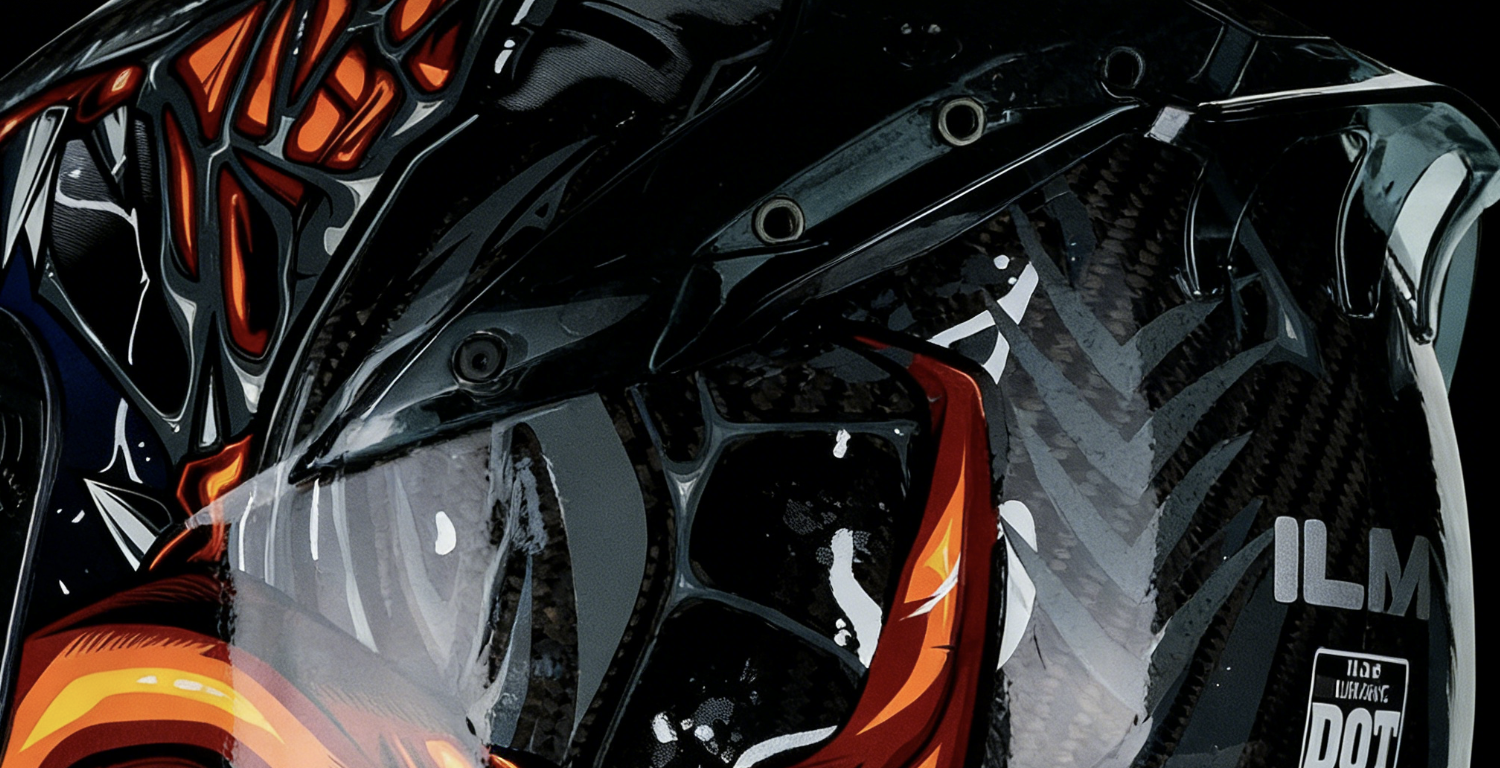
Three helmets. Three different answers to one question: how much forged carbon protection can you get before the price gets too high?
|
Model |
Shell Sizes |
Weight |
Certifications |
Price (USD) |
Standout Feature |
|---|---|---|---|---|---|
|
SEDICI Duale Forged Carbon |
2 |
1,630g (M) |
DOT + ECE 22.06 |
~$350 |
Peak visor + internal sun drop |
|
LS2 Dragon (FF807) |
3 |
1,280–1,500g |
DOT + ECE 22.06 |
~$450–$480 |
Pinlock 120 MaxVision included |
|
Bilmola RC-1 |
2 |
1,350g |
DOT + ECE 22.05 |
$523 |
Emergency release, Active Air padding |
The LS2 Dragon is the lightest in this group. At the smallest size, it weighs just 1,280g. You get three shell variants that cover XS through 4XL. Dual visors and Pinlock 120 come in the box. That’s solid value at $450.
The SEDICI Duale has the lowest price. Its Kevlar reinforcement brings the weight up to 1,630g. That’s heavier than most forged carbon builds. But you’re getting real protection — not just a good number on a spec sheet.
One thing to flag: the Bilmola RC-1 is certified to ECE 22.05, not 22.06. At $523, you pay the most here — and get an older safety standard for it.
Want genuine forged carbon fiber instead of wrap? Explore more in our full best forged carbon fiber applications in 2026.
How to Choose the Right Forged Carbon Helmet for Your Riding Style

Riding style changes everything. A track rider and a city commuter can pick up the same forged carbon helmet and walk away needing two very different things.
Here’s how to cut through the options and land on the right one.
Match Your Certification to Your Riding Environment
Street and city riders — DOT and ECE 22.06 is your baseline. ECE covers rotational impacts, environmental wear, and multi-point testing. DOT doesn’t require any of that. That’s the combination worth prioritizing.
Canyon and sport riders — ECE 22.06 or Snell SA2025. Either works. Snell tests multiple strikes per impact site and adds edge anvil testing. The gap between Snell and DOT is not small.
Track and circuit riders — Snell SA2025 or FIM-accepted equivalents. No exceptions. The standard requires fire-resistant interior materials and stronger energy dispersion. At speed, those are not optional features.
Five Checks Before You Buy
-
Weight: Under 1,400g for long-ride comfort. Forged carbon runs 30–40% lighter than fiberglass at equal strength. That edge disappears fast in a badly built shell.
-
EPS liner thickness: Minimum 25mm for real impact absorption. Anything thinner and you’re cutting corners on protection.
-
Chinstrap: Pull hard. It shouldn’t move. If it does, walk away.
-
Visor integrity: Optical clarity matters at speed. Distortion is a safety risk, not a minor inconvenience.
-
Certification verification: Snell puts a serialized label inside the helmet. ECE marking sits on the shell itself. Skip the product page — check the physical helmet in your hands.
One last thing: brands should keep production lot testing records for three years. Ask about that process. A brand that can’t answer tells you a lot about how seriously they take safety.
Frequently Asked Questions: Forged Carbon Fiber Helmets
Riders ask the same questions. Here are the straight answers.
Is forged carbon stronger than woven carbon?
For helmets, yes. Forged carbon composite spreads strength equally in every direction — engineers call this isotropic behavior. Woven carbon is stronger along specific fiber axes, but weaker at the angles in between. Real crashes hit from unpredictable angles. Forged carbon handles that better.
How much does a forged carbon fiber helmet weigh?
Most fall between 1,200g and 1,600g. The lightest forged carbon shells hit 550g on their own — about 40% lighter than a comparable fiberglass shell. Full helmet assemblies add an EPS liner, chinstrap hardware, and a visor. Check the spec sheet for your exact size. Weight can shift by 50g or more across a size run.
Why do forged carbon helmets cost so much?
The manufacturing process is expensive at every step. Autoclave curing runs at 150–200°C under 4–5 bar of pressure for hours per batch. Raw carbon prepreg needs frozen storage at -20°C to stop resin from breaking down. F1-grade forged carbon helmets reach $10,000. Consumer-grade versions cost less — but the core process stays expensive no matter what.
What certification should I look for?
ECE 22.06 is the minimum for serious street use. Independent labs run the testing — DOT does not require that. Track riders should put Snell SA2025 at the top of the list. A forged carbon shell with DOT only is actually a worse buy than a fiberglass helmet with ECE 22.06.
Conclusion
Your helmet is the one piece of gear that gets a single chance to work — and it either does, or it doesn’t.
We broke down the manufacturing science behind forged carbon composite construction. We tested real-world weight figures. We compared ECE 22.06, DOT, and Snell ratings side by side. The conclusion is clear: not all carbon fiber helmets are equal. The forged process isn’t marketing language — it’s a measurable structural advantage. In a crash, it changes how force spreads across your skull.
Spending $600 or more on a helmet? You owe it to yourself to know what you’re actually buying.
Start with the comparison table. Find your riding style. Check the certifications side by side. Then make the call with confidence — not guesswork.
The road doesn’t care what you paid. Buy the helmet built for what’s at stake.
Contact HyperX Carbon – Your Trusted Chinese Carbon Fiber Partner
Ready to source high-performance carbon fiber materials or custom forged carbon fiber parts from China?
HyperX Carbon is a leading manufacturer with 20+ years of expertise, specializing in aerospace-grade forged carbon fiber, prepreg, tubes, sheets, and lightweight automotive/drone/medical components. We offer:
-
Stable supply chain with premium raw materials (Toray, Mitsubishi, Hengshen)
-
AS9100D certified production for aerospace & UAV applications
-
Rapid prototyping (5-8 weeks) and monthly capacity exceeding 180,000 parts
-
Competitive pricing with 15-18% cost savings on forged carbon solutions
-
Full customization: from T700/T1100G to ultra-high modulus grades
Whether you’re an eVTOL developer, automotive OEM, drone manufacturer, or medical device engineer, HyperX delivers consistent quality, batch-to-batch reliability, and reliable delivery.
Get in touch today for a free consultation, custom quote, or material sample.
📧 Email: [email protected]
🌐 Website: https://www.hyperxcarbon.com/
📞 Phone/WhatsApp: +86 15623270276 (English support available)
Let’s build your next lightweight innovation together – contact HyperX Carbon now and stay ahead in the low-altitude and advanced composites market.