Richard Mille charges $150,000 for a watch that looks like it was forged from a storm. That price tag is real — but so is this: you don’t need to spend anywhere close to that to get the same raw, unapologetic energy on your wrist.
Forged carbon fiber is now the most talked-about material in high-performance watchmaking. It sits right at the crossroads of aerospace engineering and wrist-level flex — and that’s exactly why everyone wants it.
The problem? Luxury brands lock the best pieces behind six-figure prices. Plus, 2026 has brought a flood of affordable alternatives crowding the market. Knowing what you’re buying matters more than ever.
This guide breaks it all down:
-
The real material differences between forged carbon options
-
Which budget picks hold up — and which ones don’t
-
How to find the forged carbon watch that earns its spot on your wrist
Forged carbon fiber is now the most talked-about material in high-performance watchmaking. See how forged carbon fiber fits into the bigger picture of forged carbon fiber applications.
Forged Carbon Variants Compared: Carbotech vs TPT vs C-SMC vs Frosted Carbon

Four names. Four different materials. The watch industry throws them around like they mean the same thing — and that’s how buyers end up with something they didn’t expect.
Here’s what you actually need to know.
Carbotech — The Patek Philippe Standard
Carbotech is Patek Philippe’s own composite material, built in partnership with Swiss firm Carbotech AG. Thin PEEK (polyether ether ketone) layers stack with carbon fiber sheets, then press together under intense pressure. You get a wavy, organic grain pattern — less chaotic than traditional forged carbon, more structured and deliberate.
Key characteristics:
– Light: about 30% lighter than titanium
– Non-magnetic and non-corrosive
– Matte-black surface with a clear layered texture
– Used in Patek’s Aquanaut Travel Time Ref. 5650G — a piece that trades near $55,000
The look is quiet, restrained luxury. The pattern stays subtle. That’s the whole idea.
TPT Carbon — Richard Mille’s Signature Material
TPT (Thin Ply Technology) sits behind Richard Mille’s most bold, striking cases. North Thin Ply Technology in Switzerland builds each piece by stacking hundreds of carbon fiber filaments at alternating 45° angles. Each layer runs just 30 microns thick. Then they infuse the stack with resin under vacuum.
What separates it:
– Up to 600 alternating layers per component
– Strong rigid-to-weight ratio — beats standard forged carbon in torsion resistance
– A striped, near-geological surface pattern you can spot across a room
– Production runs slow, costs a lot, and stays deliberately limited
That’s why Richard Mille starts at $150,000 and climbs from there. TPT isn’t just a visual choice — it’s a structural engineering call.
C-SMC — The Accessible High-Performance Option
C-SMC (Carbon Sheet Molding Compound) is where forged carbon becomes something buyers at more accessible price points can actually own. Manufacturers mix random-orientation carbon fiber fragments with epoxy resin, then compression-mold the blend into near-net shapes.
Why it matters for 2026 buyers:
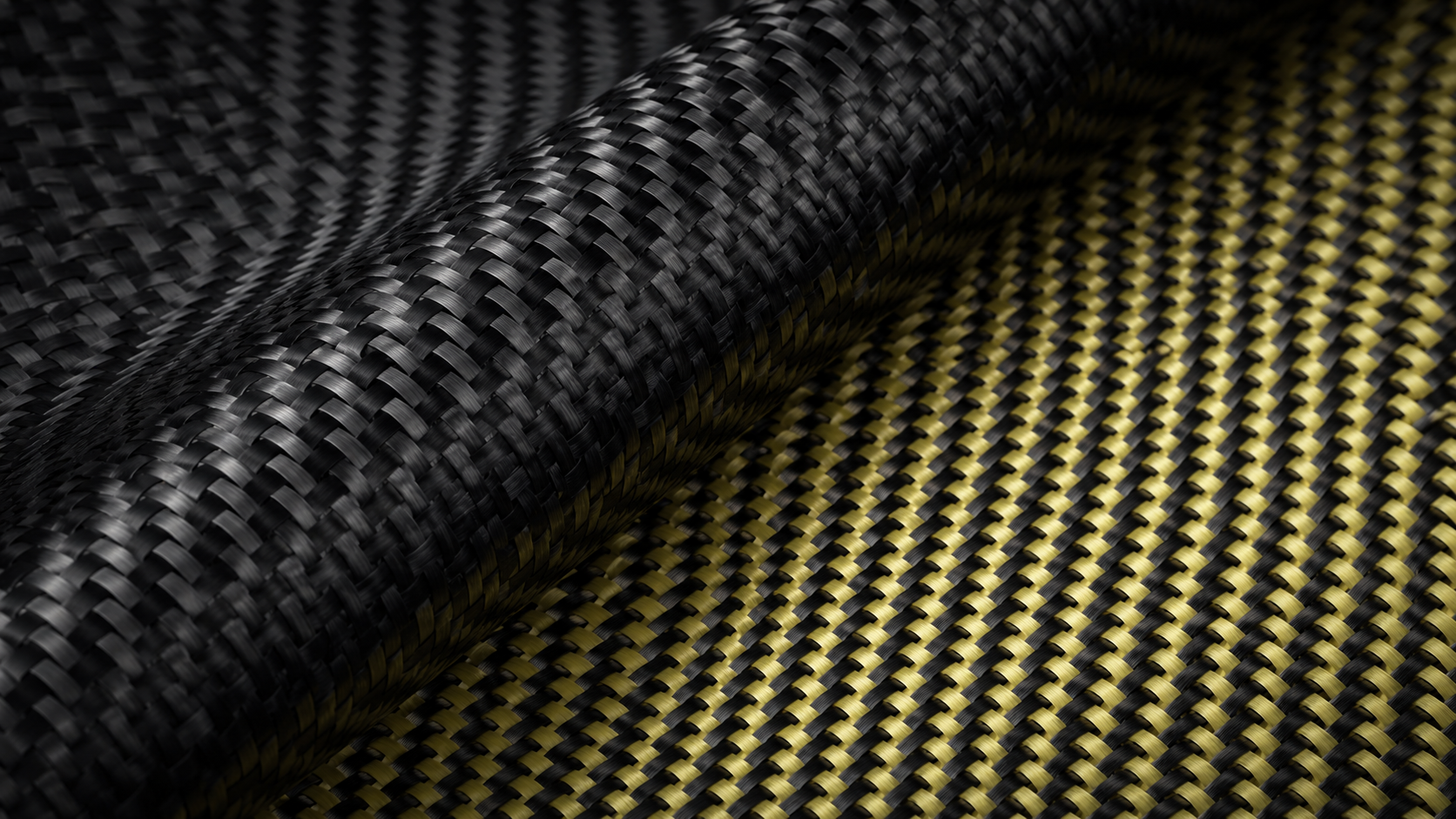
– Delivers the classic marbled forged carbon look
– Tooling costs run far lower than TPT
– Works with complex mold shapes — great for watch bezels and mid-cases
– Mid-tier and independent brands use it across the $200–$2,000 segment
To an untrained eye, the result looks almost identical to the premium options. That’s the honest truth, and it’s worth knowing.
Frosted Carbon — Texture as Identity
Frosted carbon isn’t a material category on its own — it’s a surface treatment added to finished carbon fiber parts. Sandblasting or chemical etching creates a matte, near-powdery finish. This cuts glare and pulls back the aggressive look of standard forged carbon.
Where it shows up:
– Sport watches aimed at younger buyers who want a fashion-forward edge
– Bezel inserts and dial rings where tactile contrast adds character
– Brands that compete on looks rather than material engineering
Production costs less than TPT or Carbotech. But frosted carbon photographs well — and in 2026’s social-media-driven market, that carries real commercial value.
Bottom line: TPT and Carbotech earn their premium prices through real engineering depth. C-SMC gives you the forged carbon aesthetic at a fraction of the cost. Frosted carbon is a finish, not a material class — good to know before you pay extra for it.
C-SMC gives you the classic marbled forged carbon look at a fraction of the cost… The same premium forged texture works beautifully on smaller luxury items — explore it in forged carbon fiber wallets or forged carbon fiber phone cases.
Forged Carbon vs Titanium vs Ceramic vs Steel: Which Watch Material Wins in 2026?

The numbers settle the debate faster than any brand marketing can.
Forged carbon composite sits at 1.6 g/cm³. That’s less than half the weight of titanium. It’s also less than one-fifth the weight of stainless steel. That’s not a marginal difference — that’s a category jump.
Here’s how the four main materials stack up where it counts:
|
Material |
Density (g/cm³) |
Weight vs Steel |
Hardness (Vickers) |
|---|---|---|---|
|
Steel 316L |
7.9 |
Baseline |
150–200 |
|
Titanium |
4.5 |
~40% lighter |
200–250 |
|
Ceramic (ZrO₂) |
5.7 |
~28% lighter |
1200–1500 |
|
Forged Carbon |
1.6 |
~60% lighter |
600–800 |
Match the Material to the Situation
No single material wins every scenario. What matters is where you’re wearing the watch.
Daily commute — Titanium is the practical choice. It’s 30% lighter than steel, hypoallergenic, and handles urban humidity with no issues. Omega’s Grade 5 titanium cases are a benchmark for this exact reason.
Outdoor and sport use — Forged carbon dominates. That 60% weight reduction is noticeable on your wrist across a full day. It also absorbs real shock. That’s why military-style watches in 2026 are turning to it as the go-to case material.
Business formal — Ceramic holds the edge. You get a scratchproof surface, zero oxidation over time, and a gloss finish that stays sharp for years. Steel’s 904L polish is a solid second — it builds character rather than just showing wear.
Why Brands Are Betting on Carbon in 2026
The market has already made its call. Carbon-ceramic composites now account for over 40% of premium watch production. That’s a sharp rise from just a few years ago. Steel still leads at 58% of overall volume, but that’s the cost-sensitive segment.
Hublot and Audemars Piguet are pushing carbon as the mark of technical seriousness. Omega pairs recycled steel with titanium for sustainability messaging. But the brand still reaches for carbon to target Gen Z buyers — a segment showing 28% stronger awareness of the material.
The sustainability case holds up too. Lighter material means less raw input per watch. Forged carbon also lasts for decades of hard, regular use. Put those two facts together, and the lifecycle math becomes very hard to dismiss.
The honest summary: Steel is reliable and familiar. Titanium earns its place day after day. Ceramic is the pick for clean, lasting aesthetics. Forged carbon, though, is the one material in 2026 that wins on weight, durability, and visual impact — all at once.
See how it compares to traditional woven carbon fiber in our forged vs traditional woven carbon fiber guide.
Luxury Forged Carbon Watches Worth the Price ($10K+): 2025–2026 Top Picks
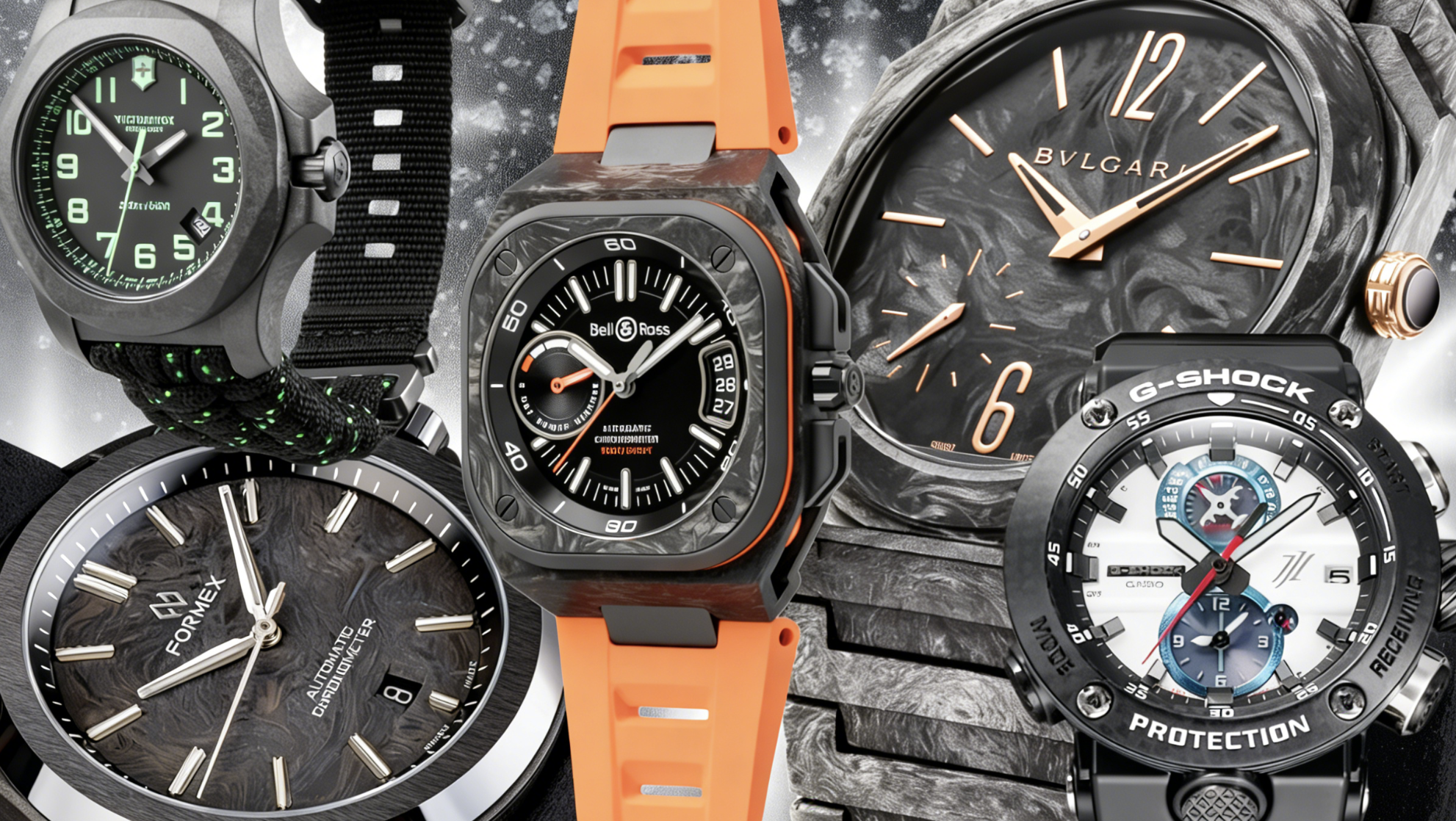
Five brands. Five very different answers to the same question: what does $10,000–$500,000 worth of forged carbon get you?
The honest answer isn’t about price. It’s about what the engineering solves — and whether that solution fits how you live.
The Standouts Worth Knowing
TAG Heuer Monaco TH-Carbonspring — $17,700
Only 50 pieces exist. Released December 2025. The real story isn’t the 40mm forged carbon case or the TH20-60 flyback chronograph at 28,800 vph. It’s the carbon fiber balance spring. TAG calls it TH-Carbonspring. It blocks magnetic fields up to 1,500 gauss. It also delivers isochronism ten times better than standard Nivarox springs. COSC certified. ±4 seconds per day. That’s a real mechanical breakthrough inside a forged carbon case — not just a visual upgrade dressed up in engineering language.
TAG Heuer Carrera Extreme Sport — $14,250
41.5mm forged carbon. Titanium pushers. Skeleton dial with blue sapphire subdials. The Heuer 02 flyback movement. Total wrist weight sits around 70 grams. You wear a chronograph while racing, climbing, or cycling — that weight difference hits different. It’s physical, not theoretical.
Panerai Submersible Luna Rossa Carbotech — $14,000
47mm of Carbotech composite. 300 meters of water resistance. The P.9010 automatic movement brings a three-day power reserve and a built-in regatta timer. Matte black finish. Zero interest in looking delicate. This is the military-aesthetic pick — the one you reach for because it makes everything else look soft.
Audemars Piguet Dual-Color Forged Carbon — $50,000+
Two-tone luminescent forged carbon that glows green and blue. Six tons of compression pressure. 120°C heat treatment. Hand-polished edges. The material itself becomes the statement. Resale data holds at 85–95% of MSRP after one year. That’s no accident — scarcity and craft stack on top of each other and push value up.
Richard Mille RM 035/061 Carbon TPT — $355,000–$579,000
This is the ceiling. Ultra-light TPT carbon, tourbillon options, 5,000g shock resistance. The RM 035 runs $484,000–$579,000 on Chrono24 pre-owned — up around 15% from MSRP. The material doesn’t justify the price. The rarity does.
Where the Money Goes
Chrono24 resale data from 2025–2026 tells the clearest story:
|
Model |
Price Range |
1-Year Resale Rate |
|---|---|---|
|
Richard Mille Carbon TPT |
$355K–$579K |
92–110% MSRP |
|
Hublot Big Bang Carbon |
$19,995–$34K |
85–95% MSRP |
|
Panerai Carbotech |
~$14K |
80–90% MSRP |
|
TAG Heuer Carbon Chrono |
~$14–$17.7K |
75–85% MSRP |
The pattern holds: forged carbon + limited production under 1,000 pieces = 10–20% appreciation potential. Richard Mille breaks above 100% resale because the waitlist runs longer than supply. Hublot and Panerai stay steady because demand is real and consistent.
The practical read: Under $20,000, TAG Heuer and Panerai give you solid forged carbon engineering with movements that pull their weight. Above $50,000, you’re paying for exclusivity — AP’s proprietary compression process, RM’s TPT layering, Hublot’s brand pull. All of it is real. None of it is cheap. The real question is which kind of value you’re buying for.
Best Affordable Forged Carbon Fiber Watches Under $3K: Real Value or Aesthetic Compromise?

The gap between what forged carbon looks like and what it costs has never been wider. For buyers in 2026, that’s great news.
Sub-$3K forged carbon watches now deliver 80–90% of the visual impact of a $50,000 piece. That’s not a guess. C-SMC molding technology has moved from Swiss manufacturing labs into accessible production runs. That shift changed everything. The marbled grain, the 3D surface depth, the way the material catches light at an angle — none of that is locked behind a luxury price tag anymore.
Here’s what the affordable segment looks like in 2026:
Full Forged Carbon Construction
These picks use forged carbon throughout the case, dial, or bezel — not just as an accent:
-
Zelos Vitesse Forged Carbon — $1,499. Full forged carbon case and dial with soft blue accents. 40mm. Limited to 50 pieces. At this price, the material quality is solid and real.
-
Squale T-183 Forged Carbon — $1,500. All-carbon dive case. Vintage-inspired color palette. 42mm. One of the cleanest builds you’ll find under $2K.
-
Unimatic U1S-Carbon GMT Limited Edition — $1,500–$3,000. Bold construction. The industry keeps pointing to this one as a value benchmark.
-
Shinola Forged Carbon Monster Automatic — $2,995. 45mm, full forged carbon with color resin accents and an automatic movement. It pushes the budget ceiling, but the build justifies it.
-
PRX-homage forged carbon (AliExpress) — Under £200. Full forged carbon case, dial, and bezel. 40mm × 11.5mm. PT5000 movement, sapphire crystal, screw-down caseback, 100m water resistance. The grain is smooth. It glistens in a way that surprises most people. Hard to argue against at that price.
Partial Composite — Worth Understanding Before You Buy
Not every carbon watch in this range uses full forged carbon. The difference matters:
-
Casio G-Shock GWR-B1000HJ-1AJR — $925. Carbon core guard structure with resin and steel layering. Not full forged carbon — but the triple-protection shock system cuts impact by an estimated 30–50%. Lightweight, Japan-limited, and built with serious logic.
-
Casio G-Shock 55mm rugged model — $579. Carbon fiber case with rubber strap. A solid entry point into the material category.
-
Gorilla Fastback Galaxy Blue Carbon — mid-$1,000s. 44mm with an integrated rubber strap and carbon lugs. Partial composite, but strong visual results.
Brands that list “forged carbon” in their specs run 80–100% carbon fiber and resin. Partial composites sit closer to 20–50% carbon content. No universal standard exists. Check the spec sheet before you buy.
Where the Affordable Segment Actually Falls Short
Weight is not the problem. A sub-$3K forged carbon case runs 40–50% lighter than steel. That matches luxury-tier performance on that one metric.
The looks hold up better than most people expect. Squale and Zelos replicate the marbled surface depth that Hublot and Roger Dubuis charge multiples more to produce. The PRX homage swirls under light in a way that catches people off guard.
The real gaps are in two areas:
-
Movement certification: Most pieces under $1,500 skip COSC certification. The PT5000 in the PRX homage runs a few seconds off per day. It works fine, but it’s not precision-certified.
-
Material depth: Resin-hybrid composites don’t match the structural strength of full-compression forged carbon. Under hard daily use, that difference shows up over years — not days.
|
What You Get Under $3K |
Compromise vs. Luxury |
|---|---|
|
80–90% visual parity |
Minor — grain uniformity and finish depth differ |
|
40–50% weight reduction vs. steel |
None — matches luxury lightness |
|
100m+ water resistance, sapphire crystal |
Low — specs overlap well |
|
Movement precision |
Medium — no COSC in most sub-$1.5K options |
|
Long-term material durability |
Medium — resin hybrids trail full-carbon over years |
Buying for looks and everyday wear? The compromise is smaller than the price gap suggests. Buying for investment value or mechanical heritage? The gap is real. The luxury tier earns that premium for those specific reasons.
Forged Carbon Fiber Watch Bezels: Luxury OEM vs Aftermarket Replacement Options
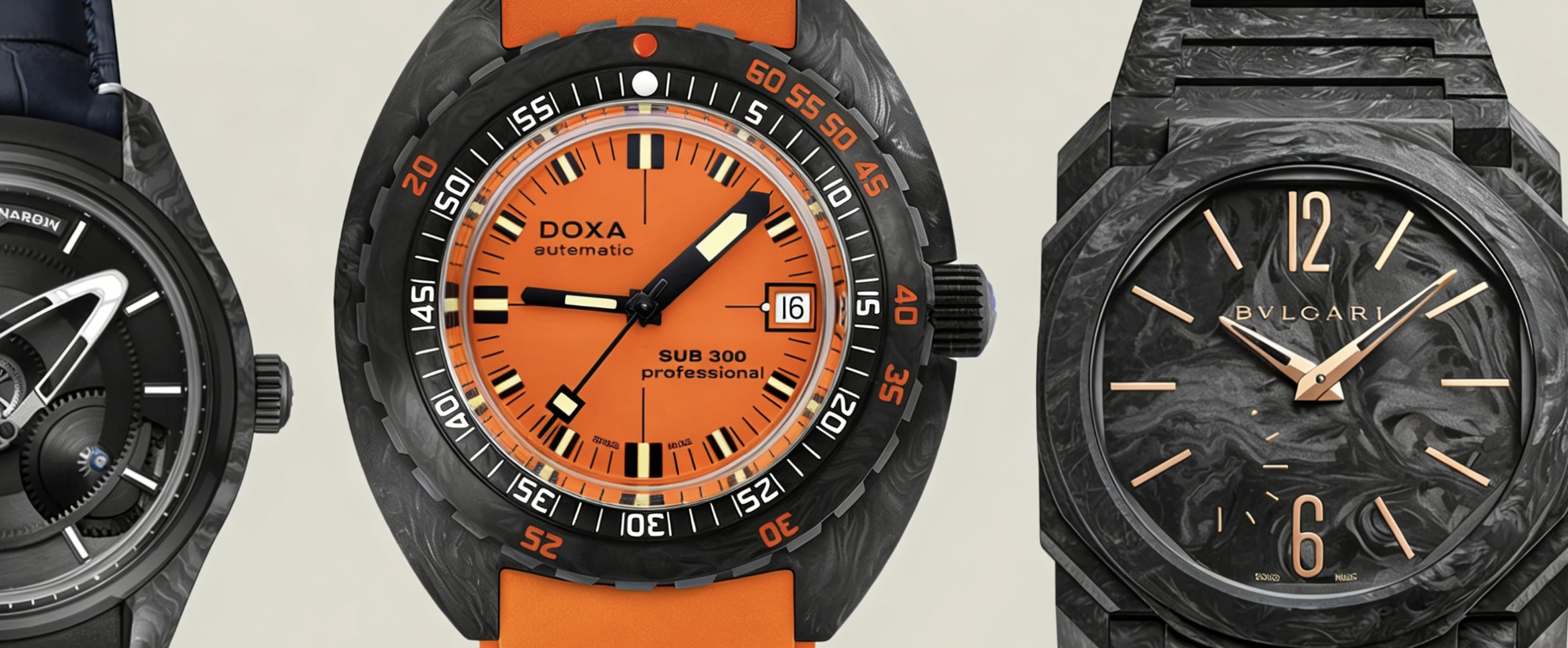
The bezel is where forged carbon makes its first impression — and where the gap between luxury OEM and aftermarket becomes painfully clear.
At the top, Audemars Piguet’s Royal Oak Concept fuses forged carbon into the case and bezel as one structural unit. Tolerances run ±0.01–0.05mm. The Formex Essence Leggera pairs a machined forged carbon dial with a zirconium oxide ceramic bezel. Each dial panel carries its own random, non-repeating grain pattern. No two look the same. The Phoibos Leviathan’s forged carbon bezel insert clicks 120 times per rotation. Each click is precise and firm. That’s what real OEM engineering feels like.
Aftermarket tells a different story.
True forged carbon replacements under $3,000 are rare. Most of what you’ll find — AliExpress kits, DIY Watch Club inserts — use a stainless steel base with a resin-composite surface coating. The DIY Watch Club GMT insert runs $50–100. It photographs well. It is not forged carbon.
How to Tell Real From Fake Before You Buy
Three checks. Fast.
Grain pattern — Real forged carbon has a swirled, fluid, non-repeating texture. It looks almost melted. Fakes repeat. The lines run straight and uniform across the whole insert.
Weight — A genuine OEM forged carbon case head runs 40–88g. Aftermarket resin-filled inserts run heavier despite looking similar. Pick it up. The weight tells you something the photos won’t.
Cut edge — On real forged carbon, you’ll see layered fiber strands at any cross-section. Fakes show flat, even density — a surface print sitting on top of a base material, not a material running all the way through.
DIY Install: The Risks You Need to Know First
Swapping a bezel insert looks easy. The fit risks are where things go wrong.
|
Risk |
What Goes Wrong |
How to Avoid It |
|---|---|---|
|
Size tolerance |
Aftermarket variance ±0.1–0.2mm vs OEM ±0.01–0.05mm |
Measure your case ledge with calipers before ordering anything |
|
Crown interference |
Oversized inserts block crown rotation |
Test crown movement dry before any adhesive touches the case |
|
Water resistance drop |
Gasket mismatch drops rated depth by 20–50% |
Replace the case gasket after every install; pressure test before use |
The install sequence matters. Heat the old bezel to 80°C with a heat gun before prying — use even pressure, no shortcuts. Dry-fit the new insert for 24 hours before committing to epoxy. Put adhesive on at 0.1mm thickness. Clamp for four hours. Torque case screws to 0.2–0.3Nm. Then check: 120 clicks, no play, crown spins clean.
The bottom line on bezels: OEM forged carbon starts at $20,000+ and delivers real engineering depth — precise fit, certified water resistance, material integrity all the way through. Aftermarket kits run $50–300 and deliver the look, most of the time. Know which one you’re buying before you reach for the epoxy.
Forged Carbon Fiber Watch Buying Guide: How to Choose by Budget, Use Case & Style

Three things decide which forged carbon watch belongs on your wrist: your budget, how you use a watch day to day, and the look you’re after. Nail all three and you won’t regret the purchase six months later.
Here’s how the market breaks down — by price tier, by use case, and by the six things worth checking before you hand over your card.
By Budget: What Each Price Tier Delivers
$500–$3K — Entry aesthetics, real specs
This range has gotten really good. You’re not buying prestige here. You’re buying weight reduction, water resistance, and forged carbon looks at a price that doesn’t sting.
-
Tissot PRX Powermatic 80 Forged Carbon — ~$995. 40mm case, silicon hairspring, 80-hour power reserve. One of the best value options in the whole category.
-
Victorinox I.N.O.X. Carbon — $720. Passed 130 durability tests. A 10-meter drop. An 8-ton tank rolling over it. 200m water resistance. That’s not marketing copy — Victorinox publishes the full test protocols.
-
Casio G-Shock Gravitymaster — $790. Tough Solar, 200m WR, built like a structural component rather than a fashion piece.
-
Luminox Master Carbon SEAL — $725. Carbon case, tritium lume tubes that self-power for 25 years. No battery needed, ever.
-
Hamilton Khaki Aviation — $1,580. 44mm, carbon dial and bezel, automatic chronograph. Instrument-grade look at a mid-entry price.
$5K–$10K — True forged construction
The jump here isn’t just visual. Cases go full forged carbon. Movements get better. Water resistance steps up.
-
Norqain — $5,990. 42mm, 12.3mm thin, 200m WR, NN085 automatic. Most roundups overlook this one — they shouldn’t.
-
Oris — $6,600. 47mm, Cal. 793 automatic, 100m WR. Big presence on the wrist.
-
TAG Heuer Carrera Chrono — $7,260. 43mm carbon and steel PVD combo, automatic chronograph. Sport and dressy, no compromise between the two.
$20K+ — Full forged, complex movements, no compromises
At this tier, both the material and the movement earn their place.
-
Hublot Classic Fusion Ferrari GT — $20,710. Carbon outer shell, titanium inner structure, UNICO HUB1580 in-house movement.
-
TAG Heuer Monza Flyback — $14,250. Forged carbon cushion case, Heuer 02 flyback, skeleton dial. Already covered earlier in this guide — worth cross-referencing.
-
Panerai Submersible Carbotech — $14,140. Dive-rated, low-profile military finish, built for water.
-
Zenith Defy El Primero 21 — $12,850. Full carbon, 44mm, 1/100th second chronograph, 293-part movement. The lightest full-carbon build in this guide — estimated 50–60g on the wrist.
By Use Case: Matching the Watch to Your Life
|
Who You Are |
What Matters Most |
What to Buy |
|---|---|---|
|
Sports & outdoor |
WR >200m, shock >5,000g, weight <80g |
Victorinox ($720), Norqain ($5,990), Panerai ($14,140) |
|
Business daily |
Thickness <13mm, lug-to-lug <50mm, clean finish |
Tissot PRX ($995, ~11mm), TAG Carrera ($7,260) |
|
Watch modifiers |
Bezel replaceability, case compatibility |
TAG Heuer / Panerai Carbotech modular bezels |
The Tissot PRX is the quiet standout for business wear. Its proportions lean closer to a dress watch than a sport piece. Still, the forged carbon dial and silicon hairspring do real technical work under that calm exterior.
The forged carbon watch market in 2026 rewards buyers who ask the right question first… Dive deeper into forged carbon fiber strength and properties in our how strong is carbon fiber guide.
6-Point Checklist Before You Buy
Run through these before committing to anything.
-
Verify “forged” vs “woven” — Forged carbon uses compression-molded shards. Woven carbon is a different material with a different look. Check the brand’s language closely. Tissot lists silicon upgrades. Hublot marks UNICO movement specs. Good brands leave no room for guesswork.
-
Target total weight under 100g — The Zenith Defy comes in at around 50–60g with everything on. That’s the benchmark to measure other pieces against.
-
Check shock certification — Look for at least DIN 8308 standard, or an equivalent rating. Victorinox publishes 130 specific tests. Zenith and IWC rate above 5,000g. A brand that won’t publish a number is worth questioning.
-
Confirm lume system — Super-LumiNova on hands and dial is standard. Luminox uses tritium tubes — self-powered, no charging needed. Know which system you’re getting before you need it in the dark.
-
Understand after-sales costs — Tissot and Oris warranties run 2–5 years. Hublot and Bulgari authorized servicing costs $500–$1,000 per year. Factor that into your total cost before you buy.
-
Check bezel replaceability — TAG Heuer and Panerai Carbotech bezels are modular. Some mid-tier pieces aren’t. Plan to swap bezels? Confirm the fit type before you commit to the watch.
The forged carbon watch market in 2026 rewards buyers who ask the right question first. Budget narrows the field. Use case points you in the right direction. The checklist stops you from paying full price for something that won’t hold up.
Contact HyperX Carbon – Your Trusted Chinese Carbon Fiber Partner
Ready to source high-performance carbon fiber materials or custom forged carbon fiber parts from China?
HyperX Carbon is a leading manufacturer with 20+ years of expertise, specializing in aerospace-grade forged carbon fiber, prepreg, tubes, sheets, and lightweight automotive/drone/medical components. We offer:
-
Stable supply chain with premium raw materials (Toray, Mitsubishi, Hengshen)
-
AS9100D certified production for aerospace & UAV applications
-
Rapid prototyping (5-8 weeks) and monthly capacity exceeding 180,000 parts
-
Competitive pricing with 15-18% cost savings on forged carbon solutions
-
Full customization: from T700/T1100G to ultra-high modulus grades
Whether you’re an eVTOL developer, automotive OEM, drone manufacturer, or medical device engineer, HyperX delivers consistent quality, batch-to-batch reliability, and reliable delivery.
Get in touch today for a free consultation, custom quote, or material sample.
📧 Email: [email protected]
🌐 Website: https://www.hyperxcarbon.com/
📞 Phone/WhatsApp: +86 15623270276 (English support available)
Let’s build your next lightweight innovation together – contact HyperX Carbon now and stay ahead in the low-altitude and advanced composites market.