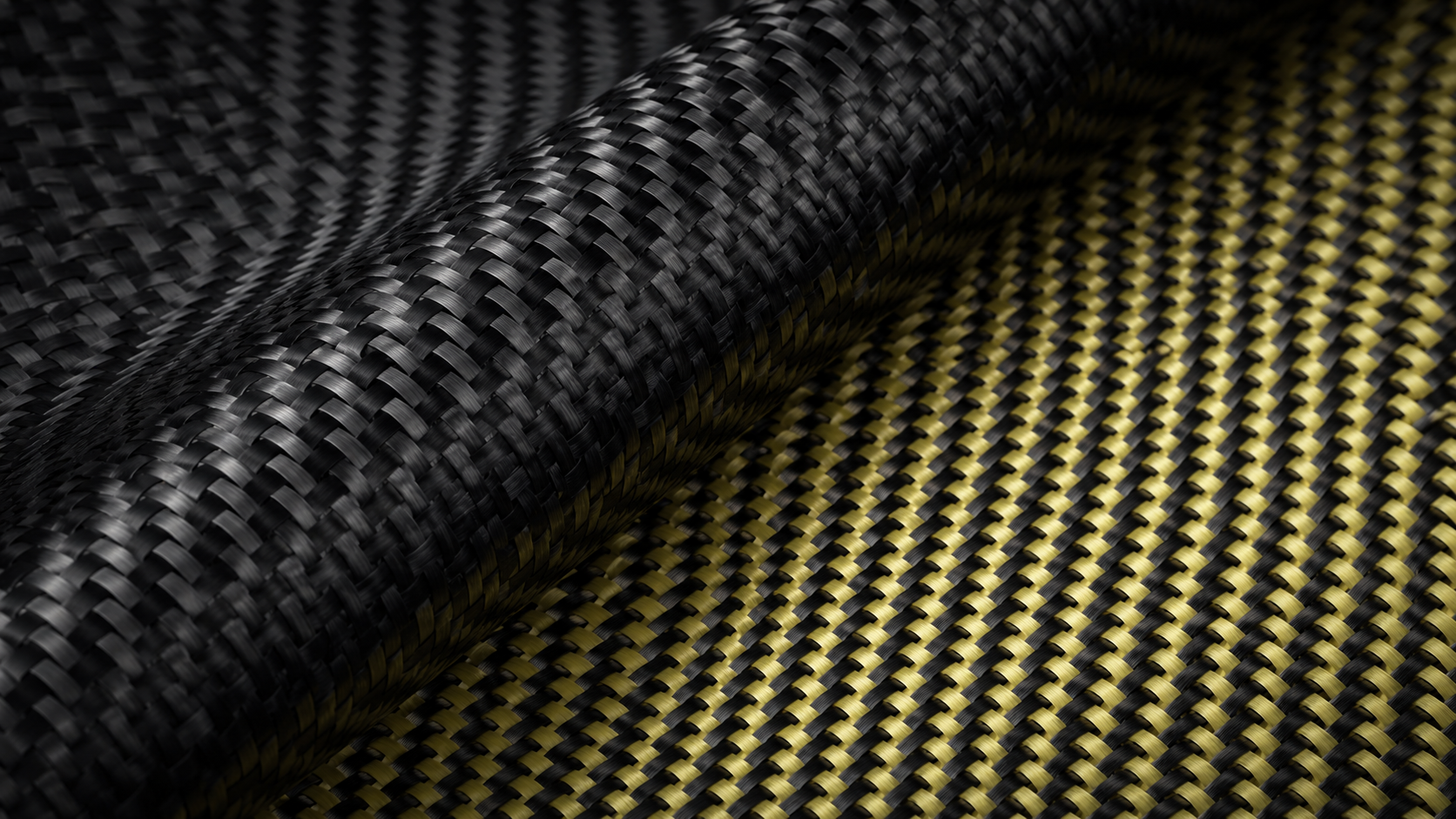
Forged carbon fiber earns its place in Lamborghini dashboards and aerospace parts for good reason. It’s expensive, labor-intensive, and stunning to look at. That swirling, marbled texture isn’t printed or wrapped onto the surface. It’s baked into the material itself. Every single piece comes out different — no two look alike.
Now, in 2026, it’s breaking into the custom keyboard world. Not as a novelty, but as a real option for builders who’ve pushed aluminum and standard woven carbon to their limits.
So what does this guide cover? A few key things:
-
Artisan keycaps that make people stop mid-conversation to take a closer look
-
Lightweight keyboard cases that hold their feel without the extra weight
-
An honest look at the price — and whether it’s worth paying
You’ll get a clear, straightforward breakdown of all three. See more applications at forged carbon fiber applications 2026 guide.
Forged Carbon Fiber vs Aluminum vs Woven Carbon Fiber: Keyboard Case Material Comparison

Three materials. Three different personalities. The wrong pick won’t wreck your build — but the right one will shape it.
Here’s how they stack up.
Weight & Structure
Forged carbon and woven carbon are both lightweight. That’s their shared edge over aluminum. The YING75 forged carbon case brings the full keyboard to 1,100g — compact at 311×123×45mm, stable without feeling like a brick.
Aluminum goes the other way. It’s heavier and denser. That extra mass keeps it planted on your desk. Want a keyboard that stays put through long sessions? Aluminum does that job well.
Sound Profile & Typing Feel
This is where the three materials split apart.
|
Material |
Sound Character |
Typing Feel |
|---|---|---|
|
Forged Carbon |
Neutral, balanced, minimal resonance |
Firm, precise, ultra-stable |
|
Woven Carbon |
Distinct from solid carbon, a touch warmer |
Smooth, full carbon rigidity |
|
Aluminum |
Brighter, deeper with less vibration |
Firm, solid, traditional |
Forged carbon doesn’t amplify sound. It absorbs the impact and gives back a clean, quick response. Aluminum rings a bit brighter — not bad, just its own thing. Woven carbon lands between the two. Its acoustic character comes from the material itself and how the case was built.
Durability: The Honest Answer
Forged carbon scratches. After about two months of daily use, surface marks show up on the glossy resin. The upside? That marbled pattern eats those scratches visually. You’ll see them up close. No one else will.
Aluminum holds up better against surface damage under force. Carbon fiber — forged or woven — keeps its structural strength over tens of millions of keystrokes. The finish, though, needs some care.
Bottom line: aluminum takes the win on raw durability. Forged carbon leads on weight-to-rigidity ratio. Woven carbon sits in the middle — full carbon look and feel, without the price tag that forged carbon carries.
The same premium forged texture works beautifully on smaller items — explore it in forged carbon fiber phone cases or forged carbon fiber wallets. For real structural performance gains in cars, see our guide to best forged carbon fiber automotive parts.
Best Forged Carbon Fiber Keycaps in 2026: Ranked by Value & Compatibility

The forged carbon fiber keycap market split in two directions this year. One path leads to genuine forged carbon — rare, expensive, handcrafted. The other leads to high-fidelity carbon-look sets that copy that swirling marble pattern at a fraction of the cost. Both paths are worth knowing.
Here’s what’s available in 2026, ranked by value and compatibility.
The Value Leader: Drop + T0mb3ry SA Carbon
Nothing else on this list touches $5. That’s the current price on Drop — down from $49, a 90% discount that placed it at #8 on Drop’s Best Keycaps list for March 2026.
The set runs SA profile with sculpted R0/R5 rows. Cherry-compatible stems let it drop straight into most custom builds. No adapter needed. User reviews call it “aesthetically pleasing” — the carbon colorway looks authentic even though it’s not forged material. Want the visual without the premium price? This is your starting point.
Best Layout Coverage: XVX Forged Carbon-Look Cherry Profile
119 keys. That’s the number that matters here.
The XVX set covers full-size, 65%, TKL, ortholinear, and most custom layouts in one purchase. Cherry profile makes the switch smooth for anyone coming from standard typing positions. The forged carbon texture copies the real marbled pattern well enough that user reviews describe it as having “extremely nice forged carbon similarity.”
Cherry-compatible stems. Wide key count. Solid design. It’s the practical pick for builders who swap layouts or run multiple boards.
Quick Value Reference: Top Carbon-Aesthetic Sets, March 2026
|
Set |
Profile |
Current Price |
Discount |
|---|---|---|---|
|
Drop + T0mb3ry SA Carbon |
SA |
$5 |
90% off |
|
Drop MT3 Fairlane |
MT3 |
$15 |
88% off |
|
Drop + MiTo SA Godspeed |
SA |
$20 |
79% off |
|
Drop + MiTo GMK Laser Novelty |
GMK |
$10 |
82% off |
Compatibility at a Glance
Match your stem type and profile preference before buying:
-
Cherry MX stems: Works with every Drop SA/MT3 set above, plus the XVX Forged Carbon-Look set
-
PBT doubleshot: Check out Endorfy EY0E003 (104 keys) or Razer PBT Upgrade for long-term durability. PBT lasts 2x longer than ABS and resists shine buildup
-
MT3 profile: Thicker caps, ergonomic dish, better sound dampening — the Drop + Matt3o “thicc caps” design sets the standard
One material point worth flagging: longevity vs. profile preference. PBT wins on durability every time. ABS looks good out of the box but fades faster. PBT holds its texture.
Chasing genuine forged carbon keycaps — not the look-alike sets? Etsy is the main source for handmade, Cherry-compatible pieces with unique one-off patterns. No set pricing exists there. You’ll pay a premium, and you’ll get something nobody else has.
The price gap is real — but real forged carbon fiber delivers long-term value. Compare it to traditional carbon fiber in our forged vs traditional woven carbon fiber guide.
Best Forged Carbon Fiber Keyboard Cases in 2026: 60% / 75% / TKL Options

The forged carbon fiber keyboard case market is tiny right now. One confirmed production model in 2026. One layout. One real option for builders who want the genuine article — not a carbon-look wrap, not a printed texture, but actual forged carbon fiber forming the body of their keyboard.
That single option still matters. Here’s why.
The One That Exists: WLMOUSE YING75 HE
The WLMOUSE YING75 HE is a 75% layout board built around a genuine forged carbon fiber case. Not carbon-look PBT. Not carbon-patterned aluminum. The case is forged carbon — built with the same high-pressure, chopped-fiber process covered earlier in this guide.
Here’s what you get in practice:
-
Weight: The full board comes in at 1,100g — solid and planted for a carbon case, with a compact footprint of 311×123×45mm
-
Rigidity: Real forged carbon fights flex and deformation. Push hard on the case. It holds firm
-
Heat resistance: This material handles thermal stress better than most plastics. It sits close to aluminum in that regard
-
Scratch resistance: Present, but not bulletproof — the glossy resin surface will pick up marks after months of regular use
The internals match the case quality. You get Hall Effect magnetic switches with an 8K polling rate, N-key rollover, RGB lighting, and PBT keycaps. Works with both Mac and Windows right out of the box.
This isn’t a bare case shell. It’s a complete, ready-to-use build. That makes the buying decision straightforward.
60% and TKL: The Honest Answer
No verified 2026 forged carbon fiber cases exist for 60% or TKL layouts. That’s the straight answer. There’s no point filling space with guesses.
The layout comparison still helps anyone planning a build or tracking the market:
|
Layout |
Keys |
Best For |
Trade-Off |
|---|---|---|---|
|
60% |
~61 |
Maximum desk space, portability |
No F-keys, no arrow cluster |
|
75% |
~81 |
F-keys + compact footprint |
A bit wider than 65% |
|
TKL |
87 |
Full function row, dedicated arrows |
Less compact than 75% |
The 75% hits a practical middle ground — enough keys for serious use, small enough to free up desk space. It’s no accident that the first production forged carbon case landed at this size.
What to Know Before You Buy
A few things worth checking before you commit to a forged carbon fiber case in 2026:
Verify the material. Sellers use “carbon fiber” as a loose term. Printed carbon patterns, carbon-look finishes, and genuine forged construction are three separate things at three very different price points. Ask the seller directly about fiber volume fraction and the manufacturing process. Real forged carbon parts carry a real price tag — a suspiciously low price is a clear signal the material isn’t the real thing.
Grip is a factor. Forged carbon’s smooth resin surface can slide on certain desk surfaces. A thin mat underneath fixes the problem. Factor that into your setup.
Shock absorption is limited. Carbon fiber is stiff by design. That stiffness is the whole point — but drops hit harder on a rigid case than they would on something with more give. Treat it with care.
The forged carbon fiber keyboard case market is still in its early days. One layout confirmed. More are coming. The YING75 HE is the benchmark right now — and for builders who want forged carbon today, it’s the one serious choice on the table.
2026 Forged Carbon Fiber Keyboard Buying Guide: How to Choose by Budget & Build Goals

Budget determines what’s possible. Build goals determine what’s worth it. Get both wrong and you’ll spend serious money on a keyboard that doesn’t match how you type.
Here’s a clear path through the 2026 forged carbon fiber market so you don’t make that mistake.
Step 1: Set Your Budget First
Three tiers. Three very different results.
Under $150 — Skip forged carbon at this price. Material costs alone make it impossible to deliver here. Plastic and aluminum hybrids like the Weikav Lucky65 V3 are the smart pick. They hold up well in stock testing and won’t let you down.
$150–$250 — This is where forged carbon gets real. The YING75 Black sits in this range. You get a genuine forged carbon case, a hotswap Hall Effect PCB, your choice of Gateron Nightfall or TTC Shadow switches, and PC keycaps. Real material. Real performance. A solid entry point.
Above $250 — The full package. The YING75 White upgrades to PBT double-shot keycaps and ships with everything: zippered carry case, USB-C cable, keycap and switch puller, cleaning brush, and four extra Magnetic Jade Pro switches in the box. For raw speed plus carbon texture, the Mercury V60 Pro brings a 0.005s rapid trigger into the mix.
Step 2: Match the Build to Your Goal
|
Goal |
What Matters Most |
Model to Consider |
|---|---|---|
|
Gaming |
8000Hz polling, sub-1ms latency, adjustable actuation |
YING75 (0.125ms), Mercury V60 Pro (0.005s RT) |
|
Typing |
Gasket mount, Poron foam, nano-coated PCB |
YING75 (vibration absorption, splash-proof) |
|
Portability |
1,100g total weight, 311×123×45mm footprint, included carry case |
YING75 all variants |
|
Customization |
Hotswap HE PCB, per-key calibration, 16.8M RGB, macro support |
All YING75 variants |
Step 3: Switch Choice for Hall Effect Builds
Both switch options in the YING75 use 36g initial force and carry over 100 million press lifetimes. The differences are small but worth knowing:
-
Gateron Nightfall — 3.5mm total travel, reduced wobble, pre-lubed from the factory
-
TTC Shadow — 3.4mm travel (±0.2mm), south-facing PCB orientation, also pre-lubed
For gaming, adjustable pre-travel is the key advantage on both switches. Set actuation below 1mm. The 8000Hz polling rate — now the 2026 standard — takes care of the rest.
The Short Version
Pick your budget tier first. Decide whether speed, sound, or portability leads your build. The 75% layout covers most use cases at 84 keys without eating up desk space. Target 1.1–1.2kg in combined case and plate weight. That range hits the best stability-to-portability balance — and forged carbon at this size does it better than anything else.
Forged Carbon Fiber Keyboard Aesthetics: Setup Showcase & Texture Gallery
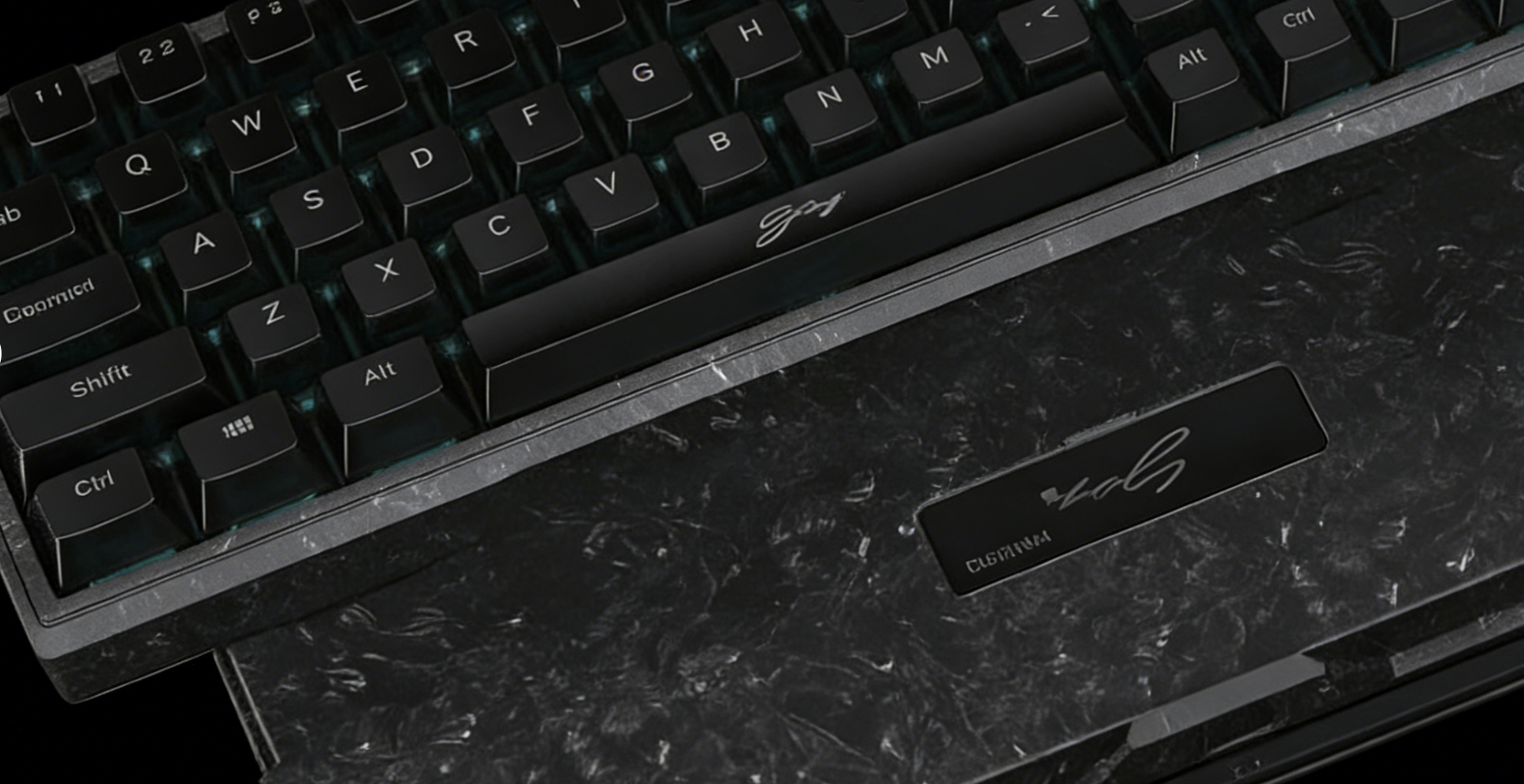
The texture never looks the same twice. Hold the YING75 under a desk lamp. The marbled pattern shifts — dark veins catch light at one angle, then fade into frosted grey at another. That’s not a surface coating. That’s the raw material doing its thing.
Every forged carbon case leaves the mold with its own unique pattern. No two are alike. The YING75’s CNC-forged top and bottom shell take that all the way through. You get a surface that’s smooth to the touch. Warm, not cold like bare aluminum. Every corner is rounded off — no sharp edges anywhere. Run a thumb across it and it feels closer to polished stone than industrial composite.
The custom AG glass nameplate catches light on its own, separate from the case body. Small detail. Big impact on a desk setup.
How it looks when you photograph it:
-
Overhead shots flatten the texture into a flat grey
-
Side lighting pulls out the depth — the swirling fiber structure comes into view
-
Matte ambient light shows the frosted finish at its best
Beyond the YING75, the HIBIKI 65% puts a 6° typing angle and leaf spring plate into a forged carbon shell. The Wanlingying 63 goes smaller — 63 keys, integrated forged carbon, magnetic switches all around.
Three boards. Three layouts. One material that shoots a different image each time you point a camera at it.
Want genuine forged carbon fiber instead of wrap? Explore more in our full best forged carbon fiber applications in 2026.
How to Maintain & Care for Forged Carbon Fiber Keycaps and Cases

Forged carbon fiber has no patience for neglect — but learn its rules, and it pays you back.
The same finish that makes this material special is what makes it fragile. That glossy resin surface will scratch. It picks up oils. Take care of it right, and it holds its look for years. Ignore it, and it breaks down fast — with no easy fix.
Cleaning: What to Use and What to Skip
Alcohol-based cleaners are off the table. Full stop. They break down the resin binder holding the fiber structure together. Use distilled water or a specialized composite cleaner instead. For day-to-day upkeep, a microfiber cloth — damp, not soaked — is all you need. Hand sanitizer works in a pinch, but keep it rare. Repeated use eats into the surface.
For keycaps, here’s the process:
-
Standard clean: Soak in warm water with a few drops of mild dish soap for 10–15 minutes. Scrub with a soft brush. Rinse under running water until clean. Air dry all the way — no shortcuts, no hairdryers. Heat warps the material.
-
Stubborn stains: Push the soak to 5–6 hours in warm soapy water or a denture tablet solution. Baking soda paste handles isolated spots — mix with water, press it on, rinse off.
-
Before you do anything: Clear loose debris first. A soft brush or rubber pump air blower works well. Skip canned compressed air. The condensation it leaves behind creates more problems than it fixes.
One method to drop right now: rubbing. It tears up the weave. Blot instead. Always blot.
For keycap removal, use a wire puller with diagonal loops — not plastic ring pullers. Wiggle it loose. Pull at a steady pace. One scratch from a rushed pull undoes weeks of careful cleaning.
Long-Term Upkeep
Keep humidity below 50%. Carbon fiber holds up poorly to moisture over time. A cheap dehumidifier costs a fraction of what a damaged case costs to replace.
Run a fingernail along the case and keycap edges once a month. You’re checking for delamination — the early splitting of layers that signals structural stress before you can see it. Catching it at that stage saves you from bigger problems.
Listen while you type. A change in the click sound isn’t just an audio quirk — it can point to carbon fiber structural shifts inside the case or keycap body. Your keyboard is giving you a signal. Don’t ignore it.
Wash your hands before every session. It sounds like a small thing. It cuts grime buildup by 80% over time. Fingertip oils are the biggest threat to a clean resin finish.
Forged carbon fiber is built to last. Most damage comes from how people treat it — not from the material itself.
Frequently Asked Questions: Forged Carbon Fiber Keyboards
Builders ask the same questions. Here are straight answers.
What makes forged carbon fiber different from regular carbon fiber?
Traditional carbon fiber uses uniform, woven sheets. Forged carbon starts differently. Fibers get cut to under one inch long, mixed with resin, then compression-molded under high heat and pressure. That random orientation creates the swirling marble pattern. No two pieces come out identical. That’s not a marketing line — it’s physics.
How long does it take to manufacture a forged carbon fiber keyboard case?
Longer than most people expect. The YING75 HE went through 4–10 PCB revisions and a 6–12 month design and testing phase before production. CNC forging required thousands of standardized tests to bring defect rates down to acceptable levels. What you hold in your hands is the result of a long, expensive process.
Is forged carbon fiber strong enough for everyday keyboard use?
Yes. This material survives aerospace and motorsport applications. A keyboard case sits well within its limits. So durability is not a concern here.
Will the texture wear off over time?
The marbled pattern is structural. It gets baked into the material at temperatures above 2000°C during carbonization. It doesn’t fade. The glossy resin surface can scratch with extended use. But the pattern underneath stays permanent.
Is the YING75 HE the only forged carbon fiber keyboard available in 2026?
Yes — it’s the only confirmed production model with a genuine forged carbon fiber shell. Independent makers do custom one-off builds. But no other manufacturer has shipped a standardized forged carbon keyboard case at scale.
Conclusion
Forged carbon fiber isn’t just another material trend. It’s a permanent shift in what “premium” means for custom keyboard builds in 2026.
You’ve seen how it compares to aluminum and woven carbon fiber. You know which keycaps punch above their price point. You know which cases deliver that unmistakable marbled texture in real-world setups. The real question was never “which material is best” in the abstract. It’s which combination fits your layout, your switches, and the statement you want your desk to make.
The builds that turn heads aren’t accidents. They’re decisions.
Contact HyperX Carbon – Your Trusted Chinese Carbon Fiber Partner
Ready to source high-performance carbon fiber materials or custom forged carbon fiber parts from China?
HyperX Carbon is a leading manufacturer with 20+ years of expertise, specializing in aerospace-grade forged carbon fiber, prepreg, tubes, sheets, and lightweight automotive/drone/medical components. We offer:
-
Stable supply chain with premium raw materials (Toray, Mitsubishi, Hengshen)
-
AS9100D certified production for aerospace & UAV applications
-
Rapid prototyping (5-8 weeks) and monthly capacity exceeding 180,000 parts
-
Competitive pricing with 15-18% cost savings on forged carbon solutions
-
Full customization: from T700/T1100G to ultra-high modulus grades
Whether you’re an eVTOL developer, automotive OEM, drone manufacturer, or medical device engineer, HyperX delivers consistent quality, batch-to-batch reliability, and reliable delivery.
Get in touch today for a free consultation, custom quote, or material sample.
📧 Email: [email protected]
🌐 Website: https://www.hyperxcarbon.com/
📞 Phone/WhatsApp: +86 15623270276 (English support available)
Let’s build your next lightweight innovation together – contact HyperX Carbon now and stay ahead in the low-altitude and advanced composites market.