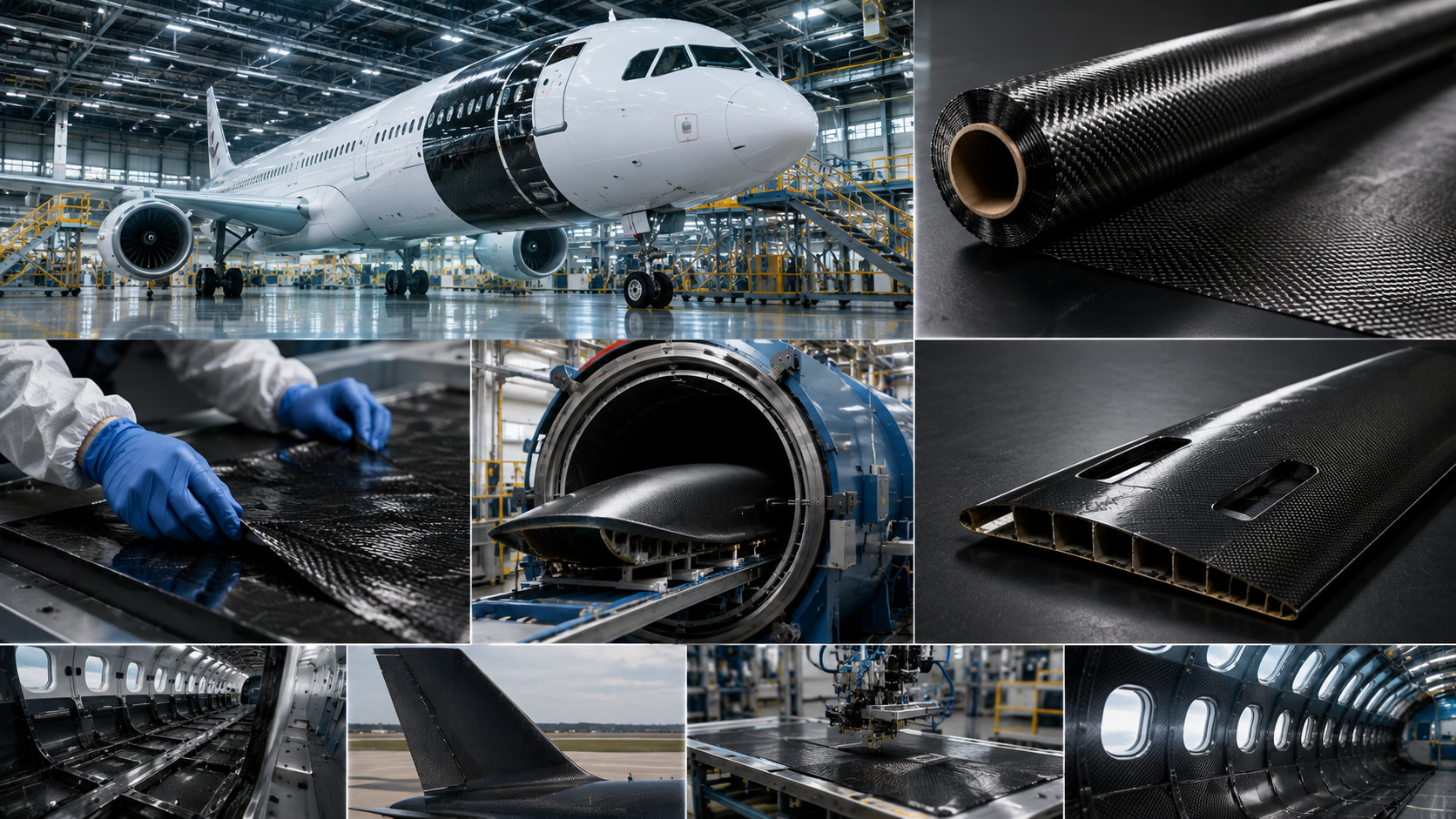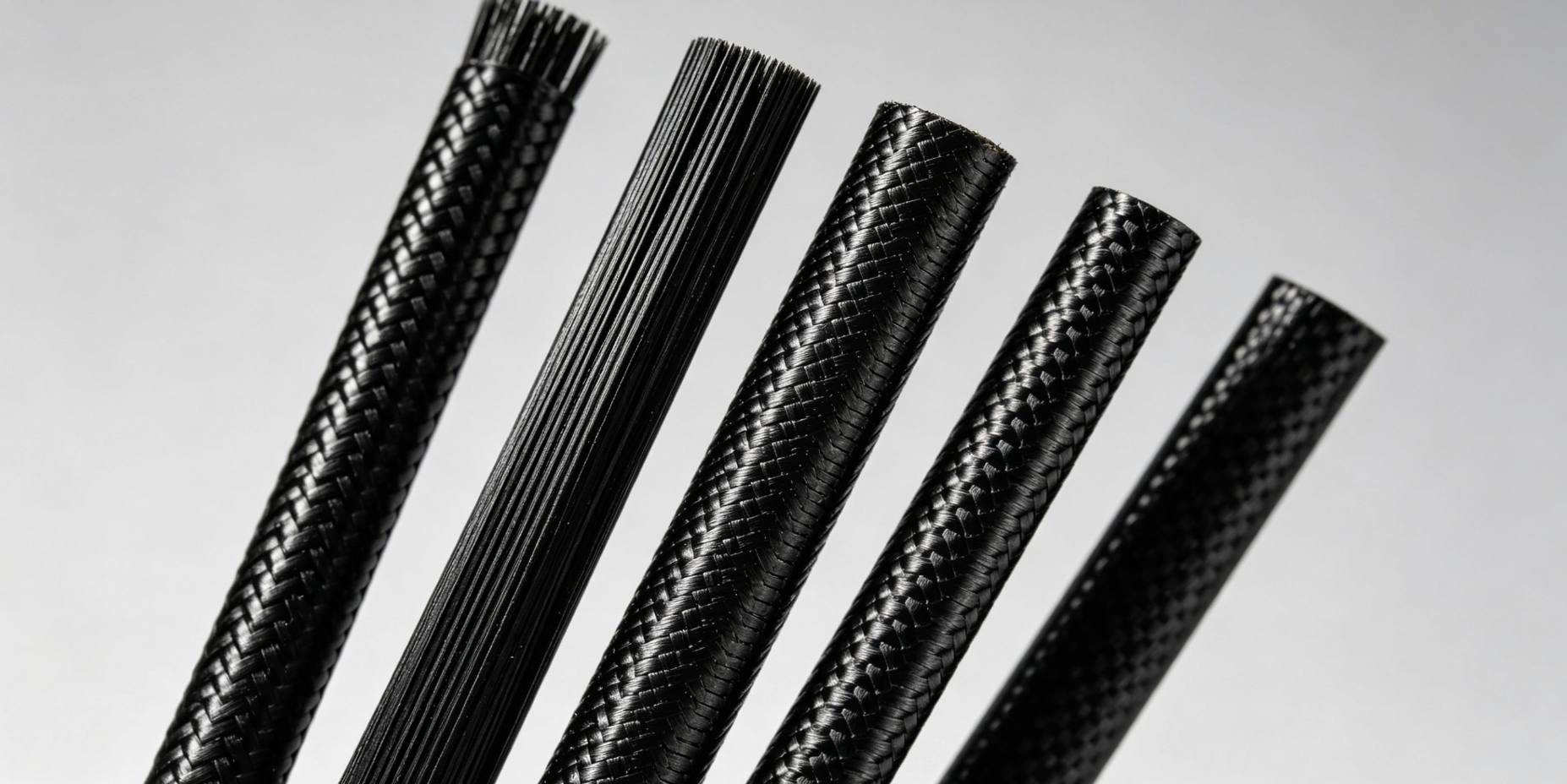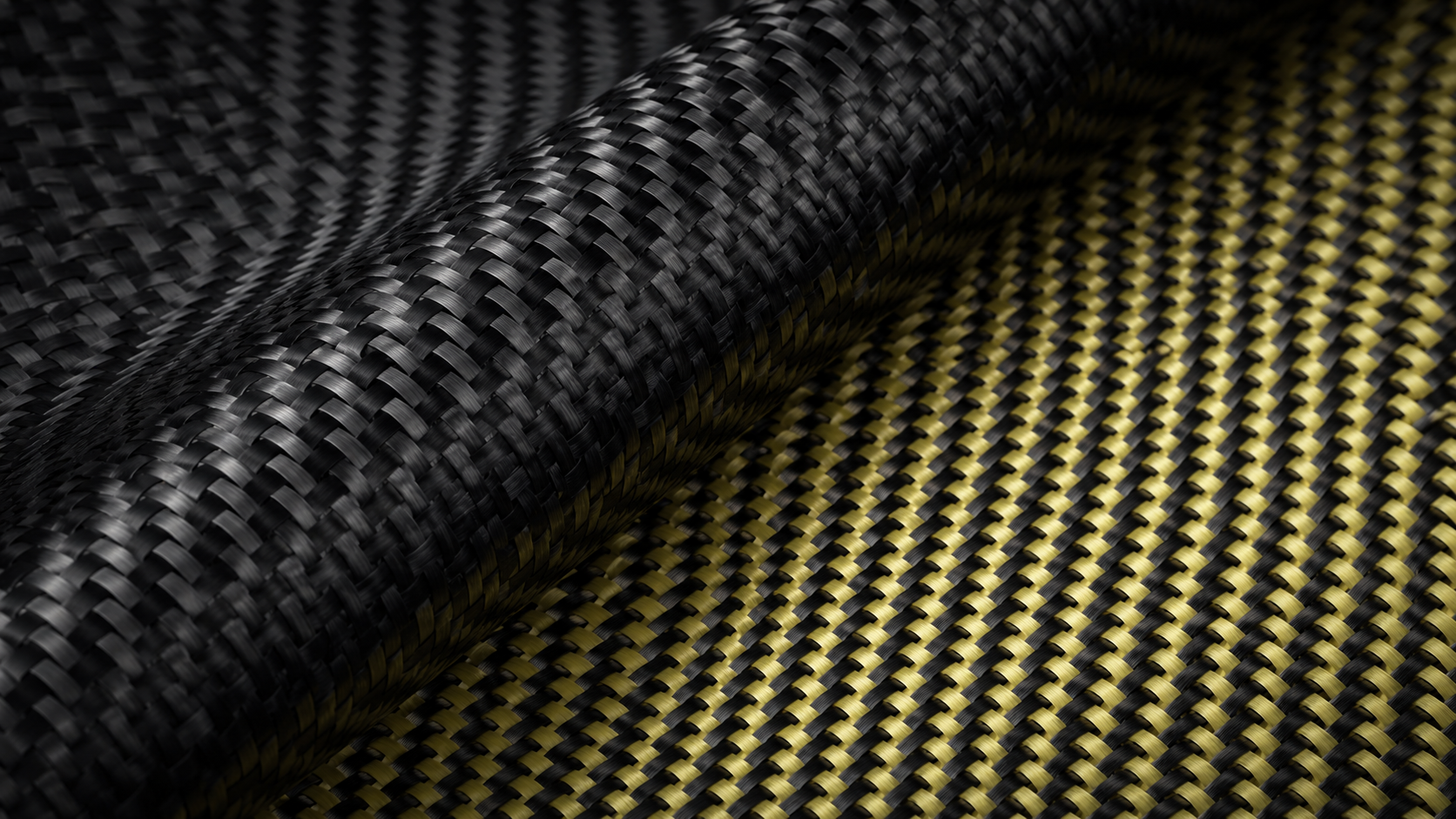
Most people find carbon fiber wrap through their car — then start eyeing everything else they own. That helmet sitting on the shelf. The laptop getting scratched up in a backpack. The motorcycle fairings that rolled off the factory floor looking flat and boring.
Here’s what the automotive crowd figured out years ago: carbon fiber film adhesive works just as well off four wheels as it does on them — sometimes better.
Think about it:
-
Chasing that aggressive 3D carbon fiber texture wrap finish on a full-face helmet
-
Reinforcing a concrete column with structural composite wrap
-
Making your gaming setup look like it belongs in a pit lane
The same material handles all of it. The results just depend on where you put it.
This guide covers every major non-automotive application. You’ll learn what works, what doesn’t, and how to avoid the mistakes that turn a clean install into a bubbled mess.
For a complete overview of all carbon fiber wrap types, benefits, and applications, start with our Ultimate Carbon Fiber Wrap Guide 2026. If you’re curious about the real differences between forged carbon fiber and traditional 3D/5D patterns, check out our detailed breakdown in Forged Carbon Fiber Wrap Explained.
Carbon Fiber Helmet Wrap: Upgrade Your Gear Without Replacing It
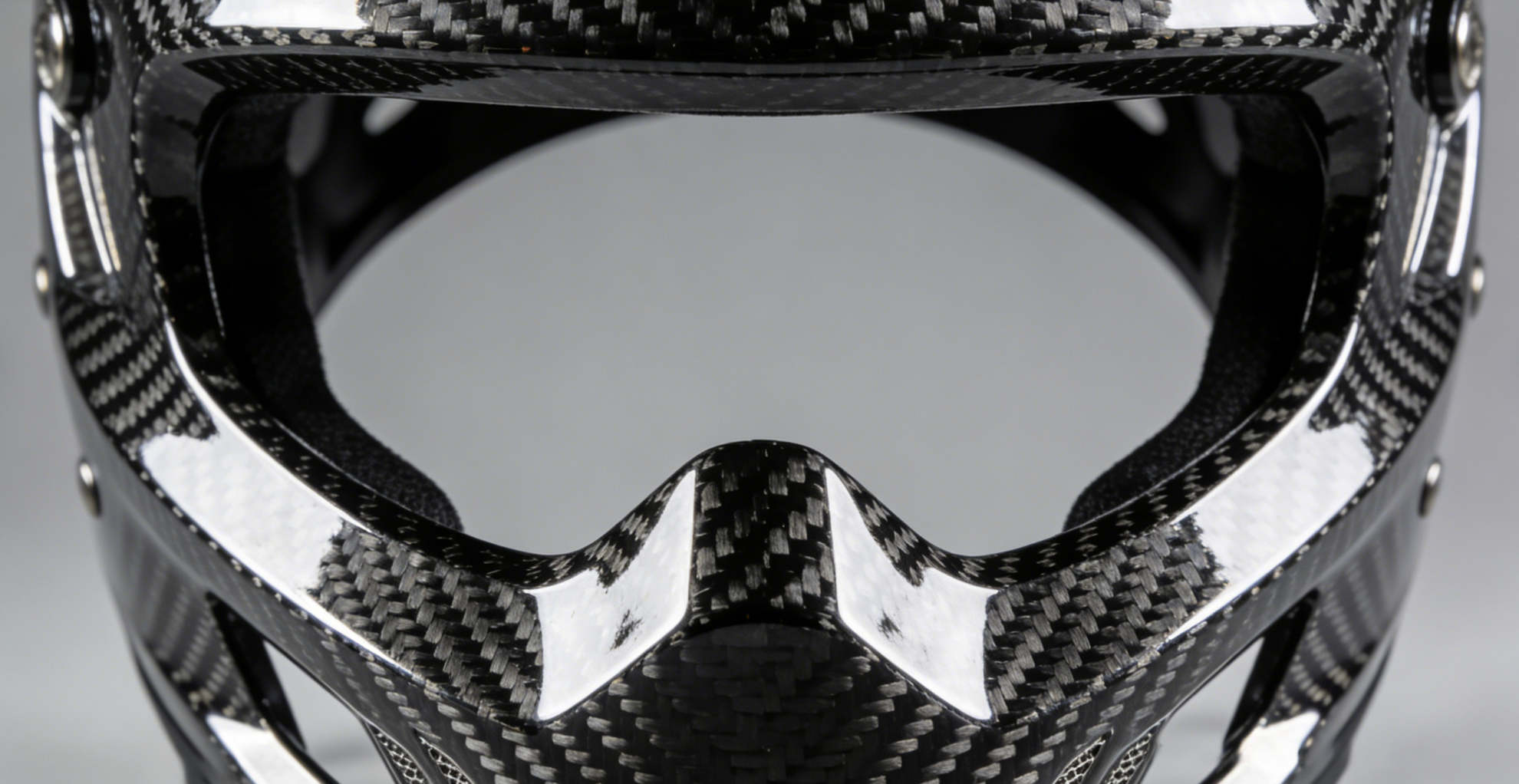
A full carbon shell helmet runs $400 minimum. A quality carbon fiber helmet wrap runs about $30 and a Saturday afternoon.
The visual result is close to identical. The safety result — and this matters — is also identical.
Here’s why that’s not a compromise. The wrap sits at 0.15–0.3mm thick on the outer shell surface. It doesn’t touch the EPS liner. It doesn’t change shell stiffness. It adds 20–50 grams to a helmet that already weighs 1,300g. That’s under 4% mass increase. ECE 22.05 certification? Still valid. The wrap is surface-only, non-structural, full stop.
The Real Challenge Is the Curves
Helmets aren’t flat panels. They have compound curves, vent cutouts, and irregular edges. That’s what makes a standard vinyl wrap fight back.
This is where material spec matters:
-
Stretch rate: You need 180–250% unidirectional elongation at minimum. Below that, the material wrinkles over arcs beyond 10cm radius. Full-face motorcycle shells run 20–30cm radius — that’s tough territory.
-
Thickness: Stay in the 0.15–0.3mm range. Go thicker, and the material stops conforming to curves.
-
Weight: Target 120–180 g/m². Below that, durability drops. Above it, you’re making the curves harder to work with.
-
UV resistance: ASTM D4587 Grade 8–10 — rated for 3,000+ hours without fading beyond 5ΔE. Helmets spend a lot of time in sunlight.
Application That Holds
The process is straightforward, not complicated:
-
Wipe the shell with 99% isopropyl alcohol — no shortcuts here
-
Heat the 3D carbon fiber texture wrap vinyl to 60–80°C before stretching it over curved surfaces
-
Mask vents with 3M fine-line tape (0.3mm) before cutting
-
Use relief cuts at irregular edges, then post-heat seal at 100°C for 30 seconds
-
Test peel strength — below 4N/cm, the wrap won’t hold through road vibration and weather cycling
Bike helmets need extra care. The radii are smaller (15–25cm) and the venting is denser. You’ll need stretch above 200% and added weight kept under 30g to avoid rotational inertia issues. Sports and skate helmets have irregular cuts. Heat the vents at a low pace to avoid exposing the EPS foam underneath.
The carbon fiber aesthetic finish you get at the end adds visual stiffness — that premium, motorsport-grade look — with zero structural changes to the gear protecting your head.
Carbon Fiber Laptop Wrap: Give Your MacBook or Gaming Laptop an Industrial Edge

Laptops take a beating. Bag zippers leave hairline scratches across aluminum lids. Desk grit works into surfaces. A MacBook that cost $1,400 starts looking like it came back from a construction site — and not in a good way.
A carbon fiber skin overlay fixes that. For around $15–30, you get the carbon fiber aesthetic finish that industrial designers charge a premium to produce. It wraps over whatever machine you’re already carrying.
What the Wrap Does — and Doesn’t
Let’s be straight: a carbon fiber skin overlay is not a case. It won’t save your machine from a drop. It won’t improve thermals or add structural rigidity. What it does is stop the slow scratching that kills resale value. A two-year-old laptop can look four years older from daily wear alone. This wrap prevents that. You get scratch protection, dust defense, and low-profile coverage — all without the bulk a hard case adds.
Getting the Fit Right
This is where most installs go wrong. Manufacturer specs and actual lid dimensions are not the same number. Measure the flat surface of your laptop lid yourself. Don’t pull the figure from a spec sheet.
Two fit approaches work:
-
Universal fit with rounded corners — fastest install, clean look, small gap at edges (this is intentional — it stops edge catch during use)
-
Trim-to-fit — order the next size up, cut by hand for full edge-to-edge coverage
The adhesive matters here. Premium cast vinyl with micro air channels handles the slight curves on most laptop lids. That’s what makes bubble-free application possible without professional tools. All you need are clean hands, the included video walkthrough, and patience on the bottom edges. Rushing that area causes blemishes.
Brand Matters More Than People Expect
Generic options cut corners on thickness consistency. Name-brand vinyl skins have tighter edge tolerances, fewer flaws, and stronger long-term adhesion. Gaming laptops need thicker skins than ultrabooks — the surfaces are built differently. Hand quality control in production is what separates a clean install from one that lifts at the corners by month three.
A carbon fiber look DIY result — done right — holds up to hard use and peels off clean when you’re ready to sell.
Carbon Fiber Motorcycle Wrap: Fairings, Tanks & Parts That Look Factory-Built

Factory carbon fiber on a production motorcycle costs thousands as a trim option — and that’s only if the manufacturer offers it. A vinyl wrap gets you the same visual result for under $300. That gap is hard to ignore standing in a garage, staring at flat OEM plastics.
The full surface area of a motorcycle wrap runs 10–15 square feet. That’s a fraction of a car. But the geometry is brutal. Tank contours, fairing edges, compound-curved mudguards — nothing sits flat. Nothing forgives a sloppy install.
What Gets Wrapped and Why
The fuel tank is the obvious starting point. It’s the most visible surface on the bike. It holds wiring and sensors under the paint. A good wrap protects all of it and transforms the look at the same time. Fairings come next — high-visibility panels that catch the most debris impact. After that: side panels, mudguards, handlebars, the rear section, the silencer cover.
Partial coverage works just as well as a full wrap. A 25–75% application covering just the tank and fairings runs $50–100 in material. It protects your OEM finish. It stops stone chips from reaching the paint underneath. Done right, it looks like it left the factory that way.
The Technique Is Different From Car Work
Cars have large flat panels. Motorcycles have tight curves and compound bends. Standard squeegee technique breaks down fast on anything beyond a side panel. The process shifts:
-
Disassemble first — tank, fairings, fenders off the bike. You can’t wrap edges you can’t reach.
-
Clean every surface with isopropyl alcohol. No shortcuts.
-
Wrap flat sections first — tank sides, large fairing panels — squeegee out any movement.
-
Use a heat gun at a 45–60° angle for curves and edges. Soften the vinyl, stretch it, fold the undersides under.
-
Trim excess and seal edges tight.
-
Run a final heat cycle to shrink the adhesive and lock everything down.
Material choice drives the outcome. You need vinyl with air-release channels to stop bubbles forming on those compound bends. Super carbon fiber vinyl is flexible with high stretch ability — it handles tight fairing edges without cracking the texture. Forged carbon pattern gives a random, high-gloss result that reads as premium even up close.
The Numbers Make the Case
A replacement carbon fiber fairing for a Z900 runs $150 per panel. A full DIY wrap — 10 feet of vinyl plus tools — lands under $300 total. A professional paint job on those same surfaces starts at $500 and climbs from there. The wrap is also reversible. Pull it clean for a different look, or pull it before you sell. The OEM finish underneath stays untouched.
The 4D epoxy gloss carbon fiber finish is what separates a wrap that looks like a sticker from one that looks built-in. The depth and texture bends light the way real carbon does. Matte finishes read flat. High-gloss reads structural. That difference is what puts a wrapped motorcycle in a different visual class on its own.
Carbon Fiber Wrap for Concrete Repair: Real Structural Composites

Bridges don’t get wrapped with vinyl films. That needs to be said upfront.
The carbon fiber composite wrap used in structural concrete repair shares a name with decorative vinyl — and almost nothing else. This is unidirectional carbon fiber fabric, 600gsm, saturated in structural epoxy resin like Sikadur 300 or Sikadur 330. The tensile strength hits 380 GPa. That’s the benchmark for high-modulus structural fabrics like SikaWrap Hex-230C. A decorative skin overlay doesn’t belong in the same conversation.
What It Does
The physics are simple. CFRP wrap confines concrete under compression. It resists shear and flexure through hoop tension. The fibers run in one direction to carry maximum tensile load. Epoxy bonds the laminate to the substrate. Load transfers across the full composite system.
Here’s where it gets applied:
-
Bridge piers and piles — full circumferential wraps for shear strengthening; U-wraps where ends are inaccessible
-
Concrete columns — crack repair from corrosion, seismic damage, or overloading; the wrap restores capacity and blocks further moisture
-
Beams — continuous strips at maximum 12-inch spacing, with 6-inch minimum lap for all U-wrap anchorage
Professional Installation Required
This is not a peel-and-stick job. The installation sequence is fixed and must be followed:
-
Remove all spalled or delaminated concrete per ACI 546R / ICRI 310.2R standards. Patch repairs must cure for 14–28 days before any CFRP goes on. Clean corroded rebar first — no exceptions.
-
Surface preparation to ICRI-CSP3 profile. Remove all laitance, oil, and contamination. Round sharp corners to ½-inch minimum radius. Run the moisture test: leave a 3×3 ft poly sheet overnight. No condensation means it’s ready.
-
Prime coat — apply epoxy primer into surface voids, then saturate the carbon fabric through.
-
Hand lay-up under uniform tension. Use a 6-inch minimum overlap on all seams. Orient fibers for the target load direction.
-
Top coat — apply a UV-protective waterproof epoxy finish, rated for a 50-year design life.
-
Pull-off adhesion testing per ASTM D7522/D4541 — minimum 200 psi, and the concrete substrate must fail (not the bond). Two tests per bent.
|
Parameter |
Specification |
|---|---|
|
Adhesion Strength |
200 psi (substrate failure) |
|
Tensile Strength |
380 GPa |
|
Overlap / Lap Length |
≥ 6 inches |
|
Corner Radius |
≥ ½ inch |
|
Surface Profile |
ICRI-CSP3 |
|
Patch Cure Time |
14–28 days |
Shop drawings need a licensed PE stamp. This is a regulated, engineered repair system — not an aesthetic upgrade. Anyone searching for structural carbon fiber repair in a construction context is working in a different technical world from vinyl wrap installs. Same material family. Different discipline.
Unexpected Places Carbon Fiber Wrap Works: Phones, Gaming Gear & More
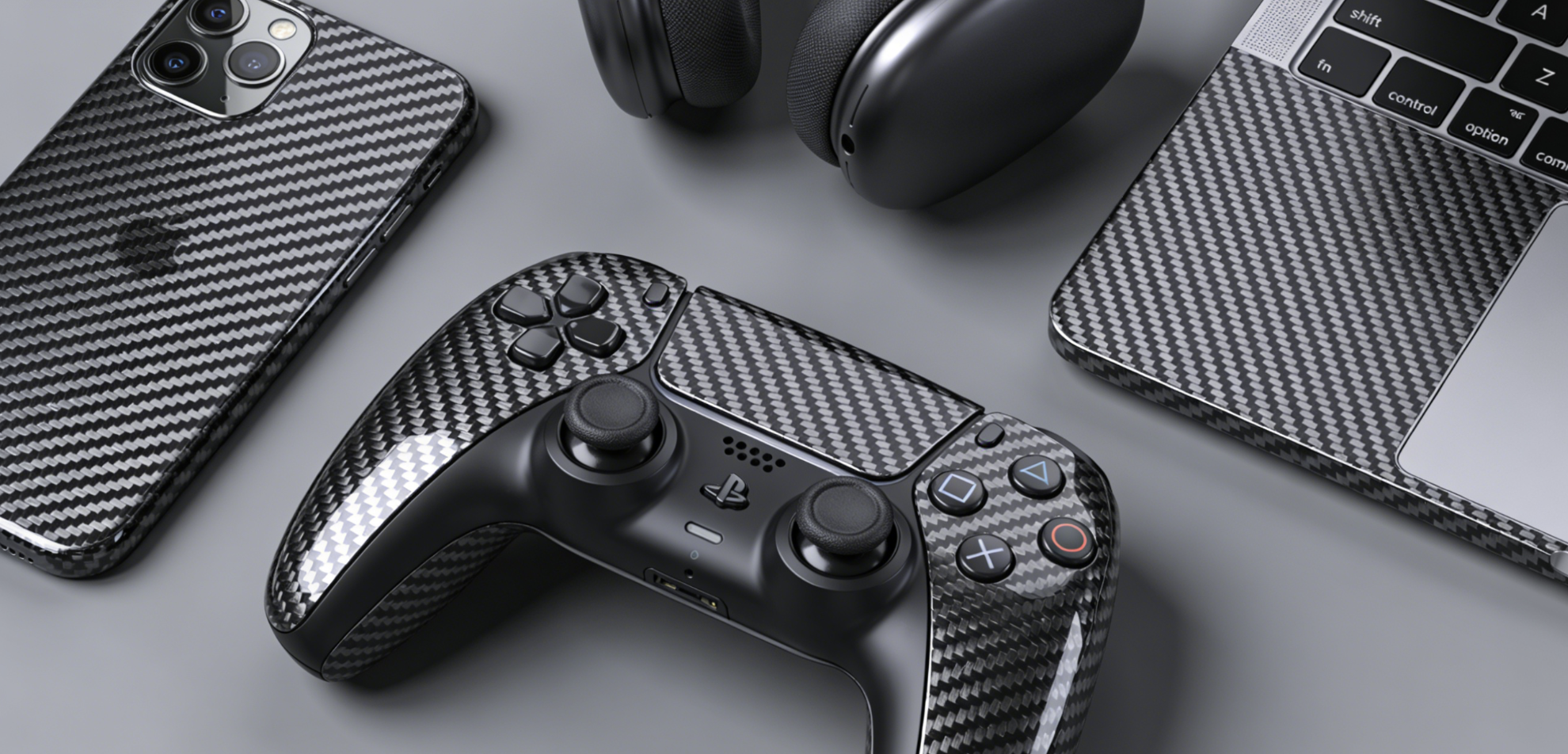
Browse any gaming setup subreddit and you’ll spot it fast — that woven texture on controllers, headsets, and mechanical keyboards beside the monitor. Carbon fiber wrap moved into consumer electronics without much noise. Now it’s everywhere.
And the reasons go beyond looks.
Phones and Foldables
A carbon fiber skin overlay on a Redmi Note 11 does three things at once:
-
The textured weave reduces hand slip by spreading surface oil
-
Mohs hardness above 6 shrugs off scratch damage from everyday use
-
Drop survival from 1.5 meters beats standard plastic cases in impact tests
The thickness added? Under 2mm.
Foldables push the material harder. Take the Huawei Mate X6. A carbon fiber decal sticker across the hinge and back panel handles repeated fold stress at tensile strengths above 3,500 MPa. It keeps the profile slim. It also drops operating temperature by 5–10°C compared to silicone during sustained 5G use.
Gaming Gear
PS5 and Xbox controller handles wrapped with carbon fiber surface protection film gain 20–30% more grip friction during sweaty sessions. There’s no flex under 50N of applied force. A solid install holds up through six months of heavy use without peeling.
Mechanical keyboard side panels pick up quieter gains. A carbon fiber decal sticker on an aluminum chassis adds 0.5mm grip texture. It resists oil smudging. Plus, it lowers key surface temperature by 4°C during long sessions by improving heat vent airflow.
Headset earcup overlays are worth a closer look too. A 3D carbon fiber texture wrap reduces mic arm flex and pulls heat away during extended wear — measured at an 8°C drop. It also protects headbands on AirPods Max and Razer models from scratches that eat into resale value over time.
One Limitation Worth Knowing
The carbon fiber look DIY approach has a ceiling. Wraps peel apart on surfaces that flex a lot — tennis racket shafts fail around 1,000 vibration cycles. Tight curves under 5mm radius don’t hold clean adhesion. On phones in weak RF environments, there’s a 1–5% signal absorption effect to keep in mind.
Flat and semi-rigid surfaces, though? The numbers hold up. A carbon fiber aesthetic finish at $20–50 beats a $10 plastic case on every practical measure — heat control, grip, and scratch resistance — and it looks like it came straight off a race car.
Conclusion
Carbon fiber wrap isn’t a car thing. It never was.
Refreshing a scuffed helmet before next season? Carbon fiber wrap handles that. Giving your laptop a look that fits your setup? Same material. Wrapping motorcycle fairings that turn heads at every stop? It works there too. The material performs on any surface you put it on.
Stop seeing carbon fiber finish as a niche car accessory. It’s a real tool for personalization, protection, and — in structural applications — genuine repair. That’s a big difference.
You now have the full picture. You know what works, what doesn’t, and how to match the right wrap to your project.
So pick your surface. Grab the right film. Stop waiting for a “good enough reason” to upgrade something you use every single day. If you’re leaning toward a DIY approach, our DIY Carbon Fiber Wrap Tutorial: Step-by-Step for Beginners walks you through the full process with zero-fail tips and common pitfalls to avoid.
Contact HyperX Carbon – Your Trusted Chinese Carbon Fiber Partner
Ready to source high-performance carbon fiber materials or custom forged carbon fiber parts from China?
HyperX Carbon is a leading manufacturer with 20+ years of expertise, specializing in aerospace-grade forged carbon fiber, prepreg, tubes, sheets, and lightweight automotive/drone/medical components. We offer:
-
Stable supply chain with premium raw materials (Toray, Mitsubishi, Hengshen)
-
AS9100D certified production for aerospace & UAV applications
-
Rapid prototyping (5-8 weeks) and monthly capacity exceeding 180,000 parts
-
Competitive pricing with 15-18% cost savings on forged carbon solutions
-
Full customization: from T700/T1100G to ultra-high modulus grades
Whether you’re an eVTOL developer, automotive OEM, drone manufacturer, or medical device engineer, HyperX delivers consistent quality, batch-to-batch reliability, and reliable delivery.
Get in touch today for a free consultation, custom quote, or material sample.
📧 Email: [email protected]
🌐 Website: https://www.hyperxcarbon.com/
📞 Phone/WhatsApp: +86 15623270276 (English support available)
Let’s build your next lightweight innovation together – contact HyperX Carbon now and stay ahead in the low-altitude and advanced composites market.