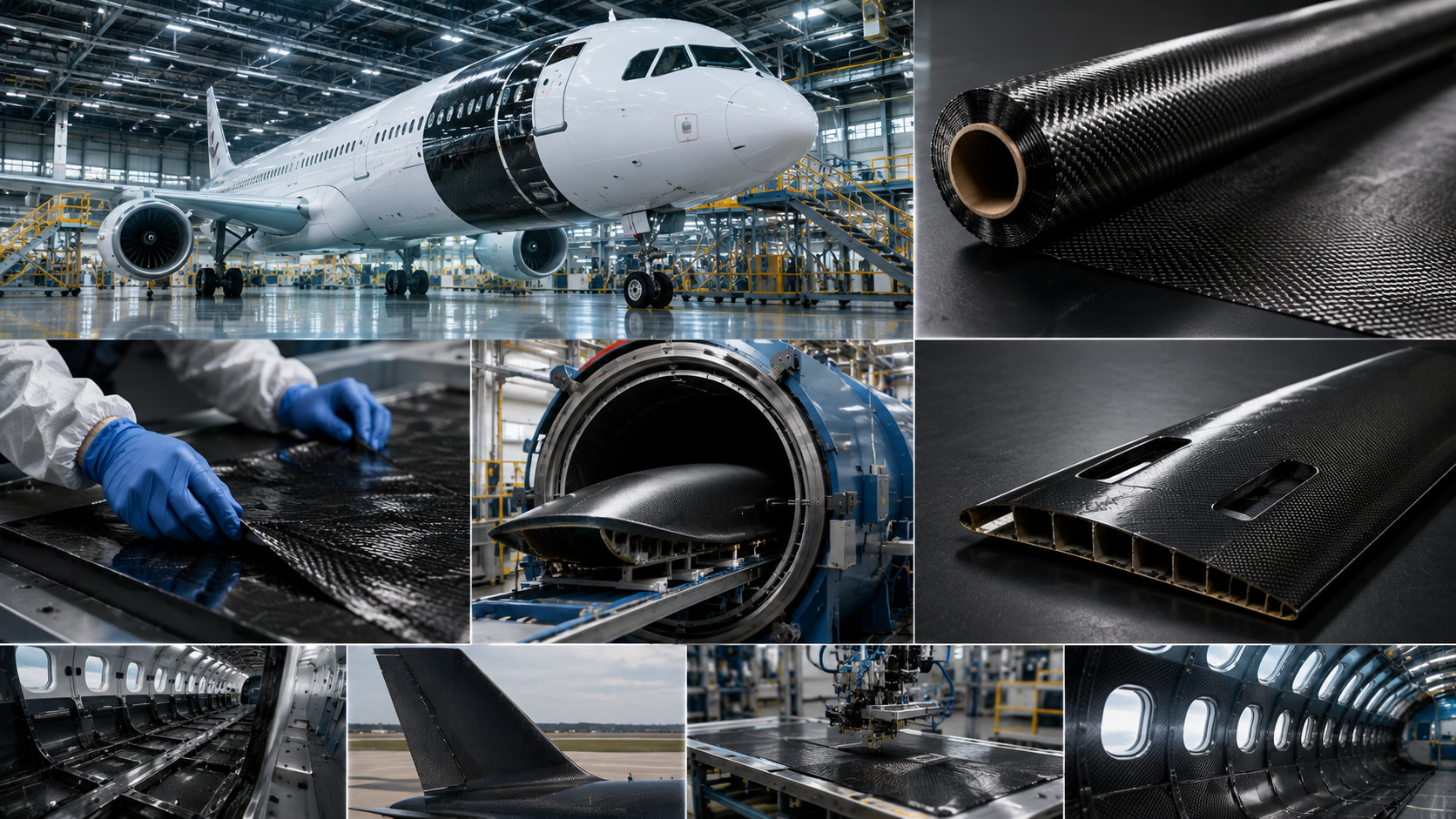
Carbon fiber prepreg is more than just a material. It’s what lets a Formula 1 chassis survive a 200mph impact. It’s why commercial aircraft drop thousands of pounds in weight without losing structural integrity. And it’s what gives a professional tennis player’s racket that razor-sharp, precise response.
For engineers, designers, and manufacturers seeing it for the first time, prepreg carbon fiber can feel like a black box — mysterious, expensive, and very specific in what it needs. So what is it? How does it differ from standard dry carbon fabric? And is it the right choice for your application?
This guide breaks it all down — composition, the prepreg manufacturing process, curing methods, real-world applications, and how to pick the right specification for your project.
What Is Carbon Fiber Prepreg? (Core Definition)

Strip away the jargon, and the concept is clean.
Carbon fiber prepreg is carbon fiber fabric with resin already built in. The resin gets applied under factory-controlled conditions, in an exact ratio, before you ever touch it. The resin system is most often epoxy. High-temperature applications may call for phenolic or bismaleimide (BMI) alternatives.
What makes it different from dry fabric isn’t the resin itself. It’s the state of that resin.
The B-Stage: Frozen in Time
After impregnation, the resin goes through a partial cure. Chemists call this a B-stage. At this stage, the resin is tacky enough to hold its shape and flexible enough to conform to complex tooling. But it won’t cure further — it’s chemically locked in place. Cold storage at -18°C keeps it there.
At that temperature, the cure reaction stalls. The clock stops. Pull it out, let it warm up, and you get a working window to cut, position, and laminate before full cure begins.
This is what separates prepreg carbon fiber from a bucket of resin and a brush. The factory handles the hard part upfront:
-
It locks in a fiber volume fraction of 55–65% — a figure wet layup seldom hits
-
It produces a carbon fiber reinforced polymer with twice the strength of steel at just 25% of the weight
-
It keeps void content below 1–3% under autoclave cure
Precision built in. Variability locked out.
What’s Inside: Composition and Material Structure

Three things build a prepreg: carbon fiber, resin, and a carefully controlled state of incompletion.
Each element has its own engineering logic. Together, they create a material system where performance is locked in long before anything touches an autoclave.
The Carbon Fiber Layer
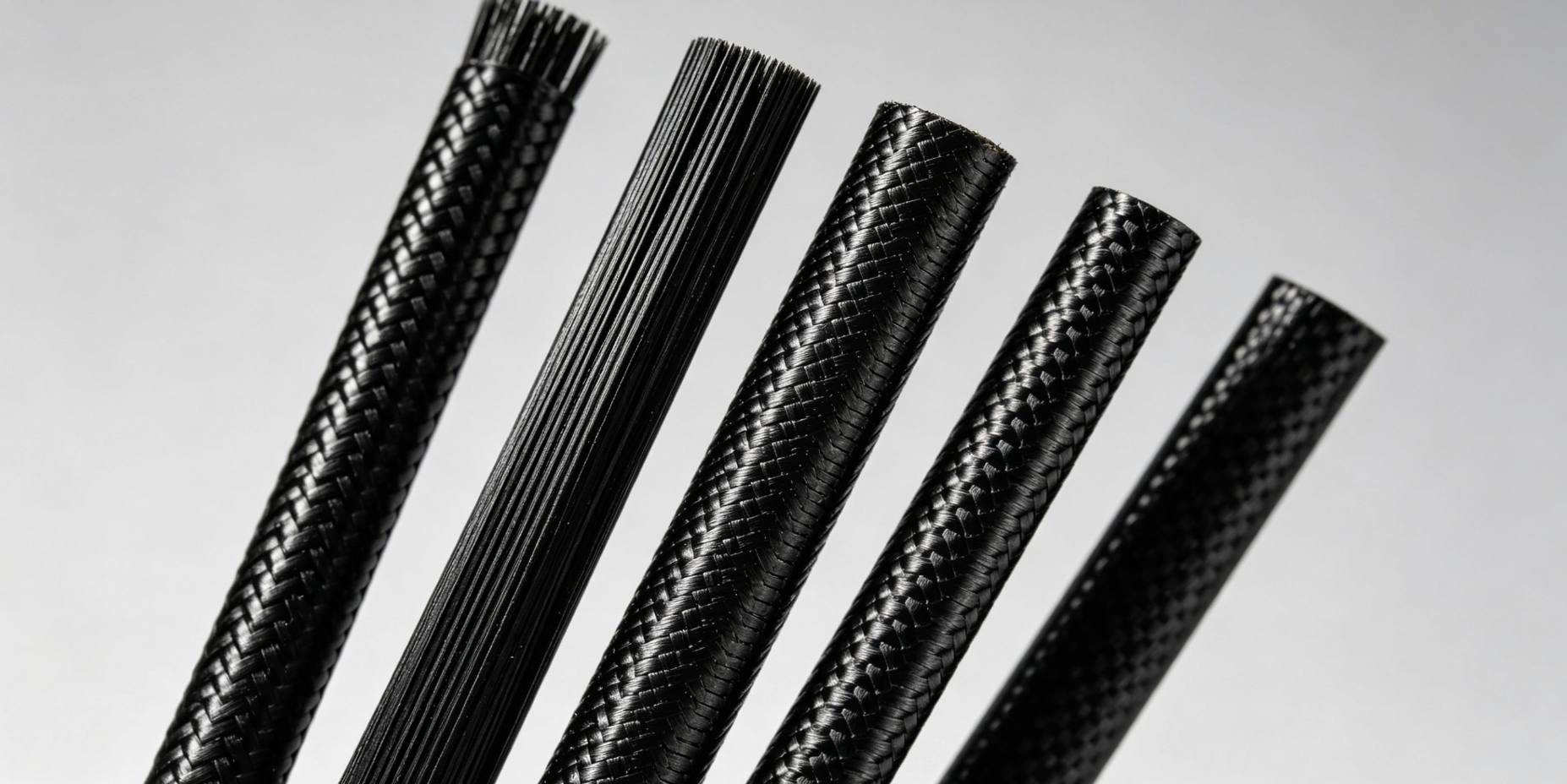
The fiber comes in different tow sizes — and tow size matters.
-
3K tow (3,000 filaments per bundle): highest drape, tensile strength of 3.5–4.0 GPa, ideal for complex curved molds and tight geometries
-
6K tow: the middle ground — about 3.8 GPa tensile, solid flexibility, used in intermediate structural components
-
12K tow: densest bundle, 4.0–4.5 GPa tensile, lower flexibility, built for flat panels and high-load applications
Then there’s the architecture of those fibers — how they’re arranged.
Unidirectional (UD) prepreg aligns all fibers in one direction. Tensile strength hits 4.0–5.0 GPa along that axis. It’s anisotropic by design. Think aerospace spars, structural beams, anything where load runs in one clear direction.
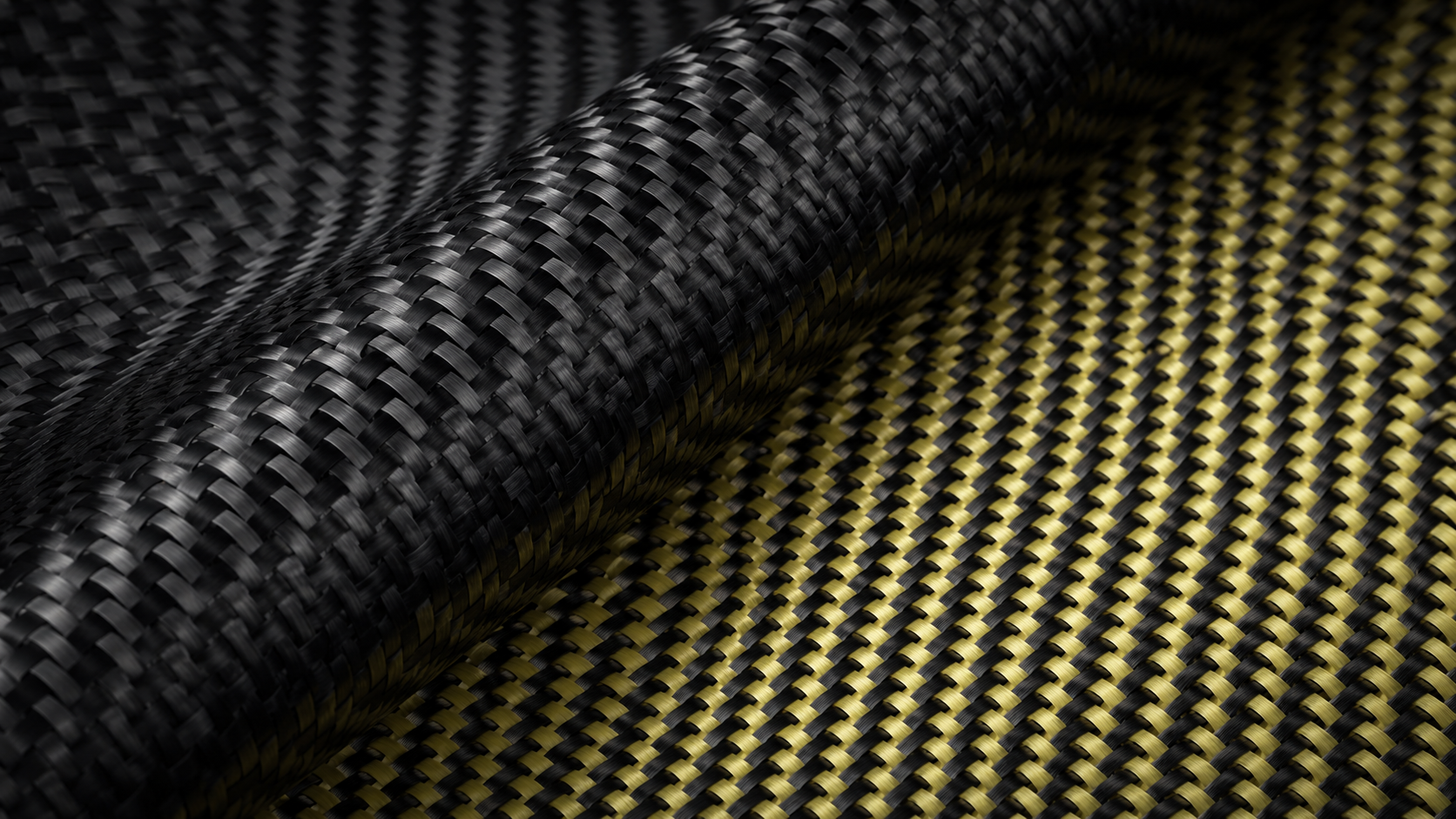
Woven carbon fiber prepreg spreads strength across multiple directions. Tensile drops to 2.5–3.5 GPa, but drape improves. The material also handles complex panel shapes much more easily. Automotive bodywork. Consumer sporting goods. Anywhere geometry gets complicated.
The Resin System
Most prepreg carbon fiber uses epoxy resin — tensile strength of 70–90 MPa, glass transition temperature (Tg) between 120–180°C. It’s the standard choice because it balances fiber wet-out, processing ease, and final part performance better than anything else at this price point.
High-temperature environments need more. Bismaleimide (BMI) pushes Tg up to 300°C. You’ll find it in aerospace engine components, where standard epoxy would soften and fail. Phenolic resins give up some strength for fire resistance and low smoke output — a critical trait in aircraft interiors.
Resin content stays in a tight band: 30–50% by weight. Drop below 30%, and fiber-to-resin bonding breaks down. Strength falls 20–30%. Push above 50%, and density climbs past 1.8 g/cm³. Stiffness drops. The weight advantage that makes carbon fiber reinforced polymer worth using starts to disappear.
Prepreg Carbon Fiber vs. Dry Carbon Fiber / Wet Layup: Key Differences
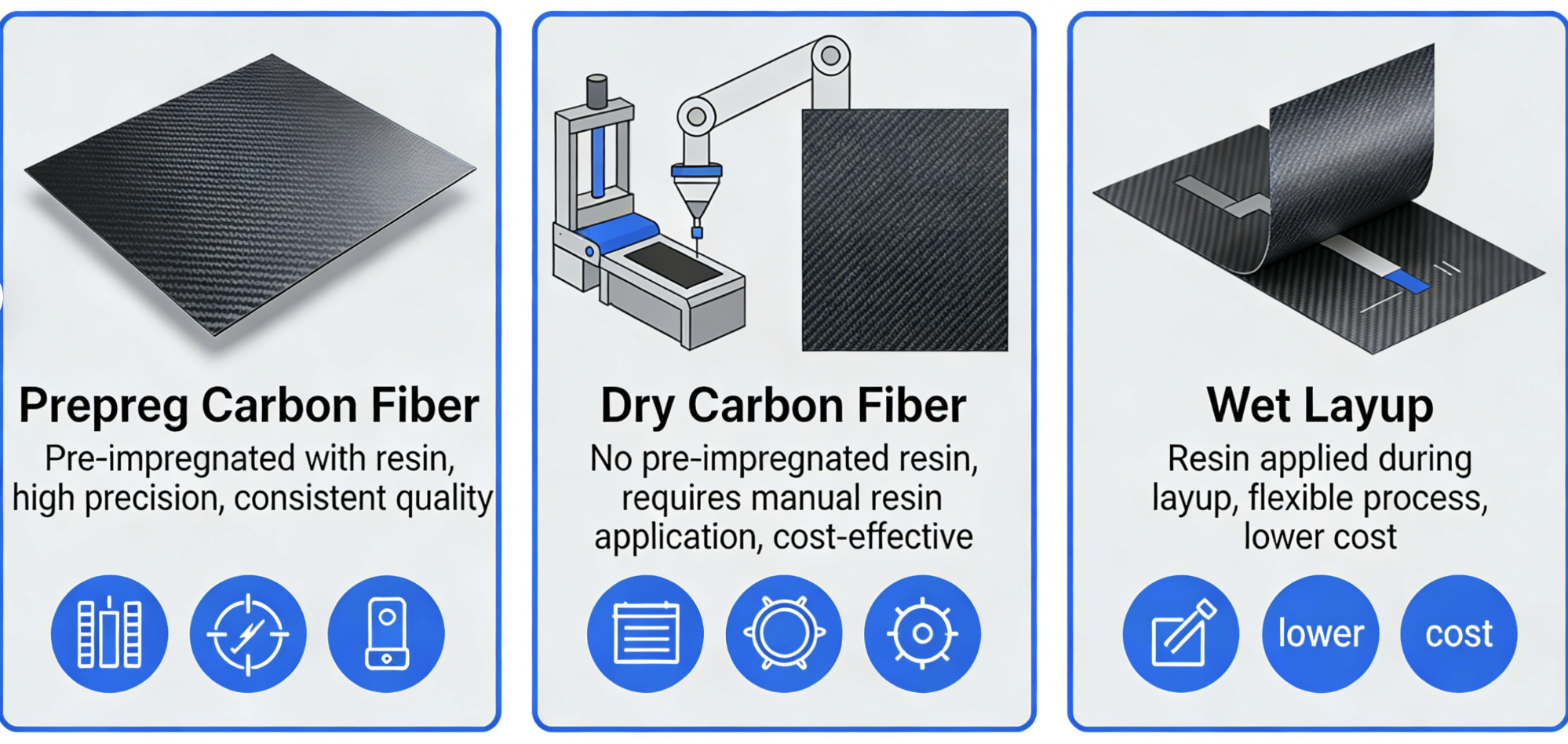
The gap between prepreg and wet layup isn’t a matter of preference. It’s a matter of physics — and the numbers are clear.
A skilled laminator with a brush and a bucket of epoxy can produce a beautiful part. But “beautiful” and “strong at the structural level” are not the same thing. Wet layup delivers a fiber volume fraction of 40–55% — and that ceiling depends on the operator. Prepreg starts at 55% and holds steady up to 65%. That’s not a small improvement. That’s the difference between a racing monocoque and a hood scoop.
What the Numbers Say
|
Property |
Prepreg |
Wet Layup |
|---|---|---|
|
Fiber Volume Fraction |
55–65% |
40–55% |
|
Void Content |
<1–3% (autoclave) |
1–5% (variable) |
|
Strength vs. Wet Layup |
10–20% higher |
Baseline |
|
Surface Finish |
Consistent, minimal prep |
Variable, more rework |
|
Batch Reproducibility |
Excellent |
Operator-dependent |
|
Material Cost |
~4× higher |
Lower |
Void content is where things get serious. Push voids past 2% and mechanical strength drops 20–30%. Wet layup — done by hand, under ambient pressure — tends to produce void content of 1–5%. Prepreg under autoclave cure comes in under 1% with great consistency. The autoclave doesn’t just add heat. It squeezes trapped air out of the laminate before the resin locks everything in place. That’s a physical process no hand layup can replicate.
Where Wet Layup Holds Its Ground
Wet layup isn’t obsolete. For large, non-structural panels — boat hulls, automotive trim, architectural cladding — it’s cheaper and faster to set up. You don’t need cold storage. No -18°C freezer. No out-of-autoclave oven. No controlled thaw cycle. A roll of dry fabric and a resin kit gets you started.
Prepreg asks more of you: cold chain logistics, skilled technicians, and either autoclave access or a validated out-of-autoclave prepreg cure cycle. The payoff is a level of consistency that hand lamination can’t reach — no matter how good the operator is.
Aerospace and motorsport teams don’t have a choice. That trade-off is part of the job. For a prototype bracket in a garage, wet layup is likely the right call.
Key Benefits of Using Carbon Fiber Prepreg

The numbers don’t lie. The prepreg carbon fiber market is growing at a 7.38% CAGR through 2028. Industries don’t pour that kind of growth into a material unless it delivers real results.
Here’s what’s driving that adoption.
Strength Without the Weight
Prepreg holds a fiber volume fraction of 55–65% under strict, controlled conditions. You get a carbon fiber reinforced polymer with tensile strength up to 5.0 GPa — at a density that makes steel look heavy. Boeing’s next-generation aircraft programs used prepreg-based structures to cut airframe weight by 20%. That means lower fuel burn and fewer emissions on every flight cycle.
Wind turbine manufacturers see the same results. Switch blade construction to unidirectional carbon fiber prepreg, and blade weight drops 15% while blade length grows 10%. More swept area. More energy captured. Same tower.
Fuel and Efficiency Gains That Stack Up
Weight reduction adds up fast. Across automotive and aerospace, prepreg-based lightweighting has pushed fuel efficiency gains up to 35%. That’s not a small improvement. It’s a design-level shift that changes what a vehicle or aircraft can do — per tank, per flight, per lifecycle.
Processing Consistency at Scale
Hot melt prepreg holds 43.2% market share as of 2024. It’s the top manufacturing route, and for good reason — it cuts solvents out of the process. No solvents means lower emissions, faster processing, and cleaner resin distribution across every layer. That’s what makes prepreg layup process results repeatable at thousands of parts, not just dozens.
Dimensional Stability Under Pressure
Prepreg parts hold their shape. Void content stays below 1–3% under autoclave curing. So the cured laminate performs consistently through heat cycles, mechanical stress, and long-term load. For aerospace structures, EV battery enclosures, and high-load sporting equipment, that kind of consistency isn’t optional. It’s a certification requirement.
Where Carbon Fiber Prepreg Is Used: Industry Applications
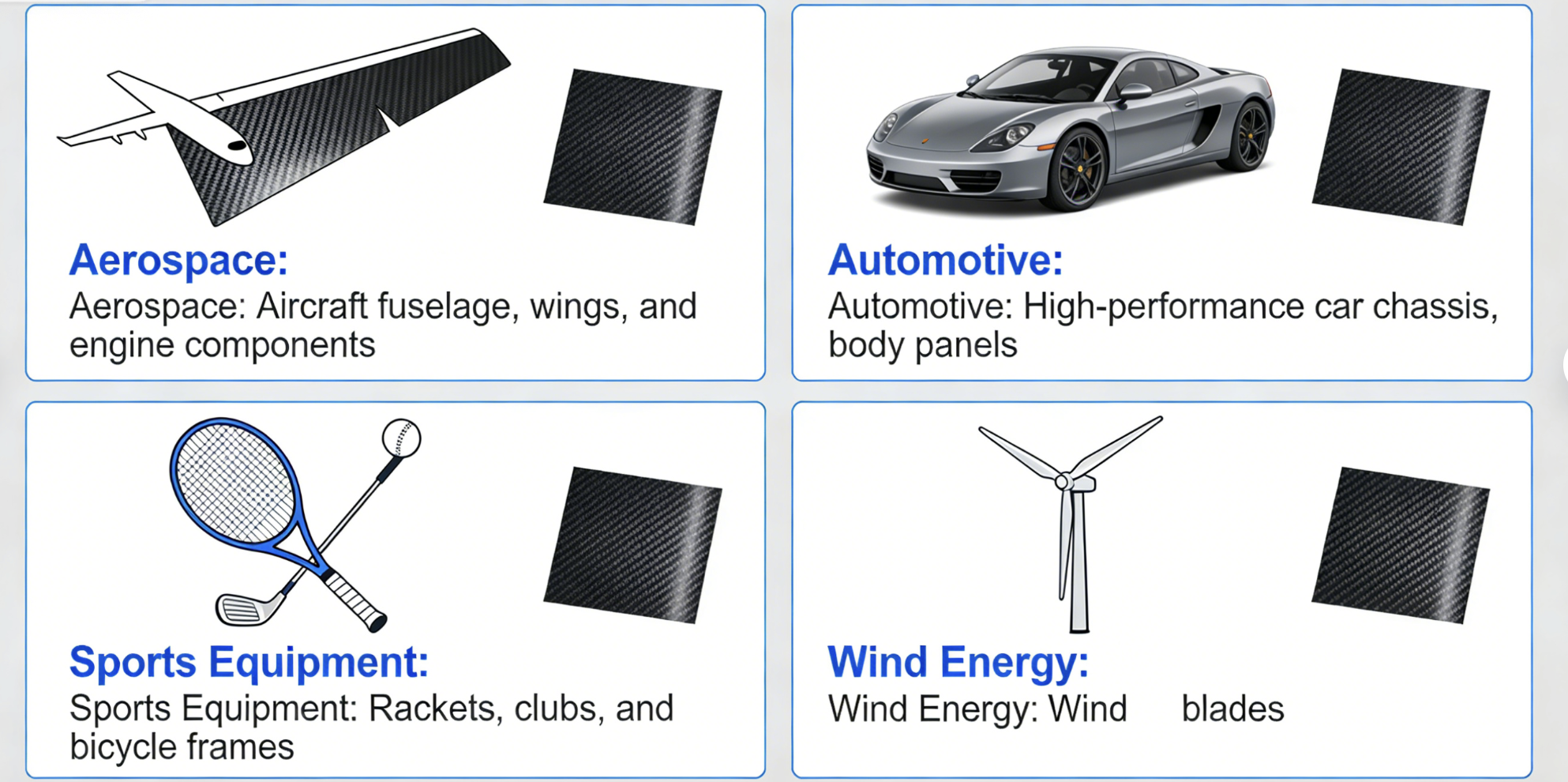
Prepreg carbon fiber shows up wherever failure is not an option — and the market data confirms it. Aerospace and defense alone claimed 43.2% of global prepreg demand in 2024. The global market sits at $9.72–11.30 billion and is tracking toward $18.9–21.86 billion by 2034. That money follows performance.
Aerospace & Defense
Boeing, Lockheed Martin, Northrop Grumman — they all build with prepreg. The Boeing 787 Dreamliner uses carbon fiber reinforced polymer prepreg across its fuselage and wing structures. This cuts airframe weight while keeping structural integrity at 35,000 feet. North America holds 35.4% of global prepreg consumption. Programs like these drive almost all of that demand. In June 2023, Hexcel introduced faster cure-cycle prepregs to keep up with rising production speeds in this sector.
Motorsport & Automotive
F1 monocoque chassis use high-performance prepreg layup process laminates. These parts absorb 200mph crash energy without falling apart. Outside motorsport, electric and hybrid vehicle programs across Asia-Pacific are picking up prepreg at a fast pace. The region is the fastest-growing market. Strict automotive weight-reduction targets push this growth — and battery-heavy EVs make those targets even harder to ignore.
Wind Energy & Sports Equipment
Turbine blade makers use unidirectional carbon fiber prepreg to extend blade length without adding load to the tower. Longer blades, same tower stress — that’s a real engineering win. Sports equipment is another strong use case. Tennis rackets, golf shafts, and bicycle frames all rely on woven carbon fiber prepreg for its mix of stiffness, durability, and the ability to handle complex shapes. Europe holds a 36% regional share, backed by heavy infrastructure spending and steady wind energy investment.
How to Select the Right Carbon Fiber Prepreg for Your Application

Picking the wrong prepreg doesn’t just waste money. It builds failure into the part before layup even starts.
The decision breaks down into five variables. Get all five right, and material selection stops being a guessing game.
Fiber Architecture: Direction Decides Everything
Unidirectional (UD) prepreg puts all fibers along one axis. Maximum tensile strength — up to 5.0 GPa — runs in that direction. Wing spars, bicycle frames, structural beams — anywhere the load follows a known path, UD is the right call.
Woven prepreg spreads that strength across multiple axes. Plain weave and twill both handle complex geometry better than UD. Twill conforms to curved molds without bridging. For automotive body panels and visual components, woven fabric also delivers the surface finish that UD can’t match.
Tow size matters too. 3K tow gives you the finest control and best drape. 12K tow runs faster in layup but pushes back on complex tooling.
Resin System: Match the Temperature, Match the Job
|
Resin |
Max Service Temp |
Best For |
|---|---|---|
|
Epoxy |
<150°C |
General automotive, structural aerospace |
|
BMI |
<230°C |
Aerospace engine structures |
|
Phenolic |
— |
Marine, fire-critical interiors |
|
PEEK/PPS |
— |
Medical devices, industrial automation |
Aviation programs lock resin content at 35–38%. Sports equipment gives you more room to work. Push resin content too high — density climbs, stiffness drops. Drop it too low — dry spots form, structural strength suffers.
Cure Method: Know Your Equipment First
This step gets skipped. It shouldn’t.
Autoclave-cure prepreg needs pressure and elevated heat — 250°F or 350°F soak cycles are standard. Your shop runs a conventional oven only? That roll is useless to you. Specify out-of-autoclave prepreg instead. It’s validated for oven cure and still hits void content targets.
Application-Specific Priorities
-
Aerospace: High-modulus UD with BMI or high-performance epoxy. Strength-to-weight ratio is non-negotiable. You also need thermal stability across altitude cycles.
-
Automotive structural: High-strength, high-modulus prepregs. Mix in glass fiber where cost pressure is real.
-
Marine/outdoor: Go with phenolic systems or flame-retardant additives. Check interlaminar shear strength — delamination is the failure mode that catches you off guard.
Areal Weight: Efficiency vs. Complexity
Higher areal weight (gsm) means fewer plies and faster layup. But heavier fabric fights back on tight molds. For flat or lightly curved panels, 600 gsm moves fast and lays down clean. For complex double-curvature geometry, drop to 200–300 gsm. Yes, you’re adding ply count — but you’re keeping control of the shape.
Match areal weight to geometry first. Speed comes second.
Storage, Handling, and Out-Life Management

Prepreg is a living material. The moment it leaves the factory, it starts aging. How you treat it between the freezer and the layup table decides whether your finished part meets spec — or fails where it shouldn’t.
The Freezer Is Non-Negotiable
Prepreg carbon fiber stores at -18°C to -20°C. That’s not a guideline. It’s a chemical requirement. At that temperature, the B-stage resin reaction stops cold. Drift more than 2°C above target, and the resin starts advancing. The change is silent, gradual, and permanent.
Thawing has its own rules:
-
Pull a roll from the freezer and keep it sealed inside its moisture barrier bag.
-
Leave it sealed until it hits room temperature.
-
Open it too soon and condensation forms on the fiber surface.
That moisture gets locked into the part. It turns into porosity. Porosity turns into a void content problem. A proper thaw at around 4°C takes 12–24 hours. Don’t rush it to fit a production schedule.
Out-Life: The Clock You Can’t Reset
Prepreg hits room temperature — the clock starts. Most carbon fiber prepreg systems carry an out-life of 10–30 days at 20–25°C. Past the 21-day mark, tack loss exceeds 20%. The plies stop bonding to each other. Ply-to-ply adhesion goes inconsistent, and no cure cycle fixes that.
Track total room-temperature exposure. Every hour above 25°C burns through that window faster. A few key rules to follow:
-
Hit 80% of out-life consumed — the material is borderline.
-
Borderline means discard it.
-
A rejected roll costs far less than a failed structural part.
Layup Environment: Humidity Is the Hidden Enemy
The prepreg layup process needs a controlled environment. Target ISO Class 8 cleanroom conditions, held at 21±2°C and 45–55% relative humidity. Every 1% rise in humidity above that band adds 0.5% post-cure porosity. At 60% RH, void content can climb 2–5% above target. That pushes past the point where strength loss is structural — not just cosmetic.
Your baseline requirements are:
-
Gloved handling at all times
-
Minimal open-air exposure
-
Clean tooling surfaces before every layup
Contamination at the ply interface is invisible going in. Coming out, it’s catastrophic.
Frequently Asked Questions About Carbon Fiber Prepreg
These are the questions that come up every time someone gets serious about prepreg. Short answers. No filler.
Can you use carbon fiber prepreg for DIY projects?
Not really. Autoclave curing needs controlled pressure and high heat. Home setups can’t deliver either. Void content, fiber-matrix adhesion, and resin flow all require specific equipment — plus active monitoring. A garage bench doesn’t have any of that. This isn’t gatekeeping. It’s physics.
Why does prepreg cost so much more than dry fabric?
Expect to pay 5–10× the price of dry carbon cloth. The hot melt impregnation process takes precision. Add resin control, cold-chain storage, and skilled handling on top of the base material cost. Those layers add up fast. Dry fabric skips all of that — and loses fiber volume fraction and mechanical consistency in return.
Can prepreg cure without an autoclave?
Yes. Out-of-autoclave prepreg uses vacuum bags and controlled heat instead. A well-specified OOA system cuts equipment costs 20–30% and still hits void content below 2%. The key word is specified. Not every prepreg roll works for oven cure — check before you buy.
What’s a typical minimum order quantity?
Standard commercial grades run 100–500 kg per order. Drop below 50 kg and you’ll pay a 20–50% price premium. Setup costs for resin systems and cold storage don’t shrink with smaller orders.
How do you verify prepreg quality from a supplier?
Pull the data sheet. Test against it. Key benchmarks to check:
– Fiber volume fraction: 50–60%
– Tensile strength: above 3,500 MPa
– Void content: below 2%
– Shelf life: 6–12 months at -18°C
Also ask for certifications on fiber sizing and surface treatment. A supplier that can’t show those numbers? That roll has no place in a structural part.
Conclusion
Carbon fiber prepreg isn’t just a material — it’s a precision decision.
Building aircraft structural components, optimizing a race car chassis, or designing high-performance sporting goods? Prepreg carbon fiber delivers what dry fabric and wet layup can’t match: consistent resin distribution, repeatable quality, and mechanical performance you can predict and trust.
The real takeaway? Understanding the prepreg manufacturing process — from resin impregnation to autoclave curing — separates engineers who use composites from engineers who master them. That knowledge shapes better material selection. It cuts production failures. And it produces stronger end products.
Now it’s time to move from understanding to action.
Browse our full range of unidirectional and woven prepreg carbon fiber. Or connect with our composites specialists. They’ll match the right resin system and fiber architecture to your specific application.
The best part of working with prepreg? The performance speaks for itself.
Contact HyperX Carbon – Your Trusted Chinese Carbon Fiber Partner
Ready to source high-performance carbon fiber materials or custom forged carbon fiber parts from China?
HyperX Carbon is a leading manufacturer with 20+ years of expertise, specializing in aerospace-grade forged carbon fiber, prepreg, tubes, sheets, and lightweight automotive/drone/medical components. We offer:
-
Stable supply chain with premium raw materials (Toray, Mitsubishi, Hengshen)
-
AS9100D certified production for aerospace & UAV applications
-
Rapid prototyping (5-8 weeks) and monthly capacity exceeding 180,000 parts
-
Competitive pricing with 15-18% cost savings on forged carbon solutions
-
Full customization: from T700/T1100G to ultra-high modulus grades
Whether you’re an eVTOL developer, automotive OEM, drone manufacturer, or medical device engineer, HyperX delivers consistent quality, batch-to-batch reliability, and reliable delivery.
Get in touch today for a free consultation, custom quote, or material sample.
📧 Email: [email protected]
🌐 Website: https://www.hyperxcarbon.com/
📞 Phone/WhatsApp: +86 15623270276 (English support available)
Let’s build your next lightweight innovation together – contact HyperX Carbon now and stay ahead in the low-altitude and advanced composites market.