
You’ve already decided carbon fiber wrap is the move — now comes the real question: matte or gloss?
Pick the wrong finish, and you’re stuck with a wrap that fades early, collects fingerprints, or just doesn’t match your build. Pick the right one, and your wrap stays sharp for years while turning heads every time you pull up.
Most guides skip the details that matter. This one doesn’t. The gap between these two finishes runs deeper than looks — it touches durability, maintenance, UV resistance, and long-term value.
Below is a straight breakdown of matte vs gloss carbon fiber wrap — real performance data, honest trade-offs, and clear picks so you know which finish belongs on your car.
Matte Vs Gloss Carbon Fiber Wrap 2026: The Complete Comparison Framework

Two finishes. One decision. The results on your car look worlds apart.
Here’s how they stack up across every factor that matters in 2026:
|
Factor |
Gloss Carbon Fiber Wrap |
Matte Carbon Fiber Wrap |
|---|---|---|
|
Visual Impact |
High-shine, deep weave depth |
Subtle, stealth-style finish |
|
Durability |
5–7+ years, tough and resilient |
5–7 years, fades faster in harsh sun |
|
Maintenance |
Easy to clean, shows fingerprints |
Hides dirt, but scratches show |
|
Cost |
~10–20% higher than matte |
Easier on the budget |
|
Best For |
Exteriors, sport builds, showroom cars |
Interiors, everyday drivers, curves |
|
Application |
Professional recommended |
Beginner-friendly |
The pattern is clear:
-
Want maximum visual realism, UV resilience, and long-term exterior durability? Go gloss.
-
Prefer low-maintenance upkeep, interior flexibility, and a clean stealth look? Go matte.
Both finishes — sourced from quality brands like TeckWrap or Saili — deliver a solid 5–7 year lifespan. Lifespan isn’t the difference. It’s how each finish holds up under your specific conditions.
That’s the framework. Now let’s go deeper on each factor.
Gloss Carbon Fiber Wrap: What You’re Getting
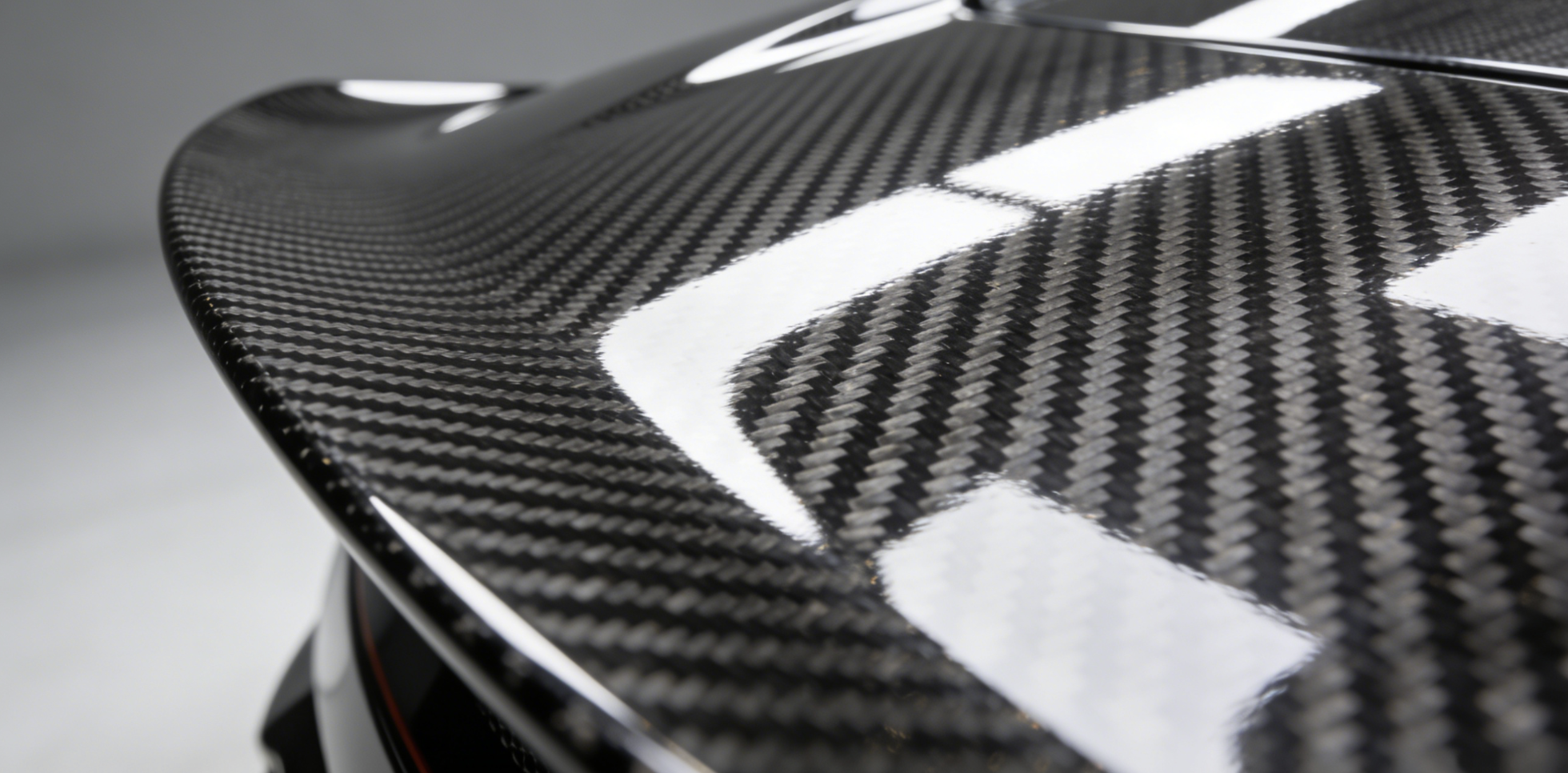
Gloss carbon fiber wrap is an engineered product. The specs behind it explain why it performs the way it does.
The standard vinyl gloss construction uses a 4-layer system: a protective barrier, polymeric vinyl core, acrylic adhesive, and a 130-micron PET liner on top. That top liner is the detail most buyers overlook. It creates the lustrous, light-catching sheen that makes gloss carbon look like real exposed fiber — under both natural light and garage lighting.
Here’s what that translates to in real numbers:
-
Thickness: 5.5 mil face film, 7.5 mil total with adhesive
-
Adhesion strength: 3–5 lb/in on automotive clear coats, 4–5 lb/in on ABS panels
-
Temperature tolerance: -65°F to +225°F post-application (-60°C to +107°C)
-
Dimensional stability: Less than 4% shrinkage
That temperature range is a bigger deal than it looks. Hoods, roofs, and door panels absorb serious heat in summer. A film that can’t hold its shape above 180°F will lift, bubble, or shrink at the edges within a season.
Where Gloss Shines (Literally)
Flat and gently curved surfaces are where gloss carbon fiber wrap gives you the most visual impact. Engine hoods and roofs perform best — they catch the most direct light, and the weave depth looks most realistic from these angles. Doors and side panels are a close second for a clean, showroom-ready finish.
Premium-grade gloss films come with air-release channels and repositionable adhesive. These two features are what separate a clean professional install from a bubbled, wrinkled mess. Budget gloss films skip both. They also leave out self-healing properties and hydrophobic topcoats. So micro-scratches stay visible, and water spots bond to the surface over time.
The bottom line on gloss: Your build lives outdoors — especially in sun-heavy climates. A quality gloss carbon wrap is built to handle that. It’s not just about the look. It’s about a material stack built to last.
Matte Carbon Fiber Wrap: The Real-World Performance Breakdown

People choose matte carbon fiber wrap for one reason above all others: it looks like it belongs on a stealth fighter, not a showroom floor.
That subdued, non-reflective surface isn’t just a style choice — it’s a different material behavior altogether. Gloss bounces light. Matte scatters it. The micro-textured top layer breaks up incoming light across multiple angles. That’s what creates the flat, aggressive look that’s taken over the custom car scene.
So here’s what that same surface texture means in practice.
The Trade-Off You Need to Understand
Matte finishes hide dust and road grime well — far better than gloss. Minor water spots and light contamination disappear against the non-reflective surface. For everyday drivers putting on miles in all kinds of conditions, that’s a real advantage.
The flip side is scratches. Fine scratches and abrasion marks show up clearly on matte surfaces because the surrounding area scatters light and the damaged zone doesn’t. Standard car waxes and gloss-enhancing detailers are off-limits too. They seal the micro-texture and leave permanent shiny patches that wreck the finish.
So your cleaning routine matters more here, not less:
-
Use pH-neutral, matte-specific detailers — no substitutes
-
Avoid circular scrubbing — wipe in straight lines
-
Stay away from automated car washes with abrasive brush systems
-
Apply matte sealant fresh every 6–12 months in high-UV environments
Where Matte Performs Best
Curved panels, interior trims, and A/B/C pillars are where matte carbon fiber wrap stands out. The material is flexible and forgiving on complex shapes. That’s a real benefit for DIY installers handling tight contours without professional heat guns or prior experience.
Interior use cases are a strong fit. Dashboard panels, center consoles, and door inserts sit out of direct UV exposure. That matters because UV is matte’s main durability weakness. Prolonged intense sun speeds up surface oxidation on matte films faster than on gloss versions — visible fading can appear 12–18 months earlier under the same harsh-climate conditions.
The takeaway is simple: matte carbon fiber wrap is the smarter pick for complex applications, interior coverage, or a low-key aesthetic — as long as you stick to the maintenance rules that come with it.
Durability Head-to-Head: Which Carbon Fiber Wrap Finish Lasts Longer
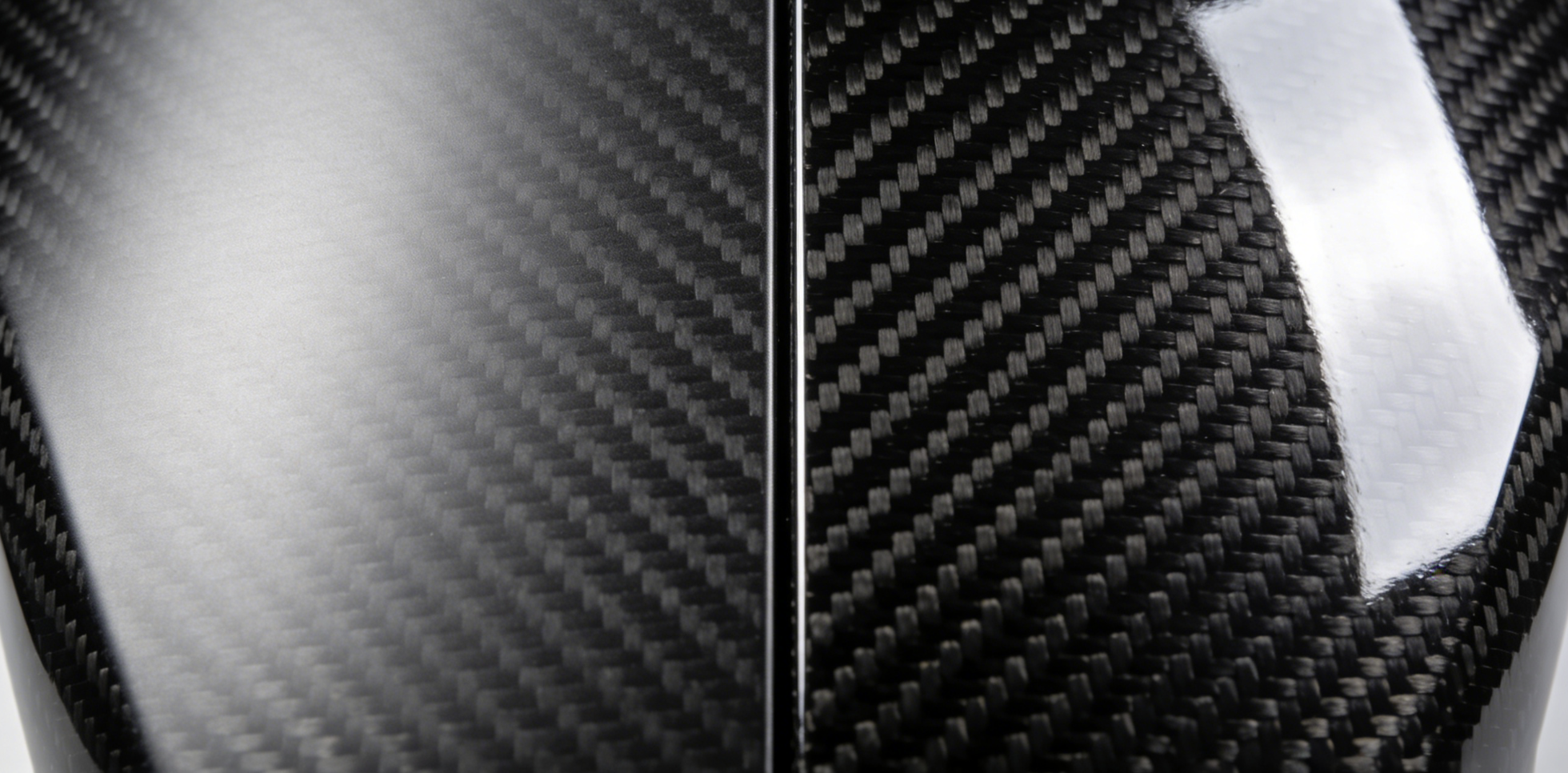
Here’s what most wrap sellers won’t tell you: the finish type alone doesn’t determine how long your carbon fiber wrap lasts. The material underneath does.
Both matte and gloss carbon fiber wraps fall in the 5–7 year range for standard cast vinyl. Premium TPU-based carbon PPF products push that to 7–10 years, backed by manufacturer warranties from brands like STEK and HEXIS. The finish — matte or gloss — isn’t really about raw lifespan. It’s about how that lifespan breaks down under your specific conditions.
That difference matters when you’re spending real money on a wrap.
Where the Durability Gap Shows Up
UV exposure is where the two finishes start to split. Gloss carbon fiber wrap holds its surface longer under sustained sun. The reflective topcoat works as a partial UV shield. It slows the oxidation process that dulls and fades vinyl over time. Matte carbon fiber wrap fading can show up 12–18 months earlier under the same high-UV conditions. The adhesive doesn’t fail — the micro-textured surface layer breaks down faster. That’s the real difference.
Thickness tells a similar story. The better-built gloss and matte products on the market both sit in the 7.5–8.5 mil range. Films thinner than that — budget options under 6 mil, for example — show edge lifting and shrinkage within the first two seasons. Finish type doesn’t matter much at that point.
The premium-tier products worth knowing:
-
STEK DYNOcarbon (gloss and matte): 10-year warranty, self-healing TPU base, hydrophobic topcoat on both variants
-
HEXIS CANDYFENCE CF001: 7.6 mil thickness, rated up to 10-year durability, gloss 3D carbon construction
-
Avery Dennison Pure Defense: Up to 8-year protection with cast vinyl construction
What the Data Doesn’t Cover
No published head-to-head test measures matte vs. gloss carbon fiber wrap UV fade rates, pencil hardness scores, or heat recovery times side by side. That gap in the data is real. What we do know is that installation quality and material tier outweigh finish type as durability predictors. Edge sealing, proper surface prep, and application temperature all affect long-term adhesion more than whether the surface scatters or reflects light. Pick the right tier first. Finish choice comes after.
Bottom line: High-UV climate? Gloss has a measurable edge. Covering interior panels or complex curves with limited sun exposure? Matte holds just as long. At that point, finish type takes a back seat. Material thickness and warranty tier matter more.
Aesthetics Compared: Gloss vs Matte Carbon Fiber Wrap in Different Lighting & Color Scenarios
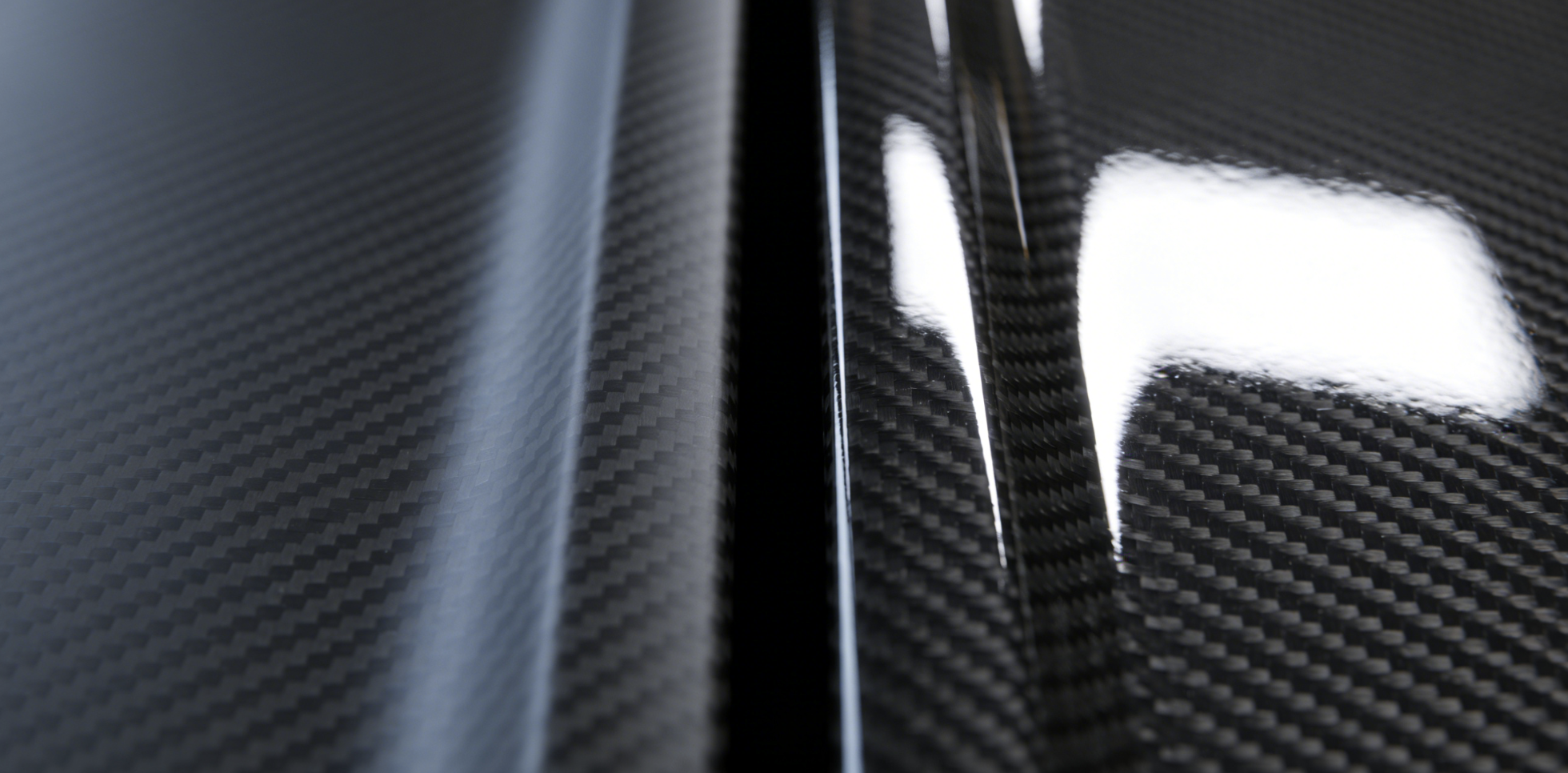
The finish you pick doesn’t just change how your car looks — it changes how your car looks based on where it is.
That’s worth paying attention to. Gloss and matte carbon fiber wrap don’t just differ in sheen level. They behave in opposite ways across lighting conditions and color choices. Get this wrong, and a color you loved in the showroom looks flat and dead on the street.
How Each Finish Behaves in Different Light
Gloss carbon fiber wrap is built for attention in bright environments. Direct sunlight, show lighting, and bright garage setups are where it shines. The reflective topcoat catches and boosts light, making the woven carbon pattern stand out from the surface. That depth — the three-dimensional quality that makes gloss wrap look close to real exposed fiber — needs strong, direct light to show up at its best.
Matte carbon fiber wrap works on its own terms. Under soft or overcast light — cloudy days, underground parking, early morning — matte holds its look far better than gloss. No harsh glare. No light pooling in the wrong spots. You get a controlled, low-key aggression that stays consistent no matter the conditions. Track builds and daily drivers both suit this behavior well.
Color Pairing Changes Everything
This is the factor most buyers overlook. Your color choice and your finish choice affect each other.
-
Black and deep gray: Matte wins here, no real debate. The non-reflective surface adds depth and a rich, almost mysterious quality that gloss can’t match in dark tones. Gloss on black also works against you — every fingerprint and smudge shows up right away.
-
Blue: Gloss boosts richness and color depth. A deep gloss blue carbon wrap under direct sun turns heads. Matte gives the same color a softer, quieter tone — solid choice if low-key is what you’re going for.
-
Red and bold colors: Gloss brings out vibrancy under sunlight. Matte pulls bold colors back into something more refined and deliberate — less street racer, more precision build.
A simple rule: matte belongs on muted, earthy, and dark tones — black, gray, olive. Gloss belongs on vivid colors that need that shine boost to hit the way they should.
What Community Preference Data Shows
Numbers from 2025 buyer surveys show 58% of carbon fiber wrap buyers prefer matte — citing a more refined, forward-looking look. That lines up with what you see across custom build forums and enthusiast communities: matte leads in performance and track builds; gloss stays the standard for show cars, luxury builds, and European enthusiast communities — BMW owners especially.
Neither preference is wrong. They’re answering different questions about what you want the car to say.
The straightforward way to decide: Your car lives under show lights or direct sun, and you’re running a vivid color — gloss is the right visual call. It’s a dark-toned daily or performance build, and you want solid results in any light — matte is the smarter aesthetic choice.
Gloss vs Matte Carbon Fiber Wrap: Price, Installation & Total Cost of Ownership
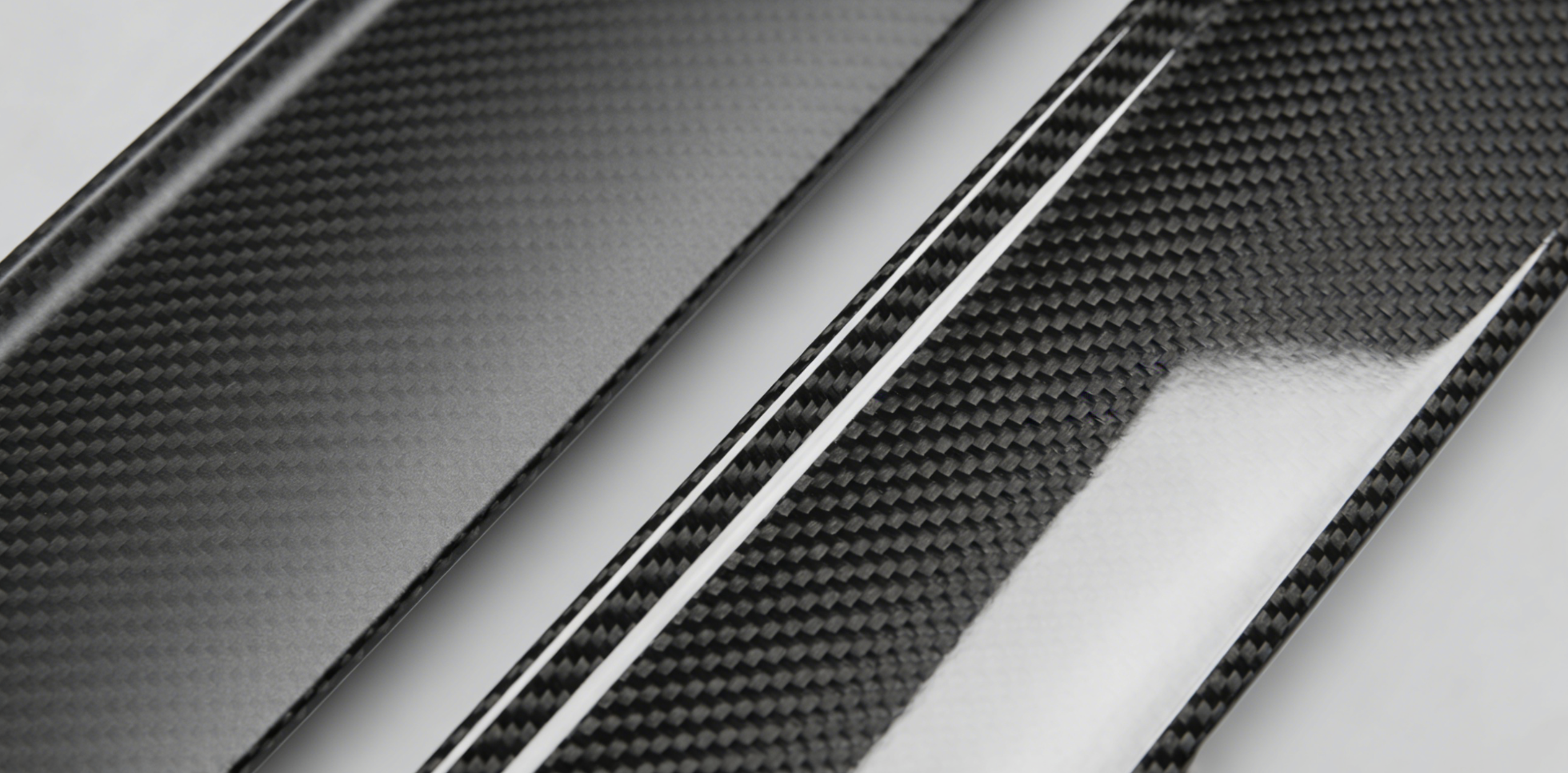
The price tag on the product page is just part of the story. Your real spend — across materials, installation, maintenance, and eventual re-wrap — tells a different one.
Here’s how the numbers break down.
Material Cost: Matte Runs Higher From the Start
Raw material pricing for both finishes lands in the $5–$10 per square foot range for standard cast vinyl carbon fiber wrap. Matte sits at the higher end — and sometimes beyond it.
A gloss carbon fiber wrap roll (5×10 ft) runs $159–$169, working out to about $3.20–$3.40/ft² in bulk. Comparable matte rolls push up to $299.99 for the same size. That’s a 10–20% price premium for matte. The extra cost comes from the added processing steps needed to create that micro-textured surface.
For a full sedan wrap (200–250 sq ft), budget $1,000–$2,500 in materials alone before anyone touches your car.
Installation: Matte Costs More Here Too
This is where the gap widens.
-
Partial wrap (hood, roof, mirrors): $200–$600
-
Full vehicle installation: $1,500–$3,000+, with professional shops reaching $2,000–$5,000
Matte brings extra difficulty that gloss doesn’t. Seam alignment has to be precise. Mismatches and small imperfections stand out against a flat surface in a way they just don’t on gloss. Most professional installers charge a 10–30% premium for matte work. Gloss is more forgiving on curves and covers minor application errors better. That makes gloss the practical DIY option. Matte? Leave it to the pros.
Total Cost of Ownership Over 5 Years
|
Finish |
Upfront Total |
Maintenance/Year |
5-Year TCO |
Annual Cost |
|---|---|---|---|---|
|
Gloss |
$2,500–$3,500 |
$100–$200 |
$3,000–$4,500 |
$600–$900 |
|
Matte |
$2,800–$4,000 |
$50–$150 |
$3,050–$4,750 |
$610–$950 |
The TCO gap is smaller than most buyers expect. Matte costs $300–$500 more upfront, but its lower maintenance needs eat into that difference over time.
Installation is the real deciding factor. Do a gloss wrap yourself and save $500–$1,000 in labor — gloss wins the cost equation by a solid margin. Go pro on both finishes, and the five-year numbers end up close to the same.
One more thing worth factoring in: re-wrap cycles. Plan on $2,000–$5,000 every 5–7 years, regardless of finish. Stepping up to premium brands like 3M or Avery Dennison adds about 20% upfront. In return, you get a lifespan of 7–10 years. That pulls your annual cost down to $400–$700 — and that’s where the real long-term value sits.
The bottom line: Budget is tight and DIY is on the table? Gloss is the safer financial pick. Going pro and want low maintenance over the long run? Matte’s total cost lands in the same range — and the look more than holds its own.
Top Carbon Fiber Wrap Brands in 2026: Gloss & Matte Options Worth Buying
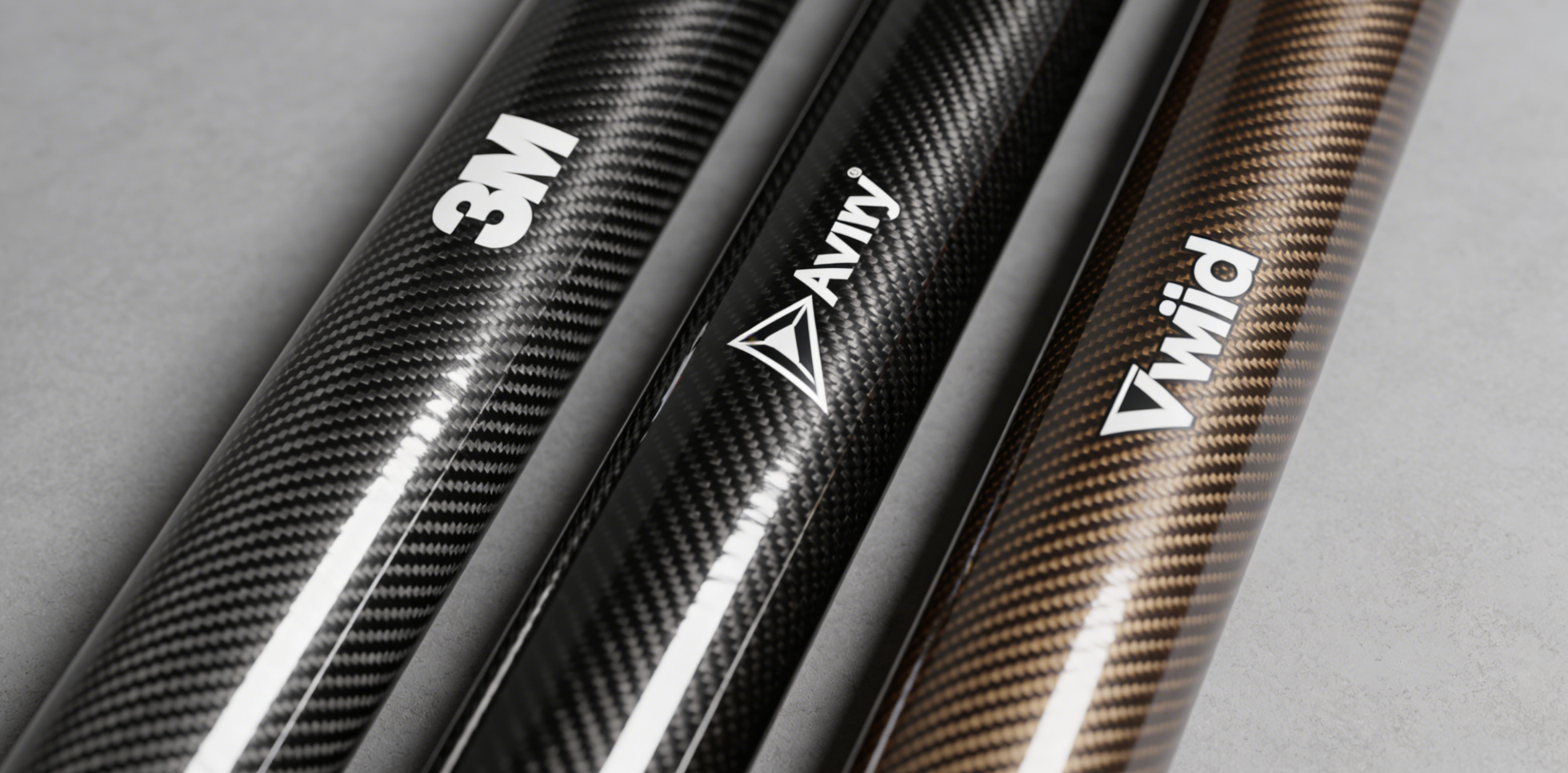
The brand you choose matters as much as the finish you pick. A matte wrap from a budget manufacturer fades faster than a gloss wrap from a premium one — every time.
Here’s where each major brand stands in 2026:
|
Brand |
Gloss Option |
Matte Option |
UV Resistance |
Durability |
Price Range |
|---|---|---|---|---|---|
|
3M |
2080 Series |
Yes |
Certified, high |
5–7 years |
$800–$1,200 |
|
Avery Dennison |
SW900 |
Yes |
High, certified |
5–6 years |
$800–$1,100 |
|
CarLike |
Electro/CF |
Yes |
Strong |
3–5 years est. |
$400–$800 |
|
KPMF |
Iridescent |
Yes |
Premium cast |
4–6 years |
$600–$1,000 |
|
RAXTiFY |
UV films |
Yes |
Explicit UV |
3–5 years |
$109–$700 |
What Separates the Leaders
3M and Avery Dennison sit at the top for a reason. 3M’s Comply™ adhesive technology cuts out air bubbles during install. Avery’s Easy Apply RS™ system lets you reposition the film before it locks down. Both fix the two biggest install problems — bubbles and misalignment. On complex matte jobs, that repositionable adhesive isn’t a bonus. It’s a must.
RAXTiFY is the go-to starting point for DIYers on a budget. The $109–$700 price range makes it easy for first-time installers to get started. Just plan for a re-wrap — the 3–5 year durability cap comes up fast.
CarLike delivers more than its price tag suggests. You get 30+ series, 1,500+ colors, and 16 years of production behind every roll. It’s a solid mid-tier pick for buyers who want real variety without paying premium prices.
One Red Flag to Watch
Budget films under $500 show a 50% higher defect rate than premium options. Low-grade polymeric films with no built-in UV inhibitors fail in predictable ways:
-
Bubbling starts early
-
Edges curl within two seasons
-
Visible fading shows up by the six-month mark
These aren’t rare cases — they’re documented failure patterns across the category.
The fix is simple. Check for cast vinyl construction. Look for a stated UV warranty. Do both before you buy anything.
FAQ: Matte vs Gloss Carbon Fiber Wrap — Real Questions Answered
These are the questions that show up in every forum thread, every comment section, every DM to wrap shops. Here are the straight answers.
Can you wax matte carbon fiber wrap?
No. Wax seals the micro-textured surface. It leaves permanent shiny patches that ruin the finish. Use a pH-neutral, matte-specific detailer — no polish, no gloss enhancers. Wipe in straight lines, never circular. Do this right and your matte wrap holds up for years without issue.
How often does gloss carbon fiber wrap need replacing?
Quality gloss wrap runs 5–7 years before a replacement makes sense. Premium brands like 3M can push past 7. Check edge wear each year — that’s where degradation starts first.
Which finish handles UV better?
Gloss wins, and it’s not close. The reflective topcoat blocks a portion of UV rays. This slows surface breakdown over time. Matte fades faster under long-term sun exposure — you’ll see the difference sooner than you’d expect.
What’s the difference between 3D, 4D, and 5D carbon fiber wrap?
Simple breakdown:
– 3D — Basic texture, 0.15–0.18mm thickness, entry-level price
– 4D — Deeper texture, 0.18–0.20mm, ~85% realism
– 5D — Deepest texture, 0.20–0.25mm, ~95% realism, costs 20–30% more
Finish type applies across all three. Gloss 5D gives you the most visual depth. Matte 4D is the sweet spot for a refined, low-reflection look without the premium price.
Conclusion
Most comparison guides skip this part: there’s no single “better” finish — just the one that fits your driving life.
Gloss carbon fiber wrap delivers drama and visual depth. Matte carbon fiber wrap handles fingerprints better and brings that low-key, factory-exotic look taking over 2026 builds.
What about durability? Go with a quality 3D or 4D film from a solid brand. Either finish can hold up 5–7 years. The key is keeping up with basic maintenance.
The real mistake isn’t picking the “wrong” finish. It’s buying the wrong grade of film for your climate, your car, and how much upkeep you’re willing to do.
You’ve done the research. You know what separates a wrap that lasts from one that fades by summer.
Now make the call.
Contact HyperX Carbon – Your Trusted Chinese Carbon Fiber Partner
Ready to source high-performance carbon fiber materials or custom forged carbon fiber parts from China?
HyperX Carbon is a leading manufacturer with 20+ years of expertise, specializing in aerospace-grade forged carbon fiber, prepreg, tubes, sheets, and lightweight automotive/drone/medical components. We offer:
-
Stable supply chain with premium raw materials (Toray, Mitsubishi, Hengshen)
-
AS9100D certified production for aerospace & UAV applications
-
Rapid prototyping (5-8 weeks) and monthly capacity exceeding 180,000 parts
-
Competitive pricing with 15-18% cost savings on forged carbon solutions
-
Full customization: from T700/T1100G to ultra-high modulus grades
Whether you’re an eVTOL developer, automotive OEM, drone manufacturer, or medical device engineer, HyperX delivers consistent quality, batch-to-batch reliability, and reliable delivery.
Get in touch today for a free consultation, custom quote, or material sample.
📧 Email: [email protected]
🌐 Website: https://www.hyperxcarbon.com/
📞 Phone/WhatsApp: +86 15623270276 (English support available)
Let’s build your next lightweight innovation together – contact HyperX Carbon now and stay ahead in the low-altitude and advanced composites market.




