
Shaving 15 pounds of unsprung mass sounds like a spec sheet number — until you feel it through a fast corner. Forged carbon fiber wheels don’t just change how your car performs. They change how it communicates with you. Every surface texture, every lateral force — translated with a precision that forged alloy can’t match. But prices are climbing past $15,000 a set. A flood of 2026 models is hitting the market from OEM programs and boutique aftermarket brands alike. So the real question isn’t whether they work. It’s whether they’re the right call for your specific build.
Here’s a complete breakdown of what you need to know:
-
The manufacturing science behind forged carbon fiber
-
Honest weight and strength data
-
Failure modes that nobody advertises
-
A straight-talking buying guide to help you spend smart — or figure out you don’t need to spend at all
Real-World Weight Savings & Performance Gains: The Numbers Behind the Claims
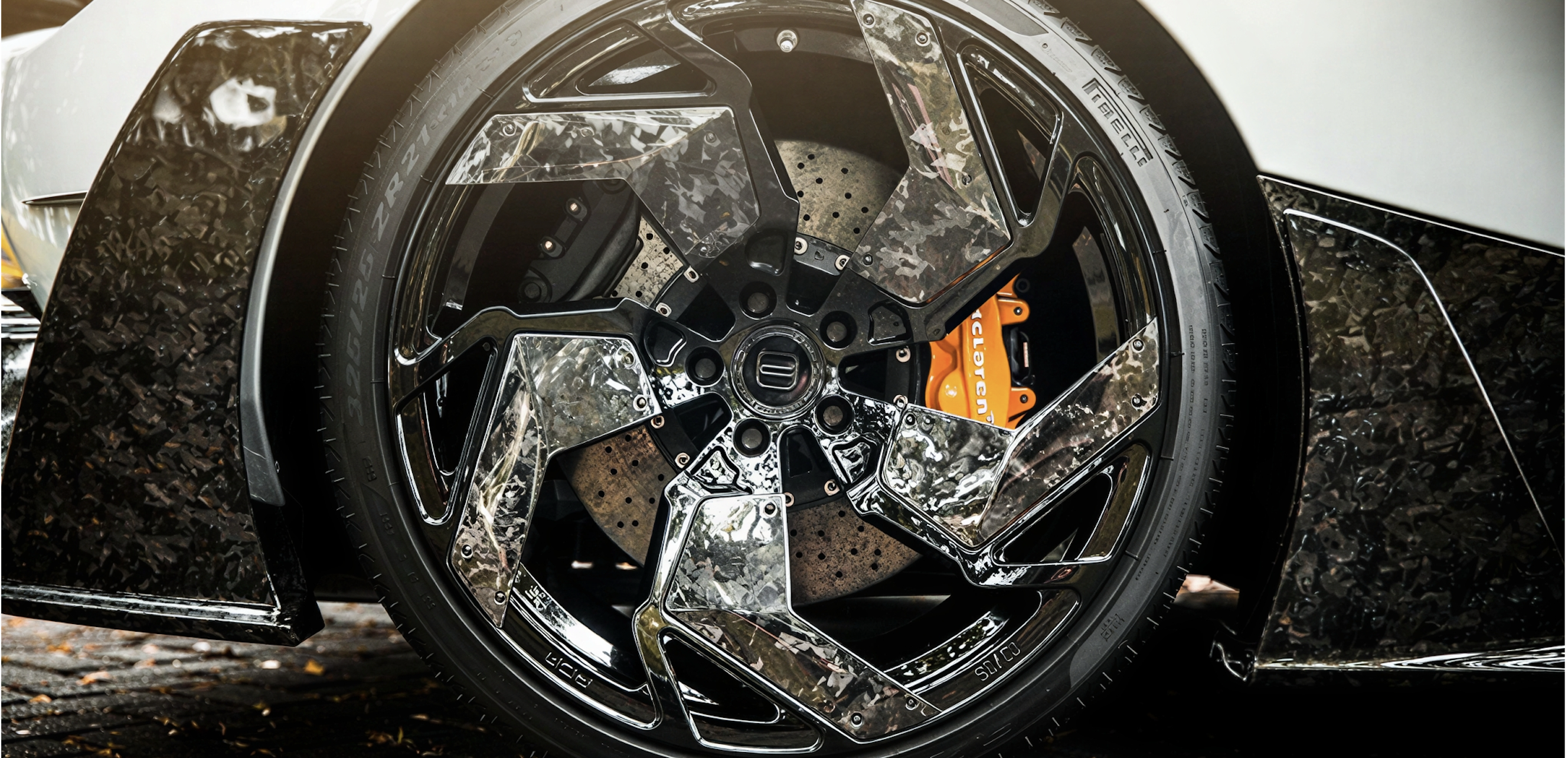
The physics here are unforgiving — and in the best possible way.
Every pound you strip from a rotating wheel doesn’t behave like a pound from your trunk. It behaves like two or three pounds. That’s the unsprung mass multiplier effect. It’s also the single most important number nobody mentions when selling you a wheel upgrade.
Here’s the baseline: a 10% reduction in total vehicle mass delivers 3–7% in fuel savings for combustion engines and up to 5% energy efficiency gains for EVs. Meaningful, but not dramatic. Now take that same logic and apply it to rotating components — wheels, axles, rotors. The conversion ratio changes completely. Each pound saved at the wheel delivers 2–3× the performance effect of a pound saved from sprung mass. Acceleration, braking, cornering response, efficiency — all of them improve at once.
What 5–15 lbs Actually Buys You
A full set of forged carbon fiber wheels saves 5–15 lbs over comparable forged alloy. That range doesn’t sound like much. Run it through rotational inertia math, though, and the output looks like this:
-
0–60 mph response: 0.2–0.5 seconds felt improvement from reduced MOI alone — not from added horsepower
-
60–0 mph braking: 3–8 feet shorter stopping distance per 10% MOI reduction
-
Cornering turn-in: 0.2–0.5 seconds faster response. The car rotates sooner, with less lag between input and behavior
-
Lap time: Track data shows 0.3–0.8 seconds per lap from a 5–15 lb unsprung mass reduction — consistent with what MotoGP and WSBK programs documented through rotating mass testing
The MOI formula is straightforward: MOI = mass × radius². A 10% cut in moment of inertia means about 1% less force needed for the same angular acceleration. Drivers feel this as throttle response that’s 20–30% snappier — instant rev-match, zero hesitation lag.
The Fuel and Efficiency Angle
For road car owners, the efficiency case is real but secondary. Rotational mass savings feed through drivetrain efficiency in a way that static mass savings don’t. Less inertia on every acceleration cycle means the engine or motor works a little less hard — at every corner exit, every traffic light, every time you pull away. That adds up over time.
The benchmark figure: 10% total mass reduction delivers a 6% fuel economy gain through powertrain downsizing on ICE platforms. For BEV owners, the same mass logic ties directly to battery sizing. Lighter rotating components let engineers spec a smaller pack and still hit the same range targets.
The weight savings from forged carbon composite wheels aren’t a marketing abstraction. They’re physics doing exactly what the numbers say — measured in seconds, feet, and fractions of a percent. No breathless product launch language needed.
Strength, Durability & Real Failure Modes: What the Specs Don’t Tell You
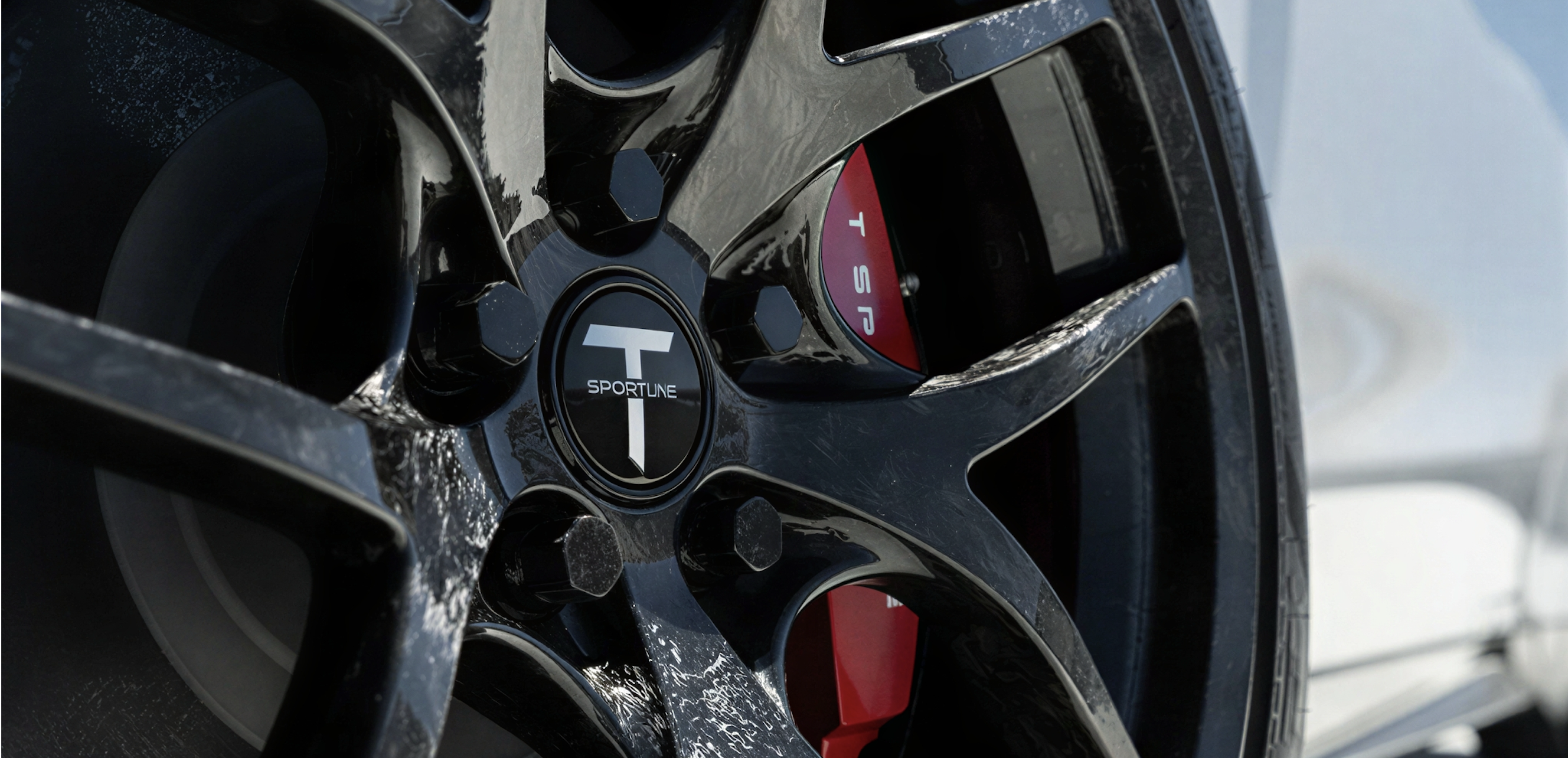
Carbon fiber doesn’t lie. It also doesn’t warn you — and that distinction is everything.
Forged alloy bends. It yields. It gives you a slow leak, a wobble, a visible crease before anything catastrophic happens. Carbon fiber behaves in a completely different way. It fails along a crack line. The crack spreads fast. There’s no plastic deformation, no buffer, no gradual warning like you get with alloy. That’s not a flaw in the material. That’s physics. But the spec sheets never seem to mention it.
How Carbon Fiber Wheels Fail
Two failure modes are worth understanding. Each one plays out under very different conditions.
Brittle fracture is the dramatic one. It happens at high-speed impacts — potholes at over 100 km/h, road debris at speed. At over 150 km/h, impact risk climbs more than 200%. Strike something deeper than 5 cm at those speeds, and the crack spreads in an instant. No plastic deformation. No warning deformation. No second chance. This is the failure mode that built carbon fiber’s reputation for fragility. That reputation has some truth to it.
Fatigue crack propagation is the quiet one. Sub-critical cracks — too small to see, too small to feel — grow in tiny steps across 100,000 to 1,000,000 load cycles under repeated 50–100 Hz vibrations. Cobblestone roads at 120+ km/h push that risk up by 3×. The wheel doesn’t collapse all at once. It degrades over time. By the time you notice something is wrong, the damage is already structural.
The Repair Math Nobody Likes Talking About
|
Material |
Repair Cost |
Replacement Cost |
|---|---|---|
|
Forged Alloy |
$200–$500 |
$300–$700 |
|
Forged Carbon Fiber |
Not repairable |
$800–$1,500+ |
Aluminum’s yield strain runs 10–20%. Carbon fiber’s sits below 1%. That gap in ductility is the core reason alloy can be repaired and carbon cannot. A bent alloy wheel goes to a shop. A cracked carbon wheel goes in the bin.
What Certified Testing Tells You
The leading brands have published real impact data:
-
Rotobox: 15 kJ drop test — equal to a 50 km/h pothole strike — survived across five repeated impacts. Certified to TÜV SÜD EN 14764 and ECE R110.
-
BST (Brembo): 12 kJ at a 13° impact angle, with fatigue validated to 10⁷ cycles at 300 MPa. Holds DOT FMVSS 120 and TÜV SÜD rail approval.
-
HyperX Carbon: 10 kJ radial impact threshold, with an axial fatigue limit of 450 MPa at 10⁷ cycles. Certified ECE R90 and ISO 4210-5 adapted for motorcycle use.
The benchmark that matters: forged aluminum fails ductile at 8–10 kJ. Forged carbon fails brittle at 9–12 kJ. The energy thresholds are close. The failure behavior is not.
The Real-World Derating Rule
Engineering specs are tested at 1% failure probability. Real-world use runs closer to 50%. That gap is significant. Lab conditions are not a track day on an unfamiliar circuit. In practice, subtract 8–10% from any published fatigue figure before you trust it. That’s the stress buffer you actually need.
For street use with occasional track exposure, certified forged carbon wheels hold up well within their design range. That range just has harder limits than alloy. Know where those limits are before you push anywhere near them.
2026 Buying Guide: How to Choose the Right Forged Carbon Fiber Wheels for Your Setup
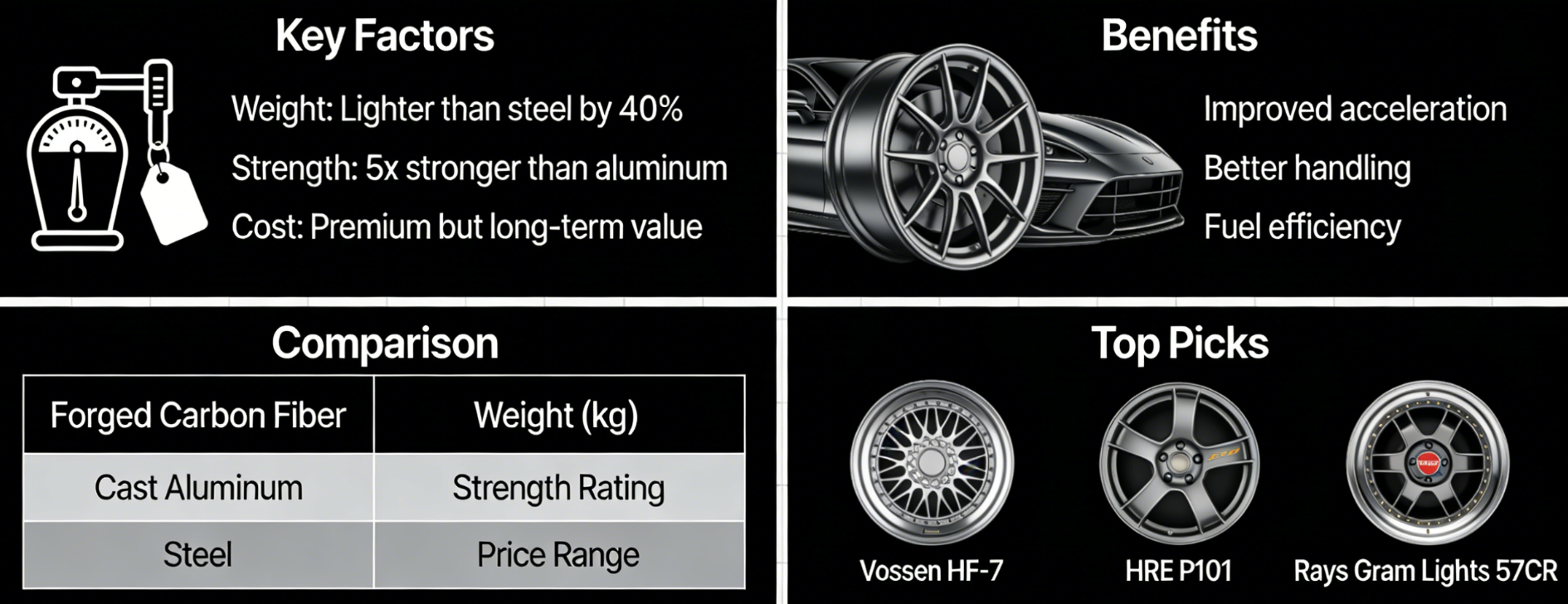
Wrong wheel, wrong build. It’s that simple — and that expensive.
The 2026 market is packed with options. OEM programs, boutique carbon shops, hybrid carbon-alloy wheels at every price point — the noise is loud, and a bad decision costs well past a thousand dollars. This guide breaks it down to three variables: your vehicle, your use case, and your budget. Lock in all three first.
Step 1: Match Your Vehicle Category First
Fitment isn’t a formality. It’s the first filter.
Harley-Davidson Softail (Fat Boy, Heritage Classic, Breakout): You need a 25mm front / 28mm rear axle spec, a 10mm hub spacer, and 5×114.3mm PCD. Wrong axle diameter and the wheel won’t seat. Full stop.
Harley Touring (Road King, Street Glide, Electra Glide): Spec for 12mm rear axle shims and reinforced hubs. The load profile differs from Softail. The hardware reflects that difference.
Pan America 1250: 22mm front axle collars with an ABS sensor ring. Skip this and your ABS-dependent traction systems won’t work. No exceptions.
Tesla Model S / Plaid: 19–21″ diameter range. The UP-03 and UP-05 forged carbon options are built for this platform. Squared and staggered setups both work. A common configuration runs 255/45ZR20 up front.
Check every dimension before you spend: PCD, offset, center bore, hub depth, caliper clearance. None of these are optional. Get them all right.
Step 2: Weigh Your Use Case
Three scenarios. Three different risk profiles. Three different wheels.
|
Scenario |
Risk Weight |
What Matters Most |
|---|---|---|
|
Pure Track |
High — 22J ISO 8564 impact standard |
13.2 lbs front / 18.7 lbs rear; 19% lighter vs. aluminum |
|
Weekend Driving |
Medium |
18,000-mile bearing service intervals; thermal stabilization critical |
|
Daily Commute |
Low — but avoid gravel roads |
Shorter service life vs. aluminum (24,000-mile benchmark) |
Track builds can justify the premium on weight savings alone. The lap time data holds up — but only if you’re putting in real laps. A daily driver on cracked city pavement is a different calculation. The risk math changes completely.
Step 3: Set a Budget Tier, Then Pick the Right Option
|
Tier |
Price Range |
Best Option |
|---|---|---|
|
Entry |
$1,500–$3,000 |
Forgeline Carbon+Forged hybrid — carbon rim, forged aluminum center. Repairable. Practical. |
|
Mid |
$3,000–$5,000 |
Harley 2026 Forged Carbon — 13.2/18.7 lbs, 1,850 kgf radial load rating. Purpose-built fitment. |
|
Premium |
$5,000+ |
UP-03 Carbon Fiber — Tesla-specific, Pikes Peak specification. No compromises. |
The hybrid carbon-alloy option gets overlooked more than it should. A carbon rim paired with a forged aluminum center cuts 19% of the mass compared to full aluminum. Unlike full-carbon construction, it’s repairable after impact. Impact resistance hits 22J — below the 35J rating of full alloy, but well above full carbon’s brittle threshold. Service intervals sit around 18,000 miles. Pricing runs $550–600 per piece for a 20″ 5×114.3 fitment. Diameters go from 15–30″. For most street builds, this tier gives you the best value per pound saved.
5 Things to Verify Before You Buy in 2026
Counterfeit forged carbon is in this market. Not edge cases — real, documented products that look right but aren’t.
-
Certification check: Confirm SAE J2530 compliance and a minimum 1,850 kgf radial load rating. Scan the QR code for JASO T203-85 serial verification. No certification? Walk away.
-
Carbon layer inspection: Fiber length should run 1.2–1.8mm with even distribution. Voids must stay below 0.05mm. Look for the sheen that comes from 72-hour stabilization at 120°C — it’s visible and distinctive. Micro-fractures are not visible, which makes them more dangerous.
-
Fitment verification: Check PCD (5×114.3 / 5×130 / 6×139.7), ET offset, center bore, hub depth, axle diameter, and caliper clearance. Every dimension. Every time.
-
After-sales policy comparison:
|
Brand |
What You’re Getting |
|---|---|
|
Harley |
Model-specific HWK-FC2026-XX kit; certified repair centers |
|
Unplugged Performance |
2,000-mile no-wobble warranty; TPMS and lug nut sets included |
|
Rotobox |
Pentagon hub lock; non-repairable after impact damage |
-
Spotting fake forged carbon: Real forged carbon shows random short-fiber grain under 15,000 psi / 180°C compression. Test resin voids — degassed material reads below 0.05mm. Uniform layup patterns are a red flag. Real forged carbon doesn’t look machined. It looks compressed.
OEM vs. Aftermarket in 2026: The Real Value Map
|
Type |
Specs |
Price-to-Performance |
|---|---|---|
|
OEM Mustang (prior gen, 19×10.5F/11R) |
Discontinued in 2026; high G-force tuning |
Lower — and unavailable |
|
Porsche / Ferrari OEM |
Proprietary fiber process |
2× aftermarket cost; track-only justification |
|
Aftermarket (UP Tesla / Rotobox) |
12.1–13.2 lbs front; torque pentagon lock; 20–21″ packages |
1.5× better value — lightweight plus custom fitment |
The OEM prestige argument doesn’t hold the way it used to. Aftermarket programs from Unplugged Performance and Rotobox now build at the same engineering level — and price with more flexibility. Unless your build needs OEM-spec proof for warranty or homologation reasons, aftermarket is where the 2026 value sits.
Three variables. One decision. Match your vehicle, your use case, your budget — in that order. Everything else is marketing.
Top Forged Carbon Fiber Wheel Brands & Models for 2026: Expert Recommendations

Six brands dominate the serious conversation in 2026. They don’t all cost the same. They don’t all fit the same vehicles. They are not interchangeable. Here’s who’s building at the highest level — and what each brand delivers.
Rotobox: The Benchmark for Motorcycle Forged Carbon
Rotobox leads the motorcycle carbon wheel market for one reason: they’ve been doing this longer than almost anyone. The testing data backs up that reputation. Their 2026 lineup holds TÜV SÜD EN 14764 certification. It has survived 15 kJ drop tests — equal to a 50 km/h pothole strike — across five repeated impacts without failure. Pentagon hub locking systems come standard.
One thing you need to know upfront: Rotobox wheels are non-repairable after impact damage. There’s no fixing them once they take a hard hit. Go in with that expectation.
Best for: High-performance motorcycles, track-day builds, riders who put maximum weight reduction above repairability.
BST (Blackstone Tek): Engineering-First Carbon for Track and Road
BST — now part of the Brembo group — tests to 10⁷ fatigue cycles at 300 MPa. It holds DOT FMVSS 120 and TÜV SÜD rail approval. Their 12 kJ impact rating uses a 13° angle. That matches real-world oblique strike geometry, not clean laboratory axial loading. That’s the detail that sets BST apart from brands publishing straight-line numbers that look good on paper.
Best for: Supercar and high-end GT platforms. Owners who want DOT road legality and real track credibility in the same wheel.
Dymag: The Hybrid Architecture Specialists
Dymag built their reputation on one idea that turned out to be right: full carbon isn’t always the best answer. Their carbon-aluminum hybrid design uses a forged 6061-T6 aluminum center with a carbon fiber barrel. You get 19% mass reduction versus full aluminum. Impact resistance holds at 22J — well above where full carbon starts to crack. Repair stays possible after non-catastrophic strikes.
For street builds with occasional track use, Dymag’s hybrid is the most practical engineering choice in the 2026 market. You keep real weight savings. You don’t give up all repairability to get them. That’s a trade-off worth considering.
Best for: Dual-use builds — street first, track second. Owners who want genuine weight savings without accepting full carbon’s zero-repair risk.
2026 Brand Comparison: Quick-Reference
|
Brand |
Impact Rating |
Fatigue Limit |
Repairability |
Primary Certification |
Best Fit |
|---|---|---|---|---|---|
|
Rotobox |
15 kJ |
— |
No |
TÜV SÜD EN 14764 |
Motorcycle / track |
|
BST |
12 kJ @ 13° |
300 MPa / 10⁷ |
No |
DOT FMVSS 120, TÜV |
Supercar / GT road+track |
|
HyperX Carbon |
10 kJ radial |
450 MPa / 10⁷ |
No |
ECE R90, ISO 4210-5 |
Broad fitment, EV+ICE |
|
Dymag (hybrid) |
22J |
— |
Yes |
SAE J2530 |
Street/track dual-use |
One Practical Rule for 2026
Don’t buy brand. Buy certification first, fitment second, brand third.
A wheel without a verified serial number and published fatigue data is a liability — no matter what the label says. Counterfeits in this market look fine in photos. They fail at speed. Scan the QR code. Check the cert. Then decide.
Forged Carbon Fiber Wheels FAQ: 8 Questions Every Buyer Asks Before Purchasing
Eight questions. Every single one comes up before money changes hands. Here are straight answers — no filler, no hedging.
1. Are forged carbon fiber wheels repairable?
No. This is a hard line, not a caveat. Carbon fiber structural damage triggers composite delamination inside the laminate. It’s invisible, progressive, and no conventional repair method can fix it. Aluminum can be welded back. Carbon cannot. A genuine impact means one thing: replace the wheel. Hit a pothole at speed? Inspect for microcracks. That inspection isn’t optional maintenance — it’s a safety protocol.
2. Are they worth the money?
For performance builds, yes. You get 25–50% weight reduction over forged aluminum. Some configurations hit 40% over cast OEM. Carbon Revolution has recorded 40–50% mass reduction on like-for-like replacements. That drops unsprung mass — and lower unsprung mass sharpens acceleration, braking, and handling all at once. For daily drivers on a tighter budget, the math gets harder. For supercar and hypercar owners? The question isn’t whether they’re worth it. It’s which set.
3. Can I daily drive forged carbon fiber wheels?
Yes — with monthly inspections and route awareness. These wheels have passed 750 kg load ratings under TÜV, SAE, JWL, and VIA certification. Field testing covers pothole streets and race circuits. Thermal stability stops brake heat from degrading the rim. One caveat: salted winter roads need monitoring. Protective coatings help. Neglect doesn’t.
4. How long do they last?
Ten years or more with reasonable care. Long-term testing shows no real degradation from UV exposure, chemical contact, or sustained heat cycles. Users report like-new performance after years of mixed street and track use. SAE and DOT lifecycle data puts forged carbon at 3–5× the endurance benchmark of comparable aluminum wheels. Low-maintenance coatings push that even further.
5. What certifications should I verify before buying?
At minimum: TÜV, SAE, JWL, and VIA. These aren’t marketing badges. They’re load and fatigue thresholds backed by real engineering. The 750 kg radial load rating is your structural floor. A seller who can’t produce certification documentation — or whose QR serial scan returns nothing — is a seller you walk away from.
6. Carbon fiber wheels vs. titanium wheels — which is lighter?
Carbon fiber wins, and it isn’t close. Multiple manufacturers have confirmed a 25–40% mass advantage over aluminum. Titanium’s role in wheel construction is mostly limited to hardware — bolts, lug nuts, fastener systems — not full rim production. Brands like Brixton that reference titanium are describing RAU titanium hardware paired with carbon barrels. Not solid titanium wheels. For serious rotational mass reduction in automotive use, carbon fiber is the answer. Full stop.
7. Do forged carbon fiber wheels affect ride quality?
They improve it. Carbon fiber absorbs road vibration better than aluminum. That cuts noise, vibration, and harshness (NVH) across the contact patch. More rigidity doesn’t mean a harsher ride — with carbon, the opposite is usually true. On large-diameter setups (18–23″), reduced rotational mass plus better vibration absorption gives you a cleaner, smoother ride. You’ll notice it most at highway speeds.
8. What’s the actual weight difference versus OEM wheels?
Expect 40–50% lighter than standard OEM aluminum on most platforms. On a 20/21″ Lamborghini OEM fitment, that can mean 15 kg of total reduction across the set. Brixton’s carbon program documents 25% savings versus forged aluminum and 40% versus cast OEM. Vision CFF sits at 30% versus forged aluminum. For EV platforms, that mass reduction translates straight into range. Every kilogram of unsprung mass removed at the wheel delivers more efficiency than pulling the equivalent weight from anywhere else on the vehicle.
Conclusion
The weight savings are real. The performance gains are measurable. By 2026, forged carbon fiber wheels crossed from exotic luxury into serious engineering territory — something serious drivers can back with data, not just desire.
Three things separate a smart upgrade from an expensive mistake:
-
Understanding the construction process
-
Matching the wheel to your actual use case
-
Buying from a manufacturer with testing standards that hold up
This guide gives you all three.
You’ve done the research. You know what unsprung mass reduction does to a lap time. You know how forged carbon fiber rims stand apart from the imitations flooding the market.
Contact HyperX Carbon – Your Trusted Chinese Carbon Fiber Partner
Ready to source high-performance carbon fiber materials or custom forged carbon fiber parts from China?
HyperX Carbon is a leading manufacturer with 20+ years of expertise, specializing in aerospace-grade forged carbon fiber, prepreg, carbon fiber tube, carbon fiber sheet, and lightweight carbon fiber automotive parts/carbon fiber drone components/carbon fiber medical components. We offer:
-
Stable supply chain with premium raw materials (Toray, Mitsubishi, Hengshen)
-
AS9100D certified production for aerospace & UAV applications
-
Rapid prototyping (5-8 weeks) and monthly capacity exceeding 180,000 parts
-
Competitive pricing with 15-18% cost savings on forged carbon solutions
-
Full customization: from T700/T1100G to ultra-high modulus grades
Whether you’re an eVTOL developer, automotive OEM, drone manufacturer, or medical device engineer, HyperX delivers consistent quality, batch-to-batch reliability, and reliable delivery.
Get in touch today for a free consultation, custom quote, or material sample.
📧 Email: [email protected]
🌐 Website: https://www.hyperxcarbon.com/
📞 Phone/WhatsApp: +86 15623270276 (English support available)
Let’s build your next lightweight innovation together – contact HyperX Carbon now and stay ahead in the low-altitude and advanced composites market.




