
Swapping your factory steering wheel for a custom carbon fiber steering wheel changes how the car feels right away. The grip is tighter. Feedback sharpens up. Your cockpit starts to match the way the car actually performs.
Getting there takes some work, though. Hub adapter compatibility, airbag trade-offs, finish options, lead times — there’s a lot to sort through before you hit “order.” Most buyers stall out somewhere in that process.
This guide covers all of it. Here’s what you’ll find inside:
-
Fitment compatibility by make and model, including 2026 vehicles
-
A step-by-step order walkthrough so you know what to expect
-
Pricing factors that affect your total cost
-
Safety questions worth asking before you commit
Already deep into your research? Good — you’re in the right place. Ready to pull the trigger on that upgrade? Everything you need is here.
2026 Vehicle Fitment Compatibility: Which Cars Can Be Upgraded

Not every car on this list will accept a custom steering wheel swap the same way. Three things drive compatibility: hub adapter availability, column spline count, and airbag system design. These factors vary by platform — and sometimes by trim level within the same model. Know where your vehicle stands before you order. It saves weeks of back-and-forth.
Here’s the current fitment picture for 2026 model year vehicles.
Confirmed 2026 Model Fitment
Each platform below has been checked for custom carbon fiber steering wheel compatibility. You’ll need the right hub adapter and quick-release setup:
|
Vehicle |
Hub Adapter Required |
Airbag Delete Needed |
Notes |
|---|---|---|---|
|
Toyota 4Runner (2026) |
Yes — Toyota OEM spline |
Yes |
Clean column access |
|
Toyota Corolla (2026) |
Yes — Toyota OEM spline |
Yes |
Compact hub profile |
|
Hyundai Palisade (2026) |
Yes — Hyundai-spec |
Yes |
Multi-function stalk retained |
|
Honda Passport (2026) |
Yes — Honda 6-bolt |
Yes |
Confirm trim-level column |
|
Ford Expedition (2026) |
Yes — Ford Boss kit |
Yes |
Large-column platform |
2026 Honda HR-V and Acura ADX A-Spec AWD owners have also confirmed successful fitment. Both platforms take standard aftermarket hub sizing. No column modification needed.
What “Compatible” Really Means Here
Compatible means a hub adapter exists for your column spline pattern. It does not mean your factory airbag survives the swap. On every 2026 platform listed above, you need to deactivate the OEM airbag or replace it with an aftermarket horn button solution.
Two points to lock down before you submit your custom order:
-
Trim matters. Base and sport trims on the same nameplate sometimes run different column specs. Confirm your exact trim before ordering.
-
ADAS systems. Several 2026 models carry steering-integrated lane assist sensors. Swapping the wheel does not disable ADAS — but your installer needs to know it’s there before starting the job.
Not seeing your 2026 model listed? Send your VIN through the quote form. HyperX Carbon checks fitment data against live update cycles. New 2026 records get added on a rolling basis as OEM spec sheets come out.
Carbon Fiber Finish & Customization Options Explained
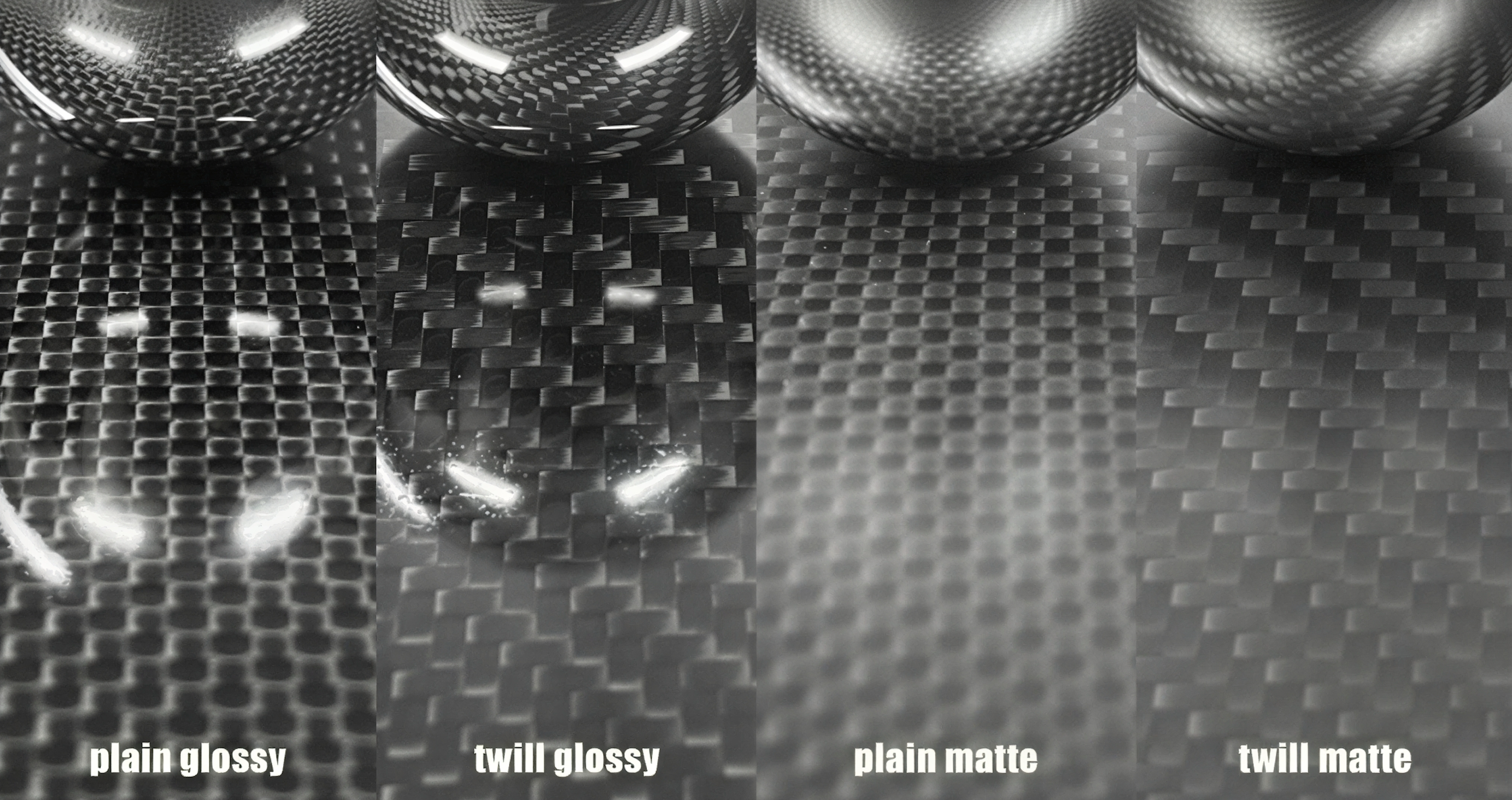
The finish on your steering wheel is not decoration. It starts with raw polyacrylonitrile fiber. Then it goes through 350 megajoules of energy per kilogram, multiple furnace passes, and 20+ hours of hand labor. The result ends up in your hands.
That background shapes how you pick between finish options. These are not catalog selections. Each one is a different surface treatment, a different weave geometry, and a different visual result — top to bottom.
The Three Core Carbon Weave Styles
1. High-Gloss 2×2 Twill
The classic. A tight diagonal weave pattern with a lacquered top coat. Light reflects hard off the surface. Under direct sunlight or cockpit lighting, the carbon structure looks almost three-dimensional. This is the finish most buyers picture when they search carbon fiber steering wheel. It works well in black-interior builds and anything with chrome or polished metal accents.
2. Satin/Matte Forged Carbon
Forged carbon uses short-fiber strands placed in random directions — not a structured weave. The result is a marbled, organic pattern. No two wheels look the same. The matte top coat cuts out glare. That makes it a strong choice for track environments where cockpit reflections get in the way. Weight comes in slightly lower too, because the finish layer uses less resin fill.
3. Raw Matte Twill
Same 2×2 twill structure as the gloss option, but without the high-build lacquer. The weave sits closer to the surface. The look is industrial, intentional, understated. Owners running matte-wrapped interiors or dark PPF builds tend to go this direction.
Grip, Stitch, and Spoke Customization
The carbon shell is just one part of the build. HyperX Carbon lets you configure:
-
Grip material: Alcantara, perforated leather, or suede — each changes how the rim feels and how much heat it holds
-
Grip thickness: Standard (28mm) or thickened (32mm) rim profile for drivers who want more material in the palm
-
Stitching color: Single-color or dual-tone, matched to your interior or seat stitching
-
Spoke finish: Exposed carbon, brushed aluminum inserts, or full carbon spoke wraps
-
LED RPM indicator: Optional integrated ring module around the center hub — wired to CAN bus on compatible platforms
What the Manufacturing Process Delivers
HyperX Carbon sources fiber from Japanese and Italian suppliers. That fiber goes through oxidation at 200–300°C before carbonization. This controlled heat sequence converts PAN precursor into structural fiber. The result: tensile strength of 3.6 GPa and a modulus of 233 GPa. Those are aerospace-level numbers. The same fiber grade used in racing monocoques and performance airframes gets shaped around your wheel’s aluminum armature.
HyperX Carbon uses autoclave processing for layup — the method behind 70% of aerospace-grade carbon production. It runs slower than compression molding and costs more than RTM cycling. It is also more precise. Robotic layup hits positional accuracy to ±0.1mm. You see that tolerance in how sharply the weave lines align at the spoke junctions and across the rim face.
That precision is why the lead time is what it is. A custom carbon fiber steering wheel does not come from a shelf. The build team constructs it layer by layer, from the blank up.
Matching Your Finish to Your Build
|
Finish Type |
Best For |
Light Behavior |
|---|---|---|
|
High-Gloss Twill |
Street builds, show cars |
High reflectivity |
|
Matte Forged Carbon |
Track, minimal interiors |
Zero glare, unique pattern |
|
Raw Matte Twill |
Dark interiors, PPF builds |
Low sheen, structured look |
Have a color scheme in mind? Include it in your quote request. HyperX Carbon’s build team will check your grip, spoke, and stitch selections against your base finish before locking in production specs. That step stops the most common customization mistake — picking options that clash rather than pull the build together.
Step-by-Step: How To Order a Custom Carbon Fiber Steering Wheel
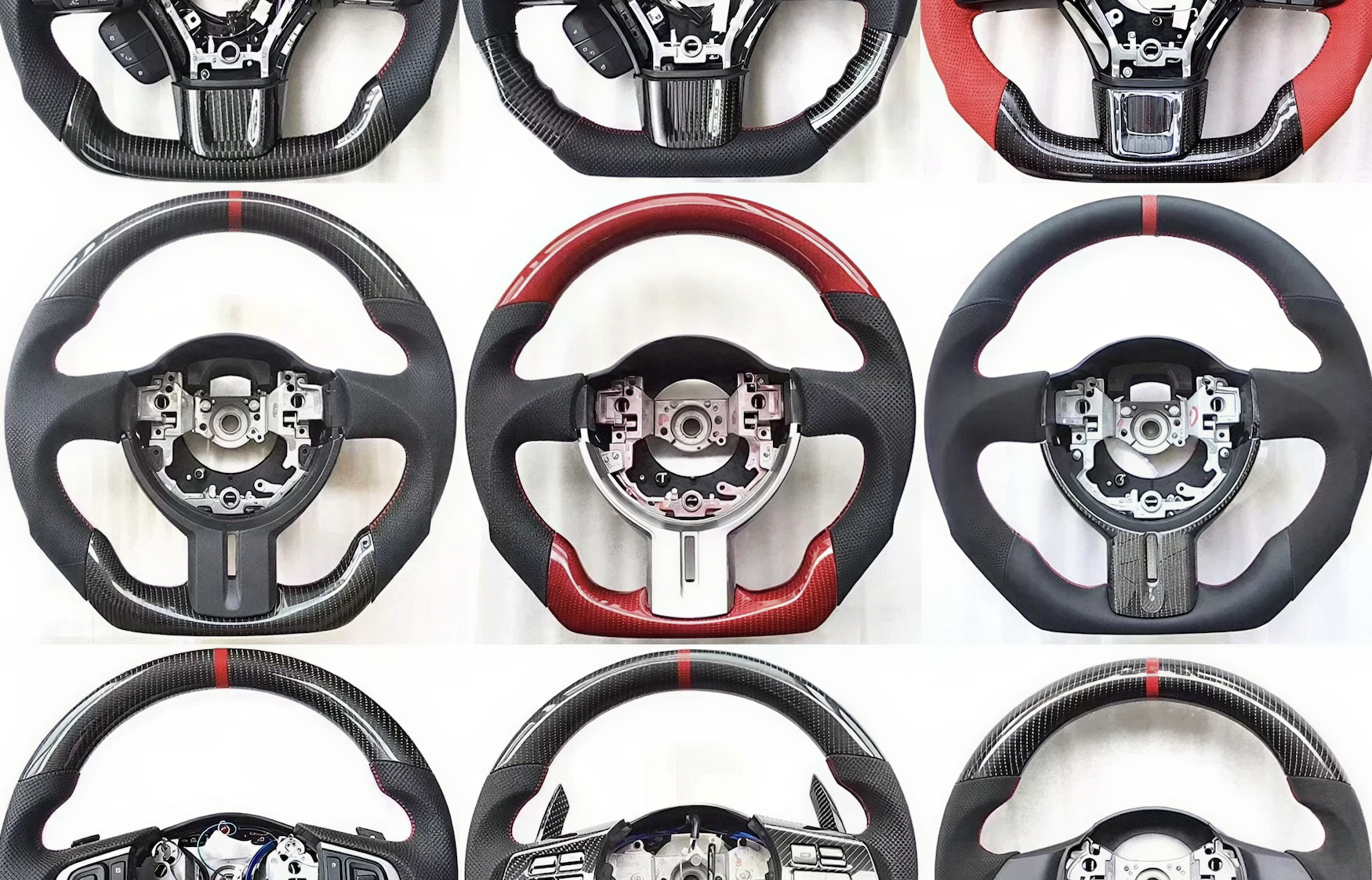
Most buyers lose time in the order process — not because it’s complicated, but because they come in without the right information. Here’s how it works at HyperX Carbon, from first contact to finished wheel.
Step 1: Submit Your Vehicle Details
Start with your VIN, make, model, trim level, and year. This is not optional groundwork — it is the entire foundation of your order. A 2026 Ford Expedition base trim and a Platinum trim run different column specs. One detail wrong here costs you weeks later.
Also include your preferred finish, grip material, stitching color, and spoke configuration at this stage. A complete submission lets the build team confirm specs faster and lock production sooner. The more you give us upfront, the less back-and-forth later.
Step 2: Fitment Confirmation & Hub Adapter Selection
We cross-check your column spline pattern against our current hub adapter inventory. This step also flags any ADAS or steering-integrated sensor considerations specific to your vehicle platform.
You’ll get a confirmed hub adapter recommendation. Plus, we’ll include a note on airbag deactivation requirements. Every custom steering wheel swap requires this conversation. It happens here, before any money changes hands.
Step 3: Spec Lock & Production Handoff
Fitment confirmed. Customization selections finalized. At that point, the build team locks your order into the production queue. This is the point of no return on specs.
Lead times run 6 to 8 weeks for full custom builds. Hand-laid carbon construction moves through multiple cure cycles:
-
Core prep: 1 to 2 days
-
Hand layup: 2 to 3 days
-
Moulding and curing: 2 to 4 days
UV-clear coat, grip wrap, and hardware assembly come after that. That timeline is not padding. It reflects the actual build sequence, step by step.
Step 4: Quality Check & Shipping
Every completed wheel goes through a pre-ship inspection. Our team checks surface finish, bolt pattern alignment, hardware fitment, and spoke integrity. The standard bolt pattern is a 6-bolt, 70mm spacing layout with 5mm holes — but your spec sheet governs final drilling.
Shipping confirmation and tracking details go out as soon as inspection clears.
Ready to start? Fill out the custom quote form with your vehicle details and finish preferences. The build team responds within one business day.
Pricing Breakdown: What Determines the Cost of Your Custom Wheel
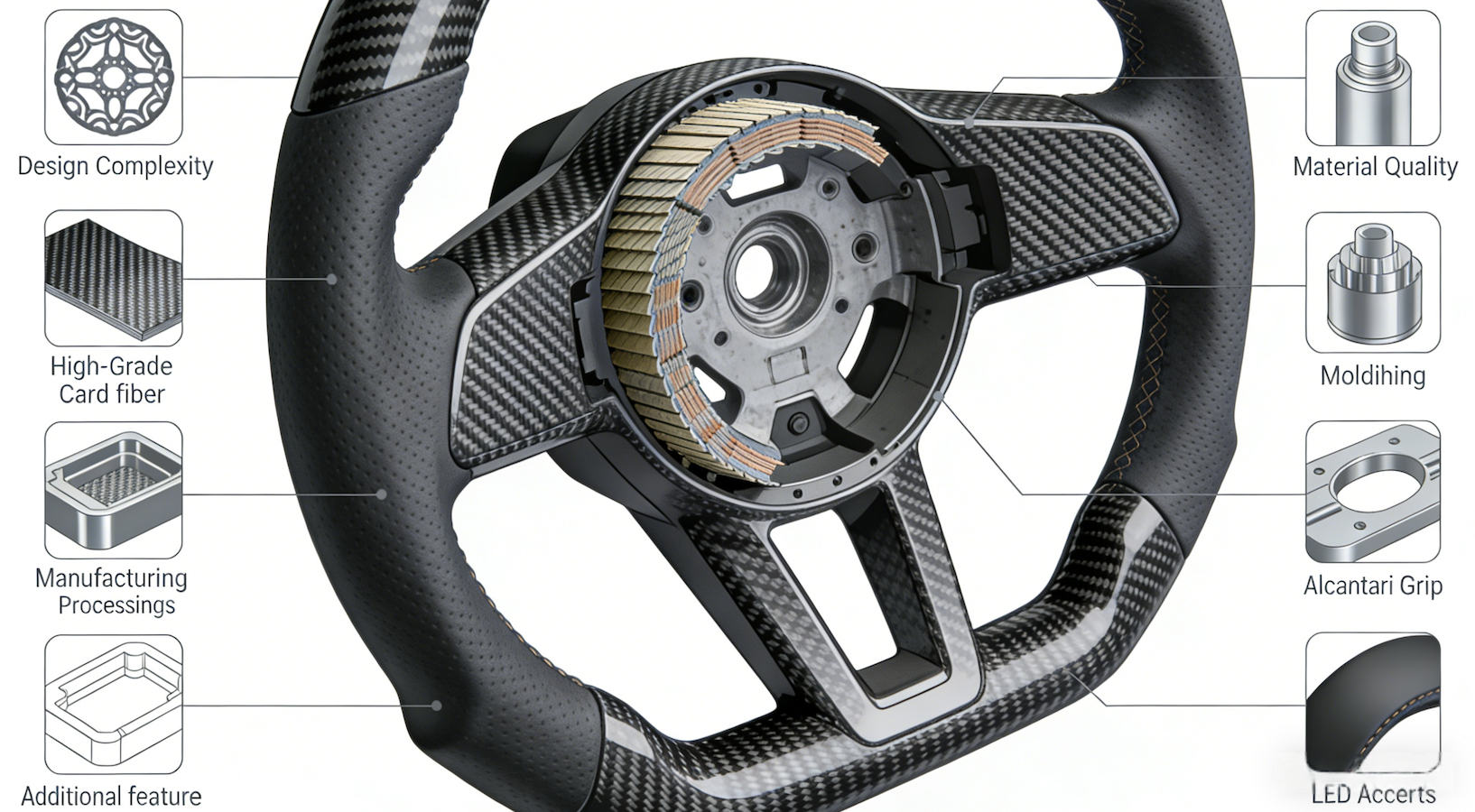
The number that stops most buyers isn’t the price itself — it’s not knowing what they’re paying for.
A custom carbon fiber steering wheel sits in a different cost category than an off-the-shelf replacement. You’re not buying inventory. You’re commissioning a hand-built component. That difference drives everything below.
The Core Cost Variables
Four factors move your price more than anything else:
1. Construction Method
This is the biggest lever. Monoblock forged aluminum starts around $170 per wheel for smaller sizes and climbs to $370 at 24 inches. Two-piece forged runs $395 to $570 across the same size range. Three-piece forged begins at $480 and can reach $4,000 per wheel at the premium end. Add titanium hardware, and the price goes higher.
Carbon fiber sets sit in their own tier: $10,000–$13,500 for a set. That price reflects autoclave processing, hand layup, and aerospace-grade fiber sourcing — all built into each piece.
2. Size and Diameter
Bigger diameters mean more material, longer machining time, and higher energy costs during forging. A 24-inch wheel runs about $200 more than a 15-inch version. That gap is in raw production alone, before any custom work starts.
3. Customization Depth
Multi-tone finishes, unusual fitments, custom center caps, and non-standard hardware each add 25–50% to your base cost. The further a build moves from a standard spec, the more CNC programming and hand labor it needs.
4. Production Volume
Custom orders don’t benefit from bulk production savings. Each unit gets its own tooling setup, its own QC pass, and its own skilled-labor time. That’s a fundamentally different model from mass-produced cast wheels — which is why cast aluminum can drop to $30 per wheel, while forged custom work starts at $170 and goes up.
What This Means for Your Budget
|
Build Type |
Per-Wheel Range |
Set Estimate |
|---|---|---|
|
Flow-formed aluminum |
$170–$400 |
$560–$2,200 |
|
Single-piece forged |
$170–$370 |
$4,000–$8,000 |
|
Three-piece forged |
$480–$4,000+ |
$6,000–$31,400 |
|
Carbon fiber |
Custom quote |
$10,000–$13,500 |
The honest read: material and process make up the bulk of your cost. Custom options add a real amount on top of that. Rush production can push the price further, depending on your build.
Request your quote with full specs attached. That one step replaces every estimate with a real number for your exact build.
Airbag & Safety System Compatibility: What You Must Know Before Buying
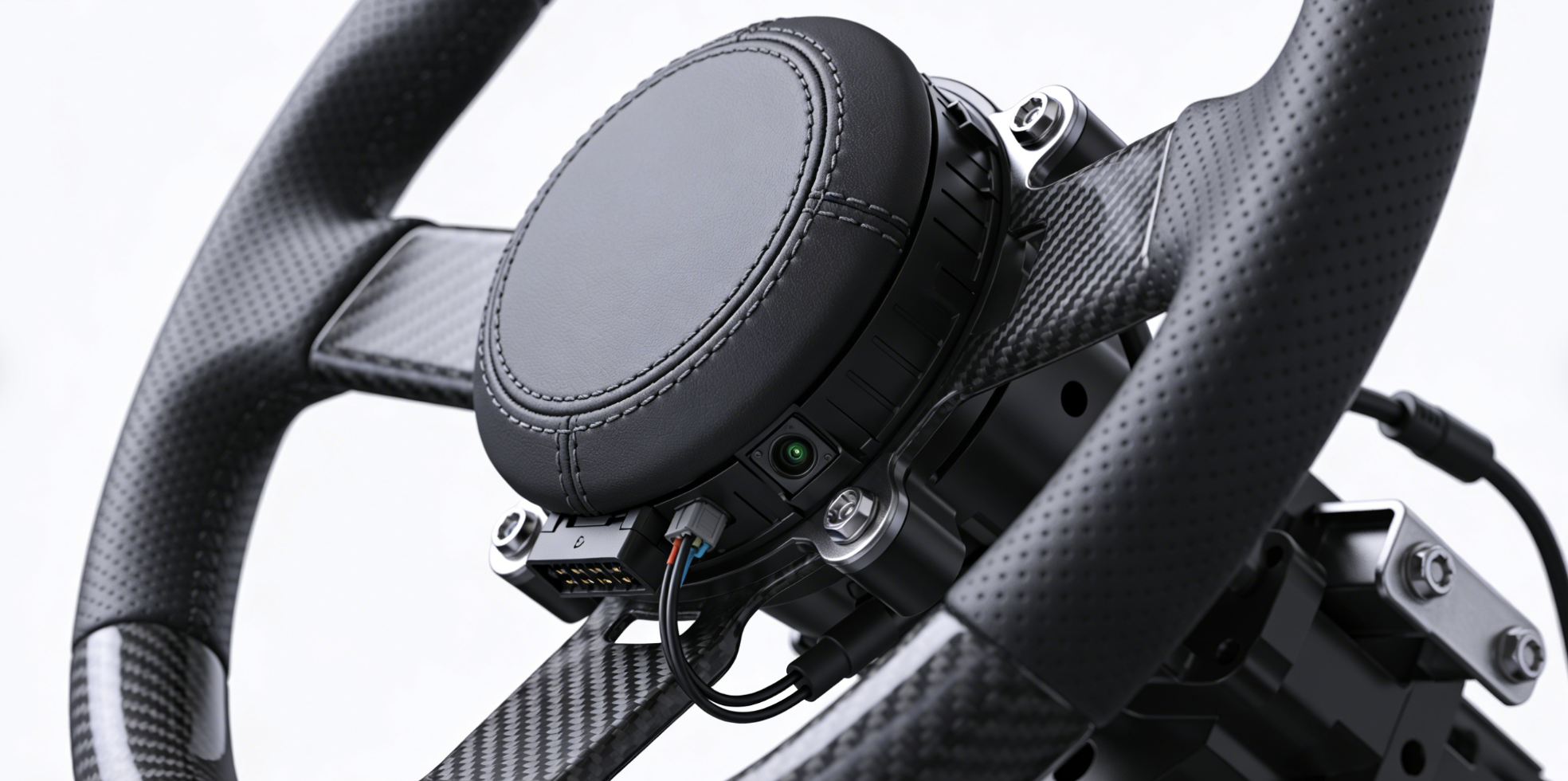
Frontal airbags have saved over 50,000 lives in the United States. That number matters here. Pull your OEM steering wheel, and you are working with that system.
Most buyers skip this section. It is the most important one.
The Core Trade-Off You Need to Understand
Every 2026 vehicle on the fitment list above requires airbag deactivation before a custom wheel goes in. That is not a workaround. It is the basic reality of aftermarket steering wheel swaps on modern platforms.
Here is what you give up: the factory SRS airbag module. This is a dual-stage inflator system built to FMVSS No. 208 Advanced Air Bag standards. It deploys at different thresholds based on crash severity, belt status, and seat position. These systems are complex. A belted driver triggers stage 2 at a higher impact speed than an unbelted one. Seat track sensors block deployment if the driver sits at the forward-most position. None of that carries over after the swap.
What takes its place: a horn button solution — a quick-release hub with a simple contact ring. It works. It is not the same.
Before You Buy — Run These Checks
Got a car with existing SRS history? These checks matter even more:
-
Scan for DTCs first. Wiring faults and sensor errors can disable airbag systems without any warning. Run a professional OBD scan to confirm whether the SRS is active before you remove anything.
-
Verify OEM component integrity. Salvaged airbag modules carry crash data from past incidents. A module that has fired will not deploy again — and it may not throw a visible fault code.
-
Check pretensioner and load limiter status. These parts connect to the airbag control module. A damaged pretensioner can throw off the module’s full deployment sequence — even in crashes that have nothing to do with the steering wheel.
The ARC Recall Context
The ARC airbag defect risk is 1 in 371,400 per unit. Still, it triggered a recall covering 52 million vehicles, with confirmed injuries and at least one U.S. fatality as of late 2023. The numbers are low. The outcome when it goes wrong is not.
That is the situation your swap operates in. Deactivating the OEM system removes a known risk. It also removes a real layer of crash protection. That trade-off is yours to make — but make it with full information, not assumptions.
What HyperX Carbon Recommends
Include your airbag deactivation plan in your quote submission. Our build team does not install the wheel on your car — but at the fitment stage, they will confirm what your platform needs and whether your installer must handle any ADAS-integrated steering sensors first. That conversation happens before spec lock. Not after.
Frequently Asked Questions: Fitment, Orders & Aftercare
These are the questions that show up in every inquiry form. Answered straight, no runaround.
Does my factory airbag survive the swap?
No. Every custom steering wheel install requires airbag deactivation. A horn button quick-release takes the place of the SRS module. That trade-off gets full coverage in the safety section above — read it before you decide.
How long does production take?
Six to eight weeks for a full custom build. That timeline covers hand layup, autoclave curing, UV clear coat, grip wrap, and hardware fitment. Rush requests get reviewed case by case.
Will my 2026 vehicle work with a custom wheel?
Most likely — but trim level matters more than most buyers expect. A base trim and a sport trim on the same nameplate can run different column spline specs. Submit your VIN and exact trim through the quote form. We confirm fitment before spec lock.
What hub adapter do I need?
That comes down to your column spline pattern. HyperX Carbon identifies the correct adapter at the fitment confirmation step — Step 2 in the order process. You don’t pick it yourself. We handle that for you.
Can I keep my heated steering wheel function?
Heated grip function does not carry over on most platforms. Check with your installer before ordering. This matters most if heated grip is a hard requirement for you.
What happens if the wheel arrives damaged?
Contact the build team right away with photos. Our pre-ship inspection catches most issues. Still, something can surface after delivery. The aftercare process starts with documentation — send photos first. We respond within one business day.
Do you ship internationally?
Yes. Once inspection clears, shipping confirmation and tracking details go out to you — no matter where you are.
Conclusion
Your 2026 vehicle deserves better than a factory steering wheel built for the average driver. You already know what a custom carbon fiber steering wheel can do — for the feel, and for the identity of your build.
Here’s the reality: fitment is solvable. The order process is simple. The craftsmanship is real. One inquiry is all that separates you from a carbon fiber interior upgrade that fits your car, your grip, and your style.
Don’t overthink it. Share your vehicle details, pick your finish, and let the build begin.
Contact HyperX Carbon – Your Trusted Chinese Carbon Fiber Partner
Ready to source high-performance carbon fiber materials or custom forged carbon fiber parts from China?
HyperX Carbon is a leading manufacturer with 20+ years of expertise, specializing in aerospace-grade forged carbon fiber, prepreg, carbon fiber tube, carbon fiber sheet, and lightweight carbon fiber automotive parts/carbon fiber drone components/carbon fiber medical components. We offer:
-
Stable supply chain with premium raw materials (Toray, Mitsubishi, Hengshen)
-
AS9100D certified production for aerospace & UAV applications
-
Rapid prototyping (5-8 weeks) and monthly capacity exceeding 180,000 parts
-
Competitive pricing with 15-18% cost savings on forged carbon solutions
-
Full customization: from T700/T1100G to ultra-high modulus grades
Whether you’re an eVTOL developer, automotive OEM, drone manufacturer, or medical device engineer, HyperX delivers consistent quality, batch-to-batch reliability, and reliable delivery.
Get in touch today for a free consultation, custom quote, or material sample.
📧 Email: [email protected]
🌐 Website: https://www.hyperxcarbon.com/
📞 Phone/WhatsApp: +86 15623270276 (English support available)
Let’s build your next lightweight innovation together – contact HyperX Carbon now and stay ahead in the low-altitude and advanced composites market.




