Most people think carbon fiber comes in one color: black. That assumption cuts designers, engineers, and builders off from stunning possibilities.
The reality? Colored carbon fiber spans a full spectrum — red, blue, white, green, purple, orange, and more. Each color is achievable through distinct manufacturing techniques that preserve the material’s legendary strength-to-weight ratio.
Not all coloring methods deliver the same results. Pick the wrong one for your application and you risk faded finishes, compromised aesthetics, or mismatched expectations from your supplier.
Carbon fiber colors matter more than most buyers realize:
-
How a color is made affects how it holds up over time
-
Some methods suit high-heat environments; others don’t
-
Your use case — track build, consumer product, or aerospace panel — should drive the choice
Understanding these differences changes how you source, spec, and buy.
Can Carbon Fiber Be Colored? The Science Behind the Black Default

Carbon fiber isn’t black because of dye. It’s black because of physics.
Each fiber strand’s carbon atoms absorb 100% of visible light — across the full 400–700 nm spectrum — and reflect back less than 5%. That’s not a manufacturing choice. That’s atomic behavior. The darkness is built into the molecular structure itself.
So here’s the bottom line: color isn’t locked in. Black is just the default.
Four Ways Color Gets Into Carbon Fiber
There are four distinct methods to introduce color into carbon fiber. Each one enters the production process at a different stage:
-
Dyeing fiber tows — Pigment goes in before weaving. This produces the most vibrant, most durable results. It also costs 2–3× more than standard black.
-
Coloring prepregs — Pigment goes into the resin matrix before layup. You get 12+ achievable shades. In current order data, Metal Gray takes 38% of colored prepreg orders. Deep Blue follows at 22%.
-
Tinted resin over black fibers — The weave stays black underneath. The colored resin gives you a subtle, lustrous finish. Cost premium: 10–15% over black.
-
Surface nano-coatings (TiO₂) — Titanium dioxide nanolayers change color based on thickness. These coatings bond at the molecular level. No chipping. Colorfast after 50 wash cycles. Weight addition stays under 1%.
Does Color Compromise Strength?
No. This is the question engineers care about most — and the answer is clear.
Colored carbon fiber holds 1.65 GPa tensile strength — identical to standard black. Every major coloring method — tinted resin, nano-coating, structural TiO₂, pigmented fibers — delivers 100% strength retention. Weight change is negligible across all four methods.
The cost of going colored? A 10–30% premium over black. That sounds steep until you compare it to post-fabrication painting. Painting adds 5–10% in weight and brings chip and delamination risk. Integrated color avoids both problems.
Custom color matching covers any Pantone or PMS code — full solid color or a marbled forged-fiber look. The palette isn’t the limit. The real question is which method fits your application.
Red Carbon Fiber: Bold Aesthetics for High-Performance Applications
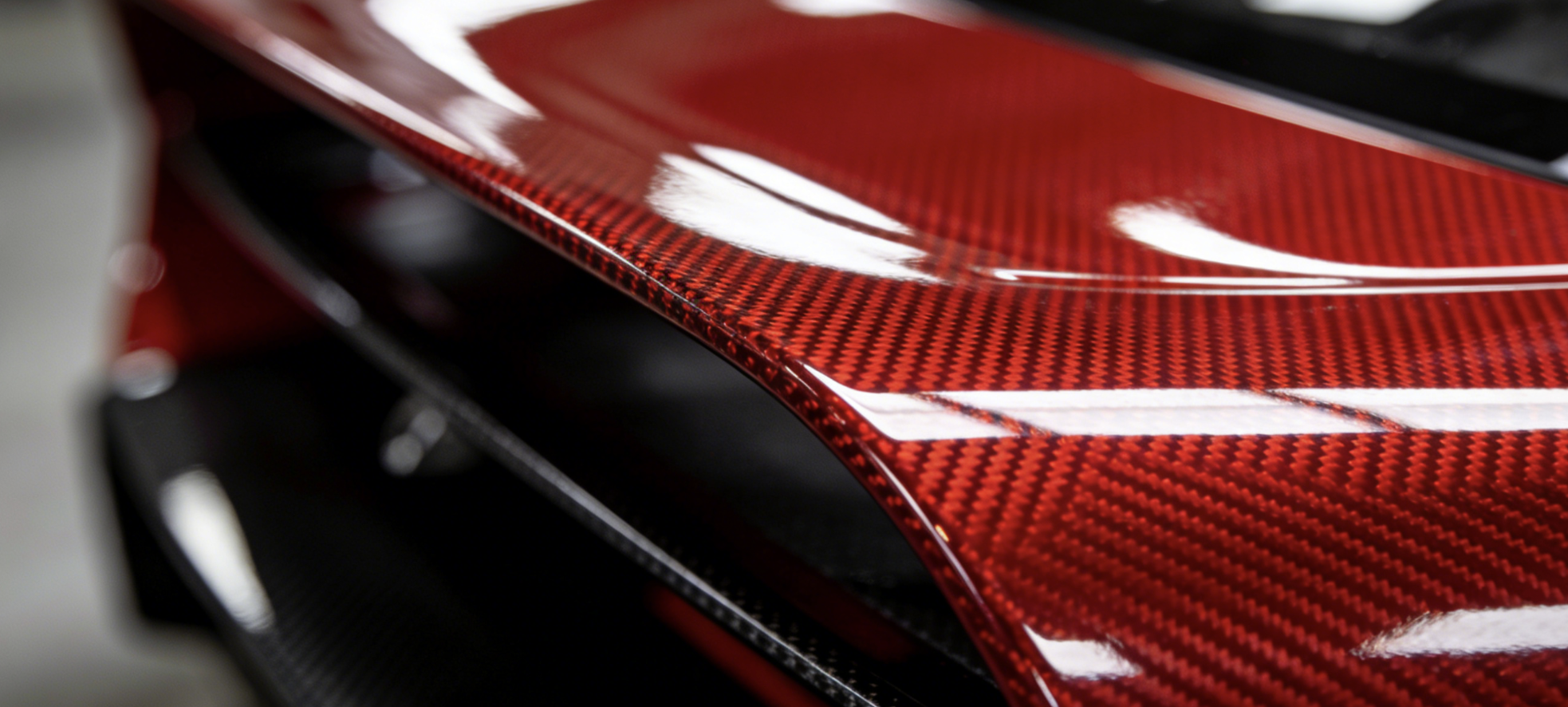
Red carbon fiber doesn’t whisper. It announces itself — on a track-prepped hood, a racing seat shell, a motorcycle fairing that catches light at speed.
The color starts with red-pigmented resin. It pairs with a forged fiber process, where random fiber orientation inside the resin matrix builds that marbled, high-contrast pattern. No painted surface can replicate it. And the result isn’t just visual. You get real structural performance — tensile strength near 1.65 GPa at about one-quarter the weight of comparable steel.
Where red carbon performs best:
-
Automotive — body panels, dashboard trim, fender and hood applications on high-performance cars and EVs
-
Aerospace — components that need extreme temperature stability and fatigue resistance
-
Sporting goods — bike frames and high-impact equipment where cutting weight is non-negotiable
The red-and-black carbon fiber combination has become a signature look in motorsport and luxury automotive builds. The marbled pattern signals performance on sight — no spec sheet needed.
Forged red carbon works with vacuum infusion, RTM, and wet-layup processes. So you can achieve complex shapes and geometries without giving up the finish quality that makes red worth choosing. Each method supports tight tolerances, clean edges, and consistent color depth across the part surface.
Blue Carbon Fiber: From Steel Blue to Cyan — Color Variants Explained
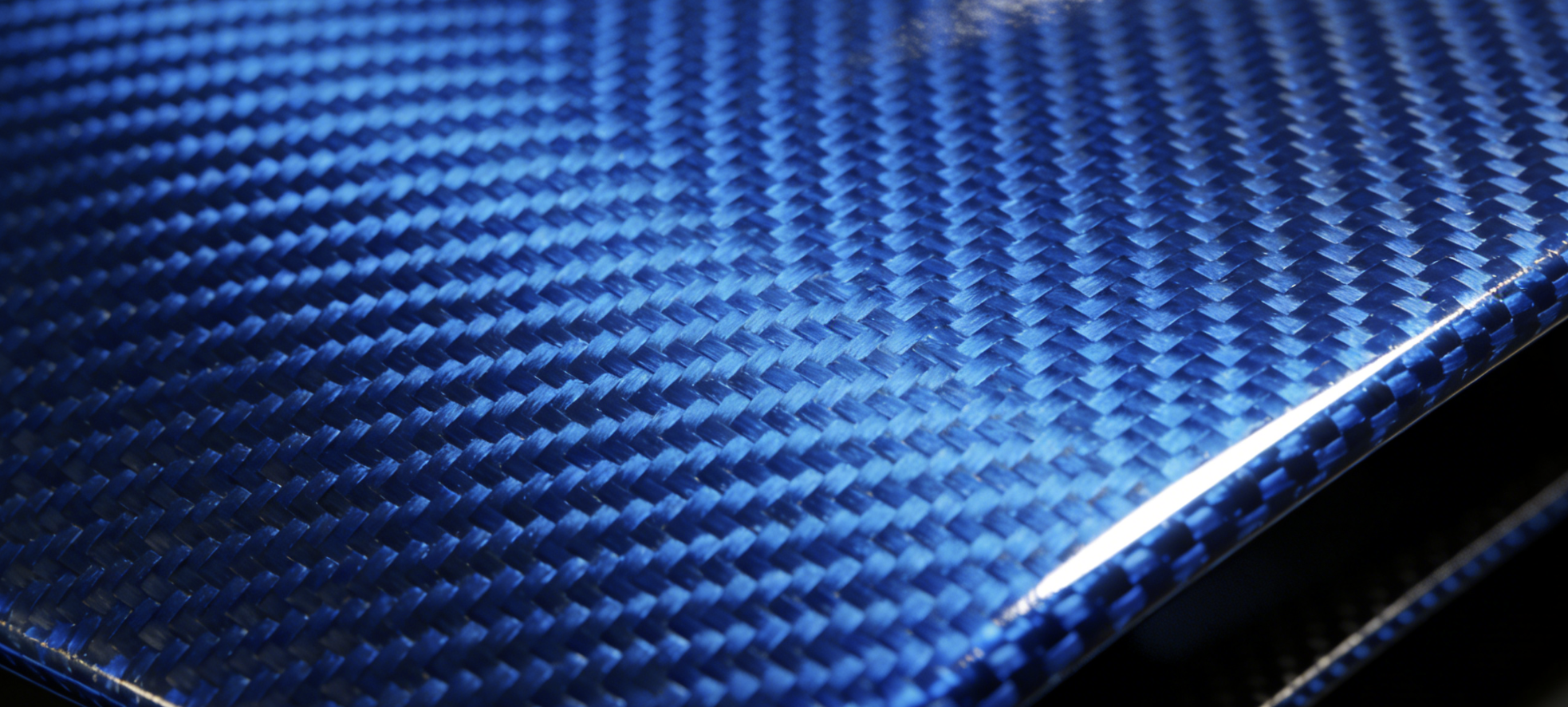
Blue carbon fiber doesn’t come in just one shade. It runs across a spectrum, and where you land on that spectrum shapes everything about the final part.
Steel Blue sits at the deep end: rich, metallic, high-contrast. Pigments go straight into the resin before extrusion — that’s solution dyeing. You get uniform color all the way through, plus genuine UV resistance. Aerospace composites and structural automotive parts tend to use this variant. Strength-to-weight ratio matters as much as the finish in those applications.
Standard Blue is vibrant and glossy. It coats both sides of the fabric at a mid-tone level, and the color shifts noticeably once the part cures in epoxy. Custom accessories and aftermarket upgrades are the main use cases here.
Cyan is the subtle one. It reads as teal rather than blue-green, and in low light it’s easy to miss. The dye runs through the full fabric, so the 3D weave stays visible under the surface. Matte cyan shrugs off fingerprints and holds up against UV outdoors — that’s why sporting goods makers and UAV body manufacturers reach for it.
One number worth knowing: solution dyeing achieves 100% colorfastness. Post-production spray or heat printing tops out at 70–80% saturation. That gap becomes visible over time, and it keeps growing.
Blue carbon fiber vs. blue vinyl wrap: vinyl just copies the weave pattern onto an adhesive film. It peels. It fades faster. It adds unwanted thickness. For aerospace or high-stress automotive builds, vinyl wrap is the wrong choice — full stop.
White Carbon Fiber: Achieving Light Colors on a Dark Material
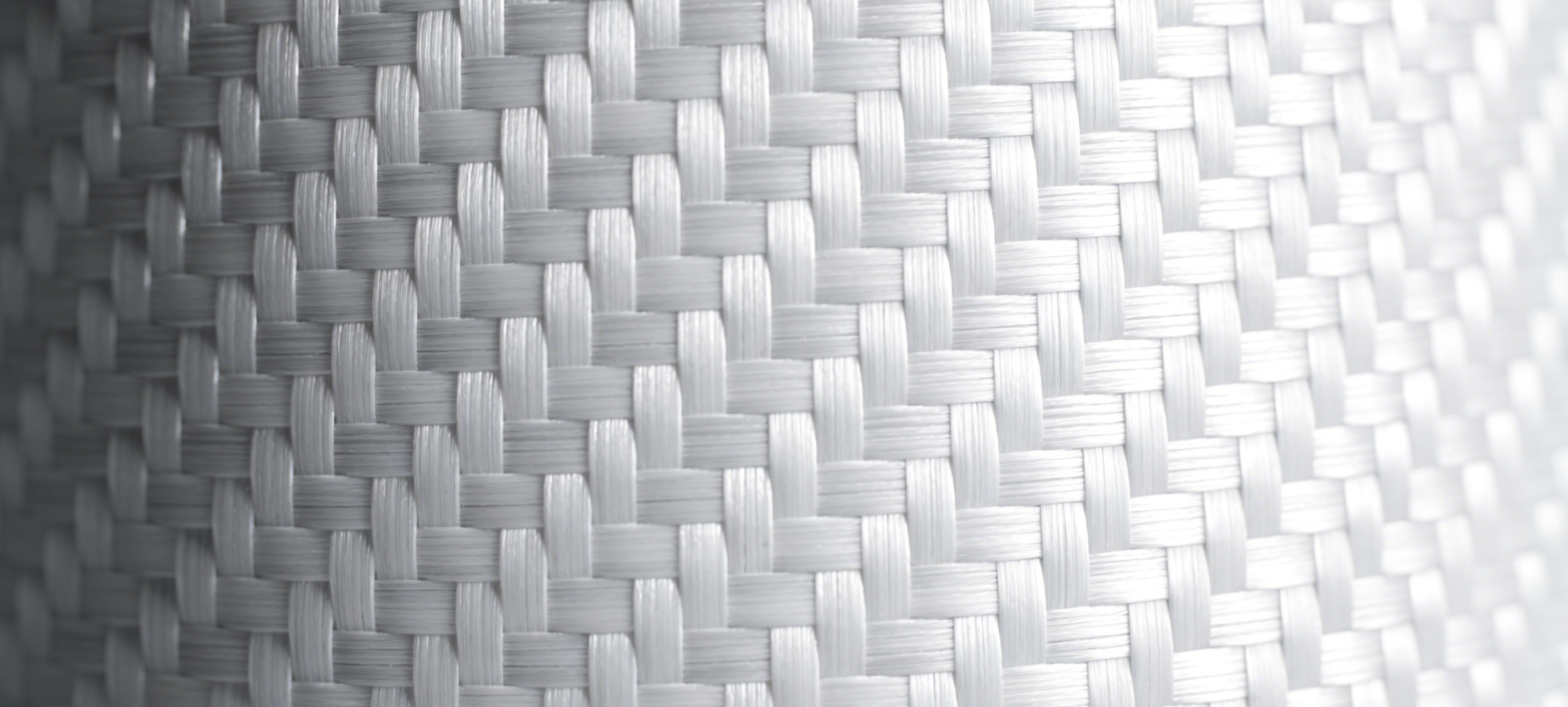
White is the hardest color to pull from carbon fiber. The material absorbs everything — light, pigment, assumption. Getting white out of a substrate that reflects less than 5% of visible light isn’t a coating problem. It’s a physics problem.
Two technologies solve it at the nanoscale.
Titanium dioxide (TiO₂) structural coatings place an ultra-thin layer over the black fiber surface. The trick isn’t pigment — it’s interference. Change the TiO₂ layer thickness, and you change which wavelengths bounce back. White, pale silver, soft ivory — all reachable without touching the fiber structure underneath. Mechanical properties stay the same as standard carbon fiber. Color holds after 50 wash cycles. The research behind this comes from ACS Nano, 2017.
Carbon sphere (CS) growth via glucose hydrothermal synthesis takes a different route. Microspheres grow right on the fiber surface. Their diameter controls the reflected wavelength through Mie scattering. Smaller spheres shift the color toward lighter, shorter wavelengths. The CS-to-fiber bond stops clumping. It also holds up through mechanical rubbing at 50 kPa, 120-minute acid immersion, and high-intensity UV aging.
Where White Carbon Fiber Gets Specified
The applications lean premium — and that’s the point.
-
Medical devices — a white finish signals sterility and clinical precision. A matte black panel can’t say that.
-
Aviation interiors — light CF panels carry the “light luxury” look now standard in high-end cabin design.
-
Consumer electronics — watch cases and phone shells in Hypetex CAM white CF show stronger results than classic black CF on strength tests, plus a clear visual upgrade.
Keeping White Carbon Fiber White
Light colors show everything. Maintenance matters more here than on any other color:
-
Use pH-neutral wipes — abrasive cleaners tear into coatings fast.
-
Add a UV-protectant topcoat for any outdoor use.
-
For candy-coated or hydrographic finishes, plan on clear coat reapplication every 2–3 years.
Nano-structured surfaces — both TiO₂ and CS systems — outlast pigment dyes on every durability measure. Long-term color stability is non-negotiable? Structural color is the spec to choose.
Black Carbon Fiber: Why the Classic Remains the Industry Standard
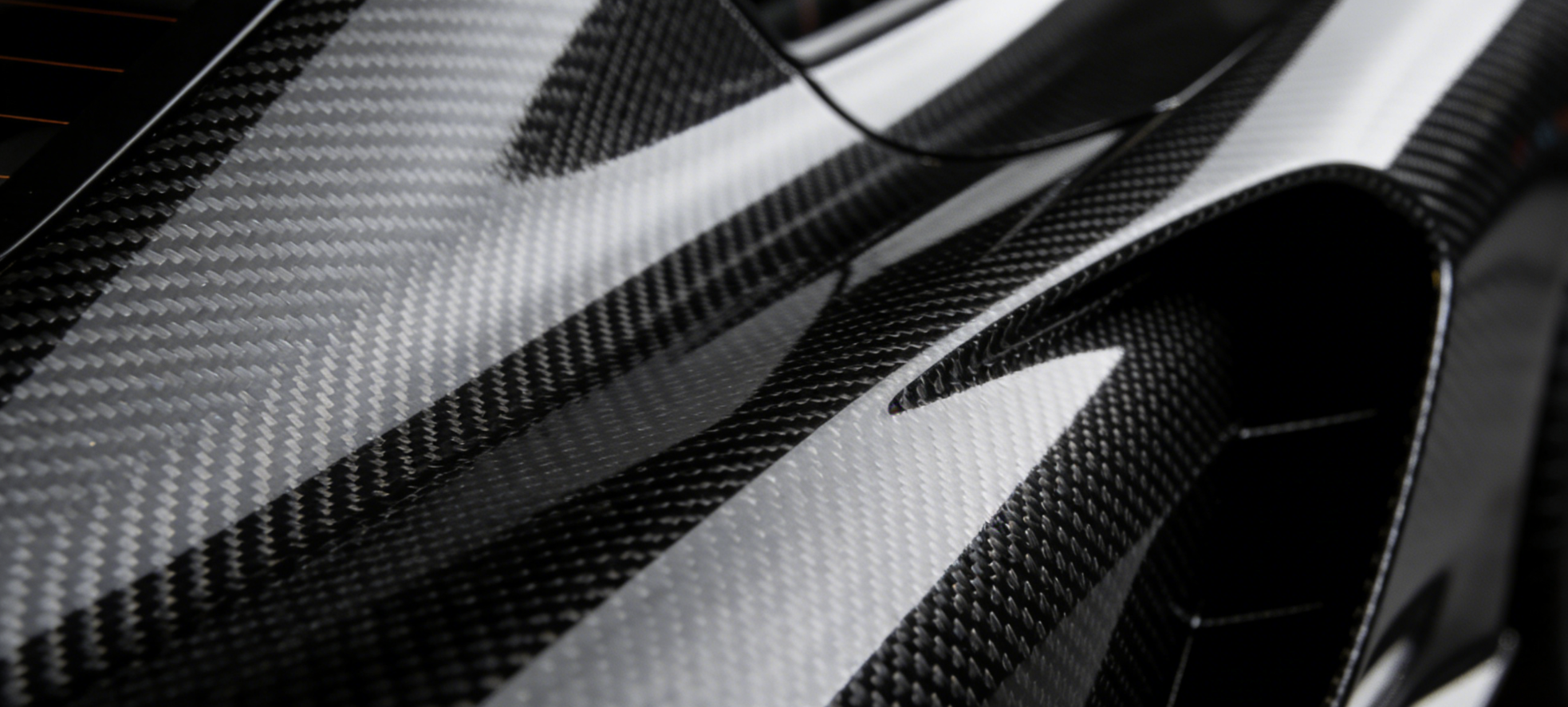
Black carbon fiber isn’t popular because it’s the default. It’s the default because nothing else has matched it across every performance category that matters.
The numbers back this up. Black CF retains 60% fatigue strength after millions of load cycles. Compare that to 40% for steel, 30% for aluminum, and 30% for glass fiber. In aerospace and racing, fatigue failure is not an option. That gap matters. Small-tow configurations — 1K through 24K — deliver stability and low thermal expansion that these environments need. PAN-based black carbon fiber is the highest-output grade worldwide for this reason.
It’s also the benchmark everything else gets measured against. Colored variants get tested against black’s COA specifications — iodine surface area, OAN structure, sieve residue — before any hue shift moves into production.
Three finish options extend its range:
-
Matte — reflectance drops to 5–10%, the go-to spec for stealth aviation and low-observability racing
-
Gloss — 80–90% reflectance, standard for luxury automotive interiors
-
Forged texture — depth and 3D dimensionality that mimics machined metal
Black isn’t a fallback. It’s the foundation every other carbon fiber color builds on.
Green Carbon Fiber: Dark Green vs Light Green Applications
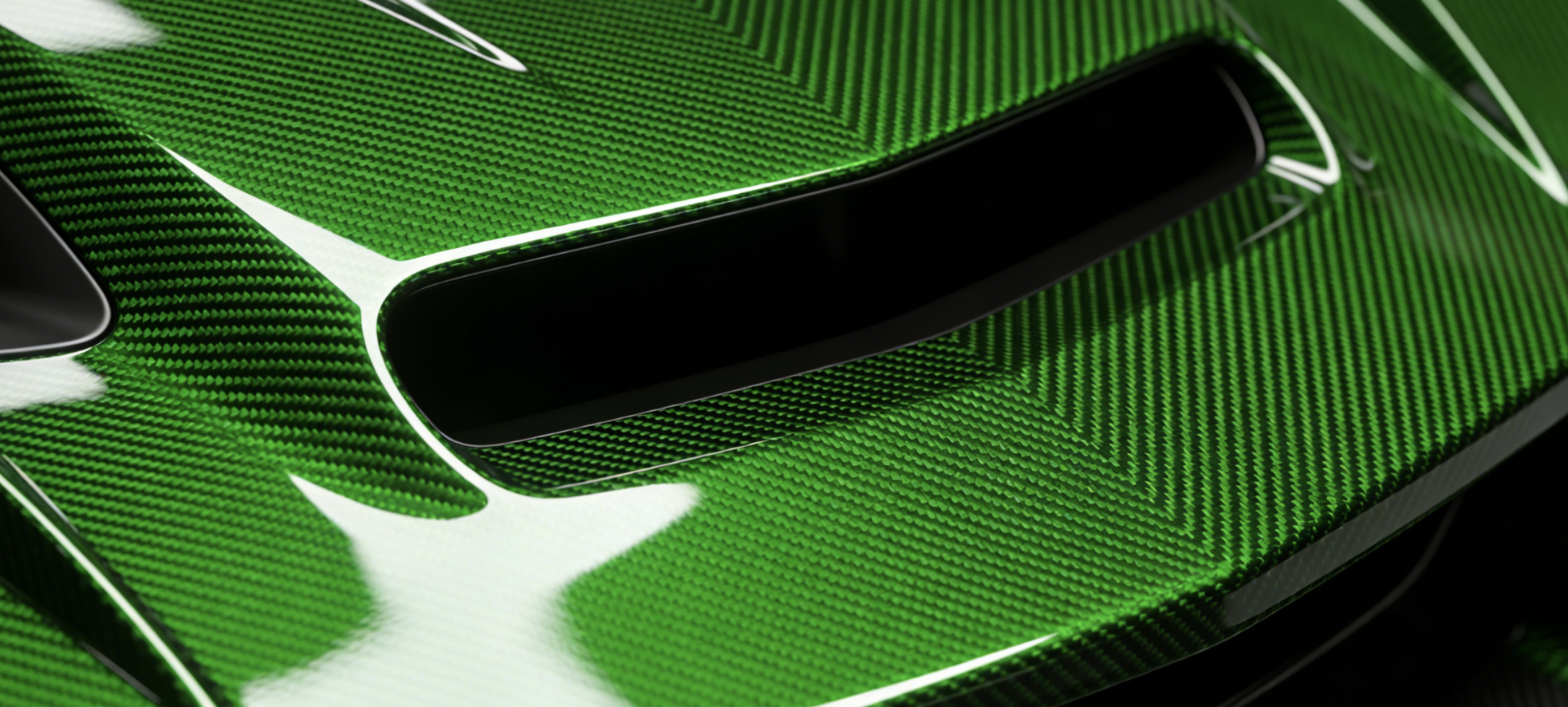
Green carbon fiber comes in two very different types — and mixing them up is a costly mistake.
Dark green (military green) uses full-carbon filament winding. The fiber wraps at a 45° angle with specialty resin. After curing, the surface gets a military green paint coat based on your spec. Every fiber carries structural load. Compressive strength reaches “super” grade. The weight is about one-fifth of comparable steel. This is the right spec for UAV frames, tactical tubes, and load-bearing sports equipment.
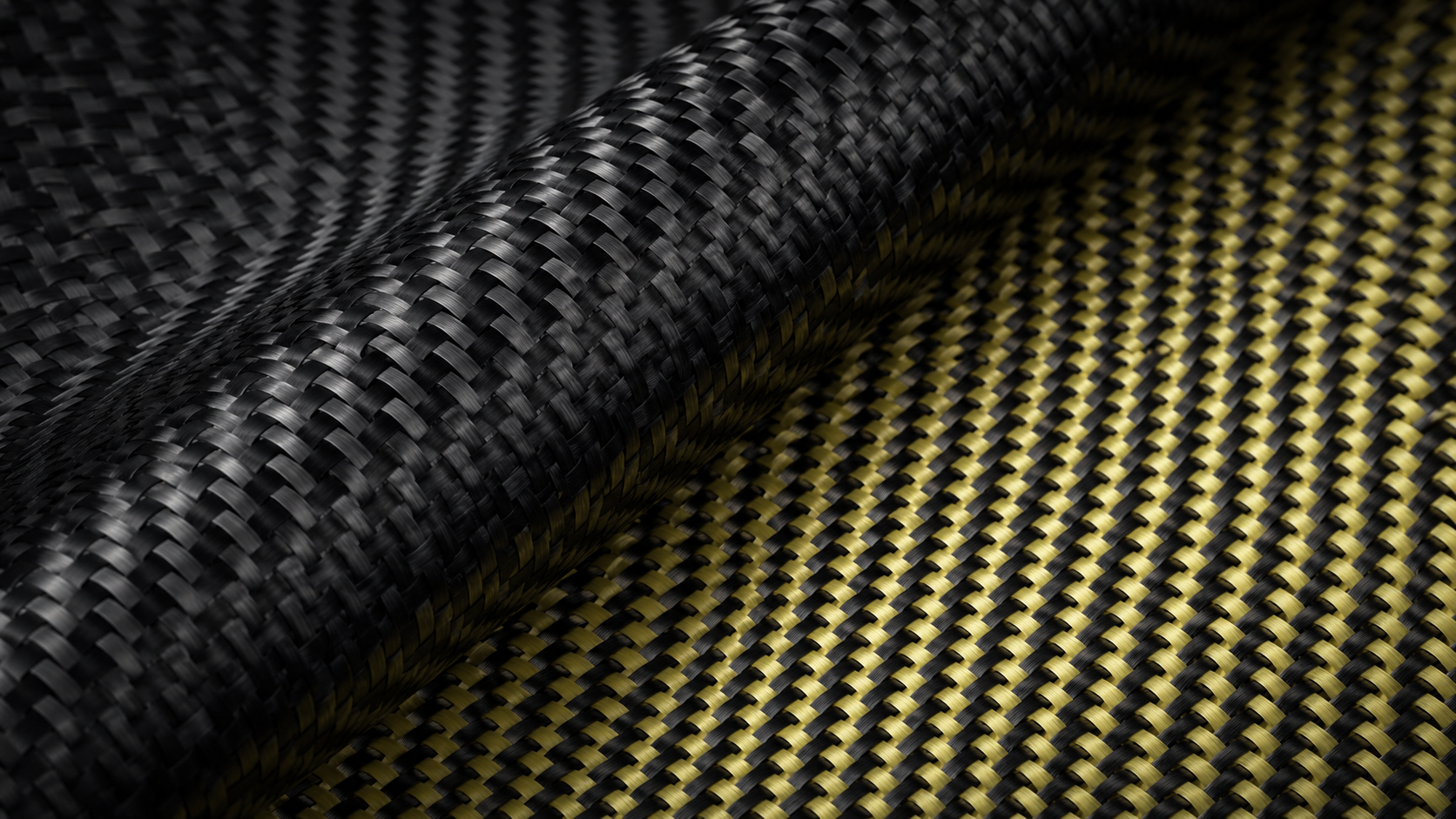
Light/bright green is a completely different product. It’s a 2/2 twill hybrid — 3K carbon tow woven with bright green polyester fiber, 210g/m², 0.30mm thick. The black-and-green pattern looks sharp and eye-catching. But 50% of the content is polyester. That means mechanical strength drops compared to pure carbon. Use it as a decorative surface layer. Don’t use it as a primary structural material.
|
Dark Green |
Light Green |
|
|---|---|---|
|
Carbon content |
100% |
~50% |
|
Color method |
Post-cure paint |
Colored yarn in weave |
|
Best for |
UAV, tactical, military |
Aesthetics, outdoor consumer |
Eco-forward brands may find the light green hybrid appealing for one specific reason: the green color is built into the material itself. No paint. No coating. No added surface treatment. The look is genuine, not applied.
Purple Carbon Fiber: Standard, Metallic & Burgundy Variants

Purple carbon fiber comes in three distinct types. Each one behaves differently — and your choice shapes everything from finish performance to target market.
Standard purple keeps brightness low. Blue undertones feel cool and technical. Shift to red undertones and the tone changes — richer, more dramatic, more of a design statement.
Metallic purple is built for visual punch. Metallic flake or mirror-gloss finish catches light across the weave’s surface. You get color-shifting depth that changes as the viewing angle shifts. The carbon pattern beneath stays visible. The effect is bold — nothing subtle about it.
Burgundy sits at the refined end of the range. It combines deep red with purple undertones — darker than standard red, more layered than wine. The color reads in one way under warm light and shifts under cool light. That variability is what luxury buyers in the mature market are looking for.
Finish Drives the Look More Than Color Does
Gloss gives you a wet-look, showroom-ready surface. It brings out the weave pattern clearly. Satin and matte pull things back — more technical, controlled, and understated. Gradient options add strong visual depth, especially for premium motorcycle builds and high-end fashion pieces.
For B2B sourcing, start with your base variant and undertone. Then lock in your finish choice before light-response testing. Order spectrum samples before you commit to a production run. Purple shifts in visible ways across different materials and environments — so testing first saves you real problems later.
Orange Carbon Fiber: Visibility, Safety & Motorsport Identity
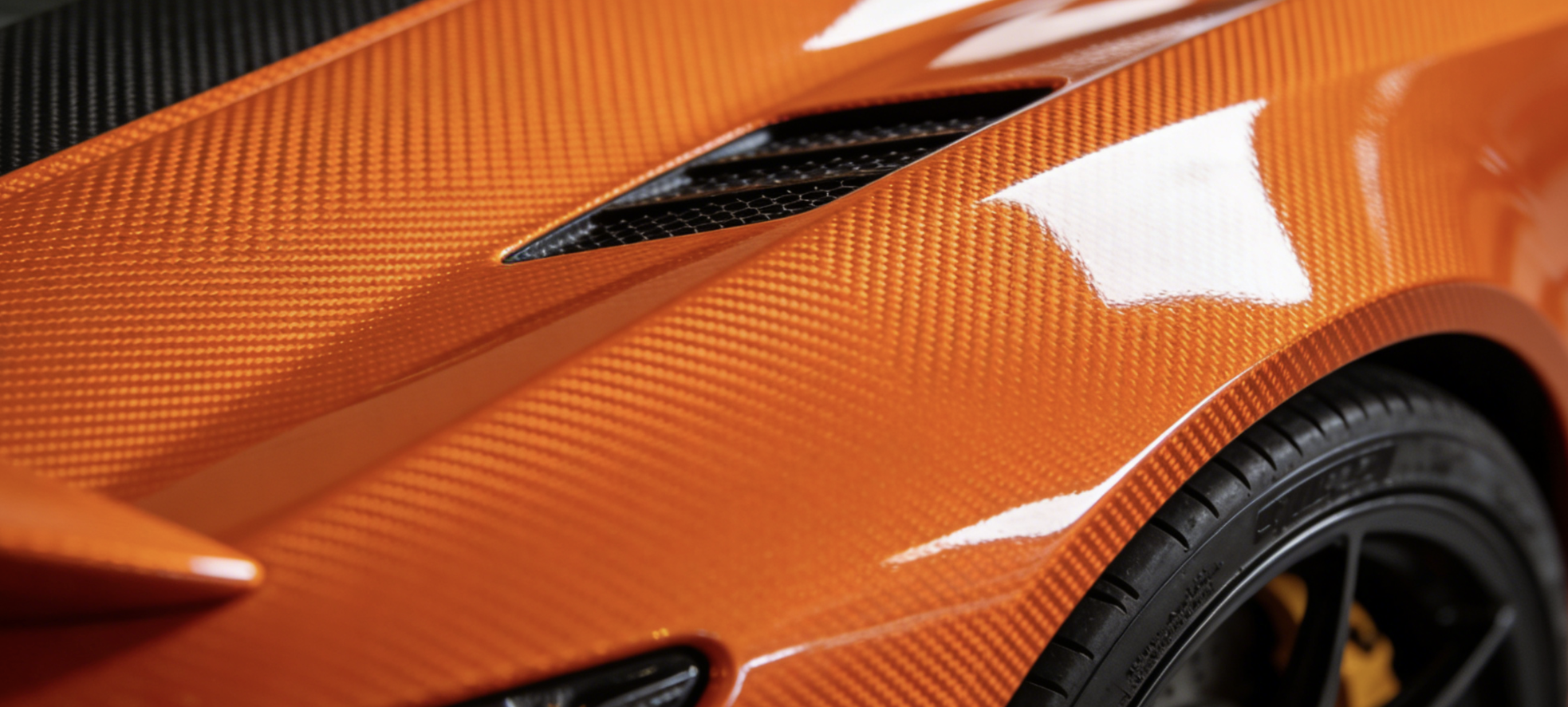
Orange is the one color on a racetrack that nobody misses.
That visibility isn’t accidental — it’s engineered. Orange sits at the sharp end of the visible spectrum. Your eye picks it up faster than red or yellow, even in low or changing light. McLaren built an entire brand identity around it. Their iconic Papaya Orange isn’t just a paint code. On carbon fiber trim, it becomes part of the machine’s core identity.
Where orange carbon fiber earns its place:
-
Motorsport bodywork — side skirts, splitters, and mirror housings where you need instant recognition on track
-
Safety and rescue equipment — high-visibility panels that stay light and easy to spot at the same time
-
Cycling and action sports — helmets, frame accents, and handlebar wraps that stand out on the road
You can get the color through pigmented resin or tinted prepreg. Strength stays intact. The look costs you nothing structurally.
Coloring Methods Compared: Dyed Fiber vs Colored Resin vs Surface Coating
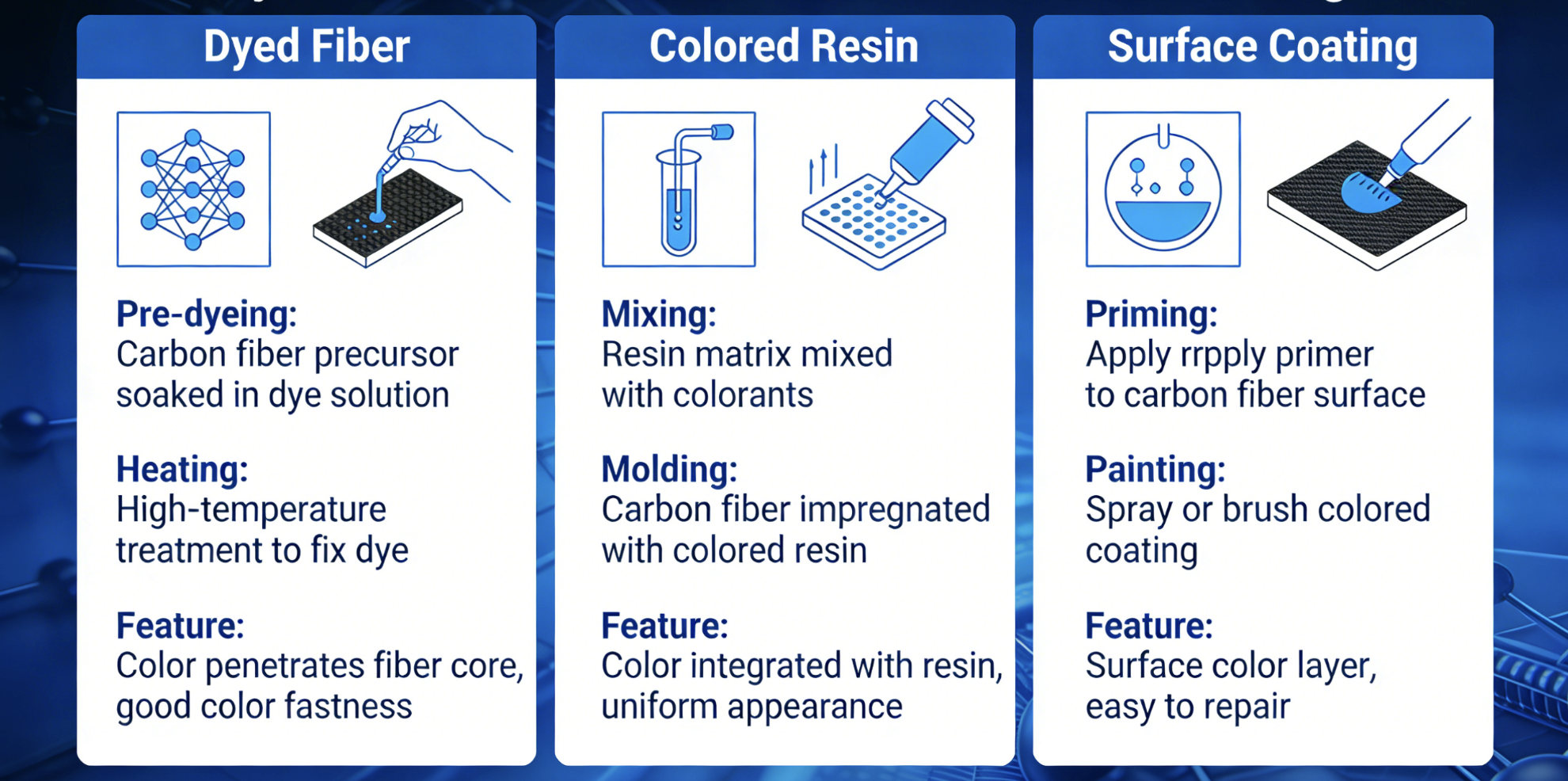
Three methods. Three entry points in the manufacturing process. Three very different outcomes.
Your choice shapes more than day-one appearance. It determines how the part holds up after a year of UV exposure, thermal cycling, and mechanical wear.
Where Color Enters the Process
Dyed fiber gets pigmented before weaving. Color goes into the tow at the pre-impregnation stage. That integration runs deep — but there’s a catch. Oak brown can cure out as bronze reddish-brown. Graphite gray can flatten into matte black. The resin matrix changes what you see at the end. Skilled suppliers account for this. Inexperienced ones don’t warn you.
Colored resin works at the matrix level. Liquid dyes blend evenly into the resin, producing translucent, vibrant effects. That makes them the go-to for decorative art and high-gloss display pieces. Powder pigments go in for opaque or pearlescent finishes — a better fit for furniture, tabletops, and layered-depth applications. One watch point: powder pigments settle fast. Skip the stirring and you get an uneven cure. The fix is simple, but it has to be deliberate.
Surface coatings come last. They apply post-cure as a top layer over finished parts. Alkyd or silicone-modified resins add gloss and heat resistance. A 30% silicone modification boosts moisture and heat tolerance by a solid margin — that’s why marine applications rely on it. Setup costs stay low. A basic spray setup runs $500–$2,000. You can coat individual pieces with no MOQ pressure.
How They Stack Up
|
Dyed Fiber |
Colored Resin |
Surface Coating |
|
|---|---|---|---|
|
Color consistency |
Moderate — shifts during cure |
High for dyes; good for pigments |
Good — UV-stable polyesters hold |
|
Heat resistance |
Limited data |
Good in epoxy systems |
Superior — silicone-alkyd resists high thresholds |
|
Abrasion resistance |
Reduced 3D surface effect |
Lower than coatings |
Highest — hard epoxy layer resists scratches |
|
Cost (per sq m) |
$30–100 bulk |
Mid-range |
$5–15 small batch |
|
Best application |
Industrial prepreg, structural parts |
Art, decor, custom accessories |
Marine, motorsport, small-run custom work |
The performance gap between methods is real and measurable — not theoretical. Your build runs hot? Coatings earn their place. Color depth through the full material cross-section matters? Think aerospace panels or load-bearing sports components. Dyed fiber or pigmented prepreg is the right call there. Top-surface-only finishes break down under sustained stress or long UV exposure in those environments.
Match the method to the mission. The finish follows from that decision.
Colored Carbon Fiber by Application: Which Color Works Best for Your Project

The application drives everything. Before you pick a color, know what the part has to survive.
Here’s a direct breakdown of what works, where, and why:
Automotive modifications pull toward Metal Gray (38% of orders), Classic Black (40%), and Deep Blue (22%). The reasons are practical. You need UV stability for exterior panels, plus that luxury forged look that reads premium at a glance. Think Lamborghini-style marbled finishes on 200–300 gsm twill weave with tinted resin. Here’s a real example: Metal Gray forged carbon on BMW panels held color after 500 hours of UV testing. Weave visibility stayed at 98% intact after cure.
Motorcycle parts favor black/red and black/yellow 50/50 carbon-Kevlar hybrids. The Kevlar content adds impact toughness. You keep the color pop too — no trade-off. A black/red hybrid on Ducati fairings ran 10,000 km of track use with zero delamination. Standard black clocked a 5% failure rate over the same distance.
Sports equipment goes with Silver Texalium or Red. The 200Å aluminum coating on Texalium pushed rigidity up 12% on a tennis racket frame. Color stayed clean — zero fade after two years.
Consumer electronics calls for thin, precise, brand-matched color. Gold and custom blended fibers at 100–150 gsm hold thickness to 0.5mm. A gold full-color iPhone case took a 1.5-meter drop and came out intact.
Aerospace sticks with black or neutral-tinted prepreg. Color stays stable from −40°C to 120°C. Density locks at 1.76 g/cm³.
Custom Color Carbon Fiber: How to Order Non-Standard Colors
Ordering a non-standard color is straightforward. The cost structure, though, catches most first-time buyers off guard.
Non-black colors carry a +30% surcharge. Custom weave or finish adds another +10%. Forged or high-modulus carbon adds yet another +30%. Add those up before you set your budget.
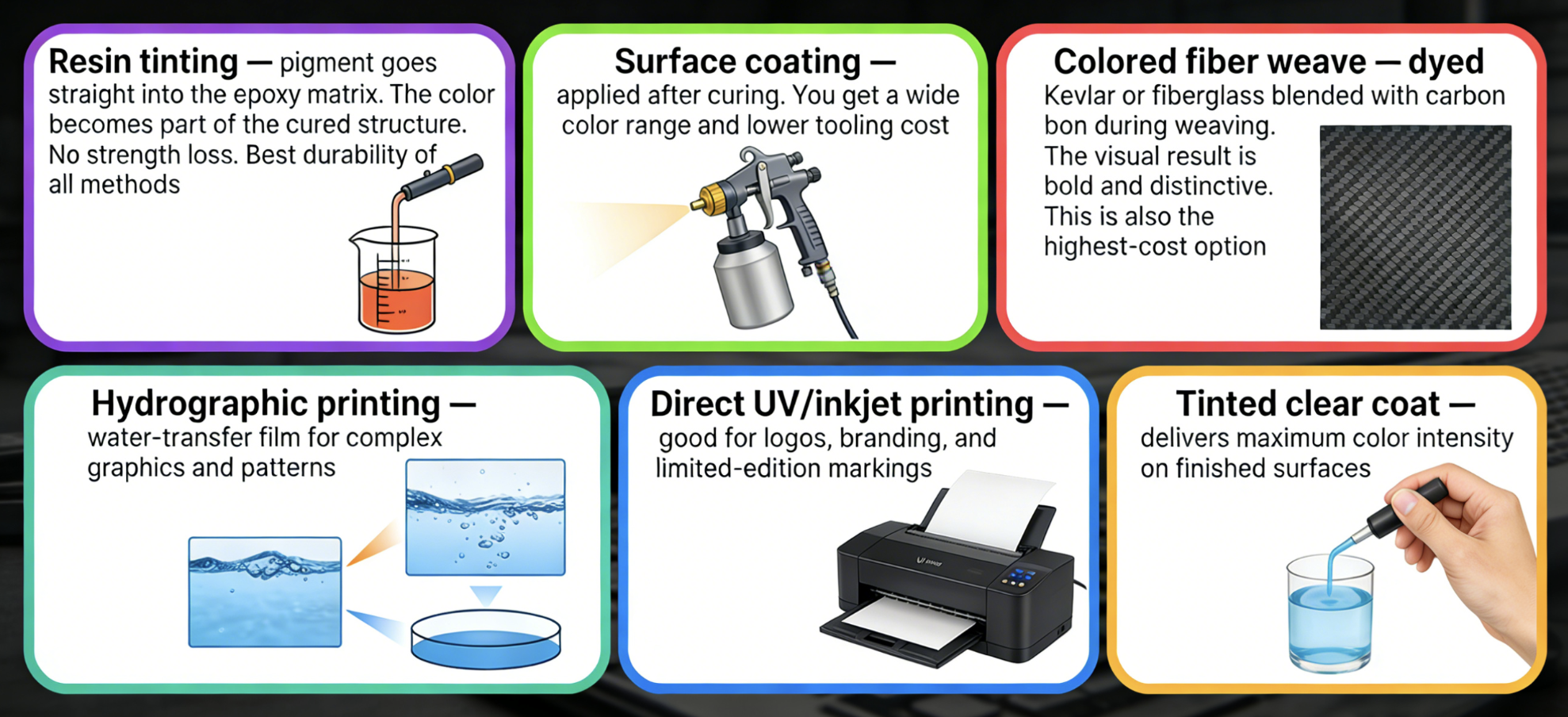
Six techniques cover nearly every custom color need:
-
Resin tinting — pigment goes straight into the epoxy matrix. The color becomes part of the cured structure. No strength loss. Best durability of all methods.
-
Surface coating — applied after curing. You get a wide color range and lower tooling cost.
-
Colored fiber weave — dyed Kevlar or fiberglass blended with carbon during weaving. The visual result is bold and distinctive. This is also the highest-cost option.
-
Hydrographic printing — water-transfer film for complex graphics and patterns.
-
Direct UV/inkjet printing — good for logos, branding, and limited-edition markings.
-
Tinted clear coat — delivers maximum color intensity on finished surfaces.
Follow this order to avoid costly mistakes:
-
Identify the specific part and its load requirements
-
Choose your coloring method
-
Specify color using a Pantone or RAL code
-
Lock in weave pattern, finish, and dimensions
-
Request a quote — surcharges get added at this stage
-
Approve the first sample (2–3 weeks after mold completion)
-
Move to batch production
Sheet specs run 0.5mm–40mm thick, up to 1000×1000mm, in gloss, matte, or semi-matte. Tolerances hold at ±0.01mm. Custom parts scale to 3000mm length and 300mm outer diameter.
Colored Carbon Fiber FAQs: Answering the Most Searched Questions
Buyers ask the same questions. Here are straight answers.
Does colored carbon fiber weaken the material?
No. Tensile strength holds at 1.65 GPa — identical to standard black. Color goes onto the surface or into the resin matrix. The structural fibers below stay untouched.
Will the color chip or scratch off?
Not if it’s done right. Integrated color — tinted resin, nano-coating, or woven colored fiber — bonds into the material itself. It’s not sitting on top like paint. Paint chips. Integrated color holds.
How much more does it cost?
Expect a 10–15% premium over black for standard colored variants. That’s far less than post-fabrication painting. Plus, you skip the weight penalty and delamination risk that paint brings.
Can you match any specific color?
Yes. Any Pantone code, RAL reference, or physical sample works. The palette has no hard ceiling.
How do you spot fake colored carbon fiber?
Real carbon fiber is graphite-black at its core. Check the cut edges. No black visible there? It’s paint, color varnish, or a non-carbon base — not real carbon fiber. Fading or color shift over time is another warning sign. It means the clear coat resin is breaking down.
Glossy or matte — does finish affect strength?
Neither one. Both finishes carry identical mechanical properties. Gloss highlights the weave pattern and looks premium under showroom light. Matte pushes back fingerprints and gives a more technical feel. The choice is aesthetic, not structural.
How do you maintain colored carbon fiber?
Keep it simple. Use a microfiber cloth for cleaning. Apply UV-protective spray on a regular schedule. Glossy and matte finishes both wear down faster without UV protection — particularly on exterior automotive or sporting parts that sit in direct sunlight.
Conclusion
Carbon fiber doesn’t have to be black. It never did.
Want the aggression of red carbon fiber on a track-ready build? Or the clean look of white carbon fiber in a luxury interior? Maybe something fully custom that exists nowhere else. The material is far more versatile than most people think. The coloring method you pick shapes the look, the durability, the structural strength, and the finish quality. That choice has real consequences.
Now you have the full picture — the science, the color spectrum, the tradeoffs, and the real-world applications.
The next step is yours. Know the color you want? HyperX Carbon handles custom carbon fiber fabrication across the full color range, backed by solid engineering know-how. Still deciding? Use this guide as your reference point. Come back once the vision is clear.
Contact HyperX Carbon – Your Trusted Chinese Carbon Fiber Customization Partner
Ready to develop high-performance carbon fiber materials or custom forged carbon fiber parts tailored specifically for your project?
HyperX Carbon is your long-term strategic partner with over 20 years of expertise in advanced composites. We specialize in delivering aerospace-grade forged carbon fiber custom solutions, along with fully personalized prepreg, tubes, sheets, and lightweight carbon fiber structural components for automotive, drone, eVTOL, and medical applications.
We don’t just supply materials — we provide end-to-end customization support:
-
Stable premium supply chain using Toray, Mitsubishi, and Hengshen raw materials
-
AS9100D certified production tailored for aerospace and UAV requirements
-
Rapid prototyping carbon fiber component in just 5-8 weeks, with monthly capacity over 180,000 parts
-
Competitive pricing with 15-18% cost savings on forged carbon solutions
-
Full customization flexibility: from T700 and T1100G to ultra-high modulus grades, with tailored layups, finishes, and performance specifications
Whether you’re an eVTOL developer, automotive OEM, drone manufacturer, or medical device engineer, HyperX Carbon delivers bespoke material selection, structural optimization, and manufacturing solutions that match your exact technical and performance needs — with consistent batch-to-batch quality and reliable delivery.
Get in touch today for a free technical consultation, personalized quote, or custom material samples.
📧 Email: [email protected] 🌐 Website: https://www.hyperxcarbon.com/ 📞 Phone/WhatsApp: +86 15623270276 (English support available)
Let’s co-create your next lightweight innovation together. Contact HyperX Carbon now and stay ahead in the low-altitude economy and advanced composites market.
HyperX Carbon – Not just a supplier, but your dedicated carbon fiber customization expert.