Carbon fiber already makes a statement. Camo carbon fiber takes it further — it makes that statement yours.
Building a tactical rifle chassis? Wrapping a motorcycle fairing? Finishing a custom drone frame? The pattern you pick says something about you. It shows your style, your purpose, your build.
This guide covers every major special-pattern option out there. You’ll find military-grade camouflage, reptilian snake skin, dense jungle finishes, forest patterns, and more. For each one, we break down how it’s made, where it performs best, and how to get a custom design built from scratch.
Been wondering if the finish you have in mind is possible in real carbon fiber? The answer is almost always yes.
What Makes Camo Carbon Fiber Different
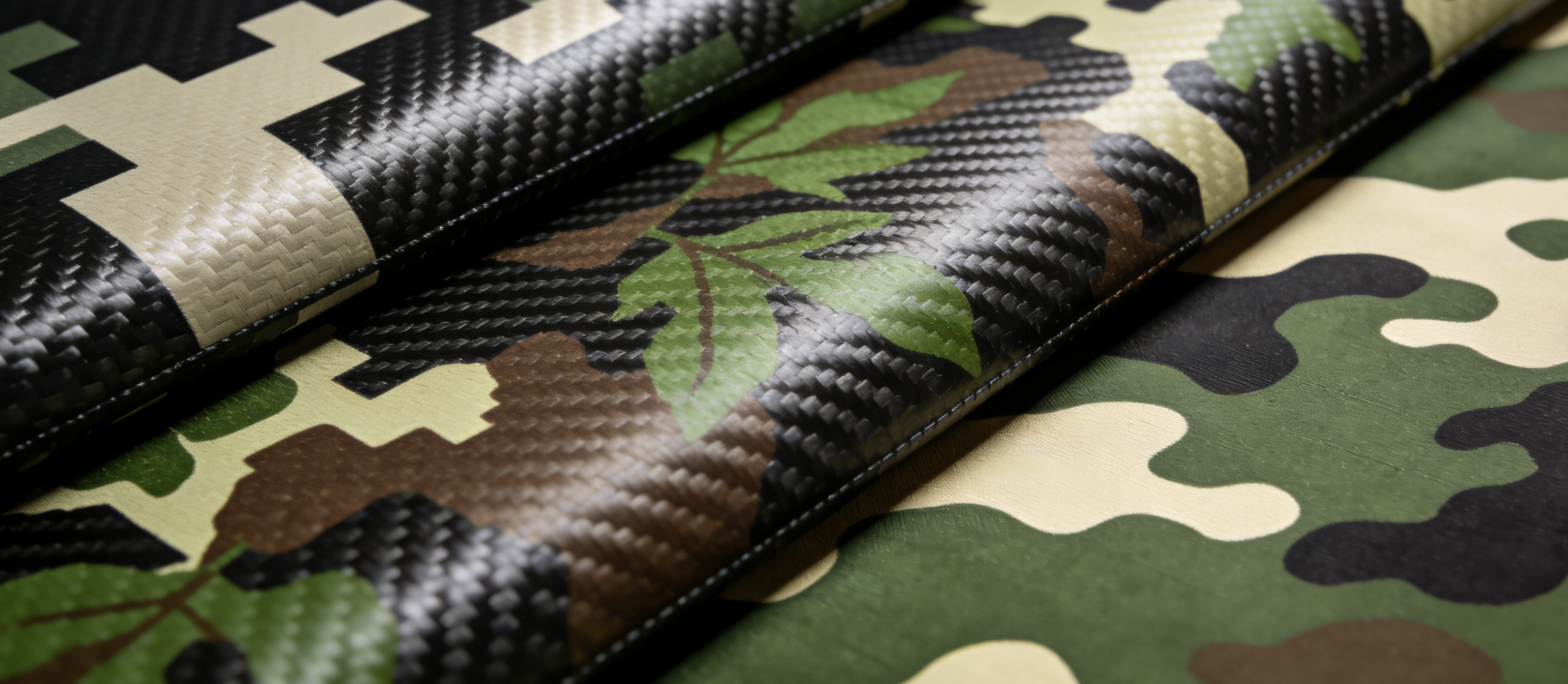
Not all camo carbon fiber is cosmetic. The pattern gets woven into the carbon structure itself — not printed, not wrapped, not added on top.
Here’s what that means in practice:
-
Fabric weight: 6.5oz/yd², woven from 3k carbon strands in twill or satin configurations
-
Thickness options: Standard 0.5mm veneer up to 5mm high-gloss panels
-
Resin matrix: Special resin blends lock the camo pattern in place. You get full structural performance, not just surface decoration.
The result stands up to temperature extremes. It absorbs impact energy. The strength-to-weight ratio makes it a real option for load-bearing military gear — not just trim on the outside.
Pattern variety runs wider than most people expect. You’ll find digital camo (pixelated, urban-ready), multi-color jacquard weaves in tactical blue or red, and classic woodland colorways. All of these work in real carbon fiber construction.
That’s the core difference: the pattern performs just as hard as the material underneath it.
What Is Camo Carbon Fiber? Weave vs. Hydro Dipping Explained
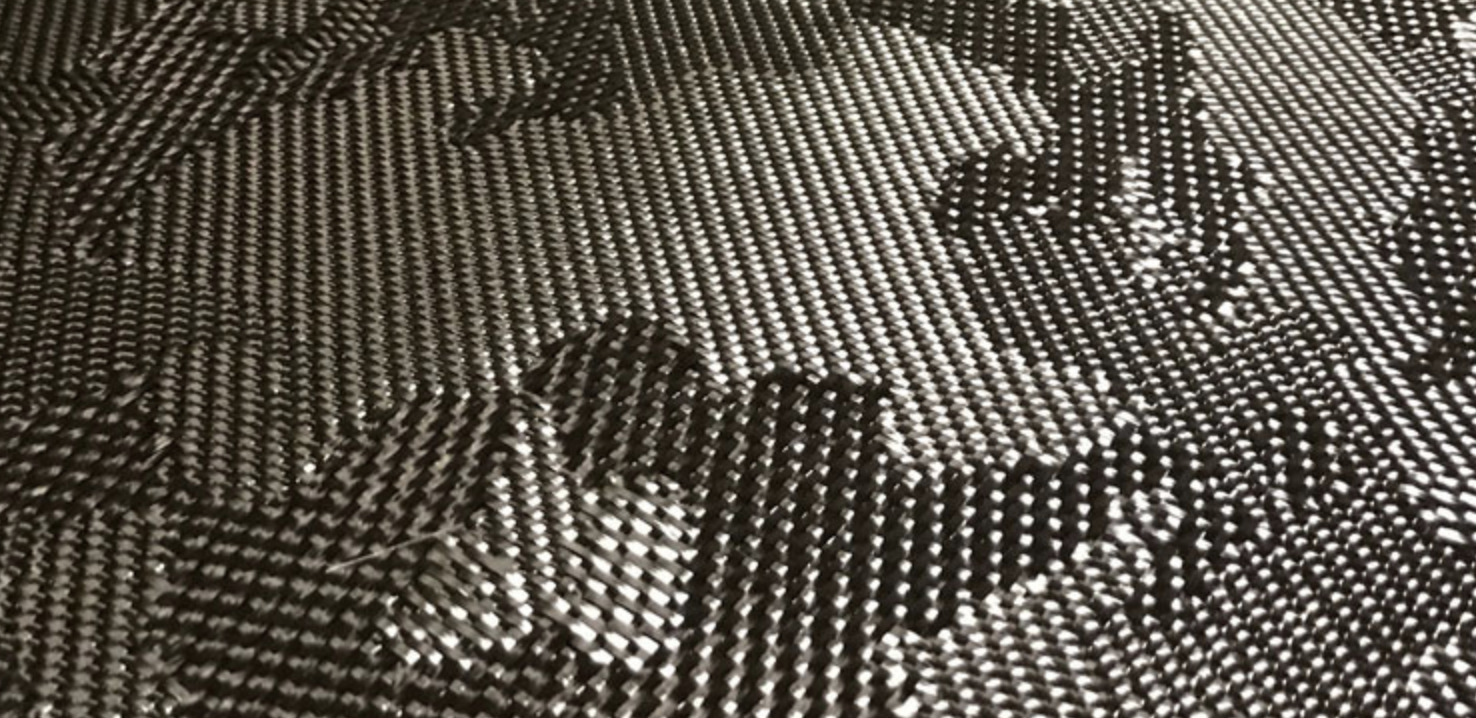
Two products share the name “camo carbon fiber.” They look similar in a product photo. In real life, they are two completely different things — and most buyers don’t figure that out until after they’ve placed an order.
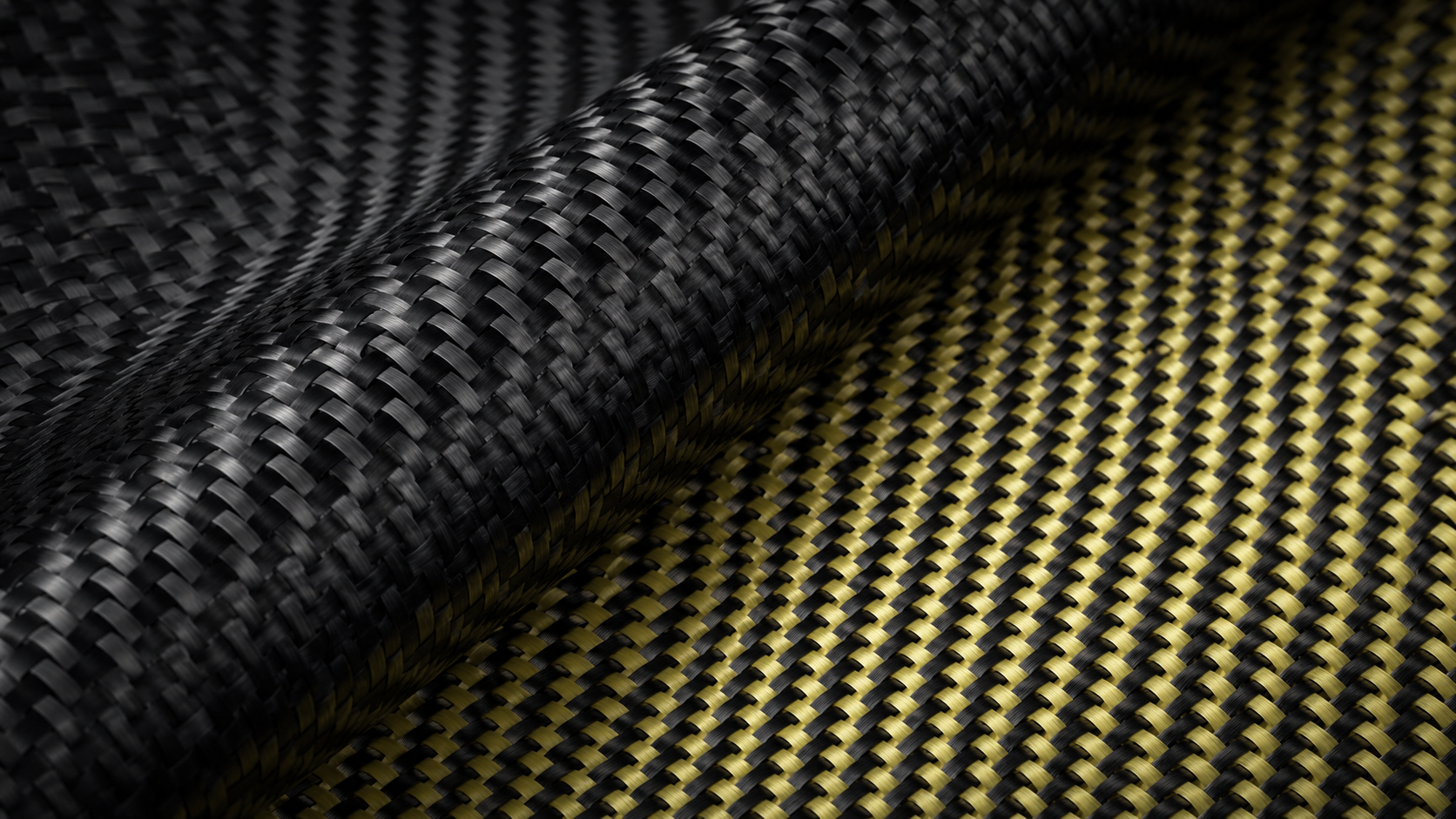
True camo carbon fiber is built at the weave level. The camouflage pattern is woven directly into the fiber itself — not applied on top, not transferred via film. Shift your angle and the individual fiber strands catch light in a new way. That’s a 3D optical effect you can’t fake. It moves with you. It has real depth.
Hydro dipping works on a different principle. A printed film floats on water. The part gets pushed under. The film wraps the surface. The finish can look sharp — add metallics and it pops under direct sunlight — but it’s a 2D image sitting on top of the material. No texture. No light-shift. No depth. Durable? Yes. The same as woven camo? Not even close.
Here’s a quick cost reality check: a hydro-dipped gun finish runs around $200 on average. A vinyl camo gun skin (Mossy Oak style) will run you $29.95. Real woven camo carbon fiber costs more than both — because it is more than both.
How Weave Structure Controls the Pattern
The camo effect in real carbon fiber isn’t random. Three main weave types control the final look, and each one produces a different visual result:
|
Weave Type |
Tow Size |
Visual Character |
|---|---|---|
|
Plain Weave (1×1) |
1K — 1,000 filaments |
Fine lines, sharp detail, matte finish. Best for detailed, high-resolution camo patterns. |
|
Twill Weave (2×2) |
3K — 3,000 filaments |
Diagonal flow, balanced gloss. The standard for most woodland and tactical camo blends. |
|
Satin Weave (4×4+) |
12K — 12,000 filaments |
Broad, glossy, bold. Best for large-scale fades and forest-style color spreads. |
Tow size controls the visual scale. 1K fiber produces tight, matte, fine detail — the kind that reads as real camo up close. 12K fiber goes broader and high-gloss. The pattern reads bold from a distance, not up close.
Check the product listing carefully. A listing that says “carbon fiber camo” but skips any mention of woven construction? You’re most likely looking at hydro dipping or vinyl wrap. Real woven camo carbon fiber passes a simple texture test — run your eye across the surface and the fibers shift with the light. Film-based finishes stay flat, no matter how the light hits them.
Camouflage Carbon Fiber Patterns: Military Digital, Woodland & Classic Camo
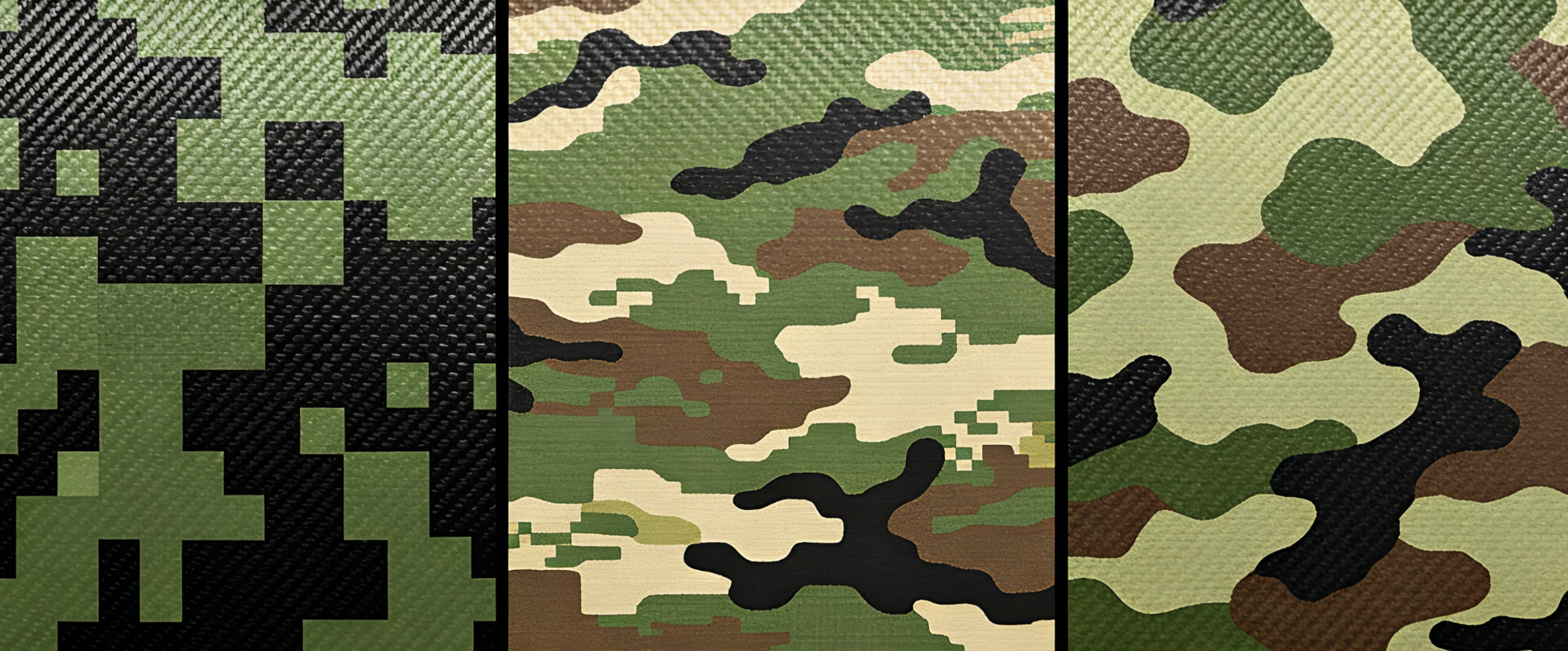
Three camo patterns lead the real carbon fiber market. Each one comes from a different visual tradition. Each one also serves a different purpose on the finished part.
Military Digital (MARPAT Woodland) is what most people picture with “tactical camo carbon fiber.” Think pixelated squares in dark green, brown, and black. This pattern replaced classic Woodland as the standard issue for US Marine Corps combat uniforms. The military built it to break up the human silhouette across different terrain types. In carbon fiber, that same pixelated layout produces a finish that looks aggressive and sharp. Urban builds, rifle chassis, tactical drone frames — these projects tend to reach for this pattern first.
Woodland Camo runs deeper. The organic blotch pattern layers forest greens and earthy browns together. It carries decades of real field history. Digital looks engineered. Woodland looks grown. You’ll find it fitting naturally on hunting gear, outdoor equipment, and any build that belongs in a forested setting rather than an urban one.
Classic Camo covers the wider category. It uses dark green and brown patterning spread across carbon fiber backgrounds. You get it in both pixel and mountain-contour styles. It’s a flexible option that works across a range of builds.
All three patterns translate into decorative carbon fiber sheets and patterned carbon fiber fabric. You can get them as woven constructions or through hydro dipping, depending on your spec and budget.
|
Pattern |
Visual Character |
Best Application |
|---|---|---|
|
Military Digital (MARPAT) |
Pixelated blocks, sharp edges |
Tactical gear, rifle chassis, drone frames |
|
Woodland |
Organic blotches, layered tones |
Hunting equipment, outdoor builds |
|
Classic Camo |
Blended green/brown integration |
General-purpose military aesthetic parts |
Snake Skin Carbon Fiber: Texture, Visual Effect & Best Use Cases
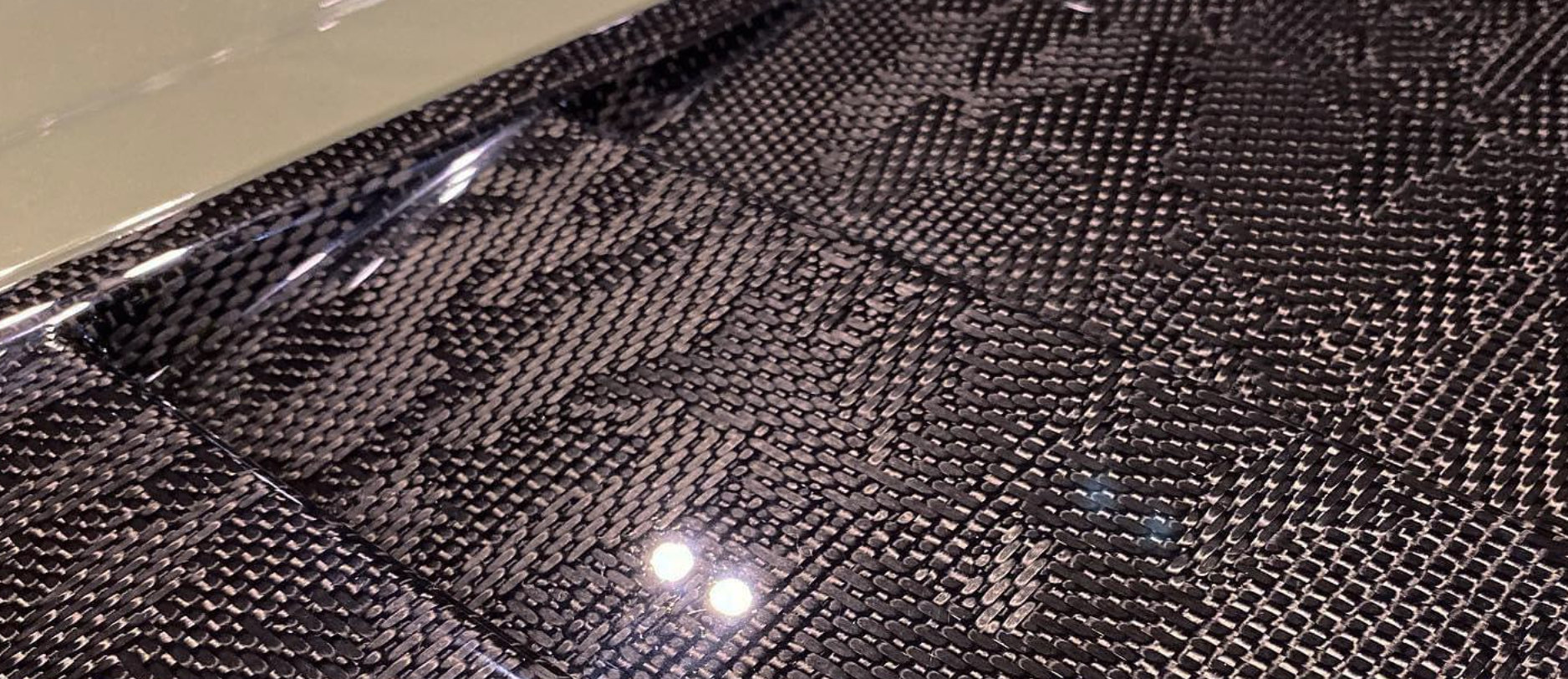
Snake skin carbon fiber sits in a very specific corner of the market — and the people who want it, want it hard.
The pattern is irregular, scale-like, and built to be felt. Metallic particles — bronze, gold, copper — get fused into the surface layer. Run your hand across a finished panel and you feel the scales lift. It’s not an illusion. That raised, dimensional quality is part of the material itself.
What the Finish Looks Like
Two metallic variants lead the snake skin carbon lineup:
-
Gold bronze infusion: A warm bronze-gold sheen spreads across the black carbon weave. Heavy epoxy saturation pulls out the highlights. Individual scales catch light at sharp angles.
-
Copper variant: Metallic copper flecks hit with more contrast. The look is bold — dark forged carbon base against bright copper detail. This is the one that stops people mid-scroll.
Both finishes sit on a colored primer — yellow or amber base — that bleeds through the translucent epoxy layers on top. That undertone gives the surface its glow and depth. Skip it and you get pattern. Keep it and you get dimension.
How It’s Applied
The process follows a water transfer path with several precision steps:
-
Lay down a colored primer coat for undertone visibility
-
Spray adhesive onto the primed surface
-
Lay the snake skin film flat and tight — trim excess with a razor right away
-
Saturate with heavy epoxy; torch-level the surface for uniform flow
-
Allow a minimum 4-hour cure between coats
-
Clean up edges with a Dremel for sharp borders
Film application has to be tight. Any looseness brings in bubbles. Bubbles break the scale definition. The epoxy isn’t just decorative — it’s structural. It holds the pattern in place and protects every edge.
Best Use Cases
Snake skin carbon fiber cuts clean on a machine. That makes it practical, not just a showpiece.
-
Knife scales and custom handles: The gold bronze variant suits grips that need to look earned. Copper fits showpiece builds where the finish is the whole point.
-
Guitar body projects: Epoxy-layered snake skin over a primed base produces a textured finish no paint job can match.
-
Custom fabrication and artisan work: The material cuts clean. Makers who need sharp edges and repeatable results keep coming back to it.
This is a forged carbon fiber pattern aesthetic taken in a different direction — less industrial, more predatory. Your build needs to look like it means something? Snake skin carbon fiber is one of the few finishes that earns that impression without forcing it.
Jungle & Forest Carbon Fiber: Outdoor, Hunting & Tactical Applications
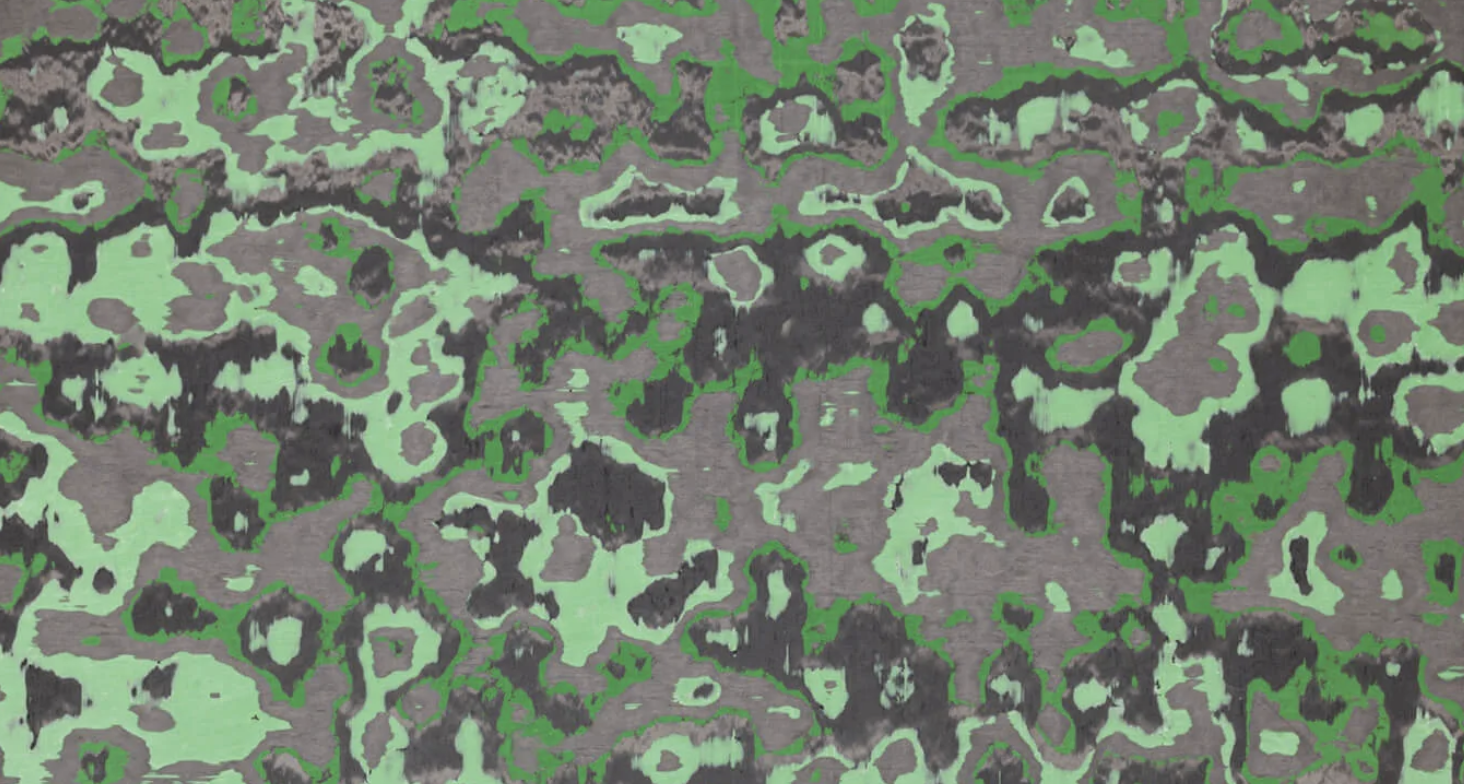
Dense green. Layered. Built into the material itself — not sitting on top of it.
That’s what separates jungle and forest carbon fiber from everything else in the pattern category. Products like “Jungle Wear” composite use ultra-thin colored resin layers — just 0.2mm each — pressed between carbon fiber plies during lamination. The two-tone green pattern isn’t applied after the fact. It’s embedded. You can’t scratch it off in the field. You can’t fade it with cleaning solvent. It’s part of the structure.
That detail matters more than it sounds.
Built for the Field, Not Just the Look
The performance numbers back up real outdoor and tactical use:
-
Density: ~2.1 g/cm³ — 22% lighter than aluminum, 73% lighter than steel
-
Stiffness: Tensile modulus of 70–150 GPa, matching or beating aluminum at a fraction of the weight
-
Corrosion resistance: Holds up against oils, cleaning agents, and weak acids — the exact stuff field knife maintenance throws at a handle material
-
Water resistance: Watertight construction, tested for watch cases. Rain, sweat, and river crossings aren’t a problem.
For knife scales and handle inlays — the main confirmed use case — jungle carbon fiber covers every practical need. It’s light. It doesn’t corrode. It stays stable through temperature swings. You can shape it on a belt sander or CNC mill without issues.
The application range goes well beyond knives:
-
Firearm stocks: Camo CF tubes (5–150mm diameter, ±0.001mm inner tolerance) work in rifle-support builds. You save 400–600g over wood stocks.
-
Bow components: Riser inlays and limb cores gain real benefit from the stiffness-to-weight ratio. Forest green fits bowhunting concealment well — especially in low-light conditions.
-
Pack frames and trekking poles: Same CF tube stock, built for ultralight backpacking. You get 22%+ weight reduction over aluminum equivalents.
One Honest Limitation
The shimmering surface effect — noted by the manufacturer — works against active concealment in direct sunlight. This is a decorative forest aesthetic, not NIR-rated tactical camouflage. Need true field concealment? A matte clear coat removes most of the reflectivity without affecting the embedded color underneath.
For gear that lives in the field and needs to look like it belongs there, jungle carbon fiber earns its place. The color won’t quit on you. The material won’t either.
Custom Carbon Fiber Patterns: How to Design & Order Your Unique Finish
Most suppliers will tell you custom carbon fiber patterns are possible. Few will break down what that means in practice — the timelines, the minimums, the real costs, and what complexity levels are on the table.
Here’s the full picture.
What You Can Build
Custom carbon fiber patterns go far beyond minor color tweaks. Jacquard weaving gives you precise warp-level control over the entire surface. That means logo integration, complex geometric layouts, forged carbon effects, and multi-layer 3D stacks are all within reach. Not as upsells. As standard capabilities.
Pre-designed pattern codes offer a faster entry point. Use one of these if you don’t need a fully original design:
-
1017 Forged Carbon — irregular, high-gloss, aggressive
-
120 Carbon Micro Check — tight grid, clean finish
-
850 3D Carbon Stack — layered depth, catches light from multiple angles
-
182 Braided Weave — structured, directional, strong visual rhythm
Each ships in 3K or 12K tow configurations. Larger 12K bundles cut per-unit cost on bulk orders.
The Order Process, Step by Step
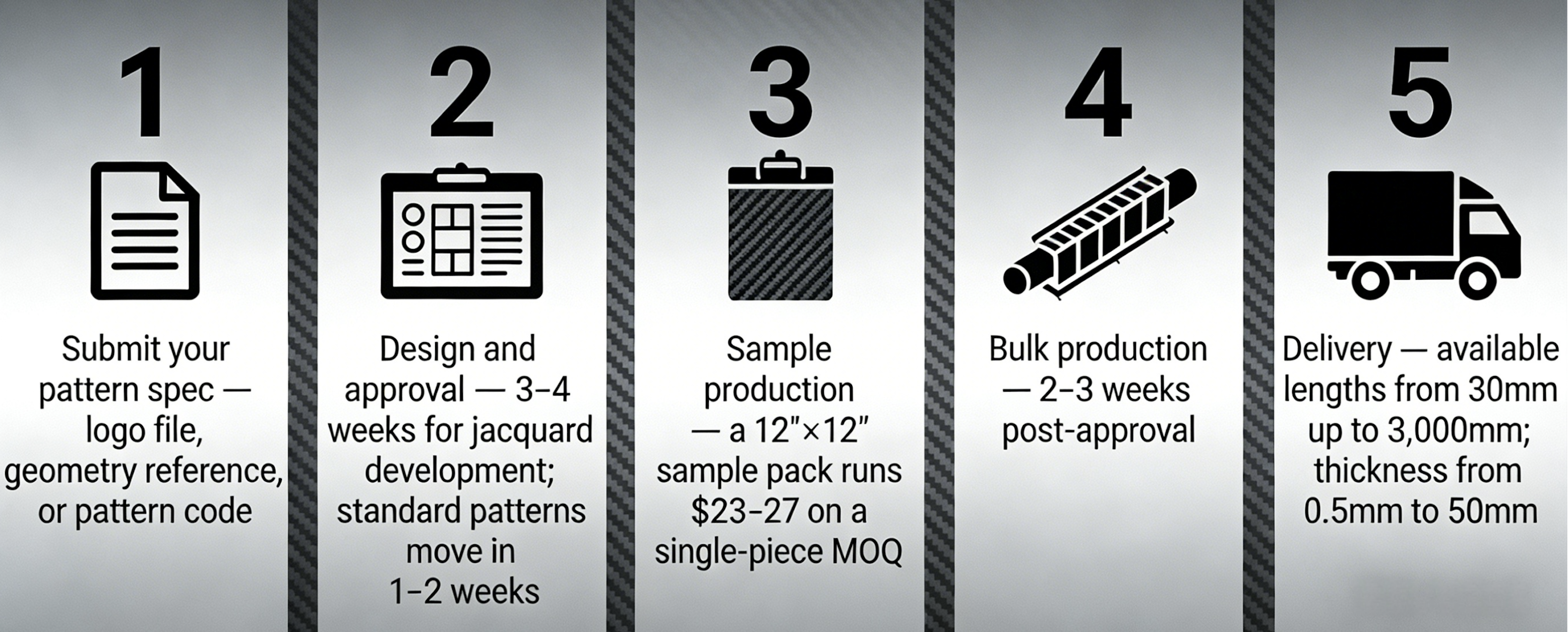
Custom work follows a defined sequence:
-
Submit your pattern spec — logo file, geometry reference, or pattern code
-
Design and approval — 3–4 weeks for jacquard development; standard patterns move in 1–2 weeks
-
Sample production — a 12″×12″ sample pack runs $23–27 on a single-piece MOQ
-
Bulk production — 2–3 weeks post-approval
-
Delivery — available lengths from 30mm up to 3,000mm; thickness from 0.5mm to 50mm
The sample step isn’t optional. Multi-layer forged carbon and 3D stack constructions need physical confirmation. You want to see and feel the result before committing to a full production run.
Tow Size and Cost
Tow selection goes beyond looks. 3K fiber gives you tighter detail and a finer surface texture. 12K fiber covers more area per strand. That brings material costs down on large orders without hurting structural performance.
For custom decorative carbon fiber sheets where surface finish is critical, 3K is the stronger choice. For bulk composite production where cost efficiency takes priority, 12K makes more sense.
The minimum order is one piece. There’s no barrier to getting started.
Automotive & Motorcycle Camo Carbon Fiber Parts: Real-World Applications
The Dodge SRT Viper didn’t get a carbon fiber roof panel because it looked good in photos. It got one because dropping weight from high up changes how a car handles at the edge. That’s a difference you feel in the seat, not just read on a data sheet.
That’s the idea behind every serious camo carbon fiber build. The pattern is personal. The performance is structural.
On cars, the parts that make the biggest difference are hoods, door panels, and spoilers. A carbon fiber hood cuts 70% of the weight compared to steel — 40% compared to aluminum. Add built-in venting channels and you pull heat out of the engine bay while cutting drag. Two problems. One part. GT wings and front splitters work the same way. You get real weight savings that sharpen acceleration and tighten cornering. Camo patterning adds zero weight. It adds a lot to the identity of the build.
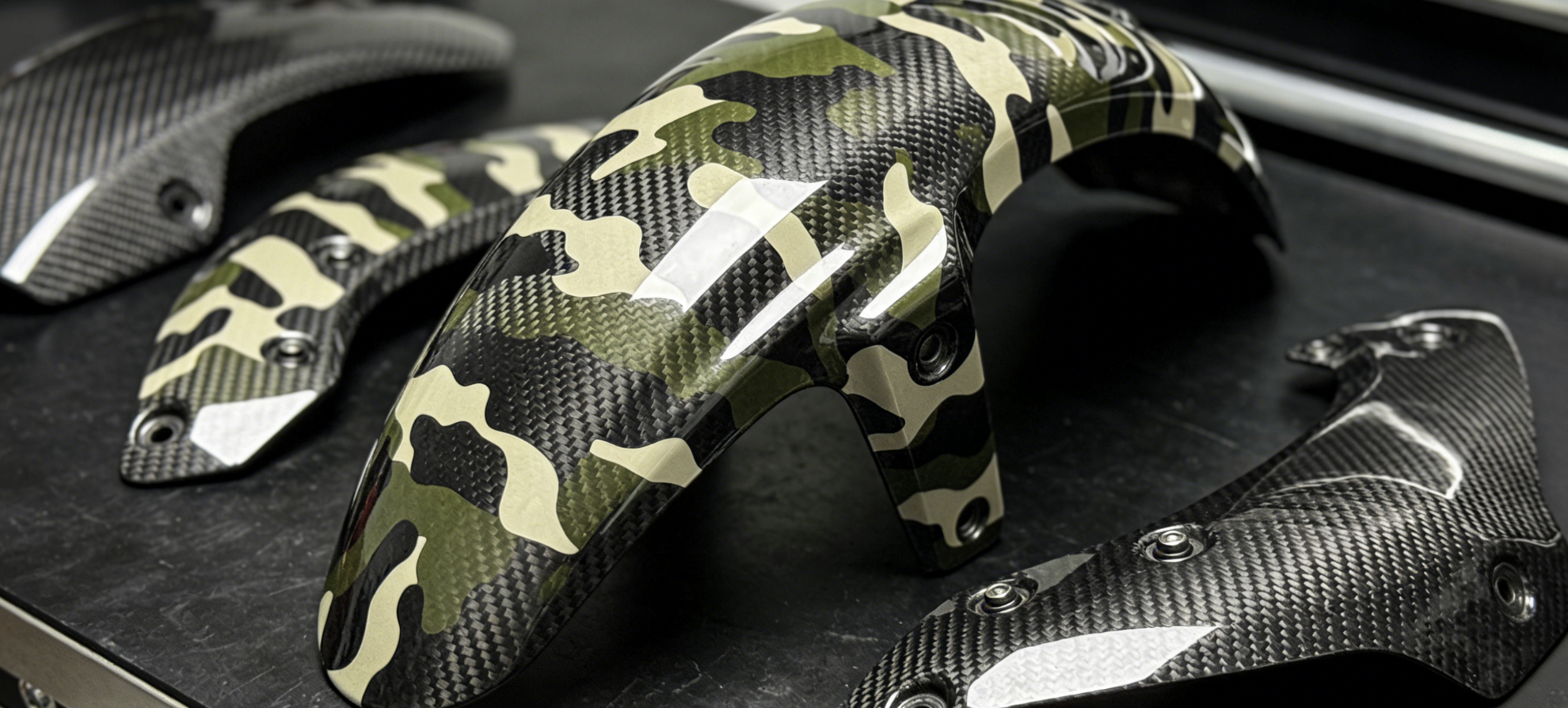
On motorcycles, the shapes get harder to work with. Fairings, fenders, and exhaust covers are curved and layered — and that’s where carbon fiber’s ability to form around complex shapes pays off. Hydro-dipped camo finishes wrap those curves with a clean, tight finish. Carbon fiber also absorbs road vibration instead of passing it through to the rider. Riders who’ve put serious miles on CF-equipped bikes report better stability and less fatigue by the end of a long ride. That’s not a sales pitch. That’s unsprung weight reduction doing its job.
The market backs this up. In high-performance motorcycle builds, carbon fiber parts adoption tops 80%. Of those buyers, more than half are looking for custom patterned finishes — camo, snake skin, jungle — because raw performance alone no longer sets a build apart. Visual identity does.
Standard carbon fiber sits at baseline pricing. Camo and special-pattern versions carry a 20–50% premium. Buyers aren’t paying for looks alone. They’re paying for a part that performs the same as the plain version and looks like nothing else on the road.
Gun Parts & Tactical Gear in Camo Carbon Fiber: Performance Meets Stealth

Tactical gear has a weight problem. Every gram on a rifle, handguard, or stock is a gram the operator carries through every hour of a deployment. It adds up fast.
Carbon fiber fixes that at the material level. Specific strength up to 30x stainless steel. Stiffness 7x greater than steel. You carry a rifle all day without giving up durability or accuracy. That’s not marketing language. Proof Research, Christensen Arms, and Smoke Composites have built entire product lines around that aerospace-grade spec.
Camo carbon fiber adds the concealment layer on top of all that.
Where It Shows Up on Real Builds
-
Free-floating handguards (AR, PCC, .308): Rock-solid mounting with zero flex. Lighter than aluminum. The barrel floats clean, so accuracy goes up.
-
Carbon fiber barrels: 18″ threaded profiles in digital camo stock. Helical wrapping spreads heat along the barrel length. It cools faster and holds tighter groups over extended fire.
-
Stocks and grips: Hybrid aluminum/carbon builds like the XDS Drop Stock (five color options) cut weight without losing rigidity. Manners-PH configurations add ARCA and bipod rail compatibility.
The camo patterning — digital, woodland, military MARPAT — gives you real concealment value in field and urban environments. It adds no weight. It doesn’t touch the structure. The build just disappears where you need it to.
FAQ: Camo Carbon Fiber Common Questions
Straight answers. No padding.
Is camo carbon fiber stronger than steel?
Yes — and it’s not close. Carbon fiber density sits at ~1.6 g/cm³. Steel runs 7.8 g/cm³. At equal strength, camo carbon fiber parts weigh 75–80% less. That gap explains why aerospace and military specs have shifted to carbon composite construction.
Will the pattern fade in sun and rain?
The resin system is UV-stable. The surface treatment resists weather. No fading has been reported under long sun exposure or harsh weather conditions. The finish holds.
Can I order custom shapes, not just flat sheets?
Yes. The camo pattern works on molded and formed parts, not just flat sheets. Custom shapes are standard. You don’t need to make a special request.
Can I do water transfer printing myself at home?
You can try — but the risk is real. DIY requires a clean dry surface, the right adhesive, and correct film tension. Get any of those wrong, and the bond fails. A failed bond wipes out the fatigue resistance and impact strength that make carbon fiber worth using. For complex parts, go with a professional.
What are the fiber dimensions?
Each carbon filament is 5–10 micrometers in diameter. That’s thinner than a human hair. Thousands of those filaments bundle together to form a single tow, which then gets woven into the material you see.
Conclusion
Camo carbon fiber isn’t a niche novelty. It’s where serious performance material meets bold personal identity. Wrapping a rifle chassis in military digital, finishing a motorcycle fairing in snake skin, or going with a custom jungle pattern for your build — the right pattern turns functional carbon fiber into something that’s yours.
The options are wider than most people expect. Good craftsmanship holds up over time.
You’ve made it this far — that means you’re not just browsing. You’re deciding. So keep that momentum going. Browse the full camo carbon fiber pattern library at HyperX Carbon. Request a custom sample. Or reach out to the team and spec your project together.
Contact HyperX Carbon – Your Trusted Chinese Carbon Fiber Customization Partner
Ready to develop high-performance carbon fiber materials or custom forged carbon fiber parts tailored specifically for your project?
HyperX Carbon is your long-term strategic partner with over 20 years of expertise in advanced composites. We specialize in delivering aerospace-grade forged carbon fiber custom solutions, along with fully personalized prepreg, tubes, sheets, and lightweight carbon fiber structural components for automotive, drone, eVTOL, and medical applications.
We don’t just supply materials — we provide end-to-end customization support:
-
Stable premium supply chain using Toray, Mitsubishi, and Hengshen raw materials
-
AS9100D certified production tailored for aerospace and UAV requirements
-
Rapid prototyping carbon fiber component in just 5-8 weeks, with monthly capacity over 180,000 parts
-
Competitive pricing with 15-18% cost savings on forged carbon solutions
-
Full customization flexibility: from T700 and T1100G to ultra-high modulus grades, with tailored layups, finishes, and performance specifications
Whether you’re an eVTOL developer, automotive OEM, drone manufacturer, or medical device engineer, HyperX Carbon delivers bespoke material selection, structural optimization, and manufacturing solutions that match your exact technical and performance needs — with consistent batch-to-batch quality and reliable delivery.
Get in touch today for a free technical consultation, personalized quote, or custom material samples.
📧 Email: [email protected] 🌐 Website: https://www.hyperxcarbon.com/ 📞 Phone/WhatsApp: +86 15623270276 (English support available)
Let’s co-create your next lightweight innovation together. Contact HyperX Carbon now and stay ahead in the low-altitude economy and advanced composites market.
HyperX Carbon – Not just a supplier, but your dedicated carbon fiber customization expert.