
Carbon fiber wheels range from $1,500 to well over $100,000. That gap is enormous — and it’s where most buyers get confused.
Maybe you’re upgrading your supercar. Maybe you’re setting up a race-ready road bike. Or you just want to know how much carbon fiber wheels cost before spending a dollar. Either way, the 2026 pricing landscape is more complex and more competitive than it’s ever been.
New manufacturers have entered the market. Production methods have improved. But quality is all over the place. You get premium brands charging top dollar, budget options that look the part but fall short, and everything in between.
This guide breaks it all down:
-
A full price breakdown across cars and bikes
-
A clear look at what’s driving those numbers
-
What to check before you buy so you don’t waste your money
What Do Carbon Fiber Wheels Cost in 2026? (Price Snapshot)
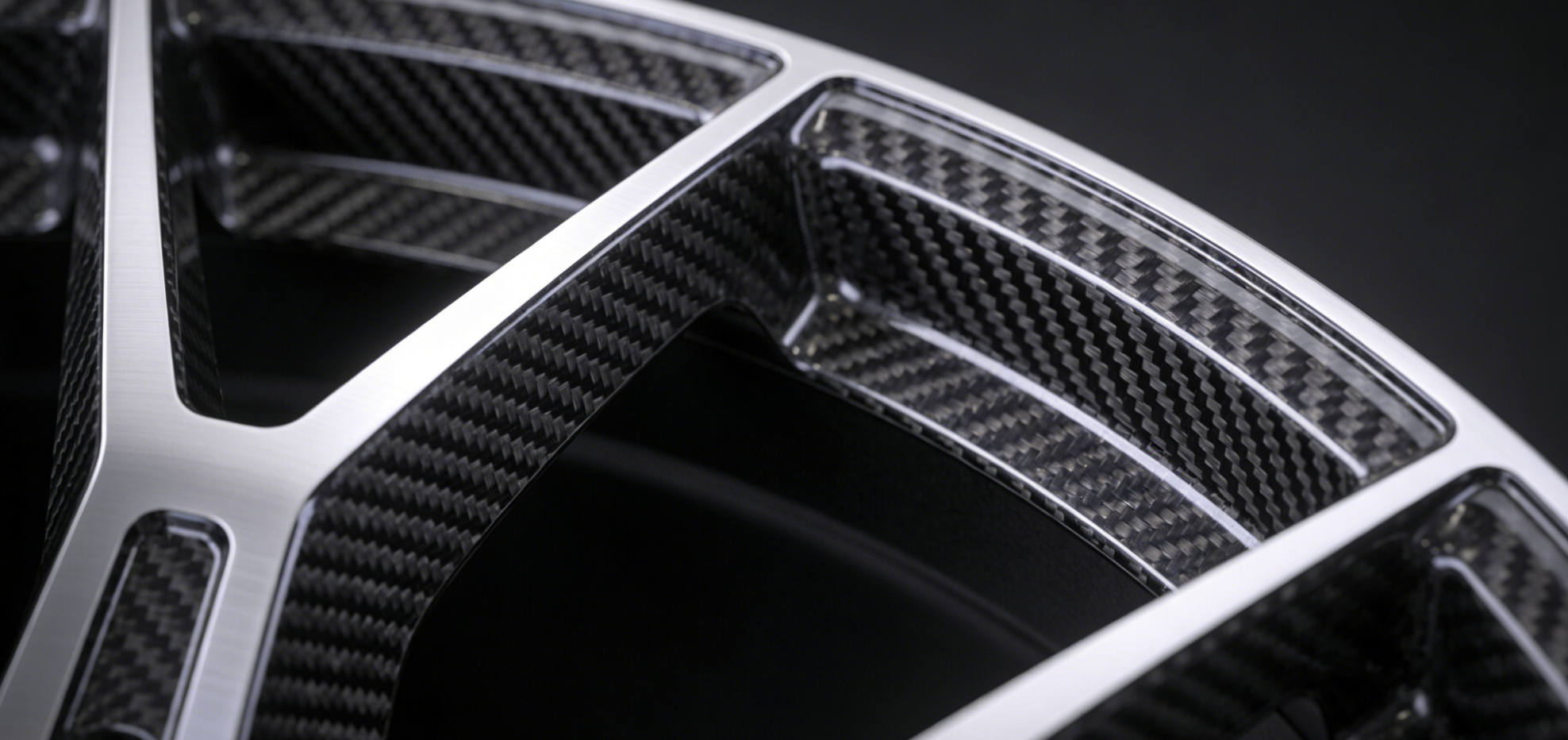
Here’s the short answer: $1,559 on the low end. $27,495+ on the high end. And no, that’s not a typo.
The price depends on what you’re buying — a bicycle wheelset or an automotive set. These two categories exist in completely different financial worlds.
Bicycle carbon wheelsets have gotten much more affordable. The FARSPORTS 2026 EVO S Series runs between $1,559 and $1,779. You get wheelsets as light as 1,150g at a 45mm rim depth. That same performance would have cost twice as much five years ago. Better manufacturing and more competition have pushed prices down and quality up.
Automotive carbon wheels tell a very different story. Take the 2026 Corvette Z06 as a real-world benchmark:
|
Wheel Option |
Price |
|---|---|
|
Carbon Flash-painted (ROY) |
$11,995 |
|
Visible carbon fiber (ROZ) |
$13,995 |
|
Visible carbon fiber + Red stripe (STZ) |
$15,500 |
Add the Z07 aero package and carbon ceramic brakes, and the total hits $27,495. Buy those components as a bundle and you save up to $8,000 compared to buying each piece on its own.
So why such a huge gap between car and bike wheels? Three clear reasons:
-
Load engineering — car wheels must support 3,000+ lbs
-
DOT safety certification — required for road use
-
Production complexity — bicycle wheels follow standardized production runs; automotive wheels do not
One last thing to factor into your budget before you commit: supply is tight in 2026. Many carbon wheel options have limited stock, and wait times can stretch up to a year. Plan for the wait, not just the price.
Carbon Fiber Car Wheels Price Breakdown: By Vehicle Type & Brand (2026)
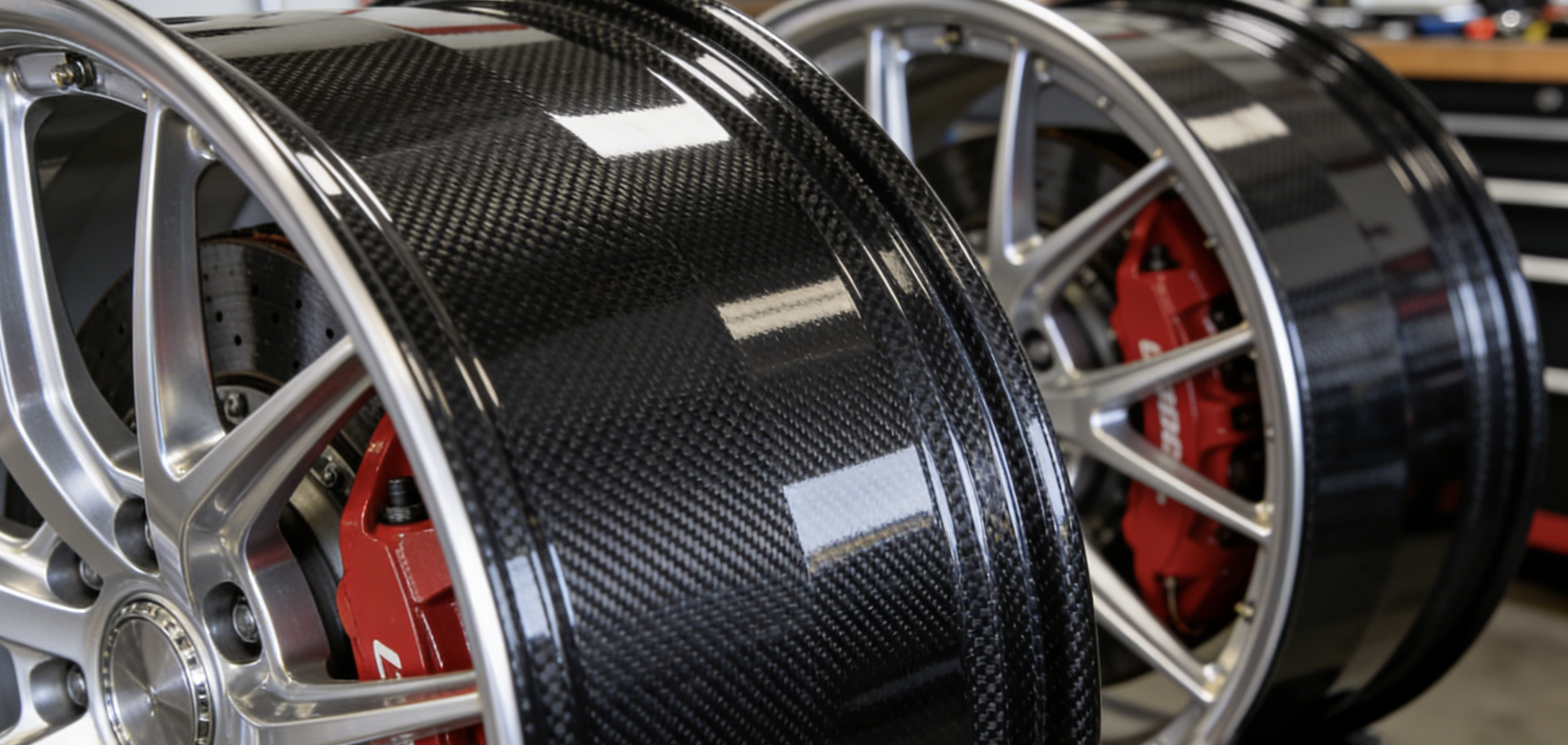
The carbon fiber wheel market splits into two distinct worlds: OEM factory fitments and aftermarket upgrades. Each follows its own pricing logic. Know the difference, and you’ll avoid serious sticker shock.
OEM Carbon Fiber Wheels: What the Factory Charges
Carbon Revolution is the dominant OEM supplier. They supply wheels to GM, Ford, Lamborghini, and Land Rover. The performance data behind these fitments is hard to ignore.
Here’s what OEM carbon fiber looks like across real vehicle applications:
|
Vehicle |
Wheel Size |
Weight Savings |
OEM Status |
|---|---|---|---|
|
Shelby GT350R |
19″ 7-spoke |
13.2 lbs per wheel |
OEM option |
|
Corvette Z06 |
20/21″ 5-spoke |
41 lbs overall |
OEM Tier 1 |
|
Corvette ZR1 |
20/21″ 10-spoke |
42.8 lbs overall |
OEM standard |
|
Range Rover Sport SV |
23″ 10-spoke |
35.6 kg total |
OEM (first SUV application) |
|
Lamborghini Temerario |
20/21″ 10-spoke |
15 kg vs. standard set |
OEM standard |
These numbers aren’t marketing. GM’s own engineers confirmed Carbon Revolution wheels cut 1.5 seconds off a 2-minute lap on the Corvette Z06. That gain came from reduced unsprung rotational mass — nothing else. This is a real performance return, not a cosmetic upgrade.
One pattern worth noting: weight savings scale with diameter. The 23″ Range Rover application saves 35.6 kg total. So as wheel size grows, carbon fiber becomes easier to justify on cost. Luxury SUV buyers should pay close attention to that.
OEM pricing gets bundled into option packages. You can’t buy these wheels at retail. Carbon Revolution runs as a Tier 1 supplier — not a direct-to-consumer brand.
Aftermarket Carbon Fiber Wheels: Real Numbers for 2026
Buy outside the factory order, and you face hard pricing realities.
Splux Luxury Wheels sets the current aftermarket benchmark. Their Real Carbon Fiber Series uses a 2-piece hybrid construction: a 3K 2×2 twill carbon fiber barrel paired with 12,000-ton forged 6061-T6 aluminum spokes.
-
Price: $23,800 per set of 4 (~$5,950 per wheel)
-
Sizes: 20″, 21″, 22″, 23″
-
Weight savings: 25% lighter than forged aluminum
-
Finish options: 100+ variations (powder-coat, chrome, polished, brushed)
-
Warranty: Lifetime structural warranty
-
Fitment: Custom-built per order — any PCD/CB configuration
That 25% weight saving reflects the hybrid build. Full carbon monoblock wheels — like Carbon Revolution’s OEM units — hit 40–50% savings. The trade-off? You won’t find them on the aftermarket retail shelf.
The Aluminum Benchmark: What You’re Comparing Against
To understand the carbon fiber premium, you need a baseline. RVRN’s RV-MB01 forged aluminum wheel sets the lower bound:
-
$799 per wheel / $3,196 for a set of 4
-
Aerospace-grade forged 6061-T6 aluminum
-
Sizes from 15″ to 26″
-
3–4 week production time
Carbon fiber carries a 5–7× price premium over forged aluminum aftermarket options. That gap gets smaller as performance demands go up. Track use, EV efficiency, and large-diameter fitments all shift the math in carbon’s favor.
2026 Price Tier Summary
|
Segment |
Brand Example |
Set Price |
Per Wheel |
|---|---|---|---|
|
Supercar OEM |
Carbon Revolution / Lamborghini Temerario |
OEM bundled |
~$3,000–$6,000 est. |
|
Performance Car OEM |
Carbon Revolution / Corvette Z06 |
Option package |
Premium over standard |
|
Luxury SUV OEM |
Carbon Revolution / Range Rover Sport SV |
Option package |
Premium package |
|
Aftermarket Hybrid CF |
Splux CF Series (20″–23″) |
$23,800 |
~$5,950 |
|
Aftermarket Forged Al |
RVRN RV-MB01 (benchmark) |
$3,196 |
$799 |
Two costs most buyers forget to budget: installation and tires. Neither Splux nor RVRN includes these in their pricing. For staggered 20/21″ or 23″ fitments, tires alone can run several thousand dollars. Add both to your budget before you commit.
Carbon Fiber Bike Wheels Price Breakdown: Road, Gravel & Mountain (2026)

Bike wheels follow a different pricing logic than automotive carbon. For most riders, the numbers are far more approachable.
The 2026 road carbon wheelset market has settled into three clear tiers. Each tier targets a specific type of rider. Figure out where you fit, and you won’t need to second-guess your budget.
Road Carbon Wheels: The Three-Tier Breakdown
|
Tier |
Price Range |
Key Specs |
Best-In-Tier Examples |
|---|---|---|---|
|
Budget |
$700–$1,000 |
19–23mm internal, 35–50mm depth, ~1,357–1,433g |
Light Bicycle Falcon AR46 ($702), Hunt 35 Carbon Aero ($849), Scribe Inception 50+ (<$900) |
|
Mid |
$1,100–$1,500 |
21–25mm internal, 35–46mm depth, ~1,530–1,630g |
Zipp 303 S ($1,400), ENVE Foundation 45 ($1,400), Bontrager Aeolus Pro 3V ($1,500) |
|
Premium |
$3,000+ |
21–23mm internal, 45–60mm depth, 1,515g+ |
Roval Rapide CLX II, Zipp 404 Firecrest (~$3,000+), Metron RS ($3,290) |
The budget tier has moved fast. Take the Light Bicycle Falcon AR46 at $702. It delivers 1,392g and a 46mm rim depth — specs that belonged in the mid tier just three years ago.
The Factory-Direct vs. Retail Brand Gap
Here’s the single biggest pricing lever most riders ignore: who builds it vs. who sells it.
Factory-direct brands like Light Bicycle own their manufacturing. No middleman. No brand premium. That’s how a 21×46mm wheelset lands at $702 while ENVE charges $1,400 for near-identical geometry.
That’s a 2× markup for the same core specs.
Chinese direct brands — Winspace Hyper, Tukus, Lún MEGA D45 — sit in the $700–$1,200 range for 35–50mm depths. Weight and build quality are solid across the board. What you give up is brand recognition, US-based warranty support, and aero refinements like Zipp’s ABLC dimple tech — worth about 4W at race speed.
The bottom line:
– Happy with self-assembly and doing your own research? Factory-direct cuts your cost by 40–70%.
– Want dealer support, verified aero data, and a name that holds resale value? Pay the retail premium. It’s worth it for that profile.
Gravel & Mountain Bike Carbon Wheels
Gravel riders haven’t needed a separate product line. Road wheels like the Zipp 303 S ($1,400, 23mm internal) and Roval C38 ($1,100, 21mm internal) already handle 25–50mm tires with no dedicated gravel SKU needed. The wider internal widths do all the work.
Mountain bike carbon pricing is less organized right now. Brands like Hunt, Roval, and Industry Nine haven’t released clean 2026 spec sheets yet. Based on factory trends, expect to pay $800–$2,500 for 25–30mm internal widths at 20–35mm depths. That gap will shrink as the MTB carbon segment grows.
One spec worth tracking across all disciplines: rim depth. Going from a 35mm baseline (Hunt, $849) to 45–50mm depth adds $300–$700 to your total. That’s the aero tax. Worth paying? That depends on where and how you ride.
5 Factors That Determine Carbon Fiber Wheel Prices (Why Costs Vary So Much)
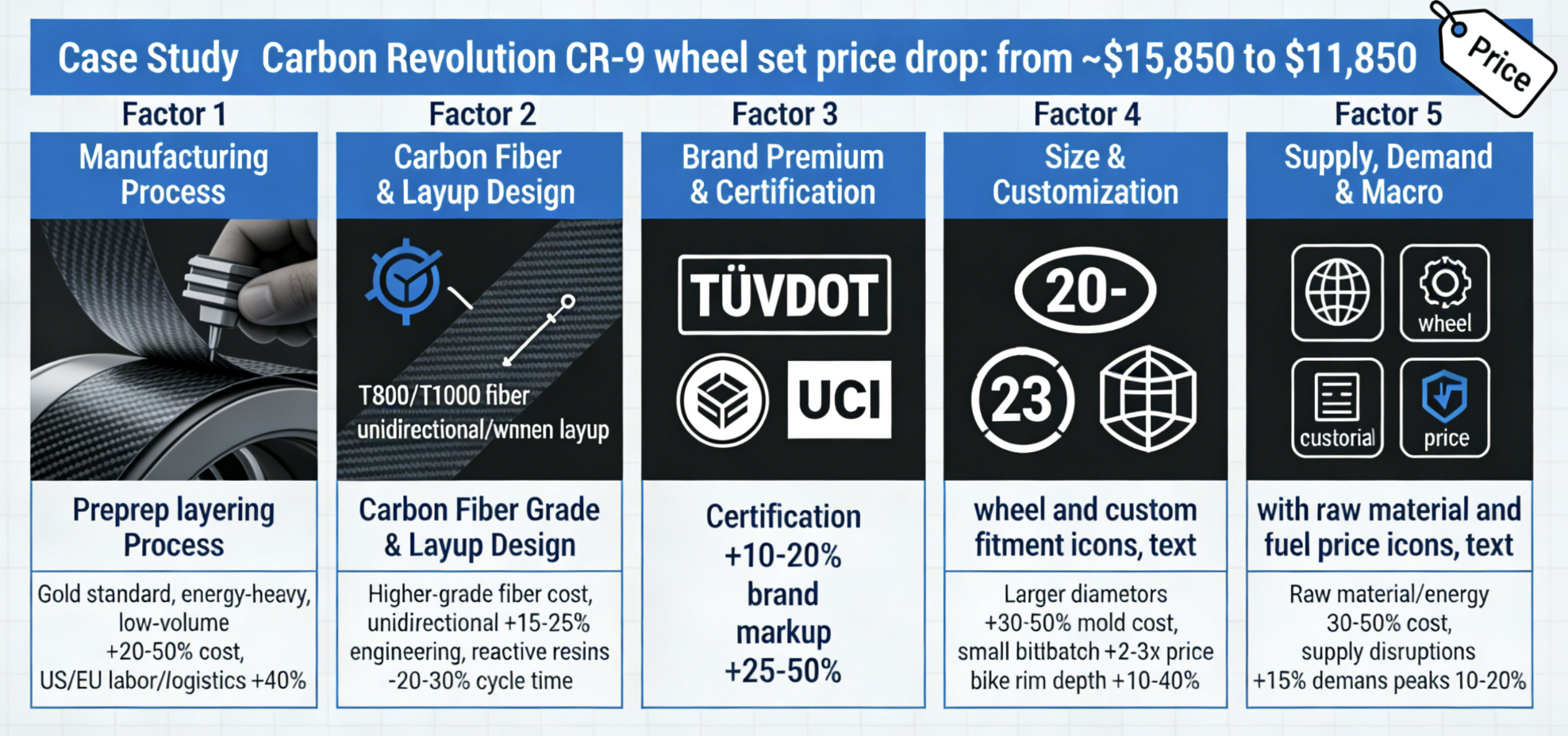
Carbon Revolution slashed $4,000 off their CR-9 four-wheel set — dropping from ~$15,850 to $11,850. They didn’t cut quality. They got smarter about production. That one example shows you how carbon fiber wheel pricing really works.
The price isn’t random. Five specific factors push the number up or down. Understand them, and you’ll see why two wheels with identical specs can have a $5,000 gap between them.
Factor 1: Manufacturing Process
Prepreg layering plus autoclave curing is the gold standard. It’s also energy-heavy and slow.
-
Low-volume production runs — built for niche vehicles or custom fitments — push unit costs 20–50% higher than mass-production equivalents
-
US and EU brands like ENVE carry a 40%+ labor and logistics premium over Chinese factory-direct manufacturers
-
Supply chain disruptions add another 10–30% on top of that
So the process itself sets the floor price — before any other factor kicks in.
Factor 2: Carbon Fiber Grade and Layup Design
Not all carbon is the same. Higher-grade fiber (T800/T1000 equivalent) costs more to source and work with.
-
Unidirectional layups versus woven designs add 15–25% in extra engineering work
-
Reactive resins have cut production cycles by 20–30%, which helps on cost
-
But premium layup specs still create big price gaps between budget and high-performance wheels
You’re paying for both the raw material grade and the labor required to shape it correctly.
Factor 3: Brand Premium and Certification Costs
Certifications aren’t free. TÜV and DOT automotive approvals add 10–20% to the wheel price before a single unit ships. UCI approval for competitive cycling pushes bike wheel costs up by 15–30%.
Then comes brand markup. Marketing and luxury positioning add another 25–50% on top. That full stack gets passed straight to you at retail. A budget wheel skips most of this. A premium brand wheel carries all of it.
Factor 4: Size and Customization
Larger automotive diameters — think 20–23″ — need custom molds. That step alone adds 30–50% to production cost.
-
Small-batch custom fitments for specific vehicles can push prices 2–3× higher with no bulk savings to offset it
-
On the bike side, deeper rim profiles and wider internal widths add 10–40% in extra material and layup costs
The more custom your spec, the less room there is to spread costs across volume.
Factor 5: Supply, Demand, and Macro Conditions
Raw materials and energy make up 30–50% of total wheel cost. That number moves — a lot.
-
Global supply disruptions from fuel prices or geopolitical instability can tack on another 15%
-
Motorsport event cycles and cycling boom periods drive demand up, pulling prices 10–20% higher during peak windows
The same wheel can cost more or less based on when you buy it. Timing matters. The input costs are volatile, and manufacturers pass that movement straight through to retail pricing.
Carbon Fiber Wheels vs Aluminum / Forged Alloy: True Cost of Ownership Comparison
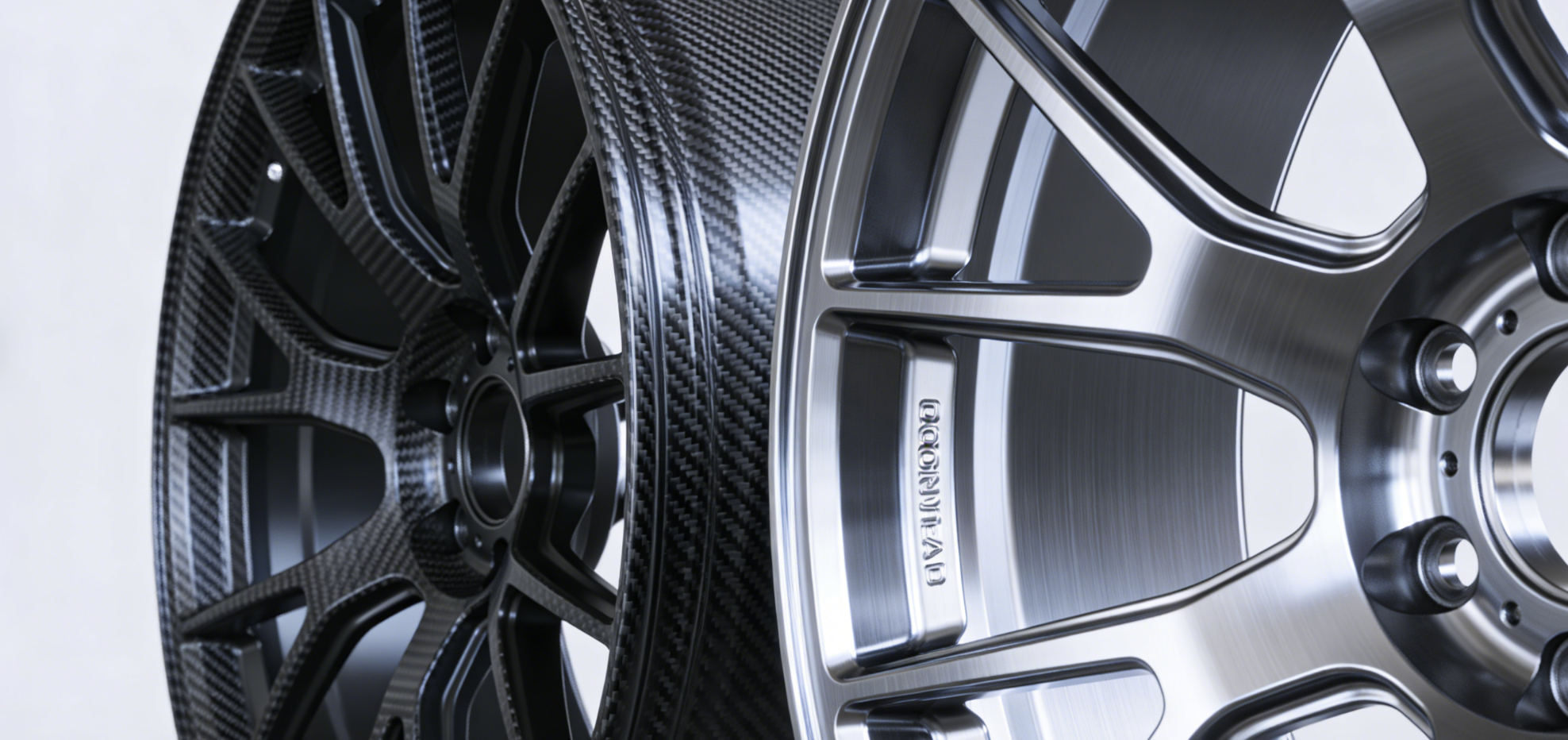
The sticker price is just the start. What you pay over the life of a wheel set is a very different number — and most buyers don’t do that math until it’s too late.
Here’s the full picture.
Upfront, carbon fiber costs 3–5× more. A forged aluminum automotive wheel runs about $1,500 per corner. A carbon fiber equivalent? Around $8,000. For a full high-end set, you’re looking at $20,000 in carbon versus $12,500 for forged magnesium — which already costs about 2× standard forged aluminum.
On the repair side, the gap gets bigger. Aluminum takes a hit and you straighten it for $50–$200. Carbon takes the same hit and you’re buying a replacement — often the entire wheel. Professional crack repairs run $200–$800. That’s assuming the damage is even visible. Cheaper carbon wheels can hide internal voids and delamination. You won’t know until something goes very wrong.
Durability tells a similar story. Forged aluminum handles potholes, curbs, and rough roads without breaking a sweat. Carbon fiber holds up well under steady, consistent load — but sharp impacts are a different matter. One bad pothole can end the wheel. For track-only use on clean asphalt, carbon wins. For mixed street driving, forged aluminum is the more practical call.
|
Category |
Carbon Fiber |
Forged Aluminum |
|---|---|---|
|
Initial Cost |
$3,000–$20,000+ per set |
$1,500–$3,000 per set |
|
Weight |
Lightest available |
Lighter than cast; heavier than carbon |
|
Repair Cost |
$200–$800+ or full replacement |
$50–$200 |
|
Impact Durability |
Brittle; inspect regularly |
Tough; curb and pothole resistant |
|
Best Use Case |
Track / smooth road |
Street / mixed conditions |
The honest verdict: Carbon fiber gives you about 90% of the performance thrill at 3–4× the total cost. Forged aluminum gets you 90% of the gains with far better real-world durability and a fraction of the long-term spend. Building a dedicated track car or racing setup? Carbon’s lightweight carbon wheel advantage is worth the premium. Driving on public roads? The numbers don’t add up.
Top Carbon Fiber Wheel Brands Compared: Who Offers the Best Value at Each Price Point?
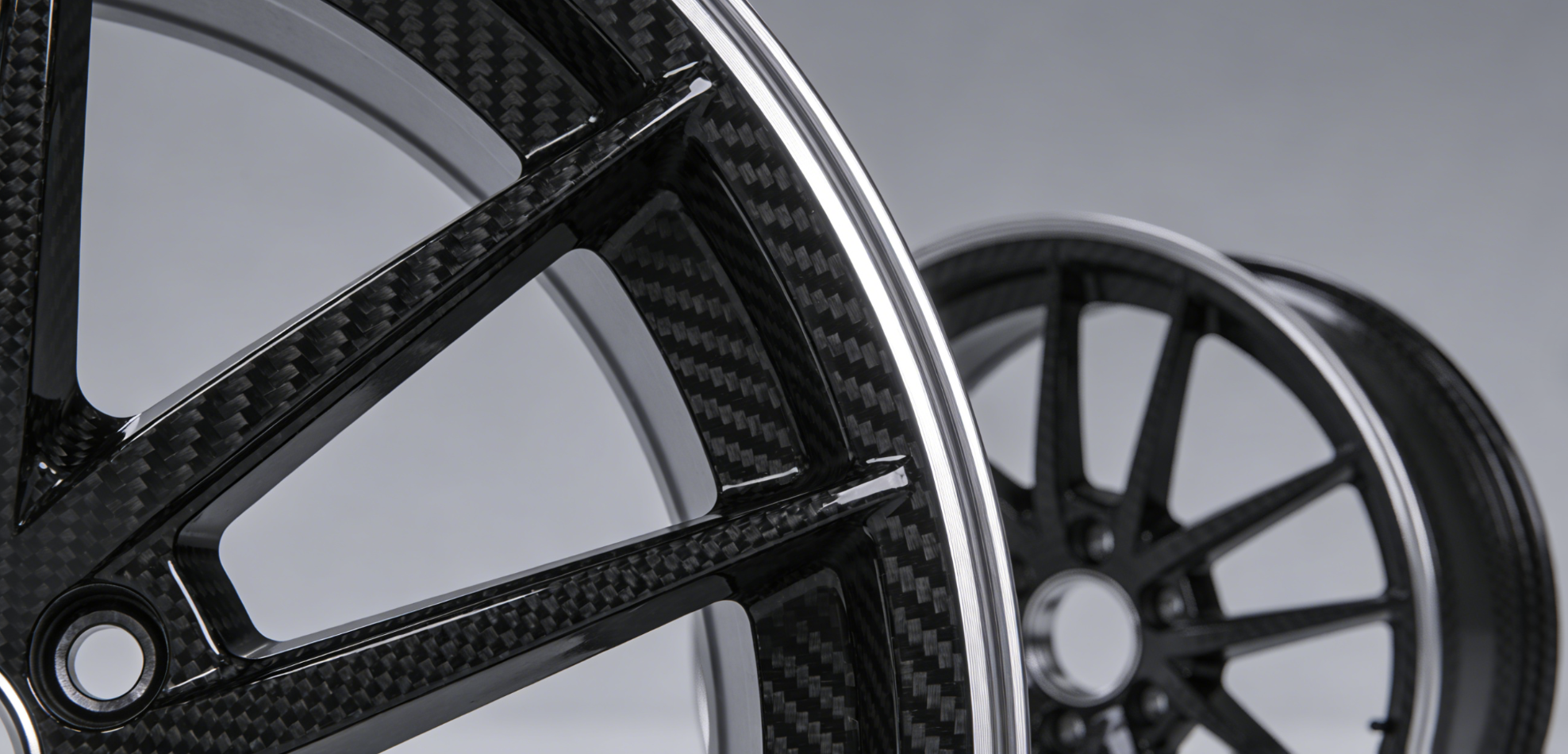
Six brands dominate this market. The rest are noise.
Knowing the price range is one thing. Knowing which brand delivers real value at your specific budget is what protects your money. Here’s the breakdown — automotive first, then cycling.
Automotive Carbon Fiber Wheel Brands
|
Brand |
Origin |
Price (per set) |
Key Tech |
Best For |
|---|---|---|---|---|
|
Carbon Revolution |
Australia |
$4,000–$8,000 |
One-piece monoblock, 20–30% lighter than alloy |
OEM-grade durability (Ferrari, Lamborghini, Porsche) |
|
Dymag |
UK |
$5,000–$10,000 |
Magnesium-carbon hybrid, patented flow-forming |
Stiffness-to-weight ratio on McLaren, Aston Martin builds |
|
Rotobox |
Slovenia |
$6,000–$12,000 |
3D-woven carbon, seamless rim, 1,200g front/rear pair |
Custom track builds, hypercars |
|
HyperXCarbon |
China |
$2,500–$5,000 |
T1000 carbon fiber, 36T ratchet hubs |
Mid-budget aftermarket — Porsche, BMW M-series |
Carbon Revolution leads on OEM-equivalent durability. It’s the top pick for Ferrari, Lamborghini, and Porsche fitments. Dymag takes the win on stiffness-to-weight for serious track builds. HyperXCarbon is the clearest value at the mid tier. You get T1000 carbon at close to half the price of European competitors.
Cycling Carbon Wheel Brands: Tiered by Budget
Under $800 — Factory Direct
– Light Bicycle: $400–$650, hookless rims, 1,300–1,500g, fully customizable build. Best entry point for DIY riders.
– ProX: $500–$700, T800 carbon, 19–25mm internal widths. Solid for budget racers who want real specs.
$800–$1,200 — Mid Tier
– Hunt: ~$900–$1,100, 1,450g, disc-optimized with vibration dampening. A strong all-rounder. It handles most conditions without compromise.
– Scribe: ~$1,000, 60mm depth at 1,400g. Built for endurance racers who want stiffness without paying flagship prices.
$1,200+ — Flagship
– Zipp 404 Firecrest: $1,800–$2,500, 1,400g, ABLC Sawtooth dimples delivering a 4W aero gain. Worth it for pure speed.
– ENVE SES 4.5/6.7: $2,500–$3,500, 25mm internal, optimized aero-stiffness balance. Pro-level performance — but more than most riders need unless you race at a competitive level.
– Roval Rapide CLX II: $1,900+, 1,500g at 51mm depth. A versatile pick for riders who want flagship performance across more than one discipline.
High-Value Chinese Brands Worth Knowing
– Elitewheels: 1,200–1,400g, UCI-approved, $500–$900. You get competitive-level specs at close to half the Western price.
– Winspace: UNAAS HARD SE at 1,250g, $700–$1,000. This brand delivers above its price point every time.
The Honest Value Verdict
-
Zipp: Buy it if aero watts matter. Skip it if you’re not racing — the premium markup doesn’t justify casual use.
-
ENVE: At $3,000+, the climbing-aero balance pays off at a competitive level. For casual or amateur use, the price is hard to justify.
-
Light Bicycle / Elitewheels: The smartest buys under $800. UCI-approved options exist. The trade-off is US warranty support — not build quality.
-
HyperXCarbon: Fills the gap European brands ignore. You get performance-grade carbon fiber wheels at a price that won’t break the bank.
How to Buy Carbon Fiber Wheels Without Getting Burned: Red Flags & Buying Checklist
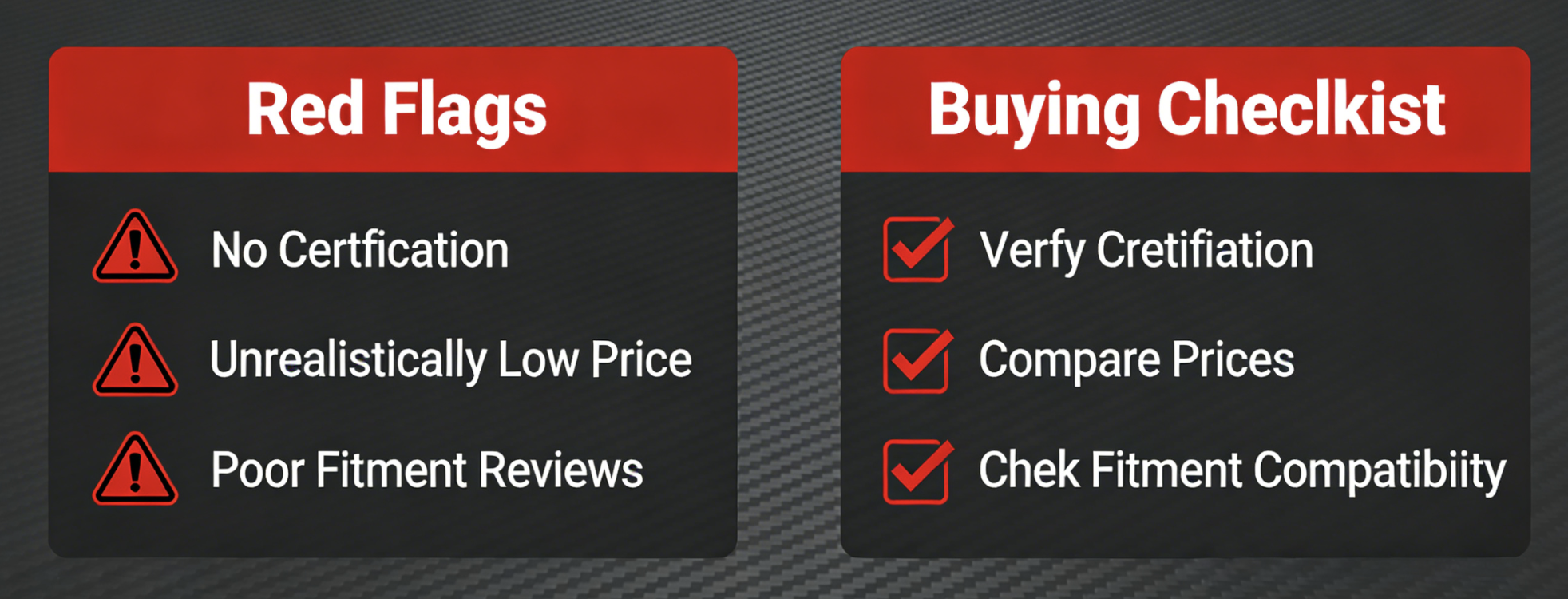
The carbon fiber wheel market rewards informed buyers — and punishes everyone else.
Spend under $880 on a car carbon wheel set and you’re in dangerous territory. That price range is flooded with substandard builds assembled to look the part. Treat anything in that bracket as semi-disposable. Buy from retailers with solid return policies and real consumer protections.
Before you hand over money, run through this checklist:
-
Surface condition — Clean the wheel and inspect every inch for scratches, cracks, or exposed fiber. Exposed fiber signals structural damage. Walk away.
-
Braking surface — On rim brake wheels, worn pad grooves are a hard no.
-
Spoke integrity — Any twist or kink in a spoke points to improper build tension or impact damage.
-
Hub bearings — Spin it. Listen for grinding. Hold the rim and check for side-to-side play. Either one means worn bearings.
-
Brake system match — Rim brake wheels do not work on disc brake bikes. This is non-negotiable. Check compatibility first. Full stop.
What you should never compromise on:
-
Warranty coverage and real customer support
-
Spoke count and tension quality — this matters more for heavier riders
-
Tubeless compatibility — it gives you pressure flexibility and puncture protection
One thing most buyers skip: asking about repairability. Can you source replacement parts? Is the brand fixable at a local shop? A wheel you can’t repair after one bad impact isn’t a long-term investment — it’s a liability. Ask these questions before you buy, not after.
Buying direct from a Chinese manufacturer? Request rim test reports, weight specs, and packaging photos before you commit. Get clear answers on shipping carrier and import tax responsibilities up front. Surprises at customs cost real money.
The bottom line: go with vendors who have clear accountability — documented warranties, real support channels, and traceable product specs. Great carbon fiber wheels don’t hide behind vague listings.
FAQ: Carbon Fiber Wheels Cost — Quick Answers to What Buyers Search
These are the exact questions buyers type into Google before they buy. Here are straight answers.
How much does a single carbon fiber wheel cost?
Plan on $1,125–$5,000 per wheel for automotive use. ESE Carbon’s E2 line sits at $1,125 per wheel — or $4,500 for a set of four. That’s 20–30% below the old $5,000-per-wheel standard. The lower price came from better manufacturing methods, not cheaper materials or corners cut.
Are carbon fiber wheels worth the price premium?
For performance-focused drivers: yes. Carbon wheels come in at 17 lbs per wheel. Forged aluminum wheels run 25–30 lbs. That 8–13 lb difference shows up in real results:
– Faster acceleration off the line
– Shorter braking distances
– 5–10% better fuel economy across the wheel’s life
For daily commuters on rough roads? The numbers don’t add up in your favor. The performance gains matter most on track or spirited driving — not stop-and-go traffic.
How long do carbon fiber wheels last?
Expect 5–7 years or 50,000+ miles with proper care. Keep torque specs at 100–120 ft-lbs. Run regular alignment checks. Avoid hard impacts. Do those three things and you’ll get the full lifespan out of them. Add a ceramic coating and you push that even further.
What does carbon fiber wheel repair cost?
Repair runs $500–$3,000 per wheel, based on how bad the damage is. That’s 2–5× the cost of aluminum repair, which sits at $200–$500. Factor that into your budget before you buy — not after.
Are prices dropping?
Yes — 10–20% by 2026. Scale, more competition, and smarter production are all driving costs down. The market grows from $127.2M in 2024 to over $1.2B by 2033. More volume means lower unit costs. The trend is clear and it’s moving in buyers’ favor.
Conclusion
Carbon fiber wheels aren’t cheap — and now you know why they shouldn’t be.
The price gap between a $300 aluminum set and a $5,000+ carbon fiber wheel isn’t random. It comes down to real engineering advantages: measurable carbon fiber weight savings, superior fatigue resistance, and lap-time performance that forged alloy can’t match at the same weight.
Here’s what matters most before you decide: match your use case to your budget tier.
-
Weekend track warriors and competitive cyclists will get that premium back through real performance gains.
-
Daily commuters won’t see the same return.
Contact HyperX Carbon – Your Trusted Chinese Carbon Fiber Partner
Ready to source high-performance carbon fiber materials or custom forged carbon fiber parts from China?
HyperX Carbon is a leading manufacturer with 20+ years of expertise, specializing in aerospace-grade forged carbon fiber, prepreg, carbon fiber tube, carbon fiber sheet, and lightweight carbon fiber automotive parts/carbon fiber drone components/carbon fiber medical components. We offer:
-
Stable supply chain with premium raw materials (Toray, Mitsubishi, Hengshen)
-
AS9100D certified production for aerospace & UAV applications
-
Rapid prototyping (5-8 weeks) and monthly capacity exceeding 180,000 parts
-
Competitive pricing with 15-18% cost savings on forged carbon solutions
-
Full customization: from T700/T1100G to ultra-high modulus grades
Whether you’re an eVTOL developer, automotive OEM, drone manufacturer, or medical device engineer, HyperX delivers consistent quality, batch-to-batch reliability, and reliable delivery.
Get in touch today for a free consultation, custom quote, or material sample.
📧 Email: [email protected]
🌐 Website: https://www.hyperxcarbon.com/
📞 Phone/WhatsApp: +86 15623270276 (English support available)
Let’s build your next lightweight innovation together – contact HyperX Carbon now and stay ahead in the low-altitude and advanced composites market.




