
Choosing between carbon fiber and Kevlar isn’t a materials science debate — it’s an engineering decision with real consequences. Get it wrong, and you’re facing a drone frame that shatters on impact. Or a protective panel that deflects bullets but cracks under flex fatigue. Or a racing component that absorbs energy when it should stay rigid.
These two materials sit at opposite ends of the composite performance spectrum. Knowing where each one excels — and where it fails — is what separates a smart layup from an expensive mistake.
This guide cuts through the noise with 2026 benchmark data, failure mode analysis, and a practical decision framework. You’ll find everything from tensile strength comparisons in composites to the cases where a hybrid carbon-Kevlar laminate is the right call.
Tensile Strength & Stiffness: Where Carbon Fiber Dominates

Raw numbers tell the story here. Carbon fiber hits 3,500–7,000 MPa in tensile strength — and that upper ceiling keeps climbing. Toray’s T300 grades start at 3,530 MPa. Their T800H pushes to 5,490 MPa. The T1100G breaks past 7,000 MPa. Each new generation adds 20–30% over the last. The theoretical maximum sits near 63 GPa, and the industry hasn’t reached it yet.
Compare that to what engineers have long accepted as standard. Structural steel lands between 400–1,200 MPa for common grades. Even high-strength alloy steel tops out around 2,600 MPa. Aluminum sits at a modest 276 MPa. Carbon fiber doesn’t just beat these materials — it changes the whole conversation.
Strength-to-Weight: The Real Competitive Advantage
Raw strength is only half the picture. The other half is the weight you carry to get there.
Here’s where carbon fiber pulls ahead by a wide margin:
|
Material |
Specific Tensile Strength (Pa·m³/kg) |
Specific Tensile Modulus (MPa·m³/kg) |
|---|---|---|
|
Carbon Fiber Laminate |
400 |
46.7 |
|
Kevlar |
333 |
20.8 |
|
Aluminum |
102 |
25.5 |
|
Steel |
53 |
25.3 |
|
Fiberglass |
231 |
13.2 |
Carbon fiber achieves 40–50x the specific strength of steel and 10–20x that of aluminum. Its specific tensile modulus of 46.7 is close to double aluminum’s 25.5. That gap is why aerospace engineers moved past the “why carbon fiber?” question decades ago — the data settled it.
What the Layup Data Actually Means
A standard 0/90° balanced laminate gives you around 600 MPa tensile strength and 70 GPa modulus under real fabrication conditions. Compressive strength falls between 700–1,000 MPa, depending on fiber volume fraction and resin ratio.
Three variables drive that final number:
-
Fiber orientation — unidirectional layups push peak directional performance. Quasi-isotropic spreads the load, but trades off peak values
-
Fiber volume fraction — more fiber means more load-bearing cross-section. Higher content raises strength directly
-
Resin selection — the matrix system controls how well stress moves between fibers. A poor resin match limits the fiber’s full potential
Kevlar competes on toughness — that’s its lane. For stiffness under sustained load, carbon fiber reinforced polymer (CFRP) has no real challenger at the same weight. Nothing else in that weight class comes close.
Impact Resistance & Energy Absorption: Where Kevlar Has the Clear Advantage
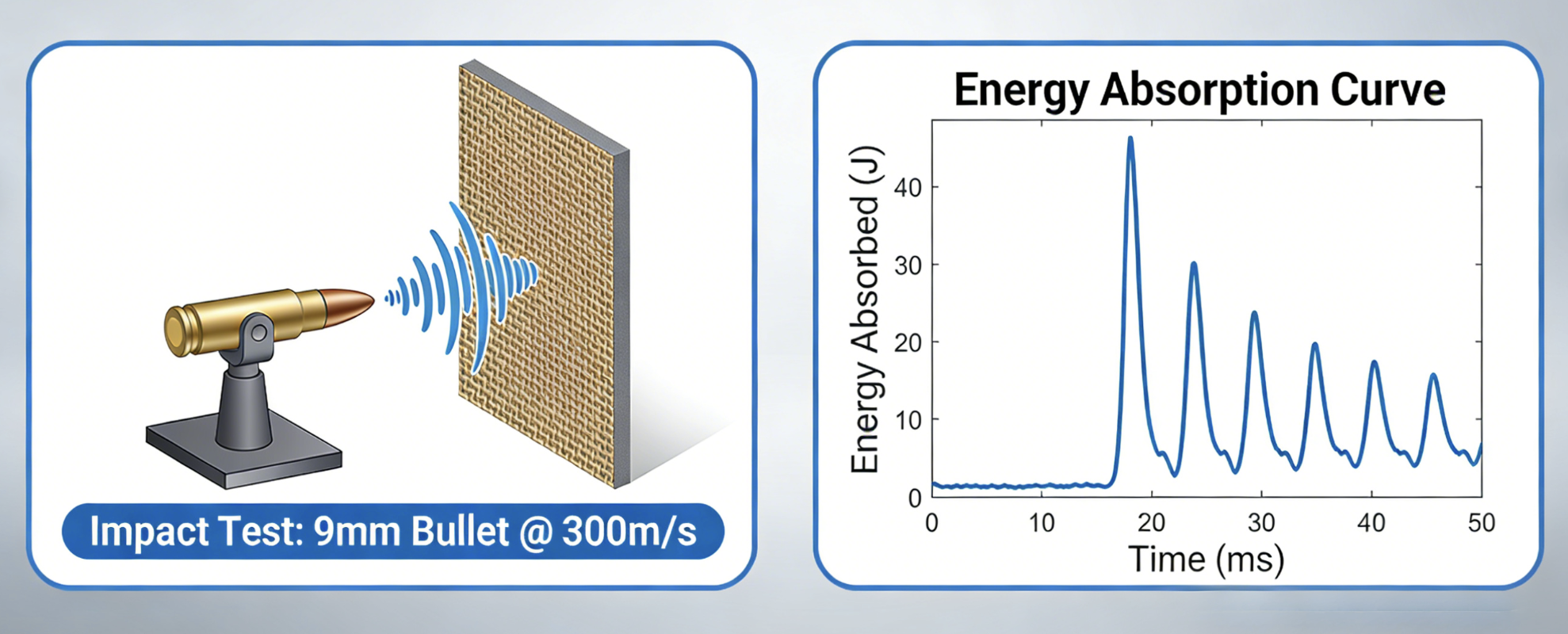
Shattering is not a feature. Carbon fiber breaks suddenly under dynamic impact. That kind of catastrophic failure is exactly why Kevlar belongs in this conversation.
Hit Kevlar with a projectile or blunt force, and something different happens. The fibers don’t snap. They stretch. They spread the load. Kinetic energy moves through deformation and fiber-on-fiber friction. It spreads across the whole structure instead of piling up at one weak point. That controlled give — not a brittle crack — is what makes aramid fiber properties so hard to replace in ballistic and impact-critical applications.
How Kevlar Absorbs Energy
The physics matter here. Kevlar’s energy absorption edge comes from three behaviors working together:
-
Fiber deformation without failure — at lower-speed impacts, Kevlar stretches a good deal before hitting its limit. That buys time and spreads the load across a wider area
-
Inter-fiber friction — fibers slide against each other under stress. That converts kinetic energy into heat, not cracks
-
Fabric architecture — advanced weaving patterns make this effect stronger. Optimized hybrid laminates with high-performance fibers can push energy absorption composites performance past what either material does on its own
In composite toughness benchmarks, Kevlar beats both carbon and glass fiber. It also pulls ahead of Vectran — a common alternative — on impact resistance and the ability to add toughness to hybrid layups.
Advanced Kevlar Configurations Push It Further
The standard version is already strong. The advanced versions take it much further.
-
Kevlar + carbon nanotubes (CNTs): CNTs grown through chemical vapor deposition build a layered nanostructure that delivers a 30% increase in impact resistance over standard Kevlar
-
Kevlar + shear-thickening fluids (STFs): This combination is what engineers call “liquid armor.” The material stiffens on contact, giving you a sharp boost in energy dissipation right at the moment of impact
-
Multi-layer Kevlar structures: Stack these with ceramics or metals, and the configuration spreads impact energy across material boundaries. This is the main design approach in both body armor and vehicle protection panels
One tradeoff worth noting: Kevlar absorbs moisture — over 10% by weight in humid conditions. That degrades its mechanical performance over time. Vectran absorbs less than 10% and holds up better in long-term outdoor exposure. For sealed or marine environments, that difference is real.
For ballistic resistance and dynamic impact scenarios, nothing else in the fiber-reinforced polymer comparison matches Kevlar. It doesn’t just survive impact. It’s built for it.
Head-to-Head Properties Comparison: 2026 Benchmark Data Table
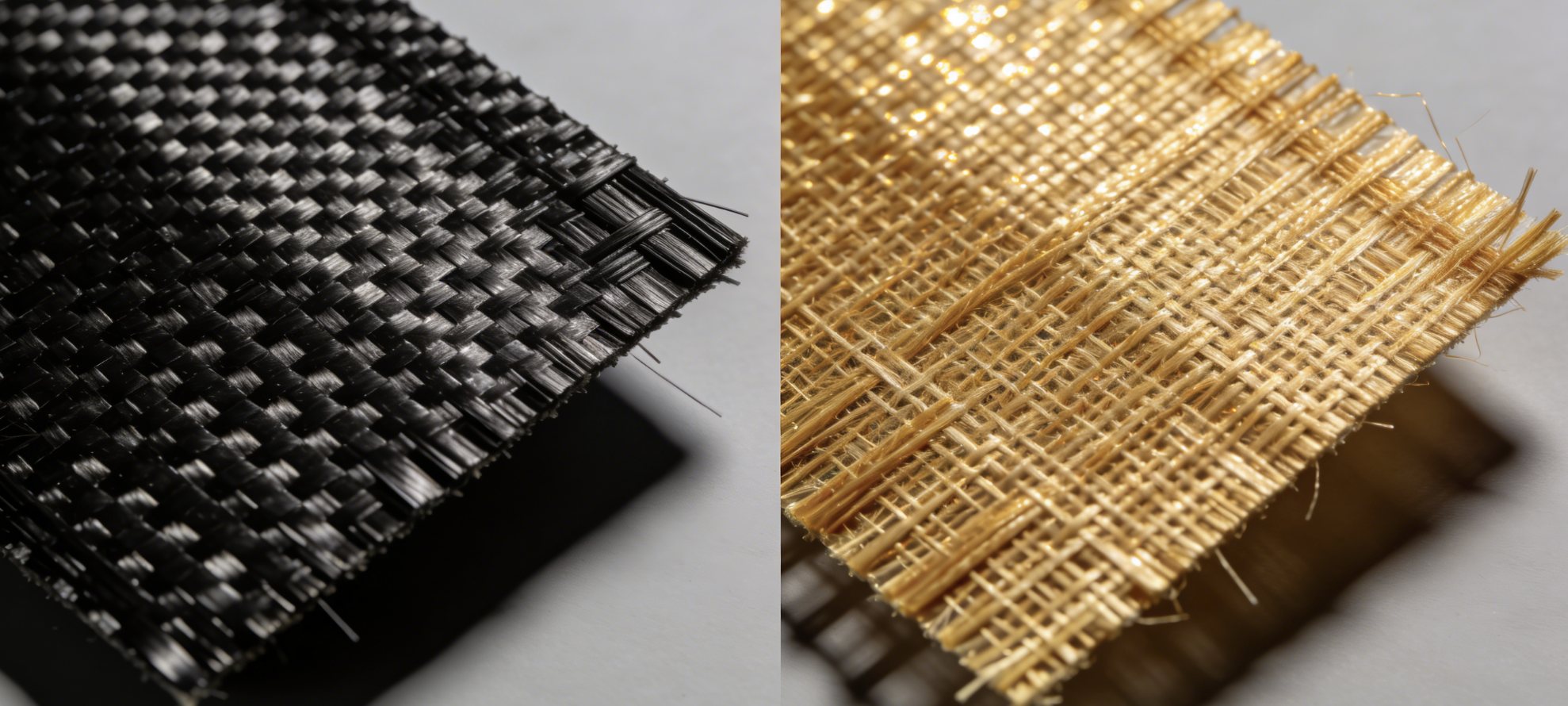
Nine properties. Two materials. The numbers speak for themselves.
|
Property |
Carbon Fiber (CFRP) |
Kevlar (KFRP) |
Winner |
|---|---|---|---|
|
Tensile Strength |
3,500–7,000 MPa |
2,800–3,600 MPa |
Carbon Fiber |
|
Tensile Modulus |
230–900 GPa |
70–125 GPa |
Carbon Fiber |
|
Density |
1.55–1.60 g/cm³ |
1.44–1.47 g/cm³ |
Kevlar (lighter) |
|
Impact Toughness |
Low — brittle fracture |
High — fiber deformation |
Kevlar |
|
Specific Strength |
400 Pa·m³/kg |
333 Pa·m³/kg |
Carbon Fiber |
|
Elongation at Break |
1.4–2.0% |
2.4–3.6% |
Kevlar |
|
Moisture Absorption |
<0.1% |
>10% by weight |
Carbon Fiber |
|
Compressive Strength |
700–1,000 MPa |
125–185 MPa |
Carbon Fiber |
|
Chemical Resistance |
Excellent |
Moderate |
Carbon Fiber |
Most designers miss the compressive strength gap. Carbon fiber reinforced polymer (CFRP) is 5–7x stronger in compression. That one number rules Kevlar out of most structural load-bearing jobs right away.
The moisture story goes the other way. Kevlar fiber reinforced polymer (KFRP) soaks up over 10% of its own weight in water after long humidity exposure. That hurts mechanical performance — you can measure the drop. In sealed parts, you can work around it. In open marine or outdoor use, it becomes a real material problem. Your design has to account for it.
The table can’t capture one thing: failure mode. Carbon fiber shatters. Kevlar stretches. These are not equal tradeoffs. They are two different structural behaviors. The right pick comes down to your application — does it punish stiffness, or does it need stiffness?
Failure Mode Analysis: How Each Material Breaks Under Real-World Stress
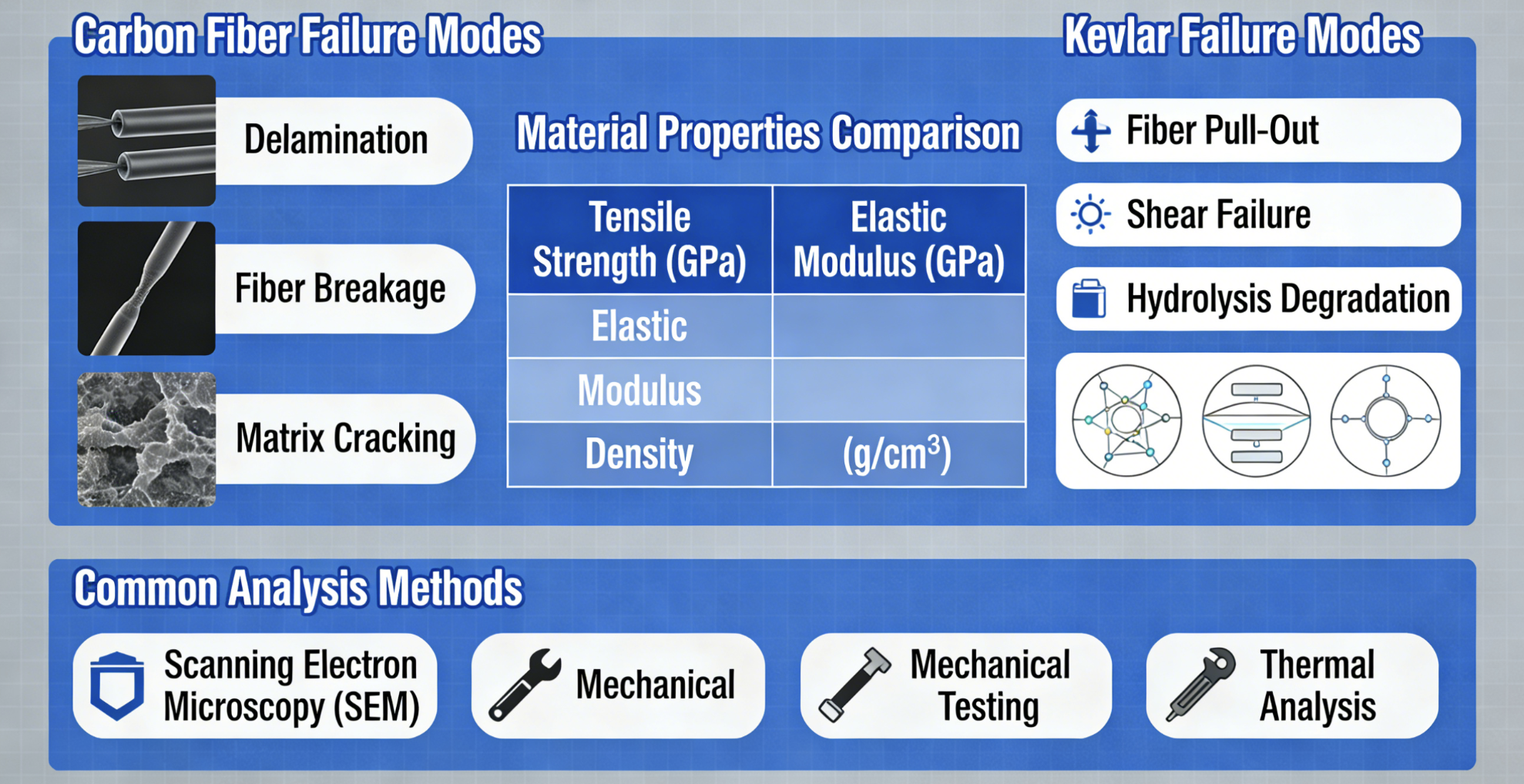
The way a material fails tells you more about it than the way it performs.
Carbon fiber doesn’t bend before it breaks. It breaks — full stop. Under dynamic impact, CFRP acts like glass. Crack initiation is instant. Propagation is rapid. The failure is total. There’s no warning deformation, no plastic stretch to signal distress. Elongation at break sits between 1.4–2.0%. Once effective stress exceeds the fiber’s tensile limit, the maximum principal stress criterion triggers and the laminate shatters along fiber boundaries. Sharp corners and voids make this worse. Stress concentrations in badly designed CFRP layups amplify local load by 2–5x. A minor impact becomes a structural fracture.
Kevlar fails in a different way. It yields. Fibers stretch and deform before reaching the breaking point, absorbing energy through elongation (up to 3.6%) and friction between fibers. That’s not a flaw — it’s the core mechanism. Carbon fiber stores elastic energy and releases it in a sudden burst. Kevlar takes that same kinetic force and spreads it out as heat and distributed deformation.
The practical consequence is this:
-
CFRP is exposed to out-of-plane impact and fatigue crack growth — cyclic loads below 50% yield strength can still push micro-cracks forward at 10–100 μm per 1,000 cycles
-
KFRP holds up against puncture and ballistic impact, but handles compression badly — compressive strength drops to 125–185 MPa, far below CFRP’s 700–1,000 MPa
One material shatters under the wrong load. The other deforms without warning under the wrong geometry. Both failure modes are avoidable — you just need to know which one your application is likely to trigger.
Hybrid Carbon-Kevlar Composites: Engineering the Best of Both Worlds
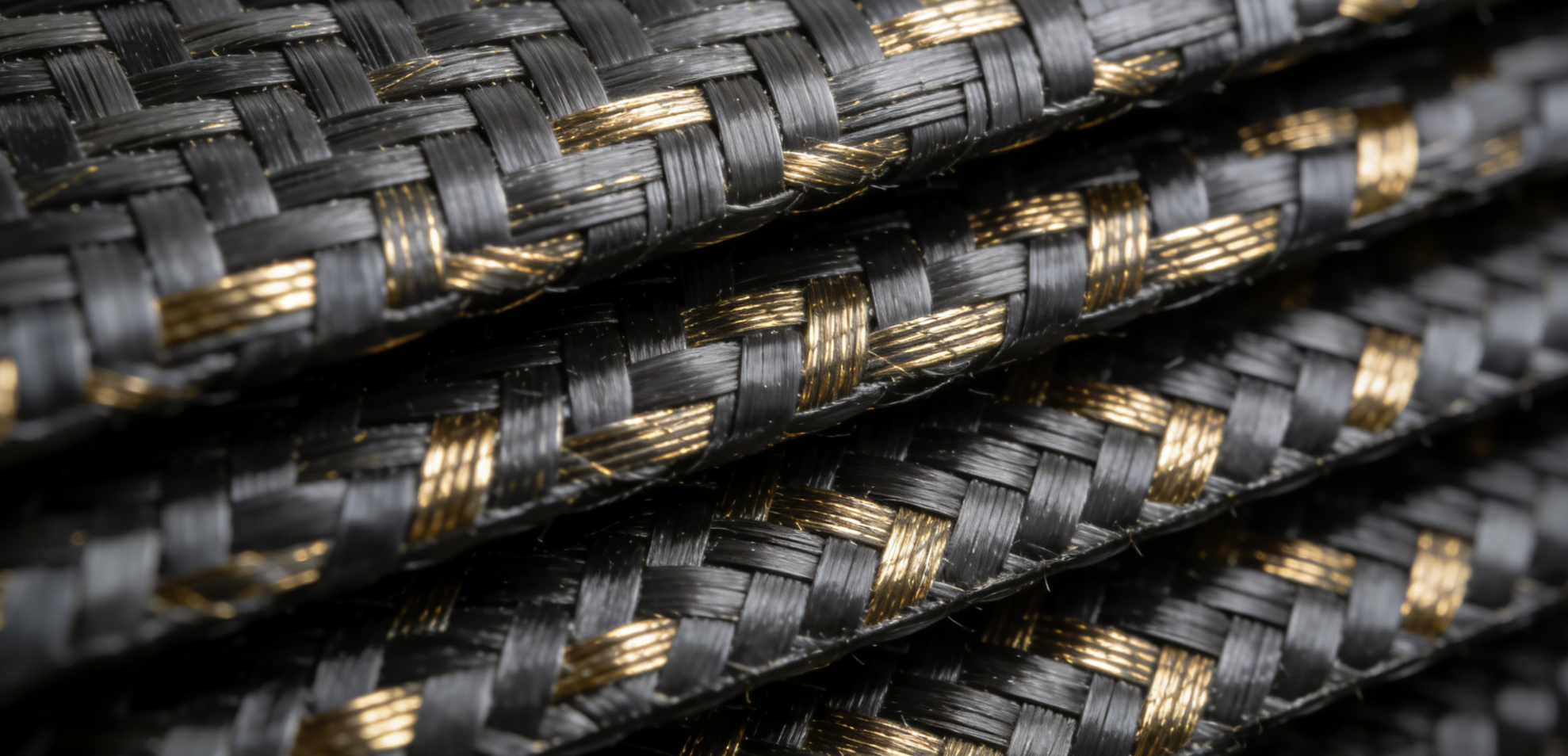
Stack them together, and something unexpected happens. Carbon fiber and Kevlar don’t just coexist in a hybrid laminate — they cover each other’s weak points.
The data is clear. Hybrid carbon-Kevlar composites deliver 27.40% higher tensile strength than basalt-only configurations. Flexural strength improves by 30.87%. Impact strength hits 136.25 kJ/m² — a 24.4% jump over basalt specimens. These aren’t small gains. Neither material hits this performance level on its own.
Layup Sequence Changes Everything
Here’s what most engineers miss: the order of your plies matters as much as the ratio.
Look at these four configurations under quasi-static indentation:
|
Configuration |
Fiber Damage % |
Dominant Damage Mode |
|---|---|---|
|
CCCC |
80% |
Brittle fracture |
|
CCCK |
79.8% |
Matrix cracking (48%) |
|
CCKK |
70% |
Matrix cracking (79%) |
|
KCCK |
60% |
Delamination (39%) |
Move a single Kevlar ply to the non-loaded face — the KCCK arrangement — and fiber damage drops from 80% to 60%. The failure mode shifts away from brittle fracture. It moves toward managed delamination instead. That’s a design-level decision. It adds no material weight, yet it returns a measurable safety margin.
Placing Kevlar on the outer surface produces larger failure deflections. It also extends the load-bearing phase. The structure holds longer because the energy-absorbing layer sits in the right spot in the stack. That’s not luck — it’s physics.
Getting the Ratio Right
Raising the Kevlar fraction cuts peak load capacity by up to 46.03% and stiffness by 41.43%. That’s the tradeoff. More toughness costs you rigidity. You can’t avoid that curve.
So where’s the sweet spot? At a 50% hybrid ratio, KCCK versus CCKK produces less than 2.22% stiffness difference under quasi-static loading. Past that balance point, configuration sensitivity drops fast. Aerospace engineers have used this principle to achieve 15–20% weight reduction with 15% fuel savings per aircraft.
The hybrid isn’t a compromise. It’s a calibrated system.
Industry Applications: Which Material to Choose for Each Use Case
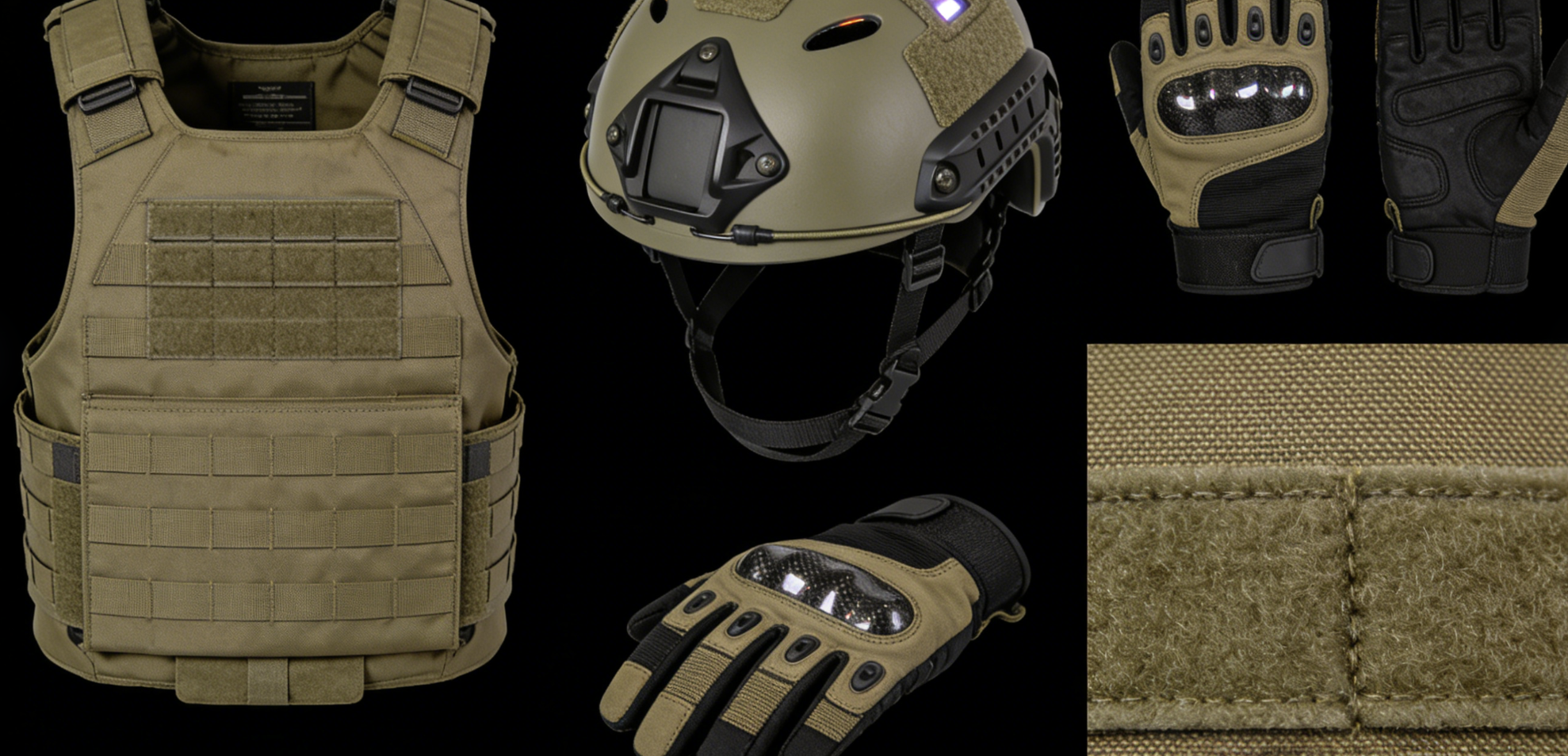
Four industries drive most of the demand for high-performance composites. Each one punishes the wrong material choice — just in different ways.
Aerospace & Defense
Weight is currency in aerospace. CFRP (carbon fiber reinforced polymer) dominates structural airframe components — fuselage panels, wing spars, bulkheads. Why? Its stiffness-to-weight ratio lets engineers cut mass without giving up load-bearing strength. That 15–20% weight saving over aluminum shows up straight away in fuel costs and payload capacity.
But airframes take hits too. Bird strikes. Ground handling damage. Hail. Hybrid carbon-Kevlar laminates handle this well. The outer skin absorbs impact energy. The inner carbon plies hold the structure firm. Defense applications take it further. Ballistic resistance in rotorcraft panels and body armor systems depends on Kevlar’s ability to deform and absorb energy from a hit — that fiber deformation is the whole mechanism.
Motorsport & Automotive
Racing teams want one thing from a body panel: maximum stiffness at minimum mass. Carbon fiber wins that every time. Monocoques, diffusers, splitters — any part that can’t flex under aero load is pure CFRP.
Crash structures are a different problem. A survival cell needs to absorb energy, not bounce it back. So Kevlar plies go into the impact zones. They stretch the deformation phase out, buying the milliseconds that keep drivers alive. Several Formula-class teams run carbon outer layers over Kevlar inner cores for this exact reason.
Protective Gear & Body Armor
This is where Kevlar belongs most. Soft armor, hard plate backing, helmet shells — aramid fiber sets the performance ceiling for ballistic resistance. Carbon fiber doesn’t belong here. Its brittle fracture behavior makes it a poor fit. It shatters under the same load conditions this gear is built to survive.
Sporting Goods
Bicycle frames, tennis rackets, paddle shafts — stiffness and low weight are what matter. CFRP covers both. Some applications also need vibration damping. Hockey sticks and rowing oars are good examples. More manufacturers are now using hybrid carbon-Kevlar layups in these products. You get shock absorption without losing the feel and response athletes expect.
How to Choose: Carbon Fiber vs Kevlar vs Hybrid Decision Framework
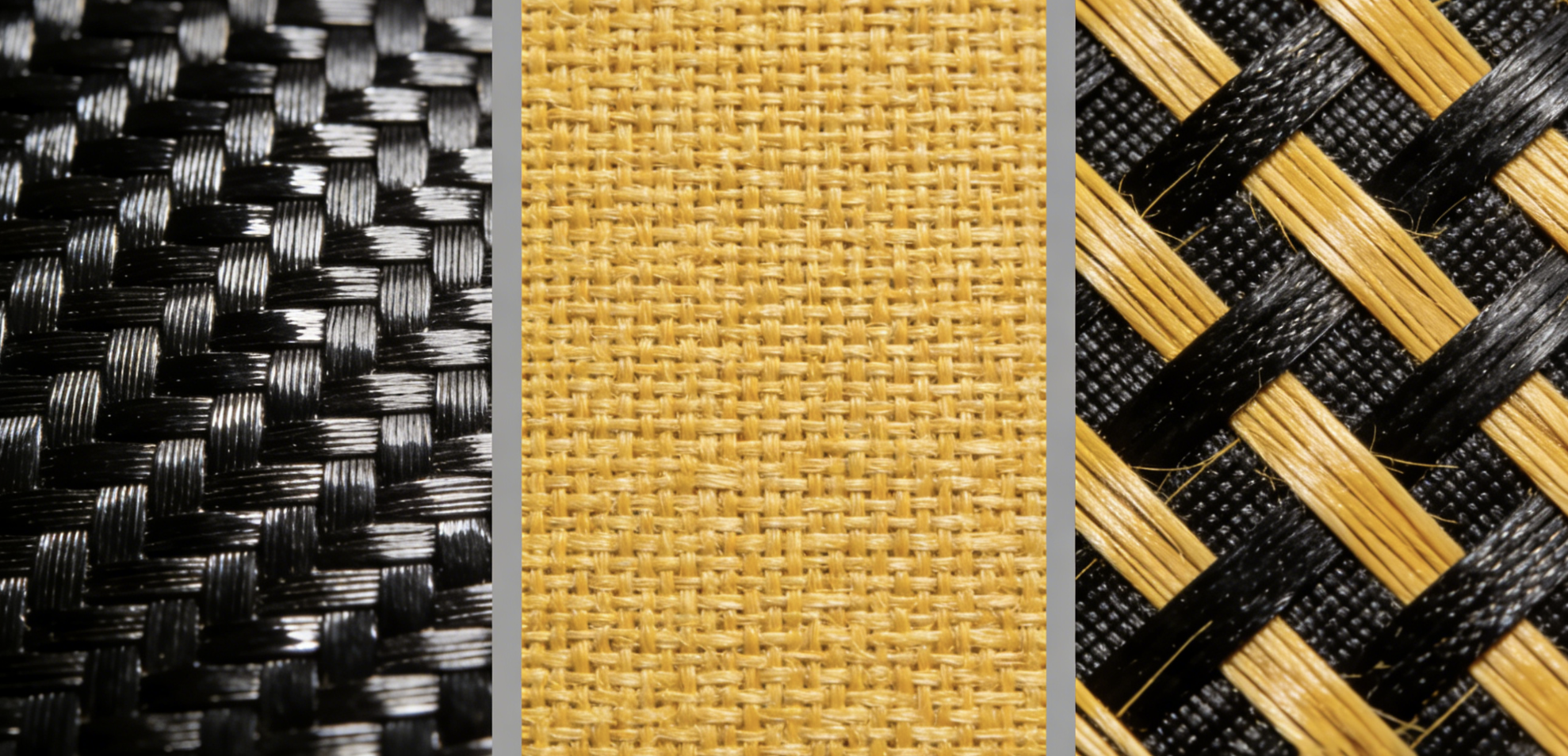
Three materials. Dozens of variables. One right answer for your specific application — and two expensive wrong ones.
The framework below runs five filters in sequence. Work through each step. By the end, you’ll have a solid material selection backed by data, not guesswork.
Step 1: Identify Your Primary Load Type
Start here. Every other decision flows from this one.
-
Compression, static load, or stiffness-critical → Carbon fiber. Think aerospace beams, structural auto panels, anything that can’t flex under sustained load.
-
Tension, impact, or dynamic stress → Kevlar. Body armor, ballistic helmets, abrasion zones requiring up to 4,500N cut resistance.
-
Both at once → Hybrid. Carbon outer plies handle rigidity. Kevlar inner core handles energy absorption.
Step 2: Rank Your Performance Priorities
|
Your Priority |
Best Material |
Why |
|---|---|---|
|
High stiffness + low weight |
Carbon fiber |
5× the rigidity-to-density ratio of aviation aluminum |
|
Energy absorption + abrasion |
Kevlar |
8× steel’s energy absorption per unit weight |
|
Stiffness without brittleness |
Hybrid |
+40% impact performance in drone shells and racing chassis |
Step 3: Factor in Your Environment
Materials don’t live in labs. They live in real conditions.
-
UV exposure or harsh outdoor use: Carbon fiber holds up better. Coat contact surfaces to prevent galvanic corrosion near metals.
-
Heat or flame proximity: Kevlar breaks down near 500°C. That gives it a clear edge in high-temperature environments.
-
Long-term maintenance burden: Kevlar needs UV protective coatings. Carbon fiber is harder to repair after impact damage. Neither one is maintenance-free.
Step 4: Pressure-Test Your Fabrication Reality
Material choice and manufacturing capability go hand in hand. You can’t separate them.
Carbon fiber is brittle under machining. Cutting and drilling need controlled parameters — push too hard, and you risk delamination. Kevlar is tough and fibrous. Clean edge finishing is hard to achieve without the right tooling. Hybrid laminates bring both challenges to the table.
Your production process has to handle the machining demands. A great material on paper can still be the worst outcome in practice if your shop isn’t set up for it.
Step 5: Validate Against Benchmark Data
Before you lock in the spec, check it against performance benchmarks:
-
Carbon fiber: Holds over 95% of tensile strength under cyclic fatigue loading. That number matters for any part that faces repeated stress cycles.
-
Kevlar: Absorbs 8× more energy per unit weight than steel under impact. That’s the core reason it leads in protective applications.
-
Hybrid laminates: Deliver measurable gains that neither material reaches on its own. The combination outperforms both used alone.
The short version:
-
Choose carbon fiber when structural stiffness, dimensional stability, and low weight are non-negotiable.
-
Choose Kevlar when the application involves dynamic impact, repeated stress, or abrasion resistance.
-
Choose hybrid when you need both — and you’re ready to engineer the layup sequence to get there.
FAQ: Top Questions Engineers Ask About Carbon Fiber vs Kevlar
These questions come up on every project. Here are the straight answers.
Is carbon fiber stronger than Kevlar?
In tensile strength, yes. Carbon fiber hits 3,500–7,000 MPa. Kevlar lands between 2,800–3,600 MPa. But raw tensile numbers don’t tell the whole story. Carbon fiber shatters under impact. Kevlar stretches up to 3.6% before breaking. That’s close to double carbon’s elongation limit. In dynamic load scenarios, that difference changes everything.
Why can’t carbon fiber replace Kevlar in body armor?
Brittleness. Carbon fiber stores elastic energy and releases it in a sudden fracture. That’s the opposite of what protective gear needs. Kevlar absorbs energy through fiber deformation and friction. Swapping materials here doesn’t just reduce performance — it flips the failure behavior. You go from energy absorption to sudden shattering. That’s a dangerous trade-off in any protective application.
Which material is stiffer?
Carbon fiber, by a wide margin. Tensile modulus runs 230–900 GPa versus Kevlar’s 70–125 GPa. That stiffness gap is why CFRP dominates structural airframes. Kevlar simply can’t compete on rigidity at that level.
Which costs more?
Carbon fiber. Both materials carry premium pricing, but Kevlar runs lower. Also factor in machining costs. Carbon fiber delaminates under poor cutting conditions. Kevlar resists clean edge finishing without specialized tooling. So your total production cost can shift significantly depending on how you process each material.
Can they be used together?
Yes — and in many cases, they should be. Hybrid carbon-Kevlar laminates combine stiffness and impact resistance. Together, they reach a performance level neither material hits on its own. The layup sequence matters more than most engineers expect. Get that wrong, and you lose the benefits of both.
Conclusion
Carbon fiber and Kevlar aren’t competing — they serve different purposes. Your application decides which one wins.
Need stiffness and light weight? Carbon fiber is the clear choice. Facing impact or ballistic threats? Kevlar absorbs the energy that carbon fiber can’t handle. And when one material falls short, a well-engineered hybrid laminate layup isn’t a compromise — it’s a performance advantage.
Most engineers reading this already know which direction makes sense. The data backs it up.
Good composite design versus great composite design comes down to one thing. It’s not just picking the right material. It’s knowing when to stop pushing one property and start balancing two.
Moving from research into production? The next step is just as important as the material itself. The HyperX Carbon team works side by side with engineers and product developers on custom carbon fiber reinforced polymer components — from layup design to finished part.
Contact HyperX Carbon – Your Trusted Chinese Carbon Fiber Customization Partner
Ready to develop high-performance carbon fiber materials or custom forged carbon fiber parts tailored specifically for your project?
HyperX Carbon is your long-term strategic partner with over 20 years of expertise in advanced composites. We specialize in delivering aerospace-grade forged carbon fiber custom solutions, along with fully personalized prepreg, tubes, sheets, and lightweight carbon fiber structural components for automotive, drone, eVTOL, and medical applications.
We don’t just supply materials — we provide end-to-end customization support:
-
Stable premium supply chain using Toray, Mitsubishi, and Hengshen raw materials
-
AS9100D certified production tailored for aerospace and UAV requirements
-
Rapid prototyping carbon fiber component in just 5-8 weeks, with monthly capacity over 180,000 parts
-
Competitive pricing with 15-18% cost savings on forged carbon solutions
-
Full customization flexibility: from T700 and T1100G to ultra-high modulus grades, with tailored layups, finishes, and performance specifications
Whether you’re an eVTOL developer, automotive OEM, drone manufacturer, or medical device engineer, HyperX Carbon delivers bespoke material selection, structural optimization, and manufacturing solutions that match your exact technical and performance needs — with consistent batch-to-batch quality and reliable delivery.
Get in touch today for a free technical consultation, personalized quote, or custom material samples.
📧 Email: [email protected] 🌐 Website: https://www.hyperxcarbon.com/ 📞 Phone/WhatsApp: +86 15623270276 (English support available)
Let’s co-create your next lightweight innovation together. Contact HyperX Carbon now and stay ahead in the low-altitude economy and advanced composites market.
HyperX Carbon – Not just a supplier, but your dedicated carbon fiber customization expert.




