
Pick up any carbon fiber component spec sheet and you’ll see the word prepreg on it. Ask three engineers what type they’re using, though, and you might get three completely different answers — with three different sets of terms.
Epoxy prepreg. Thermoset prepreg. Thermoplastic prepreg.
The labels blur together fast. The underlying chemistry gets skipped over in plain language, which makes it worse. That confusion carries real cost: wrong resin selection leads to mismatched curing cycles, weakened mechanical performance, or a manufacturing process that won’t scale.
This guide cuts through the terminology fog. It maps out every major carbon fiber prepreg type, breaks down the core differences between thermoset and thermoplastic systems, and lays out the decision logic that separates a well-specified composite from an expensive mistake.
Thermoset Carbon Fiber Prepreg: Types, Properties & Curing Mechanism
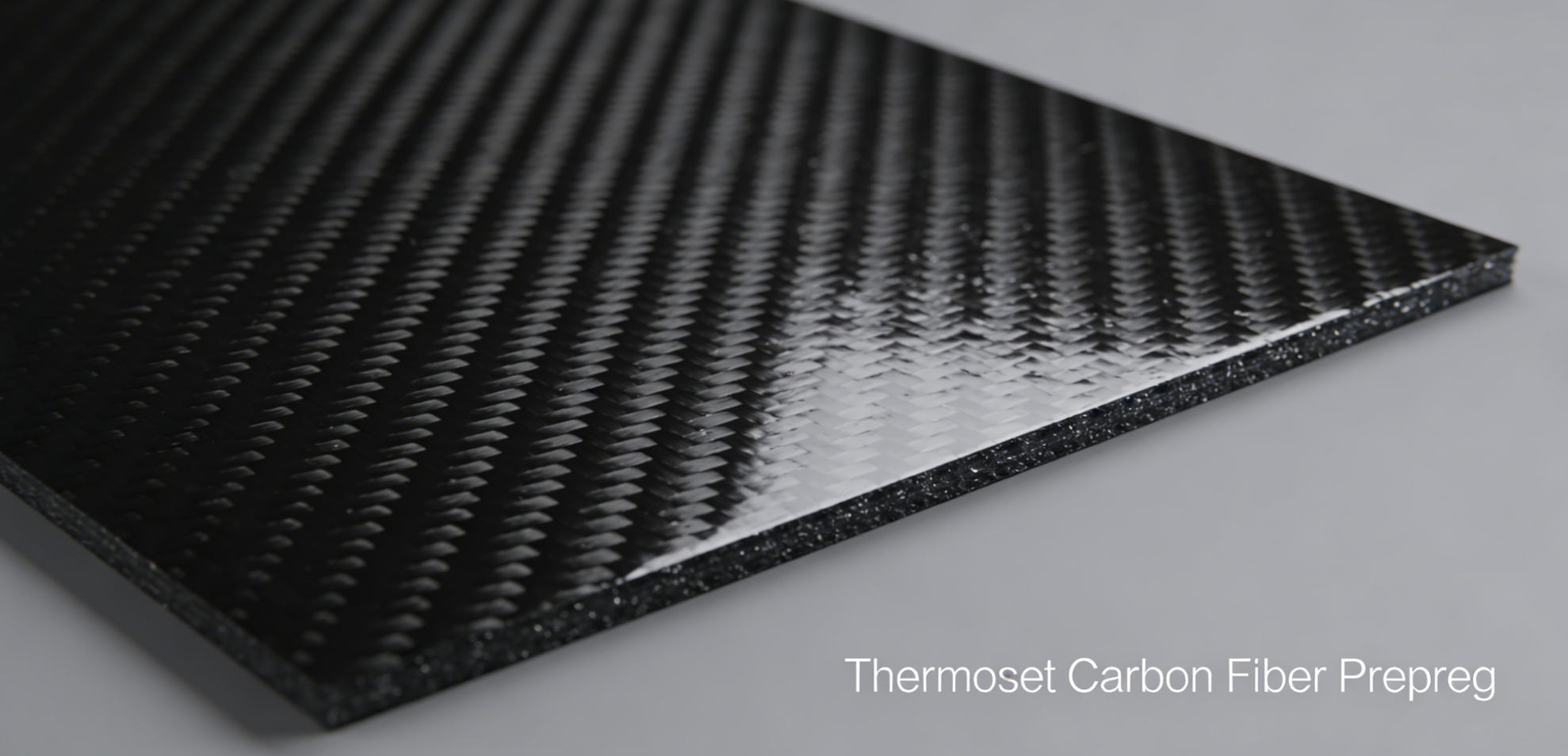
Thermoset chemistry is a one-way door. Once the resin cures, there’s no going back — no remelting, no reshaping, no second chance. That irreversibility is what makes it so reliable under load. It’s also why thermoset carbon fiber prepreg dominates aerospace, motorsport, and precision tooling applications across the world.
The Resin Families Behind Thermoset Prepreg
Epoxy leads the pack. It’s the default thermoset matrix for a reason — proven mechanical performance, broad process compatibility, and a cure window that fits most industrial setups.
But “epoxy prepreg” isn’t a single material. It’s a category with wide internal variation:
- Standard cure epoxy (e.g., #367): Cures at 130–140°C, Tg 140°C, fast cycle time, built for high rigidity — a strong choice for press-molded structural parts
- High-Tg epoxy (e.g., #362, #3R2): Cure range 130–150°C, Tg reaches 170°C — made for press compression molding (PCM) where dimensional stability and surface finish both matter
- Low-temperature epoxy (e.g., #830): Cures at 80°C in a standard oven, Tg 80°C — the right pick for large parts where autoclave access is limited
- Tooling-grade epoxy (e.g., #853): Demolds at 80°C, post-cure pushes Tg to 180°C with a very low coefficient of thermal expansion — a standard choice for aerospace tooling
- Bio-derived epoxy (#400/#500 series): Cures at 130°C, Tg range 130–170°C — the #500 series carries ISCC+ mass balance certification for manufacturers tracking sustainable sourcing
Epoxy has a thermal ceiling. Past that point, Cyanate Ester takes over. The #290 system processes at 135°C, post-cures to 250°C, and reaches a Tg of 270°C with low water absorption. That’s the specification you need for sustained high-temperature performance.
How B-Stage Cure Works
Every thermoset prepreg ships in what chemists call B-stage: the resin is partly cured, tacky, and drapable — but not yet set. Think of it as a reaction paused mid-sentence.
During manufacturing, low-viscosity liquid resin saturates the fiber bed completely. The excess gets removed. Controlled heat then advances the cure just far enough. The liquid becomes a tacky semi-solid. It conforms to complex mold shapes and compacts under vacuum pressure.
Full cure happens in the autoclave or oven. Heat ramps — 130–180°C — combined with autoclave pressure of 50–100 psi drop viscosity briefly. This lets the resin wet the fibers one final time before the crosslinking reaction fires. From there, linear molecular chains lock into a three-dimensional rigid network. Think of batter becoming a baked cake. The change is permanent.
Post-cure — free-standing heat applied after demolding — pushes the reaction to completion. This maximizes both Tg and stiffness.
One metric governs the outcome: cure degree. Under-cure leaves Tg and stiffness below spec. Over-cure builds in residual stress and can create voids. Both outcomes are expensive problems you want to avoid.
Storage Discipline Is Non-Negotiable
B-stage doesn’t sit still. At room temperature, the resin keeps advancing on its own — viscosity climbs, tack fades, and the material becomes harder to process. That’s why thermoset prepreg storage requires -18°C freezing to stop the reaction.
This shapes the entire supply chain. You thaw, cut, and lay up within a defined outlife window — hours, not days. Inventory rotation and just-in-time scheduling aren’t just operational preferences. They’re material requirements.
Epoxy Prepreg Carbon Fiber: The Dominant Thermoset Explained
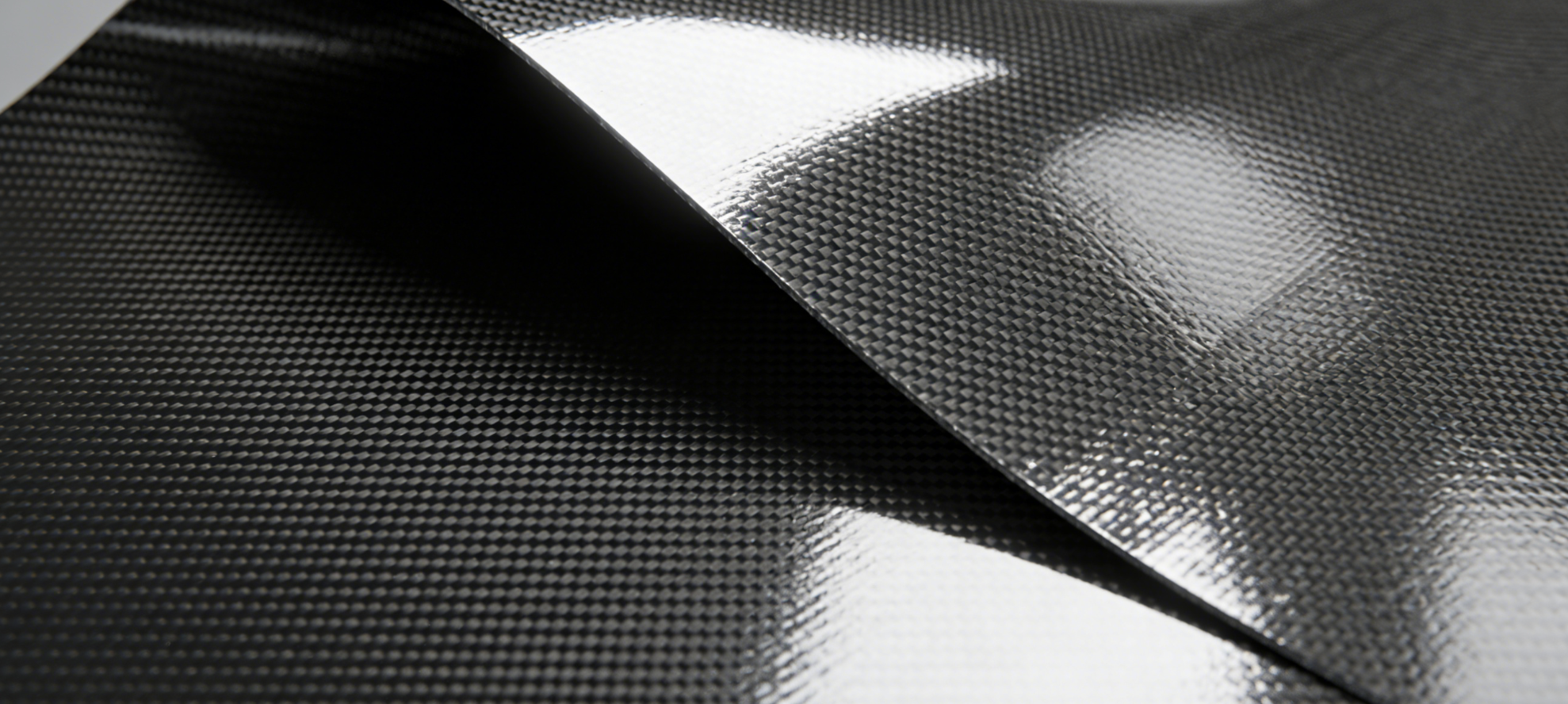
Epoxy didn’t earn its market position by accident. Across aerospace, automotive, and sporting goods, epoxy prepreg carbon fiber covers the overwhelming majority of thermoset applications — and the data shows why.
The material comes in two structural forms. Unidirectional (UD) prepreg aligns fibers in a single direction for maximum axial strength. Woven cloth prepreg uses an interlaced structure that trades peak stiffness for better drapability and impact resistance. Both forms share the same core chemistry. The differences show up at the system level.
Why the Cure Window Matters More Than You Think
Epoxy prepreg systems cover a wide cure temperature range. You’re looking at everything from 80°C oven-cured systems built for large industrial parts, up to 180°C autoclave systems designed for aerospace-grade heat resistance and toughness.
That spread isn’t arbitrary. Each cure window delivers a different Tg ceiling, a different mechanical profile, and a different manufacturing path:
- 80°C cure systems — built for large components where autoclave access isn’t practical; Tg sits at 80°C
- 130°C multi-purpose systems — high toughness, fast cycling, suitable for satellite structures and exterior industrial parts
- 130–140°C high-Tg systems — Tg reaches 170°C, optimized for press compression molding (PCM) with tight dimensional tolerances and clean surface finish
- 180°C aerospace systems — maximum heat resistance, high toughness; the spec range for primary structural components in aviation and automotive platforms
- Out-of-autoclave (OOA) aerospace systems — 121°C cure, paired with T700-series standard modulus fibers for primary structures without autoclave infrastructure
Some applications push past epoxy’s thermal ceiling. The clear step-up option is cyanate ester. Processing starts at 135°C, post-cure reaches 250°C, and Tg climbs to 270°C — with low moisture absorption on top of that.
The Impregnation Variable Engineers Often Underestimate
Getting resin into fiber isn’t just a manufacturing step — it’s a precision operation. Hot-melt impregnation lowers resin viscosity through elevated temperature. This improves fiber wettability and drives complete saturation across the fiber bed. Rheometric measurement tracks complex viscosity at isothermal conditions between 50–140°C to confirm the process stays within specification.
Three parameters control epoxy matrix quality at this stage: B-stage degree, viscosity profile, and tackiness. Lose control of any one of them, and downstream processing drifts — layup conformability, void content, and final Tg all take a hit.
Take a DICY-cured carbon fiber/epoxy system as a concrete example. The gap between uncured Tg (7.6°C) and fully cured Tg (106.2°C) shows just how much transformation the resin undergoes. The Šesták–Berggren model captures those curing kinetics best across the full reaction arc.
Thermoplastic Carbon Fiber Prepreg: High-Performance Alternative with Recyclability

Thermoplastic carbon fiber prepreg doesn’t cure. That one fact sets it apart from every thermoset system — and it changes everything that follows.
Thermoset resins lock into a permanent crosslinked network. Thermoplastic matrices work differently. They melt under heat and harden on cooling. The process is reversible. You can reheat, reshape, and reprocess the material. That’s not a small processing detail — it’s a fundamental shift in what a carbon fiber composite can do over its entire working life.
The Resin Families That Matter
Four thermoplastic systems lead the commercial thermoplastic carbon fiber prepreg market:
| Resin | Tg (°C) | HDT (°C) | LOI (%) | Cost Tier | Reprocessing Cycles |
|---|---|---|---|---|---|
| PEEK | 143 | 152 | 47 | High | >5 |
| PEKK | 155–165 | 150–165 | ~35 | Mid | >5 |
| PPS | 85–90 | 130–140 | 44–47 | Mid-High | >5 |
| PP | –10 | 100–120 | 17–19 | Low | >5 |
PEEK sits at the top of the cost range — and earns it. An LOI of 47% makes it a true flame-resistant material. PEKK costs less than PEEK and reaches a higher Tg ceiling (up to 165°C). That’s why aerospace programs are choosing it — they get PEEK-level performance at a lower price. PPS covers the mid-range industrial bracket. PP handles lower-demand applications where structural requirements stay modest.
The Impregnation Problem Nobody Discusses
Thermoplastic resins are thick and viscous in melt form. Getting them deep into a dense carbon fiber bed is harder than it looks. The method you choose has a direct impact on fiber volume fraction consistency and void content.
Four methods are in active use:
- Solution impregnation — resin dissolves in solvent, then gets applied to fibers; fiber distribution uniformity exceeds 95%; best suited for PEEK; solvent recovery adds steps to the process
- Hot-melt extrusion — molten resin pressed into the fiber bed; uniformity 80–90%; localized fiber clustering is a real risk; standard method for PPS and PEKK
- Powder coating — electrostatic resin powder deposits onto fibers; uniformity 85–95%; particle size must stay below 50 μm to reduce voids
- Film stacking — resin film and fiber layers consolidate under heat and pressure; uniformity exceeds 98%; lowest fiber damage rate; the go-to standard for aerospace-grade prepreg layup process requirements
Reprocessability as an Engineering Advantage
The recyclability story isn’t just an ESG checkbox. The numbers back it up.
Weld joints made through ultrasonic or resistance welding keep 95% of parent material strength. In aerospace maintenance, that cuts repair cycle times by 50%. Stamp-forming runs at 180–400°C with press speeds above 1 m/s. Full-cycle times stay under 60 seconds, and fiber length retention holds above 80%.
Scrap carries real value here. Mechanically recycled CF-PEEK — after grinding and reprocessing — keeps over 85% tensile strength. That makes it viable for high-performance secondary applications. At fiber volume fractions below 20%, recycled prepreg granulate outperforms conventional virgin material in dispersed-fiber configurations. Aerospace secondary processing waste recovery rates top 90%. Programs that switch from traditional bonded patch methods to thermoplastic repair see documented maintenance cost cuts of 30–40%.
The Supply Chain Shift That Rewrites Procurement Logic
Thermoset prepreg needs –18°C frozen storage. Thermoplastic prepreg doesn’t. Room-temperature shelf life with no expiration cuts cold storage costs by 70%. It also removes the outlife countdown that drives thermoset inventory decisions.
Long-cycle aerospace programs often hold material in inventory for months before a scheduled layup. With thermoplastic prepreg, that’s no longer a pressure point. Delivery lead times drop by 50%. Waste from expired rolls falls 10–20%. The change isn’t surface-level — it reshapes how procurement teams plan and how suppliers price their quotes.
Thermoset vs Thermoplastic Carbon Fiber Prepreg: Head-to-Head Performance Comparison
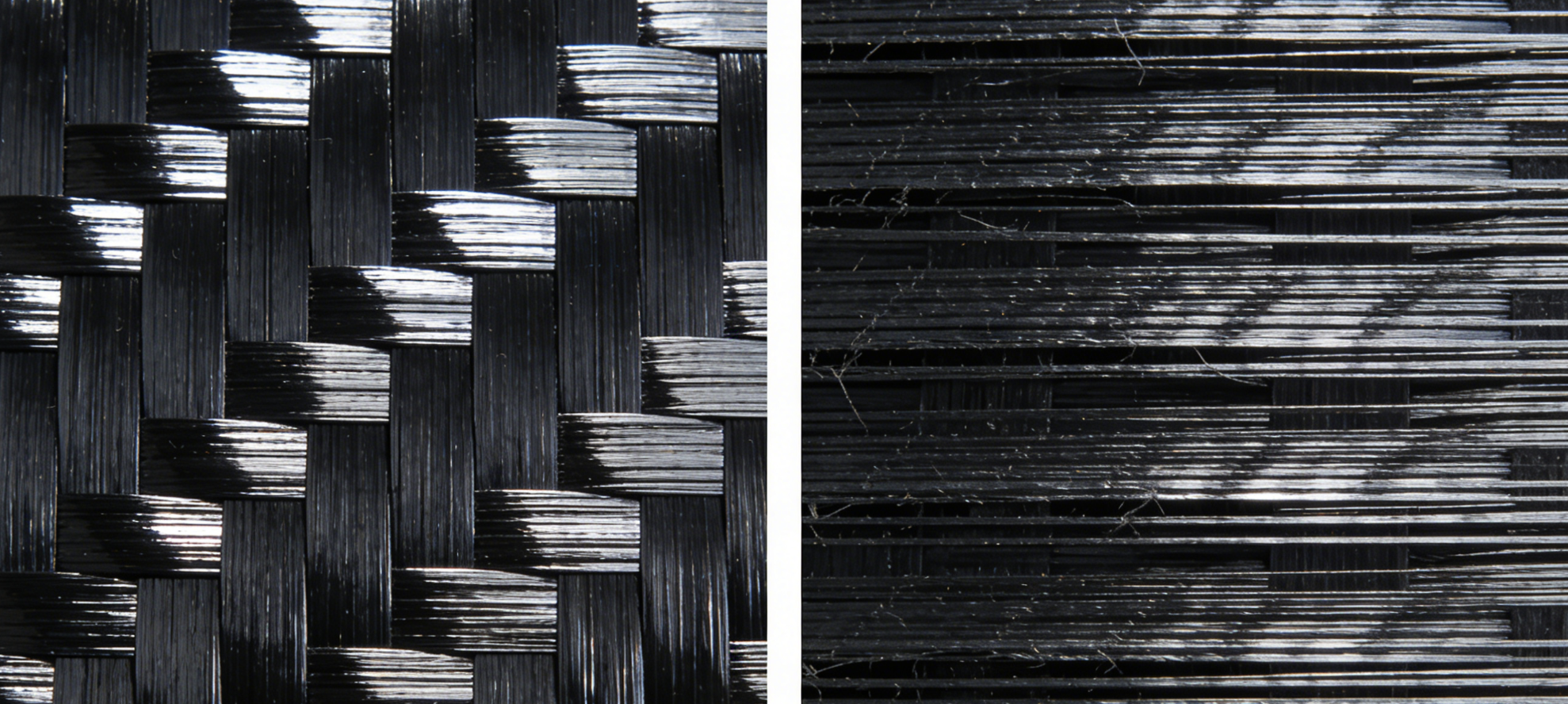
The numbers don’t lie — and here, they tell a story most spec sheets won’t show you.
Both thermoset and thermoplastic carbon fiber prepreg systems deliver exceptional performance. But they deliver different kinds of exceptional. The choice isn’t about which one is better in theory. It’s about knowing where each system wins, where it falls short, and what that means for your build.
Here’s the full comparison across every dimension that matters.
Mechanical Performance
| Property | Thermoset (CF-Epoxy) | Thermoplastic (CF-PEEK) |
|---|---|---|
| Tensile Strength | 311 MPa | 425 MPa |
| Impact Resistance | Brittle — cracks and shatters | Superior — deforms and absorbs energy |
| Fracture Toughness | Lower — rigid structure prone to sudden failure | Higher — polymer chains stop crack spread |
| Creep Resistance | Excellent — the benchmark for primary structures | Good, but trails thermoset under sustained load |
| Thermal Stability | Stable to 230°C in co-curing configurations | Stable to 230°C; processes at ~400°C |
The tensile gap is real. Thermoplastic CF-PEEK comes in 37% stronger. The bigger difference is how each handles impact. Thermoset composites crack and fracture. Thermoplastic composites deform — they absorb the hit and hold the structure together. In high-speed impact tests, that difference separates a damaged component from a destroyed one.
Thermoset still leads on creep resistance. Crosslinked networks resist slow deformation better than thermoplastic matrices under long, constant loads. Primary aerospace structures carry steady loads with almost zero tolerance for dimensional drift. That’s why they still rely on thermoset systems.
Processing Reality
- Cure time: Thermoset autoclave cycles run 8–12 hours for bonded joints. Thermoplastic stamp-forming finishes in under 60 seconds. Co-curing integrated processes take 30–90 minutes — still faster than standard thermoset.
- Equipment: Thermoset works with standard autoclaves and hand layup setups. Thermoplastic needs higher processing temperatures (~400°C vs 200°C) and specialized presses. The upfront equipment cost is real.
- Shelf life: Thermoset prepreg needs refrigerated storage and a strict outlife clock. Thermoplastic prepreg stores at room temperature with no time limit. That’s a supply chain factor that adds up across long production programs.
Cost and Lifecycle Economics
Raw material costs favor thermoset. The manufacturing infrastructure is mature and the supply base is wide. But raw material cost is just one line item.
The full total cost of ownership (TCO) picture includes:
- Waste disposal: Thermoset scraps go to landfill. Thermoplastic scrap melts down and reforms — that’s 86% less carbon fiber waste compared to thermoset equivalents.
- Joint efficiency: Mechanical fastening drops 30% of structural strength. Thermoset adhesive bonding delivers 1.5 GPa/cm³ specific strength. Thermoplastic co-curing reaches 3.69 GPa/cm³ — more than double.
- Fatigue life: Thermoplastic-joined structures last 4.39× longer than adhesive-bonded thermoset equivalents before fatigue failure hits.
- Repair cost: Thermoplastic structures can be redone — up to three full heat-cycle reheatings, plus self-healing behavior at 300°C that extends service life by 300%. Thermoset repair is patch-and-pray. Once cured, rework options are tight.
Sustainability
This isn’t just an ESG talking point. It has real operational impact.
Thermoset composites can’t be recycled — the chemistry doesn’t allow it. The crosslinked network is permanent. End-of-life parts go straight to landfill. Thermoplastic composites are 100% re-meltable. Scrap gets chopped, reprocessed, and put back to use. Programs with sustainable sourcing or carbon neutrality targets will find thermoplastic a much easier fit.
The Practical Decision Framework
Neither system wins across the board. The right pick depends on what you’re building and how you’re building it.
Go with thermoset:
– Sustained creep resistance is critical
– Your manufacturing setup is already autoclave-based
– Raw material cost per kilogram is a primary constraint
– Your program sits within a validated aerospace certification envelope that requires it
Go with thermoplastic:
– Impact performance and damage tolerance are top priorities
– Production volume demands short cycle times
– Cold-chain storage is costly to run
– Repair and maintenance access drives your lifecycle cost
– Your program has sustainability targets that non-recyclable thermoset can’t meet
The performance gap between these two systems is closing. The processing gap — in favor of thermoplastic — keeps growing. Know both sides before you lock in a material selection that has to hold up past the first prototype.
Carbon Fiber Prepreg Applications by Industry: Which Type Fits Where
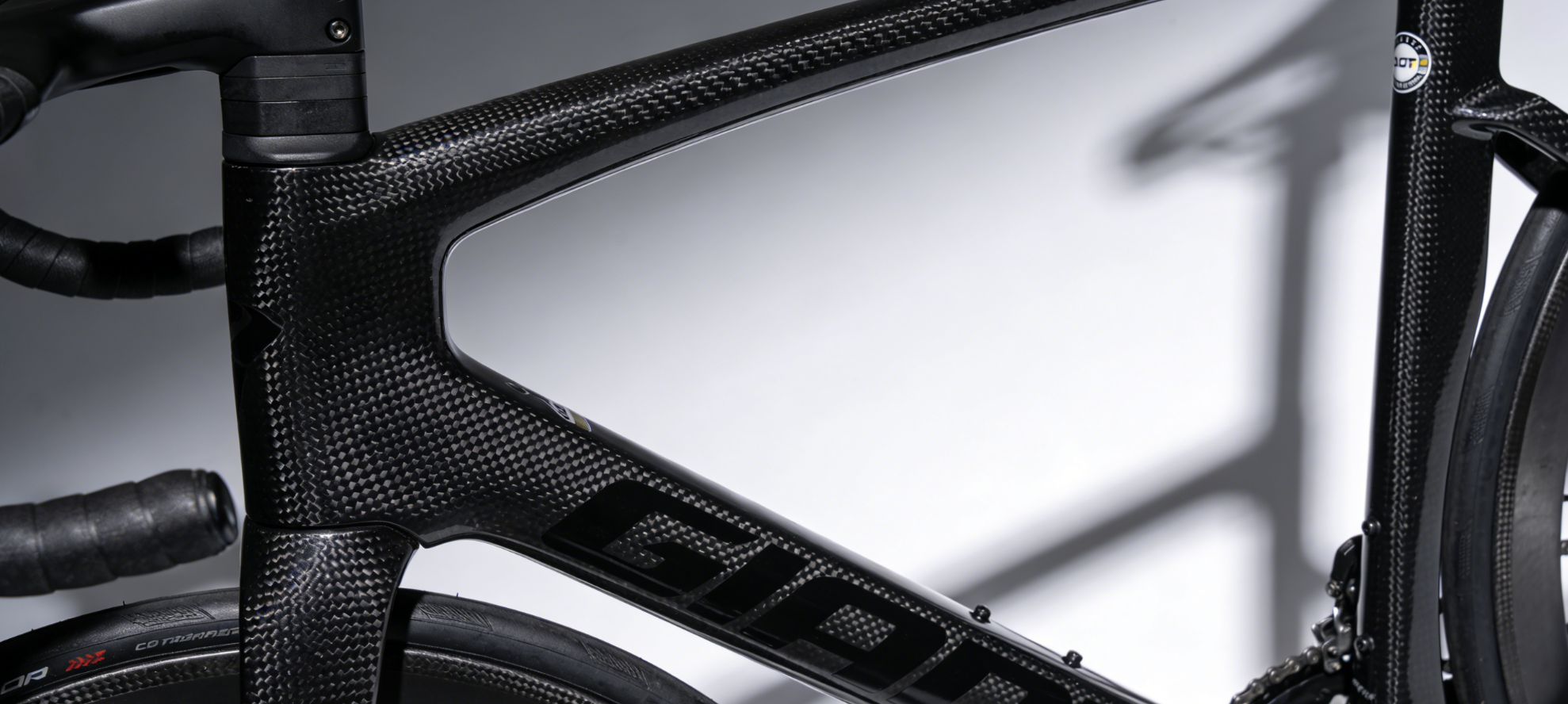
Industry doesn’t forgive mismatched materials. A prepreg system that works well in a racing chassis can be the wrong choice for a wind turbine blade. Not because either material is bad — but because the demands are different in ways you don’t see until something breaks.
Here’s where each prepreg type lands in practice.
Aerospace: The Thermoset Stronghold — With Thermoplastic Moving In
Airbus and Boeing have built their primary structures on thermoset epoxy prepreg for over 25 years. Fuselages, wings, load-bearing frames — all of it. The reasons are clear: proven tensile performance, corrosion resistance, and a certification track record no other system has matched. The aerospace and defense segment is expanding at a 7.75% CAGR through 2034. Thermoset carries the majority of that volume.
Thermoplastic is gaining ground in specific areas. CF-PEEK prepreg is moving into impact-critical parts — engine adjacencies, interior structures, brackets. In these zones, damage tolerance matters more than sticking with an older cure schedule.
Automotive: Speed for Race, Stampability for Scale
In motorsport and supercar production, thermoset epoxy prepreg is still the top choice. The performance-per-kilogram ratio takes priority over cycle time. Carbon fiber components run 50–70% lighter than steel equivalents. That weight drop contributes to the 30% fuel efficiency gains seen across performance platforms.
EVs change the equation entirely. Thermoplastic prepreg’s rapid stamp-forming process runs full cycles in under 60 seconds. That speed fits high-volume EV production in a way that thermoset autoclave schedules simply don’t. Tesla’s Cybertruck battery enclosure uses multi-layered prepreg construction — built for thermal runaway resistance and crash safety. Right now, automotive is the fastest-growing segment in the carbon prepreg market.
Wind Energy, Sports, and Industrial Applications
Thermoset epoxy leads wind turbine blade construction across European and Asia-Pacific markets. Blades cycle under variable load, day after day. Fatigue resistance, corrosion immunity, and a high strength-to-weight ratio aren’t optional — they’re required. Operators running advanced prepreg blade systems report 30% reductions in unplanned downtime.
Sports equipment follows the same logic. Bicycle frames, tennis rackets, golf shafts — all benefit from thermoset’s moisture resistance, chemical stability, and consistent structure across production runs.
Emerging Thermoplastic Territory
Three sectors are shifting toward thermoplastic prepreg systems:
- Medical devices — custom fiber-resin tuning lets manufacturers hit precise component geometries, and end-of-life recyclability is a real advantage
- Defense and UAVs — CF-PEEK handles ballistic protection and repeated stress cycles well; its impact behavior outperforms thermoset in strike scenarios
- Marine engineering — corrosion-resistant structures last longer and leave a smaller environmental footprint than steel alternatives
The broader carbon prepreg market is on track to reach $21.86 billion by 2034. Aerospace leads in total demand. But the fastest-moving applications sit in automotive and emerging sectors — and thermoplastic prepreg takes an outsized share of that growth.
How to Choose the Right Carbon Fiber Prepreg Type: A Decision Framework for Engineers
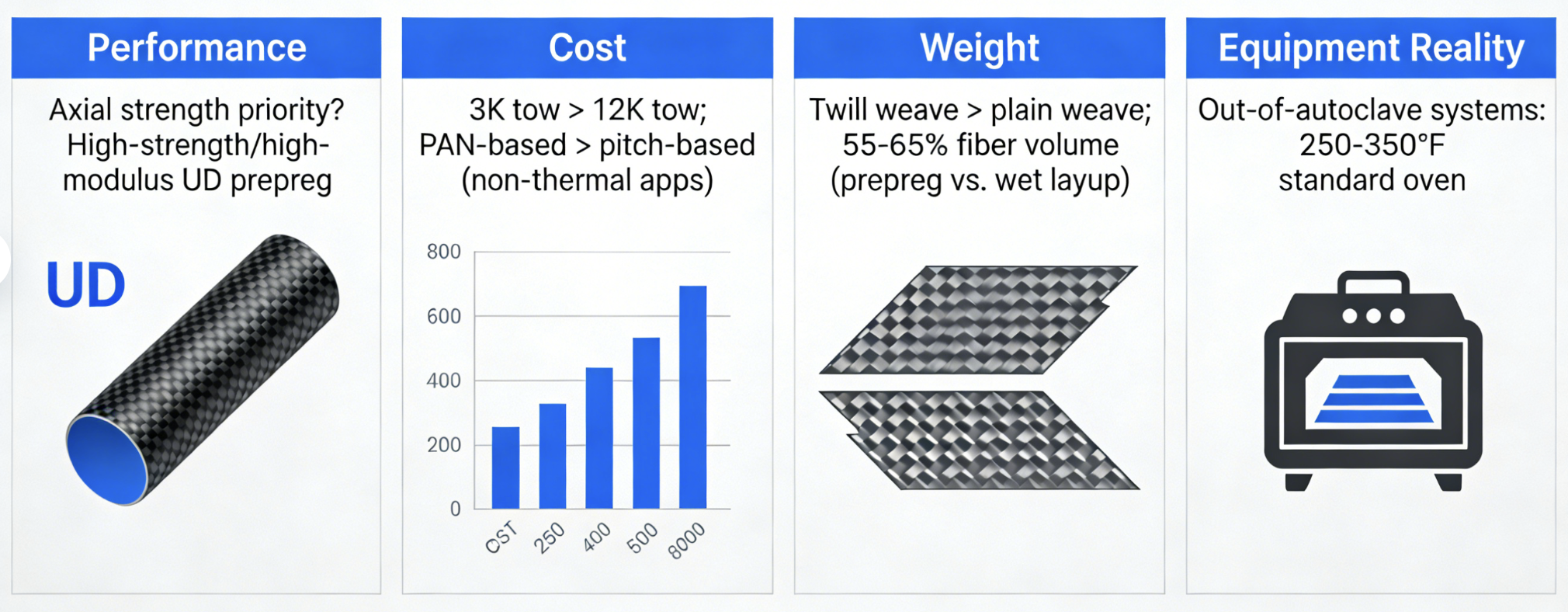
Material selection doesn’t happen in a vacuum. It happens under pressure — deadline pressure, budget pressure, the program manager asking why the spec sheet still isn’t locked. Getting this right means mapping your project’s real constraints to a prepreg system that can meet them.
Four constraints drive almost every selection decision:
- Performance — Need axial strength as the priority? Go high-strength or high-modulus UD prepreg. Chassis spars, wing structures, bicycle frames — the load runs in one direction, and UD is built for it.
- Cost — 3K tow costs more per kilogram than 12K. PAN-based fiber beats pitch-based on price without losing structural integrity in most non-thermal applications. Budget is tight? Those two swaps recover margin fast.
- Weight — Twill weave outperforms plain weave on flexibility and multi-directional strength. A fiber volume fraction of 55–65% is achievable with prepreg. Wet layup rarely hits that range. Hitting that target keeps dead weight out of the structure.
- Equipment reality — Out-of-autoclave systems cure at 250–350°F in a standard oven. No autoclave in your facility plan? Don’t spec a material that needs one.
Key Parameters at a Glance
| Parameter | What to Ask | Matching System |
|---|---|---|
| Service temperature | Above 200°C sustained? | Cyanate ester or pitch-based fiber |
| Load type | Static/axial vs. impact/fatigue | UD vs. twill weave |
| Production volume | High-run? | 12K–24K tow; thermoplastic stamp-forming |
| Cure equipment | Autoclave or oven? | Standard epoxy prepreg or OoA system |
| Certification scope | Aerospace/auto compliance? | Epoxy; marine → vinyl ester |
Three Mistakes That Show Up Again and Again
Chasing tensile numbers that don’t match your load case. High-modulus fiber data looks impressive on a spec sheet. The moment your part sees out-of-plane impact more than axial tension, that data becomes irrelevant. Match the fiber architecture to the actual stress state — not to the most impressive number on the datasheet.
Underestimating outlife. Thermoset prepreg starts a countdown the moment it leaves cold storage. Skip batch traceability and storage discipline, and you’re not just risking wasted material. You’re risking a cured part with degraded Tg and hidden void content. Neither problem shows up until it’s too late.
Assuming autoclave process transfers directly to an oven. Ramp rates, soak times, and pressure cycles are all system-specific. Run an autoclave-spec epoxy in a standard oven without revalidating the process, and it will under-cure. The part may look fine on the outside. The mechanical performance will tell a different story.
Before You Contact a Supplier
Lock down these five questions first:
- Target FVF (55–65% for structural applications)
- Cure profile, including ramp and soak temperatures
- Tow size and weave geometry
- Outlife and cold storage requirements
- Certification scope your end market requires
Suppliers who answer all five without hesitation are the ones worth qualifying. Those who hedge or deflect on any of them are telling you something important — pay attention to it.
Conclusion
Picking the right carbon fiber prepreg type isn’t about finding the “best” material. It’s about finding the best fit for your situation. Think cure temperature, structural load, production volume, and whether recyclability is even on your list.
Epoxy prepregs lead the market for solid reasons — proven performance, established supply chains, and a processing window that works for most manufacturing setups. Thermoplastic prepregs, though, are no longer just a future option. For high-rate production and end-of-life compliance, they’re a present-day solution.
The terminology gets clearer once you tie every material decision to real application needs. Spec-sheet numbers only tell part of the story.
Ready to move from research into selection? That’s where HyperX Carbon fits in. Our engineering team partners with customers in aerospace, automotive, and sporting goods. We match the right prepreg carbon fiber type to the right project — no guesswork, no overselling.
Contact HyperX Carbon – Your Trusted Chinese Carbon Fiber Customization Partner
Ready to develop high-performance carbon fiber materials or custom forged carbon fiber parts tailored specifically for your project?
HyperX Carbon is your long-term strategic partner with over 20 years of expertise in advanced composites. We specialize in delivering aerospace-grade forged carbon fiber custom solutions, along with fully personalized prepreg, tubes, sheets, and lightweight carbon fiber structural components for automotive, drone, eVTOL, and medical applications.
We don’t just supply materials — we provide end-to-end customization support:
- Stable premium supply chain using Toray, Mitsubishi, and Hengshen raw materials
- AS9100D certified production tailored for aerospace and UAV requirements
- Rapid prototyping carbon fiber component in just 5-8 weeks, with monthly capacity over 180,000 parts
- Competitive pricing with 15-18% cost savings on forged carbon solutions
- Full customization flexibility: from T700 and T1100G to ultra-high modulus grades, with tailored layups, finishes, and performance specifications
Whether you’re an eVTOL developer, automotive OEM, drone manufacturer, or medical device engineer, HyperX Carbon delivers bespoke material selection, structural optimization, and manufacturing solutions that match your exact technical and performance needs — with consistent batch-to-batch quality and reliable delivery.
Get in touch today for a free technical consultation, personalized quote, or custom material samples.
📧 Email: [email protected] 🌐 Website: https://www.hyperxcarbon.com/ 📞 Phone/WhatsApp: +86 15623270276 (English support available)
Let’s co-create your next lightweight innovation together. Contact HyperX Carbon now and stay ahead in the low-altitude economy and advanced composites market.
HyperX Carbon – Not just a supplier, but your dedicated carbon fiber customization expert.




