
A carbon fiber steering wheel seems like a simple upgrade. Then you start shopping — and prices run from $77 on Amazon to well over $3,000 for a custom-built piece. That gap isn’t random.
The difference comes down to real factors: materials, craftsmanship, fitment precision, and whether you’re buying genuine carbon fiber or a plastic shell wrapped in carbon-look vinyl. Get this wrong, and you’re not just wasting money — you’re putting a safety-critical part at risk.
This guide gives you real 2026 market pricing. You’ll get a straight breakdown of what drives cost, plus a clear path to finding the right carbon fiber steering wheel aftermarket option for your vehicle and budget.
Carbon Fiber Steering Wheel Price 2026: What the Market Looks Like
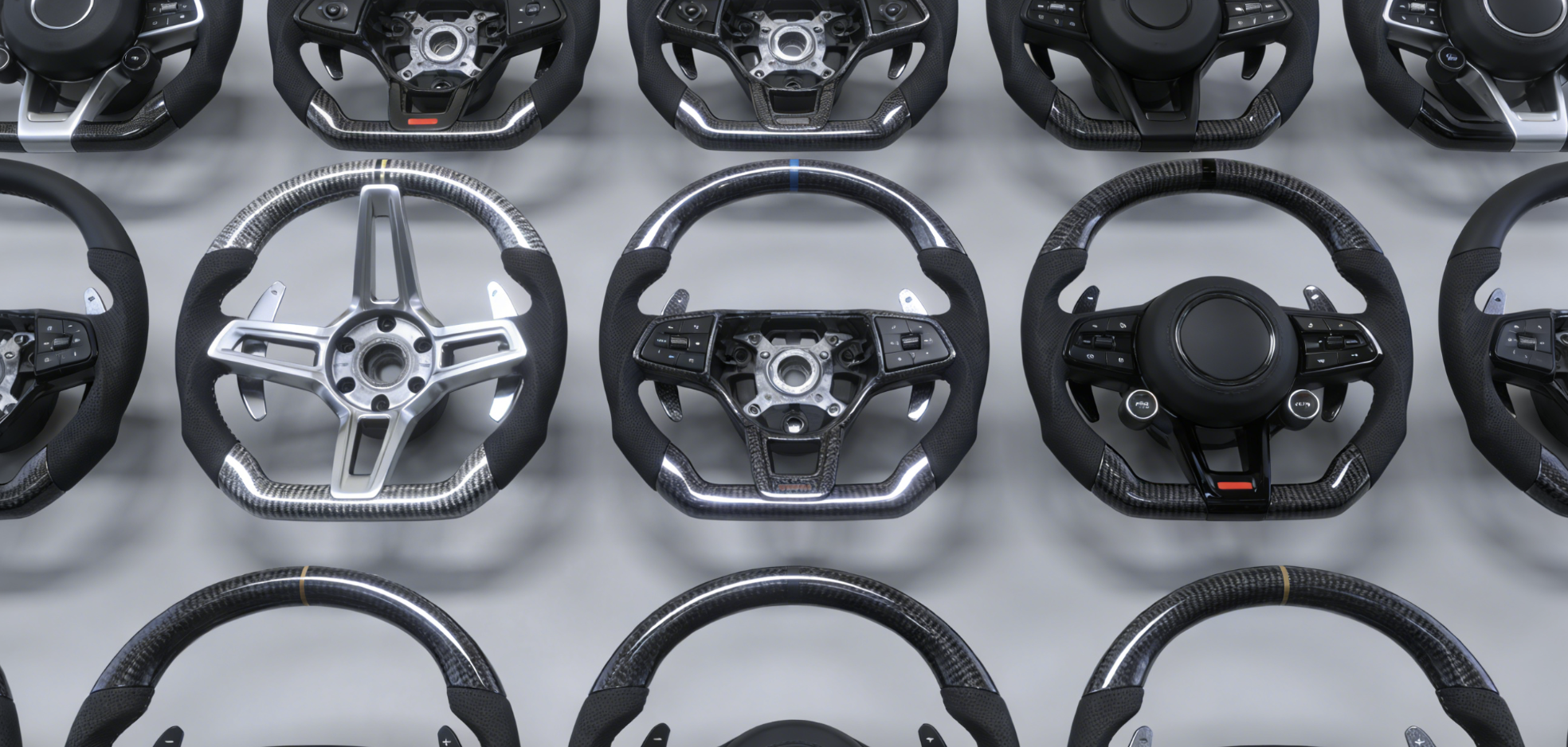
Here’s the 2026 reality: most carbon fiber steering wheels run between $288 and $861 for bolt-on aftermarket fitments. Custom-built pieces cost more. Add model-specific fitment, airbag compatibility, or extra features, and the price jumps to $399–$1,000+. What you pay depends on what you build.
Here’s how real 2026 pricing breaks down across popular models:
|
Vehicle / Product |
Price Range |
|---|---|
|
NRG Universal (315–350mm) |
$288.97 – $316.97 |
|
Nissan GTR 2009–2026 (Custom) |
$399.99 |
|
Tesla Model Y Juniper 2026+ (Heated) |
~$399 |
|
Toyota Camry 2018–2024 (KOCF) |
$499.99 |
|
Ford Mustang S650 2024–2026 (Base) |
$499 – $699 |
|
Honda Civic/Accord 2022–2026 (TTD Craft) |
$608.80 |
|
Toyota Corolla/RAV4 2019–2026 (KOCF) |
$689.99 |
|
Mustang 2024–2026 (s550Euros) |
$861.00 |
Add-ons stack up fast. Take a Mustang S650 build starting at $599. Throw in an LED airbag cover ($399), carbon paddle shifters ($200), and heated grip retention ($250) — you’re past $1,500+ before you know it. Build time is 4–10 weeks, depending on how complex your order is.
That’s the baseline. Now let’s break down why prices move — and where the real value lies.
How Much Does a Carbon Fiber Steering Wheel Cost in 2026?

The short answer: $399 on the low end, $1,500+ once you start customizing.
That range doesn’t tell you much on its own. The real number comes down to three things — your vehicle, your material choices, and how many add-ons you pile onto the base build.
Start With the Base Price
Most bolt-on carbon fiber steering wheels come with an OEM-adapted frame, a basic carbon finish, and a standard leather grip. That’s your starting point. Here’s what base pricing looks like for popular 2026-compatible vehicles:
|
Vehicle |
Base Price |
|---|---|
|
Tesla Model 3 Highland (2024–2026, heated) |
$524.99 |
|
BRZ / FRS (2017–2026) |
$549.99 |
|
Kia K5 (2021–2026) |
$599.99 |
|
Honda Civic / Accord (2022–2026) |
$608.80 |
|
Acura MDX / TLX |
$850.00 |
|
Ford Mustang (2024–2026, full custom) |
$549.99 – $1,089.99 |
Where the Price Really Climbs
Add-ons are where budgets blow up fast. Each upgrade looks small on its own. Stack three or four, though, and the total jumps quickly:
-
Carbon finish upgrade (matte / gloss / forged): +$50–$100
-
Fabric grip upgrade (Alcantara, full carbon): +$50
-
Thumb grips: +$50
-
Carbon paddle shifters: +$200
-
Heated grip function: +$250
-
Custom airbag cover: +$250
-
LED airbag cover: +$399
-
LED RPM display: +$250
Add a few of those to a $599 Kia K5 base, and a “mid-range” build hits $1,200–$1,500 in no time. Build time runs 6–10 weeks, depending on how complex your order is.
The bottom line: base price gets you in the door — your options set the final number.
Carbon Fiber Steering Wheel Price Breakdown by Tier (2026 Market Data)
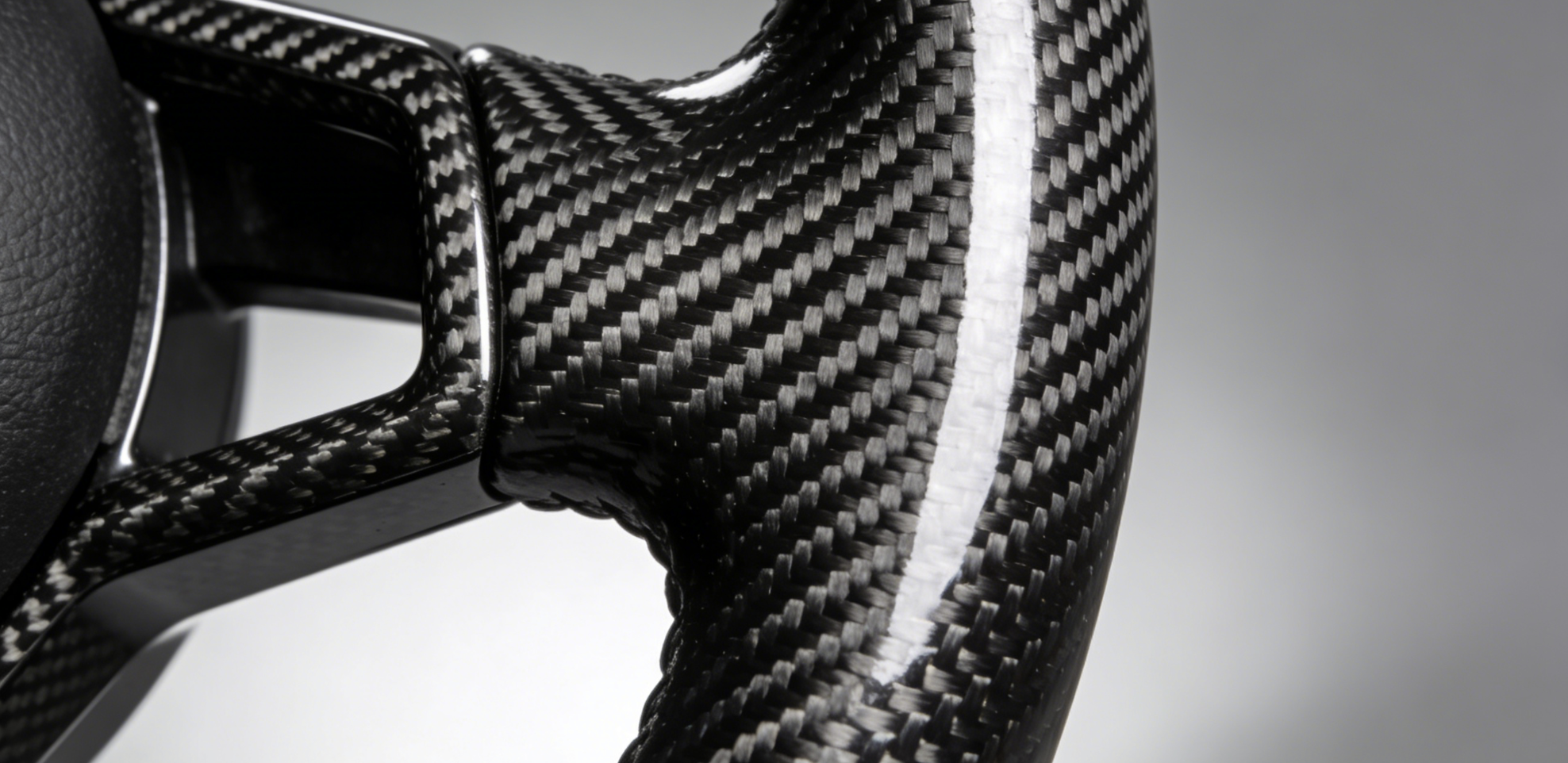
Four tiers. One table. Everything you need to stop guessing and start buying smart.
The aftermarket doesn’t reward shoppers who skip this step. Carbon fiber steering wheels cover a wider price range than most people expect. The difference between tiers isn’t just dollars — it’s materials, construction, and long-term safety performance.
Here’s how the 2026 market breaks down:
|
Tier |
Price Range |
What You’re Getting |
|---|---|---|
|
Entry-Level |
$399–$500 |
Basic carbon veneer over OEM base; standard weave; limited fitment |
|
Mid-Tier |
$500–$600 |
4–5mm carbon faceplate; improved rigidity; broader vehicle compatibility |
|
High-End |
$600–$689 |
Full hand-layered carbon; UV-cured finish; advanced 2022–2026 fitment |
|
Custom Add-Ons |
+$50–$399 |
Kevlar/carbon hybrid weaves, colored stitching, biometric integration |
What Each Tier Really Means
Entry-level ($399–$500) gets you the carbon look, not full carbon performance. Take the XGENAUTO Accord X at $449. It uses carbon veneer over a standard OEM base. It works, but flex resistance is limited.
Mid-tier ($500–$600) is where build quality takes a real step up. The FFP S650 Mustang (starting at $549.99) uses 4–5mm forged carbon plates. That cuts steering inertia and drops 400g of weight compared to similar aluminum wheels.
High-end ($600–$689) means hand-shaped, hand-layered carbon with no shortcuts. The TTD Craft Honda Civic/Accord unit sits at $608.80 and holds full price for good reason. You get zero flex under 20Nm of torque, heat-resistant grips, and precise 2022–2026 fitment.
Custom upgrades stack on top of any base tier. Options include Kevlar hybrid weaves, paddle sensors, and biometric grip integration. Each feature adds $50 to $399. Together, they push strength-to-weight ratios 30% beyond aluminum.
One more data point worth noting: mass production automation is steadily making this market more affordable. Expect 10–20% price drops across mid and high tiers through 2026. Manufacturing competition is driving that shift. The $689 → $499 drops already showing up on hybrid builds? That’s just the start.
What Determines the Price: 5 Key Cost Factors Explained
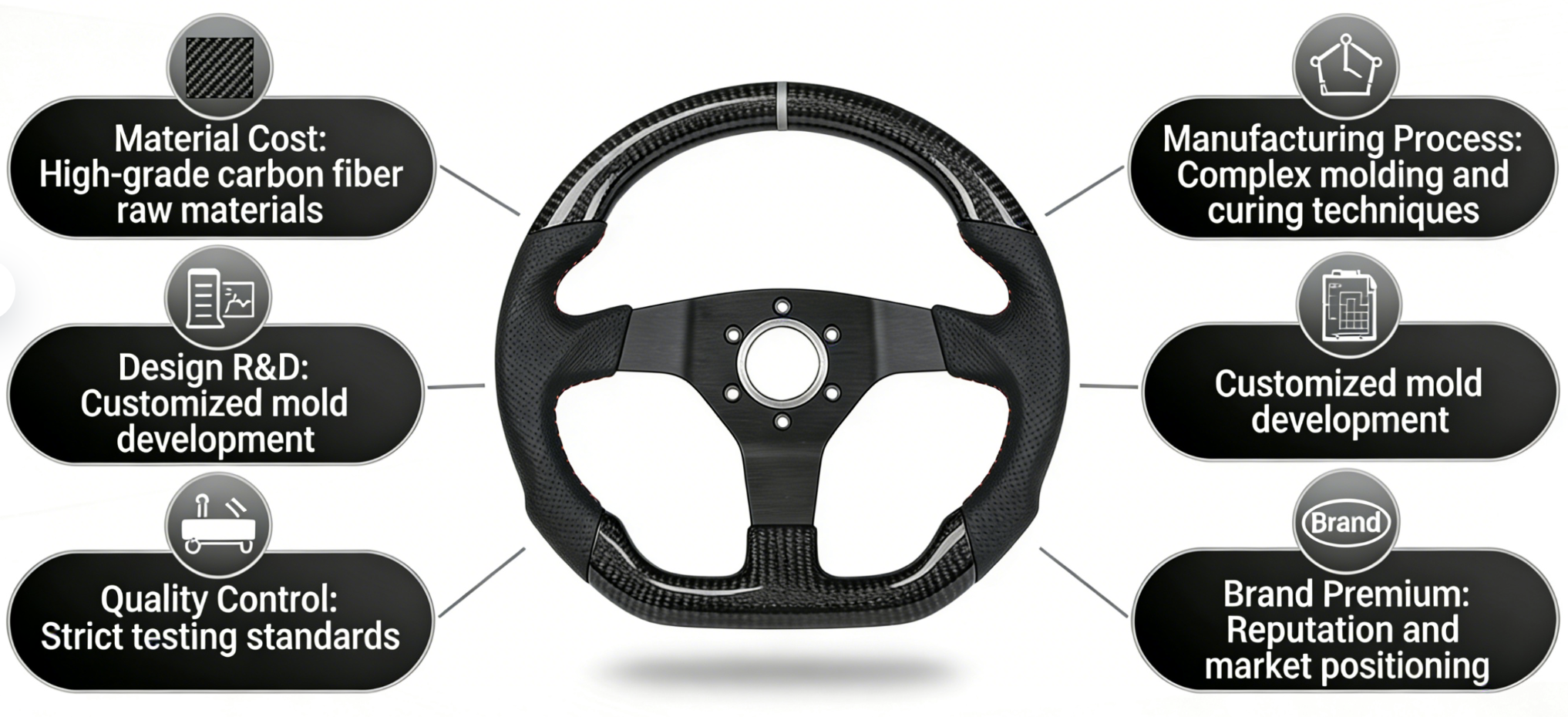
Five variables set the final price on every carbon fiber steering wheel listed online. Know these, and you’ll stop overpaying.
1. Raw Materials and Manufacturing Quality
This is where the biggest price gaps show up. Genuine carbon fiber — woven, layered, and cured under controlled heat — costs far more to produce than carbon-look vinyl wrap or thin veneer sheets. Real carbon fiber weave needs precise layup processes, UV-resistant resin, and skilled labor for each unit. That $77 Amazon listing? It skips every one of those steps.
Forged carbon fiber costs even more to produce. It delivers a 30% higher strength-to-weight ratio than standard woven versions. That difference lands straight on the price tag.
2. Labor and Craftsmanship Intensity
Hand-layered construction pushes labor costs up fast. A hand-shaped carbon wheel takes individual artisan hours per unit — trimming, fitting, finishing. Mass-produced options automate most of that work. This cuts cost, but it also cuts quality.
Premium builds take 6–10 weeks. That’s not slow. That’s precise.
3. Vehicle-Specific Fitment Engineering
Universal wheels cost less to produce. One mold covers many vehicles. Model-specific fitment is a different story. Engineers design it for exact clockspring alignment, airbag compatibility, and OEM connector integration. Each vehicle platform needs its own dedicated tooling. That engineering cost goes into the unit price. It’s why a Mustang S650-specific build costs more than an NRG universal piece.
4. Airbag Compatibility and Safety Engineering
Carbon fiber steering wheel airbag compatible designs need extra structural engineering. The carbon shell must absorb and redirect airbag deployment force — without breaking apart. Testing, certification, and materials adjustment all add real production cost.
Cut airbag compatibility to save money, and you turn a safety component into a liability. That’s not a trade worth making.
5. Brand Overhead and Market Positioning
Established brands carry real overhead: R&D, quality control, warranty programs, and customer support. That markup exists for a reason. For safety-critical parts, it’s earned. Budget brands skip those layers — and price to match.
Vehicle-Specific Carbon Fiber Steering Wheel Prices: Is Yours on the List?
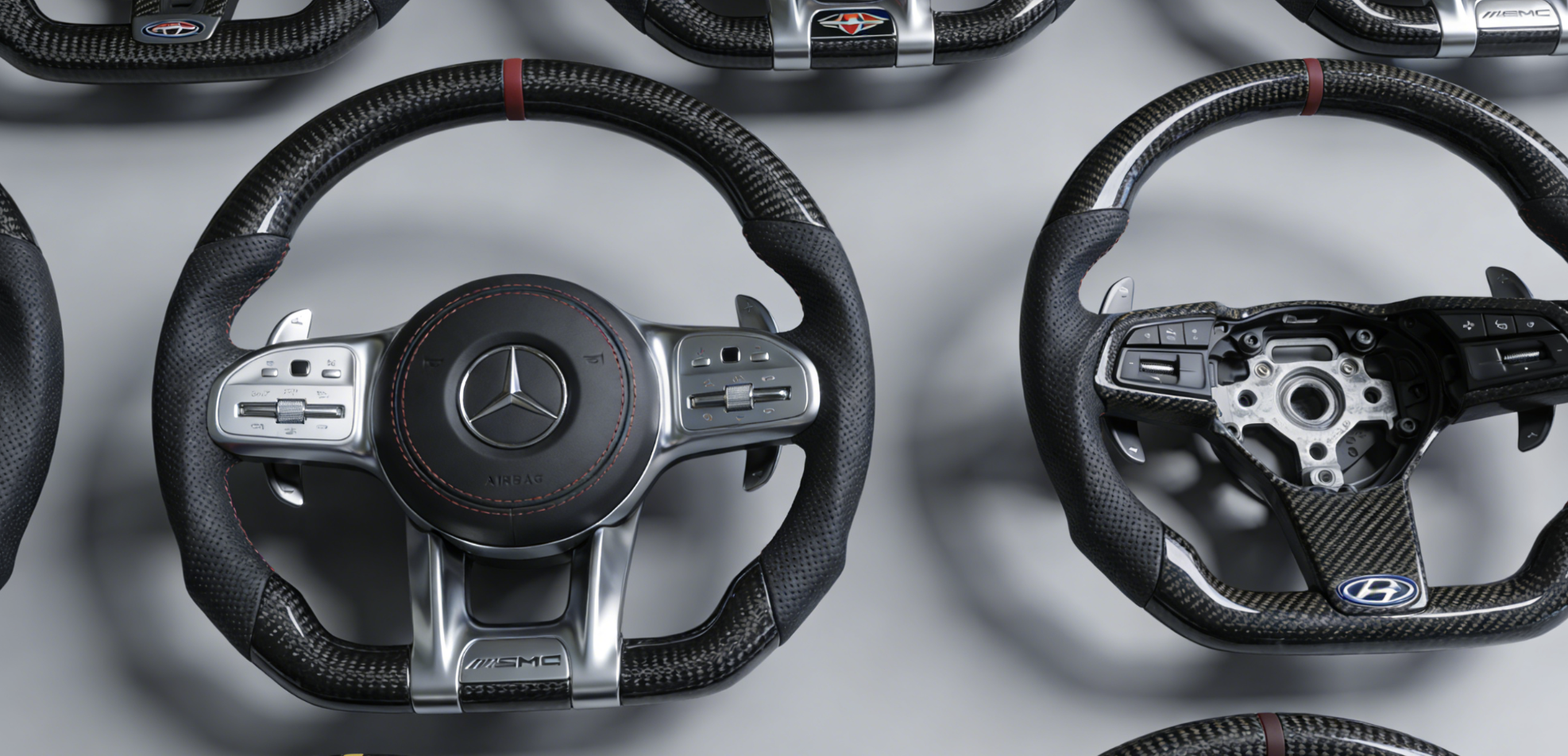
Vehicle fitment changes everything. A price that looks fair for one platform can jump by $500 or more on another. Here’s what real 2026 market pricing looks like across the most popular makes.
Toyota
GR Yaris owners are looking at €1,050 for a full custom or forged carbon build (mk1/mk2). That price reflects hand-layered construction and model-specific clockspring alignment. This platform demands both. Corolla, Camry, and RAV4 pricing data for 2026 is still thin. Budget for the $499–$689 range based on similar fitment difficulty.
Honda
Civic Type-R FL5 (2023–2024) owners can pick up a pre-preg carbon steering wheel surround for $285. Full replacement wheel pricing for the standard Civic and Accord hasn’t been published yet for 2026. Stock on many platforms is also limited. Plan on waiting. For a complete, airbag-compatible unit, budget closer to $600+.
BMW
M2 G87, M3 G80/G81, and M4 G82/G83 owners have solid options. Carbon trim packages start at €190. A full LCI G Style carbon wheel jumps to €1,290. Custom builds on these platforms keep airbag retention intact. That added engineering is a big part of why the price is higher.
Tesla
Model 3 and Model Y (including Juniper-compatible trims) start at $920 through builders like CMST Tuning. That higher starting price comes down to one thing: electronic integration. These builds reuse OEM buttons, support haptic feedback modules, and use plug-and-play wiring. Simpler platforms skip all of that. You’re paying for the extra engineering work.
Ford
Mustang S650 (2024+) pricing has shifted. Carbon LED wheel builds that listed at $799.99 before now sit at $499.99 — a real drop worth noting. F-150 and Raptor models (2015–2026) run $549–$599.99. Most listings show as unavailable. Expect custom lead times of 4–10 weeks as standard.
Bottom line: Full wheel replacements fall between $500 and $1,400 depending on your platform. Trim-only carbon pieces run $99–$285. Forged carbon construction adds a 10–20% premium on top of any base price.
Where to Buy a Carbon Fiber Steering Wheel: 8 Trusted Sources in 2026
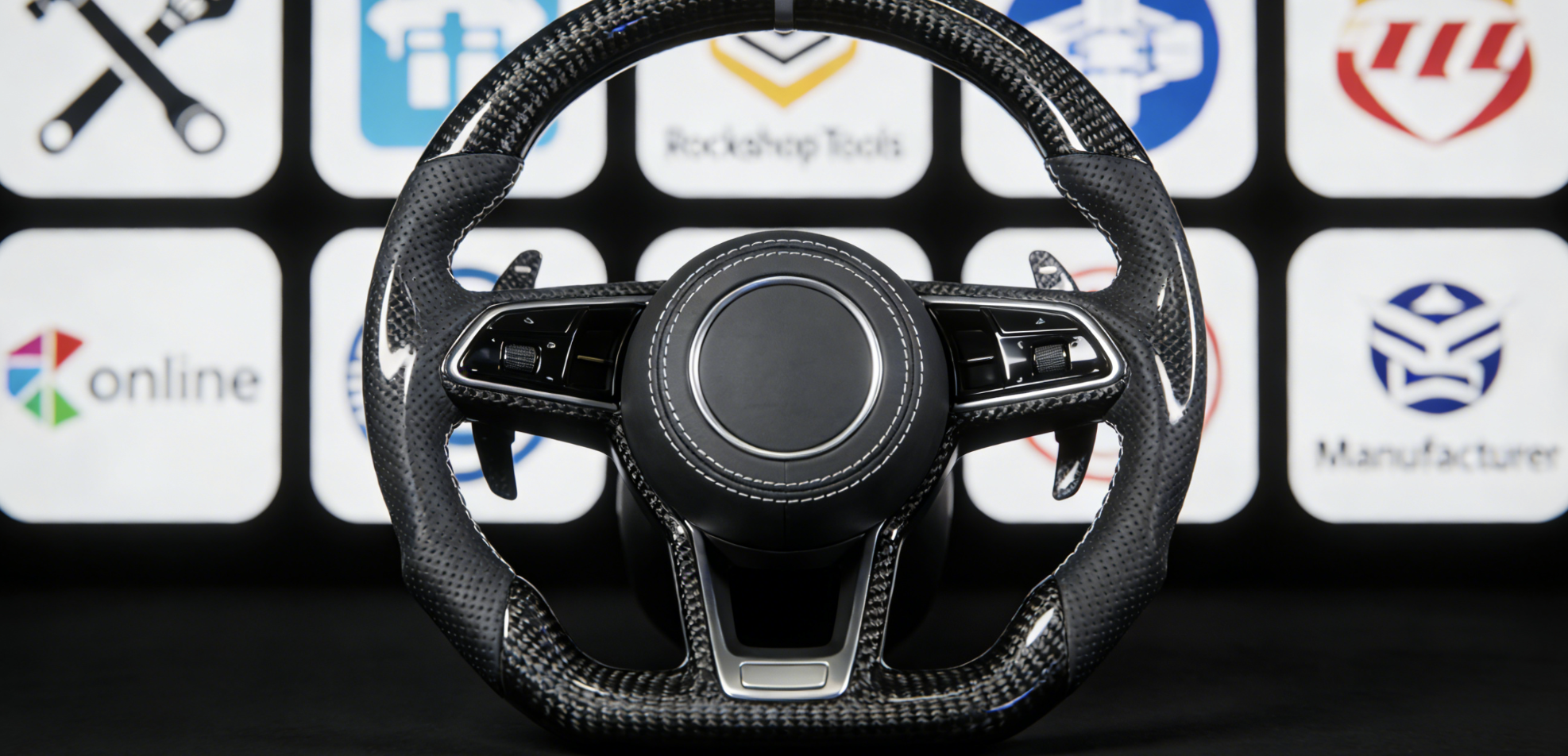
Finding a legit source is harder than finding the right wheel. The market is flooded with vendors making identical claims — “hand-built,” “OEM-quality,” “real carbon fiber” — and most of them can’t back any of it up. These eight sources deliver in 2026. You get real pricing, real policies, and real vehicle coverage.
The 8 Sources, Ranked by What They’re Best For
1. Autoledtech.com — Best for Ram/Dodge Custom Builds
Price range: $1,200–$2,500. This shop focuses on Ram 1500/TRX/RHO (2021–2026+) and Dodge platforms. Build time runs 4–10 weeks based on complexity. The 2-year warranty covers craftsmanship and heated functions. One caveat: the 35% restocking fee is non-negotiable. It covers 20+ labor hours already built into your order. Don’t buy here unless you’re certain about your fitment.
2. TTDCraft.us — Best for Honda Civic/Accord
Price range: $800–$1,800 (estimated). These builds are plug-and-play for 2022–2026 Civic and Accord models. You can mix carbon and leather finishes. The return window is 30 days. Build time: 4–8 weeks.
3. FFPPerformance.co — Best for Mustang S650 Purists
Price range: $1,500–$2,200. Every wheel is handcrafted — 20+ hours per unit. Fits Ford Mustang GT/EcoBoost/Dark Horse (2024–2026 S650). You’ll find flat-bottom options, Alcantara/leather wraps, and custom stitching. Note: heated grip is disabled by design to remove dash error codes. Returns are limited due to OEM modification work.
4. LethalPerformance.com — Best for Mustang Buyers Who Want Stock Lead Times
Price range: $900–$1,600. Covers Ford Mustang 2024–2026 with sporty OEM-style carbon finishes. Standard stock ships in 2–4 weeks. The 30-day return window on unmodified units is one of the most buyer-friendly policies on this list.
5. AliExpress (Gobi Express Top Picks) — Best for European Platform Fitments on a Budget
Price range: $400–$1,200. Coverage includes:
– BMW G/F-series (M2–M5)
– Porsche Cayenne/Panamera/911/718
– Nissan GTR R35 (2007–2016)
– Mercedes W205/W213
Ships worldwide in 1–3 weeks. Flash sales drop prices 10–25% off on a regular basis. The risk? You carry the authenticity check yourself. Return policies differ by seller, and dispute resolution can drag on. Use this channel only after you confirm material specs before buying.
6. CarbonCityCustoms.com — Best for Multi-Brand Custom Builds
Price range: $1,000–$2,800. This shop has one of the widest model coverage lists out there — Audi, BMW, Mercedes, Porsche, Dodge, Lamborghini, VW, Nissan, Ford, and more. All builds are hand-made. Lead time: 6–12 weeks. Expect a ~25% restocking fee on custom orders.
7. GalaxyCustoms.com — Best for One-Off Custom Designs
Price range: $1,100–$2,400. Each wheel is built to match a specific vehicle. Build time: 5–9 weeks. No returns on custom cores — confirm your fitment before you commit. Best for enthusiasts who want something no one else has.
8. ProImportTuners.com — Best for JDM/USDM Multi-Brand Shopping
Price range: $700–$2,000. Covers carbon wheel options across Subaru, Ford, and BMW platforms. The return window is 60 days — one of the longest on this list. Stock availability shifts, with lead times running 1–5 weeks.
Direct Official vs. Third-Party: The Real Difference
|
Factor |
Official Builders |
Amazon / eBay / AliExpress |
|---|---|---|
|
Price Transparency |
Configurator-based; exact cost upfront |
Listed low, but duties/shipping add 20–40% |
|
Warranty & Returns |
2-year warranty; restock fees stated upfront |
15–30 days; seller-dependent; disputes common |
|
Authenticity Risk |
OEM-based, hand-built with traceable specs |
High fake risk; ~20–30% estimated return rate |
The pattern is clear. Third-party platforms offer lower entry prices, but the risk falls on you. Official builders cost more upfront. In return, you get documentation, warranty coverage, and real fitment engineering.
FAQ: Your Top Questions About Carbon Fiber Steering Wheel Pricing Answered
Shoppers ask the same questions every time — and the wrong answers cost real money. Here’s the straight version.
How much does a carbon fiber steering wheel cost in 2026?
Real carbon fiber starts at $399 for bolt-on fitments. Prices climb past $1,500+ as customization adds up. Full custom builds on premium platforms like BMW M-series or Ram TRX push into $2,500+ territory. Anything listed under $150 is not real carbon fiber.
Why does it cost so much?
Three reasons: premium materials, hand labor, and fitment engineering. Workers hand-layer carbon sheets, infuse resin, and precision-cure each unit. That takes skilled hours — not a machine cycle. That labor cost goes straight into the price tag.
Full carbon vs. hybrid — what’s the real difference?
Full carbon uses carbon composite throughout. Hybrid designs place real carbon veneer over an OEM base. Both look almost the same side by side. Hybrid costs less and keeps factory fitment intact. For most buyers, hybrid delivers 90% of the result at 60–70% of the price.
Is forged carbon worth the premium?
Strength-wise, forged carbon and standard woven carbon perform the same. The difference is visual. Forged carbon has a distinct 3D texture that standard weave can’t match. Want that look? Pay for it. Don’t care? Standard 3k Twill does the same job for less.
How long will it last?
A real carbon fiber steering wheel with UV-resistant coatings and quality resin lasts the lifetime of the vehicle. Fakes crack, fade, and peel within 12–18 months under normal use.
Can I customize without blowing the budget?
Yes — but add options one at a time and track the total. Upgrades like contrasting stitching or matte finish add $50–$100 each. Heated grips add $250. LED airbag covers add $399. Each option looks small on its own. Stack a few together and your base price can double fast.
Does the quoted price include my original steering wheel core?
Not always. Some vendors fold the core cost into the quote — you keep your original wheel. Others ask you to ship in your existing unit or buy a core on top of the quoted price. Confirm this before ordering. Missing this detail adds unexpected cost.
Are prices dropping?
Yes. Automation and more competition are pushing mid-tier prices down 10–20% through 2026. Hybrid carbon designs are speeding that up — you get real carbon aesthetics at a much lower production cost. Price drops like $689 down to $499 are already showing up on select builds. That’s the start of a wider shift.
Conclusion
Here’s what most steering wheel guides won’t tell you: the price tag doesn’t define the value — the carbon fiber quality does.
Spending $300 on a clean aftermarket upgrade? Or going all-in at $2,000+ for a custom carbon fiber steering wheel built to OEM spec? Either way, three things matter most:
-
Material authenticity
-
Vehicle fitment compatibility
-
Real certifications from the seller
A low price is not a reason to cut corners on a part your hands never leave.
Use the price tiers and buyer checklist in this guide as your filter. A deal that falls into the “$77 trap” range is a red flag. Real carbon fiber steering wheels have a cost floor. Anything priced far below that is sending you a clear warning — don’t ignore it.
Contact HyperX Carbon – Your Trusted Chinese Carbon Fiber Partner
Ready to source high-performance carbon fiber materials or custom forged carbon fiber parts from China?
HyperX Carbon is a leading manufacturer with 20+ years of expertise, specializing in aerospace-grade forged carbon fiber, prepreg, carbon fiber tube, carbon fiber sheet, and lightweight carbon fiber automotive parts/carbon fiber drone components/carbon fiber medical components. We offer:
-
Stable supply chain with premium raw materials (Toray, Mitsubishi, Hengshen)
-
AS9100D certified production for aerospace & UAV applications
-
Rapid prototyping (5-8 weeks) and monthly capacity exceeding 180,000 parts
-
Competitive pricing with 15-18% cost savings on forged carbon solutions
-
Full customization: from T700/T1100G to ultra-high modulus grades
Whether you’re an eVTOL developer, automotive OEM, drone manufacturer, or medical device engineer, HyperX delivers consistent quality, batch-to-batch reliability, and reliable delivery.
Get in touch today for a free consultation, custom quote, or material sample.
📧 Email: [email protected]
🌐 Website: https://www.hyperxcarbon.com/
📞 Phone/WhatsApp: +86 15623270276 (English support available)
Let’s build your next lightweight innovation together – contact HyperX Carbon now and stay ahead in the low-altitude and advanced composites market.




