Sourcing a carbon fiber sheet 4×8 sounds simple — until you’re staring at a spec sheet with no clear answers on weight, fiber grade, or weave type. And the project deadline isn’t moving.
The wrong choice costs more than money. It can compromise structural integrity, add dead weight, or leave you with a panel that won’t machine at all.
You might be an aerospace engineer calculating load-bearing tolerances. Maybe you’re a robotics builder tracking every gram. Or a manufacturer comparing large carbon fiber sheets against aluminum for a full production run. Either way, the decision needs more than instinct.
What follows is a data-backed breakdown — real weight figures, tensile strength comparisons, and a straight selection guide built around how carbon fiber performs in real-world conditions.
What Is a Carbon Fiber Sheet 4×8 — Dimensions, Industry Usage & Why Size Matters

The number 4×8 isn’t arbitrary. It maps to a 48″ × 96″ (1220mm × 2440mm) panel — the same footprint as a standard plywood sheet. CNC routers run on 4×8 beds. Fabrication shops are built around 4×8 handling. A material that fits that system cuts waste and boosts throughput.
After trimming, usable dimensions land around 47″ × 95″ for carbon/glass hybrid sheets and 46″ × 94″ for carbon/carbon composites. Plan for that in your nesting layout.
Where 4×8 Carbon Fiber Sheets Get Used
The size earns its place in demanding environments:
-
Automotive and racing — full floor panels, interior trim, and electronic mounting plates in high-vibration builds exceeding 1,000hp
-
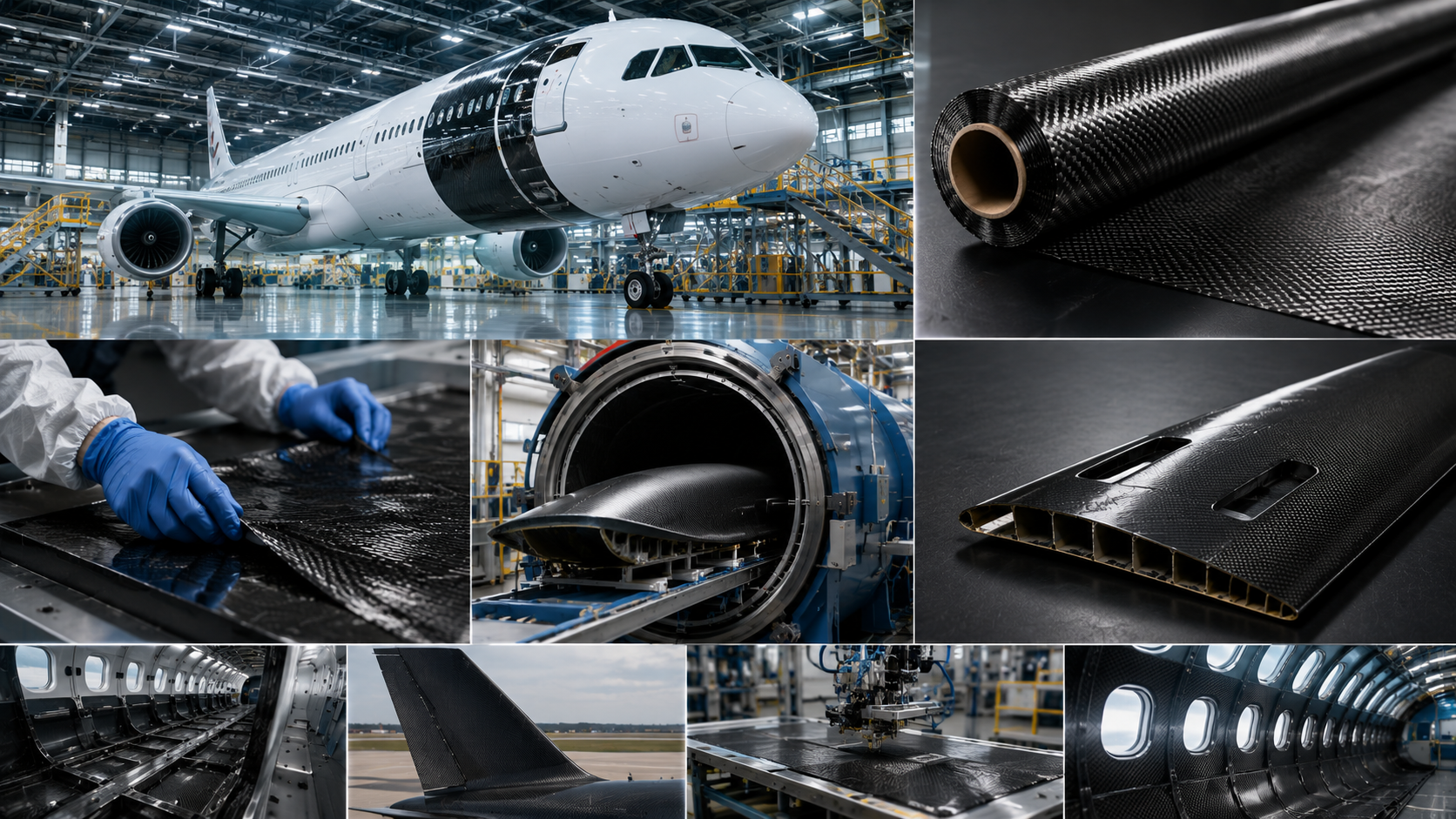
Aerospace and transportation — structural skin panels where every gram of saved weight translates to fuel savings
-
Robotics, drones, and new energy vehicles — lightweight chassis components that need UV and corrosion resistance
Why the Size Creates Real Structural Advantage
A single 4×8 sheet covers a full hood or floor panel with no seams. That matters more than it sounds. Joints are weak points. They add weight. They require bonding time. They introduce failure risk under cyclic load.
CNC nesting across a full 4×8 bed pushes material utilization past 90%. For production runs, the yield gap between 4×8 and smaller formats like 3×3 ft adds up fast.
Sandwich panels built on a 4×8 base — with foam or honeycomb cores infused to 10–20mm total thickness — deliver 2–3× the stiffness of standard single-ply sheets. The added weight is negligible. One panel. No splicing. No compromise.
Standard Carbon Fiber Sheet Sizes: Complete Dimensions Reference (4×8, 24×48 & More)
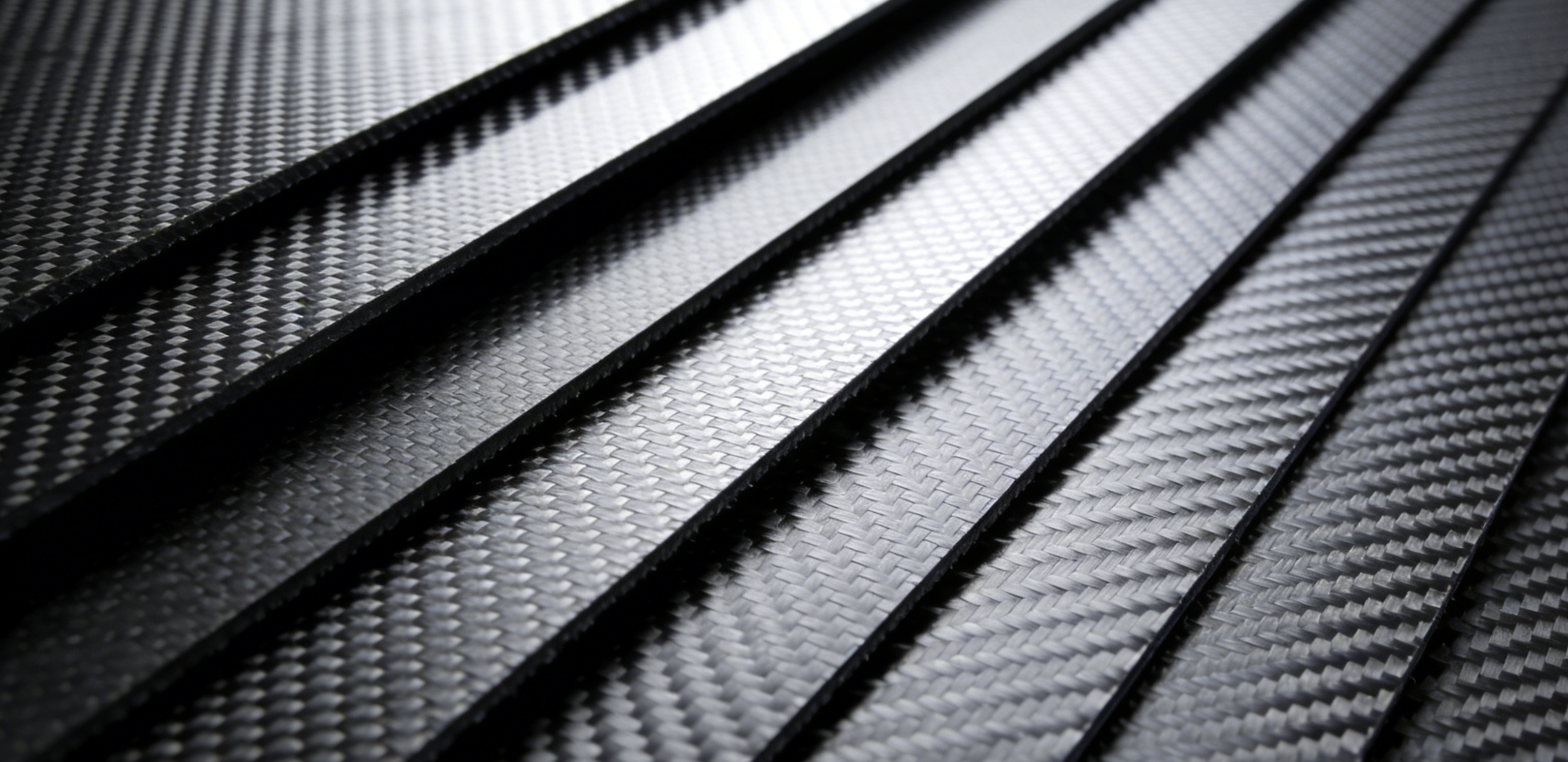
Most fabricators know the 4×8 format. What’s less clear is where it sits in the full lineup — and which nearby size fits a specific application better.
Here’s the complete picture.
Standard Size Reference Table
|
Size (Imperial) |
Size (Metric) |
Common Thickness |
Key Details |
|---|---|---|---|
|
48″ × 96″ (4×8 ft) |
1219 × 2438 mm |
0.050″–1.5″ (1.27–38 mm) |
~10.25 lbs at 0.050″; single-side gloss standard |
|
24″ × 48″ |
610 × 1219 mm |
1/16″–1/8″ (1.6–3.2 mm) |
Uni-directional available; scales to 12×24″ and 24×24″ variants |
|
39.4″ × 39.4″ |
1000 × 1000 mm |
2.5 mm (±0.2 mm) |
3.6 kg; gloss one side, matte reverse; 2/2 fiber orientation |
|
12″ × 12″ |
305 × 305 mm |
0.250″ (6.35 mm) |
Quasi-isotropic plate; T700S fiber; 1.98 lb/ft² |
|
Custom |
400 × 500 mm |
0.2–50 mm |
CNC-cut to drawing; standard repeat format |
|
Large format |
2000 × 1200 mm |
0.2–50 mm |
Maximum single-mold limit for most production processes |
What the Size Limits Mean
Standard production single-block forming tops out at 2000 × 1200 mm. Ultra-long variants — up to 8000 × 3000 mm — are available, but they need custom forging processes and longer lead times.
Past those limits, panels need splicing or sandwich core construction. Splicing works. It does add cost. Joints lose 10–20% strength at the overlap zone. That happens because of fiber discontinuity and resin concentration. This is a consistent result across quasi-isotropic panel testing.
Thickness Ranges Worth Knowing
Thin veneers:
– 0.25 mm, 0.5 mm, 1.0 mm — surface skins, cosmetic overlays, weight-critical panels
Structural range:
– 1.3 mm, 1.7 mm, 2.4 mm, 3.1 mm — load-bearing applications, chassis components
Heavy plate:
– Up to 38 mm (1.5″) in 48×96″ format — tooling, structural blocks, machined parts
Infusion-process sheets carry a tolerance of ±0.2 mm. Build that number into your design margin for any precision-fit assembly. It matters more than most people expect.
Custom Sizing: What It Costs
-
Whole sheets trimmed to spec: +5–10% over standard pricing
-
Net custom dimensions cut to drawing: +15–25% premium; NDA available for proprietary profiles
-
Scrap recovery from offcuts larger than 200×300 mm: You recover 20–40% of material. That cuts repeat-order costs by 10–15%. Set up a blanket purchase agreement if your volumes support it — the savings add up fast.
Carbon Fiber Sheet Weight Chart: Areal Weight by Thickness (0.5mm to 10mm)
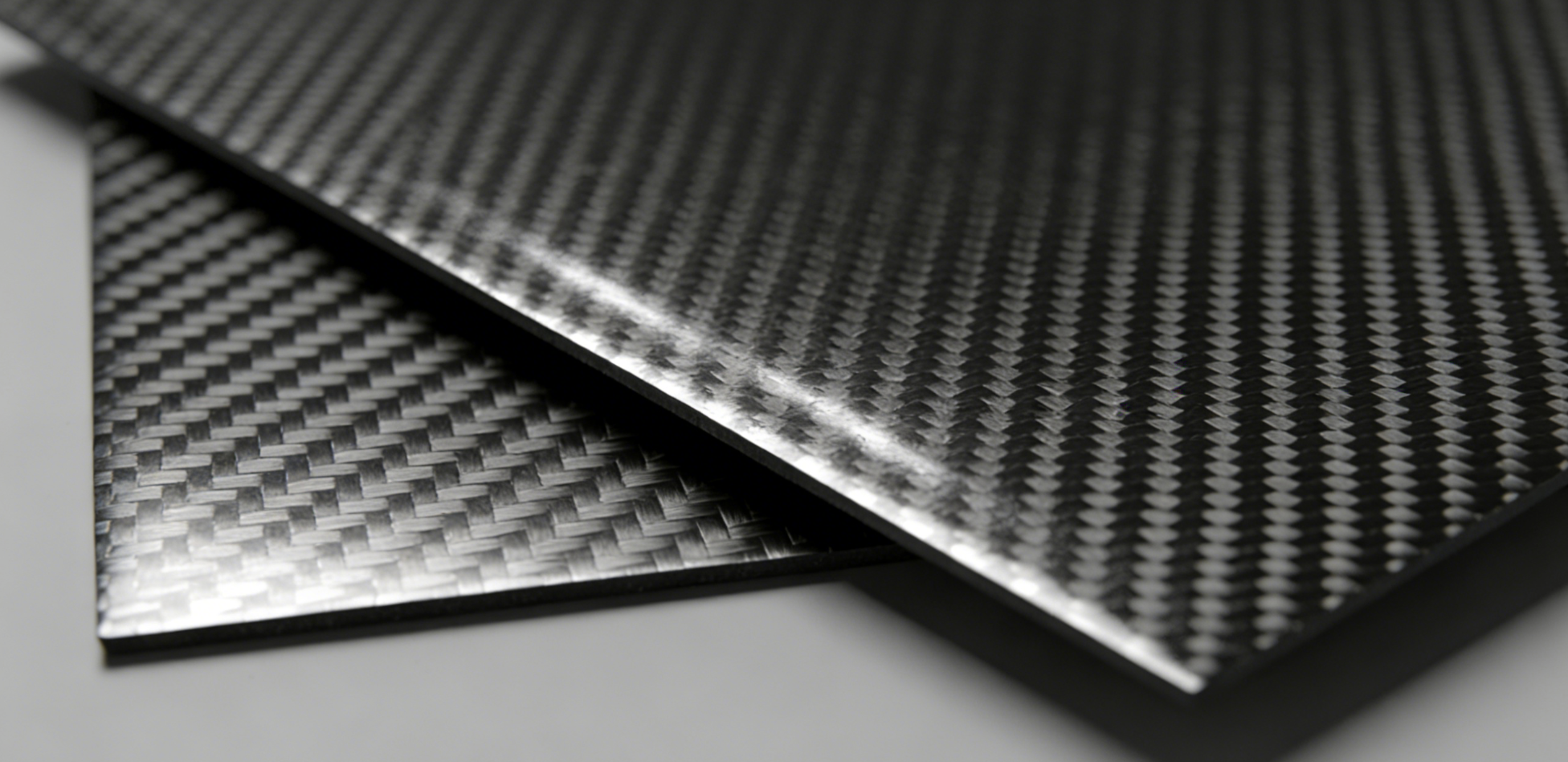
Weight is where carbon fiber makes its argument. Not in tensile charts or marketing decks — in the number on the scale when you pick up the panel.
The density of a carbon fiber sheet runs 1.5 to 1.6 g/cm³. That range isn’t random. Real variables drive it: resin content sits between 30–40%, fiber volume fraction runs between 60–70%, and weave type — plain or 2×2 twill — plays a role too. High resin content pulls density toward 1.5. High fiber volume pushes it toward 1.6. Twill versus plain adds another ±5%. Know your layup, and the weight becomes predictable.
Areal Weight by Thickness
|
Thickness |
Areal Weight (g/m²) |
lbs/ft² |
|---|---|---|
|
0.5mm |
750–800 |
0.154–0.164 |
|
1mm |
1,320–1,600 |
0.27–0.33 |
|
2mm |
2,900–3,200 |
0.59–0.66 |
|
3mm |
4,350–4,800 |
0.89–0.98 |
|
4mm |
5,800–6,400 |
1.19–1.31 |
|
5mm |
7,250–8,000 |
1.49–1.64 |
|
6mm |
8,700–9,600 |
1.78–1.97 |
|
8mm |
11,600–12,800 |
2.38–2.62 |
|
10mm |
14,500–16,000 |
2.97–3.28 |
The math behind these numbers is simple: Areal weight (g/m²) = density (g/cm³) × thickness (cm) × 10,000. A 1mm sheet at 1.55 g/cm³ works out to 1,550 g/m². Resin percentage shifts that figure up or down within the ranges shown.
What a Full 4×8 Sheet Weighs
A 4×8 ft panel covers 3 m². Run the areal weights above through that area and you get:
-
0.5mm — 13–14 lbs
-
1mm — 23–28 lbs
-
2mm — 50–60 lbs
-
4mm — 100–120 lbs
The industry-standard 0.050″ (1.27mm) sheet hits 10.25 lbs for a full 4×8 panel — 0.30 lbs/ft². That number is worth committing to memory if you spec these panels on a regular basis.
The Weight Gap Against Competing Materials
At the same thickness, the numbers tell a clear story:
|
Material |
1mm (lbs/ft²) |
2mm |
10mm |
|---|---|---|---|
|
Carbon Fiber |
0.27–0.33 |
0.59–0.66 |
2.97–3.28 |
|
Aluminum |
0.89 |
1.78 |
8.89 |
|
Carbon Steel |
2.45 |
~4.90 |
~24.5 |
Carbon fiber runs ~40% lighter than aluminum at the same thickness. Against steel, the gap widens to 70–80%. That’s not a small edge. It’s a large enough difference that entire industries rewrote their material specs around CFRP.
Carbon Fiber Sheet Strength Data: Tensile, Flexural & Stiffness by Fiber Grade
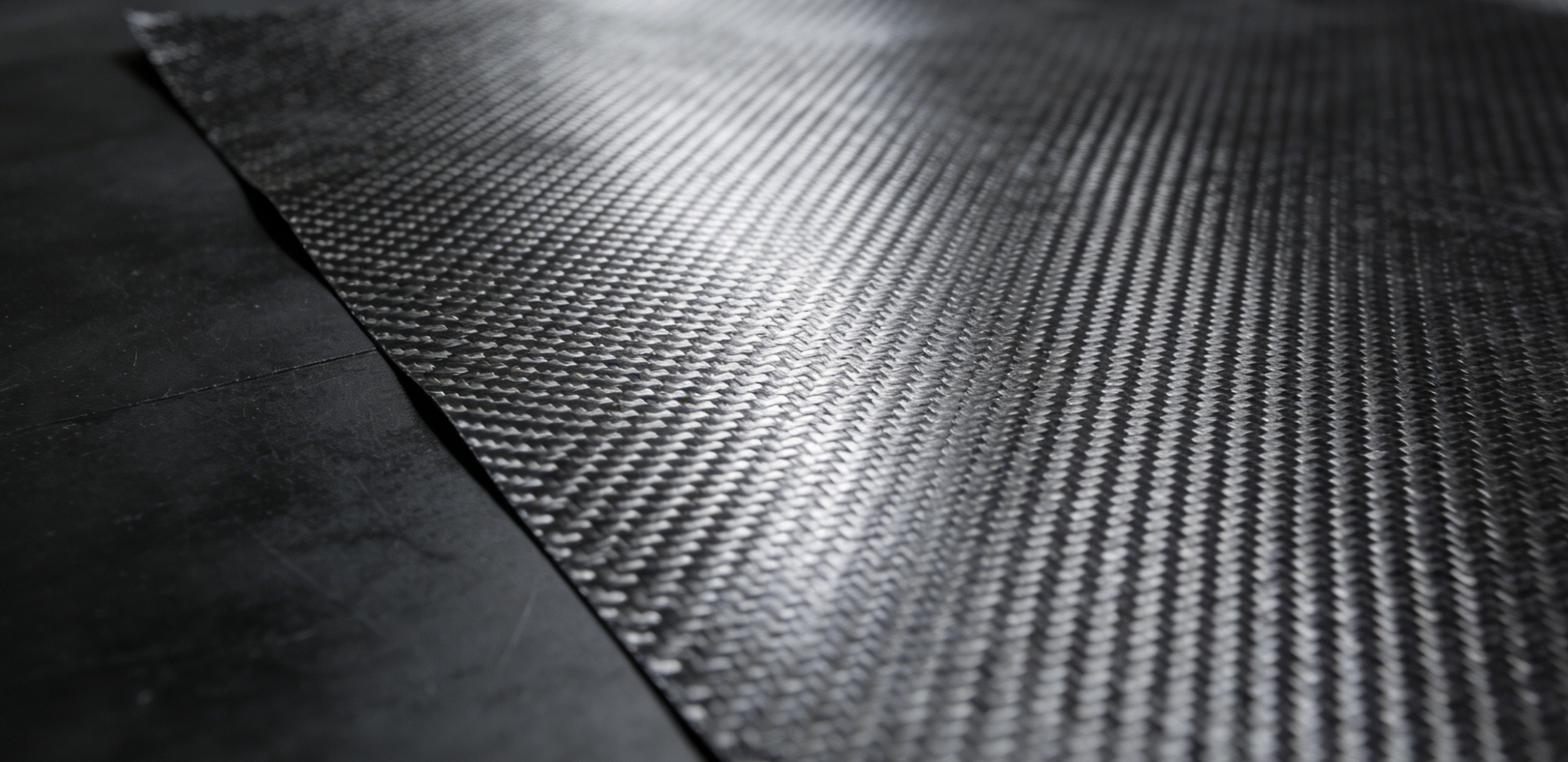
Carbon fiber sheet strength data breaks into two separate problems: what the raw fiber can do, and what the finished laminate delivers. These are not the same number. Sheet values run 50–70% lower than raw fiber specs once resin, voids, and layup geometry enter the equation. Build your design margins around laminate values — not fiber data sheets.
T300, T700, T800: What the Grade Difference Means
Three grades cover most structural applications. Each one trades off cost, tensile strength, and stiffness differently.
|
Grade |
Tensile Modulus (GPa) |
Tensile Strength (MPa) |
Flexural Stiffness (N·m²/m @ 1mm) |
Best Fit |
|---|---|---|---|---|
|
T300 (Standard) |
227–230 |
3,500–5,000 |
0.15–0.25 |
Automotive panels, sporting goods, general aerospace |
|
T700 (Intermediate) |
230–290 |
4,800–7,000 |
0.20–0.35 |
Robotics, pressure vessels, wind turbine blades |
|
T800 (High Modulus) |
290–390 |
4,500–6,400 |
0.30–0.50 |
F1 components, aerospace spars, stiffness-critical drones |
T800 leads on stiffness. T700 wins on raw tensile strength. T300 gives you the best cost-per-performance ratio for work that doesn’t push either extreme. Most carbon fiber composite sheet buyers land on T700. It hits the right balance for high-load structural work without the T800 price premium.
The Thickness-Cubed Rule for Flexural Stiffness
This is the number that catches engineers off guard the first time.
Flexural stiffness scales with the cube of thickness — not in a straight line. The formula is: D = (E × t³) / 12(1-ν²). Poisson’s ratio for CFRP is around 0.3. The real-world result is dramatic:
-
T300 sheet at 1mm: D ≈ 0.20 N·m²/m
-
T300 sheet at 2mm: D ≈ 1.60 N·m²/m — an 8× increase from doubling thickness
-
T300 sheet at 0.5mm: D ≈ 0.025 N·m²/m — one-eighth of the 1mm value
Double the thickness, you get eight times the stiffness. Cut it in half, you lose seven-eighths. Deflection is the main design constraint for drone frames, robotic arms, and structural skins. In those cases, carbon fiber sheet thickness does more mechanical work than grade selection alone.
Specific Strength: Why CFRP Outclasses Metals
|
Material |
Density (g/cm³) |
Tensile Strength (MPa) |
Specific Strength (MPa/g/cm³) |
|---|---|---|---|
|
CFRP (T300) |
1.55 |
300–3,500 |
194–2,258 |
|
Aluminum 6061-T6 |
2.70 |
310 |
91–115 |
|
S235 Steel |
7.85 |
360–510 |
46–65 |
Carbon fiber tensile strength per unit weight runs 3–20× higher than aluminum and steel. At equal strength, a CFRP panel weighs about one-fifth of a steel equivalent. That gap is why prepreg carbon fiber sheet specs have replaced metals across aerospace, motorsport, and advanced robotics. Not as a premium choice — as the structurally sound one.
One hard limit to keep in mind: CFRP is brittle under compression. Plan your design around that. It does not swap in cleanly for ductile metals in impact-heavy or energy-absorption roles.
FAQ: Top Questions About Carbon Fiber Sheet Sizes, Weight & Ordering
Procurement stalls for a reason. These are the questions that cause it.
What’s the largest standard sheet size available?
Single-panel production tops out at 2,000 × 1,200 mm. The 4×8 ft format (48 × 96 inches / 1,220 × 2,440 mm) fits within that limit and ships as a standard stock item. Need to go bigger? Honeycomb sandwich construction gets you there. No flat laminate splicing needed.
Is there a minimum order quantity?
No strict MOQ. Single panels work fine for prototyping. Volume discounts kick in above 10 panels. Custom layups start from one piece.
Can the 4×8 sheet be cut down further?
Yes. CNC and waterjet both handle it with clean edges and no delamination. Post-cut thickness tolerance holds at ±0.2 mm (P2 class). Flatness stays at 1.0 mm/m. That’s tight enough for industrial jigs and UAV structural components.
How do I calculate sheet weight?
Multiply areal weight (g/m²) by panel area. A 1mm sheet runs at 600 g/m². A 3×3 ft panel at 2mm comes out to 7.1 lbs. Use a density of 1.55–1.6 g/cm³ as your baseline. Adjust from there based on resin content.
What thickness tolerances should I specify?
Three classes cover most applications:
– P0 — ±0.05 mm: precision aerospace and robotics
– P1 — ±0.10 mm: UAV structural standard
– P2 — ±0.20 mm: industrial panels and general fabrication
Do sheets carry certifications?
RoHS compliance is standard across all panels. Need UL certification? We can arrange it on request for specific resin systems. Flame-retardant resin is also an option — just specify it at order. Resin content tolerance holds at ±2%.
Conclusion
Choosing the right carbon fiber sheet isn’t just a spec decision — it’s an engineering commitment.
Sourcing a carbon fiber sheet 4×8 for a structural aerospace panel? Or cutting down a smaller blank for a precision robotics frame? Either way, the variables that matter most stay the same: thickness, weave, fiber grade, and resin system. Get them right, and you have a material that outperforms steel at a fraction of the weight. Get them wrong, and no high-end finish will save your project.
The data in this guide gives you a solid foundation. The next step is yours.
Tell us your application, dimensions, and load requirements. Our team at HyperX Carbon will match you with the exact specification. We cut to size. No guesswork, no back-and-forth.
Because the best carbon fiber sheet isn’t the most expensive one. It’s the right one.
Contact HyperX Carbon – Your Trusted Chinese Carbon Fiber Partner
Ready to source high-performance carbon fiber materials or custom forged carbon fiber parts from China?
HyperX Carbon is a leading manufacturer with 20+ years of expertise, specializing in aerospace-grade forged carbon fiber, prepreg, tubes, sheets, and lightweight automotive/drone/medical components. We offer:
-
Stable supply chain with premium raw materials (Toray, Mitsubishi, Hengshen)
-
AS9100D certified production for aerospace & UAV applications
-
Rapid prototyping (5-8 weeks) and monthly capacity exceeding 180,000 parts
-
Competitive pricing with 15-18% cost savings on forged carbon solutions
-
Full customization: from T700/T1100G to ultra-high modulus grades
Whether you’re an eVTOL developer, automotive OEM, drone manufacturer, or medical device engineer, HyperX delivers consistent quality, batch-to-batch reliability, and reliable delivery.
Get in touch today for a free consultation, custom quote, or material sample.
📧 Email: [email protected]
🌐 Website: https://www.hyperxcarbon.com/
📞 Phone/WhatsApp: +86 15623270276 (English support available)
Let’s build your next lightweight innovation together – contact HyperX Carbon now and stay ahead in the low-altitude and advanced composites market.