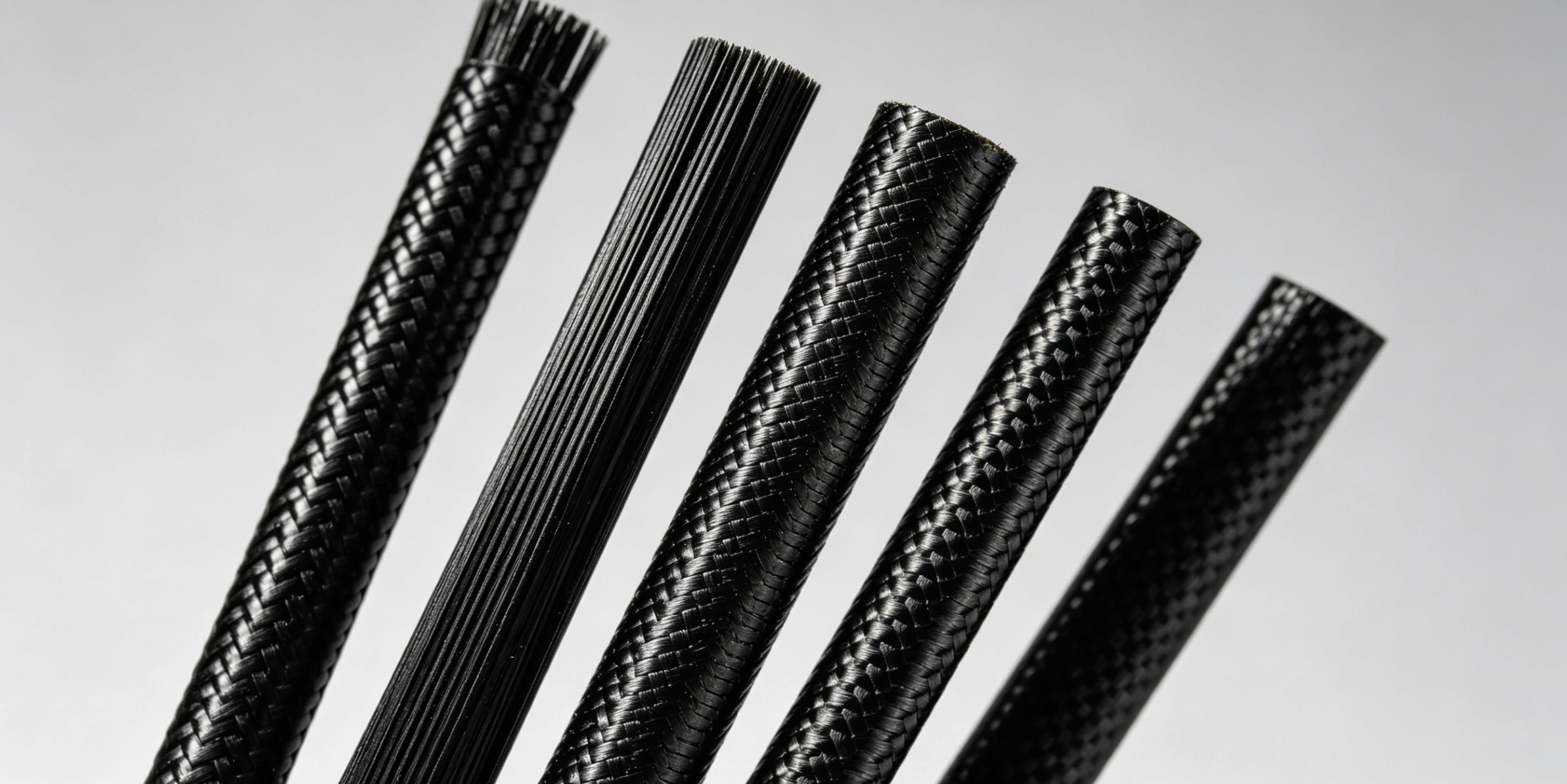
Structural engineers and racing teams don’t ask “should we use carbon fiber?” anymore. The real question is “which carbon fiber panel, and why?” That difference matters a lot.
A carbon fiber laminate sheet, a sandwich panel, and a honeycomb board may all carry the CFRP label. But they perform like different materials under load, in fabrication, and on the invoice.
This guide gives you the full picture: real performance numbers, honest trade-offs, and a clear framework for picking the right panel type. You’re building something that flies, races, floats, or supports a façade — the right choice depends on your specific application.
What Is a Carbon Fiber Laminate Sheet — Structure, Specs & Material Grades
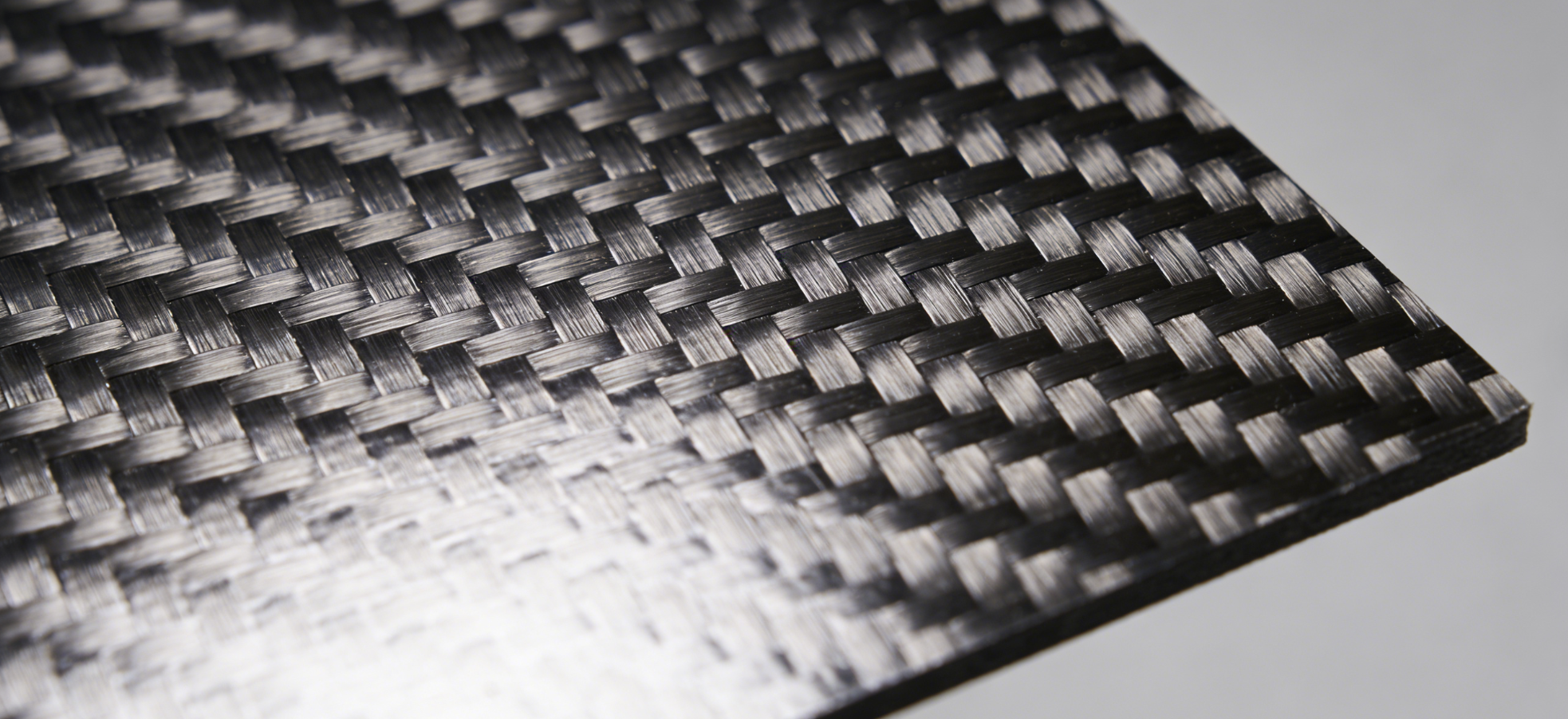
A carbon fiber laminate sheet is a stack of fiber plies bonded with epoxy resin. Heat and pressure cure everything into one solid, rigid panel.
Each ply holds fiber reinforcement at a set angle. Line up enough plies in the right order, and you get a material stiffer than steel — yet it weighs about half as much as aluminum.
How the Layers Come Together
The laminate builds from individual plies. These are thin sheets of carbon fiber, either pre-saturated with resin or dry fabric ready for infusion. Standard ply thickness starts at 0.003″ for lightweight 1k woven fabric and goes up to 0.030″+ for heavy-duty 12k stitched unidirectional.
A typical 0.067″ sheet uses a 3k/12k/12k/3k layup schedule. Thin surface plies wrap around thicker structural cores in the middle. Resin content plays a big role here. Prepreg systems carry 35–42% resin by weight, which gives you higher fiber volume and more consistent mechanical properties than wet layup methods (45–55%).
Fiber Orientation: Where Performance Is Decided
-
Unidirectional (UD): Delivers maximum stiffness along one axis. Standard modulus 3K tow hits 33,000,000 psi — the go-to choice for primary load paths in aerospace and motorsport structures.
-
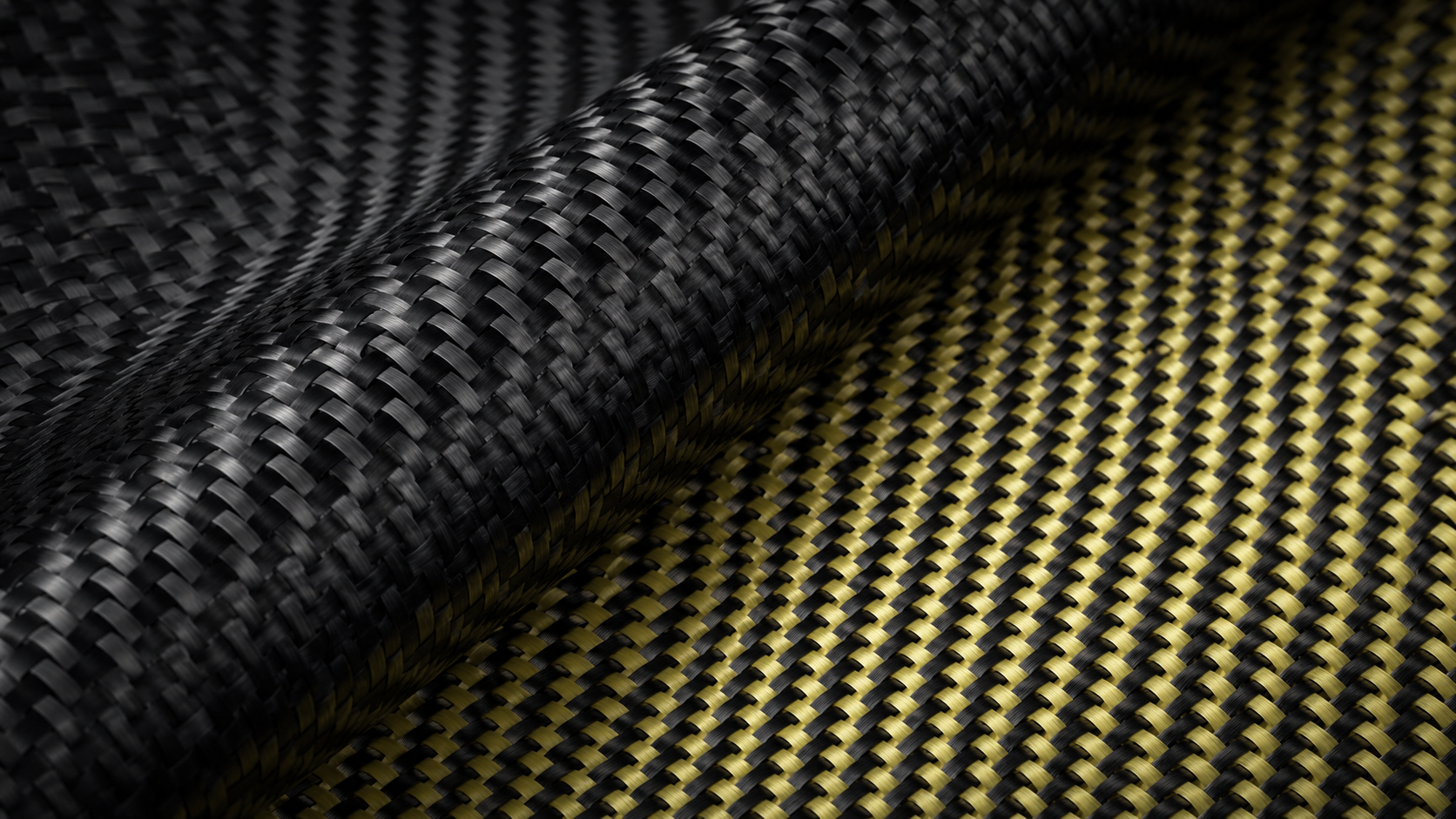
2×2 Twill Woven: Runs at balanced 0°/90° orientation. The pattern is symmetrical, stable, and easy to recognize. This works well for quasi-isotropic laminates that need consistent strength in multiple directions.
-
Multiaxial: Alternating ply angles spread stress evenly across the panel. A solid pick for parts that take loads from multiple, hard-to-predict directions.
Key Specs at a Glance
|
Property |
Value |
|---|---|
|
Density |
1.5 g/cm³ |
|
Available thickness |
0.008″ – 0.880″ |
|
Standard sheet size |
Up to 48″ × 96″ |
|
Matrix |
Thermoset epoxy |
|
Fiber modulus (3K) |
33,000,000 psi |
Here’s a useful sizing reference: 200g carbon fabric gives you 0.20–0.22mm of cured laminate. Step up to 650g, and you land at 0.65mm. Engineers use this relationship to work backward — figuring out the ply schedule from a target thickness before a single piece of fabric gets cut.
What Is a Carbon Fiber Sandwich Panel — Core Types & Bending Stiffness
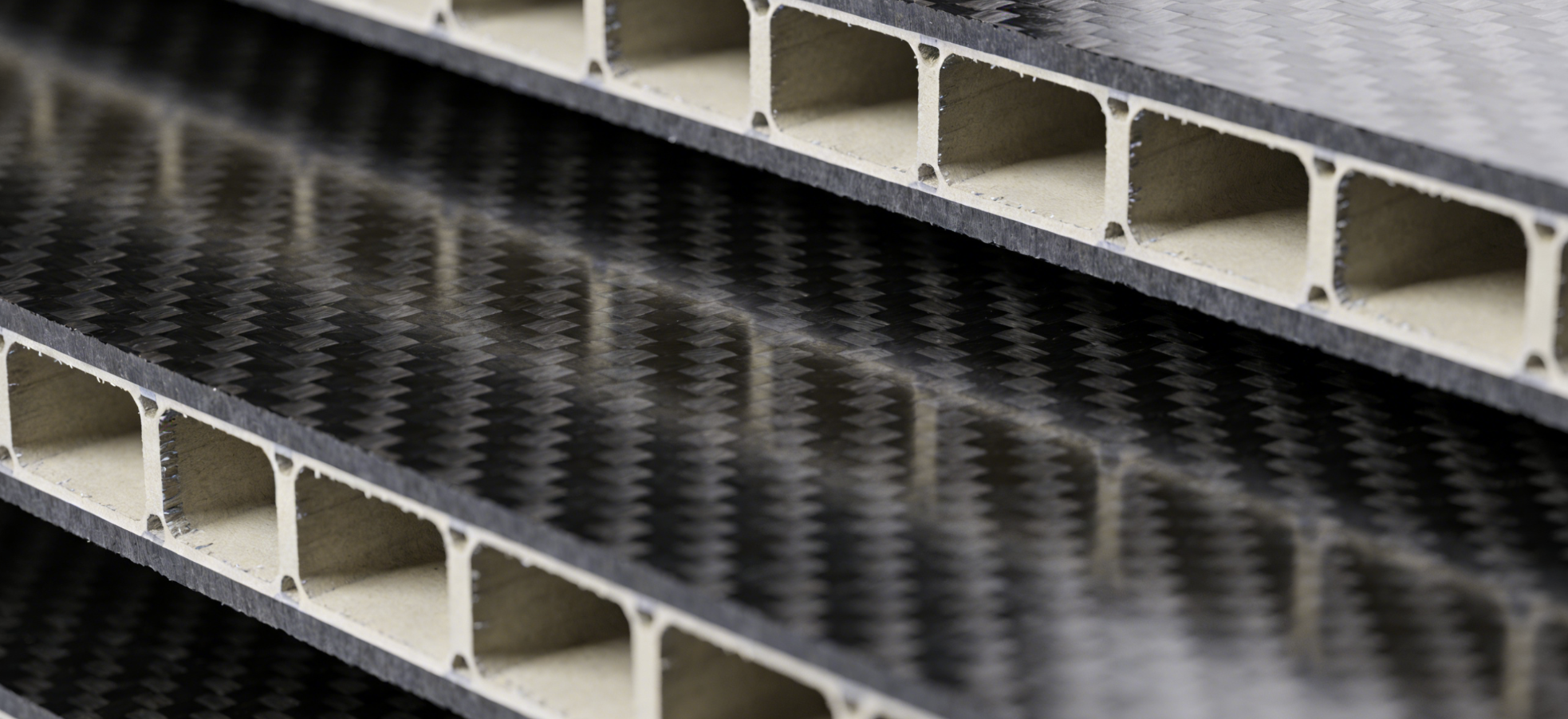
The physics here is borrowed from the I-beam. Two thin CFRP laminate skins sit on either side of a lightweight core — and that separation is what does the work.
Think of it this way: bending stiffness scales with the cube of total thickness (D ∝ h³). Double the core thickness, and stiffness doesn’t double. It multiplies by eight. A carbon fiber sandwich panel beats a solid laminate at a fraction of the weight. The skins act as flanges. The core acts as the web. The moment arm between them carries the structural load.
Core Types: What Lives Between the Skins
Not all cores are equal. Your choice drives weight, cost, and real-world performance.
-
Foam (PVC/PMI — e.g., Gurit Corecell M80): Closed-cell structure, low water absorption, strong adhesion to CFRP skins. It handles high dynamic and cyclic loads well. Cost runs lower than honeycomb, and thermal insulation is better. Heat tolerance begins to drop around 177°F (81°C) — worth checking for high-temp applications.
-
Nomex Aramid Honeycomb: The weight-to-strength standard in aerospace. Fire-retardant, impact-resistant, and cells stay free of resin pooling. Smaller hex cells give you higher compressive stiffness — bisected hex geometry outperforms standard hex. Helicopter rotor blades and curved nacelle panels use this core because you can dial in cell size to match the structural load.
-
Aluminum Honeycomb (e.g., HexWeb CR III): Stiffer and heavier than aramid. Strong — but galvanic corrosion makes it a poor match for direct CFRP contact. Keep it for non-CFRP assemblies.
-
End-Grain Balsa: Conforms to curves better than honeycomb. Compressive strength is lower. That makes it a solid choice for marine hulls and gradual compound forms, but not for aerospace primary structure.
Choosing the Right Core
|
Core |
Weight |
Compressive Strength |
Best For |
|---|---|---|---|
|
Foam (PMI/PVC) |
Low |
Moderate |
Dynamic loads, insulation needs |
|
Nomex Honeycomb |
Very low |
High |
Aerospace, UAV frames, flat rigid panels |
|
Aluminum Honeycomb |
Moderate |
Very high |
Non-CFRP structural builds |
|
End-Grain Balsa |
Moderate |
Low–moderate |
Marine, curved surfaces |
Skins get wet-out and bonded in a single process using epoxy systems — PRO-SET INF-114/213 is a common infusion choice. Layups run symmetric and balanced to prevent warping under cure.
One rule holds across all core types: higher core density and smaller cell size means stiffer panels. The tradeoff is weight and cost. Match the core to your load path, not your preference.
What Is a Carbon Fiber Honeycomb Panel — Ultra-Lightweight Rigidity Explained
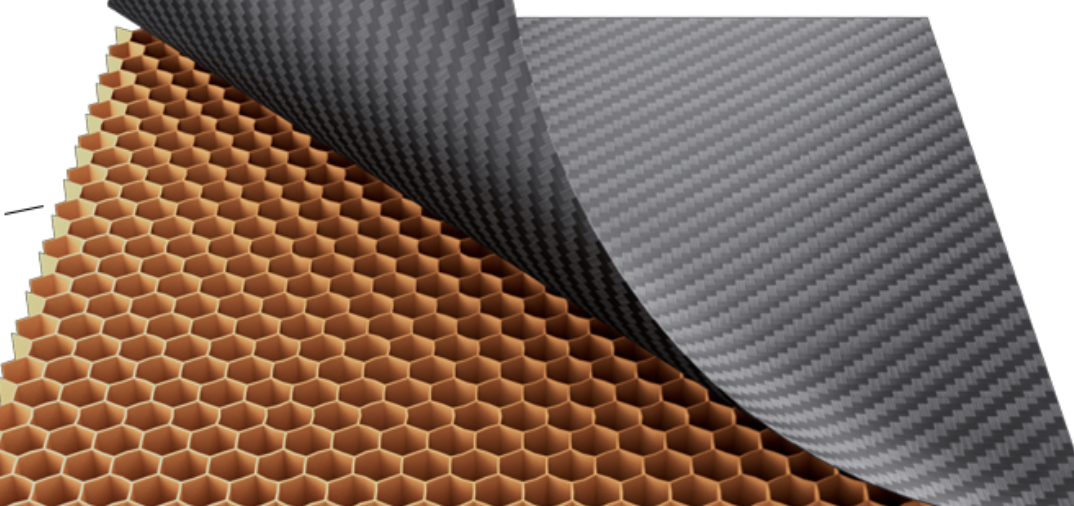
Cut one open and the cross-section tells you everything: two thin carbon fiber skins, a honeycomb core in between, and almost nothing else. That “almost nothing” is the point.
The core geometry does the heavy lifting. Hexagonal cells run straight between the skins. Their walls brace each other under load. That mutual support is why honeycomb cores beat foam and corrugated alternatives in out-of-plane compression and shear — not by a small amount, but by a real structural margin. A 0.5″ aluminum honeycomb core panel supports body weight without failure. The same stiffness in solid carbon fiber costs you 70–80% more mass.
The load path follows I-beam logic. Skins handle tension and compression. The core resists shear. Bending rigidity climbs fast as core thickness increases — the cube relationship that governs sandwich panels applies here too. The core is also lighter than anything else you could place between those skins.
Two performance advantages don’t get enough attention:
-
Vibration damping: The sealed air pockets and cellular walls convert sound waves into heat. Solid laminates don’t do this.
-
Dimensional stability: Carbon fiber has a naturally low CTE. Locked into a stable honeycomb geometry, these panels become the go-to choice for satellites, optical platforms, and precision instruments. In those applications, thermal movement is a failure mode.
Where Honeycomb Panels Go to Work
The DarkAero 1 aircraft uses carbon fiber honeycomb panels for wing ribs, tail ribs, and fuselage bulkheads. These components carry real structural loads at high temperatures. They also keep the airframe as light as possible. CNC-routed 4×8 sheets get cut into shear webs and fuselage bulkheads. You get clean edges and no delamination.
Honeycomb Panel vs. Solid Carbon Fiber: The Real Differences
|
Aspect |
Honeycomb Panel |
Solid Carbon Fiber |
|---|---|---|
|
Core |
Hexagonal Al / Nomex / CF |
Full prepreg stack |
|
Stiffness-to-weight |
High (I-beam geometry) |
Lower — heavier for equal stiffness |
|
Vibration damping |
Strong — wave-to-heat conversion |
Minimal |
|
Machinability |
Mills, routes, drills with clean results |
More limited |
|
Cost |
Higher |
Lower |
Building one of these panels takes more steps than solid carbon fiber. First, mold to dimension. Then lay the base carbon skin with perimeter strips. Drop in the cut honeycomb core. Seal the top skin. Cure under heat. Then trim. Six steps total. Each one matters for the bond between skin and core. A debonded skin means the panel has failed — and it won’t show from the outside.
Head-to-Head Performance Comparison: Laminate Sheet vs. Sandwich Panel vs. Honeycomb Panel
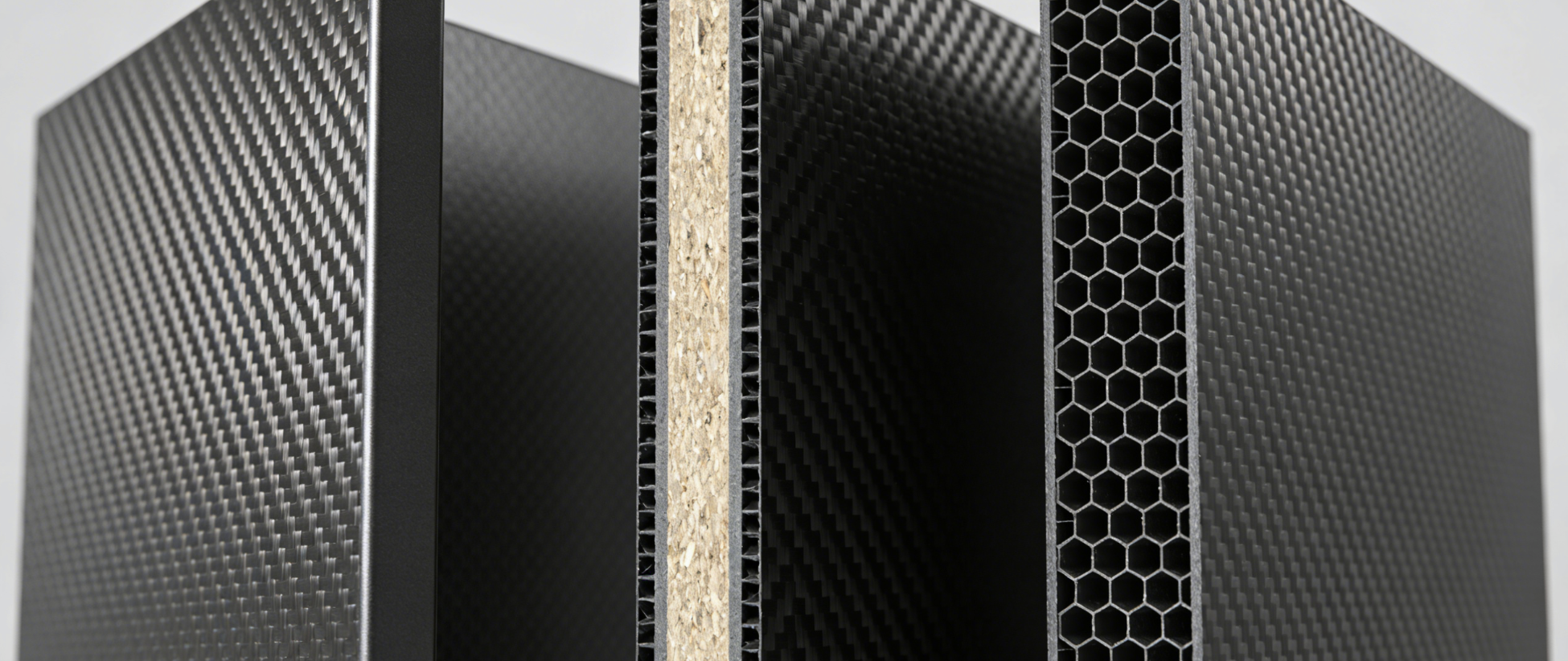
Numbers settle arguments faster than opinions. Here’s what the data shows with all three panel types side by side.
|
Property |
Laminate Sheet |
Sandwich Panel (Foam Core) |
Honeycomb Panel (Al/Nomex) |
|---|---|---|---|
|
Density |
1.5–2.5 g/cm³ |
35–45 kg/m³ core |
29–80 kg/m³ core |
|
Specific strength vs. baseline |
Baseline |
+20–40% |
+40–60% |
|
Specific stiffness |
Moderate |
High |
Outstanding — 2–3× laminate at equal weight |
|
Bending resistance |
Good in-plane |
≥2.5 MPa flexural |
+12.6% ultimate shear vs. standard |
|
Impact toughness |
Moderate |
Good energy absorption |
High — increased bond strength resists delamination |
|
Max panel size |
48″ × 96″ standard |
Up to 13m × 3.2m |
Up to 6m × 2.5m |
|
Processability |
Excellent |
Fully customizable |
Complex — higher cost |
What Those Numbers Mean in Practice
Honeycomb panels lead on specific stiffness. At the same weight, you get 2–3× the stiffness of a solid laminate. That’s not a small gap. It’s why aerospace engineers choose honeycomb for spacecraft floors and optical platforms. In those applications, flex is a failure — not just a design issue.
Sandwich panels handle bending loads best. A foam-core sandwich panel reaches ≥2.5 MPa flexural strength. It holds L/360 deflection at a 137 cm span under 4.79 kPa load. Axial capacity runs 158% higher than standard stud-wall construction. For large structural panels in trucks, buildings, or marine hulls, that number is what you care about.
Laminates are built for in-plane tension. No core to debond. No cell walls to crush. For direct axial loads — a spar cap, a bracket, a torsion plate — solid CFRP laminate is the cleaner choice.
How Each Panel Stacks Up Against Traditional Materials
-
vs. Aluminum 6061-T6: CF honeycomb cuts weight 50–70% at equal stiffness. You get the same strength at just 40% of the mass.
-
vs. Steel: CF sandwich drops weight 60–80% at matched bending stiffness. Honeycomb pushes stiffness-to-weight 200% past steel’s limit.
-
vs. GFRP: CF panels run 40–60% lighter at equal rigidity. Honeycomb compressive strength doubles that of GFRP-faced alternatives.
The choice follows a clear pattern: tensile load paths go to laminates, bending-heavy structures go to sandwich panels, and extreme lightweight-plus-stability needs go to honeycomb.
Aerospace & Defense Applications: Why CFRP Panels Are the Industry Standard

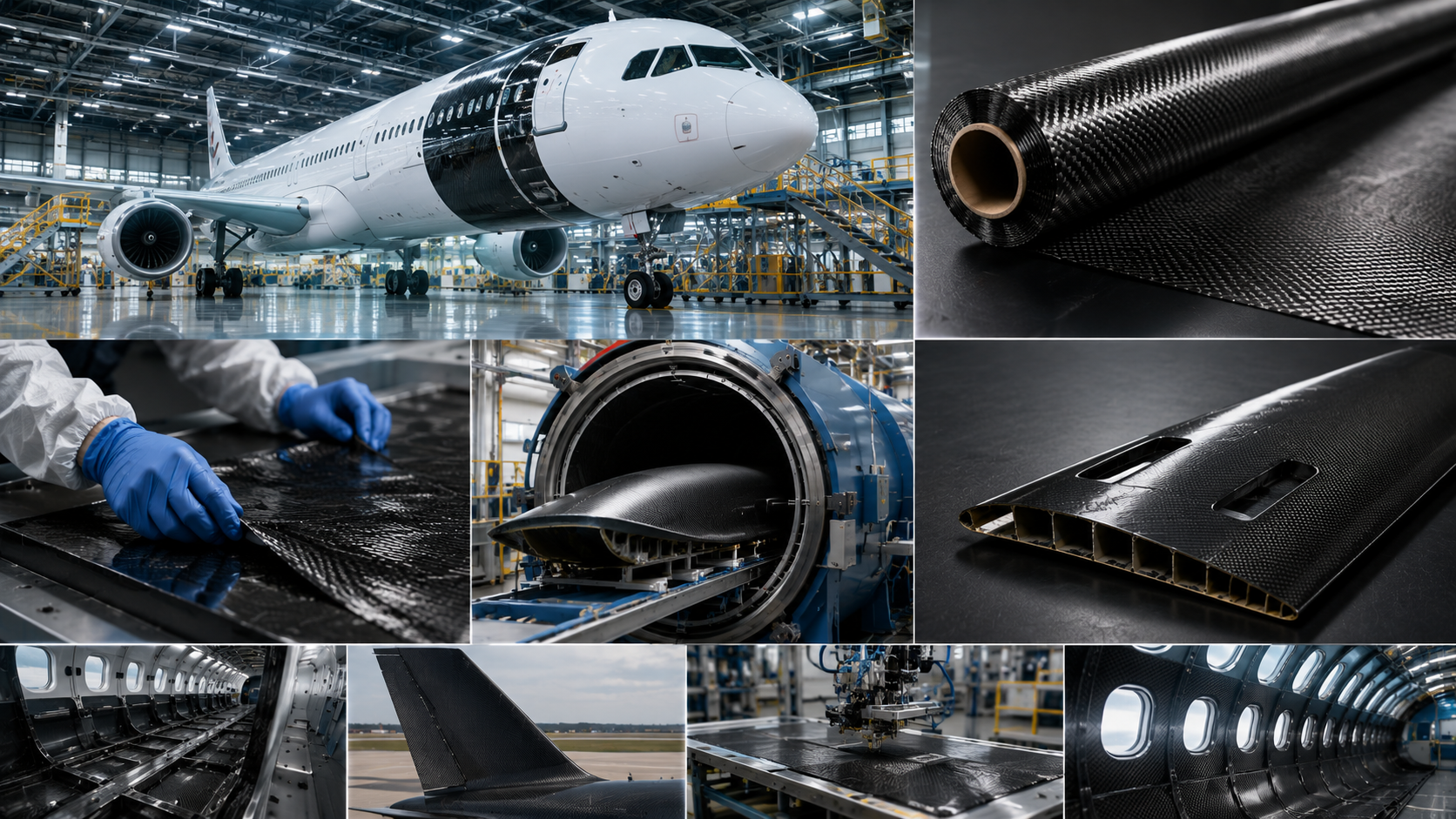
The Boeing 787 Dreamliner is 50% carbon fiber by weight. That one fact tells you why every serious aerospace program now builds around CFRP panels.
The numbers are simple. CFRP versus aluminum: 50% lighter, 25% stiffer. In aircraft and drone design, that gap translates to 10–15% more payload or range. Fuel burns less. Missions go further. The math speaks for itself.
Where Each Panel Type Gets Deployed
Each airframe has different needs. Different demands call for different panel setups:
-
Wing skins: Unidirectional CFRP laminates. Chosen for their stiffness-per-kilogram edge over aluminum. You get real fuel efficiency gains on long-haul routes.
-
Satellite structures: High-modulus CFRP panels rated to 350°C. They keep thermal expansion in check and hold structural integrity through orbital thermal cycling.
-
UAV airframes: Quasi-isotropic CFRP laminates give you lightweight rigidity. That means longer flight time and greater tactical range.
-
Armor panels: Ceramic-faced CFRP with Kevlar backing. MIL-DTL-62474B certified. Stops Level III–IV rifle rounds. Delivers 30% weight savings over steel and doubles energy absorption per kilogram.
-
Propellant tanks: Polyimide-matrix CFRP. Holds structural integrity above 300°C in oxidation-rich environments.
Certification: Civil vs. Military Standards
Civil and defense applications follow two very different qualification paths.
Civil aviation (FAA/EASA/AS9100) requires ASTM D3039 tensile, D7264 flexural, and D6484 compression testing. Tests run across both ambient and elevated temperatures. Glass transition temperature must stay 50–100°C above service temperature. The main focus is long-term fatigue resistance and preventing delamination.
Military specs go further. MIL-DTL-62474B governs ballistic CFRP. Panels must pass dynamic mechanical analysis, TGA/DSC decomposition testing above 400°C, thermal cycling, and oxidation resistance testing. Field repair is not part of the plan — military panels are built to absorb overloads, not to be patched on-site.
One rule holds across both tracks: no universal composite standard exists. Each application needs a site-specific review and a full, documented qualification trail.
Automotive, Racing & EV Applications: Weight Reduction That Translates to Performance
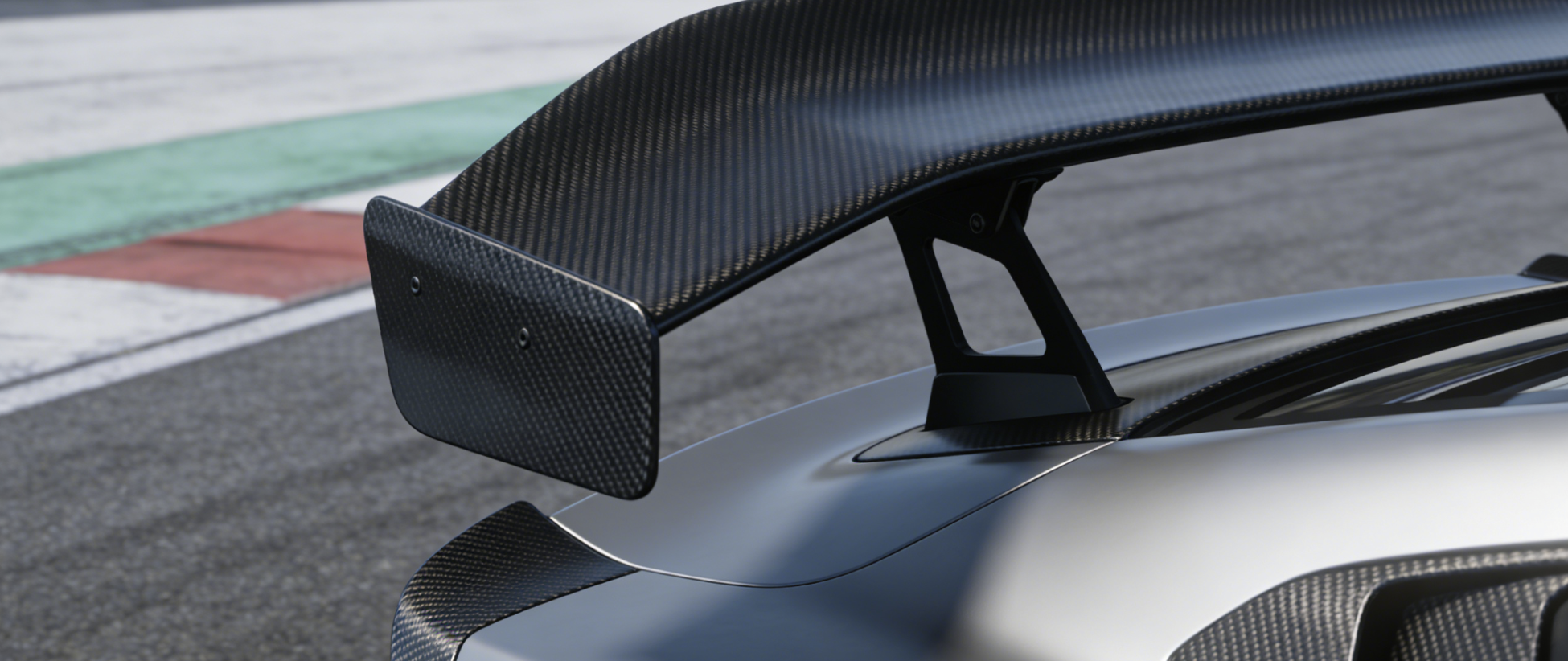
Shave 100kg off a 2,800lb sports car and you get a different machine — not just a lighter one. Zero to 60mph drops by 0.3–0.5 seconds. Stopping distance from 60mph shortens by 5–7 feet. That’s the same gain as a 10% horsepower upgrade. Except you did it by removing material, not adding it.
Carbon fiber panels are how serious automotive programs make that math work.
How Racing and Luxury Programs Split the Load
F1 monocoques don’t use one panel type. They use two — and that choice is intentional.
The primary survival cell runs prepreg carbon/epoxy laminate sheets — 1–2mm thick. These handle tensile strength and crash energy absorption. The non-critical zones use Nomex or aluminum honeycomb sandwich panels, 10–20mm thick. They deliver stiffness-to-weight ratios up to 5× steel at one-fifth the mass.
Mercedes S-Class doors and hoods follow the same logic. CFRP laminate outer skins handle surface finish and impact resistance. Honeycomb cores sit inside for panel rigidity and a 20dB NVH reduction. BMW i3 and i8 push it further. Their aluminum honeycomb roof and hood panels deliver bending stiffness three times that of aluminum sheet at 40% less mass.
Where EVs Change the Equation
Battery enclosures need something ICE vehicles never did: EMI shielding built into the structure itself.
Carbon fiber sandwich panels — carbon facesheets over Rohacell or Nomex cores — cut enclosure weight 30–50% versus aluminum. That’s 15 kg/m² against 25 kg/m². Conductive carbon fiber combined with copper mesh woven into the core hits greater than 60dB attenuation across 1–10GHz. That beats aluminum. At 40% less weight. With no assembly seams. Manufacturing cost drops by around 20%.
The BMW i3 battery tray in CFRP honeycomb holds a 16kWh pack at 120kg. An equivalent aluminum tray weighs closer to 200kg. Tesla’s structural pack in CFRP saves 100kg. That 100kg translates to a 15% range gain.
Drop the battery tray mass and the center of gravity falls 10–15cm. Handling improves with zero suspension changes.
The ROI Benchmark Worth Keeping
|
Mass Reduction |
Acceleration |
Braking |
Efficiency |
|---|---|---|---|
|
100kg |
0.2–0.3s off 0–60mph |
5–7ft shorter from 60mph |
4–5% energy reduction (EV) / 1–2% fuel (ICE) |
|
10% total mass |
Equivalent to +10% horsepower |
2–4ft per 100lb |
6–8% fuel economy gain |
For fleet programs, the numbers compound fast. Save 11kg per engine across 70 million units and you get 908 million liters of fuel not burned.
That’s what carbon fiber composite panels deliver. Not a weight number on a spec sheet. A real, permanent performance shift across every dimension that matters.
Marine, Architecture & Other High-Performance Use Cases
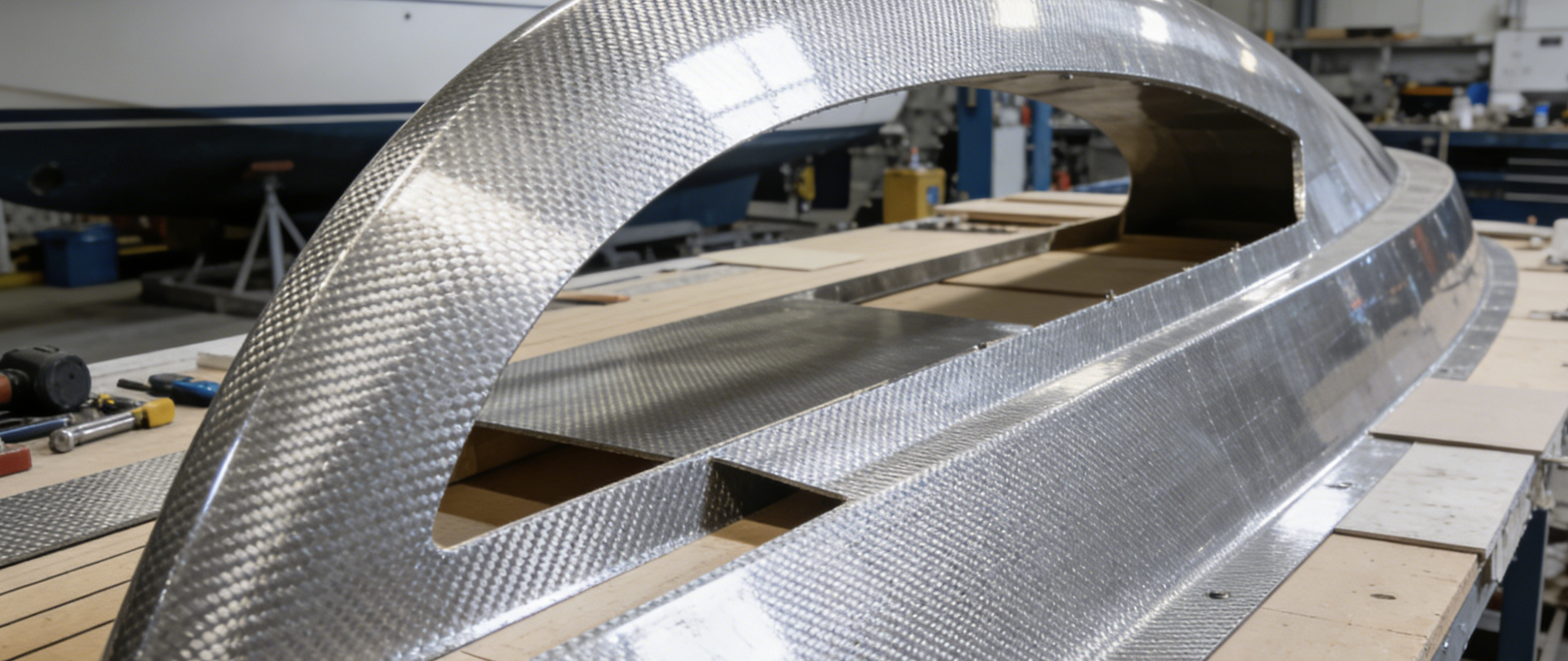
Salt water doesn’t forgive weak materials. After 10–15 years of saltwater exposure, GRP hulls develop galvanic corrosion. CFRP hulls don’t.
That corrosion resistance is only the start. Carbon fiber laminate sheets in marine hulls reach tensile strength above 2,000 MPa. That’s four to six times what GRP delivers. Hull weight drops 50–70%. Fatigue life runs 2–3× longer under cyclic wave loading. Deck panels weigh 40% less and operate at a modulus of 230 GPa versus GRP’s 20–40 GPa. For offshore racing yachts and performance cruisers, these aren’t small steps forward. They’re the gap between staying competitive and becoming obsolete.
On land, CFRP composite panels are changing what structural engineers expect from a building material. Curtain wall mullions in CFRP profiles cut weight by 60% versus aluminum. Thermal expansion sits at one-fifth that of steel. That matters on high-rise facades, where temperature swings cause warping, cracking, and joint failure over time. High-rise grid systems at Burj Khalifa scale hit a stiffness-to-weight ratio 5× aluminum, with dimensional change under 0.1% at a 50°C temperature shift. For bridge seismic retrofitting, you wrap the structure with 0.5–2mm CFRP laminates, cured at 60°C. Load capacity goes up 50%. Structural ductility improves by 50% too.
The range of uses keeps growing:
-
Drone frames: CFRP honeycomb cores run 10–20mm thick with 0.2mm skins. Panel density hits just 0.1–0.3 g/cm³. The DJI Matrice series uses this build to gain +30% payload capacity and +40% flight time.
-
Cycling: CFRP tubes weigh 250–300g. Aluminum tubes weigh 800g. You also get 200% higher stiffness and 50% better vibration damping. Tour de France margins don’t come from legs alone.
-
Paddleboards: A CFRP honeycomb board weighs 6–8 kg. The GRP version runs 15–20 kg — and delivers half the bend strength.
|
Material |
Density (g/cm³) |
Tensile Strength (MPa) |
Fatigue Cycles (×10⁶) |
|---|---|---|---|
|
CFRP |
1.5–1.8 |
1,500–3,500 |
10–20 |
|
GRP |
1.8–2.0 |
300–800 |
3–5 |
|
Steel |
7.8 |
400–1,000 |
1–2 |
|
Aluminum |
2.7 |
200–500 |
5–10 |
The pattern holds across every use case. Lightweight structural composite panels beat traditional materials — not in one area, but across all of them at once: strength, fatigue life, corrosion resistance, and dimensional stability.
How to Choose the Right Carbon Fiber Panel: A Practical Selection Guide
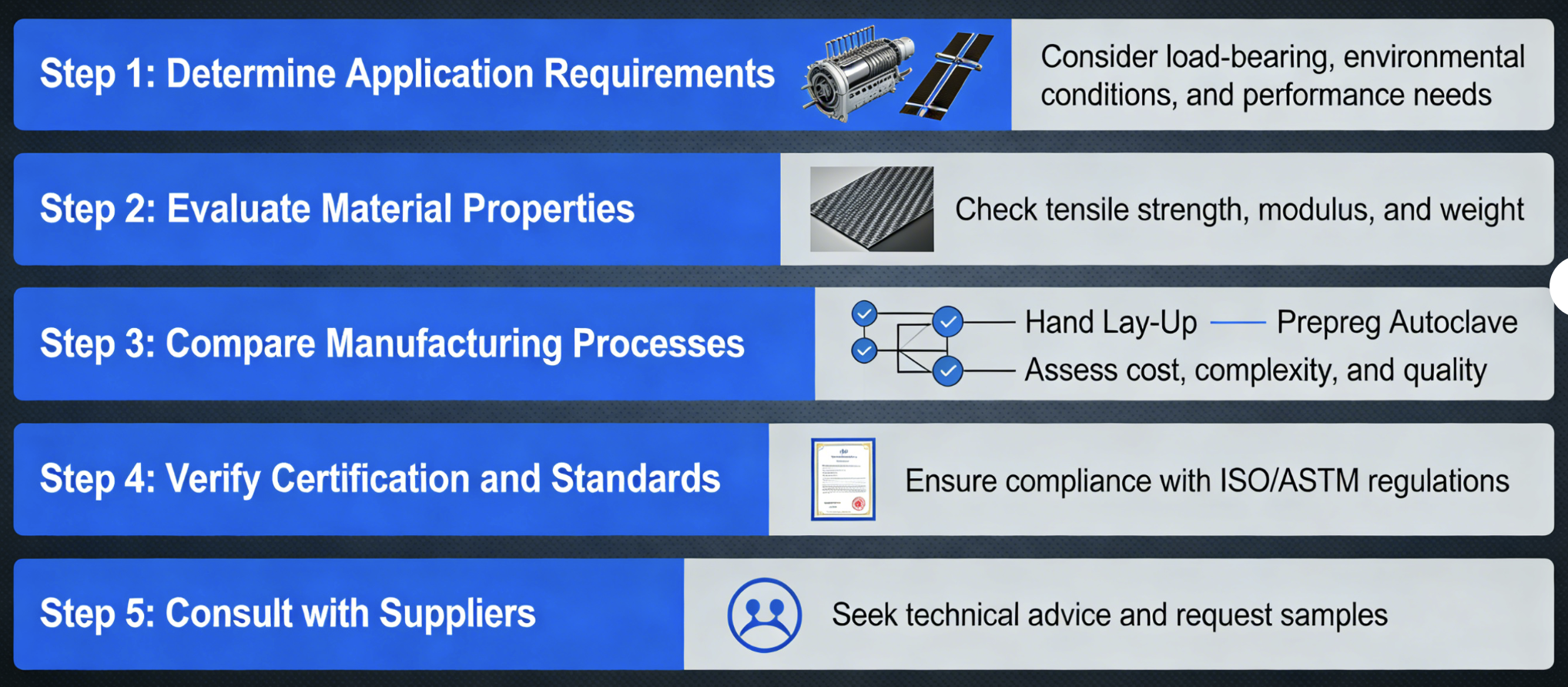
Four variables drive every carbon fiber panel decision: load type, required stiffness, dimensional tolerance, and fiber grade. Get those four right, and the panel choice falls into place.
Match Thickness to Your Application First
Bending stiffness scales with the cube of thickness. So the gap between a 1mm and a 5mm panel isn’t linear — it’s enormous.
|
Thickness |
Bending Stiffness (N·m²/m) |
Typical Use |
|---|---|---|
|
1.0 mm |
25 |
UAV bulkheads |
|
2.0 mm |
200 |
Automotive door panels |
|
3.0 mm |
675 |
Robot bases |
|
5.0 mm |
3,120 |
Machine tool beds |
Start here. Your application involves bending or shear? Thickness matters more than fiber grade. Pick the right thickness first, then move on.
Then Choose the Fiber Grade
|
Grade |
Tensile Modulus |
Best For |
|---|---|---|
|
T300 |
135 GPa |
General-purpose builds |
|
T700 |
145 GPa |
Sports equipment, high-load parts |
|
T800 |
165 GPa |
Aerospace, racing frames |
|
M40J |
230 GPa |
Optical platforms, precision fixtures |
Higher modulus doesn’t always mean better performance. M40J is brittle under impact. Use it for stiffness-critical, low-impact builds — satellite structures are a good fit. Crash-prone panels are not.
Follow the Load-Type Decision Path
-
Tension/compression dominant: UD layup at [0°/90°/±45°]ₛ, 3–6mm, high-modulus epoxy
-
Bending/shear dominant: Twill or UD at [0°₂/±45°]ₛ, 1–3mm, intermediate modulus
-
Electronics housing: Plain weave, 1–2mm, standard modulus — you need the EMI shielding here, not peak structural performance
Don’t Overlook Tolerance Class
Precision builds like optical platforms require P0 class — that means ±0.05mm thickness and 0.2mm/m flatness. Industrial jigs can work with P2 (±0.20mm). Tighter tolerance than your application needs just drives cost up. You get no performance gain from it.
Also, check your panel size. Panels over 2,000 × 1,200mm need honeycomb sandwich construction. Solid laminate sheets hit their limit below that size — they can’t reliably cover larger spans.
Frequently Asked Questions About Carbon Fiber Composite Panels
Real questions from engineers and buyers — answered with actual numbers, not marketing language.
Is carbon fiber stronger than steel?
By weight, yes. CFRP tensile strength reaches 3,500 MPa. Steel tops out at 2,000 MPa. That puts the strength-to-weight ratio at 5–7× steel. Aerospace and motorsport programs stopped debating the switch a long time ago.
Can carbon fiber panels handle heat?
Standard panels hold up to 150–200°C. Need more? Specialty resin systems raise that ceiling to 400°C. These work well for propulsion and high-temp structural applications.
Is CFRP electrically conductive?
Yes. Carbon fiber carries electricity. So for electrical enclosures, you need proper insulation between the panel and any live components. Don’t skip that step.
How do you join CFRP panels together?
Three methods work well:
– Epoxy adhesive bonding — shear strength above 20 MPa
– Mechanical fasteners — pre-drill slow and steady to prevent delamination
– Overlap joints — add secondary reinforcement for high-load connections
What certifications are available?
We test panels to ASTM D3039 (tensile), D6641 (compression), and D7136 (impact). Need ISO 527 compliant reports? Request them and we’ll send them over.
Carbon fiber honeycomb vs. Nomex honeycomb — which one wins?
Neither one wins in every case. Carbon honeycomb gives you higher compressive strength (>3 MPa vs. 1–2 MPa) and holds up to 200°C. Nomex runs lighter (32–80 kg/m³ vs. 80–150 kg/m³), handles 250°C, and meets aerospace fire-safety standards. Carbon costs 2–3× more. Pick the core that fits your load and safety specs — not just your preference.
What are MOQ and lead times?
Prototypes start at 1–10 panels and ship in 2–4 weeks. Production runs need 50+ panels. Lead times run 4–8 weeks, depending on how much customization your order needs.
Conclusion
Picking the right carbon fiber composite panel isn’t about choosing the most expensive option. It’s about matching the material to what your application actually needs. A carbon fiber laminate sheet gives you maximum tensile strength where solid rigidity is the priority. Sandwich and honeycomb constructions build on that same CFRP foundation — but push structural efficiency far higher at a fraction of the weight.
Designing a UAV frame? Speccing parts for an EV chassis? Sourcing panels for aerospace interiors? The material choice you make here affects everything that follows — performance margins, production costs, and your competitive edge.
Don’t guess. Use the comparison data and selection guide in this article as your starting point. Then take the next step: request a custom quote or sample kit from HyperX Carbon and let the material prove itself.
Contact HyperX Carbon – Your Trusted Chinese Carbon Fiber Customization Partner
Ready to develop high-performance carbon fiber materials or custom forged carbon fiber parts tailored specifically for your project?
HyperX Carbon is your long-term strategic partner with over 20 years of expertise in advanced composites. We specialize in delivering aerospace-grade forged carbon fiber custom solutions, along with fully personalized prepreg, tubes, sheets, and lightweight carbon fiber structural components for automotive, drone, eVTOL, and medical applications.
We don’t just supply materials — we provide end-to-end customization support:
-
Stable premium supply chain using Toray, Mitsubishi, and Hengshen raw materials
-
AS9100D certified production tailored for aerospace and UAV requirements
-
Rapid prototyping carbon fiber component in just 5-8 weeks, with monthly capacity over 180,000 parts
-
Competitive pricing with 15-18% cost savings on forged carbon solutions
-
Full customization flexibility: from T700 and T1100G to ultra-high modulus grades, with tailored layups, finishes, and performance specifications
Whether you’re an eVTOL developer, automotive OEM, drone manufacturer, or medical device engineer, HyperX Carbon delivers bespoke material selection, structural optimization, and manufacturing solutions that match your exact technical and performance needs — with consistent batch-to-batch quality and reliable delivery.
Get in touch today for a free technical consultation, personalized quote, or custom material samples.
📧 Email: [email protected] 🌐 Website: https://www.hyperxcarbon.com/ 📞 Phone/WhatsApp: +86 15623270276 (English support available)
Let’s co-create your next lightweight innovation together. Contact HyperX Carbon now and stay ahead in the low-altitude economy and advanced composites market.
HyperX Carbon – Not just a supplier, but your dedicated carbon fiber customization expert.