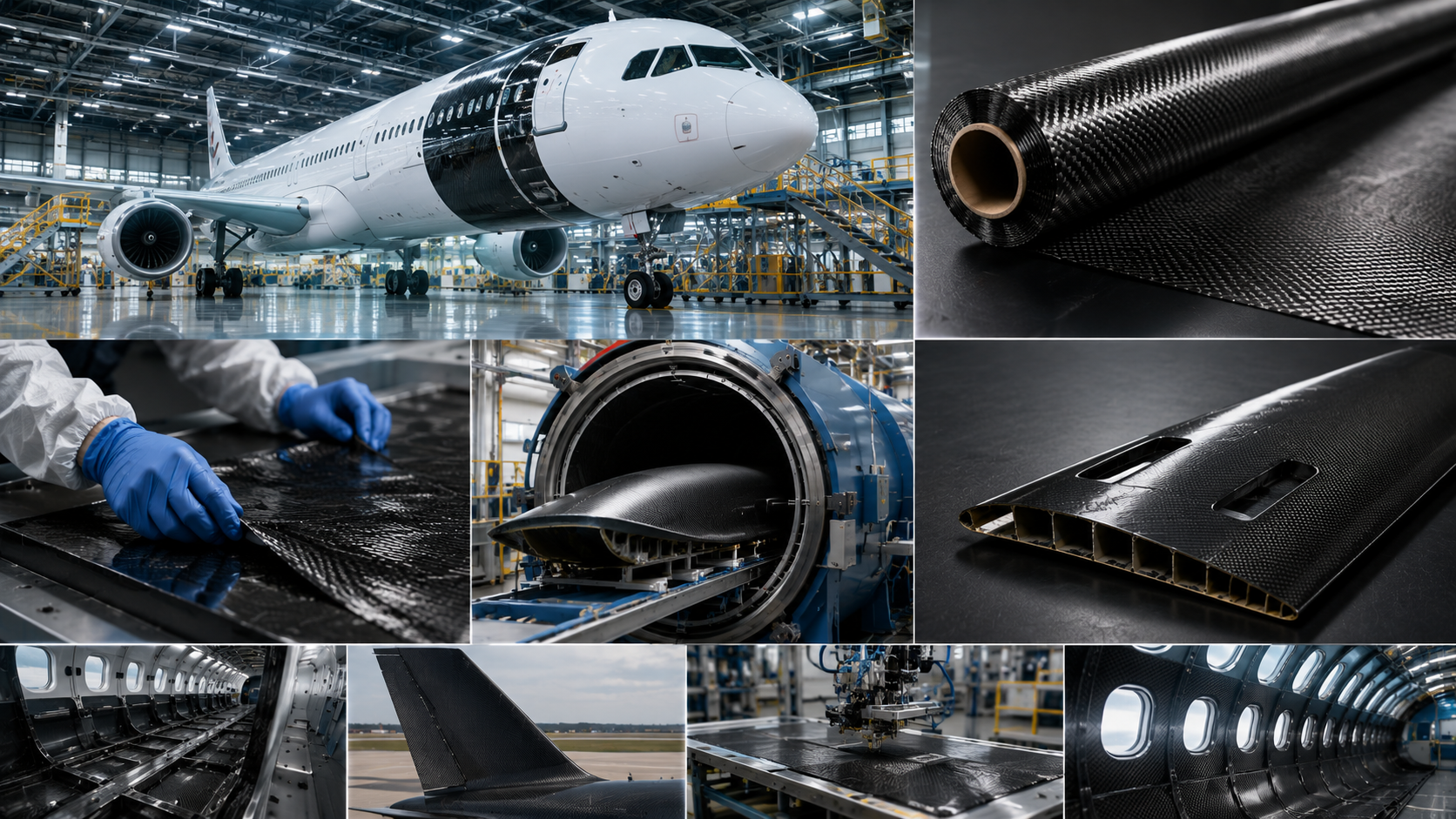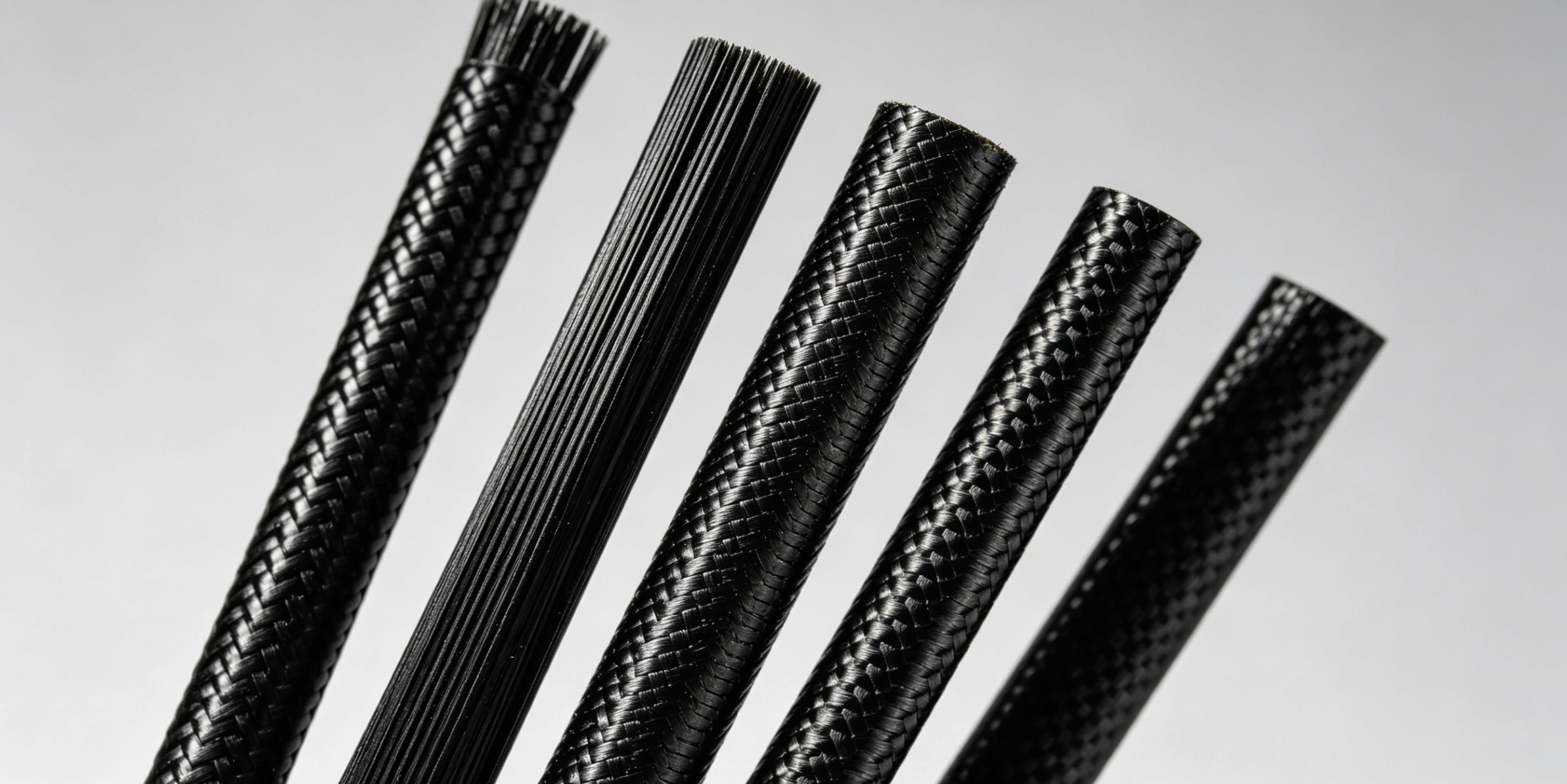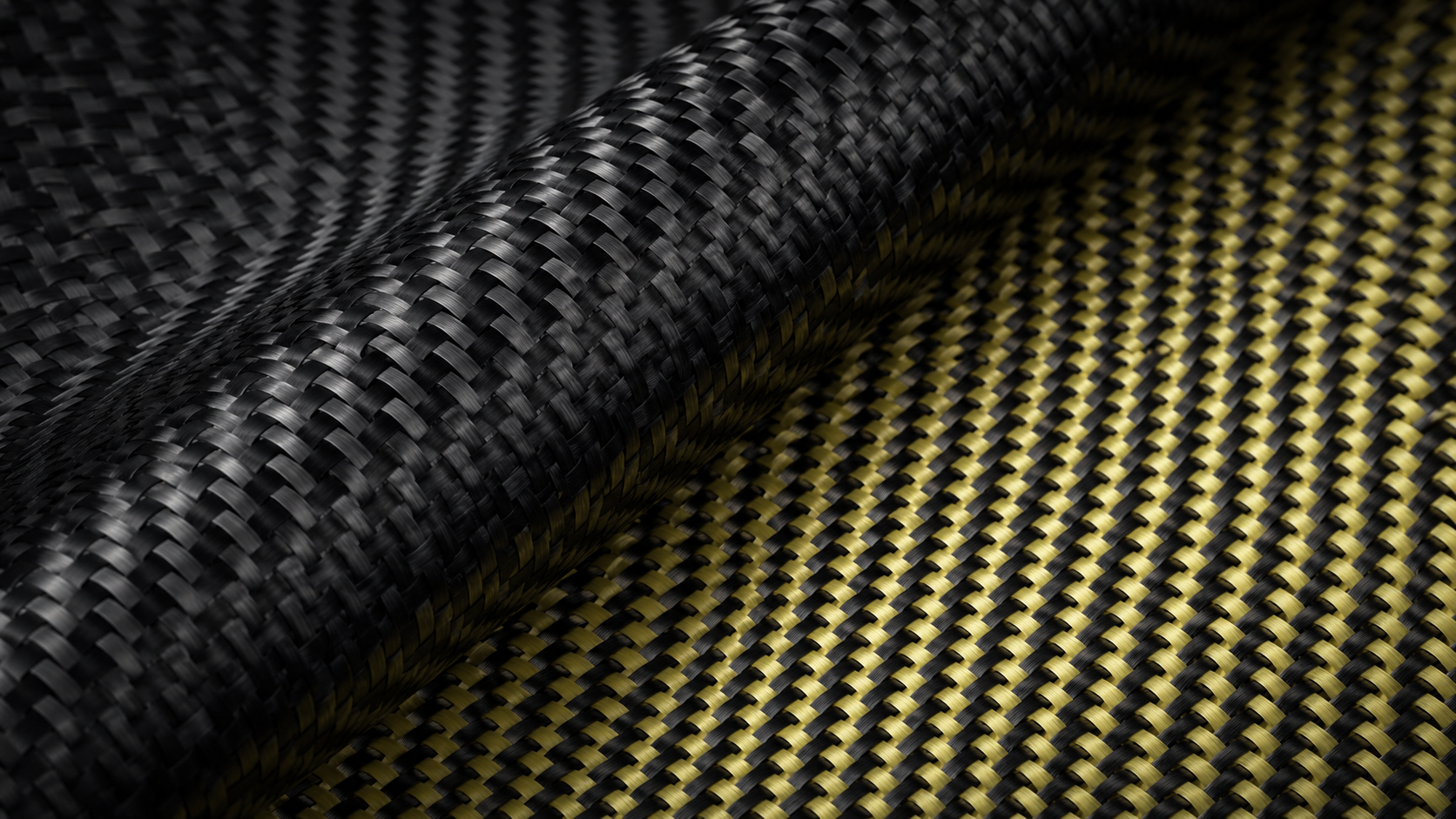
Choosing the wrong carbon fiber fabric doesn’t just cost you money — it costs you the entire layup.
A plain weave that fights you on a compound curve. A 12K tow when your surface finish demands 3K. A roll order when you needed just a meter of cloth. These are the mistakes that separate a clean, structural composite from an expensive do-over.
Building a lightweight aerospace component, wrapping a race car panel, or starting your first DIY project with epoxy resin and woven carbon fiber — the spec sheet tells you little about what matters on the bench.
This guide breaks it all down:
-
Weave patterns
-
Tow sizes
-
GSM ratings
-
Roll versus cloth formats
-
Resin compatibility
Get these right before you place the order.
Carbon Fiber Fabric Buying Guide: Optimal Content Framework
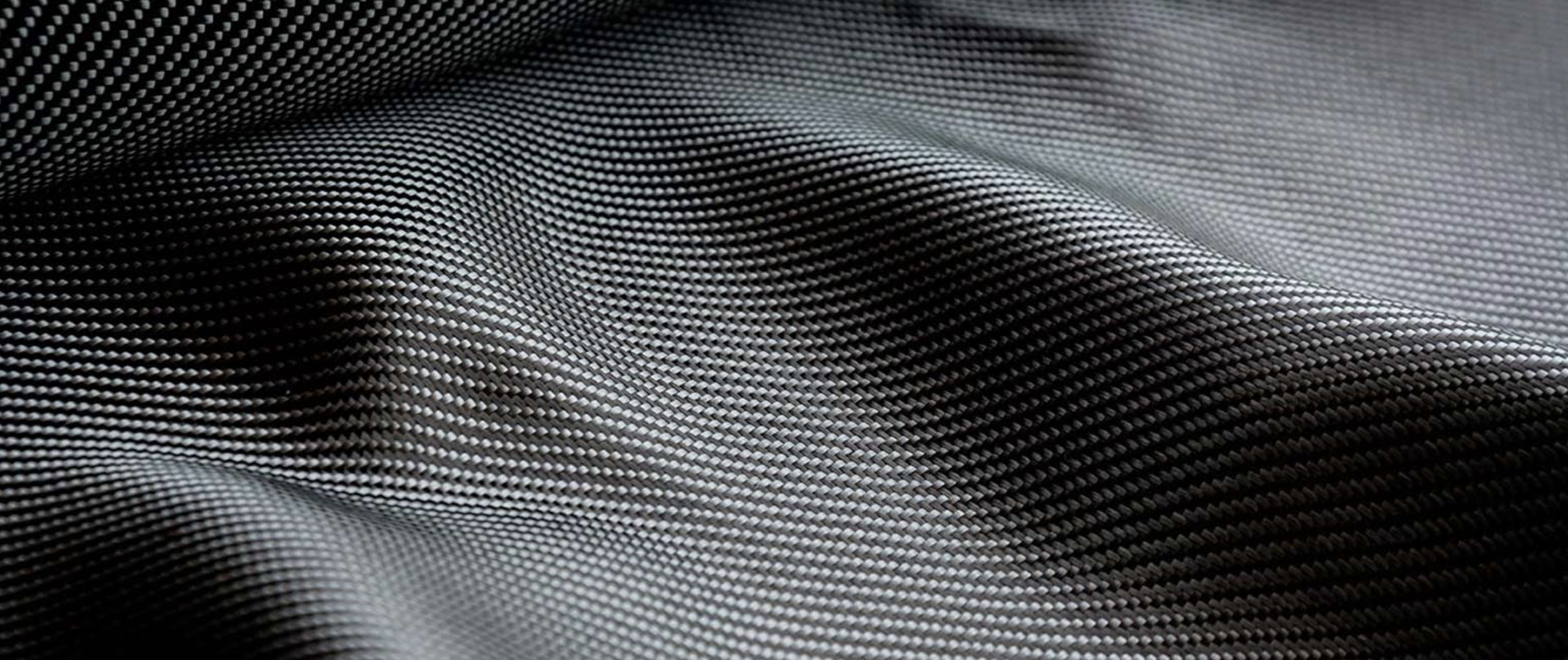
Seven variables decide if your carbon fiber fabric order works or fails. Miss one, and you risk over-building a simple panel — or under-speccing a load-bearing part.
Here’s what this guide covers, and why each point matters:
-
Weave patterns — plain, twill, satin, and unidirectional each react in their own way under load and across curves
-
Tow size (3K / 6K / 12K) — filament count drives drapability, surface finish, and structural output all at once
-
Areal weight (GSM) — from 10 gsm cosmetic veils to 400+ gsm structural plies, the number has a reason behind it
-
Roll vs. cut cloth formats — your procurement format affects waste, cost-per-meter, and MOQ thresholds
-
Resin compatibility — epoxy and phenolic systems will punish a mismatched fabric choice. Get this wrong, and the whole layup suffers
-
Modulus grade — standard, intermediate, or high stiffness each shifts the full performance range of your part
-
Supplier verification — check certifications, batch consistency, and run sample tests before placing a bulk order
Work through these in order. Each decision shapes the next one.
What Is Carbon Fiber Fabric — And Why the Weave Matters More Than You Think
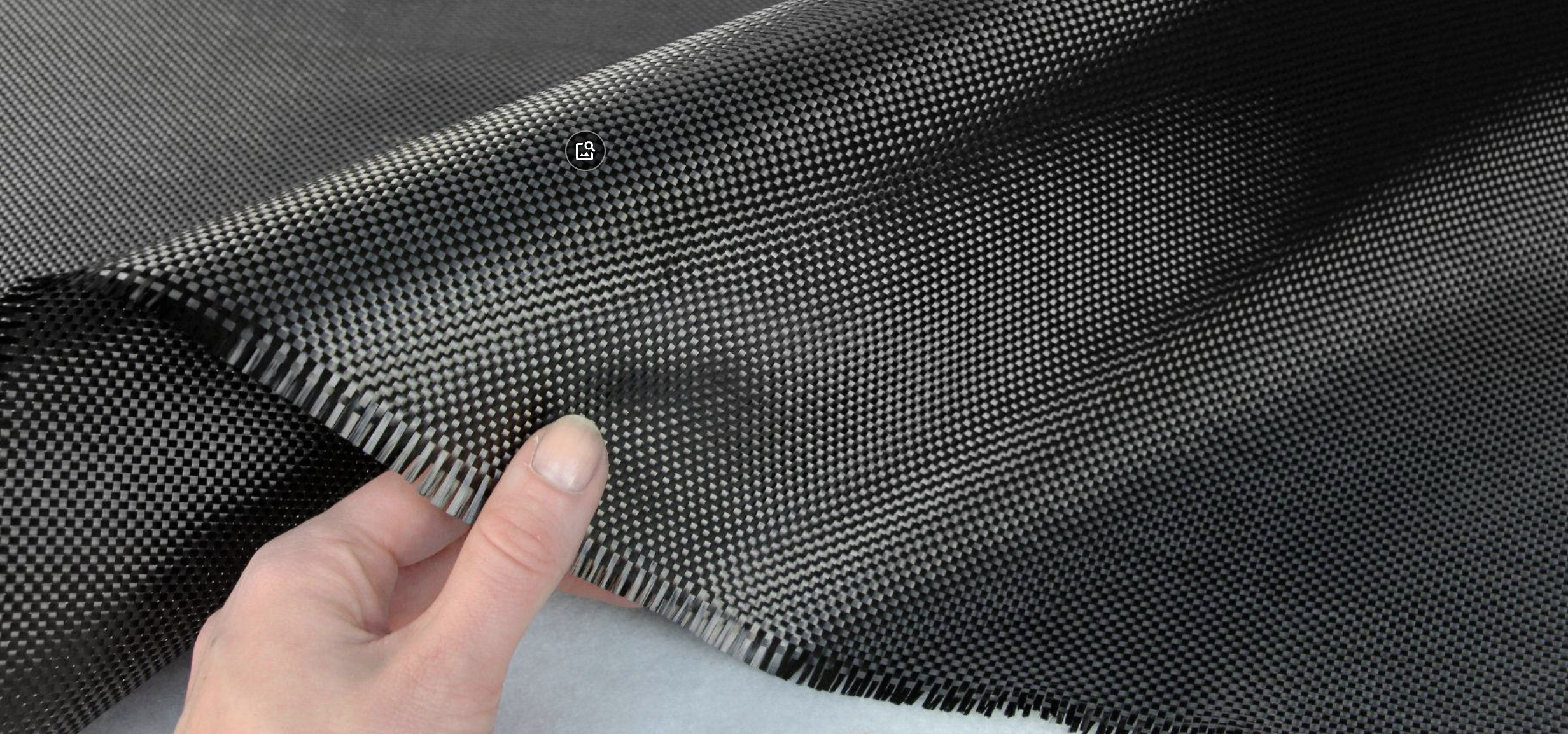
Carbon fiber fabric is not a single material. It’s a decision tree disguised as a roll of cloth.
At its core, woven carbon fiber fabric is what the name says: continuous carbon filaments — each just 5 to 10 micrometers in diameter — bundled into tows and interlaced in a repeating 2D pattern. Those bundles come in standard counts: 3K (3,000 filaments), 6K, and 12K. The number isn’t a marketing label. It controls fabric weight, surface resolution, and how the cloth behaves under your hands during layup.
What most buyers miss is this: the weave pattern matters as much as the fiber itself.
Three patterns dominate most carbon fiber composite work:
-
Plain weave — every tow crosses over and under in a 1×1 checkerboard. You get maximum dimensional stability, but minimum drape. On flat panels, it performs well. On compound curves, it fights you.
-
2×2 Twill — two tows over, one under, creating the diagonal pattern you recognize from race car panels. It drapes better — and delivers 15–25% higher in-plane shear strength than plain weave. That makes it critical for torsion-loaded parts.
-
Harness satin — four or five tows over before crossing under. It’s the most conformable of the three, draping 20–30% better on radii under 50mm. Use it for complex 3D molds where plain weave would bridge and void.
The mechanical difference is real — not cosmetic. Plain weave carries a fiber crimp angle of 5–10°. That crimp alone reduces axial tensile strength by up to 20% compared to satin’s near-zero crimp. Pick the wrong weave for a tight-radius mold, and you’re looking at 20–40% more wrinkles, a 15% strength drop, and scrap rates climbing 25%.
CFRP’s tensile strength ceiling sits between 3,500 and 7,000 MPa — about five times steel. Weave mismatch alone can cut your effective strength by 10–25%. That’s not a rounding error. That’s a structural failure waiting to happen.
The weave is where the performance lives.
Understanding Carbon Fiber Fabric Specifications: Tow Size, GSM, and Weave Density
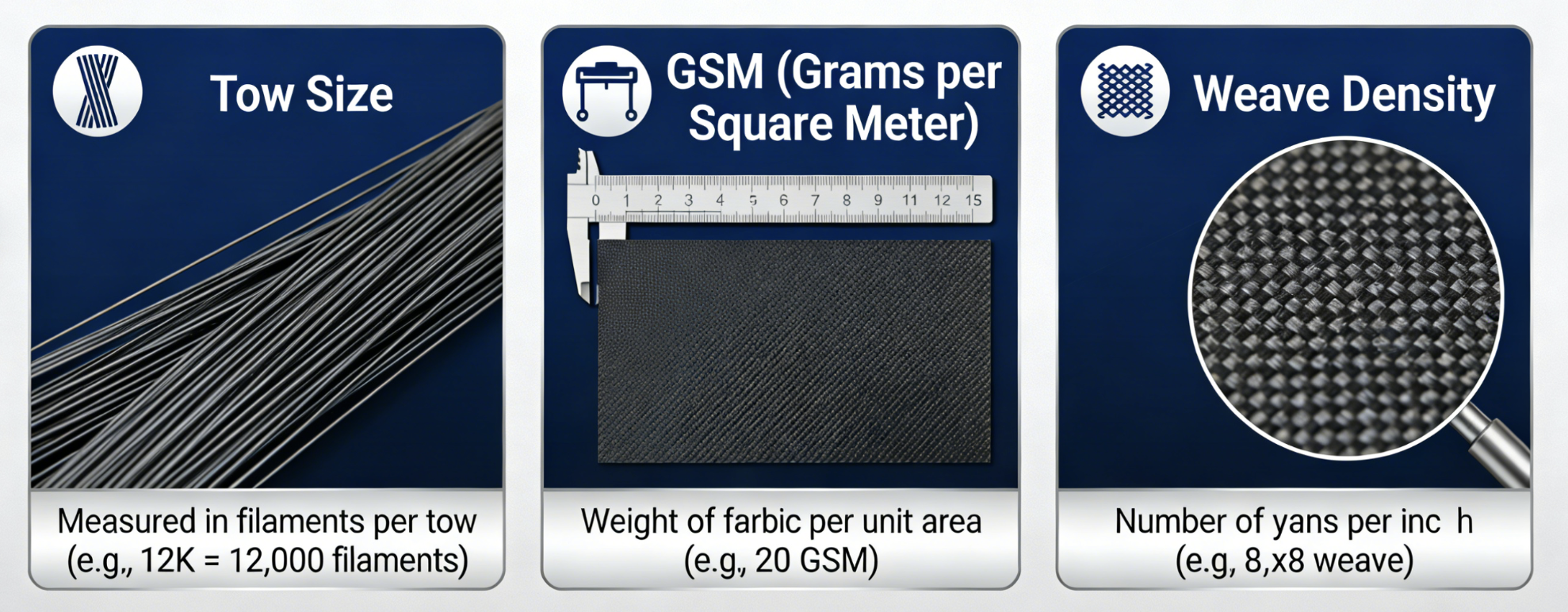
Three numbers control every carbon fiber fabric order: the K-count, the GSM, and the thread density. Learn all three, and the spec sheet starts making sense.
Tow Size: What the K-Number Tells You
The K-number counts filaments per tow bundle. That count drives surface finish, minimum areal weight, and how the fabric performs under resin.
|
Tow Size |
Filaments |
Typical GSM Range |
Surface Character |
|---|---|---|---|
|
1K |
1,000 |
80–140 gsm |
Ultra-fine, precision layers |
|
3K |
3,000 |
180–280 gsm |
Balanced — cosmetic + structural |
|
6K |
6,000 |
300–380 gsm |
Coarser, load-bearing work |
|
12K |
12,000 |
400–640 gsm |
Heavy structural; spread-tow variants reach 195 gsm |
3K is the default for good reason. It balances fine weave density with real structural output. A 200 gsm twill at 3K delivers 3,530 MPa tensile strength — a realistic, repeatable target. Go up to 12K and you trade surface resolution for volume efficiency. Drop to 1K and you’re paying for precision that most applications simply don’t require.
One exception worth noting: 12K spread-tow fabrics (Toray T700, for instance) flatten that thick bundle into a near-flat ribbon. You get weights as low as 139–195 gsm. That’s solid structural performance with far less weight penalty than standard 12K.
GSM and Weave Density: The Numbers That Control Your Laminate
Areal weight — measured in grams per square meter — sets ply thickness and total laminate build-up. The math is straightforward:
-
90 gsm × 10 layers ≈ 0.9 mm thick, 900 g/m² total
-
200 gsm × 5 layers ≈ 1.15 mm thick, 1,000 g/m² total
Weave density — threads per inch — works alongside GSM. A 3K 200 gsm fabric runs around 24 ends per inch. Higher density creates tighter resin channels. That means lower void content and cleaner consolidation. Coarser weaves — thick tow, high GSM — raise porosity risk and need more careful infusion control.
Quick application reference:
– Aerospace thin walls — 3K × 90 gsm plain, high density, porosity under 3%
– Automotive exterior — 3K × 200 gsm twill, 24 ends/inch, drape-optimized
– Structural reinforcement — 12K × 300 gsm plain, cost-effective volume
– UAV/precision parts — 12K uni at 139 gsm, 0.006″ ply thickness, 725 KSI
These three variables — K-size, GSM, density — don’t work in isolation. Tow size sets your minimum GSM floor. GSM and density together control your dry ply thickness. All three feed into resin uptake, which shapes the next decision in your laminate stack.
Carbon Fiber Rolls vs Carbon Fiber Cloth: Which Format Should You Buy?
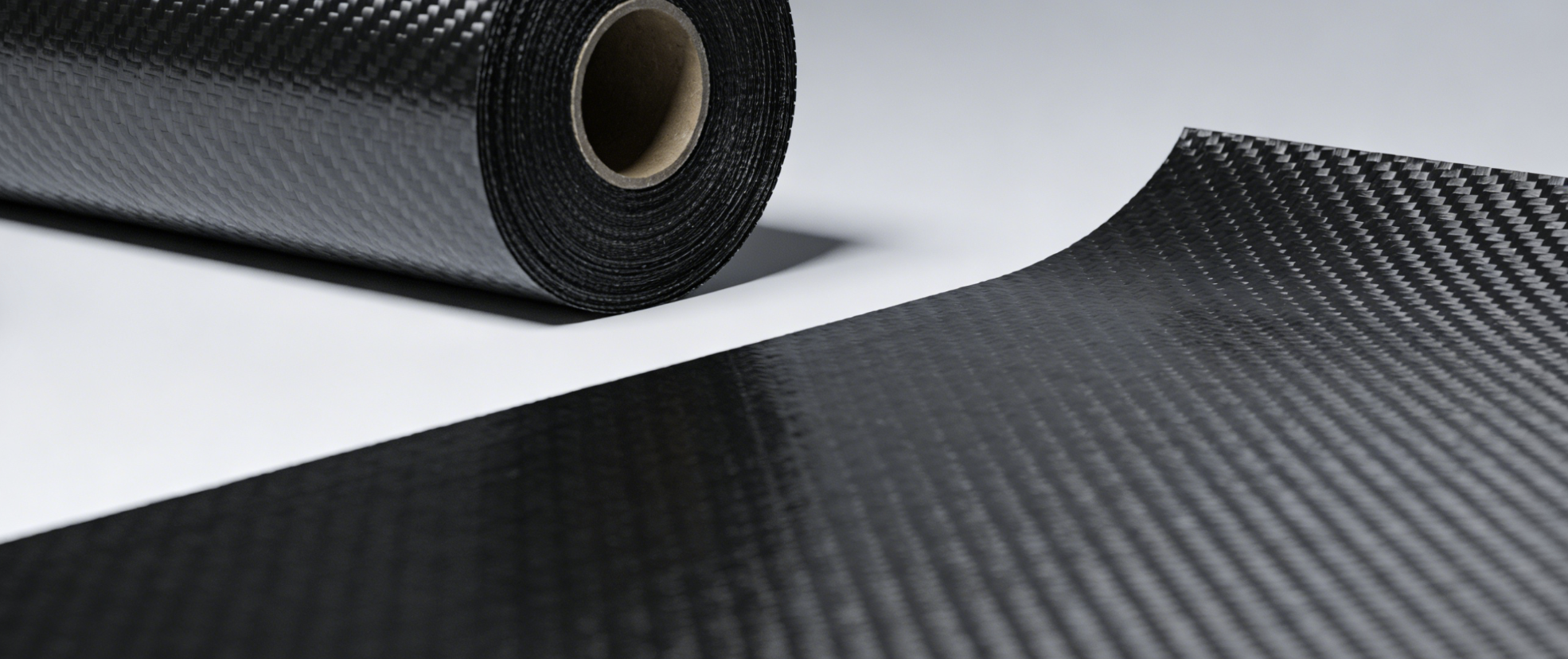
Format is a procurement decision, not an afterthought. Get it wrong and you’re adding cost before you’ve touched a mold.
Carbon fiber fabric ships in two forms: continuous rolls (50″+ wide, wound in industrial lengths) and pre-cut cloth (fixed widths, linear meter pricing, ready to use). Same fiber. Same weave options. The economics are a different story — it all depends on your production volume.
The Real Difference Is Operational, Not Structural
Fiber performance is the same across both formats. Everything around it changes.
Rolls give you flexibility. You get custom cut lengths, optimized fiber orientation, and lower per-meter cost at volume. There’s a trade-off, though. Rolls need infrastructure — cutting equipment, waste management, and temperature-controlled storage for prepreg. That storage part is serious. Poor environmental control causes premature resin curing. One bad storage setup can ruin an entire roll before it ever reaches your layup table.
Pre-cut cloth gives up some cost efficiency in exchange for immediate usability. No cutting waste. No dedicated storage setup for dry fabric. A 1000mm width plain weave at £53.50 per linear meter arrives ready to laminate. That price premium makes sense for a prototype run or a one-off repair. Scale up, and it stops making sense fast.
The Decision Framework
|
Your Situation |
Right Format |
|---|---|
|
High-volume production |
Rolls |
|
Prototype or R&D |
Pre-cut cloth |
|
Complex shapes, custom orientation |
Rolls |
|
DIY or small-batch |
Pre-cut cloth |
|
Minimizing material waste at scale |
Rolls |
|
No cutting infrastructure on-site |
Pre-cut cloth |
One note on weave and format interaction: ordering rolls for compound-curve work? Go with twill. It conforms to curves where plain weave bridges. That drapability advantage fades fast once a roll stiffens up from sitting in an uncontrolled environment.
Match the format to your workflow. Then match the weave to your geometry.
Matching Carbon Fiber Fabric to Your Application: Industry-Specific Recommendations

Different industries don’t just use carbon fiber in different ways — they pay a different price for the wrong choice.
A spec that works on a bicycle frame will break down on a structural beam. The same twill that fits an automotive hood becomes a weak point on a flat aerospace panel. Here’s how the right fabric lines up with each application.
Automotive & Racing
3K twill at 200 gsm is the go-to for body panels, hoods, spoilers, and doors. The diagonal weave handles compound curves without bridging. It also looks the part — sharp, clean, and unmistakably high-performance. That’s no coincidence. At 0.2mm ply thickness, you build up a solid structural laminate without adding unnecessary weight. Drape is the deciding factor here. Twill delivers it.
Aerospace & UAV Structures
Flip the logic entirely. Aerospace puts stiffness and dimensional stability first. Conformability takes a back seat. Plain weave 3K to 6K, 200–300 gsm keeps deformation near zero and holds fatigue resistance high. Flat panels and simple curves are standard. Drape matters less here. What matters more: certified batch consistency and low void content. Every layer has to perform the same way, every time.
Sports Equipment & Bicycles
This category pulls in two directions at once — you need vibration damping and directional strength from the same layup. Hybrid setups — plain for stability, twill for drape — in the 150–300 gsm range handle both demands. Unidirectional plies go where the load runs along a single axis. At this GSM range, you also get impact protection without over-engineering the part. Weight stays low. Performance stays high.
Architectural & Structural Reinforcement
12K plain weave at 400 gsm is built for load. Full stop. Think thick laminates, concrete and steel bonding, and structural rigidity with almost no flex. Chemical and UV resistance matter here too — these parts sit outdoors, under constant stress, for decades. A wrong GSM choice doesn’t just fall short. It fails at the worst possible moment, under real load, in the field.
|
Application |
Weave |
Tow |
GSM |
Thickness |
|---|---|---|---|---|
|
Automotive panels |
Twill |
3K |
200 |
0.2mm |
|
Aerospace structures |
Plain |
3K–6K |
200–300 |
0.2–0.3mm |
|
Sports equipment |
Plain/Twill hybrid |
3K–6K |
150–300 |
0.15–0.3mm |
|
Structural reinforcement |
Plain |
12K |
400+ |
0.4mm+ |
Matching fabric to geometry, load type, and resin system cuts fatigue-related failure risk by 20–50%. That’s a real number — and it comes from smart selection, not from buying the most expensive roll on the shelf.
Carbon Fiber Fabric Price Guide: What Affects Cost and How to Compare
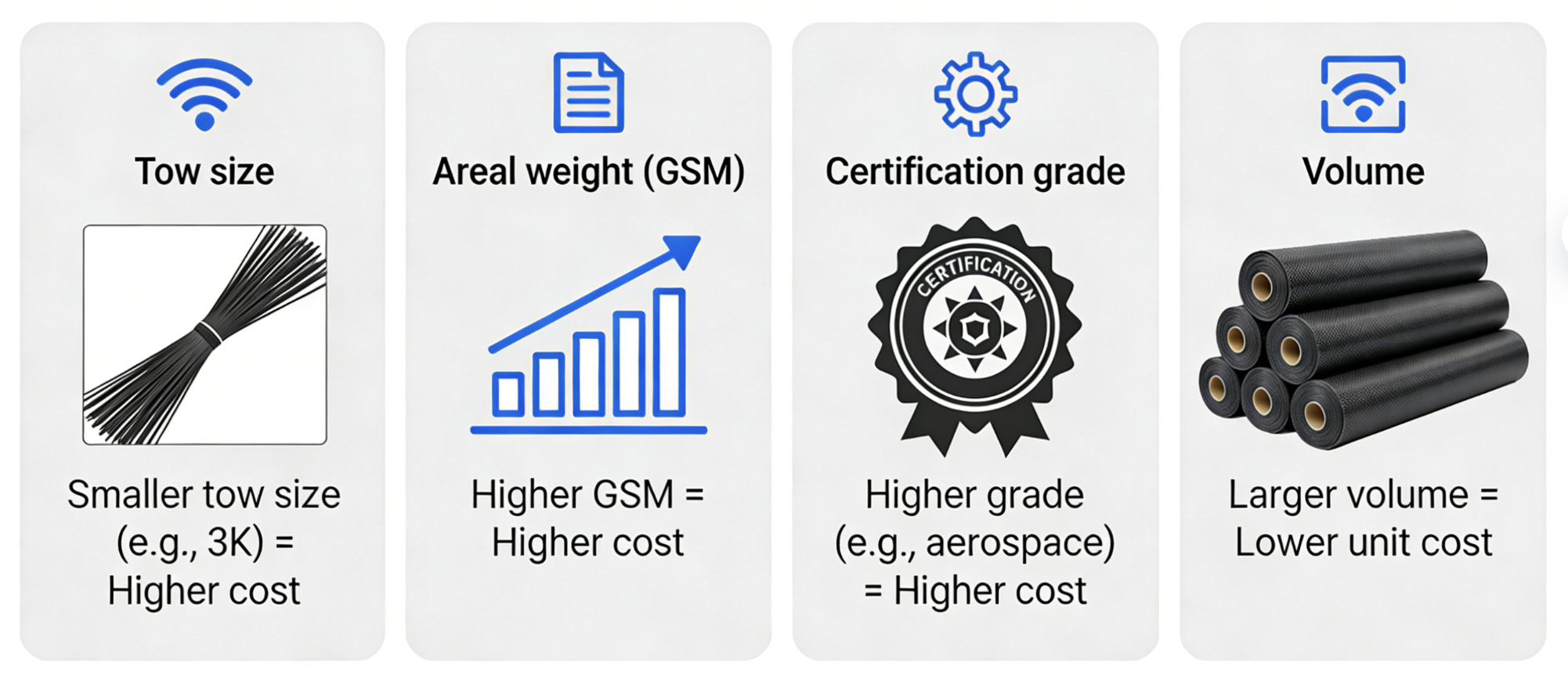
Carbon fiber fabric prices range from $10 to $200 per square meter. That spread isn’t random — and the gap isn’t just profit margin.
Six variables move the number. Know them, and you can compare quotes with confidence instead of just picking the lowest figure.
Tow size is the biggest driver. 3K fabric costs more than 12K — not because it performs better across the board, but because it’s harder to weave. Finer tows mean lower production yield per machine hour. You pay for that. 6K sits in the middle and often hits the best cost-performance balance for structural work.
Areal weight (GSM) works in the opposite direction. Heavier fabric needs fewer layers to reach your target thickness. That means lower total material cost per finished part — even if the per-meter price looks higher at first glance.
Certification grade is where the real price cliff appears:
|
Grade |
Price Range (per m²) |
|---|---|
|
Industrial 12K heavy (300+ gsm) |
$10–25 |
|
Industrial 6K mid (200–300 gsm) |
$15–30 |
|
Industrial 3K light (193–200 gsm) |
$25–40 |
|
Aerospace-grade 3K with COC |
$100–200 |
Aerospace certification isn’t a label — it’s documentation. A Certificate of Conformity (COC) tracks the batch back to its PAN precursor origin. It confirms tensile strength and modulus. It also cuts defect risk on critical parts. That paperwork adds 30–100% to the price. For structural aerospace components, it’s worth every cent. For a DIY hood panel, it’s not.
Volume changes everything. Bulk roll orders — 50 to 100 meters — drop per-square-meter cost by 10–30% compared to sample pricing.
How to Compare Quotes Without Getting Fooled
Never compare carbon fiber prices by roll price or linear meter alone. Width varies. The one honest unit is $/m².
The formula is simple: price per linear meter ÷ fabric width in meters = $/m²
A 3K twill quoted at $5 per linear meter at 1.27m width comes out to $3.94/m². A competitor quoting $4.50 at 1.0m width is $4.50/m² — more expensive, not less.
Once you’re working in $/m², line up the specs: same K-count, same GSM, same weave pattern, same modulus grade. Then ask for the COC. A supplier who markets “aerospace-grade” fabric but can’t hand over batch documentation on request — that label means nothing. Walk away.
Checklist before you commit to a quote:
-
Converted to $/m²? ✓
-
K-count, GSM, and weave matched across suppliers? ✓
-
COC or traceability docs requested? ✓
-
Bulk vs. sample pricing clarified? ✓
-
Surface treatment and fiber orientation confirmed? ✓
The right price isn’t the lowest price. It’s the price that reflects what you’re getting — verified specs, matched grade, and volume scaled to your actual production needs.
5 Buying Mistakes to Avoid When Sourcing Carbon Fiber Fabric

Most sourcing failures aren’t technical. They’re procedural — and all of them are preventable.
Mistake 1: Buying from unverified suppliers
Small workshops without licensed factory operations can look fine on a website. The problem shows up after something goes wrong — and they’re nowhere to be found. Before placing any order, confirm the supplier runs a real, documented manufacturing facility. Check their track record. A low quote from a shaky operation isn’t a bargain. It’s just moving the risk onto you.
Mistake 2: Spot-checking instead of inspecting every roll
One swatch from one roll tells you very little. Defects hide in the middle of a roll. By the time you catch them — 45+ days later, mid-production — the vendor carries zero liability. Open every roll on delivery. Write everything down on the spot.
Mistake 3: Skipping the wet-out test
Fabric and resin have to work together at the fiber level. A 3K twill that bonds well under epoxy may trap air pockets under a different viscosity system. Run a wetting test with your actual resin before placing a bulk order. Porosity found during testing is fixable. Porosity found in a finished part is not.
Mistake 4: Trusting K-number labels without documentation
A labeled 3K fabric that turns out to be 6K — or fiberglass — will fail under load. In some cases, the failure is severe. Ask for full traceability documentation: fiber origin, manufacturing batch, and GSM that a third party has verified. A supplier who pushes back on that request has already given you the answer you need.
Mistake 5: Mistaking fake carbon fiber for real
Counterfeit fabric is out there. Most of it is fiberglass, nylon, or polyester with a printed weave pattern on the surface.
|
Characteristic |
Real Carbon Fiber |
Counterfeit |
|---|---|---|
|
Weave pattern |
Consistent geometric squares |
Blurry or surface-printed |
|
Stiffness |
Rigid, holds shape |
Bends and curls with little force |
|
Weight |
Light relative to thickness |
Too heavy for its thickness |
A price that looks too good is a clear signal. The fiber is not carbon.
FAQ: Carbon Fiber Fabric Common Questions Answered
These are the questions we hear most often — with straight answers, no filler.
Is 3K carbon fiber stronger than 6K?
Not in a simple way. Both use the same filament material. Raw strength per fiber is about the same. The real difference is how they behave. 3K packs 3,000 filaments into a tighter, finer tow. You get better weave consistency, cleaner consolidation, and sharper surface detail. 6K moves heavier structural loads well, but gives up drape precision. For detailed composite work, 3K is the better pick. For bulk structural volume, 6K is the more practical choice.
Does twill weave cost more than plain weave?
Yes — 10–20% more per square meter. The diagonal float pattern needs longer loom setup, which adds cost. Plain weave is simpler to produce and cheaper to buy. Your part is flat and surface finish isn’t the priority? Plain weave is the right call.
Can carbon fiber fabric work with resins other than epoxy?
Yes, it can. Polyester, vinyl ester, and phenolic systems all bond to carbon fiber. Epoxy gives you the best fiber efficiency — around 90%. Other resin systems can drop adhesion by 10–20% without proper surface prep. Run a compatibility test before you commit to a full laminate stack.
What’s the best weave for complex curves?
Go with satin weaves — 4HS, 5HS, or 8HS — or 4×4 twill. The longer floats boost flexibility by up to 50% compared to plain weave. That extra conformability is what tight-radius molds need. Plain weave won’t bend to the shape the way these do.
What’s the difference between 2×2 and 4×4 twill?
2×2 twill strikes a balance between formability and rigidity. It’s the standard pick for structural panels and bike frames. 4×4 twill bends more freely, with fewer crimp points. That drops fatigue stress by around 15%. Use 4×4 where the part shape needs flexibility more than stiffness.
Does weave pattern change part strength?
Yes — and the numbers back it up. Plain weave spreads load in all directions. Twill and satin cut crimp-related stress concentration by 10–25%. That gap matters on curved or torsion-loaded parts. Unidirectional fabric pushes fiber efficiency to about 90% — but only along one axis. Strength in other directions drops off sharply.
Conclusion
Choosing the right carbon fiber fabric isn’t about finding the most expensive roll or the most exotic weave. It’s about matching the right specification to the right job. Plain weave holds its geometry. 2×2 twill drapes a compound curve. 3K stays sharp where aesthetics count. These aren’t abstract distinctions. They’re decisions that determine whether your layup succeeds or gets scrapped.
You now have a clear framework:
-
Know your tow size
-
Respect your GSM requirements
-
Match your resin system
-
Buy the format that fits your production volume
The next step is straightforward. Pick one project. Apply one decision from this guide. See the difference for yourself.
Browse the full range of woven carbon fiber fabrics at HyperX Carbon. Filter by weave, weight, and width. Get what your application demands — no guesswork, no waste.
Contact HyperX Carbon – Your Trusted Chinese Carbon Fiber Customization Partner
Ready to develop high-performance carbon fiber materials or custom forged carbon fiber parts tailored specifically for your project?
HyperX Carbon is your long-term strategic partner with over 20 years of expertise in advanced composites. We specialize in delivering aerospace-grade forged carbon fiber custom solutions, along with fully personalized prepreg, tubes, sheets, and lightweight carbon fiber structural components for automotive, drone, eVTOL, and medical applications.
We don’t just supply materials — we provide end-to-end customization support:
-
Stable premium supply chain using Toray, Mitsubishi, and Hengshen raw materials
-
AS9100D certified production tailored for aerospace and UAV requirements
-
Rapid prototyping carbon fiber component in just 5-8 weeks, with monthly capacity over 180,000 parts
-
Competitive pricing with 15-18% cost savings on forged carbon solutions
-
Full customization flexibility: from T700 and T1100G to ultra-high modulus grades, with tailored layups, finishes, and performance specifications
Whether you’re an eVTOL developer, automotive OEM, drone manufacturer, or medical device engineer, HyperX Carbon delivers bespoke material selection, structural optimization, and manufacturing solutions that match your exact technical and performance needs — with consistent batch-to-batch quality and reliable delivery.
Get in touch today for a free technical consultation, personalized quote, or custom material samples.
📧 Email: [email protected] 🌐 Website: https://www.hyperxcarbon.com/ 📞 Phone/WhatsApp: +86 15623270276 (English support available)
Let’s co-create your next lightweight innovation together. Contact HyperX Carbon now and stay ahead in the low-altitude economy and advanced composites market.
HyperX Carbon – Not just a supplier, but your dedicated carbon fiber customization expert.