Picking the wrong carbon fiber grade does more than hurt your budget. It can ground an aerospace prototype, weaken a structural component, or leave a high-performance build short on stiffness. The damage is real.
Finding accurate T700 carbon fiber price data is another challenge. Verified datasheets and honest supplier comparisons take hours to pull together — jumping between manufacturer PDFs, distributor quotes, and engineering forums just to get a clear picture.
This guide puts it all in one place:
-
Real mechanical specs for the Toray T-Series lineup
-
2026 pricing benchmarks across tow sizes and product forms
-
A clear breakdown of where to buy
Stop researching. Start building.
What Is Carbon Fiber Grade — And Why It Determines Your Project’s Success or Failure
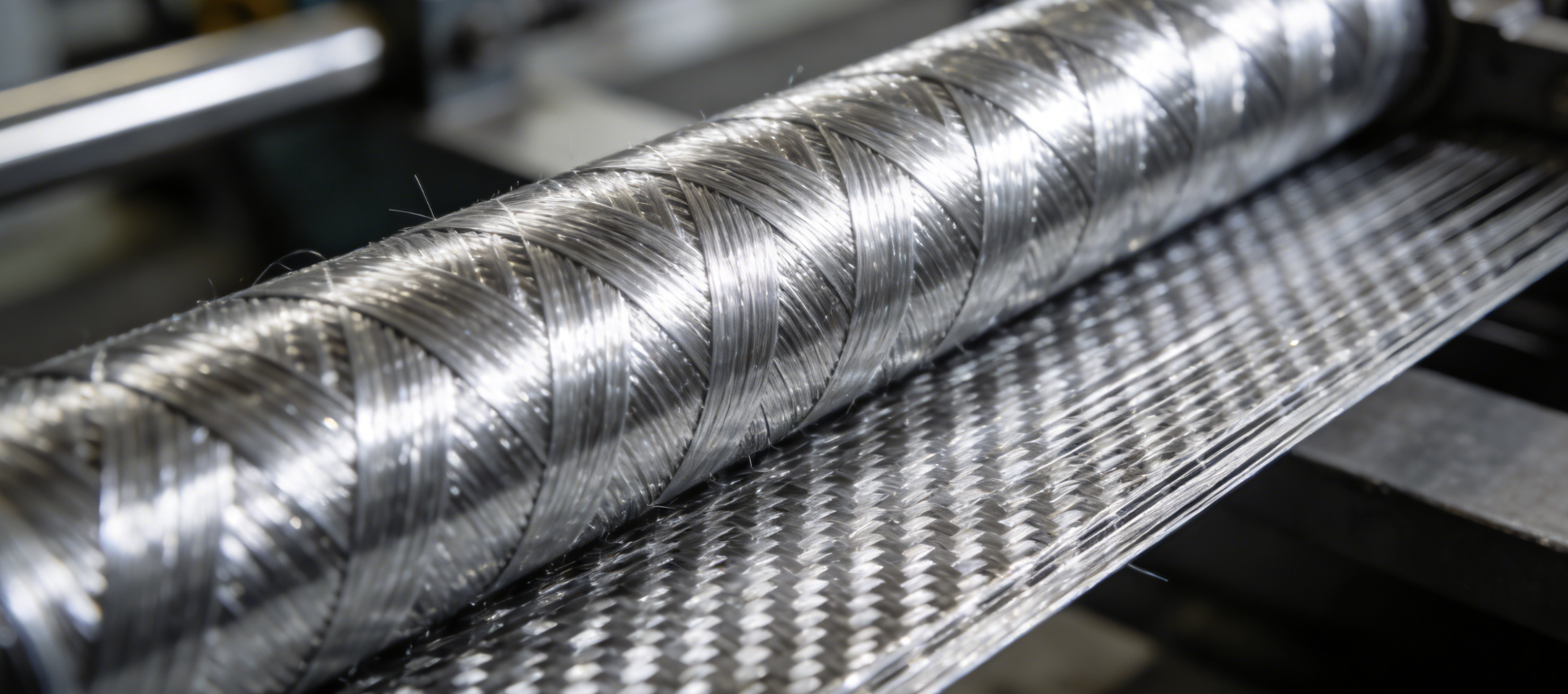
Carbon fiber grade is a classification system built on three mechanical properties: tensile modulus (stiffness), tensile strength (load capacity before fracture), and elongation at break (how much it stretches before it snaps).
Here’s what trips most engineers up: higher modulus does not mean higher strength. It means the opposite. As modulus goes up, strength drops and elongation shrinks. A fiber stiff enough to resist bending becomes brittle enough to shatter under sudden impact.
The four PAN-based grade categories break down like this:
|
Grade |
Modulus |
Strength |
Elongation |
Relative Cost |
|---|---|---|---|---|
|
Standard (SM) |
33–36 MSI |
500–700 ksi |
1.5–2.0% |
1x |
|
Intermediate (IM) |
42–47 MSI |
800–1,000 ksi |
1.0–1.5% |
1.5–2x |
|
High (HM) |
55–65 MSI |
400–600 ksi |
0.5–1.0% |
3–5x |
|
Ultra-High (UHM) |
>65 MSI |
300–500 ksi |
<0.5% |
5–10x+ |
The mismatch cost is real — and painful. Here are three common mistakes that show up in practice:
-
UHM fiber in a bike frame — Road impact needs flex. UHM’s sub-0.5% elongation means the frame snaps instead of bending. Wrong choice.
-
Standard Modulus in an aerospace spar — The spar needs stiffness. Standard Modulus falls short, so the laminate buckles. You end up increasing thickness by 20–50%, which adds 30% back in weight and cost.
-
Intermediate Modulus for a general automotive bracket — Standard Modulus holds fine here. Choosing IM instead burns 50–100% more budget with zero performance gain.
Grade selection comes down to one trade-off: stiffness vs. strength. Get it right at the spec stage, and every decision after that gets simpler.
Toray T-Series Carbon Fiber Grade Comparison Table (T300 / T700 / T800 / T1000)
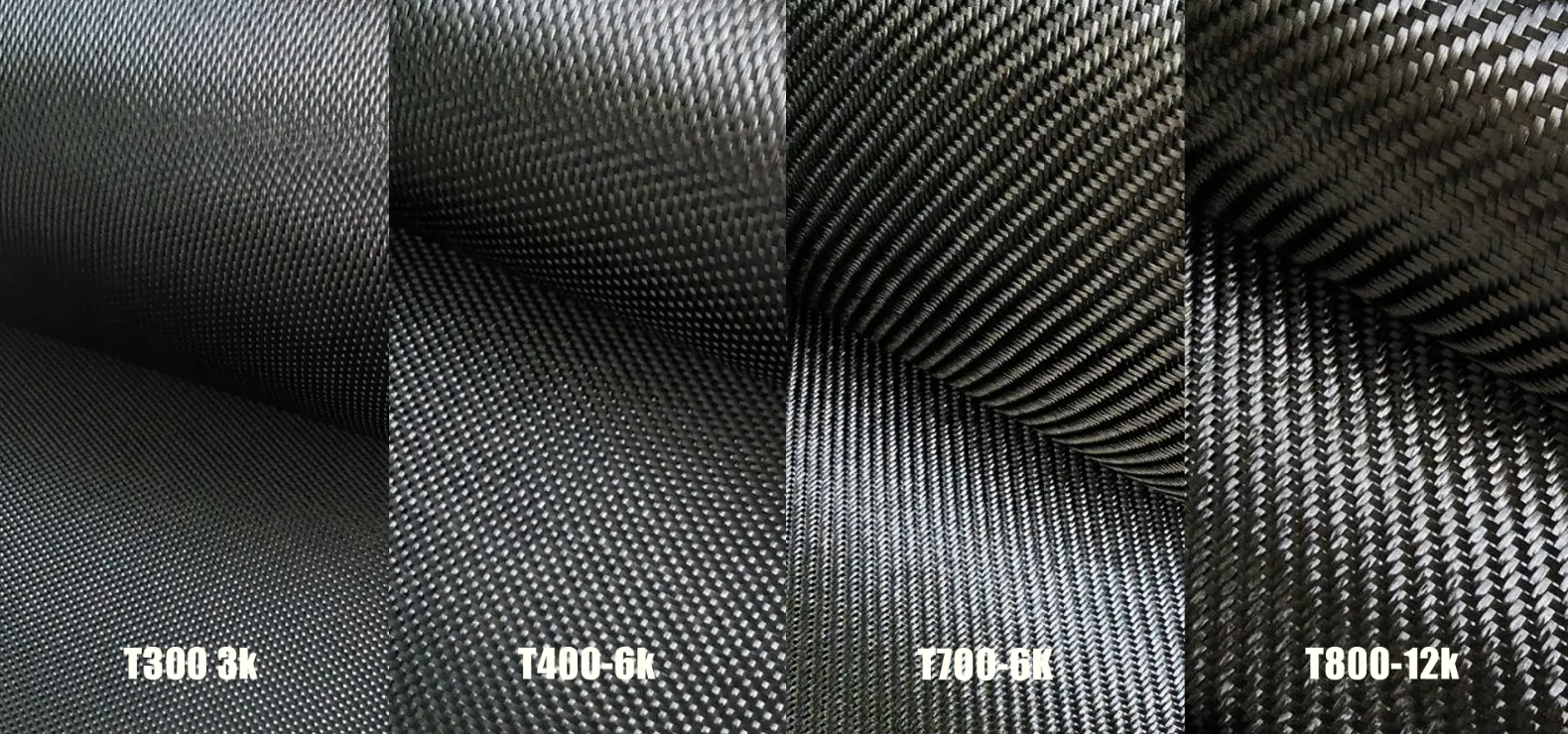
Four grades. Very different performance. The numbers below come straight from Toray’s official datasheets — no guessing, no rounding.
|
Grade |
Tensile Strength (MPa) |
Tensile Modulus (GPa) |
Density (g/cm³) |
Elongation at Break (%) |
|---|---|---|---|---|
|
T300 |
3,530 |
230 |
1.76 |
~1.5% |
|
T700S |
4,900 |
230 |
1.80 |
~2.1% |
|
T800S |
5,880 |
294 |
1.80 |
~2.0% |
|
T800H |
~5,490 |
294 |
1.80 |
~1.9% |
|
T1000G |
6,370 |
294 |
1.80 |
~2.2% |
What the Numbers Mean
The first thing engineers notice: T300 and T700S share the exact same modulus — 230 GPa. Same stiffness. But T700S delivers 38.8% more tensile strength (4,900 vs. 3,530 MPa). That gap is real, not cosmetic.
In a tension-loaded structure, you get thinner laminates, reduced safety factors, and weight savings of 20–30%. You lose no stiffness at all. For aerospace and automotive use, the failure strain jumps from ~1.5% to ~2.1%. That means your structure holds up better against buckling and delamination under cyclic loads.
Step up to T800S and you gain another 20% strength over T700S. Plus, modulus jumps 28% to 294 GPa. Higher strength and higher stiffness together — that’s why T800S is the go-to choice for primary aerospace structures.
T1000G tops out at 6,370 MPa tensile strength, the highest in this series. Modulus stays at 294 GPa, same as T800. The upgrade is pure load capacity, not added stiffness.
Tow Size Availability
Your grade choice also limits your tow options:
-
T300: 1K through 24K — the widest range
-
T700S: 6K and 12K
-
T800S/H: 12K and 24K
-
T1000G: 24K
Tow options get narrower at the high end. A T1000G layup at 24K handles a mandrel in a different way than T300 at 3K. Factor that into your process planning before you lock in a grade.
Toray T-Series Official Datasheets — Download Links & Key Specs Breakdown
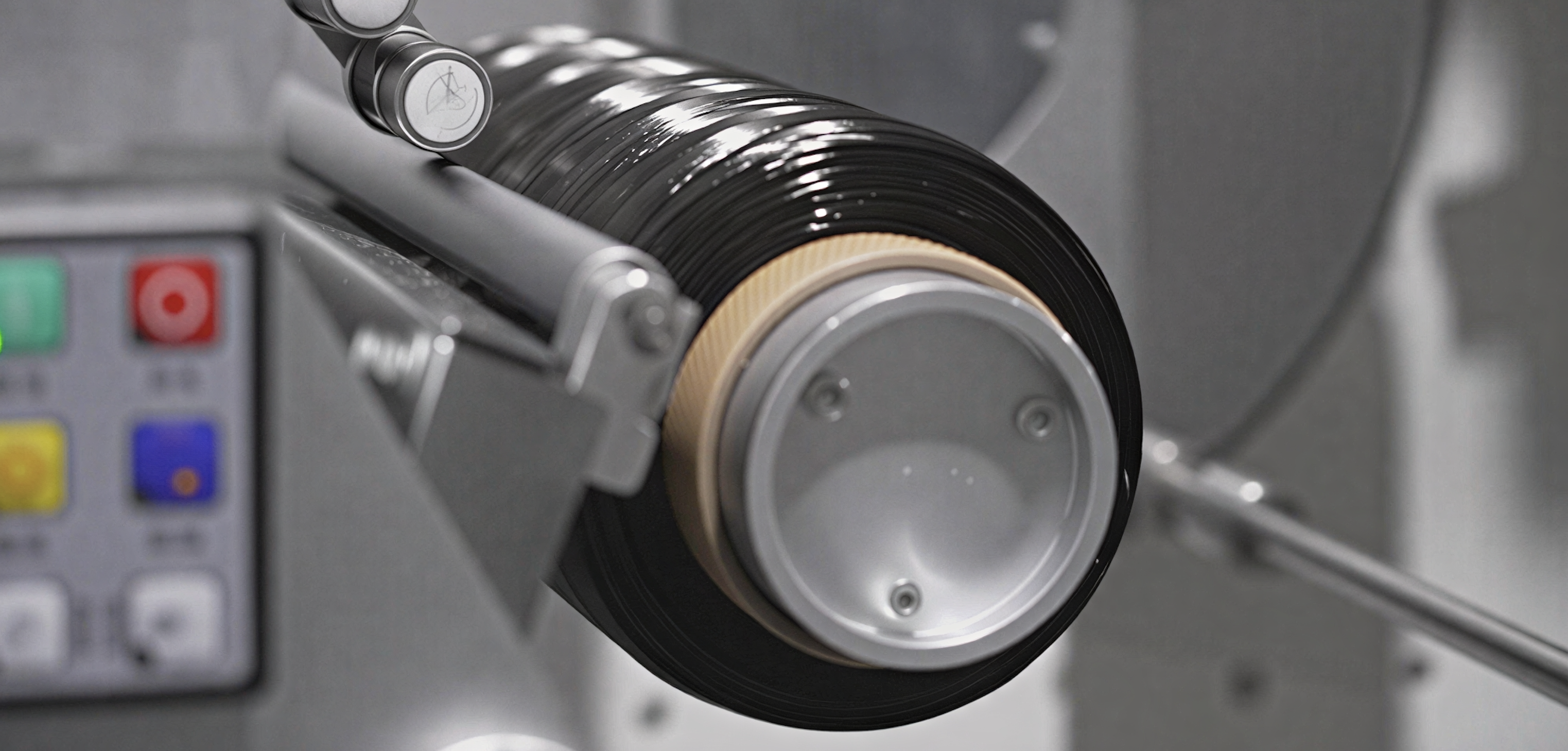
Every official Toray T-Series datasheet lives at one address: toraycma.com/resources/data-sheets/. Bookmark it. Here’s the full list:
-
T300 — Download
-
T700S — Download
-
T700G — Download
-
T800H — Download
-
T800S — Download
-
T1000G — Download
-
T1100S — Download
Note: The T300J sheet was last updated July 2024. The Technical Manual carries an April 2020 revision date.
T300J Key Specs — What the July 2024 Sheet Says
The T300J datasheet lists strand tensile strength at 4,210 MPa — not 3,530 MPa. That gap is significant. The lower figure refers to the T300 standard grade. T300J is a separate, higher-strength variant. These two grades are not interchangeable.
Full T300J strand specs per TY-QA-002/003/004:
|
Parameter |
Value |
|---|---|
|
Tensile Strength |
4,210 MPa |
|
Tensile Modulus |
230 GPa |
|
Elongation at Break |
1.8% |
|
Density |
1.78 g/cm³ |
|
Yield (3K) |
198 g/1000m |
|
Yield (6K) |
396 g/1000m |
|
Available Tow |
3K, 6K, 12K |
Strand Strength vs. Composite Strength — Don’t Mix Them Up
This is where engineers make costly mistakes. Strand tensile strength measures the raw fiber bundle. No resin, no matrix — just the bare fiber. Composite tensile strength measures the cured laminate. That’s fiber plus matrix, tested per ASTM D4018.
The composite value is always lower. Three factors pull it down:
-
Matrix interface effects
-
Void content
-
Fiber volume fraction — benchmarked at 60% Vf
A supplier quoting T300J at 4,210 MPa is giving you strand data. Your finished part will perform below that number. Plan your design around the composite value, not the strand figure.
How to Verify You’re Getting the Grade You Paid For
Suppliers misrepresent fiber grade more often than the industry admits. A two-step cross-check catches most substitutions before they reach your layup table.
Step 1 — Match density and elongation against official values:
|
Grade |
Density (g/cm³) |
Elongation (%) |
|---|---|---|
|
T300J |
1.78 |
1.8 |
|
T700S |
1.80 |
2.0 |
|
T800H/S |
1.80 |
1.0–1.5 |
|
T1000G |
1.80 |
0.9 |
|
T1100S |
1.79 |
0.9 |
Step 2 — Flag any mismatch. A density deviation greater than 0.02 g/cm³ or an elongation gap wider than 0.2% is a red flag. Recycled fiber and low-grade substitutes show up here first.
Quick grade ID rule:
-
Elongation above 1.5% and modulus around 230 GPa? You’re in T300/T700 territory.
-
Elongation below 1.5% and strength above 5,000 MPa? That’s T800 or T1000.
-
Off-spec density on either end points to substitution — treat it as a serious warning sign.
3K vs 6K vs 12K Tow Size — How Filament Count Affects Price and Structure

Tow size is the spec engineers tend to underestimate most — and the one that wrecks a build fastest when ignored.
The number before the “K” tells you how many filaments bundle into a single tow. 3K means 3,000 filaments. 12K means 12,000. That’s a fourfold difference. It ripples through fabric weight, surface behavior, resin uptake, and cost per kilogram.
|
Tow Size |
Filaments |
Areal Weight (gsm) |
Cost |
|---|---|---|---|
|
3K |
3,000 |
200–240 |
Baseline |
|
6K |
6,000 |
300–400 |
Moderate |
|
12K |
12,000 |
400–600 |
Lower per unit weight |
Drapability: Where Tow Size Is Most Visible
3K fabric is soft. It conforms to compound curves, tight radii, and complex mold shapes without bridging or wrinkling. That’s why you see it dominating cosmetic parts — hoods, mirror caps, steering wheels, interior panels — anywhere surface finish has to be perfect.
12K fabric fights back. The heavier bundle stiffens the weave. On sharp contours, it bridges instead of lying flat. Flat panels and gentle curves? Fine. Intricate shapes? It causes problems no amount of hand pressure fixes.
6K sits in the middle — more cooperative than 12K, less refined than 3K. It works best for reinforcement ribs and mechanical components.
Strength: What Tow Size Actually Controls
Here’s the part that trips people up: the K-value does not determine filament strength. T700S fiber is T700S fiber at 3K, 6K, or 12K. Grade controls strength. Tow size controls how well that strength shows up in a finished laminate.
Smaller tows improve fiber alignment. They spread stress more evenly across the laminate. They also cut the risk of resin-starved regions and boost interlaminar shear resistance. Larger tows concentrate stress inside bundles. The core gets harder to saturate — dry centers are the failure mode to watch for.
One caveat: with tight process control — autoclave cure, RTM, proper vacuum infusion — large-tow composites close that gap by a wide margin. The real difference is process sensitivity, not a hard limit on the material itself.
Matching Tow Size to Application
|
Application |
Recommended Tow |
Why |
|---|---|---|
|
Cosmetic / Detail Parts |
1K–3K |
Complex geometry, surface quality |
|
General Automotive / Consumer |
3K |
Industry standard, balanced cost |
|
Mechanical Components |
6K |
Higher stiffness, structural ribs |
|
Aerospace Load-Bearing |
6K–12K |
Shells, reinforcements |
|
Large Flat Structures |
12K |
Speed, cost efficiency |
|
Civil / Wind Energy |
24K+ |
Volume economics |
The Price Angle
Larger tows cost less per unit weight. Bundling filaments into a 12K tow is cheaper to produce than weaving four separate 3K tows over the same area. For a large structural panel, 12K or 24K is the smart economic choice.
For small, detailed parts, that logic flips. 3K gives you better moldability and cleaner surfaces. That justifies the higher per-unit cost. A bridging failure or cosmetic reject on a 12K layup costs more to fix than you ever saved on material.
Pick tow size the same way you pick grade: start with the geometry. Price follows from there.
Carbon Fiber Price Per Kg in 2026 — T300 / T700 / T800 / T1000

Carbon fiber pricing in 2026 is not a fixed number. It’s a negotiation. Know the right variables, and you put real money back in your budget.
Here are the baseline dry fiber ranges buyers are working with right now:
|
Grade |
Dry Fiber ($/kg) |
Typical MOQ |
|---|---|---|
|
T300 |
$20–35 |
100–500 kg |
|
T700 |
$30–50 |
500–1,000 kg |
|
T800 |
$50–80 |
1,000 kg+ |
|
T1000 |
$70–100+ |
2,000 kg+ |
Look at the MOQ column closely. Higher-grade fiber costs more per kilogram. It also locks you into larger minimum orders. T1000 at $70–100/kg with a 2,000 kg floor is a serious capital decision. This is not a sample order.
Prepreg Adds 20–50% — But the Variables Are Specific
Move from dry fiber to prepreg and the price jumps 20–50% over the dry base. The spread is not random. Four factors drive it:
-
Tow size — 3K and 12K carry a 10–20% premium over 24K or 50K tow. Finer tows cost more to process.
-
Resin system — Standard epoxy is the baseline. Toughened or high-temperature resin systems add another 15–30%.
-
Certification level — Aerospace-grade material (AS9100 and equivalent) runs 25–40% above industrial-grade. The paperwork is real. So is the price difference.
-
Lead time — Need delivery in under four weeks? Expect a 10–15% premium. Base pricing applies at the standard 8–12 week lead time.
A rough T700 prepreg estimate: $27–51 per square meter at 200–420 gsm fabric weight. This varies by tow and resin spec. T300 12K twill prepreg sits at $20–35/m².
Volume Discounts Are Real — Use Them
The discount structure is clear and worth planning around:
-
500–1,000 kg: 5–10% off
-
1,000–5,000 kg: 10–20% off
-
5,000 kg+: 20–30% off
That bottom tier — 5,000 kg with a 12-week lead time — is where procurement teams can cut unit cost by 20–30%. The trade-off is simple: patience plus volume commitment. Together, they move the price.
How to Get a Lower Quote
Three tactics that move the number every time:
-
Be specific in your RFQ. “12K T700, 5,000 kg, 12-week lead time” gets a sharper quote than a vague inquiry. Specificity tells suppliers you’re a real buyer, not just browsing.
-
Ask for spot price versus contract price. Spot lots — end-of-run inventory in particular — can come in 10–15% below standard pricing. Always ask.
-
Ask about off-grade or seconds. Some material doesn’t meet aerospace certification. But it’s still structurally sound for industrial or automotive use. That material often trades at 15–25% below prime-grade prices. It’s not right for every project. For the right application, though, it’s a real option worth considering.
-
Bundle dry fiber and prepreg orders. Put two product forms into one purchase. This often pushes you into the next volume tier and drops your unit cost.
Get quotes from at least three suppliers before you commit. The gap between quotes on the same specs is wider than most buyers expect. That gap is fully open to negotiation.
Where to Buy Carbon Fiber in 2026 — Verified Suppliers, MOQ Requirements

The carbon fiber supplier market in 2026 looks simple on the surface. Place your first order, though, and the picture changes fast. That “manufacturer” you’ve been emailing? Often a trading company sitting three layers away from the actual factory.
Here’s a vetted breakdown of who’s worth your time.
Verified Suppliers at a Glance
|
Supplier |
Location |
Certifications |
MOQ |
Lead Time (Mass Production) |
|---|---|---|---|---|
|
HyperX Carbon |
China |
AS9100D |
10–50 pcs |
8–12 weeks |
|
Supreem Carbon |
Dongguan |
ISO 9001 |
1 pc |
4–6 weeks |
|
ChinaCarbonFibers |
China |
ISO 9001 + AS9100 |
10 pcs |
5–8 weeks |
|
Shasha Carbon |
Dongguan |
ISO 9001 |
20–50 pcs |
4–6 weeks |
|
Suzhou M.R.D. |
Jiangsu |
ISO certified |
50 m² |
— |
Two suppliers stand out on performance numbers alone:
-
Shasha Carbon — 98.6% on-time delivery, 4.8/5.0 customer rating, ~$85/m², responds within 4 hours
-
Suzhou M.R.D. — 97.2% on-time delivery, 4.8/5.0 rating, ~$78/m², 50 m² MOQ
MOQ Reality Check
For existing tooling, most suppliers accept 1–5 pieces for sampling. Custom thickness runs 1–10 mm, with 2–6 week lead times. Supreem Carbon pushes this further — single-piece prototypes start at $30, with a 12-hour design feedback turnaround. That’s a real advantage for tight R&D cycles.
New mold projects are a different situation. Expect a one-time tooling fee upfront. Production MOQs run between 50–300 pieces per SKU. Negotiate that fee before agreeing to anything else — it’s the lever most buyers miss.
Before You Contact Anyone
Run this checklist before your first message:
-
Trade Assurance active — 50+ guaranteed orders in the past 12 months
-
On-time delivery rate — 95% minimum
-
Dispute rate — under 2%
-
Third-party audit — TÜV or SGS report dated within 24 months
-
Verified Supplier tag — look for “Onsite Check” alongside it
What to Watch Out For
The biggest structural risk in this supply chain isn’t the carbon fiber itself — it’s the supplier setup. Most listings on Alibaba and Made-in-China belong to traders, not manufacturers. Your part gets subcontracted to a shop you’ve never checked. There’s no traceability on raw material lot, cure cycle, or operator.
Four risks that come up again and again:
-
Trader posing as manufacturer — Ask for factory photos showing real, verifiable equipment. Not stock imagery.
-
Mid-run design changes without notice — This happens more than suppliers will admit
-
No traceability documentation — No COA, no lot records, no cure cycle logs
-
Unaudited subcontractors — A serious problem for AS9100-sensitive applications
Quality Validation Before You Commit
Ask for these before signing anything:
-
Material Data Sheet (MDS) — check density and elongation against grade specs
-
Third-party tensile and flexural test reports — non-negotiable for structural parts
-
Certificate of Analysis (COA) from the original fiber manufacturer
-
Sample parts with production photos — not renders
For cosmetic parts, check clearcoat adhesion. For crash-certified automotive applications, confirm your supplier can support the required testing — or has a direct working relationship with a certified tier supplier who handles it.
A reliable source and a risky one often look the same in a pitch deck. The difference shows up in the paperwork.
FAQ: Carbon Fiber Grade Questions Engineers and Buyers Ask Most
These questions come up in every procurement cycle, every engineering review, every first order. Here are straight answers.
Why do T300 and T700 share the same modulus but deliver different strength?
Both grades sit at 230 GPa. Stiffness is the same. The difference comes from the PAN precursor and how each grade is processed. T700’s manufacturing pushes filament-level tensile strength to 4,900 MPa. Modulus stays untouched. T300 tops out at 3,530 MPa. Same stiffness, 38% more load capacity. That’s a real performance gap.
Is T800 worth the cost outside aerospace?
For robotics and automotive load-critical parts, yes. You get 5,500+ MPa strength — 20–30% over T700 — but the price runs 2–3x more per kilogram. Use it where weight reduction and strength both matter at the same time. Don’t spec T800 for a bracket that T700 handles fine.
Dry fiber or prepreg for hand layup?
Dry fiber. It’s more forgiving and easier to saturate by hand. It also costs far less for prototyping. Prepreg needs autoclave or vacuum pressure to hit its rated properties. Without that setup, you won’t get the performance you’re paying for.
What does a legitimate carbon fiber sheet look like?
Look for a consistent weave pattern — no waviness, no gaps. It’s lighter than equivalent fiberglass or aluminum. Check the cut edges. You should see clear fiber and resin layers, not a thin painted surface. A real supplier backs this up with tensile test data and a fiber grade COA. No data? Walk away.
Which grade covers most industrial applications?
T300 and T700 cover the bulk of it — drones, automotive brackets, robotics frames, consumer sporting goods. High-modulus grades like M40 or M60 belong in aerospace stiffness-critical structures. Don’t pay for modulus your application doesn’t need.
Conclusion
Picking the right carbon fiber grade isn’t a small purchasing decision. It shapes every finished part you ship.
Here’s what you now have:
-
T300 — built for cost-sensitive, standard-load applications
-
T700 — the reliable choice that balances carbon fiber tensile strength and budget across aerospace, automotive, and sporting goods
-
T800 and T1000 — for projects where intermediate modulus performance is non-negotiable and weight savings justify the higher cost
You also have real 2026 pricing benchmarks, tow-size logic, and a supplier checklist to help you cut through the noise.
The next step is straightforward. Download the Toray carbon fiber datasheet for your target grade. Run it against your design requirements. Then request a quote through HyperX Carbon — specs are transparent there, and MOQs are built around real project timelines.
Good materials don’t forgive bad selection. Make the call with data, not guesswork.
Contact HyperX Carbon – Your Trusted Chinese Carbon Fiber Customization Partner
Ready to develop high-performance carbon fiber materials or custom forged carbon fiber parts tailored specifically for your project?
HyperX Carbon is your long-term strategic partner with over 20 years of expertise in advanced composites. We specialize in delivering aerospace-grade forged carbon fiber custom solutions, along with fully personalized prepreg, tubes, sheets, and lightweight carbon fiber structural components for automotive, drone, eVTOL, and medical applications.
We don’t just supply materials — we provide end-to-end customization support:
-
Stable premium supply chain using Toray, Mitsubishi, and Hengshen raw materials
-
AS9100D certified production tailored for aerospace and UAV requirements
-
Rapid prototyping carbon fiber component in just 5-8 weeks, with monthly capacity over 180,000 parts
-
Competitive pricing with 15-18% cost savings on forged carbon solutions
-
Full customization flexibility: from T700 and T1100G to ultra-high modulus grades, with tailored layups, finishes, and performance specifications
Whether you’re an eVTOL developer, automotive OEM, drone manufacturer, or medical device engineer, HyperX Carbon delivers bespoke material selection, structural optimization, and manufacturing solutions that match your exact technical and performance needs — with consistent batch-to-batch quality and reliable delivery.
Get in touch today for a free technical consultation, personalized quote, or custom material samples.
📧 Email: [email protected] 🌐 Website: https://www.hyperxcarbon.com/ 📞 Phone/WhatsApp: +86 15623270276 (English support available)
Let’s co-create your next lightweight innovation together. Contact HyperX Carbon now and stay ahead in the low-altitude economy and advanced composites market.
HyperX Carbon – Not just a supplier, but your dedicated carbon fiber customization expert.