Sourcing carbon fiber CNC services should be straightforward. For most engineers and procurement teams, it’s not.
Pick the wrong supplier and you’re looking at missed tolerances, blown lead times, and a prototype budget that’s gone toward fixing someone else’s mistakes. Good carbon fiber CNC machining partners exist — that’s not the issue. The real problem is that most buyers don’t have a clear process for finding and vetting them.
This guide gives you that process. You’ll get a sourcing checklist, a breakdown of what supplier qualifications actually mean, and a clear path to getting accurate quotes online — without the endless back-and-forth.
Prototyping a single aerospace component? Scaling into full production runs? Either way, the framework here will help you make sharper decisions at every step.
How to Find Reliable Carbon Fiber CNC Machining Partners: A Sourcing Checklist

Four sourcing channels dominate this space — and each one suits a different buyer profile.
Professional directories connect you with vetted specialists without the guesswork. Networks like RPS list 20+ carbon fiber shops. That gives you real comparison options without cold-calling strangers. Online platforms — Xometry, Protolabs — are the speed play. Quotes come in minutes. Parts ship in as little as one day. Quality varies across their partner networks, but vetting is built in. Direct vendor sites from shops like PartMFG or Upland Fab give you tighter specs and deeper expertise. Most carry 15+ years of carbon fiber experience — though MOQs tend to run higher. Industry referrals and expos take more effort. The payoff is real, though: access to Lockheed-approved suppliers and match quality that runs 20–30% better than cold outreach.
Got a list of candidates? Run them through this pre-screening checklist before spending time on detailed RFQs:
-
Carbon fiber experience: 15+ years is the threshold. Ask about aerospace or flight-critical parts — not just general machining work.
-
Equipment: Confirm 5-axis CNC capability for complex geometries. 3-axis won’t cut it for most custom composite work.
-
Online quoting: Instant DFM feedback signals a mature operation. Slow or missing feedback is a red flag.
-
MOQ flexibility: Prototype-stage buyers need single-part viability. No-minimum policies matter — a lot.
-
Dust control and certifications: AS9100, ISO 9001, or ITAR registration shows the shop takes composite safety as a core standard, not an afterthought.
From there, verify fast. Request carbon fiber case studies. Test their response time. Confirm tolerances against your actual geometry. A supplier who replies in hours is already showing you how they operate.
7 Critical Criteria to Evaluate Carbon Fiber CNC Service Suppliers
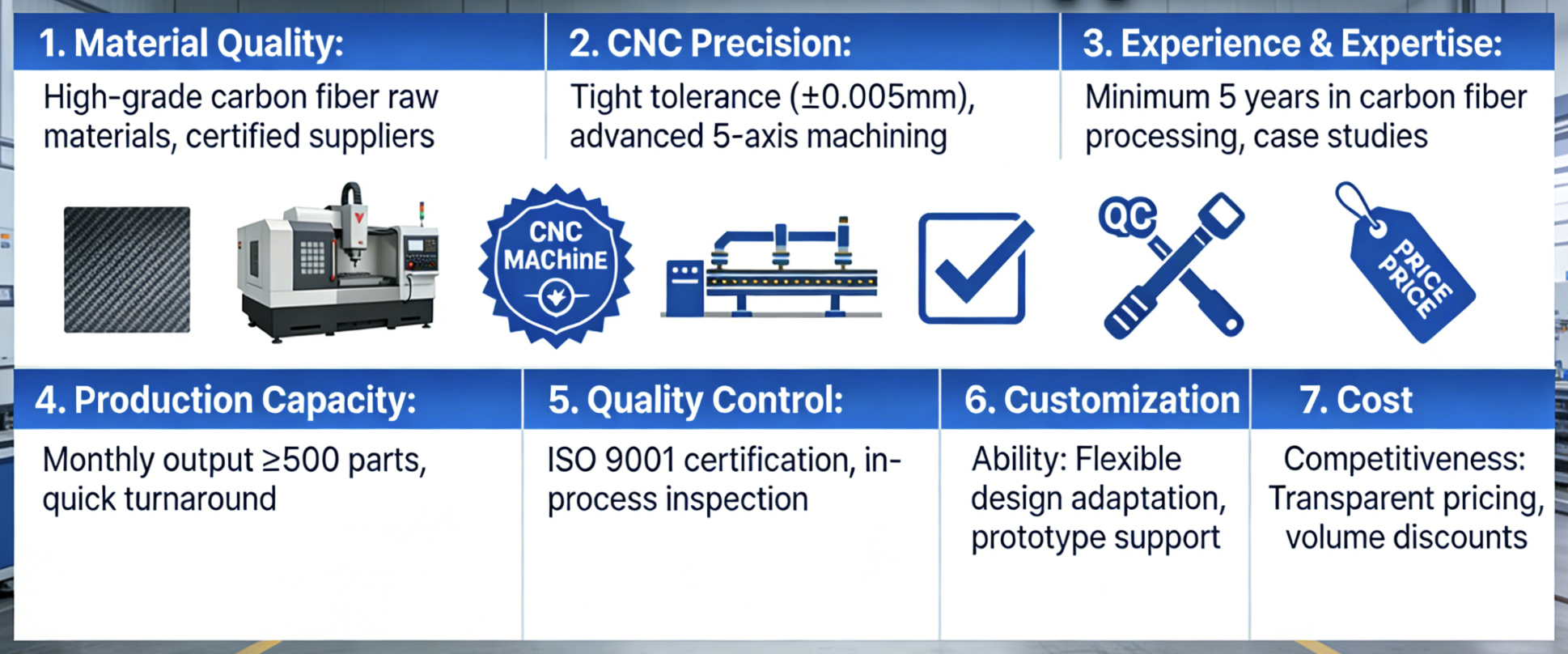
Most supplier evaluations fail before they start. Buyers ask the wrong questions.
“Can you machine carbon fiber?” is not a qualification. It’s a starting point. The criteria below separate a supplier who can run your part from one who will run it right, on time, and without a second round of tooling costs.
1. Machining Precision and CMM Inspection Capability
Tolerance claims are easy to make. CMM documentation is not.
A qualified shop holds ±0.005 mm on a coordinate measuring machine. An excellent one hits ±0.001 mm, with surface roughness down to 0.4 µm Ra and 5-axis capacity up to 500×500×500 mm. This distinction matters for carbon fiber in particular. Without proper composite vibration control, even a capable CNC machine can produce tool deflection exceeding 0.01 mm. That’s a tolerance killer. General-purpose shops don’t account for it.
Ask for CMM reports. No reports on request? That tells you everything.
2. Material Inventory Depth
A supplier’s material stock shows how seriously they treat carbon fiber — not just another job material.
The baseline: standard plate and tube in 1–50 mm thickness, plain and twill weave. The better standard: 3K/6K/12K weave options, tube OD range from 5–200 mm, and pre-cured plate ready to ship. Shops that stock carbon fiber prepreg run a different kind of operation than shops that switch over from aluminum and plastic. That gap shows up directly in delamination rates.
3. Process Capability — The Right Tool for the Right Cut
Not every carbon fiber geometry needs the same process. Here’s how the main methods stack up:
|
Process |
Best Use |
Tolerance |
Key Consideration |
|---|---|---|---|
|
Milling |
Complex 3D geometry |
±0.005 mm |
5-axis minimizes delamination |
|
Drilling |
Fastener holes |
±0.01 mm |
Low speed, high torque prevents layer separation |
|
Routing |
2D profiles, thin sheet |
±0.02 mm |
Cost-effective for flat parts |
|
Laser cutting |
Fine detail cuts |
±0.05 mm |
Edge scorching risk on thick stock |
|
Waterjet |
Thick plate, zero heat |
±0.1 mm |
No thermal damage, clean fiber edges |
The minimum bar: 3/5-axis CNC plus basic waterjet. Best-in-class: a 5-axis setup with full automation, continuous compression molding capability, and tolerances tighter than ±0.002 mm.
4. Lead Time — What “Fast” Really Requires
A one-day turnaround isn’t magic. It’s infrastructure.
Qualified shops deliver prototypes in 3–5 days, production runs in 7–14 days. The best operations hit 1–3 days on prototypes — but that requires automated tool changers, real-time monitoring, and on-hand material inventory all working at once. Carbon fiber specialists keep stable supply chains. General CNC shops that source composite materials on demand average 20–30% higher delays.
5. MOQ and Pricing Structure
Low unit price is not the same as low total cost.
Any serious carbon fiber CNC service supplier accepts single-piece prototype orders. No-minimum policies are non-negotiable for early-stage development work. On pricing: 5-axis machining runs 20–30% more than 3-axis — but setup time drops by half. That changes the math on small batches. Volume pricing should show 15–25% reductions at scale.
Here’s the harder truth: picking a generic shop to save on unit price pushes rework rates up by around 30%. Specialists cost more per part. They cost less per good part.
6. Certifications and Material Traceability
Certifications aren’t paperwork. They’re the one third-party confirmation that quality claims actually hold up.
-
Baseline: ISO 9001:2015, material chemical and visual inspection
-
Aerospace standard: AS9100D
-
Medical: ISO 13485
-
Defense: DoD QPL registration
-
Full traceability: batch number tracked back to raw material origin
For aerospace carbon fiber machining, push for NDT ultrasonic testing. It catches internal material integrity issues that visual inspection misses. General CNC shops without composite certification won’t even look for those problems.
7. Post-Project Support and Technical Responsiveness
How a supplier communicates during a project predicts how they’ll handle problems when things go wrong.
The minimum standard: a dedicated project manager, structured status updates, and sub-24-hour response time on technical questions. The practical test is simple — send them a DFM question before placing an order. A shop that comes back with specific answers within a few hours is showing you the operational discipline your parts will depend on.
Step-by-Step Guide: How to Get Carbon Fiber CNC Quotes Online (With Less Back-and-Forth)
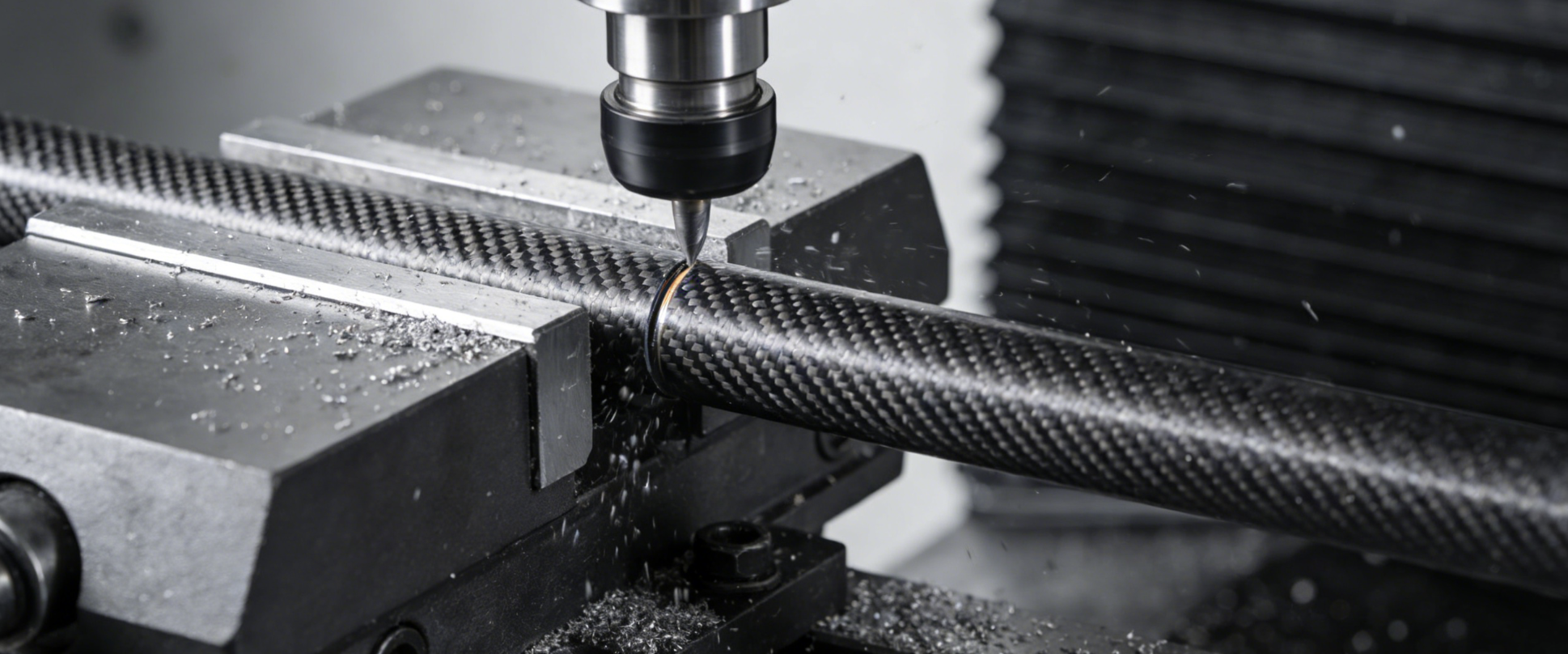
The fastest quotes go to the best-prepared buyers. That’s not a coincidence — it’s how the system works.
Carbon fiber CNC services have cut what used to be a three-day email chain down to a two-hour turnaround. Platforms like Weerg and JLCCNC return instant pricing the moment you upload a 3D CAD file. Sinofibre runs 24 CNC routers and caps analysis plus quote delivery at two hours flat. Protolabs moves even faster — seconds to hours. The bottleneck is almost never the supplier. It’s the buyer who shows up unprepared.
Here’s what to have ready before you hit upload:
-
Part dimensions — must fall within the 4000×2000 mm maximum router capacity
-
Material spec — carbon fiber grade, weave pattern (plain vs. twill), fiber count (3K/6K/12K)
-
Sheet thickness
-
Surface finish requirements
-
Quantity and target ship date
-
Threading specs, if applicable
Upload a complete 3D CAD file with all parameters set in advance. On instant-quote platforms, pricing updates live as you adjust materials, finishes, or quantities. No resubmission needed.
One thing to watch: automated DFM analysis flags geometry that pushes up cost — tall thin walls, non-threadable holes, features that need extra fixturing. Those flags show up for a reason. The platform is telling you exactly where your budget is about to go. Don’t skip past them.
On pricing transparency: reputable platforms show a binding final price with no hidden fees. Customs and VAT may come into play with overseas suppliers — confirm that upfront before you commit.
The table below breaks down how the major platforms compare on the factors that matter most:
|
Platform |
Quote Speed |
MOQ |
Fastest Shipping |
|---|---|---|---|
|
Sinofibre |
2 hours max |
1 pc |
Not specified |
|
Protolabs |
Seconds–hours |
Not specified |
1 day |
|
HyperX Carbon |
Instant |
1 pc |
3 days |
|
JLCCNC |
Instant |
Not specified |
3–5 days |
|
Carbon Vega |
Instant |
None |
Not specified |
Prepare the file. Upload once. The back-and-forth is optional — most buyers just don’t know that yet.
Carbon Fiber CNC Supplier Comparison: Top 7 Providers Analyzed
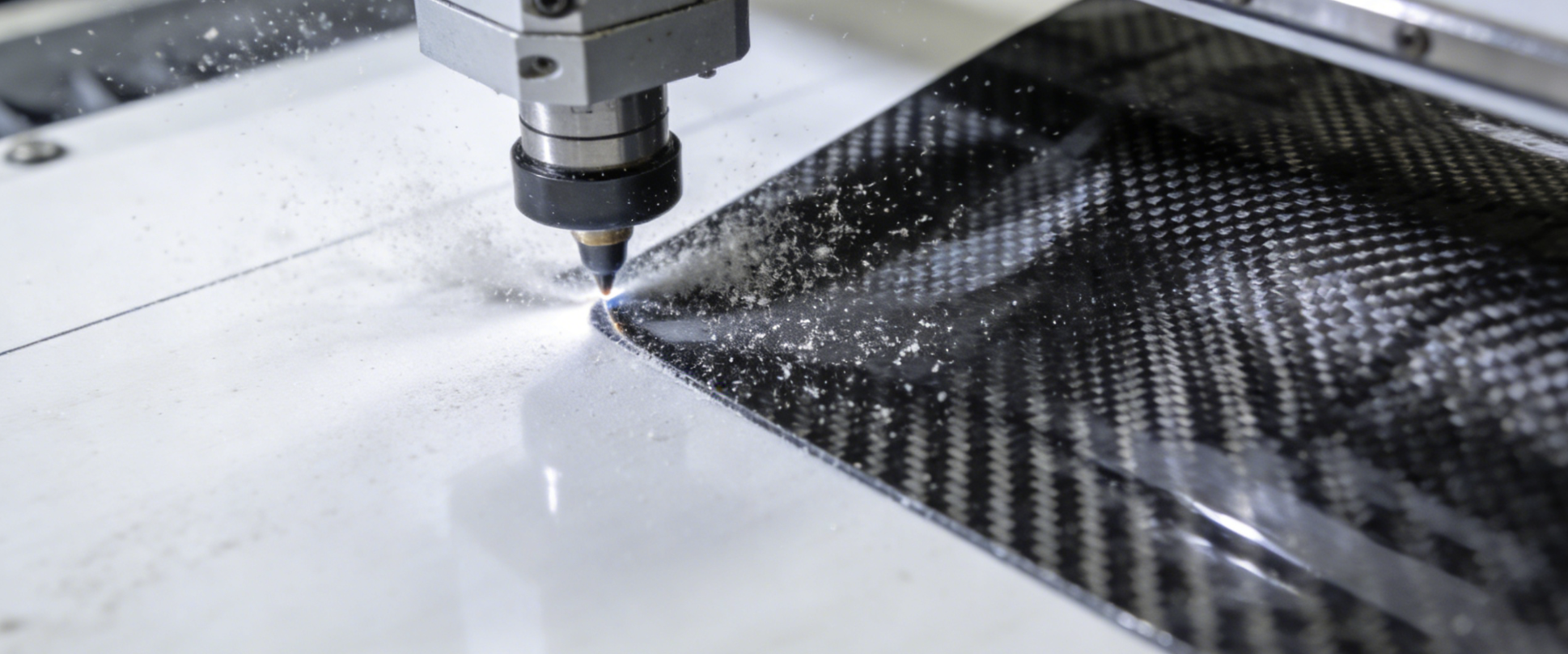
Seven suppliers. Seven different answers to the same question: who should be cutting your carbon fiber?
No single provider wins across every dimension. The right choice depends on your project stage, tolerance requirements, timeline, and how much control you need over the process. Here’s how the field breaks down.
HyperX Carbon targets precision-first buyers who need consistent results. Their heat-press molding locks in uniform thickness. Hand-layup methods can’t match that. For automotive aftermarket work or prototype firms where surface and dimensional consistency is non-negotiable, that difference matters. You get micron-level CNC cutting, instant online quotes for standard parts, and a 2–4 week lead time. ISO 9001 certified. No AS9100, so aerospace-critical programs should look elsewhere. For medium-volume custom composite work, iKabon is a serious option.
Elimold takes a different approach. They offer full custom engineering, injection molding combined with CNC, and deep customization. That makes them the right pick for industrial or consumer components that need heavy process involvement. Cost is the tradeoff — $20–45/kg puts them at the premium end. A 3–6 week lead time reflects that complexity. Their logistics focus on Asia, so international buyers should add buffer time to their planning.
DragonPlate is the go-to for researchers and R&D teams. Stock tubes and plates are ready to ship, which is useful for teams iterating on designs. Catalog pricing speeds up early-phase sourcing. Customization depth is low-to-medium, though. Lead times run 4–8 weeks. That makes them a poor fit for fast-moving projects or high-volume production.
STEVS delivers strong results on speed. Prototype turnarounds run 5–10 days. They carry ISO 9001 and ISO 14001 certification, plus 5-axis CNC capability for high-precision geometries. Global reach is limited — confirm logistics before committing. For prototype-to-medium-volume runs where precision and turnaround matter more than scale, STEVS belongs on your shortlist.
CNC Madness is the rapid-response option. Same-day quotes, 1–5 day lead times, and a wide material range make them attractive for automotive and hobby-to-prototype buyers who need to move fast. The broker model is the catch. Added fees and variable quality across their partner network are real concerns. Check their network carefully before placing high-stakes orders.
Xometry runs as a marketplace. It connects buyers to a vetted global CNC network. ISO 9001 and AS9100D certification signals real aerospace-readiness. Instant online quotes, 1–5 day lead times, and single-piece MOQ keep the barrier low. The broker fee structure does add cost. You also get less direct control over the process. For aerospace, medical, or low-volume production buyers who need certified capacity and fast turnaround, Xometry is hard to beat.
SendCutSend rounds out the list with a tight, focused offering: sheet-based CNC cutting, no MOQ, a 3–7 day lead time, and instant online quoting. Complex 3D geometries are outside their scope. For flat-profile prototyping and small-batch carbon fiber sheet work, it’s one of the most straightforward, low-friction options available.
Quick-Reference Comparison
|
Supplier |
Best For |
Lead Time |
MOQ |
Certifications |
Online Quote |
|---|---|---|---|---|---|
|
HyperX |
Consistent precision, auto/proto |
2–4 weeks |
1+ |
ISO 9001 |
Yes |
|
Elimold |
Full custom engineering |
3–6 weeks |
10+ |
None listed |
Upload |
|
DragonPlate |
R&D, stock-based sourcing |
4–8 weeks |
1 |
None listed |
Partial |
|
STEVS |
Fast-turnaround precision parts |
5–10 days |
1+ |
ISO 9001/14001 |
Yes |
|
CNC Madness |
Rapid proto, wide materials |
1–5 days |
1 |
ISO 9001 |
Instant |
|
Xometry |
Aerospace, medical, certified work |
1–5 days |
1 |
ISO 9001, AS9100D |
Instant |
|
SendCutSend |
Sheet cutting, no-MOQ prototyping |
3–7 days |
None |
Not listed |
Instant |
The pattern is clear. Speed-focused buyers gravitate toward Xometry, CNC Madness, or STEVS. Precision-over-pace buyers land on iKabon or STEVS. R&D teams working from stock get the most out of DragonPlate. Sheet-cutting prototypers can solve 80% of their problems through SendCutSend — no phone call needed.
Match the supplier to the actual problem in front of you — not to a general reputation for “good carbon fiber work.”
Prototype vs. Production: Choosing the Right Carbon Fiber CNC Partner for Your Project Scale
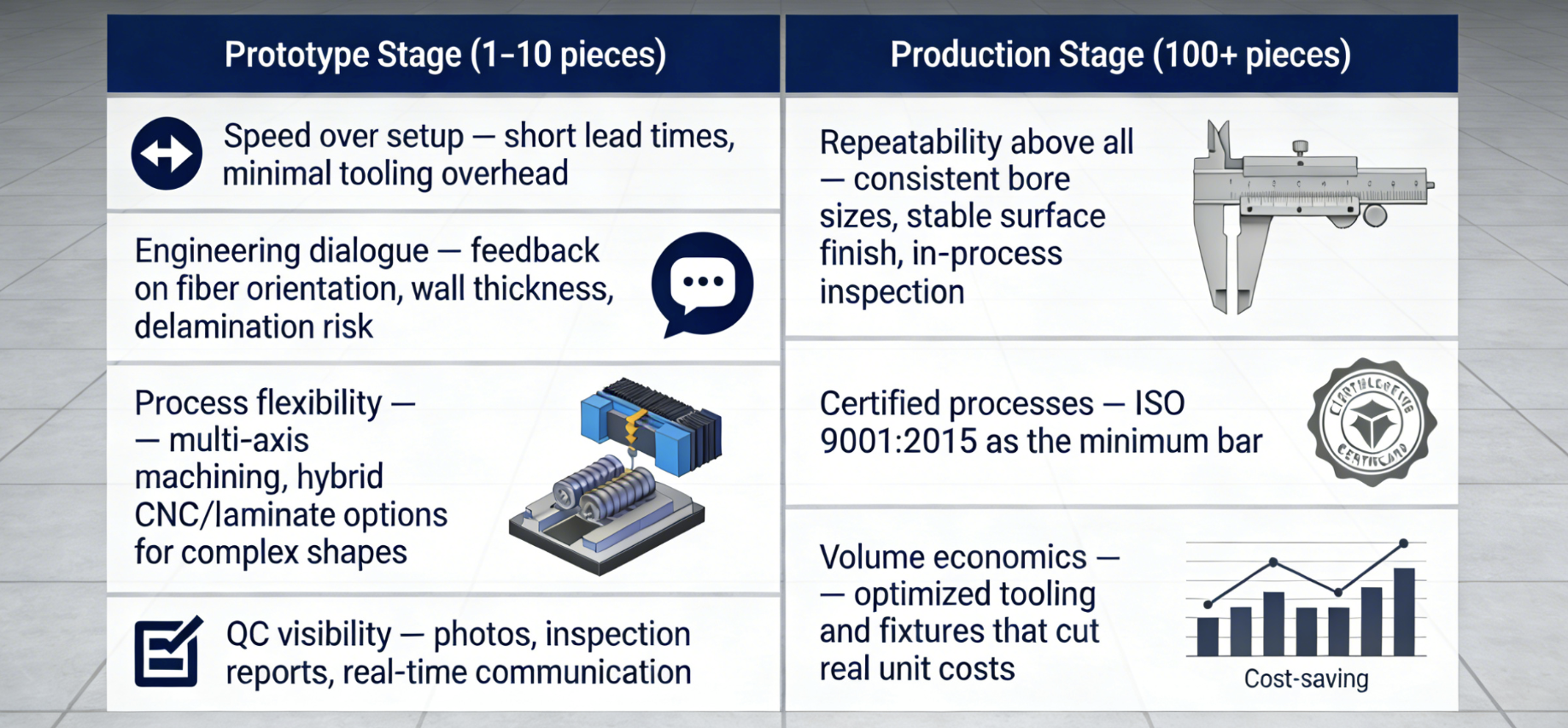
Scale changes everything — and most buyers learn this the hard way.
A supplier who nails your first ten parts can fall apart at a hundred. A shop built for volume will burn your prototype budget on setup costs you never needed. The mistake isn’t picking a bad supplier. It’s picking the right supplier for the wrong phase.
Prototype stage (1–10 pieces) calls for a different set of priorities:
-
Speed over setup — short lead times, minimal tooling overhead
-
Engineering dialogue — feedback on fiber orientation, wall thickness, delamination risk
-
Process flexibility — multi-axis machining, hybrid CNC/laminate options for complex shapes
-
QC visibility — photos, inspection reports, real-time communication
Production stage (100+ pieces) shifts the whole equation:
-
Repeatability above all — consistent bore sizes, stable surface finish, in-process inspection
-
Certified processes — ISO 9001:2015 as the minimum bar
-
Volume economics — optimized tooling and fixtures that cut real unit costs
The Transition Decision
Make the switch after your prototype has confirmed geometry, structural behavior, and a locked design — not before. Move too early and you’re paying for tooling on a part that still needs changes.
The cleanest path? Stay with the same partner through both phases. A supplier who already knows your fiber layup challenges, your tolerance logic, and your material behavior won’t need re-educating at scale. Switching resets all of that. Heat distortion issues, alignment problems, stress points that were fixed in prototyping — they come back.
Recommended Supplier Path by Scale
|
Project Scale |
Best Fit |
Why |
|---|---|---|
|
1–10 pcs (prototype) |
Elimold, DragonPlate |
Fast custom laminates, engineering feedback, CNC flexibility |
|
100+ pcs (production) |
iKabon, CNC Madness |
Volume consistency, price scaling, process stability |
|
Prototype → Production |
ISO 9001-certified hybrid shops |
Smooth transition, validated blueprint, no process reinvention |
Check scalability before you lock in a prototype partner. The best outcome is one supplier who grows with your project — not two separate relationships you’re managing across a critical handoff.
5 Common Mistakes to Avoid When Sourcing Carbon Fiber CNC Services
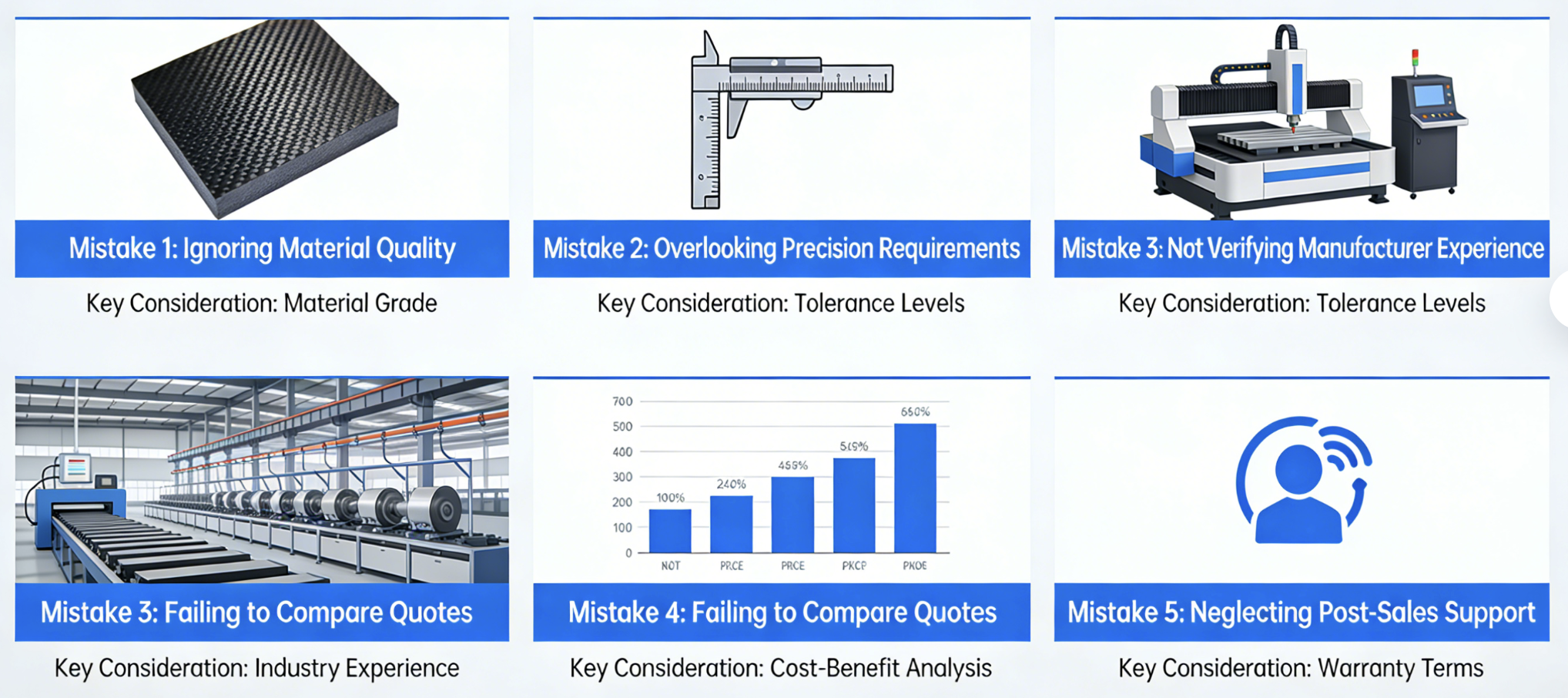
Most sourcing mistakes aren’t made during negotiation. They’re made before the first email is sent.
Carbon fiber is unforgiving in ways aluminum and steel are not. It’s anisotropic — it behaves differently based on direction — and it punishes every shortcut: wrong tooling, vague drawings, skipped post-processing. The five mistakes below cause the majority of blown budgets and failed first articles in carbon fiber CNC fabrication. Know them before they cost you.
Mistake 1: Using a general CNC shop that doesn’t specialize in composites.
Carbon fiber wears cutting tools up to 10x faster than aluminum. Without PCD (polycrystalline diamond) cutters and composite-specific feed rates, delamination isn’t a risk — it’s a guarantee.
Look for shops with 5+ years of carbon fiber experience and 5-axis capability. Ask for actual sample work: drone frames, structural brackets, anything held to sub-0.1 mm tolerances. Don’t skip this step.
Mistake 2: Submitting incomplete or non-standard files.
A drawing that ignores fiber orientation creates a 20–50% swing in quote accuracy — before a single chip is cut. Sharp internal corners under 3 mm radius cause tool chatter and matrix cracking in CFRP.
Submit STEP or IGES files. Specify:
– Fiber direction
– Ply stack-up
– Tiered tolerances: ±0.05 mm on critical holes, ±0.2 mm elsewhere
Get DFM feedback on fiber alignment and corner geometry before approving anything.
Mistake 3: Overlooking dust control and health compliance.
Carbon fiber dust is fine, conductive, abrasive, and hazardous. OSHA sets exposure limits at 0.5 fibers/cc. Shops without HEPA vacuums, down-draft tables, and documented PPE protocols are not just a health liability — they’re an equipment contamination risk.
Poor dust management blocks vacuum paths in about 30% of composite setups. Get written confirmation of dust extraction systems before committing to any carbon fiber cutting service.
Mistake 4: Choosing on price without evaluating process capability.
The cheapest quote reflects inferior tooling. That shows up as rework — and rework in custom CNC carbon fiber manufacturing adds 15–30% to total project cost.
The right questions aren’t about unit price. Ask about:
– Feed and speed rates (1,000–3,000 RPM is the CFRP baseline)
– Tool life benchmarks (500+ meters of cutting)
– Scrap rates on comparable parts
Compare processes, not just numbers.
Mistake 5: Letting post-processing fall out of scope.
This one shows up late and hurts most. Deburring alone adds 20–40% to machining time on composite parts. Edge sealing stops delamination in humid environments. Surface coatings affect both function and finish.
None of this appears on its own in a standard quote. Before you sign off, mandate line-item breakdowns covering:
– Deburring
– Edge sealing
– Surface treatment — including target surface roughness (Ra <1.6 µm)
Hidden post-processing fees are the top reason carbon fiber CNC parts come in over budget.
FAQ: Carbon Fiber CNC Machining — The Questions Buyers Ask Before Committing
These questions come up on every serious sourcing call. Here are straight answers.
What’s the minimum order quantity?
One piece. Prototype orders start at a single part. Volume pricing kicks in above 50 pieces — around 20% lower per unit.
What tolerances can I expect?
Standard carbon fiber CNC tolerances run ±0.05 mm on most geometries. Complex profiles come in at ±0.1 mm. Five-axis setups push that down to ±0.01 mm. Aerospace-grade work needs to stay under ±0.02 mm. Confirm this number directly with your supplier before you sign anything.
Can you machine carbon fiber tubes?
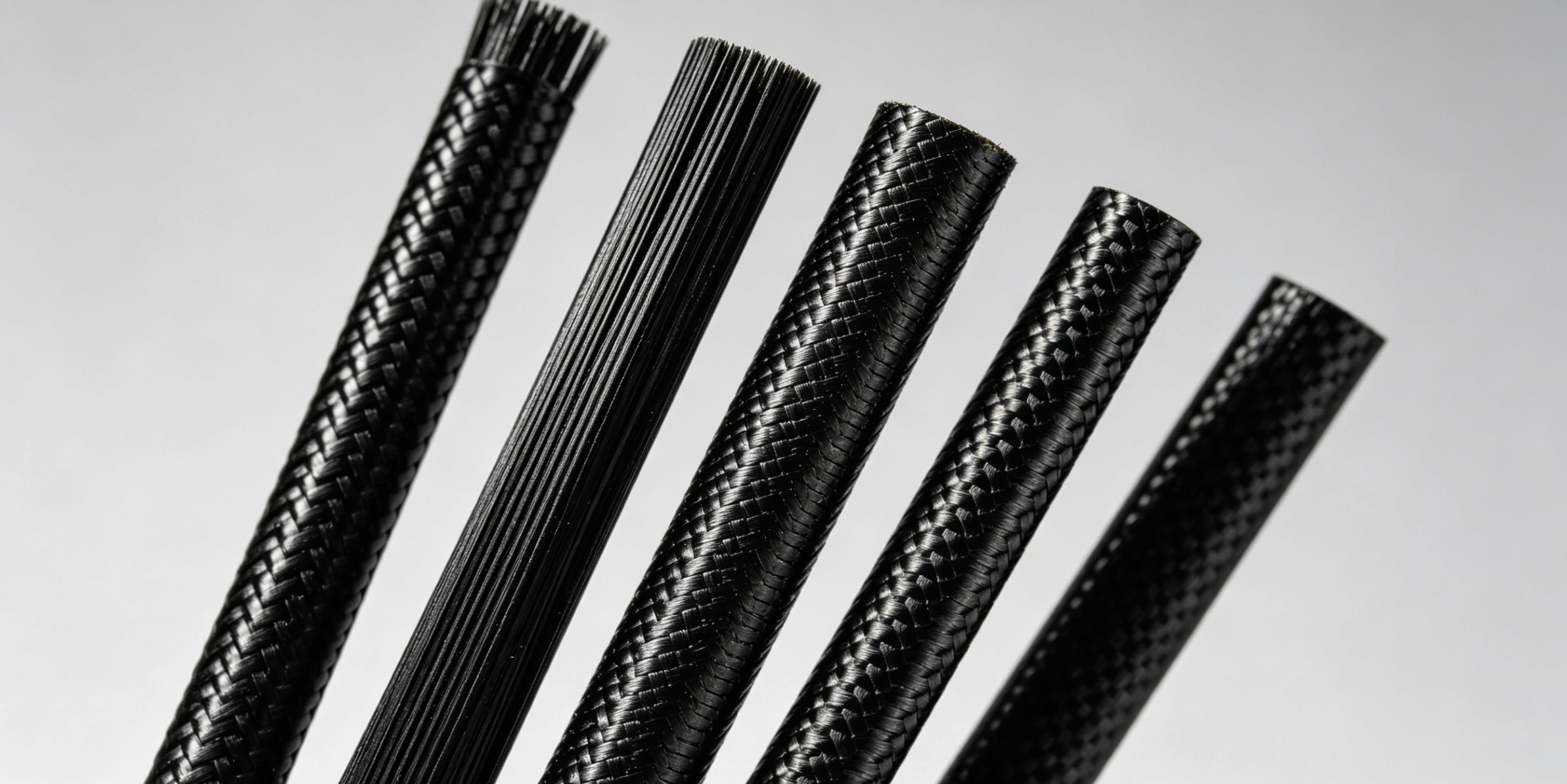
Yes. Both filament-wound and roll-wrapped tubes work with CNC machining. Typical range: 50–300 mm OD, 1–5 mm wall thickness.
How is precision verified?
We use CMM measurement and laser scanning. Every batch goes through 100% inspection against ISO 9001 documentation — from raw material to finished part.
Can lead times be expedited?
Standard runs take 4–6 weeks. Rush orders finish in 7–10 days at about a 30% price premium. Prototypes can turn around in 3 days if material is in stock.
Do suppliers ship internationally?
Yes. DDP terms are standard with established suppliers. U.S. delivery lands within two weeks. Full tracking and insurance coverage come with every shipment.
What certifications should I require?
ISO 9001 is the baseline. Aerospace programs require AS9100D. Also ask for full material traceability — fiber type, tensile strength above 3,500 MPa, and batch-level documentation.
Conclusion
Sourcing the right carbon fiber CNC service isn’t a gamble — it’s a process. You now have the checklist, the evaluation criteria, the red flags, and the questions that separate serious suppliers from costly disappointments.
Here’s what it comes down to: precision matters, but partnership matters more. The best custom CNC carbon fiber supplier isn’t just the one with the tightest tolerances. It’s the one that communicates without confusion, delivers on time, every time, and scales with your project without friction.
You’ve done the research. You know what to ask. You know what to avoid. And you know what a quality quote looks like.
The next move is simple: take your specs, use the framework in this guide, and put a real supplier to the test.
Contact HyperX Carbon – Your Trusted Chinese Carbon Fiber Customization Partner
Ready to develop high-performance carbon fiber materials or custom forged carbon fiber parts tailored specifically for your project?
HyperX Carbon is your long-term strategic partner with over 20 years of expertise in advanced composites. We specialize in delivering aerospace-grade forged carbon fiber custom solutions, along with fully personalized prepreg, tubes, sheets, and lightweight carbon fiber structural components for automotive, drone, eVTOL, and medical applications.
We don’t just supply materials — we provide end-to-end customization support:
-
Stable premium supply chain using Toray, Mitsubishi, and Hengshen raw materials
-
AS9100D certified production tailored for aerospace and UAV requirements
-
Rapid prototyping carbon fiber component in just 5-8 weeks, with monthly capacity over 180,000 parts
-
Competitive pricing with 15-18% cost savings on forged carbon solutions
-
Full customization flexibility: from T700 and T1100G to ultra-high modulus grades, with tailored layups, finishes, and performance specifications
Whether you’re an eVTOL developer, automotive OEM, drone manufacturer, or medical device engineer, HyperX Carbon delivers bespoke material selection, structural optimization, and manufacturing solutions that match your exact technical and performance needs — with consistent batch-to-batch quality and reliable delivery.
Get in touch today for a free technical consultation, personalized quote, or custom material samples.
📧 Email: [email protected] 🌐 Website: https://www.hyperxcarbon.com/ 📞 Phone/WhatsApp: +86 15623270276 (English support available)
Let’s co-create your next lightweight innovation together. Contact HyperX Carbon now and stay ahead in the low-altitude economy and advanced composites market.
HyperX Carbon – Not just a supplier, but your dedicated carbon fiber customization expert.