
Picking the wrong carbon fiber wrap leads to bubbles, peeling edges, and a redo job that costs more than the first install. Dozens of brands hit the market in 2026 — all claiming better adhesion, sharper texture, and longer durability. That makes the choice tough.
So we did the heavy lifting. We put 3M, Avery Dennison, VVivid, and several serious challengers through a full head-to-head breakdown. Every spec that counts got tested.
DIY enthusiast wrapping your first hood? Shop owner buying rolls by the case? This carbon fiber wrap review cuts through the marketing noise. It tells you which brand earns your money — and which ones fall short.
3M Carbon Fiber Wrap Review: The Professional’s Benchmark

3M has been refining vinyl wrap technology for three decades. Every roll of the 2080 Series carries that history — and professional installers notice it the moment they pull the liner back.
The 3M 2080 CFS12 Black and CFS201 Gray are the two carbon fiber SKUs dominating shop orders in 2026. Here’s what you get:
-
Thickness: 3.5 mil face film, 4.5 mil with adhesive (±0.6 mil tolerance)
-
Roll dimensions: 60 inches × 25 yards — about 1,500 sq ft per roll
-
Coverage: 1.3–1.7 rolls for a full sedan; 2.1 rolls for a mid-size SUV
-
Warranty: 8 years on vertical surfaces (75–90° angle)
-
Operating range: -61°F to 225°F (-60°C to 107°C)
What Makes the 2080 Different From the 1080
The 2080 is dual-layer cast vinyl. The 1080 is single-layer. That gap matters on complex body panels. You get better elongation, a cleaner stretch around compound curves and recesses, and lower initial tack. Lower tack means you can reposition the film without tearing it. On door handles, mirror caps, or hood scoops with tight geometry, the 2080 handles mistakes far better than the 1080.
The Controltac™ + Comply™ adhesive system is the real story here. Micro air-release channels run through the adhesive layer. You can’t see them once the wrap is installed, but they do the heavy lifting during application. Bubbles don’t trap. The film slides so you can reposition it. Heated stretching holds shape clean, with no distortion.
The Honest Downsides
At $500–$800 per roll (~$0.33–$0.53 per sq ft), 3M sits at the top of the price range. A professional shop billing out labor can defend that cost easily. For a first-time DIY wrap on a daily driver, it’s a tougher case to make.
Two other friction points worth flagging:
-
Minimum install temperature of 61°F (16°C) shuts down cold-weather work. In northern US climates, that wipes out 3–5 months of usable install days.
-
Limited SKU depth — fewer than 100 total 2080 patterns. The carbon fiber vinyl wrap selection stays narrow. CFS12 and CFS201 cover most orders, but specialty textures or colors beyond gloss black and gray are hard to find in this lineup.
The 60-inch seamless roll width is a real practical advantage. Fewer seams on wide panels like hoods and roofs. That’s not a minor detail — seam placement is the first thing that exposes an amateur install.
Bottom line: 3M earns its benchmark status in carbon fiber car wrap film through adhesive engineering and installation consistency — not just brand name. Running a professional shop or wrapping a high-value vehicle? The performance justifies the price. On a tighter budget or just getting started? There are better entry points on this list.
Avery Dennison Carbon Fiber Wrap Review: Premium Conformability & Custom Work

Custom shops have a saying: the wrap that fits the curve wins the job. Avery Dennison built its SW900 Supreme Wrapping Film around that principle.
The SW900 carbon fiber series — black (SW900-194-X) and white (SW900-115-X) — uses a 107 µm super cast vinyl face bonded to a 30 µm clear acrylic adhesive layer. A 150 g/m² StaFlat™ PE-coated liner backs the whole thing. That cast construction is what separates it from calendered competitors. Cast vinyl doesn’t fight you on curves. It conforms.
Easy Apply RS™: The Adhesive That Does Real Work
The Easy Apply RS™ system is Avery’s answer to the repositioning problem. Air-egress channels run through the adhesive. Low initial tack lets you slide and lift the film without locking it down too early. Pressure-activation seals it in place once you’re ready. For tight wheel arches, door channels, and concave body recesses — the details that punish lesser films — this adhesive earns its reputation.
Adhesion builds in stages:
– 20 minutes post-application: 350 N/m
– 24 hours: 440 N/m
– 1 week: 525 N/m
That ramp-up isn’t a flaw. It’s by design. You get a working window before the bond becomes permanent. That’s useful for complex installs where repositioning isn’t optional.
Specs That Matter in the Field
|
Spec |
Value |
|---|---|
|
Face film thickness |
107 µm |
|
Total (face + adhesive) |
137 µm |
|
Elongation at break |
200% |
|
Service temp range |
-42°C to +82°C |
|
Outdoor durability |
4 years vertical |
|
Removability |
Up to 3 years |
The 200% elongation is the number to watch. It’s lower than HyperX Carbon’s 453.7% figure. On extreme compound curves or very deep recesses, you’ll need more patience and heat work with Avery. The trade-off is dimensional stability under 0.254 mm. The film doesn’t drift or creep after installation. That’s a real advantage on finished work.
Where Avery Wins — and Where It Doesn’t
The Avery carbon fiber wrap performs best on high-end vehicles where curve complexity is the challenge, not just surface area. Custom fabrication studios pick it because the super cast film handles concave-convex combinations without incisions. No cuts into the film to relieve tension. The result is cleaner, with fewer stress points.
The tradeoff is durability. 4-year outdoor performance on vertical surfaces falls well short of 3M’s 8-year warranty claim. For a daily driver or a client vehicle built to last, that gap matters. Pricing sits at $1.99 CAD/sq ft retail — not cheap, but fair for custom work where conformability is the priority.
The honest fit: Avery SW900 is built for shops doing custom installs on complex body geometry. It’s not the most durable film on this list. It’s also not the easiest pick for beginners. But for a skilled installer wrapping a vehicle with aggressive curves and deep channels, it’s one of the most controllable carbon fiber wrap options available in 2026.
VVivid Carbon Fiber Wrap Review: Best Value for DIY Enthusiasts
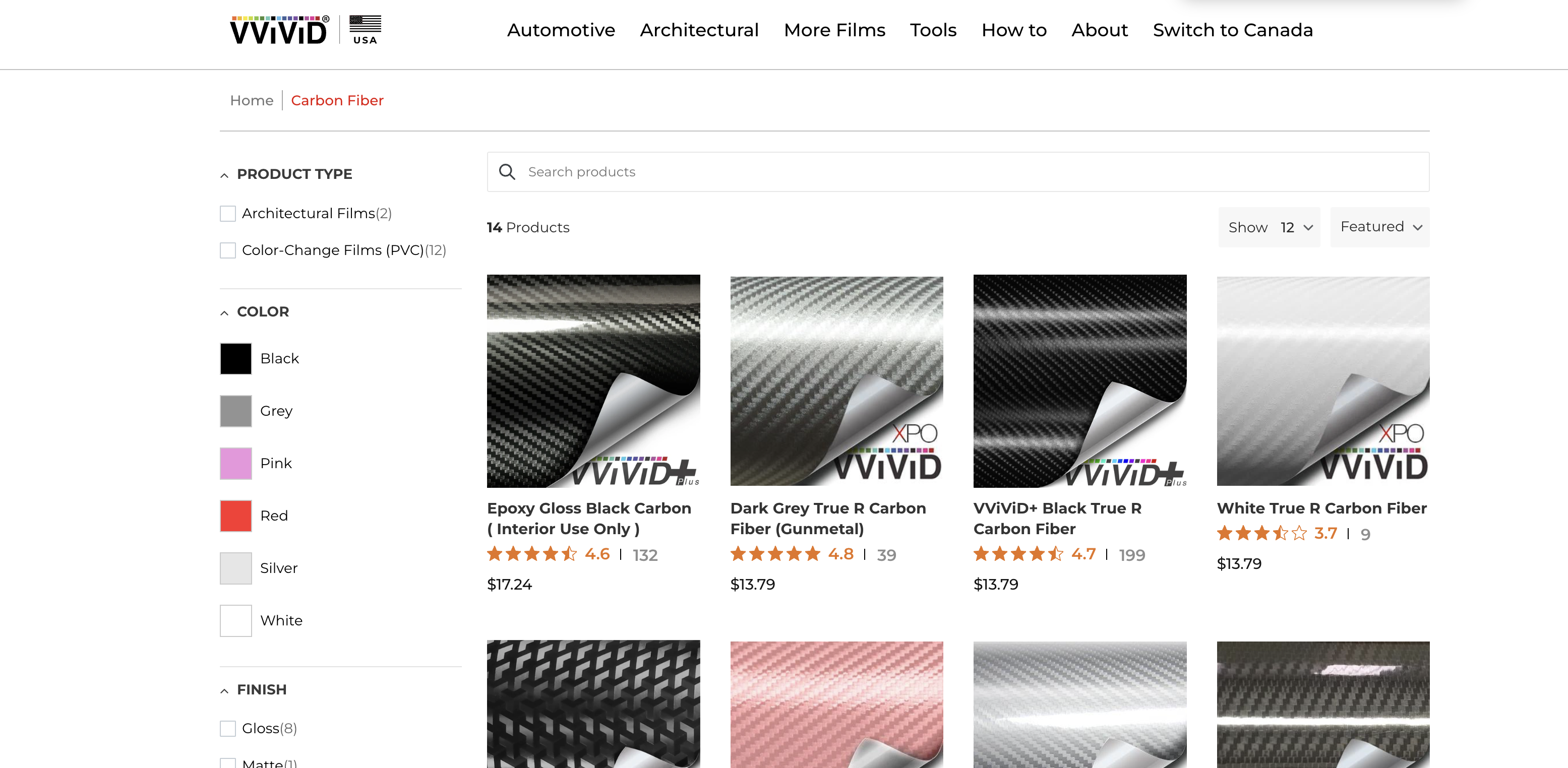
VVivid has built a loyal following among weekend wrappers — and the specs show why.
The XPO Black Carbon Fiber sits at the center of that reputation. At 4.5 mils thick on the standard black model, it’s not the thinnest film on this list. But thickness isn’t the point here. The construction focuses on something more practical: forgiveness. The hybrid-elastic PVC formula stretches without tearing, repositions without locking down too soon, and holds its shape once you commit. First-time hood wrappers will get more value from that stretch-and-reposition combo than from any spec sheet number.
What the VVivid+ Line Changed
The VVivid+ redesign wasn’t a rebrand. It was a full structural overhaul — new adhesive, new liner, new formula. Three changes matter most:
-
Self-collapsing diamond air-release liner: The pattern collapses under pressure. Fewer trapped bubbles during application.
-
Low-tack pressure-sensitive adhesive: Slides across large panels with ease before you lock it down.
-
Centerpoint Technology: Helps align the film during placement — a small feature that pays off fast on wide-surface installs.
The dry application method is a big practical win. Most DIYers don’t see how useful it is until they’ve dealt with water-based slip-agent films. No mixing ratios. No squeegee flooding. You peel, position, press. That’s it.
Pricing That Makes the Math Easy
|
Roll Size |
Price |
Est. Coverage |
|---|---|---|
|
5ft × 5ft |
$55.80 |
Hood or small panels |
|
10ft × 5ft |
$106.63 |
Full roof + trunk |
|
25ft × 5ft |
$244.87 |
Partial car wrap |
|
50ft × 5ft |
$458.75 |
Full sedan wrap |
At $0.55–$0.58 per sq ft, VVivid sits above 3M’s $0.33–$0.53 per-roll range. But that gap closes fast. VVivid’s 5-foot roll width and flexible cut options cut down on material waste. You buy closer to what you need — not a roll you’ll half-use.
The 4.6/5.0 rating across 216 reviews on the black carbon fiber model is a solid number for a niche product. Those ratings come from real installs by real people — not professional wrappers.
Where VVivid Falls Short
Straight talk: the 5–7 year durability claim lacks the long-term UV fade testing that backs up 3M’s 8-year warranty. VVivid’s 5-year warranty covers the time window, but independent longevity data is thin. Planning to keep your vehicle for a decade? That gap deserves real thought.
The smooth finish cuts both ways. It sheds dirt and grime better than textured options — a real maintenance win. But it doesn’t match the tactile depth of a premium 4D or 5D film. Up close, experienced eyes will catch the difference.
Bottom line: VVivid is the right pick for DIY beginners, budget-conscious builders, and anyone tackling their first full panel wrap. The application system is built to reduce failure — not just perform well after the install. That’s a different design goal than 3M or Avery. For a large part of this market, it’s the more useful approach.
ORACAL, TeckWrap & RAXTiFY: The Other Contenders Worth Knowing
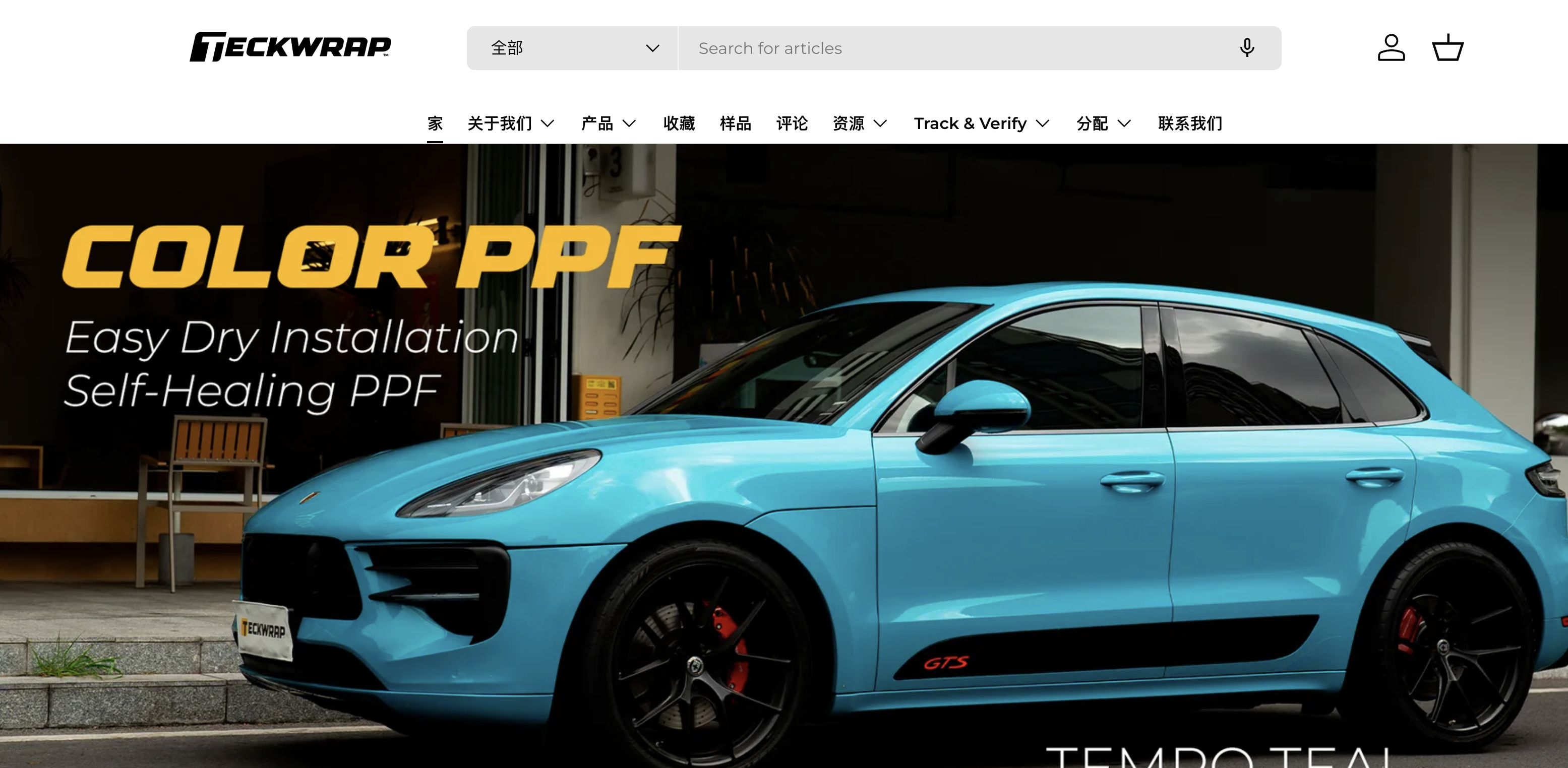
Three brands sit just outside the spotlight — and that’s where the interesting stuff happens.
ORACAL, TeckWrap, and RAXTiFY don’t get the same shelf space as 3M or Avery in most installer conversations. That’s not because they’re bad. The conversation tends to end before it reaches them. That’s worth fixing.
ORACAL 970RA: The Quiet Workhorse
ORACAL’s 970RA series built its reputation on consistency, not flashy specs. Installers in the Pacific Northwest rank it fourth among their go-to brands. That region is rough on exterior films — rain, gray skies, and temperature swings push materials hard. The reason they keep reaching for it is simple: 5–7 years of real-world longevity with low incident rates. Not a marketing claim. A field observation.
The carbon fiber texture comes in a solid range of colors and metallic finishes. The rapid air-release channel system makes it easy for beginners to work with. You can stretch it, reposition it, and stay calm when the first placement is off. First-time wrappers on a motorcycle tank or partial hood will find that forgiveness more valuable than a premium brand name on the liner.
Who it’s built for: DIY beginners, first-time installers, and anyone wrapping a motorcycle or daily driver who wants solid results without a steep learning curve.
TeckWrap: Finish Variety Over Longevity
TeckWrap earns its place through sheer catalog depth. Gloss, matte, metallic, and PPF-hybrid options with self-healing top coats — its color and finish SKU count beats most standard brands outright. Shops that need variety, or clients who want something specific, will often find it here when other brands fall short.
The durability trade-off is real, though. A 3–5 year lifespan puts it in a shorter window than ORACAL, and well behind 3M’s 8-year benchmark. UV resistance holds up for outdoor use, and adhesion stays firm under normal conditions. But longevity as the top priority? This isn’t the pick for that.
Who it’s built for: Shops needing wide finish selection, clients with specific aesthetic requests, and installs where appearance matters more than long-term durability.
RAXTiFY: Wide Selection, Real Trade-Offs
RAXTiFY brings a 250+ SKU lineup at an affordable price. That range is useful for shops building out inventory on a budget. But community rankings tell a more complicated story. In installer preference surveys, RAXTiFY lands near the bottom of the favorites list. The common complaints? Shorter lifespan and higher issue frequency compared to top-tier brands.
That’s not a dealbreaker for every job. Low-commitment decorative installs, short-term seasonal wraps, and high-volume production shops running tight budgets can all make RAXTiFY work well. Go in with clear expectations, and it delivers on its terms.
Quick Comparison
|
Brand |
Lifespan |
Price Point |
Best Use Case |
|---|---|---|---|
|
ORACAL 970RA |
5–7 years |
Competitive |
DIY installs, motorcycles, daily drivers |
|
TeckWrap |
3–5 years |
Affordable |
Finish variety, custom aesthetic jobs |
|
RAXTiFY |
3–5 years |
Budget-friendly |
Volume buying, short-term or decorative wraps |
None of these three brands belongs in the discard pile. Each one fits the right column — matched to the right job. ORACAL is the most underrated of the three for carbon fiber wrap durability in real-world conditions. TeckWrap wins on variety. RAXTiFY wins on volume economics. Know what your project needs, and one of them is likely the right call.
Carbon Fiber Wrap Brand Comparison Table: 2026 Edition (Full Spec Breakdown)
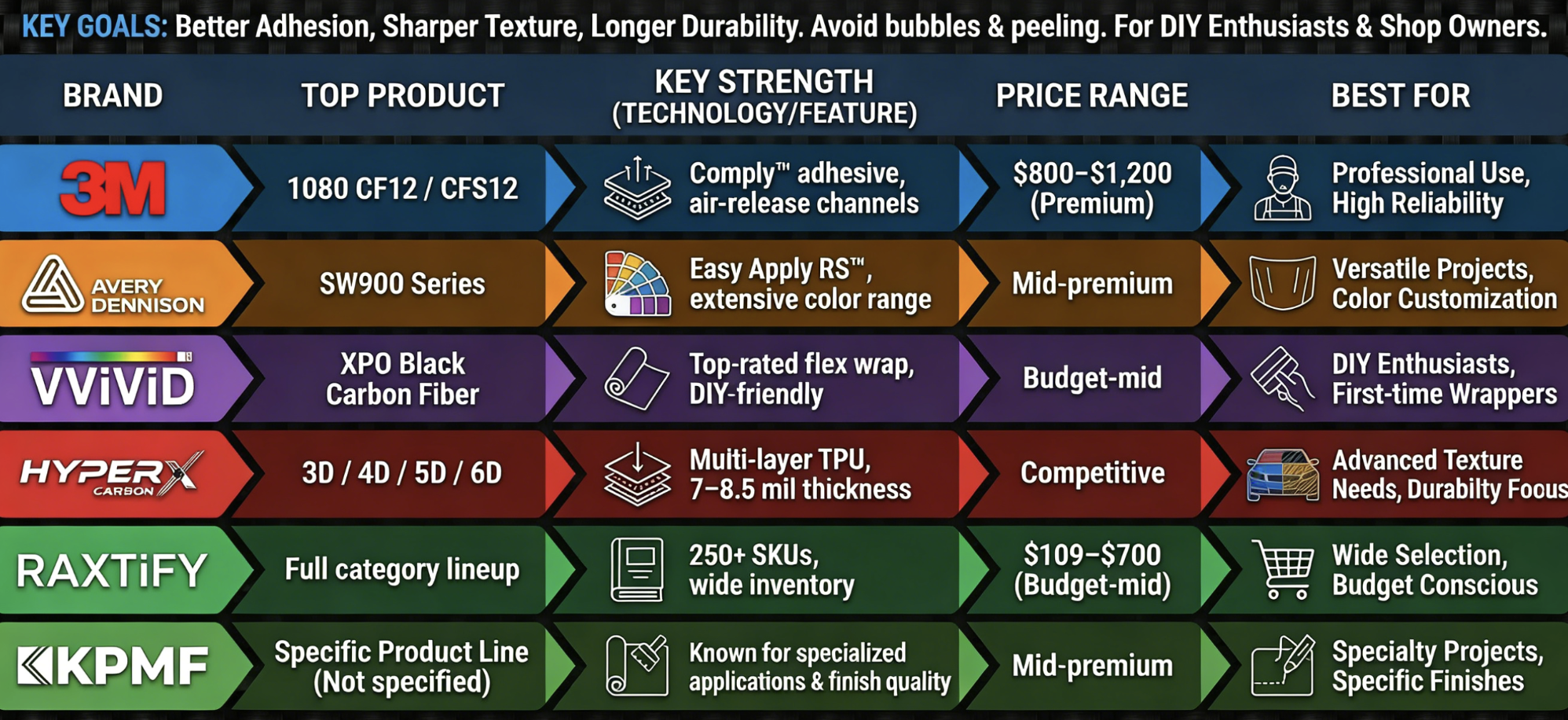
Eight brands. One table. Every number that matters with a heat gun in your hand and a vehicle in front of you.
These specs come from official product data, third-party tests, and 2026 field benchmarks. Thickness, stretch rate, UV protection, warranty, install difficulty — all in one place.
|
Brand |
Full Sedan Cost |
Thickness (μm) |
Elongation |
UV Protection |
Warranty |
Install Difficulty |
Texture Score |
Best For |
|---|---|---|---|---|---|---|---|---|
|
3M |
$800–$1,200 |
120–150 |
30% |
5–7 yrs |
5–7 yrs |
⚠️ Hard |
★★★★☆ |
Professional installers |
|
Avery Dennison |
$700–$1,100 |
110–140 |
30% |
4–6 yrs |
5 yrs |
Medium |
★★★★☆ |
Hot-climate builds |
|
VVivid |
$300–$700 |
100–120 |
30% |
3–5 yrs |
3 yrs |
Medium |
★★★★★ |
DIY first-timers |
|
RAXTiFY |
$109–$700 |
90–120 |
20–30% |
3–5 yrs |
3 yrs |
Medium-Hard |
★★★☆☆ |
Budget volume buyers |
|
XPEL |
$900–$1,500 |
150–200 |
25% |
7–10 yrs |
7–10 yrs |
Hard |
★★★★☆ |
Premium UV protection |
|
Hexis |
$600–$1,000 |
110–140 |
30%+ |
4–6 yrs |
5 yrs |
Easy |
★★★★☆ |
Heat-resistant installs |
|
CarLike |
$400–$800 |
100–130 |
25–35% |
3–5 yrs |
3–5 yrs |
Medium |
★★★★★ |
Budget luxury finishes |
|
Tinybot |
$350–$750 |
105–125 |
28% |
4 yrs |
4 yrs |
Medium |
★★★★★ |
Low-light texture builds |
2026 Industry Benchmarks Worth Knowing
These numbers separate good film from great film this year:
-
Tear strength: 27.6 N/10mm is the premium threshold
-
Shrinkage: Under 4% — anything higher creeps on long panels
-
Gloss units: Matte runs 5–30 GU; gloss hits 95–110 GU
-
Material needed: Sedan takes 52–59 sq ft; SUV requires 55–65 sq ft
-
Color durability: Gray and black hold 5–8 years; red and purple fade faster at 4–6 years
One thing the table won’t show you: finish dimension changes everything. A 3D film at 3.0 mil is a different tool from a 5D at 7.5 mil. Match the dimension to the job — not just the brand to the budget.
FAQ: Carbon Fiber Wrap Questions Answered for 2026 Buyers
The carbon fiber wrap market hit USD 1.82 billion in 2025. More buyers, more brands, and more confusion. These are the questions showing up most in installer forums, Reddit threads, and shop DMs right now.
Which carbon fiber wrap brand lasts the longest?
3M’s 2080 series leads on warranty — 8 years on vertical surfaces. XPEL pushes 7–10 years with its thicker 150–200 µm construction. For most drivers who use their car every day, ORACAL 970RA’s real-world 5–7 year track record speaks for itself. It beats brands with bigger marketing budgets but less field data to back them up.
Is 3D or 4D carbon fiber wrap better?
Depends on what you’re building. 3D films sit flatter and install faster — good for flat panels and interior trim. 4D adds a woven-layer visual depth that looks more realistic under direct light. On exterior body panels where people stop and look, 4D is worth the upgrade. For interior accents that get little attention, 3D gets the job done at a lower cost.
Which brand is easiest to install for beginners?
VVivid’s XPO line was built to solve this exact problem. The air-release liner collapses on its own. The low-tack adhesive lets you reposition the film without locking in your mistakes early. ORACAL 970RA is another strong pick for first-timers. Its rapid air-release channels give you a generous working window. Pricier films don’t always offer the same breathing room.
Is carbon fiber wrap worth it in 2026?
E-commerce wrap sales are up 140% since 2020. That tracks with falling material costs and the rise of DIY installation content — not coincidence. A full sedan wrap now runs $300–$1,200 depending on brand. A professional paint job costs $3,000–$6,000. For protection plus aesthetics, the numbers make a solid case.
Does carbon fiber wrap protect paint?
Yes — but it has limits. Vinyl wrap blocks minor abrasion, UV fading, and debris scuffs. It is not a PPF substitute. Paint protection as your main goal? Pair a quality wrap with a PPF layer on high-impact zones:
-
Hood leading edge
-
Front bumper
-
Door handles
That combination gives you real coverage where it counts.
How much material do I need?
A sedan takes 52–59 sq ft of usable film. An SUV runs 55–65 sq ft. Add 15–20% on top for overlap, repositioning waste, and panel repeats. Buy one roll more than you think you need. Running short mid-install creates a bigger headache than having a leftover strip sitting on the shelf.
Conclusion
Picking the best carbon fiber wrap doesn’t have to be stressful — but the wrong choice can wreck your budget and your whole weekend.
Here’s the short version of this comparison:
-
3M is the safe, reliable pick for professionals
-
Avery justifies its higher price on tight, complex curves
-
VVivid delivers serious value for DIY budgets
Everything else covers specific needs based on your project size and scope.
The biggest mistake most buyers make? Chasing the lowest price. That means ignoring installation difficulty and carbon fiber wrap durability — two things that decide whether your wrap still looks sharp at 36 months or worn-out at 12.
Know your surface. Know your skill level. Match the material to both before you click “add to cart.”
Contact HyperX Carbon – Your Trusted Chinese Carbon Fiber Partner
Ready to source high-performance carbon fiber materials or custom forged carbon fiber parts from China?
HyperX Carbon is a leading manufacturer with 20+ years of expertise, specializing in aerospace-grade forged carbon fiber, prepreg, tubes, sheets, and lightweight automotive/drone/medical components. We offer:
-
Stable supply chain with premium raw materials (Toray, Mitsubishi, Hengshen)
-
AS9100D certified production for aerospace & UAV applications
-
Rapid prototyping (5-8 weeks) and monthly capacity exceeding 180,000 parts
-
Competitive pricing with 15-18% cost savings on forged carbon solutions
-
Full customization: from T700/T1100G to ultra-high modulus grades
Whether you’re an eVTOL developer, automotive OEM, drone manufacturer, or medical device engineer, HyperX delivers consistent quality, batch-to-batch reliability, and reliable delivery.
Get in touch today for a free consultation, custom quote, or material sample.
📧 Email: [email protected]
🌐 Website: https://www.hyperxcarbon.com/
📞 Phone/WhatsApp: +86 15623270276 (English support available)
Let’s build your next lightweight innovation together – contact HyperX Carbon now and stay ahead in the low-altitude and advanced composites market.




