Carbon fiber sheet gets tossed around as a buzzword — lightweight, strong, premium — but very few people can explain what it’s made of or why those properties exist.
Ever held a carbon fiber laminate sheet and wondered what’s going on beneath that distinctive woven surface? That’s the right question to ask.
The answer starts with ultra-thin carbon filaments. From there, it moves through an epoxy resin matrix engineered for precise performance. It ends with a layup process that controls everything — stiffness, weight, and how the material breaks under load.
This isn’t just theory. Knowing this helps you pick the right sheet for your drone frame, structural panel, or custom component. Here’s the full breakdown.
The Primary Raw Material: What Carbon Fibers Are Made Of

Nine out of ten carbon fiber sheets in the world start the same way — with a synthetic polymer called polyacrylonitrile, or PAN.
PAN makes up 90% of global carbon fiber production. It’s a resin built from long molecular chains of carbon, nitrogen, and hydrogen. On its own, it’s nothing special. Run it through the right thermal process, though, and it becomes a material with a tensile strength of 3,500 to 7,000 MPa. That’s strong enough to change what a thin, flat sheet can do.
From Polymer to High-Performance Filament
Raw PAN becomes finished carbon fiber through four distinct stages:
-
Spinning — PAN gets polymerized, then pulled into filaments just 5–10 micrometers in diameter — thinner than a human hair. Stretching lines up the molecular chains along the filament axis. This builds the base for strength.
-
Stabilization — Filaments heat in air at 200–300°C for up to two hours. Linear bonds shift to ladder bonds. The fiber darkens, grows denser, and holds up better to heat.
-
Carbonization — The stabilized fiber goes into an inert gas environment at 1,000–1,500°C. Non-carbon atoms — hydrogen, nitrogen, oxygen — burn away. What’s left is a filament that is over 90% pure carbon, with graphitic planes running along its length. Tensile strength peaks at this stage.
-
Graphitization (optional) — Temperatures rise to 2,000–3,000°C. Carbon atoms reorganize into ordered hexagonal sheets. Modulus climbs into the 230–400 GPa range — typical of high-performance CFRP material.
Why Not Pitch-Based Fiber?
Pitch-derived fiber is real, and it’s worth knowing about. Mesophase pitch produces filaments with a very high modulus — 450 to 900 GPa, well above PAN. Its carbon yield runs higher too, at 80–90% versus PAN’s 50–60%.
The problem is brittleness. Pitch fiber has lower tensile strength and is harder to process at scale. So it stays a niche choice — satellite structural supports, specialized aerospace panels — not the go-to material for carbon fiber composite sheet manufacturing.
|
Precursor |
Carbon Yield |
Tensile Strength |
Modulus |
Market Share |
|---|---|---|---|---|
|
PAN |
50–60% |
3,500–7,000 MPa |
230–400 GPa |
~90% |
|
Pitch |
80–90% |
Lower |
450–900 GPa |
~10% |
|
Rayon |
20–30% |
Moderate |
Lower |
<1% |
For most carbon fiber sheet material applications — drones, structural panels, motorsport components — PAN hits the right balance of strength, processability, and cost. That’s not a marketing angle. It’s what the chemistry shows.
The Matrix Material: Role of Epoxy Resin in Carbon Fiber Laminates
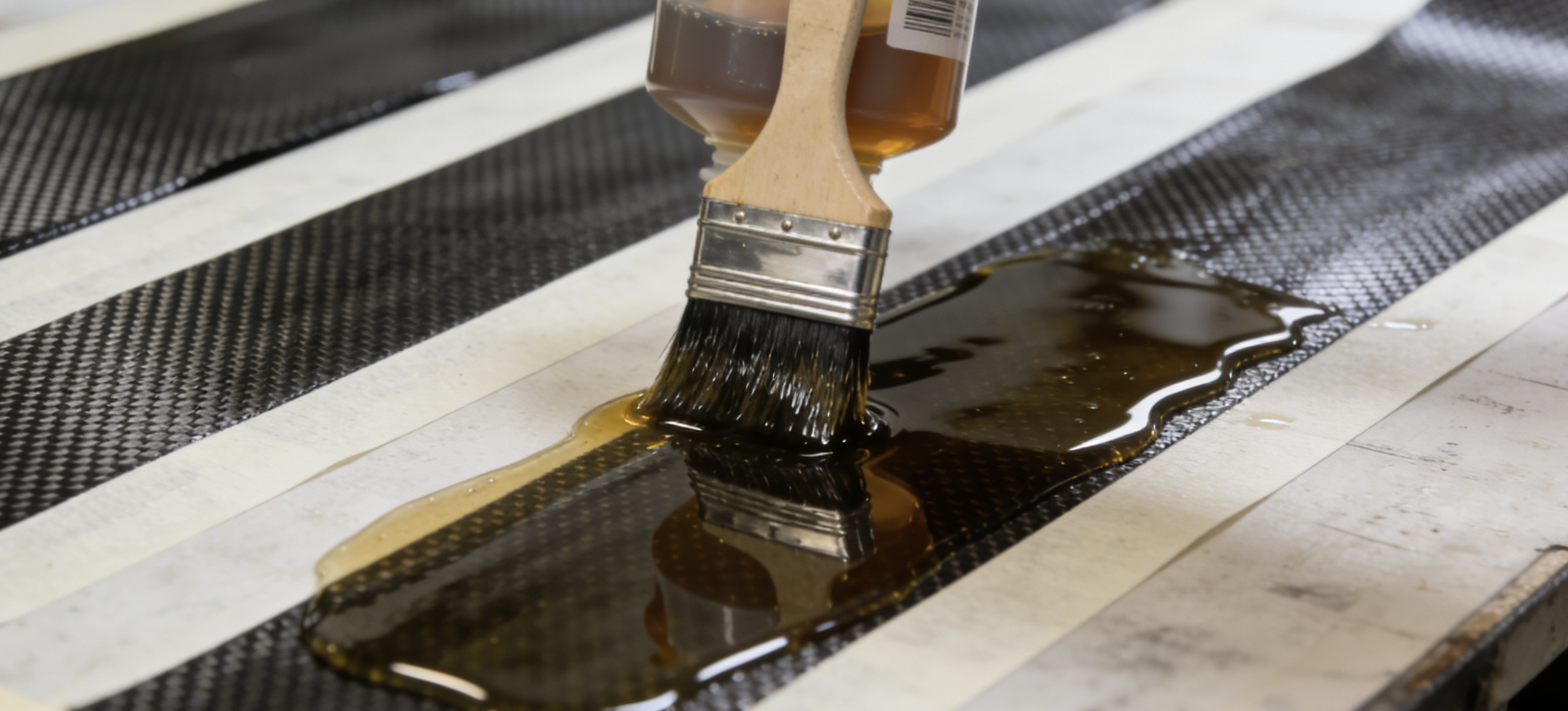
Carbon fiber filaments alone cannot form a structural sheet. They need something to bind them together, transfer load between them, and protect them from the environment. Without that, you just have a bundle of threads. That binding agent is the resin matrix — and in most carbon fiber composite sheets, that means epoxy.
Epoxy does three things that nothing else does quite as well:
-
Transfers mechanical load between fibers. Stress spreads across the laminate rather than building up at weak points.
-
Shields fibers from chemical attack, moisture ingress, and heat damage.
-
Controls toughness and heat resistance — including interlaminar shear strength (ILSS) and glass-transition temperature.
These aren’t abstract properties. They show up directly in the numbers. A well-processed epoxy resin carbon fiber laminate can hit a flexural strength of 710 MPa — achieved using T300 carbon fiber with 0.3 wt.% graphene oxide in an LY556 epoxy system — plus an ILSS of 44.86 MPa. Elongation at break reaches 13.80% with modified formulations.
Fiber Volume Fraction: Why Resin Ratio Matters
How much epoxy goes in — and how well it wets the fiber — determines a large part of final sheet performance.
-
Prepreg laminates reach fiber volume fractions above 60%, which maximizes stiffness. The rule of mixtures applies: *E_c = E_f × V_f + E_m × V_m*.
-
Hand lay-up laminates land at 35–50% fiber volume. Voids and resin-rich zones cut strength by 20–40% compared to autoclave-cured equivalents.
That gap matters. A poorly wetted epoxy matrix delivers flexural strength around 425 MPa and ILSS around 32.2 MPa. A well-optimized matrix pushes those numbers to 710 MPa and 40.8 MPa. That jump comes down to resin quality and processing discipline — nothing else.
Epoxy vs. Other Resin Systems
Epoxy isn’t the sole option for carbon fiber matrix material, but it leads the field for good reason.
|
Resin Type |
Strength Profile |
Limitation |
Best Fit |
|---|---|---|---|
|
Epoxy |
Tensile: 81.27 MPa; ILSS: 44.86 MPa |
Higher cost |
Aerospace panels, motorsport, structural laminates |
|
Vinyl Ester |
Excellent corrosion resistance |
Lower stiffness |
Marine, chemical environments |
|
Polyurethane |
High flexibility, impact toughness |
Lower modulus |
Flexible or impact-critical parts |
For most carbon fiber laminate sheet uses — from aerospace panels to drone frames — epoxy comes out on top. It delivers on strength, durability, chemical resistance, and it works with both autoclave and vacuum infusion processing. No other resin matches that combination.
Types of Carbon Fiber Sheets: Weave Patterns, Layup Configurations & Construction Methods
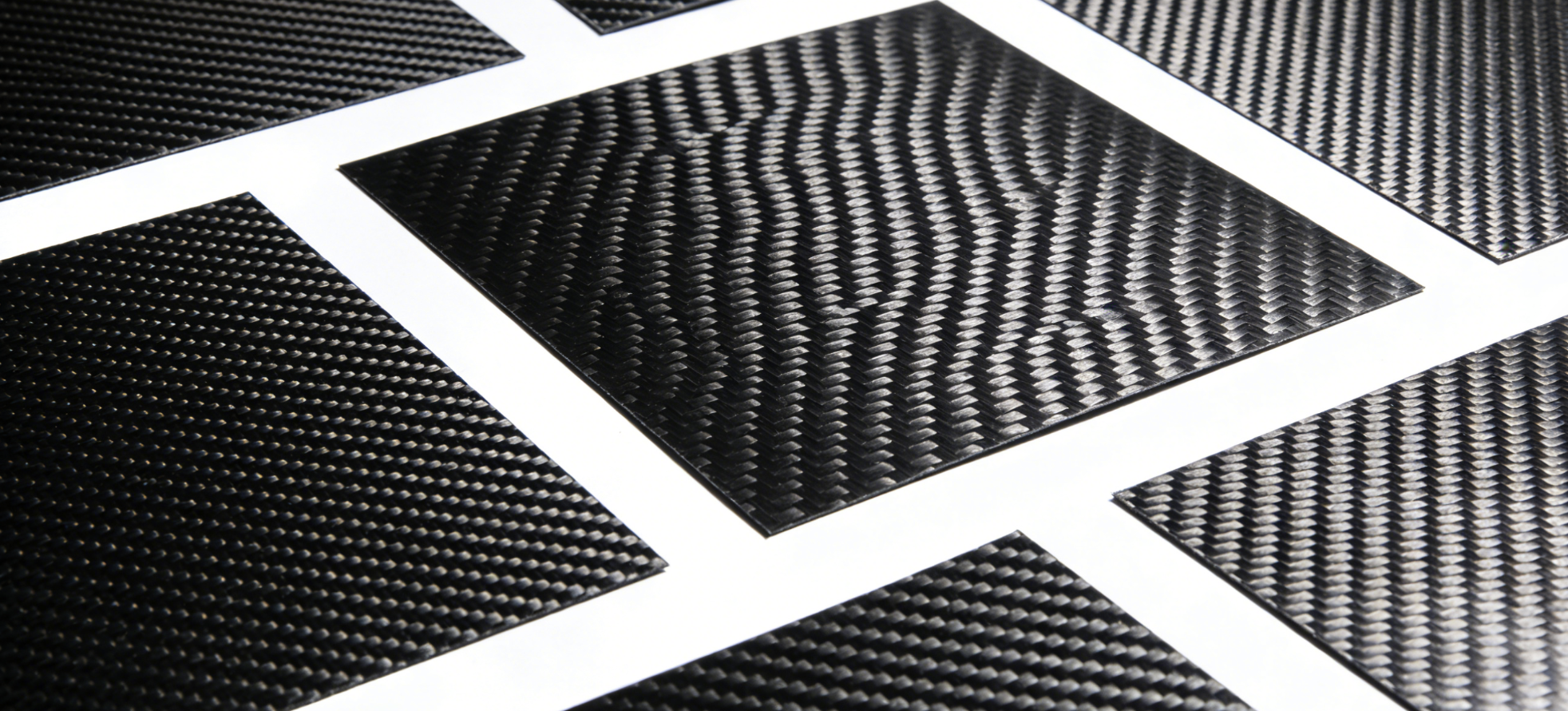
The sheet you choose determines what your project can do. Same carbon fiber filaments, same epoxy matrix — but change the weave pattern or layup configuration, and you’re working with a different material altogether.
Here’s how to read those differences.
Weave Patterns: What the Surface Is Telling You
That visual texture on a carbon fiber sheet isn’t decorative. It’s structural information.
Plain weave (1×1) is the most stable configuration. Each tow passes over one adjacent tow, then under the next. This creates a tight checkerboard lock that resists distortion. It’s rigid, flat, and holds its shape under load. That makes it the go-to choice for tooling, flat structural panels, and precision medical insoles where geometry must stay fixed.
2×2 twill trades some rigidity for formability. Each tow crosses over two, then under two — creating that recognizable diagonal ribbing pattern. You get fewer fiber crimps, better drape over curved surfaces, and a balanced strength profile that holds up well in both directions. Drone shells, bike frames, automotive fairings — this is the weave you’ll see most often in functional, visible parts.
4×4 twill and harness satin (4HS, 5HS, 8HS) push further toward flexibility. Satin weaves float one tow over four, five, or eight others before tucking under. This maximizes drapability and produces a smooth, near-glossy surface. Complex aerodynamic curves, shoe insoles, aerospace fairings — the surface looks refined because the structure is refined.
Unidirectional (UD) isn’t a weave at all. Fibers run parallel in a single direction with minimal interlacing. No crimp means nothing is wasted. UD sheets deliver the highest tensile strength in the fiber direction — up to seven times stronger than equivalent woven fabrics along that axis. Structural spars, beams, prosthetic components. Load travels in one direction, and UD is built for exactly that.
|
Weave Type |
Flexibility |
Strength Profile |
Best Applications |
|---|---|---|---|
|
Plain (1×1) |
Low |
Uniform |
Flat panels, tooling |
|
Twill (2×2) |
Medium |
Balanced |
Drone shells, automotive |
|
Satin (5/8HS) |
High |
Directional |
Aerospace fairings, curves |
|
Unidirectional |
Very low |
One-axis maximum |
Spars, structural beams |
Layup Configurations: How the Layers Stack Changes Everything
Weave handles the surface. Layup handles the cross-section.
A unidirectional layup orients all fibers at 0° or 90°. This concentrates strength along the alignment axis. It works well for springs and structural beams where load direction is known and consistent. The trade-off: the sheet becomes brittle off-axis.
A biaxial ±45° configuration rotates adjacent layers in opposite diagonal directions. Shear and torsional stress spread more evenly across the sheet. That makes it better for parts that twist, rotate, or take hits from off-angle loads. You lose some peak axial strength compared to UD, but the sheet performs better in real-world conditions.
Complex laminates can stack 100 or more alternating layers. Vertical and diagonal fiber arrangements get engineered for the exact cut angle and load case required.
Construction Methods: Three Distinct Builds
The same woven carbon fiber fabric can be assembled three different ways. Each one produces a sheet with different performance characteristics.
Laminated sheet stacks dry or wet woven fabrics, then infuses them with resin. Flat, stiff, cost-effective. It’s the standard choice for tooling and flat structural panels.
Prepreg sheet starts with fabric pre-impregnated at a controlled resin ratio — 35–40% resin content. Autoclave curing locks in the fiber volume and removes voids. You get consistent thickness from 0.125mm to 2mm, tight mechanical tolerances, and the performance profile aerospace and motorsport applications require. That’s why carbon fiber prepreg is the benchmark for high-performance CFRP material.
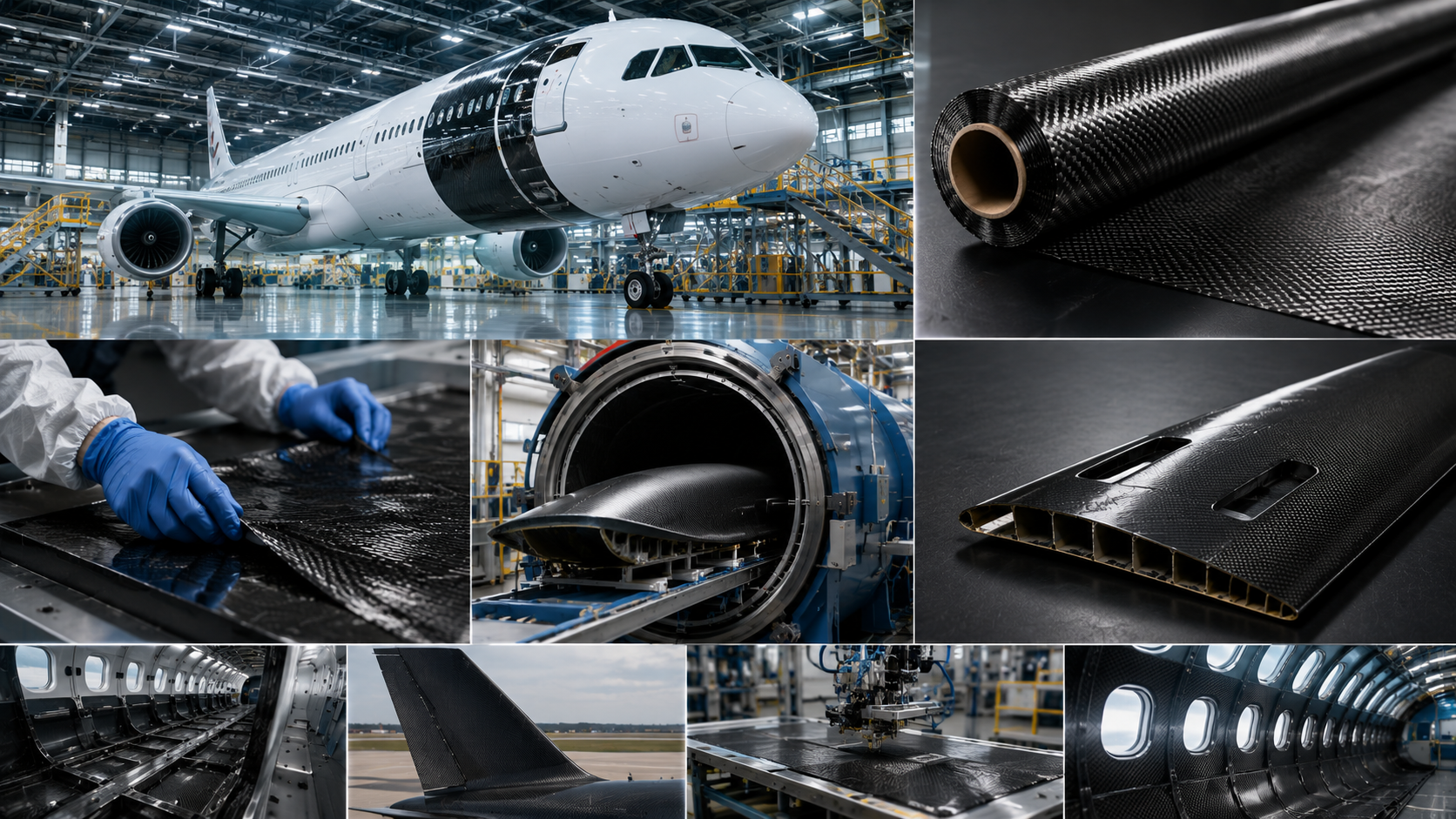
Sandwich panels bond carbon fiber facesheets around a lightweight core — aluminum honeycomb (3–25mm thick) or structural foam. Weight drops 70–90% compared to solid laminate. Aviation interiors and large partitions use this construction because structural rigidity doesn’t need solid mass behind it.
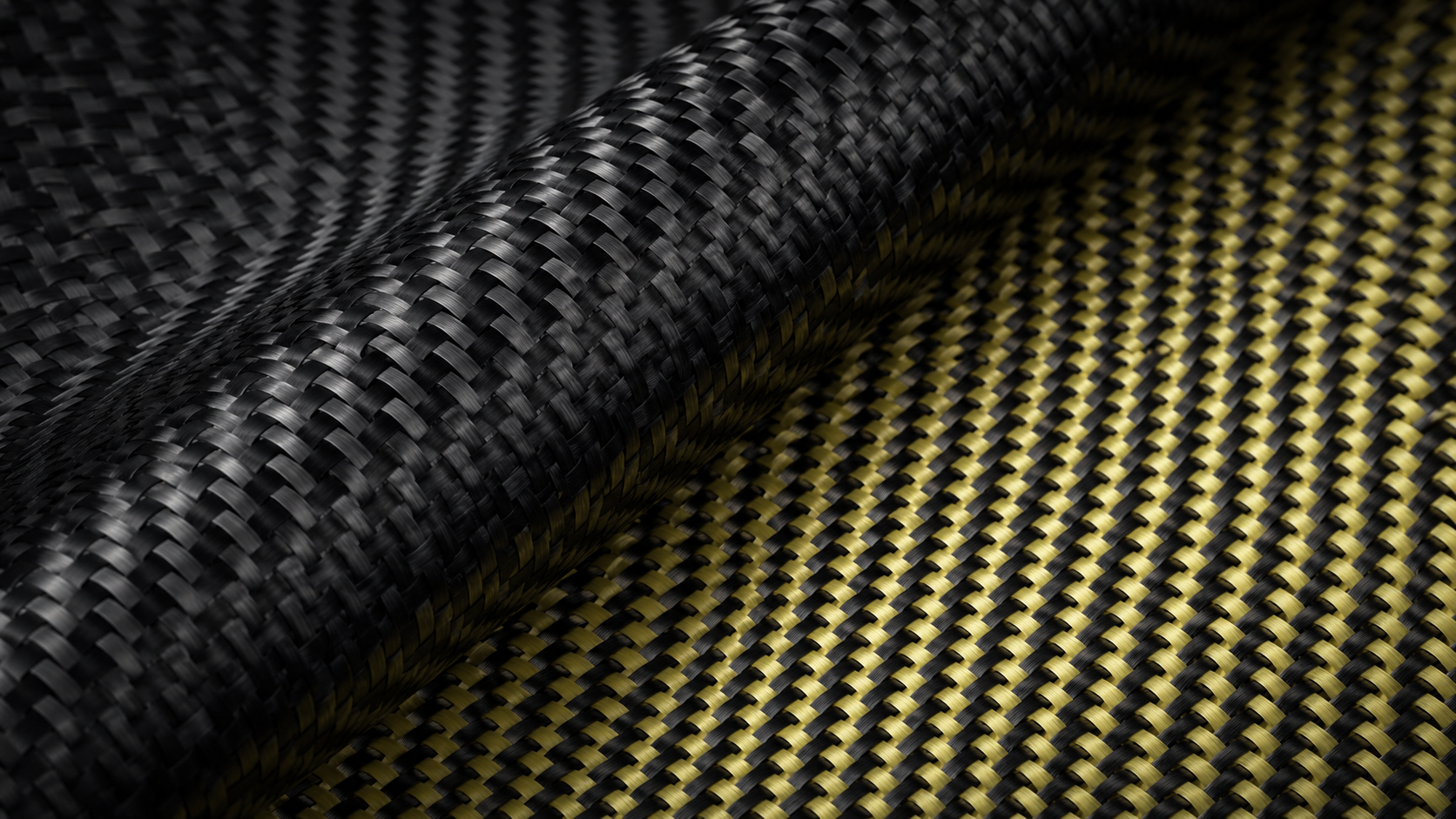
Hybrid carbon-Kevlar laminates layer carbon and Kevlar fabric together, adding 15–20% impact toughness over carbon alone. Helmets, abrasion-exposed covers, and structural panels in high-impact zones use this build. Pure carbon would be too brittle to survive those conditions.
Matching Sheet Type to Application
The decision is straightforward once the variables are clear:
-
Flat geometry, uniform load → Plain weave laminated sheet
-
Curved surfaces, mixed load directions → 2×2 twill, prepreg construction
-
Single-axis structural load → Unidirectional layup
-
Large panel, weight-critical → Sandwich construction with honeycomb core
-
Impact zones → Carbon-Kevlar hybrid
Get the weave pattern wrong and the part won’t form the way you need it to. Get the layup configuration wrong and the strength ends up where it’s not needed. Both decisions need to be right before anything goes into production.
Carbon Fiber Sheet Properties: Key Performance Specs You Need to Know

Numbers don’t lie — and carbon fiber’s numbers are hard to argue with.
A standard carbon fiber laminate sheet built from T300 or T700 fiber sits at 1.5–1.8 g/cm³. Aluminum runs at 2.8. Steel at 7.8. That density gap is where the “lightweight” claim lives. It translates to a 60% weight reduction versus metals — plus a 25% gain in fuel efficiency for vehicle applications.
The tensile strength range tells the real story. Standard CFRP material lands between 3,500 and 7,000 MPa. That’s 7 to 9 times stronger than structural steel, at a fraction of the mass. Compressive strength holds at 700–1,000 MPa. Tensile modulus spans 33–234 GPa. That range shifts based on fiber grade and layup configuration.
Three Variables That Control Performance
Same carbon fiber composite sheet category — very different results. Here’s what moves the numbers:
Fiber grade is the first lever. Standard modulus fibers — T300 and T700 — give you a balanced strength-to-stiffness ratio. They work well for drone frames, automotive panels, and industrial components. T300 reaches 512 MPa tensile strength. T700 pushes to 711 MPa. Intermediate and high-modulus grades handle aerospace work. They run 400–500% stiffer than glass fiber. Higher modulus means higher cost and a narrower application range.
Resin system quality separates durable sheets from brittle ones. A well-formulated epoxy system holds a glass-transition temperature of 80°C. You get strong fatigue resistance and solid interlaminar bonding. Low-grade resin systems crack and delaminate under sustained heat or mechanical load — often before the fiber itself fails.
Porosity control during manufacturing is the variable most buyers miss. Prepreg systems like XPREG XC130 use controlled cure cycles to keep void content low. Higher porosity reduces load transfer between fibers. Strength numbers then fall short of what the datasheet promises.
Beyond Mechanical Strength
Thermal conductivity runs 30–50 W/mK. Carbon fiber reinforced polymer stands up to acids, alkalis, and salt exposure with no surface degradation. For precision applications — machined brackets, tight-tolerance structural parts — thickness flatness tolerances matter just as much as tensile strength.
These specs aren’t a checklist. They’re the selection criteria.
How to Choose the Right Carbon Fiber Sheet for Your Application

A bad sheet choice doesn’t show up right away. You’ll see the damage three months later — a delaminated drone bulkhead, a panel that flexed out of place, or a casing that cracked on the first hard impact.
Four variables drive every good selection: load type, geometry, weight budget, and cost tolerance. Get all four right and the choice gets simple.
Match the Sheet to the Job
Structural load-bearing applications need T800 fiber in a [0°₃/±45°/90°]ₛ layup, at 1.5–3.0 mm thickness. That setup delivers 85–675 N·m²/m bending stiffness — enough for UAV bulkheads and robot bases. Tolerance class matters here too. P1 (±0.10 mm thick, 0.5 mm/m flatness) keeps precision parts within spec.
Aesthetic or decorative parts — smartphone casings, interior covers — don’t carry structural load. A 3K twill fabric at 0°/90°, 0.5–1.0 mm thick, handles those applications well. P2 tolerance is enough.
Weight-critical builds work best with T700 in a [0°₂/±45°]ₛ configuration at 1.0–2.0 mm. One rule to keep in mind: stiffness scales with thickness cubed. Double the thickness and you get eight times the stiffness — plus eight times the extra weight your load case may not need.
Thickness and Stiffness at a Glance
|
Thickness |
Bending Stiffness |
Typical Use |
|---|---|---|
|
0.5 mm |
3.1 N·m²/m |
Casings |
|
1.0 mm |
25 N·m²/m |
UAV frames |
|
2.0 mm |
200 N·m²/m |
Jigs, fixtures |
|
3.0 mm |
675 N·m²/m |
Robot bases |
What to Confirm Before You Order
Ask suppliers for three things before placing an order:
-
Fiber volume fraction — target 55–65%. Below that range, strength drops.
-
Porosity report — void content above 2% cuts mechanical strength by 20–30%.
-
Layup notation — confirm the actual [0°/90°/±45°]ₛ stack, not just the fiber grade.
Check surface treatment and flatness too. No waves, no creased fibers — both affect handling and bonding quality. Thickness tolerance classes go from P0 (±0.05 mm, for optical platforms) to P2 for general fabrication. Know which class your application needs before you start comparing quotes.
FAQ: Common Questions About Carbon Fiber Sheet Composition & Manufacturing
These questions come up all the time — from engineers sourcing material for the first time to seasoned fabricators checking specs before a new project.
Is carbon fiber sheet the same as carbon fiber plate?
Yes. Both are flat CFRP laminates made from woven or unidirectional carbon fiber held together with epoxy resin. The difference is just size. Sheets run 0.5–5 mm thick and suit flexible, lightweight applications. Plates go beyond 5 mm where structural rigidity takes priority. Same material, different load demands.
What resin is used in carbon fiber sheets?
Epoxy resin is the standard choice. It bonds to carbon fiber filaments during impregnation. Heat and pressure then cure it, building the interlaminar shear strength the finished sheet needs. Thermoset systems lead prepreg manufacturing. The cure cycle runs between 300–400°C under controlled pressure.
How thick can carbon fiber sheets get?
Standard commercial sheets range from 0.5 mm to 10 mm. Six layers of 100g unidirectional fabric through hand lay-up gives you about 2–3 mm. For exact thicknesses, post-process cutting handles the rest.
Is carbon fiber sheet stronger than aluminum?
On a strength-to-weight basis — yes. Carbon fiber composite sheet holds 600 psi live loads without failure. It outlasts aluminum on fatigue strength and expands far less under heat. The weight savings alone cover the material cost in most structural applications.
What does the manufacturing process involve?
Five steps, in order:
1. Weave or orient carbon fiber fabric from PAN-derived filaments
2. Cut and stack layers to the required configuration
3. Impregnate with epoxy via vacuum infusion or prepreg layup
4. Cure under heat and pressure — autoclave or oven
5. Post-process — trim, drill, and surface-finish to tolerance
The layup process and cure cycle set the void content, fiber volume fraction, and final mechanical performance. Get those two steps right, and everything else follows.
Conclusion
Carbon fiber sheets aren’t magic — they’re engineering. PAN-derived fibers lock into an epoxy resin matrix. They stack in set patterns, then cure under controlled heat and pressure. That’s the whole story, plain and simple.
Now you understand what sets a unidirectional carbon fiber laminate sheet apart from a woven 2×2 twill. That difference matters the moment your project needs real performance — not just good looks.
So here’s how to use that knowledge:
-
Match your load direction to the right layup
-
Check the fiber volume fraction with your supplier
-
Don’t let appearance drive a structural decision
Ready to source a carbon fiber composite sheet built to spec — not just built to sell? Explore the HyperX Carbon product range. Every laminate ships with traceable material data. You get more than a datasheet promise — you get verified specs you can trust.
The material is extraordinary. Make sure your selection matches that standard.
Contact HyperX Carbon – Your Trusted Chinese Carbon Fiber Partner
Ready to source high-performance carbon fiber materials or custom forged carbon fiber parts from China?
HyperX Carbon is a leading manufacturer with 20+ years of expertise, specializing in aerospace-grade forged carbon fiber, prepreg, tubes, sheets, and lightweight automotive/drone/medical components. We offer:
-
Stable supply chain with premium raw materials (Toray, Mitsubishi, Hengshen)
-
AS9100D certified production for aerospace & UAV applications
-
Rapid prototyping (5-8 weeks) and monthly capacity exceeding 180,000 parts
-
Competitive pricing with 15-18% cost savings on forged carbon solutions
-
Full customization: from T700/T1100G to ultra-high modulus grades
Whether you’re an eVTOL developer, automotive OEM, drone manufacturer, or medical device engineer, HyperX delivers consistent quality, batch-to-batch reliability, and reliable delivery.
Get in touch today for a free consultation, custom quote, or material sample.
📧 Email: [email protected]
🌐 Website: https://www.hyperxcarbon.com/
📞 Phone/WhatsApp: +86 15623270276 (English support available)
Let’s build your next lightweight innovation together – contact HyperX Carbon now and stay ahead in the low-altitude and advanced composites market.