You’ve probably held carbon fiber before — wrapped around a bike frame, molded into a laptop shell, or sitting under the hood of a sports car — without knowing what makes it so different from everything else. Carbon fiber is more than just lightweight and strong. It’s an engineered composite material that beats steel in strength, yet weighs far less. At its core, it’s made from microscopic strands of carbon atoms locked into a tight crystal structure. That structure is what gives it an edge no other common material can match.
So who is this for? Engineers comparing materials for a project will find the specs useful. Designers trying to justify the price tag will get clear answers. And curious readers who just want to understand the science — you’re covered too. What follows breaks down how carbon fiber is made, what gives it such strong mechanical properties, and which industries are changing because of it — including ones you deal with every day.
What Is Carbon Fiber? (Definition & Core Concept)
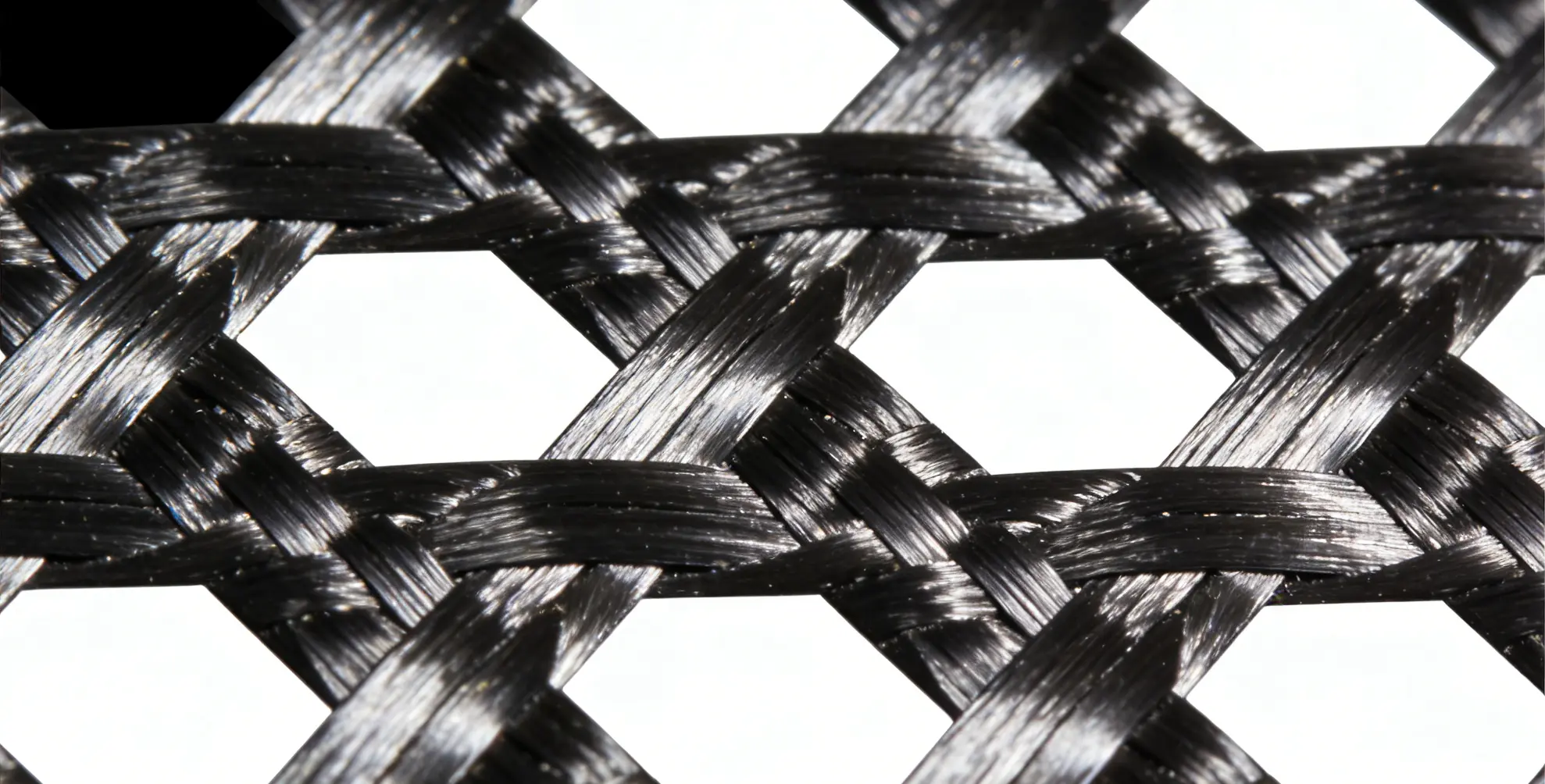
Here’s the simplest way to put it: carbon fiber is a filament between 5 and 10 micrometers in diameter — thinner than a human hair — made of at least 92% carbon atoms by weight. Those atoms don’t just sit there. They bond into long chains, folding and lining up into crystalline structures. That’s what gives the fiber its strength and stiffness.
The density numbers tell a clear story. Carbon fiber sits at 1,750–1,950 kg/m³ — less than one-quarter the density of steel. Yet tensile strength for standard PAN-based fiber runs 3,500 to 6,000 MPa. That’s an unusual mix — light weight paired with serious strength. It’s why aerospace engineers, product designers, and materials scientists keep reaching for it.
Two Structures, Very Different Strengths
The carbon atoms inside the fiber can arrange in two distinct ways:
- Turbostratic structure (PAN-derived) — carbon sheets folded in a loose, uneven pattern, built for high tensile strength
- Graphitic structure (pitch-derived, processed above 2,200°C) — tightly stacked, well-ordered layers that deliver extreme stiffness and thermal conductivity up to 1,000+ W/m·K
Most industrial carbon fiber is PAN-based. It’s the go-to choice for high-tensile applications. Pitch-based fiber plays a different role — you use it where rigidity or heat management matters more than raw strength.
What the Numbers Mean
The stiffness-to-weight ratio is where carbon fiber pulls ahead. Plain-weave carbon fiber laminate scores 160 × 10⁶ — compared to 100 × 10⁶ for both aluminum 6061-T6 and 4130 steel. Steel is stiffer in absolute terms, yes. But it’s also six times heavier. That trade-off is the whole point of carbon fiber.
Strength is only part of the picture. The material also resists corrosion, holds up under repeated stress without breaking down, expands very little under heat, and conducts electricity. No single traditional material checks all those boxes at once.
Key Properties of Carbon Fiber (Material Performance Data)

The numbers behind carbon fiber don’t just impress — they change how you approach material selection.
Start with density. Carbon fiber sits at 1.75 g/cm³. Steel comes in at 7.8 g/cm³. That’s not a small gap. Carbon fiber is four times lighter than steel, and about half the weight of aluminum. Every gram counts in part design. That gap matters.
Tensile Strength: Where Carbon Fiber Gets Serious
Standard high-tensile carbon fiber delivers 3,500–7,000 MPa of tensile strength, depending on grade. High-strength, high-modulus variants push toward the upper end. General-purpose fiber starts above 3,500 MPa as a baseline.
Temperature plays a role too. High-tenacity (HT) fiber holds 4.6 GPa at room temperature. It drops to 2.6 GPa at extreme heat — around 2,840°C. Ultra-high-modulus (UHM) grades hold 4.27 GPa at high temperatures. That makes them the go-to choice for aerospace thermal environments.
Stiffness-to-Weight: The Real Competitive Advantage
Raw stiffness numbers can mislead you. Steel has a higher elastic modulus than carbon fiber in straight terms — 30 msi vs 8 msi for plain-weave CFRP. But steel also weighs six times more.
Factor in density, and the picture flips:
| Material | Elastic Modulus | Density (lbs/in³) | Stiffness-to-Weight (×10⁶) |
|---|---|---|---|
| Plain-Weave CFRP | 8 msi | 0.05 | 160 |
| 6061-T6 Aluminum | 10 msi | 0.10 | 100 |
| Steel (4130) | 30 msi | 0.30 | 100 |
Carbon fiber’s stiffness-to-weight ratio is 1.6× higher than both steel and aluminum. That’s the number engineers care about.
Thermal Behavior and Electrical Properties
Carbon fiber’s thermal behavior is unusual. It has a negative coefficient of thermal expansion (CTE) in the longitudinal direction — from -0.4 to -1.2 ×10⁻⁶/°C. In plain terms, the fiber contracts slightly along its length as it heats up. Transverse CTE runs positive, at 5–10 ×10⁻⁶/°C. This directional difference is why layup orientation is so critical in composite design.
Take the Toray M60J grade as a clear reference. It shows a CTE of 0.363 ×10⁻⁶/°C and an interlaminar shear strength (ILSS) of 70 MPa at 60% fiber volume. Filament diameter on this grade: 5 micrometers. That’s the scale you’re working at.
One property that catches people off guard — carbon fiber conducts electricity. Axial electrical resistivity on high-modulus grades runs at -1.1 ×10⁻⁶ Ω·cm. That’s a real concern for applications near sensitive electronics or in lightning-strike protection design.
Common Applications of Carbon Fiber (Real-World Use Cases)

The numbers speak for themselves. In 2019, global carbon fiber demand hit 123,300 tons. By 2031, North America alone is set to consume 154,000 tons per year — growing at a 16.74% CAGR. That kind of growth only happens when serious industries adopt a material at scale.
Aerospace & Defense: The Dominant Force
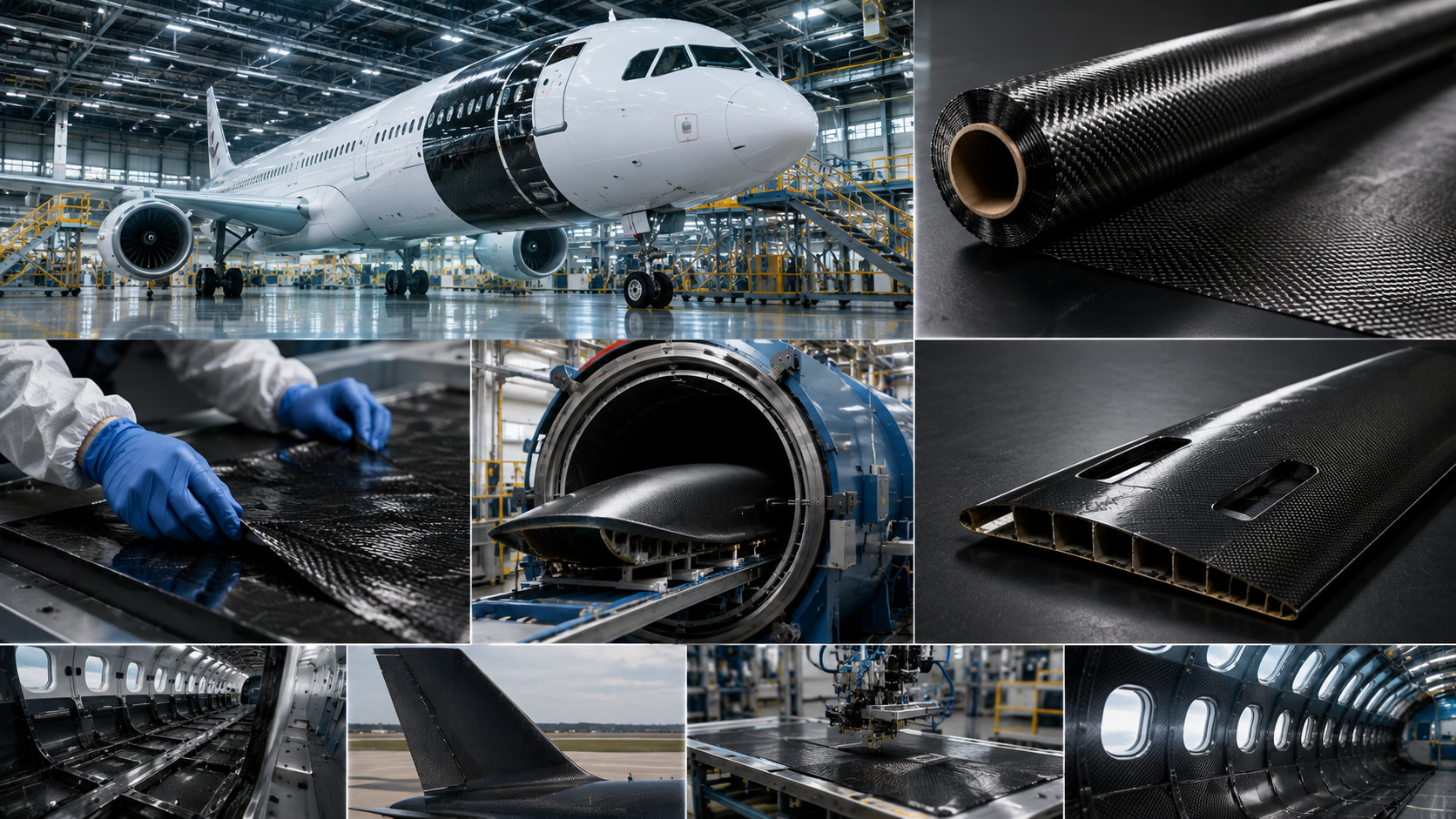
Aerospace takes up 27% of global carbon fiber demand — the single largest revenue segment by a wide margin. Aircraft fuselages, drone airframes, missile structures — all of these need materials that deliver maximum strength at minimum mass. Nothing else competes at that level. The 2024 Hexcel Alabama expansion was built to serve U.S. defense contracts directly. That tells you where investment is going. High-modulus carbon fiber composites beat aluminum on both strength-to-weight ratio and fatigue resistance across long service cycles.
Wind Energy and Automotive: High-Volume, High-Stakes
Wind energy holds 17% of global demand. Longer turbine blades capture more energy. But the material has to handle heavy mechanical stress without adding too much weight. Carbon fiber spars make those blade lengths possible.
Automotive and EV applications are scaling fast. 180,000 tons of carbon fiber composites went into automotive production in 2023. CFRP imports into the automotive sector climbed 20% in 2025. The reason is simple: EV battery packs are heavy. Carbon fiber chassis components, body panels, and battery enclosures cut that weight. You get more range without needing a bigger battery pack.
Hydrogen Storage: The Fastest-Growing Segment
Compressed hydrogen tanks for fuel cell vehicles are the fastest-growing area in the carbon fiber market. Analysts project hydrogen storage will make up around 20% of total demand by 2030. The material demands here are tough — high-pressure containment, chemical compatibility, and low weight all at once.
Beyond the Headlines
Electronics manufacturers use chopped and milled carbon fiber for device casings and thermal management parts. Medical device engineers use it in tooling and structural components. Oil and gas operators rely on it in pressure-critical infrastructure. CFRP production output grew 12% in 2024, while processing costs dropped 5–7%. Access is getting wider, not narrower.
Carbon fiber is showing up across all these industries for a reason. It marks a clear shift toward materials that deliver more while weighing less.
Types of Carbon Fiber: Grades & Weave Patterns Explained

Not all carbon fiber is the same. The grade you pick — and the weave pattern you pair it with — decides whether a part holds up under real stress or just looks good sitting there.
Grades: Trading Strength for Stiffness
Carbon fiber grades follow a clear axis. As tensile modulus goes up, tensile strength comes down. That trade-off shapes every material selection decision.
Standard Modulus / High Strength (SM/HS) is where most projects start. Tensile modulus runs 230–240 GPa. Strength lands between 3.5–4.8 GPa. You get a cost-effective option that’s easy to source and handles general automotive and structural work with no issues.
Intermediate Modulus (IM) steps up to 290–320 GPa stiffness. Strength pushes 5.5–6.9 GPa — the highest of any grade. This is the sweet spot for performance builds that need both qualities at once.
High Modulus (HM) hits ≥380 GPa. Stiffness is the focus here, not strength. Tensile strength drops back to around 4.4 GPa, and the fiber turns brittle. It suits race panels and stiffness-critical components best.
Ultra-High Modulus (UHM) reaches 450–900 GPa, with pitch-based variants at the extreme end. Strength drops further to ~2.9 GPa. Structural loading isn’t the goal here. This grade belongs in aerospace and precision instruments.
| Grade | Modulus (GPa) | Strength (GPa) | Best For |
|---|---|---|---|
| SM/HS | 230–240 | 3.5–4.8 | General parts |
| IM | 290–320 | 5.5–6.9 | Performance builds |
| HM | 380+ | 4.4 | Stiffness-critical components |
| UHM | 450–900 | 2.9 | Aerospace, precision |
Weave Patterns and Tow Size (K-Grades)
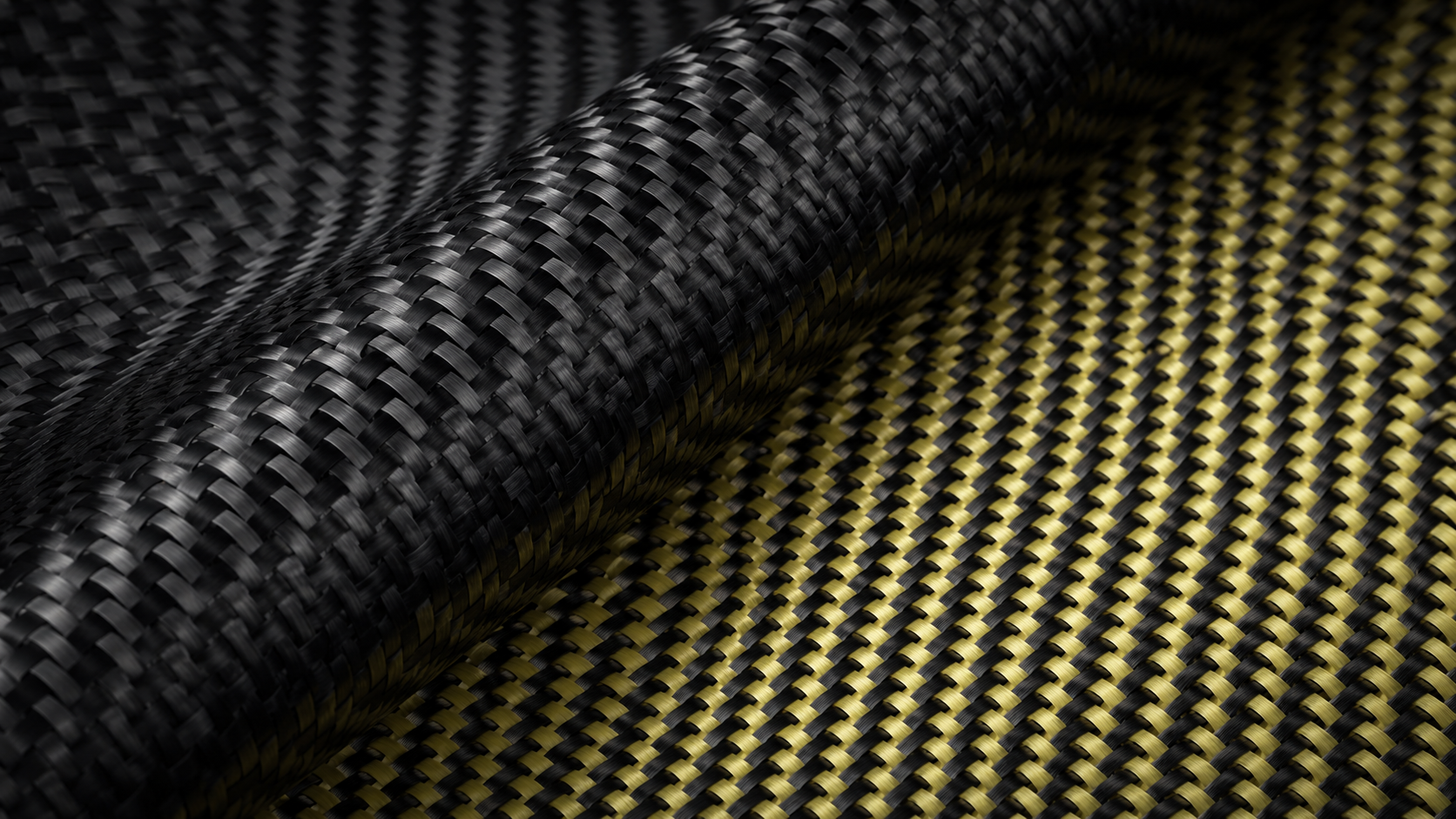
Tow size — the number of filaments bundled together — changes how a fabric handles, looks, and performs.
3K (3,000 filaments per tow) weaves tight and fine. It drapes well around curves and delivers a clean surface finish. You’ll find it on visible exterior panels where looks matter. It’s not weaker than larger tow sizes — it’s just built for different priorities.
12K runs broader and stiffer. It works better on flat structural panels and molded components that don’t need to wrap around complex shapes.
24K and above is industrial-grade. Coarse texture, matte finish, heavy coverage. Use it on large underbody panels or reinforcements where visual quality isn’t a concern.
One number worth knowing: carbon fiber’s specific strength hits 3,026 MPa/(g/cm³) — about 50× that of steel. E-glass sits at 564–1,847. Kevlar lands at 993–2,535. The gap is real. That’s exactly why grade selection matters just as much as the material choice itself.
FAQ: People Also Ask
These questions come straight from real search data — the exact things people type into Google to understand carbon fiber for the first time.
What is carbon fiber made of?
Carbon fiber starts as polyacrylonitrile (PAN) polymer. It goes through controlled heating stages until only carbon atoms are left. The final fiber is 93–99% pure carbon. The atoms lock into a tight crystalline structure. That structure delivers exceptional strength and stiffness — at a very low weight.
Is carbon fiber stronger than steel?
Yes — in tensile strength, carbon fiber beats steel by a wide margin. Standard grades hit 3,500–7,000 MPa of tensile strength. They also weigh four times less than steel. Steel is stiffer in raw terms. But carbon fiber’s stiffness-to-weight ratio runs 1.6× higher than steel once you factor in density.
What is CFRP?
CFRP stands for carbon fiber reinforced polymer. The fibers get embedded into a resin matrix — most often epoxy. That mixture cures into a solid composite part. You’ll find CFRP used across aerospace, automotive, and sports equipment industries.
Why is carbon fiber so expensive?
The production process eats up a lot of energy and time. Each stage — stabilization, carbonization, surface treatment — needs exact temperature control and specialized equipment. On top of that, raw PAN precursor materials don’t come cheap. Low production tolerances add further cost. All of this pushes the price well above what metals typically cost.
Does carbon fiber conduct electricity?
Yes. Carbon fiber carries electrical current. Axial resistivity on high-modulus grades sits around -1.1 ×10⁻⁶ Ω·cm. That’s worth factoring in — especially for parts placed near sensitive electronics or built into lightning-strike protection systems.
Conclusion
Carbon fiber isn’t just a material — it’s a fresh way of thinking about strength and weight together. You now know what it’s made of. It builds layer by layer from raw PAN precursor into something stronger than steel, at a fraction of the weight. That’s why aerospace, sports gear, and so many other industries keep reaching for it when performance really counts.
Here’s the key takeaway: understanding carbon fiber composite material is step one. The real decisions come next — matching the right grade, weave pattern, and resin matrix to your exact application.
Evaluating carbon fiber for a project? That’s a smart move. Sourcing parts, designing a product, or just learning the basics — there’s more to explore. Check out the application guides. Compare material specs. Or reach out to get specific answers. The material is extraordinary. What you build with it should be too.
Contact HyperX Carbon – Your Trusted Chinese Carbon Fiber Partner
Ready to source high-performance carbon fiber materials or custom forged carbon fiber parts from China?
HyperX Carbon is a leading manufacturer with 20+ years of expertise, specializing in aerospace-grade forged carbon fiber, prepreg, tubes, sheets, and lightweight automotive/drone/medical components. We offer:
- Stable supply chain with premium raw materials (Toray, Mitsubishi, Hengshen)
- AS9100D certified production for aerospace & UAV applications
- Rapid prototyping (5-8 weeks) and monthly capacity exceeding 180,000 parts
- Competitive pricing with 15-18% cost savings on forged carbon solutions
- Full customization: from T700/T1100G to ultra-high modulus grades
Whether you’re an eVTOL developer, automotive OEM, drone manufacturer, or medical device engineer, HyperX delivers consistent quality, batch-to-batch reliability, and reliable delivery.
Get in touch today for a free consultation, custom quote, or material sample.
📧 Email: [email protected]
🌐 Website: https://www.hyperxcarbon.com/
📞 Phone/WhatsApp: +86 15623270276 (English support available)
Let’s build your next lightweight innovation together – contact HyperX Carbon now and stay ahead in the low-altitude and advanced composites market.