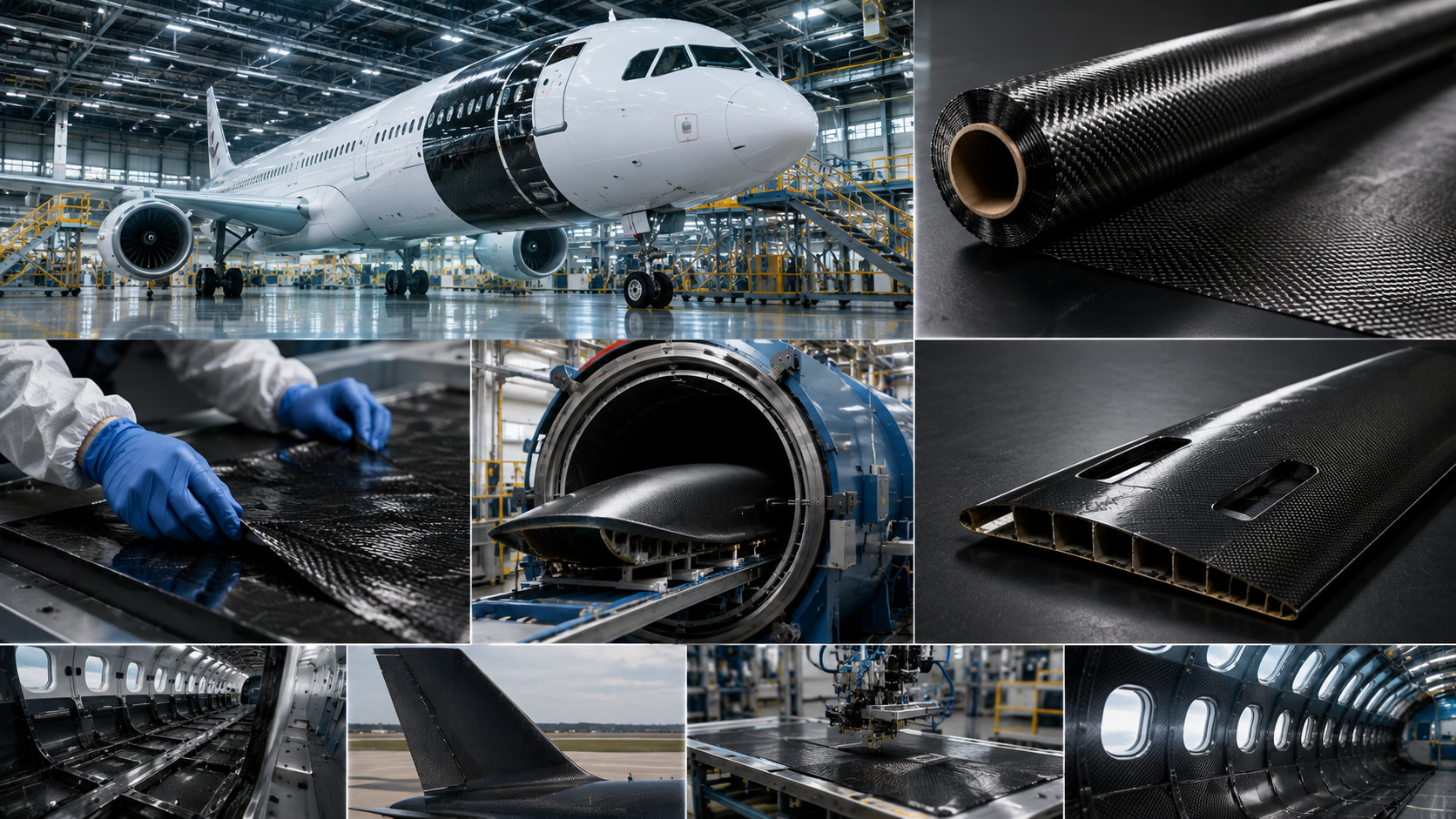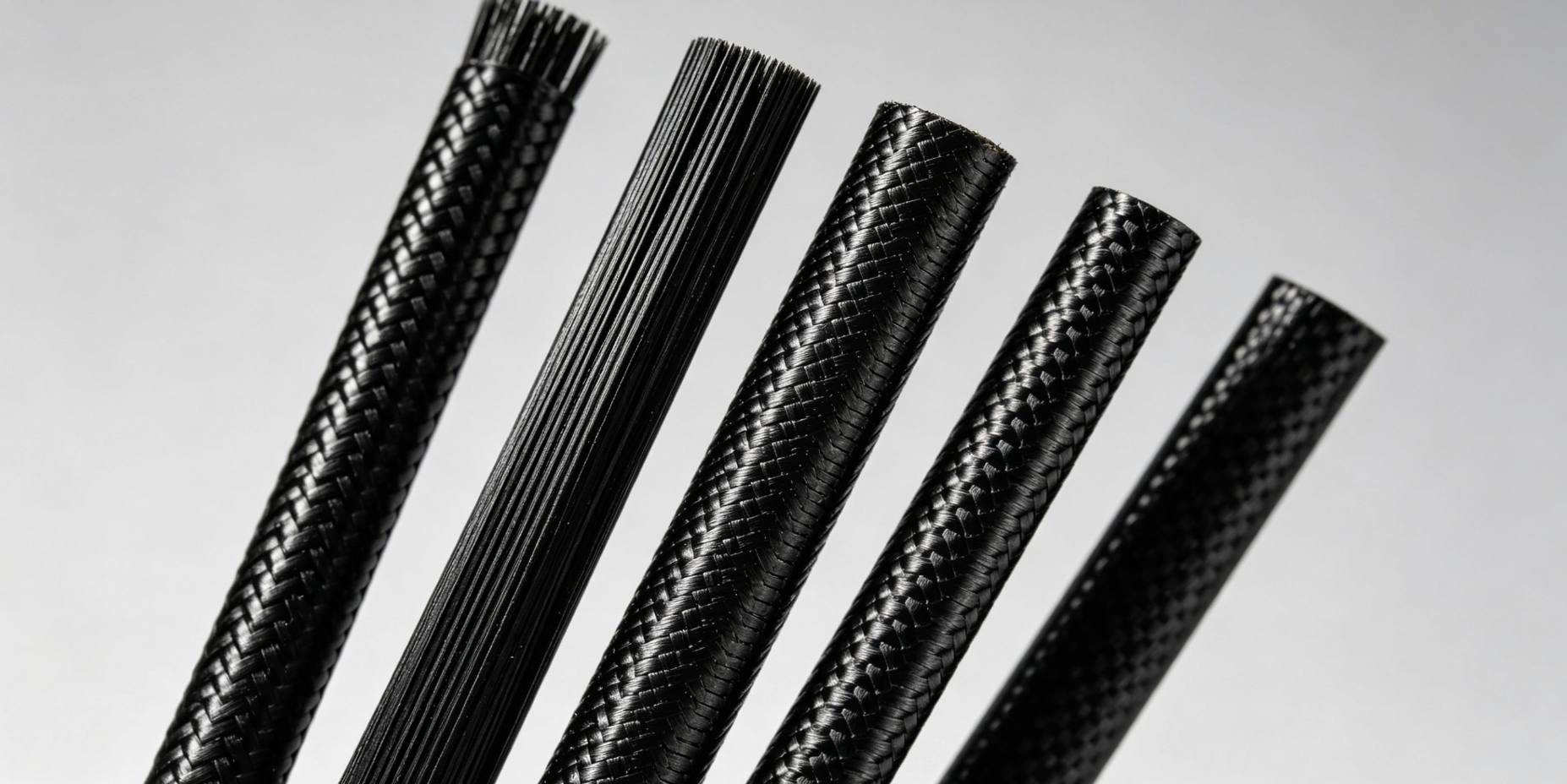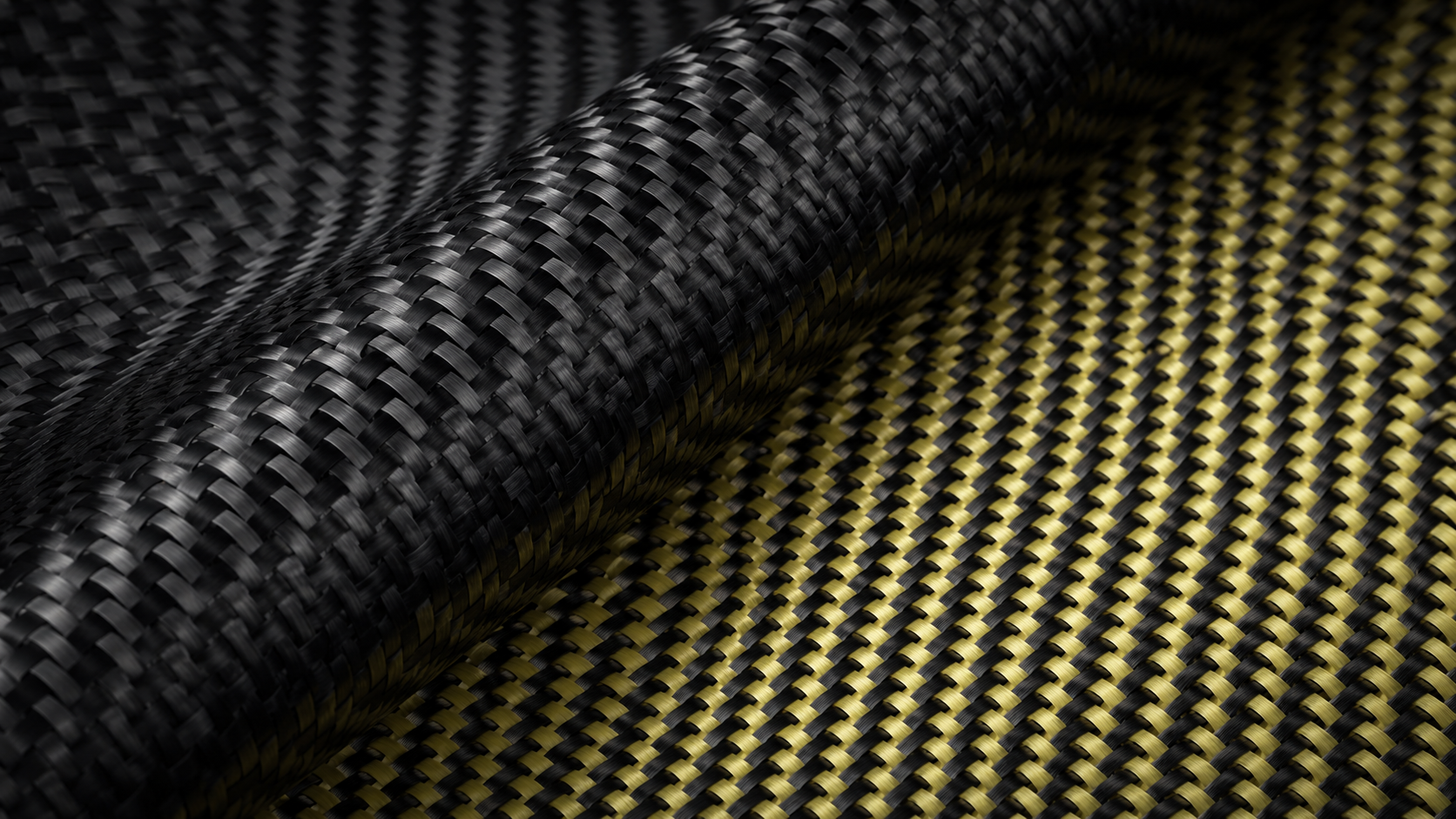
Carbon fiber looks like it should be an insulator — dark, sleek, woven from what appears to be plastic. Touch a multimeter to it, though, and something unexpected happens: current flows.
Carbon fiber is conductive. Just not in the simple way most people expect.
Its conductivity sits in a strange middle ground between metals and insulators. Molecular structure, fiber orientation, and how the material is processed all shape how well it conducts. These details matter — you’re routing wiring through a carbon fiber chassis, spec’ing materials for a UAV frame, or scratching your head over why your CFRP component just shorted something out. In each case, understanding the specifics saves you time and prevents real mistakes.
What follows breaks down the science, the numbers, and the real-world implications — straight, no hand-waving.
Does Carbon Fiber Conduct Electricity? (The Direct Answer)

The numbers say it all: carbon fiber’s electrical conductivity sits between 40,000–70,000 S/m. That’s real, measurable conductivity — and it can catch you off guard if you assumed your carbon fiber part was electrically inert.
So what category does it fall into? Carbon fiber is not a metal conductor. It’s not an insulator either. It sits in a narrow band on the resistivity spectrum — 10⁻⁵ to 10⁻³ Ω·m — putting it closer to a semiconductor in behavior than to copper or aluminum.
For context:
– Rubber (insulator): ~10¹³ Ω·m
– Carbon fiber: 10⁻⁵ to 10⁻³ Ω·m
– Copper (conductor): 1.7×10⁻⁸ Ω·m
This conductivity comes down to structure. Carbon fiber’s atomic layout mirrors graphite. Delocalized electrons flow through the material and carry charge. Not as fast or as free as in metal — but enough to create real electrical risk in the wrong design.
One variable most people overlook: manufacturing temperature controls conductivity. Fibers graphitized at high temperatures reach ~10⁻⁵ Ω·m. Lower-temperature, high-strength versions land near 10⁻³ Ω·m — about 100x less conductive. Same material family, but the electrical behavior is a different story.
Why Carbon Fiber Conducts Electricity: The Science Behind It
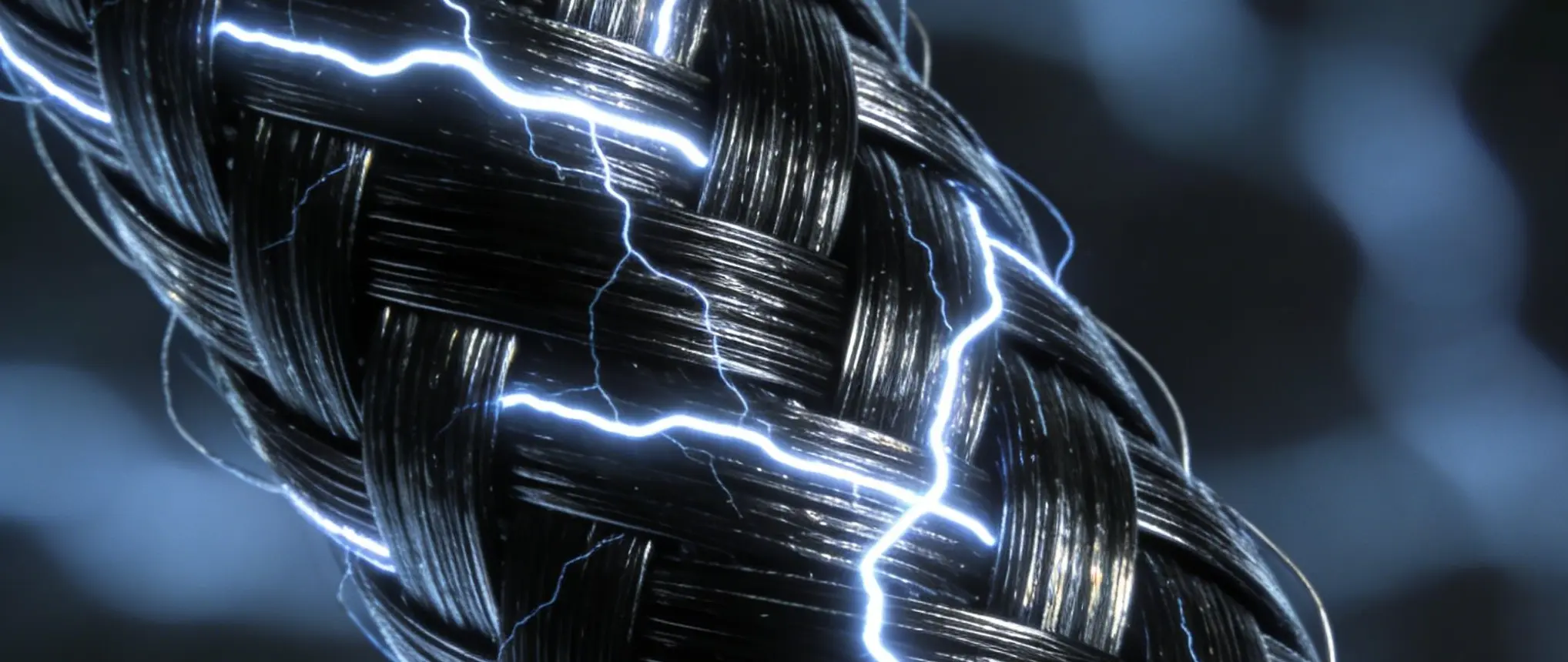
The answer lives at the atomic level — and it starts with how carbon bonds to itself.
Each carbon atom in a fiber forms three covalent bonds with neighboring atoms. Chemists call this arrangement sp² hybridization. It produces a flat, hexagonal lattice — the same basic structure as graphite. The fourth electron from each carbon atom doesn’t get locked into a bond. Instead, it sits in what’s called a π orbital. Those π electrons don’t stay fixed in place. They spread across the lattice and move along the fiber axis with no fixed path.
That’s the mechanism. Delocalized electrons carry charge — and that’s what makes carbon fiber conductive.
Graphitization Degree Changes Everything
Not all carbon fiber shares the same atomic order. Higher processing temperatures during manufacturing push the structure closer to true graphite. The closer it gets, the better it conducts.
- High-modulus fibers (high-temperature graphitization): resistivity drops to ~10⁻⁵ Ω·m
- High-strength fibers (lower-temperature processing): resistivity stays around 10⁻³ Ω·m
That’s a 100x difference in conductivity — from the same base material, just processed at different temperatures. So broad statements like “carbon fiber conducts electricity” only tell part of the story. Which carbon fiber you’re using matters a great deal.
The Network Behind the Numbers
Conductivity in carbon fiber composites (CFRP) isn’t just about individual fibers. It depends on how those fibers connect to each other. Charge moves through an interconnected fiber network. The polymer matrix around the fibers acts as an insulator. Electrons don’t pass through it. They jump between fibers at contact points instead.
This creates a clear threshold effect:
- Below ~10% fiber volume content, conductivity drops sharply — fibers don’t touch often enough to form a continuous path
- Above 30% fiber volume, the network grows dense enough for effective EMI shielding
- In the through-thickness direction, plain carbon fiber fabric measures just 2.54 S/m with resistance around 0.35 Ω
Add vapor-grown (VG) carbon structures to the fiber surface, and through-thickness conductivity climbs to 3.54 S/m — a 39.4% increase. The porous VG architecture bridges neighboring fibers without adding much mass. Go further with CNT-grafted fibers, and through-thickness conductivity can jump by 510%.
The takeaway: carbon fiber’s conductivity is a structural property, not a fixed number. You engineer it — layer by layer, bond by bond.
Carbon Fiber Electrical Conductivity vs. Metals and Insulators (Data Comparison)

Numbers tell the story better than words. Here’s where carbon fiber lands on the resistivity spectrum — measured, compared, and placed in context.
| Material | Resistivity (Ω·m) | Classification |
|---|---|---|
| Copper | 1.7 × 10⁻⁸ | Conductor |
| Aluminum | 2.8 × 10⁻⁸ | Conductor |
| Carbon Fiber (High Modulus) | ~10⁻⁵ | Semiconductor |
| Carbon Fiber (High Strength) | ~10⁻³ | Semiconductor |
| CFRP (Biaxial Weave) | 7.7 × 10⁻⁵ – 1.85 × 10⁻⁴ | Semiconductor |
| Rubber | 10¹³ | Insulator |
Carbon fiber carries 1,000 to 100,000 times higher resistivity than copper. That’s a massive gap. Carbon fiber cannot replace copper for heavy current loads. But it’s also far from rubber, which sits at 10¹³ Ω·m and barely conducts at all.
What This Means in Practice
CFRP composites are the woven, resin-bound panels used in aerospace and motorsport. They reach a 7,000–13,000 S/m conductivity range at VHF frequencies. That’s strong enough to work as an antenna structure. You get resonance and gain within 0.23 dBi of copper. Still, radiation efficiency falls to just 2–10% of copper. That’s a real limit for high-performance electrical use.
Fiber volume content controls that figure. Break it down like this:
- Below 10% fiber — the fiber network breaks apart. Conductivity drops sharply.
- Above 30% fiber — continuous fiber contact kicks in. You get effective EMI shielding.
The resin matrix sitting between those fibers acts as an insulator. Electrons travel around it, not through it.
So carbon fiber does conduct — but only under the right conditions. Treat it as a conductor where the geometry, fiber content, and fiber direction all support it. Outside those conditions, don’t count on it.
Anisotropic Conductivity: Why Direction Matters in Carbon Fiber Composites

Rotate a carbon fiber sample 90 degrees. You’re now working with a different electrical material entirely.
That’s not a metaphor. The numbers back it up. Longitudinal conductivity — measured along the fiber axis — runs 10 times higher than transverse conductivity measured across it. In some composites, that gap widens to two full orders of magnitude. Same panel. Same resin. The electrical behavior shifts based on which direction you measure.
This property has a formal name: anisotropy. For carbon fiber, it’s not a quirk — it’s the core characteristic of how the material handles electrical current.
The Numbers Behind the Direction
Real measured data from T300JB/PPS prepreg composites makes this clear:
- [(0,90)]₄s layup: in-plane longitudinal conductivity σ_x = 2.47 S/m — through-thickness conductivity σ_z = 19.9 S/m
- [(0,90)]₆s layup: in-plane longitudinal conductivity climbs to σ_x = 3.73 S/m
The through-thickness number surprises most people. It’s higher here. Cross-ply layups stack fibers in alternating orientations. That creates more inter-fiber contact points through the panel’s depth — and more contact points mean better conductivity in that direction.
Layup geometry controls which direction conducts best. Full stop.
Why Orientation Shifts the Percolation Threshold
Electrons in CFRP don’t travel through the resin. They hop between fibers at contact points. The density and alignment of those contact points determines whether current flows — or doesn’t.
Two variables drive this:
- Fiber aspect ratio — longer, thinner fibers lower the percolation threshold. Conductivity kicks in at lower fiber volume fractions.
- Fiber orientation — tighter alignment raises the percolation threshold. Parallel fibers have fewer cross-contacts, so the conducting network takes longer to form.
The minimum contact distance for electron transfer between fibers: 16 nm. Below that gap, tunneling stops. Above it, the network breaks.
In extruded carbon fiber filaments, an orientation gradient forms across the cross-section. The innermost layer carries the lowest longitudinal conductivity. The outermost layer carries the lowest transverse conductivity. So the same part conducts at different rates depending on where you probe it. That’s not a defect — it’s a structural feature of how the filament forms.
What This Means for Your Design
Anisotropic conductivity isn’t just an academic data point. It has real consequences:
- EMI shielding depends on through-thickness conductivity — a direction most standard in-plane testing misses entirely
- Chassis grounding paths in motorsport or EV builds need fiber orientation mapped out before you assume electrical continuity
- Thermal conductivity follows the same pattern — CFRP cross-plane thermal conductivity measures 5.3 W·m⁻¹K⁻¹, while fiber-dominated longitudinal thermal conductivity runs about 10x higher
Mechanical behavior mirrors this too. Tensile strength in the fiber-aligned X-Y plane runs 40% higher than in the Z-direction. Impact strength in X-Y exceeds Z-plane performance by 140%. The electrical and structural anisotropy both trace back to the same fiber architecture. They’re two sides of the same coin.
The practical takeaway: never describe a carbon fiber composite’s conductivity with a single number. Specify the direction. Specify the layup. The gap between those figures isn’t measurement noise — it’s the whole story.
Real-World Applications of Carbon Fiber’s Electrical Properties

Carbon fiber conductivity isn’t just a lab curiosity. Engineers are putting it to work across industries in ways that would surprise anyone who still thinks of it as “fancy plastic.”
Structural Antennas
CFRP doesn’t just hold an aircraft together. In the VHF spectrum (150–250 MHz), it is the antenna.
CFRP antennas reach effective conductivity of 7,000–13,000 S/m. Radiation efficiency runs 2–10% below equivalent copper antennas — a real tradeoff, but a manageable one. Bandwidth stays close to identical. Gain variation across the full conductivity range? Just 0.23 dBi. The Wheeler Cap method confirms 7,200 S/m conductivity, with strong agreement on resonance frequency, efficiency, and loss resistance.
In aerospace and defense, weight is non-negotiable. That makes a strong case for building the antenna directly into the structure.
EMI Shielding
Above 30% fiber volume content, CFRP composites build a dense enough fiber network to block electromagnetic interference. Drop below 10% fiber content, and that network falls apart. Poor inter-fiber contact through the polymer matrix cuts conductivity fast.
Want to push performance further? VG-grafted fibers combined with silver nanowires (AgNWs) in epoxy boost through-thickness conductivity by 38x — rising from ~2.54 S/m into practical shielding range. The reason is simple: lower contact resistance between fibers. No special chemistry needed.
Lightning Strike Protection
Aircraft skin takes the direct hit during a lightning strike. CFRP panels reinforced with 0.5 wt% MWCNTs and 5 wt% GPOSS hit DC volume conductivity of 3.54 × 10⁻³ S/m. That’s a massive jump from the baseline of 8.00 × 10⁻¹³ S/m in unfilled material. A 7-ply panel reaches in-plane conductivity of 16.19 kS/m, and holds AC stability across 10 Hz to 1 MHz.
Beyond Aerospace
The same electrical properties that protect aircraft carry over to other sectors:
- Automotive / EV platforms — carbon fiber dissipates static electricity in hybrid and electric vehicles, keeping onboard electronics safe
- Renewable energy — wind turbine blades and solar panels use carbon fiber to handle charge transfer and dissipation
- Structural health monitoring — carbon fiber tubes set to specific resistivity ranges detect pressure, strain, and temperature changes in real time
The resistivity window that makes all of this possible — 10⁻⁵ to 10⁻³ Ω·m — is narrow but precise. It lands right where antistatic performance and EMI shielding overlap, with no metal weight added.
Carbon Fiber Electrical Safety: Risks You Must Know Before Using It Near Electronics

Here’s what most people miss: carbon fiber breaks. It releases filaments — 5 to 7 micrometers in diameter, invisible to the naked eye, and conductive. Those particles don’t just float away clean. They get inside equipment. They settle on circuit boards. They bridge connections that were never meant to touch.
The result: short circuits. In switchgear, in control panels, in precision electronics. The filaments are small enough to slip past most physical barriers. They’re conductive enough to trigger real electrical failure.
The Dust Problem Is Worse Than You Think
Airborne carbon fiber particles are the hidden hazard. NIOSH sets a recommended exposure limit of 1 fiber/cm³ (TWA) for respirable fibers over 5 µm in length. OSHA’s PNOR limit for particulates sits at 5 mg/m³ over an 8-hour shift. These aren’t just health thresholds. They tell you the particles move fast and spread far — and they’re a real threat around any electronics.
Fine carbon dust buildup also carries an explosion risk. Carbon fiber is not ATEX-rated. That’s worth taking seriously.
Practical Protection Rules
- Seal your electronics. Use pressurized or sealed enclosures near carbon fiber work areas. Put insulating varnish on exposed boards and terminals.
- Cut only what you need. Every cut produces conductive dust. Keep it to a minimum.
- Ventilate the workspace. Good airflow stops particles from spreading too far.
- Keep electrical appliances away from any area where carbon fiber is being machined, sanded, or drilled.
The material is EU RoHS and WEEE compliant — but compliance doesn’t mean consequence-free. Carbon fiber near electronics deserves the same caution as any conductive particulate: contain it before it causes damage.
How to Choose the Right Carbon Fiber Product Based on Conductivity Needs
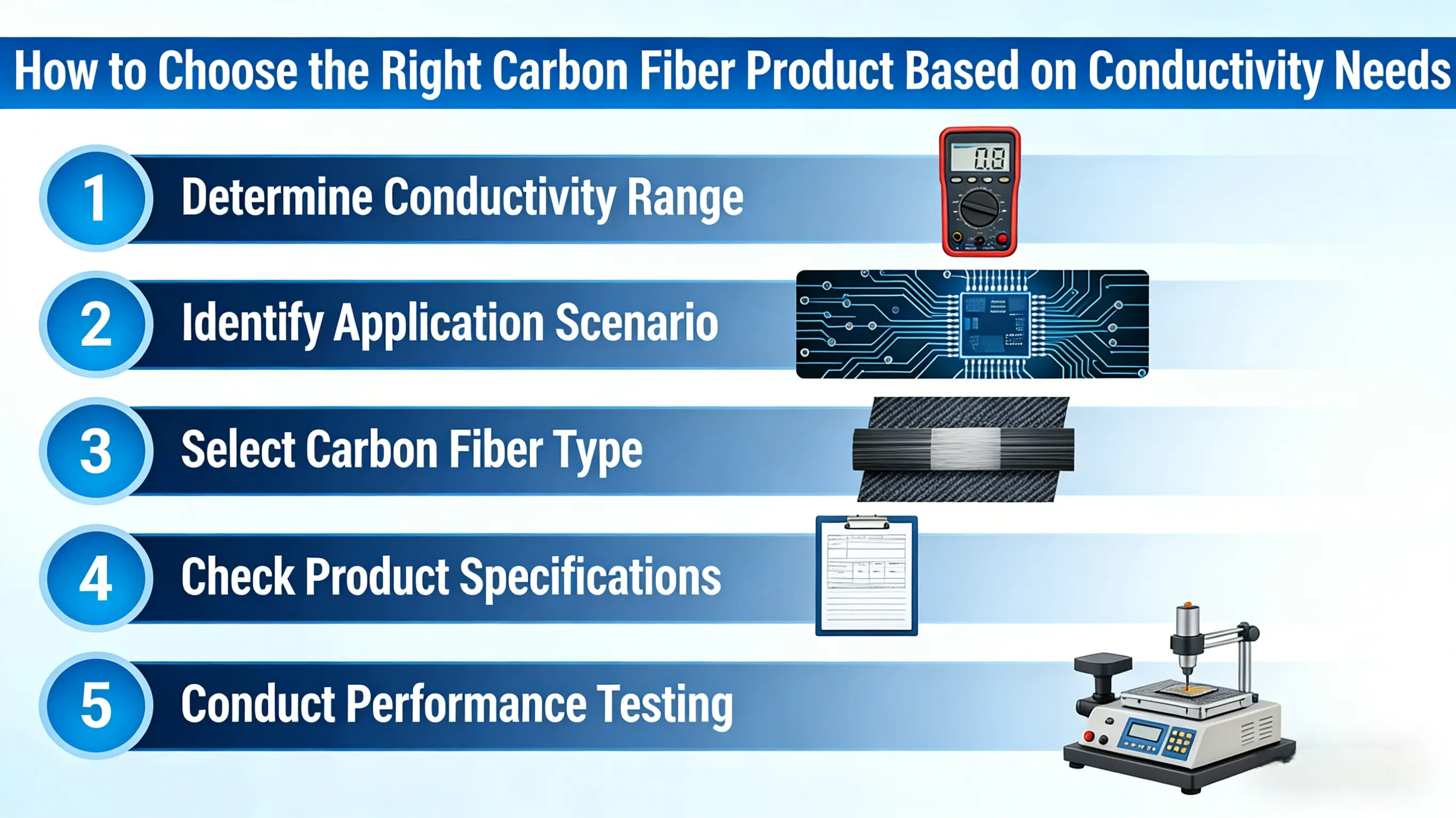
Conductivity requirements split into two tracks: electrical and thermal. Get clear on which one you need before you spec a material. That saves costly backtracking.
Step one: define your threshold.
- Electrical shielding or EMI protection: You need effective composite conductivity above 10³ S/m. Standard carbon fiber composites land in the 10³–10⁵ S/m range — workable, and far lighter than copper at 8.94 g/cm³.
- Heat dissipation: Requirements vary by direction — and the gap is large. Axial conductivity in high-modulus pitch fiber hits 500 W/m·K. Embed that same fiber in epoxy, and it drops to 5–7 W/m·K in-plane. Go transverse, and it falls below 1 W/m·K. That’s not a rounding error. It’s a hard design constraint.
Step two: match fiber type to threshold.
| Need | Fiber Type | Conductivity |
|---|---|---|
| Basic EMI shielding | Standard modulus | 21–180 W/m·K thermal; σ ~10³ S/m |
| Thermal management | High modulus pitch | Up to 500 W/m·K axial |
| Lightweight structural + EMI | Standard CFRP | σ_eff 10³–10⁵ S/m, density 1.5–2 g/cm³ |
Three variables that shift the result:
- Fiber alignment — Unidirectional layups maximize axial conductivity. Random fiber orientation cuts it by a wide margin.
- Graphitization temperature — Higher processing temps (approaching 2,973 K) push resistivity down toward 10⁻⁵ Ω·m.
- Fiber volume fraction — More fiber builds denser contact networks. Conductivity moves closer to the fiber’s own 6×10⁴ S/m baseline.
One number worth keeping in mind: carbon fiber’s density sits at 1.5–2 g/cm³. Compare that to aluminum at 2.71 and copper at 8.94. Your design needs real conductivity but can’t carry metal’s weight? That gap is where carbon fiber earns its place.
FAQ: Carbon Fiber Electrical Conductivity — Quick Answers
Got a quick question? Here’s a direct answer.
Is carbon fiber electrically conductive?
Yes. Resistivity runs 10⁻⁵ to 10⁻³ Ω·m. That’s conductive enough to cause real problems near exposed circuits.
How does it compare to copper?
Carbon fiber is 1,000 to 100,000 times more resistive than copper (1.7×10⁻⁸ Ω·m). It conducts electricity. It does not replace metal.
Does fiber type change conductivity?
Yes — by a wide margin. High-modulus fiber hits ~10⁻⁵ Ω·m. High-strength fiber sits near 10⁻³ Ω·m. That’s 100x less conductive, from the same base material.
What fiber content do I need for EMI shielding?
You need above 30% fiber volume. Drop below 10%, and the conducting network falls apart. Shielding stops working at that point.
Can carbon fiber handle a lightning strike?
Standard CFRP panels hold up to impulse currents of 11 kA. Proper reinforcement is required to reach that threshold. Bare composite with no protection breaks down fast under a direct strike.
Is the conductivity the same in every direction?
No. Unidirectional CFRP carries current well along the fiber axis. Measure across the fibers, and you’re dealing with something closer to an insulator. Direction matters a lot here.
Conclusion
Carbon fiber doesn’t fit the “conductor” or “insulator” box. That’s what makes it fascinating — and at times, dangerous. It conducts electricity along its fibers. It resists current across them. It behaves nothing like the metals it often replaces. That anisotropy isn’t a flaw. It’s a feature — if you understand it.
Routing wiring through a carbon fiber chassis? Designing a UAV frame? Spec’ing materials for your next build? The takeaway is the same: know your resin system, know your fiber orientation, and never assume insulation where there is none.
At HyperX Carbon, the right product starts with the right information. Browse our material specs and let the data drive your decision — not guesswork.
Smart builds start with knowing what your materials do.
Contact HyperX Carbon – Your Trusted Chinese Carbon Fiber Partner
Ready to source high-performance carbon fiber materials or custom forged carbon fiber parts from China?
HyperX Carbon is a leading manufacturer with 20+ years of expertise, specializing in aerospace-grade forged carbon fiber, prepreg, tubes, sheets, and lightweight automotive/drone/medical components. We offer:
- Stable supply chain with premium raw materials (Toray, Mitsubishi, Hengshen)
- AS9100D certified production for aerospace & UAV applications
- Rapid prototyping (5-8 weeks) and monthly capacity exceeding 180,000 parts
- Competitive pricing with 15-18% cost savings on forged carbon solutions
- Full customization: from T700/T1100G to ultra-high modulus grades
Whether you’re an eVTOL developer, automotive OEM, drone manufacturer, or medical device engineer, HyperX delivers consistent quality, batch-to-batch reliability, and reliable delivery.
Get in touch today for a free consultation, custom quote, or material sample.
📧 Email: [email protected]
🌐 Website: https://www.hyperxcarbon.com/
📞 Phone/WhatsApp: +86 15623270276 (English support available)
Let’s build your next lightweight innovation together – contact HyperX Carbon now and stay ahead in the low-altitude and advanced composites market.