Upgrading to a carbon fiber hood looks simple on paper. Then you start getting quotes — and the price range hits harder than expected. Hoods run anywhere from $300 to well over $3,000. Without context, that spread tells you nothing useful.
So before you pull the trigger — or talk yourself out of it — get clear on what’s driving that gap. Five things move the price:
-
Material grade
-
Manufacturing process
-
Brand reputation
-
Fitment quality
-
Installation costs
Get any one of them wrong, and you’ll spend far more fixing it than you saved upfront.
This guide breaks down what a carbon fiber hood replacement costs across different budgets, car models, and material types. The goal is simple: help you shop smart, not just shop cheap.
How Much Does A Carbon Fiber Hood Cost?
Real numbers tell the story better than estimates.
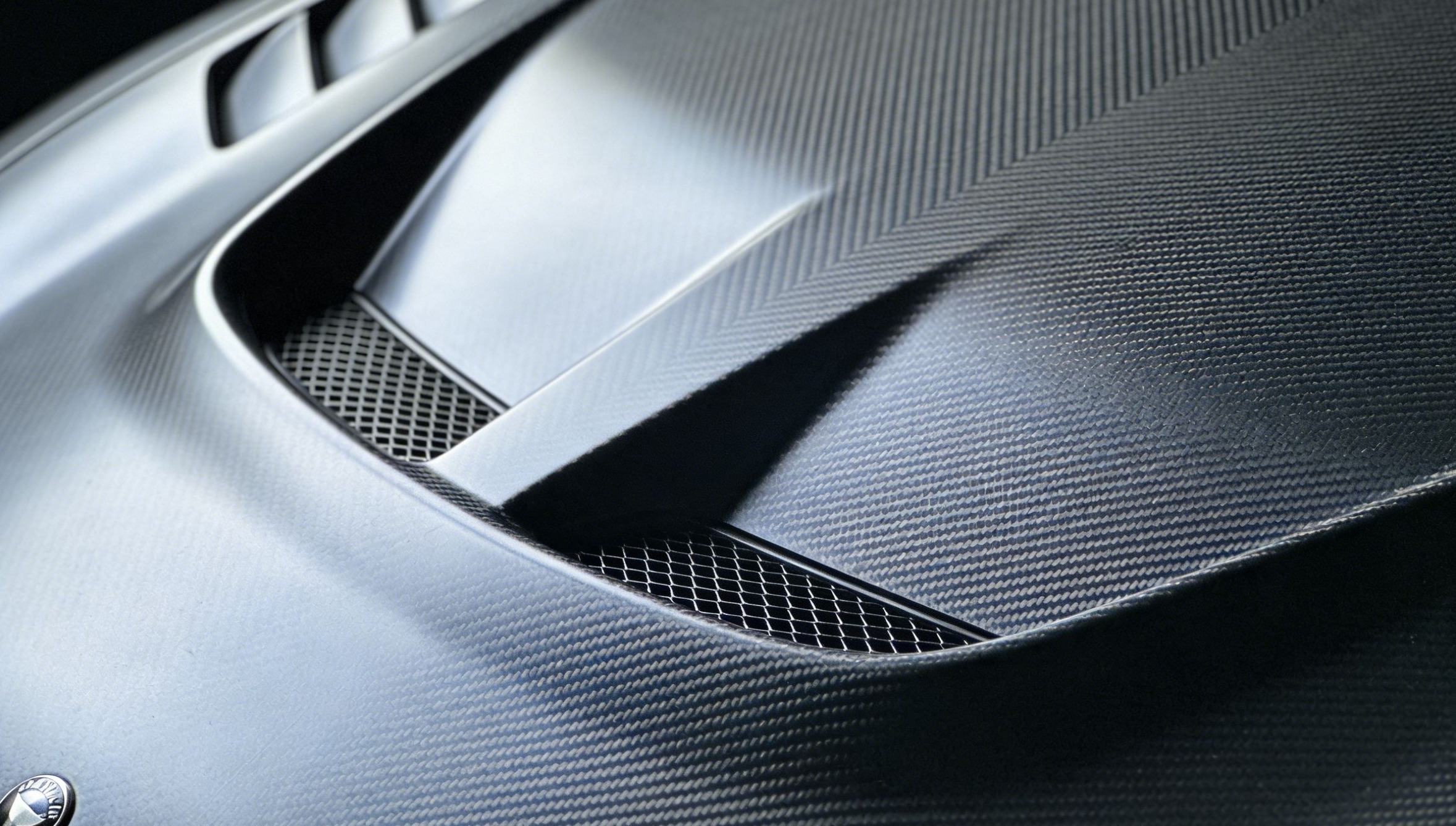
For 2022–2026 model fitments, carbon fiber hoods run between $999 and $2,268. Most popular options fall around $1,400–$1,600. Discounts of 20–33% show up often, so the sticker price doesn’t give you the full picture.
Here’s what that range looks like on specific vehicles:
|
Vehicle |
Hood Style |
Price |
|---|---|---|
|
Hyundai Elantra N (2022–26) |
TYPE-V Vented |
$999.99 |
|
Ford Mustang S650 (2024–26) |
Terminator Carbon |
$1,349.99 |
|
Honda Civic (2022–26) |
THRW Style |
$1,440.00 |
|
Tesla Model Y (2025–26) |
OEM Style |
$2,268.00 |
These aren’t random numbers. Each price reflects three things stacked together:
-
Material grade — the quality of the carbon fiber used
-
Manufacturing method — how the hood is built and finished
-
Brand overhead — the cost behind the name on the box
Set your budget with those factors in mind. Then use this guide to see where your money goes.
What’s the Average Carbon Fiber Hood Cost? (Quick Answer)

Most quality carbon fiber hoods fall between $1,099 and $2,000. That’s the real bracket. The sweet spot — where most buyers land — is the $1,440–$1,800 range.
Here’s how the tiers break down:
|
Tier |
Price Range |
What You’re Getting |
|---|---|---|
|
Budget |
$1,099–$1,350 |
Entry-level vented designs, dry carbon options |
|
Mid-Range |
$1,440–$1,518 |
OEM-style fitment, cleaner finish |
|
Premium |
$1,800–$2,000 |
Specialty styles, 3K twill weave, high-end brands |
A few factors push prices up or down within those tiers:
-
Construction quality — Hand-laid 3K 2×2 twill weave costs more than standard layup. A UV-protected gloss finish adds another $100–$300 on top.
-
Vehicle platform — Tacoma and 4Runner hoods run closer to $1,800 because production volume is lower. GR86 options sit around $1,440–$1,518 for the same reason in reverse.
-
Installation — Carbon fiber hoods bolt on using OEM hardware. The swap is direct and clean. Plan for one hour of labor if you’re not doing it yourself.
The industry marks $2,000 as the benchmark for a well-made carbon fiber hood. Anything below that isn’t a dealbreaker. It does mean you should ask sharper questions before buying.
Carbon Fiber Hood Price Breakdown by Material Type
The material inside that hood determines everything — the price, the weight savings, the longevity, and whether it still looks good three summers from now.
There are three distinct material categories on the market. Each one serves a different buyer. Know which one you’re looking at. That stops you from paying dry-carbon prices for a fiberglass shell with a carbon-print sticker on it.
Carbon Skin / Fiberglass Overlay — $300–$900
This is the entry point. A fiberglass base with carbon fiber wrap or veneer laid over the surface. It looks like carbon. It isn’t.
Weight savings are minimal. Structural performance is low. UV resistance is poor. Expect the finish to fade or yellow within two to three years without heavy maintenance. Want the look and nothing else? This tier gets the job done. Chasing real performance gains? It won’t deliver.
Budget imports and overseas eBay listings ($625–$1,500 USD) often fall into this category. The photos look clean. The actual product tends to be softer.
Wet Carbon Fiber — $900–$1,600
This is where most buyers land. The process is wet lay-up or vacuum infusion. Real carbon fiber, real structure, real weight reduction — 10–14 lbs over a stock steel hood.
Brands like Seibon produce wet carbon hoods for the 2022–25 GR86/BRZ at $1,800 USD. CMST’s BMW M3/M4 hood runs around $1,250 USD. Gloss woven finish with UV-protective clear coat is standard at this tier.
The gap versus dry carbon is real but not dramatic. Wet carbon carries more resin content. That adds slight weight and reduces long-term structural rigidity compared to autoclave-cured parts. For street use, that gap is acceptable. For track-day builds where every variable counts, it matters more.
Dry / Pre-Preg Carbon — $1,500–$3,999+
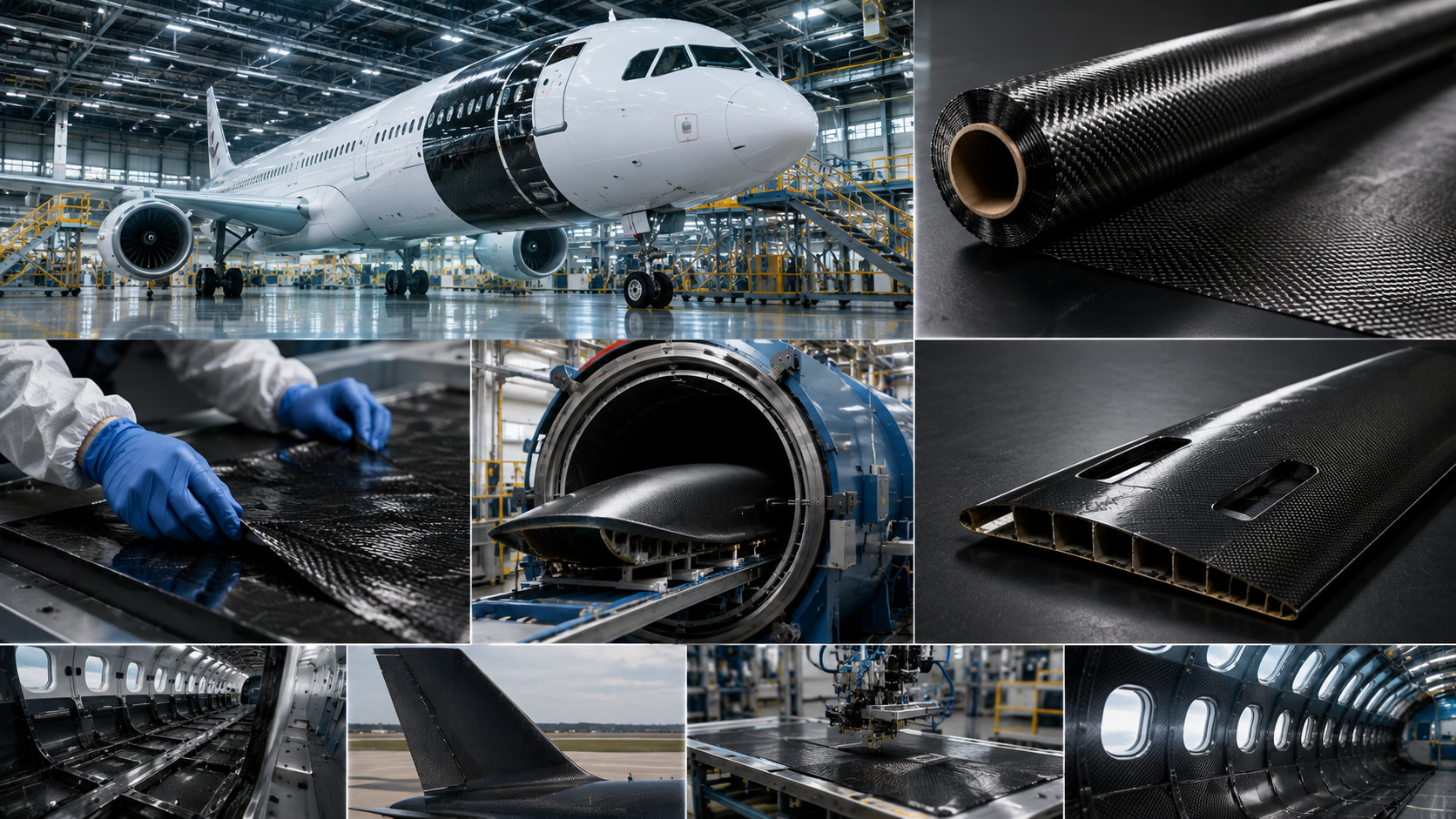
Pre-impregnated carbon fiber, cured in an autoclave under controlled heat and pressure. Aerospace manufacturers use this same process. The price reflects that.
Anderson Composites’ dry carbon hood for the Chevrolet C8 Corvette runs $3,499–$3,999. CT Carbon’s McLaren 720S hood sits at $3,750 USD. These aren’t vanity numbers. Autoclave equipment, extended curing time, and minimal material waste all add up in the final retail price.
Weight savings reach 8–10 lbs, with stronger UV resistance and better structural consistency than wet carbon. Most manufacturers at this tier include a warranty. They stand behind what they build.
Side-by-Side: What Your Money Buys
|
Material Type |
Price Range |
Weight Savings |
Durability |
UV Resistance |
Best For |
|---|---|---|---|---|---|
|
Carbon Skin / FRP |
$300–$900 |
Minimal |
Low |
Poor |
Appearance only |
|
Wet Carbon |
$900–$1,600 |
10–14 lbs |
Moderate |
Good (with coating) |
Street builds, daily drivers |
|
Dry / Pre-Preg |
$1,500–$3,999+ |
8–10 lbs |
High |
Excellent |
Track use, premium builds |
One more variable cuts across all three tiers: fiber content percentage. Higher carbon content means a lighter, stronger part. Lower-grade hoods use filler materials to cut production costs. You see the difference in the weight and the finish over time. Premium hoods keep filler low. Budget hoods don’t.
The material type sets your floor. How it’s made determines your ceiling.
Carbon Fiber Hood Prices by Car Model

Same keyword, same search, very different prices — because the car you drive changes everything.
A Toyota Camry hood starts under $1,000. A Ford Mustang GT3 hood pushes past $2,000. That’s not brand markup doing all the work. It’s mold cost, production volume, and platform popularity — all stacked on top of each other. Low-volume models cost more to tool and more to produce. That cost has to go somewhere. It ends up on your invoice.
Here’s what pricing looks like across the most common platforms:
Japanese Daily Drivers — $901–$1,440
The Toyota Camry (2018–24) has one of the widest price spreads in this category. Five distinct hood styles, five different price points:
-
V1 – from $999.99
-
V2 – from $1,199.99
-
V3 VIP – from $901.99 / standard from $1,099.99
-
V4 Sema Style – VIP from $1,099.99 / standard $1,399.99
-
V5 Muscle – VIP from $1,148.99 / standard $1,399.99
The Toyota Corolla (2019–26) sits at $1,099.99 VIP / $1,299.99 standard.
The Honda Civic 11th Gen (2022–26) ranges from $999.99 to $1,494.99 depending on trim and style. The Seibon THRW version lists at $1,600. It often goes on sale and drops to $1,440.
Performance and Truck Platforms — $1,453–$1,800
Fitment complexity drives pricing here. These platforms need precise mold work, and that adds cost.
-
Subaru WRX/STI STI-style hood — around $1,453
-
Lexus IS300/IS350 (2021–26) OEM-style hood — $1,798
-
Toyota Tacoma (2024–26) and 4Runner (2025–26) TR-Style hood — $1,800
The Tacoma and 4Runner sit at the top of this range for a clear reason. Low production volume means custom tooling costs get split across fewer units. You pay more because fewer people are buying the same hood.
Muscle and Performance Cars — $1,186–$2,539
The Ford Mustang lineup shows the widest spread of any platform:
|
Style |
Year Range |
Price |
|---|---|---|
|
Vicrez RE Style |
2018–23 |
$1,186 |
|
GT3 Hood |
2024–26 S650 |
$2,029.99 |
|
Type-GTD Hood |
2024–26 S650 |
$2,159.10 |
|
Terminator Double-Sided |
2024–26 S650 |
$2,539.99 |
The Chevrolet Corvette C8 (2020–26) ZR1-style carbon overlay lands at $1,699.99. That’s sharp pricing for a platform that tends to run higher. You’re getting a lot of hood for that number on a C8.
Why the Same Brand Charges More for Some Models
It comes down to two factors: mold investment and units sold.
A Camry hood spreads tooling costs across thousands of orders. A WRX STI hood or a 4Runner hood doesn’t. Niche JDM platforms tend to land in the $899–$1,499 range. The tooling investment gets recovered over a smaller production run, so each unit carries more of the cost. High-volume mainstream sedans push prices down toward the $900–$1,200 floor because the math works in your favor.
Your car sets your price ceiling before you’ve looked at a single listing.
Top Carbon Fiber Hood Brands and What They Cost

Four brands dominate most carbon fiber hood searches. They’re not interchangeable. Each one targets a different buyer, uses a different process, and sets prices to match.
Seibon Carbon — $1,350 to $2,000
Seibon built their reputation on consistent fitment and wide model coverage. Their hoods use pre-preg unidirectional carbon with vacuum bagging. That’s a clear step above basic wet layup — you get better resin control and a stronger weight-to-strength ratio.
The range is wide. A Subaru BRZ VS hood starts at $1,350. Toyota Tacoma and 4Runner TR-style hoods sit at $1,800. The 4Runner TS-style pushes to $2,000. GR Corolla VS dry carbon lands at $1,620–$1,800 depending on spec.
For street builds that need reliable OEM-style bolt-on fitment, Seibon is the safe play.
VIS Racing — $1,299 to $1,499
VIS stands out on process. High-pressure autoclave curing is the same core method aerospace composites use. It delivers better resin consistency and stronger heat resistance than standard wet layup. Fitment tolerances stay under 1mm gap variance. That precision is obvious on install day.
Pricing stays competitive too. You get autoclave-level quality without paying boutique prices. VIS Racing fills that gap well.
JDMuscle — $899 to $1,399
JDMuscle focuses hard on the WRX/STI platform. Their vented hoods use heat extractor designs that can drop underhood temperatures by 20–30°F. That’s a real functional gain — not just a styling detail. Vented versions run $200–$300 more than non-vented options. It’s a premium worth paying if heat management is part of your build goal.
Carbon Creations and APR Performance
Carbon Creations targets buyers who want OEM-style replacement fitment at lower prices. Wide model coverage, bolt-on installation, no surprises. APR Performance sits higher in the price range — track-rated construction, stronger structural specs, builds aimed at performance use rather than street appearance.
Brand Comparison at a Glance
|
Brand |
Price Range |
Process |
Best For |
|---|---|---|---|
|
Seibon Carbon |
$1,350–$2,000 |
Pre-preg UD, vacuum-bagged |
Street builds, wide fitment |
|
VIS Racing |
$1,299–$1,499 |
High-pressure autoclave |
OEM-precision fitment |
|
JDMuscle |
$899–$1,399 |
Vented design |
WRX/STI, heat management |
|
Carbon Creations |
Affordable |
Standard layup |
OEM-style replacement |
|
APR Performance |
Mid-High |
Track-rated |
Performance builds |
One More Thing: Avoiding Fakes
Budget listings on eBay and Alibaba carry one consistent risk — carbon skin overlays sold as structural carbon fiber hoods. Here’s how to screen them out before you buy:
-
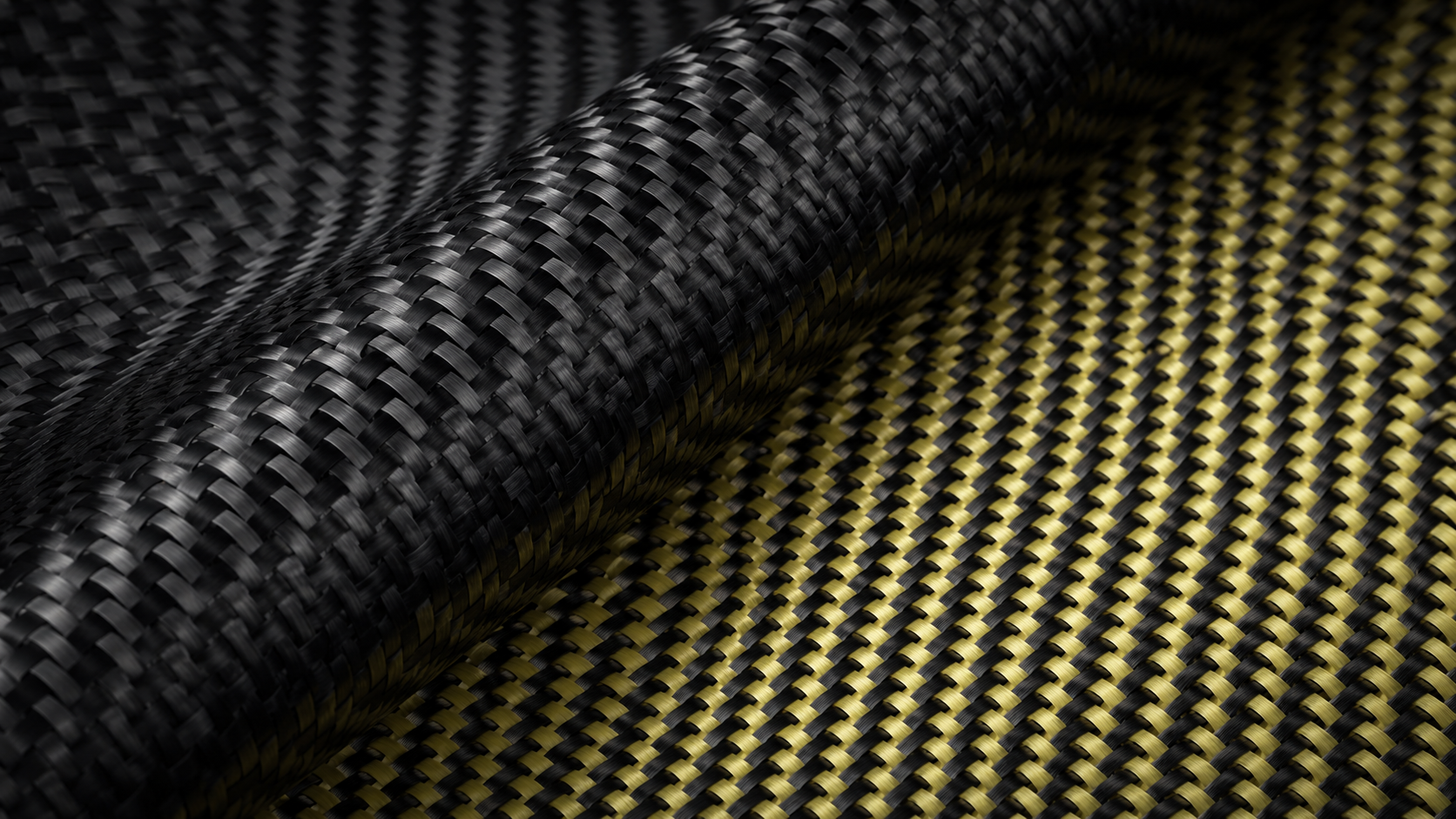
Check the weave. Real 3K or UD carbon shows slight irregularities in strand alignment. Printed film looks too clean and uniform. That’s a red flag.
-
Check the weight. A real carbon fiber hood runs 15–20 lbs. A listing showing above 25 lbs is fiberglass with a surface treatment — not real carbon.
-
Seller history matters. Look for ratings above 98% with at least 1,000 completed sales.
-
Return policy is non-negotiable. You want a minimum 30-day window with no restocking fee. A seller who won’t back their fitment has a reason for that.
The brand you choose shapes the final result. So does the research you do before paying.
Hidden Costs You Need to Factor In
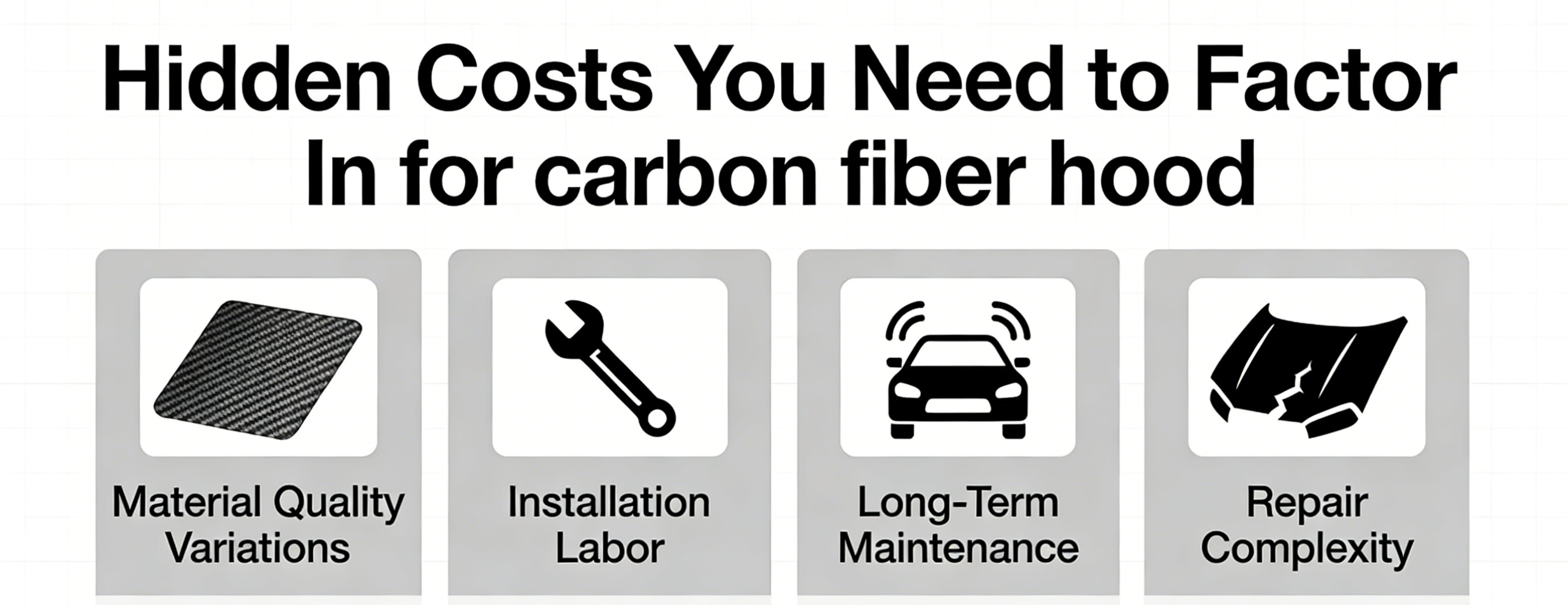
The sticker price is just the start. Most buyers budget for the hood itself and forget everything else — then wonder why the total bill came in $400 higher than expected.
Here’s what doesn’t show up in the product listing:
Installation Labor
Carbon fiber hoods bolt on using OEM hardware, so the swap is clean. But “clean” doesn’t mean “free.” Not doing it yourself? Budget $75–$150 in shop labor for a basic swap. Performance shops in high cost-of-living markets charge more. Latch modifications, hinge alignment, or gap adjustments push that number higher.
One hour of labor is the standard estimate. Plan for one and a half if your vehicle hasn’t had underhood work done in a while.
Paint, Finish, and Clear Coat
Not every carbon fiber hood arrives ready to mount and drive. Some hoods ship raw — no UV-protective clear coat applied. UV exposure on bare carbon is the fastest way to yellow the weave. A UV-resistant clear coat at most body shops runs $100–$300. The exact cost depends on hood size and how much prep work the shop needs to do.
Want a color-matched painted section on the hood? That’s a popular look on builds mixing painted and exposed carbon elements. Add another $150–$400 based on your paint code and finish complexity.
Shipping and Freight Damage Risk
Large body panels don’t ship cheap. Oversized freight charges on hoods add $80–$200 to your final order total. Some brands build this into the listed price. Many don’t.
Freight damage is real. Hoods arrive dented, cracked, or with damaged edges far more often than sellers let on. Always buy from a brand with a minimum 30-day return window and no restocking fee. That policy is your insurance policy.
The Real Number to Budget
Add it up:
|
Cost Category |
Estimated Range |
|---|---|
|
Hood (mid-tier) |
$1,099–$1,600 |
|
Installation labor |
$75–$150 |
|
UV clear coat |
$100–$300 |
|
Shipping/freight |
$80–$200 |
|
Total |
$1,354–$2,250 |
Budget for the full number, not the product page number. That gap between the two is where most buyers get caught off guard.
How to Choose the Right Carbon Fiber Hood for Your Budget
Start with three questions. What’s your total budget after installation and shipping? How much does weight savings matter to your build? How long do you plan to keep the car?
Get clear on those answers. The right tier becomes obvious.
Match the Tier to What You Need
Budget ($600–$900) gets you carbon skin — fiberglass underneath, carbon overlay on top. Weight savings are small, 2–5 lbs at best. Fitment is fair. The finish fades over time. Pick this tier if the look is the main goal and you’re clear about the trade-offs.
Mid-Range ($900–$1,600) is where most buyers land. You get genuine wet carbon from brands like Seibon and VIS Racing. Real weight reduction — 10–14 lbs off your front axle. Hardware and warranty come included. The finish holds up well. This tier fits the widest range of builds without pushing you to overpay.
Premium ($1,600+) is dry pre-preg carbon. It’s the lightest option available. UV resistance is the best in class. The finish comes out the cleanest. You’re tracking the car or building something that needs to stay sharp five years out — this price point earns it.
|
Tier |
Material |
Weight Savings |
Durability |
|---|---|---|---|
|
Budget |
Carbon Skin / FRP |
2–5 lbs |
⭐⭐ |
|
Mid-Range |
Wet Carbon |
10–14 lbs |
⭐⭐⭐⭐ |
|
Premium |
Dry / Pre-Preg |
8–10 lbs |
⭐⭐⭐⭐⭐ |
Dry carbon weighs less than wet carbon — even though the price-to-weight table looks close. The resin content is lower. The structure is tighter. That’s what puts the premium tier in its own category.
Build with a clear goal in mind. The tier that fits your needs now costs less over time than the one you’ll replace in six months.
Frequently Asked Questions About Carbon Fiber Hood Costs
These are the questions that matter most — the ones buyers ask after the sticker price stops adding up.
Is a carbon fiber hood worth the money?
For most builds, yes. But the answer depends on what you’re buying. A genuine wet carbon hood saves 10–14 lbs off your front axle. A dry pre-preg unit goes further — better structural integrity and a finish that holds for 10–15 years with minimal maintenance. That’s solid value over time.
Cheap hoods under $600 tell a different story. Low fiber content — often 20–30%, padded out with filler — leads to delamination within one to two years. One S30 buyer found out the hard way. A $500 carbon hood cracked on a pothole, yellowed within six months, and took 30 hours to fit due to persistent gap problems. The repair bill ran $300–$800. Those “savings” disappeared fast.
Can I install a carbon fiber hood myself?
Yes, you can. But it’s harder than it looks.
A pro install takes 4–8 hours. DIY jobs often run 10–30 hours once fitment problems start stacking up. The most common issues are latch misalignment, hinge torque errors, and paint damage from clamps. Go the DIY route and you’ll need:
-
Torque wrench (10–50 Nm range)
-
Alignment shims (0.5–2mm)
-
Paint-safe clamps
-
10mm and 13mm sockets
-
Threadlocker
Even 1mm of misalignment at the hinge shows up as visible gaps at the leading edge. That’s not just a looks problem — it can affect hood stability at speed.
Will a carbon fiber hood raise my insurance premium?
In most U.S. states, any modification over $500 must be declared to your insurer. A carbon fiber hood crosses that line in nearly every case.
Skipping the declaration can void your collision claim completely. Declared performance parts tend to push your premium up by 10–25%. In a theft or total loss situation, an undeclared hood often gets valued at stock replacement cost — not what you paid for it. Check your specific policy terms before installation. Assumptions here can cost you.
How long does a carbon fiber hood last?
Dry carbon with a UV-resistant clear coat holds up for 10–15 years. Wet carbon without steady UV protection starts yellowing and breaking down the resin within 5–10 years. Annual ceramic coating or UV spray extends the life of both. Direct sun exposure speeds up wear on any finish.
The gap between dry and wet carbon maintenance is real. Your car sits outside year-round? Factor that into your material choice — not just what you pay upfront.
Conclusion
A carbon fiber hood isn’t just a purchase — it’s something you see on the front of your car every single day.
Here’s the full breakdown: wet carbon starts around $300–$600. Dry carbon climbs into the $1,500+ range. Installation adds another $200–$500, depending on who does the work. The price gap between a cheap hood and a well-built one isn’t random. A good hood fits clean and opens smooth. A bad one fights you every time.
Know your budget before you buy. Know your build. Know who you’re buying from. The cheapest carbon fiber hood replacement on the market isn’t a deal if it warps by summer.
Contact HyperX Carbon – Your Trusted Chinese Carbon Fiber Partner
Ready to source high-performance carbon fiber materials or custom forged carbon fiber parts from China?
HyperX Carbon is a leading manufacturer with 20+ years of expertise, specializing in aerospace-grade forged carbon fiber, prepreg, tubes, sheets, and lightweight automotive/drone/medical components. We offer:
-
Stable supply chain with premium raw materials (Toray, Mitsubishi, Hengshen)
-
AS9100D certified production for aerospace & UAV applications
-
Rapid prototyping (5-8 weeks) and monthly capacity exceeding 180,000 parts
-
Competitive pricing with 15-18% cost savings on forged carbon solutions
-
Full customization: from T700/T1100G to ultra-high modulus grades
Whether you’re an eVTOL developer, automotive OEM, drone manufacturer, or medical device engineer, HyperX delivers consistent quality, batch-to-batch reliability, and reliable delivery.
Get in touch today for a free consultation, custom quote, or material sample.
📧 Email: [email protected]
🌐 Website: https://www.hyperxcarbon.com/
📞 Phone/WhatsApp: +86 15623270276 (English support available)
Let’s build your next lightweight innovation together – contact HyperX Carbon now and stay ahead in the low-altitude and advanced composites market.