Finding the right carbon fiber hood for your specific build is harder than it should be. You’ve got tabs stacked three rows deep, and you’re still not sure if that listing fits your Tacoma, your 4Runner, or your Supra. That stops here.
This guide cuts straight to the best options for each platform. No filler. No guesswork. Just clear answers.
Want serious weight reduction? A cleaner OEM-style finish? That unmistakable dry carbon look that turns heads at every meet? We’ve got you covered — sorted by model so you can find your fit fast, compare what matters, and buy with confidence.
2026 Best Carbon Fiber Hood For Other Models (Tacoma, 4Runner, Supra, Chrysler 300, Etc.)

Three platforms. Three distinct builds. One material that changes how your truck or sports car looks, moves, and feels on the road.
Here’s how the lineup breaks down.
Toyota Tacoma (2024–2026) — TR-Style & TS-Style

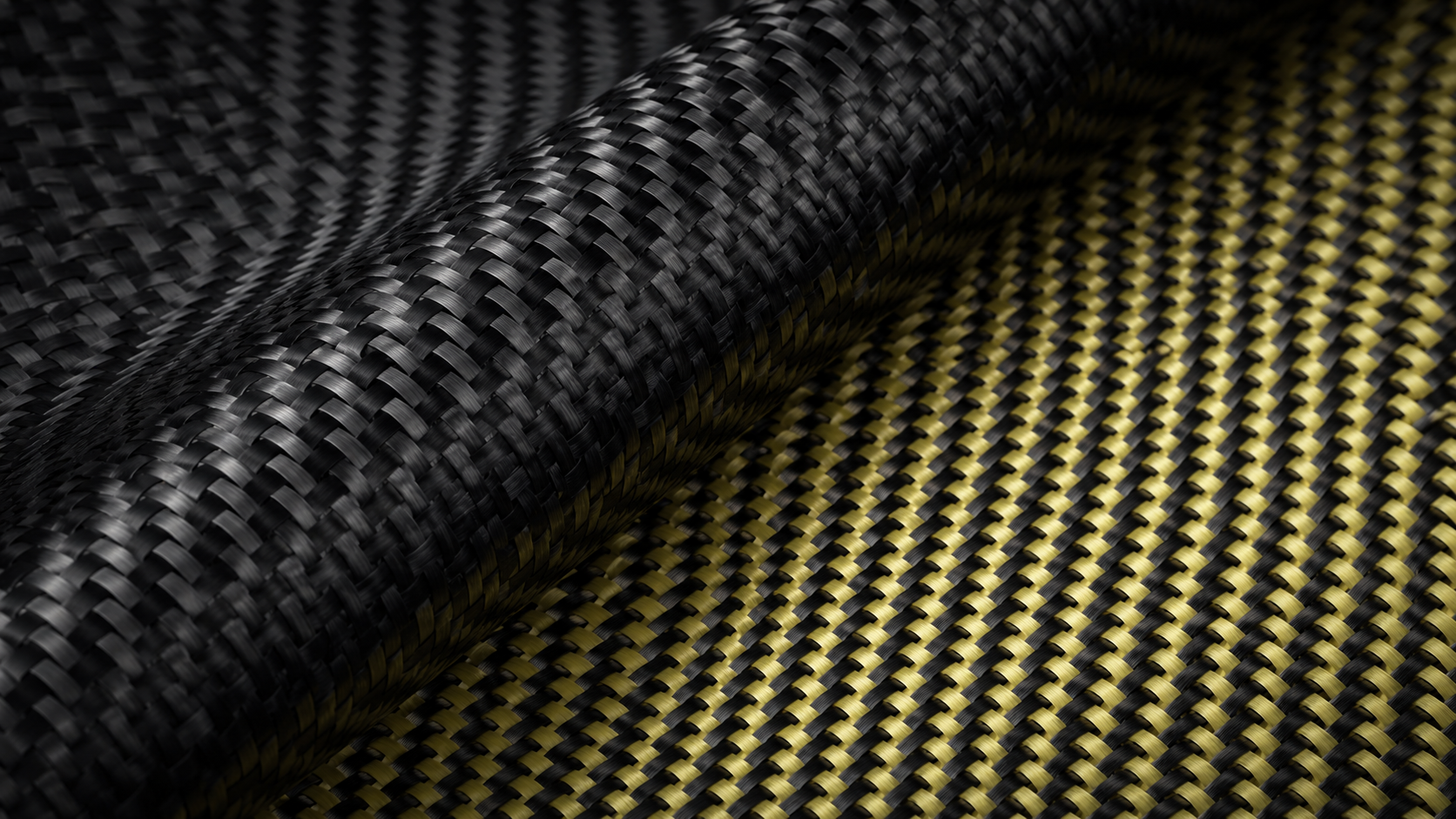
The Seibon TR-Style Carbon Fiber Hood was made for the N400/N500 Tacoma. It fits every major trim — SR, Platinum, TRD Sport, Trailhunter, and everything between. You get 3K 2X2 twill weave carbon fiber with a gloss finish on top and a matte black fiberglass underside. Price is $1,800.
The TS-Style variant runs $2,000. It adds a UV-resistant coating and heat-resistant fabric. That’s a real plus for trucks parked or driven in direct sun all year. Both hoods use your OEM hardware. No drilling. No fabrication.
What you need to know before installing either:
– Hood pins are required — not optional
– Install a heat shield to protect the carbon from engine heat
– Pull the stock gas struts. The carbon hood is much lighter, and the factory spring pressure will crack it over time. Redline Tuning aftermarket struts are a solid replacement
Get this installed by a professional. It’s worth it.
Toyota 4Runner (2025–2026) — TR-Style & TS-Style

The same Seibon TR and TS options are available here, in the $1,800–$2,000 range. Installation requirements match the Tacoma: sand and prime before painting for a custom look, and budget for professional labor. The 3K 2X2 twill weave build gives you the same stiffness-to-weight ratio. It’s backed by 20+ years of hand-crafting experience. The weave pattern is clean and consistent right out of the box — show-ready, no paint needed.
Toyota Supra (2020–2026) — VS-Style

The Seibon VS-Style is built for the A90 Supra. 100% Grade-A carbon fiber, double-sided, direct bolt-on. High-gloss finish, no prep work needed. You want a clean factory-line fitment with real dry carbon presence? This is the answer for Supra owners.
Chrysler 300
Short answer: no confirmed carbon fiber hood options exist for the Chrysler 300 — not for 2026, not for prior years — across verified aftermarket catalogs.
All Seibon hoods carry a 1-year warranty against material and craftsmanship defects from the date of sale. That’s a real guarantee, and it reflects the build quality behind every panel.
Best Carbon Fiber Hood for Toyota Tacoma (2024-2026)

The 2024–2026 Tacoma already commands attention on the road. A carbon fiber hood makes sure it keeps it.
On the N400/N500 platform — covering every trim from SR to Trailhunter — Seibon is the one confirmed manufacturer building a purpose-built carbon fiber hood for this generation. No TruFiber. No Duraflex. Just Seibon, with two distinct styles that serve two very different builds.
Here’s what separates them.
TR-Style vs. TS-Style: Know the Difference Before You Buy

TR-Style (HD24TYTA-TR) — $1,800
This one mimics the TRD Sport scoop aesthetic. It uses 3K 2×2 twill weave carbon fiber with a gloss finish on the exterior and a fiberglass underside for extra rigidity. The hood weighs 22 lbs. That’s 28 to 38 lbs lighter than your factory steel hood. You get lower front-end weight, better steering feel, and a small fuel efficiency gain — industry data puts that at 1–2% per 100 lbs removed.
Dimensions: 63 × 56 × 8 inches. Direct bolt-on using your OEM hardware. Fitment confirmed across SR, SR5, TRD Off-Road, TRD Pro, and all trims in between.
TS-Style — $2,000
The TS weighs 35 lbs — heavier than the TR, but you get a functional vented design built for airflow and underhood cooling. The UV-resistant coating and heat-resistant fabric make it the stronger long-term choice for Tacomas that spend serious time in the sun. Still a direct OEM fit. Still 2×2 twill carbon.
The TR is the style play. The TS is the performance and durability play. Pick based on how you use the truck.
Installation: What the Listing Won’t Tell You
The fitment is bolt-on. The installation itself is not something to rush.
Four things to handle before that hood goes on:
-
Replace your OEM gas struts. The factory spring pressure is set for a steel hood. On a 22 lb carbon panel, it will either block proper closing or stress the hood until it cracks. Redline Tuning aftermarket struts are a solid, proven replacement.
-
Install hood pins. A lighter hood generates more lift at speed. Pins are essential for highway driving — no exceptions.
-
Add a heat shield. Engine bay heat is the top enemy of carbon fiber longevity. Skip the shield, and you risk warping over time.
-
Budget for professional installation. Misalignment on a carbon hood isn’t just cosmetic — it creates stress points that crack. A professional sets the gaps right the first time, every time.
Painting the hood for a custom color-matched finish? Sand and prime before you apply. Minor surface blemishes from manufacturing are normal. They disappear under prep.
Best Carbon Fiber Hood for Toyota 4Runner (2025-2026)
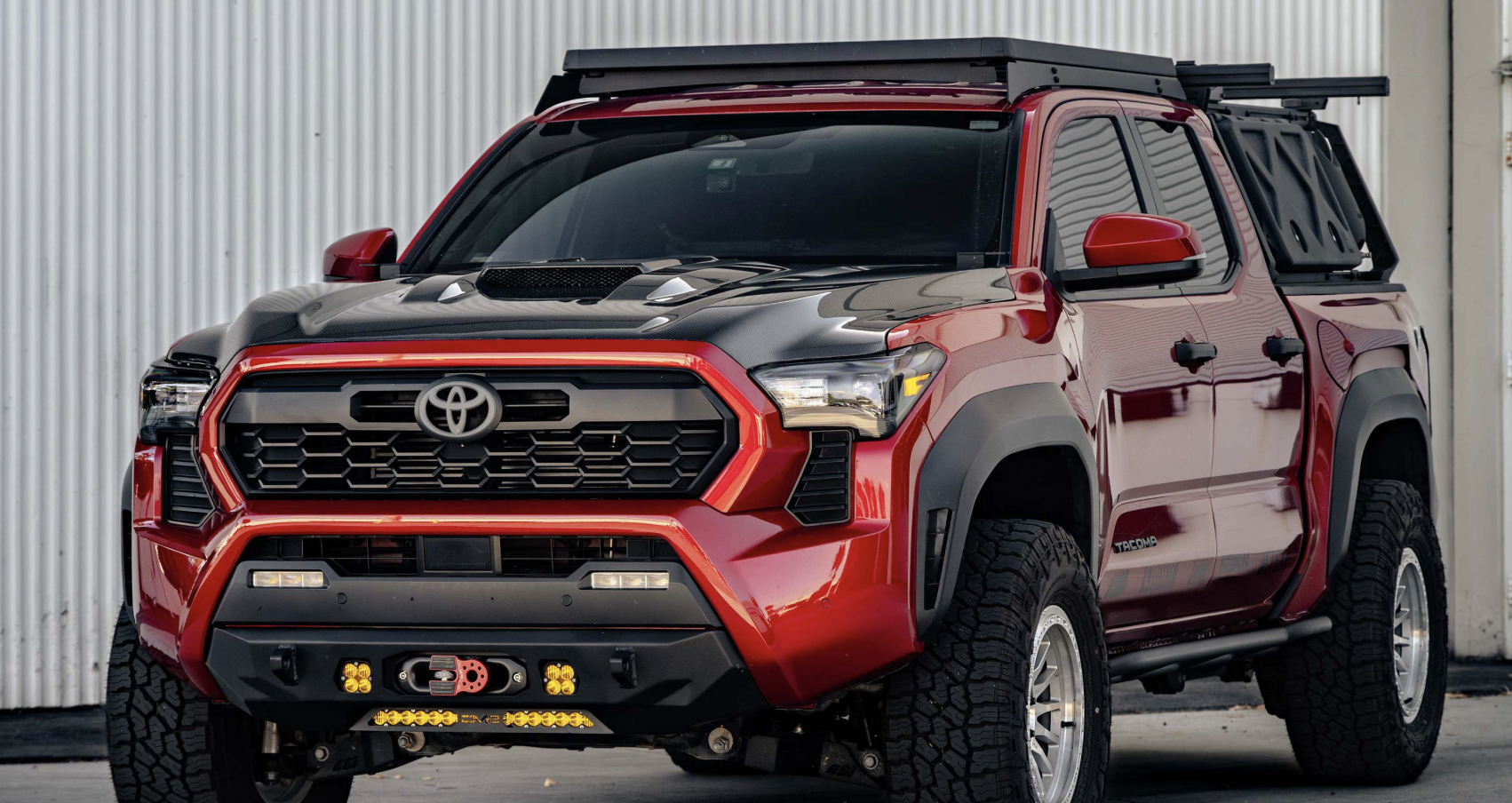
The 6th-gen 4Runner is a different beast from the Tacoma. Wider stance, more aggressive front end, built for owners who take “off-road” as a lifestyle — not just a trim badge. Still, both trucks share a common chassis underneath. That shared platform means Seibon’s TR-Style and TS-Style hoods fit both.
Good news for 4Runner owners. You’re buying a hood already proven on the Tacoma platform. Nothing speculative here.
TR-Style vs. TS-Style: Same Decision, Different Context
The choice mirrors what Tacoma owners face. But the context is different — most 4Runners see harder, more frequent trail use than their Tacoma counterparts.
TR-Style — $1,800 (or $1,620 with available discounts)
3K 2×2 twill weave carbon fiber, fiberglass skeleton underneath, gloss clear coat on top. The hood weighs 22 lbs — a flat, bolt-on replacement that drops straight onto your OEM hardware. No modification needed. Dimensions run 63 × 56 × 8 inches.
Coverage spans every trim: SR5, TRD Off-Road, TRD Pro, TRD Sport, Limited, Platinum, Trailhunter, and every i-FORCE MAX variant in the lineup.
The weave pattern is consistent and clean straight out of the box. Show-quality finish. No prep work required.
TS-Style — $1,800
Same price as the TR, but built for a different purpose. The TS features a functional scoop that pulls heat out of the engine bay. That matters on hard trail runs where underhood temps climb fast. The UV-resistant coating and heat-resistant fabric add durability for rigs that spend serious time in direct sun and high-heat conditions.
Trail-focused 4Runner? The TS is the stronger long-term pick.
Installation Notes for 4Runner Owners
The bolt-on process is straightforward. The prep work still matters.
-
Hood pins are non-negotiable. Off-road speeds and rough terrain create real vibration. Air lift at highway speed is a genuine risk. Pins take that variable off the table.
-
Pull the stock gas struts. Factory spring pressure is set for a steel hood. On a 22 lb carbon panel, that pressure fights closure and stresses the hood over time. Redline Tuning struts are the right swap.
-
Install a heat shield. The 4Runner’s engine bay runs hot. Carbon fiber and sustained heat don’t mix well long-term without one.
-
Have a professional set the gaps. Misalignment on a carbon hood puts stress on the mounting hardware. A clean install protects what you paid for.
Best Carbon Fiber Hood for Toyota Supra (A90 2020-2026)

The A90 Supra already looks fast. Carbon fiber doesn’t save a dull platform here — it sharpens a great one. You get less weight over the front axle. Heat exits the engine bay better. The finish reads race-ready without going overboard.
Three brands are doing real work for the 2020–2026 A90. Each one targets a different need.
Seibon: Two Styles, Two Purposes
Seibon VS-Style

Double-sided carbon fiber construction. The vented race design pulls real aerodynamic benefit — not just looks. Less weight up front sharpens steering response. Weight distribution improves across the whole car. It bolts straight onto the 2020–2026 A90. You want the aggressive look with real handling gains? This is where to start.
Seibon TSII-Style — $2,970 (SKU: HD20TYSUP-TSII-DS)
This is the track-focused build. Two full carbon layers bond together for serious structural strength. The venting goes more aggressive than the VS-Style. Freight adds $249 through authorized distributors like FastScions and MAPerformance. This isn’t a casual buy — you’re committing to the serious end of the performance range.
Seibon’s A90 lineup runs between $2,500 and $3,000. The TSII sits at the top. It earns that spot.
ADRO: The OEM-Fit Answer

The ADRO MK5 A90 Hood (SKU: A18A20-2401) takes a different direction. Pre-preg carbon fiber with a Kevlar underlay underneath. Strategic vents handle engine cooling and aerodynamics — no full race-design aggression needed. The profile runs lower and wider than stock. It drops the OEM hump and gives you a cleaner, sharper line.
One thing stands out: full compatibility with the Supra’s active hood hinges. No modifications needed. No extra reinforcements. ADRO includes an installation guide. Professional install is still the smart call — but the engineering fits clean without drama.
It covers 2020–2025 A90 across all variants — 2.0, 3.0, Premium, and A91 editions.
Right now it’s available as pre-order only. Estimated pricing lands in the $2,000–$3,000 range.
Which One Fits Your Build?
|
Goal |
Recommendation |
|---|---|
|
Track performance |
Seibon TSII — double-sided CF, aggressive venting, $2,970 |
|
OEM-clean show build |
ADRO — seamless fitment, low profile, Kevlar-backed |
|
Vented street/occasional track |
Seibon VS-Style — strong middle ground |
The Supra’s active hood hinge system trips people up more than anything else. Confirm compatibility before you buy. ADRO has solved this directly. Seibon’s bolt-on design handles it through fitment. Either way, professional installation is non-negotiable on this platform. The sensors, hinges, and tight body gaps on the A90 leave zero room for guesswork.
Check hyperxcarbon.com for current A90 Supra availability and fitment updates. Inventory moves fast on this platform. Pre-order windows close with little notice.
Best Carbon Fiber Hood for Chrysler 300 (2011-2026)

The Chrysler 300 is a big car with a big hood. That size is the main reason the aftermarket prices it differently from a Supra or a Tacoma.
Larger panels need more raw material. More material means higher mold costs. Those costs pass straight to you. That’s why carbon fiber hoods for the Chrysler 300 run a 30–50% premium over the same material on a compact car. That’s not a markup. It’s physics and manufacturing reality.
The market does offer range, though — real range — across styles, materials, and price points.
What’s Available Right Now (2011–2024)
Fitment covers 2011 through 2023/2024 models. A handful of serious brands serve this generation.
Carbon Fiber Options:
-
Carbon Creations — Demon Look style. Price runs $262.80 to $2,799.90 depending on spec, with a 28% discount off retail. That’s the widest price spread in this segment. The low end gets you in the door. The high end gets you a panel worth keeping for years.
-
VIS Racing — Terminator Style. Raised lines and defined character give it a strong American muscle look.
-
Zeta Composites — Hellcat Style. Light build, confirmed fitment. Hood pins are required — not a suggestion, not a recommendation. Required.
-
Aero Republic — Carbon fiber/FRP hybrid build. Muscle-forward styling with an aggressive rake.
-
FastHemis — Lightweight carbon with a precision-fit focus. Less visual drama, more clean weight savings.
The Weight Case:
Carbon fiber hoods on the Chrysler 300 weigh 20–50% less than the OEM steel panel. On a rear-wheel-drive platform, that front-end weight drop has real effects. You get better front-to-rear balance, sharper turn-in response, and small acceleration gains that add up over time.
Style Breakdown: Pick Your Direction
The Chrysler 300 aftermarket splits into two clear camps.
Muscle/Aggressive: Terminator, Demon, Hellcat, Challenger, SRT. All feature raised scoops or ram air designs. Some are functional — they move air into the engine bay and pull heat out. Others are purely visual. Know the difference before you buy.
OEM Replacement: Flat profile, clean lines, no drama. Carbon Creations and Vicrez both offer smooth-profile options. Good pick for owners who want the weight savings without the stance-car look.
Pricing and Lead Times
|
Product |
Style |
Price |
Lead Time |
|---|---|---|---|
|
Carbon Creations |
Demon Look |
$262–$2,800 |
2–4 weeks |
|
VIS Racing |
Terminator |
Varies |
2–4 weeks |
|
Zeta Composites |
Hellcat |
Varies |
2–4 weeks |
|
FastHemis |
OEM-fit |
Varies |
2–4 weeks |
Factor in accessories too. Anderson Aerocatch hood pins run $75–$95. On a lightweight carbon panel at highway speed, that’s not optional.
FAQ: Carbon Fiber Hood Questions Answered
Most buyers come into this purchase with three real questions and a pile of half-formed worries. Here’s what matters.
How are carbon fiber hoods manufactured — and does it affect quality?
Three methods exist. The difference between them is significant.
-
Autoclave curing — The premium process. Parts cure under 50–200 psi of pressure at temperatures up to 135°C over a 2–3 hour cycle. Voids are minimal. Structural integrity is at its peak. This is what separates a show-quality hood from a shelf-quality one.
-
Resin Transfer Molding (RTM) — The mid-tier option. Cure temps run 250°F–400°F with a 30–60 minute cycle. You get strong, consistent results at a more reachable price point.
-
Hand layup with vacuum bagging — Entry-level. Room temperature or low-heat cure (120°F–150°F). Quality depends on the technician’s skill. Trapped air and resin inconsistency are common when the process isn’t tight.
Know which method built your hood before you buy.
Will it fit my specific vehicle?
Carbon fiber hoods use molds built to match exact OEM dimensions. Fitment comes down to whether the mold was made for your specific make and model. Confirm compatibility before placing your order — “universal fit” language is not enough.
How do I protect the finish long-term?
Clear coat is your first line of defense. A UV-resistant clear coat, applied with care, keeps the weave sharp and stops oxidation from breaking down the resin layer. Sand and polish the surface before coating to remove any texture left from manufacturing. Skip that prep step, and the finish breaks down faster than it should.
Why does the autoclave method cost more?
The equipment runs under high pressure. Temperature control has to stay precise throughout every cycle. Skilled technicians oversee the entire process from start to finish. That’s the cost gap between autoclave and hand layup — and you see it in the finished panel’s durability and surface quality.
Conclusion
Your hood does more than cover an engine — it sets the tone for everything your build stands for.
Running a Tacoma on weekend trails? Tracking a Supra? Giving your 4Runner a serious attitude adjustment? Or rolling up in a Chrysler 300 that commands respect before you step out? A quality carbon fiber hood isn’t just an upgrade. It’s a statement backed by real numbers — up to 70% lighter than stock steel, better heat dissipation, and a finish that looks fast because it is.
The right fitment exists for your exact model. The question left is whether you’re ready to pull the trigger.
Contact HyperX Carbon – Your Trusted Chinese Carbon Fiber Partner
Ready to source high-performance carbon fiber materials or custom forged carbon fiber parts from China?
HyperX Carbon is a leading manufacturer with 20+ years of expertise, specializing in aerospace-grade forged carbon fiber, prepreg, carbon fiber tube, carbon fiber sheet, and lightweight carbon fiber automotive parts/carbon fiber drone components/carbon fiber medical components. We offer:
-
Stable supply chain with premium raw materials (Toray, Mitsubishi, Hengshen)
-
AS9100D certified production for aerospace & UAV applications
-
Rapid prototyping (5-8 weeks) and monthly capacity exceeding 180,000 parts
-
Competitive pricing with 15-18% cost savings on forged carbon solutions
-
Full customization: from T700/T1100G to ultra-high modulus grades
Whether you’re an eVTOL developer, automotive OEM, drone manufacturer, or medical device engineer, HyperX delivers consistent quality, batch-to-batch reliability, and reliable delivery.
Get in touch today for a free consultation, custom quote, or material sample.
📧 Email: [email protected]
🌐 Website: https://www.hyperxcarbon.com/
📞 Phone/WhatsApp: +86 15623270276 (English support available)
Let’s build your next lightweight innovation together – contact HyperX Carbon now and stay ahead in the low-altitude and advanced composites market.