A carbon fiber hood upgrade is one of the fastest ways to drop real weight, sharpen your front-end look, and make a statement at the paddock. But you have to pick the right one. A bad fit ruins the whole point. Gaps at the fenders, or a hood that oxidizes within a season — that’s not an upgrade. That’s money wasted.
2026 Best Carbon Fiber Hood For Honda Civic / S2000 / Integra

Here’s what most product pages skip: not every platform benefits the same way. The weight savings on a Honda Civic are dramatic. On an S2000? Minimal — that hood is already light from the factory. Knowing this before you shop makes a real difference.
This guide covers three of the most popular JDM platforms in the enthusiast market — the Honda Civic, S2000, and Integra. Each one makes a different case for going carbon.
Here’s what you’ll find inside:
-
Honda Civic — This is where the numbers get serious. A wet-lay carbon hood drops your front-end weight from 38.7 lbs down to 14–15 lbs. That’s a 23+ lb reduction — one of the highest real-world gains in the segment. Prices start at $1,424 for the Seibon TS Style and go up to $1,900 for premium TV-style variants.
-
Honda S2000 (AP1/AP2, 2000–2009) — The upgrade here is almost all visual. The Seibon JS-Style (HD0005HDS2K-JS) gives you a clean, aggressive look at $1,200. Go in with realistic expectations on performance gains — they’re small.
-
Integra — Options are tighter here. We’ll be straight about what’s available now and what’s worth watching as 2026 fitment data fills in.
Every recommendation gets evaluated on fitment accuracy, construction quality, and real buyer value — not just brand names.
Best Carbon Fiber Hood for Honda Civic (10th Gen 2016–2021 / 11th Gen 2022–2025)
Carbon fiber hood upgrades make a real difference on the Honda Civic. The numbers prove it.
A 10th Gen Civic with a stock steel hood carries 45+ lbs up front. Swap it for a quality carbon fiber hood and you drop to 36 lbs — a solid 9 lb cut. On the 11th Gen, OEM aluminum already trimmed some weight. Add a vented carbon hood and you land at 30–35 lbs, pulling 12–15 lbs off your front axle. Even a 1–2% rearward weight shift sharpens your turn-in. Your steering feels lighter. You notice it on the road.
Here’s how the best options break down by generation.
10th Gen Civic (2016–2021) — Top Picks
Seibon OEM Style

Clean, no-fuss replacement. Fits Sport, Coupe, and Sedan trims (FC/FK chassis). At 36 lbs, it runs lighter than stock steel straight out of the box. CivicX forum owners report solid fitment across the board — no gap issues at the fenders. The heat scoop can also help engine bay temps compared to a flat hood. That’s a useful bonus. Price range: $1,000–$1,300.
Seibon VS Style (Vented)

You get the same great fitment as the OEM style. Plus, functional vents pull heat out of the engine bay — measurable drops of 10–20°F depending on conditions. The vented design adds an aggressive look that holds up at shows and on track. It runs 10–15 lbs lighter than OEM steel. Price: $1,100–$1,400.
11th Gen Civic (2022–2025) — Top Picks

Synth Carbon V1
Built for the FE/FL chassis. It’s a full OEM replacement with tight fit tolerances. Install is bolt-on — remove two trim pieces, pull the OEM struts, and you’re done. Most installs finish in under 1–2 hours with a basic panel tool. Lead time runs 9–13 weeks, so order early. Price: $1,199.99, with financing at $108.31/month.
The Carbon Industries Vented
Covers 2022–2024 11th Gen. This hood drops to 30–35 lbs — a real 12–15 lb reduction from the OEM aluminum. Estimated price: $1,000–$1,200.
CMST Tuning Vented
This one uses forged carbon fiber instead of standard 3K woven. You get more mold flexibility and a distinct visual texture. It fits FE1/FE2/FE4 Sedan variants. Weight savings hit 10–15 lbs. Price: $1,200–$1,500. Worth the extra cost if the look matters as much as the weight drop.
Best Carbon Fiber Hood for Honda S2000 (AP1 1999–2003 / AP2 2004–2009)
The S2000 has one of the best power-to-weight ratios of any non-turbo roadster ever built. Honda engineers obsessed over every gram. So here’s something most product listings skip: the performance case for a carbon fiber hood on an S2000 is weaker than on almost any other car in this guide.
That doesn’t mean it’s the wrong move. It means go in with clear eyes.
The stock S2000 hood — aluminum, not steel — weighs somewhere in the 20–40 lb range. A quality carbon fiber replacement drops that to 8–12 lbs. You get a real-world front-end weight cut of 5–10 lbs. That shift improves weight balance and turn-in response. It’s most noticeable on a car that already rewards precise driving. The F20C and F22C engines also run hot at high revs. A vented or heat extractor-style hood gives you real thermal relief there.
But the bigger reason most S2000 owners go carbon? It looks dead-right on this car.
AP1 vs. AP2 — Does It Matter for Fitment?

Good news: it doesn’t. Every major style — MG, VSII, JS — fits the full 2000–2009 chassis without variation. No separate AP1 or AP2 SKU needed. One product covers the entire production run.
Top S2000 Carbon Fiber Hood Options
Seibon MG-Style (HD0005HDS2K-MG)

Clean, aggressive, and built to match the S2000’s long hood silhouette. It uses a one-piece weave construction with a gloss finish. Hood pins are required — factor that into your install plan and budget. Weight savings land in the 50% range versus stock.
Seibon VSII-Style

The VSII cuts up to 50% of hood weight. It comes with a glossy clear coat that resists chipping and flaking. You get a 6-month warranty, and it’s priced at $1,305 (down from $1,450). Hood pins are recommended here too. Want a more aggressive profile than the OEM-style MG? This is your pick.
Seibon JS-Style

The JS-Style is the entry-level option in the Seibon S2000 lineup. Financing is available at $54.38/month. Same universal 2000–2009 fitment applies. It’s a solid pick for getting the carbon look without a big upfront cost.
What the Material Delivers
All three hoods use Grade A carbon fiber with 0°/45°/90° weave orientations. That layering gives the hood stiffness without adding weight. The carbon-to-resin ratio targets rigidity, not just looks. Carbon also won’t corrode the way aluminum can over time. It handles heat up to 250°C (482°F) — that matters on an engine that sees high operating temps on a regular basis.
The Bottom Line for S2000 Owners
Buy a carbon fiber hood for the look first, thermal benefits second, and weight savings third. All three matter — just in that order for this platform. Each Seibon option gives you solid AP1/AP2 fitment, quality build, and a finish that holds up over time. Set your budget, pick your style, and move forward.
Want the sharpest front end in the paddock? [Shop S2000 Carbon Fiber Hoods →]
Best Carbon Fiber Hood for Acura Integra (DC5 2002–2006 / DB8 / 2023+ ZDX-based New Gen)

The Integra market splits into two very different stories. Know which one applies to your car before you spend a dollar.
On one side: the DC5 (2002–2006), a time-attack legend with a tight but proven aftermarket. On the other: the 2023+ new-generation DE4, where Seibon moved fast to fill a near-empty shelf. Neither generation gives you the volume of options you’d find for a Civic or S2000. But the options that do exist are worth knowing in detail.
DC5 Generation (2002–2006) — Performance First
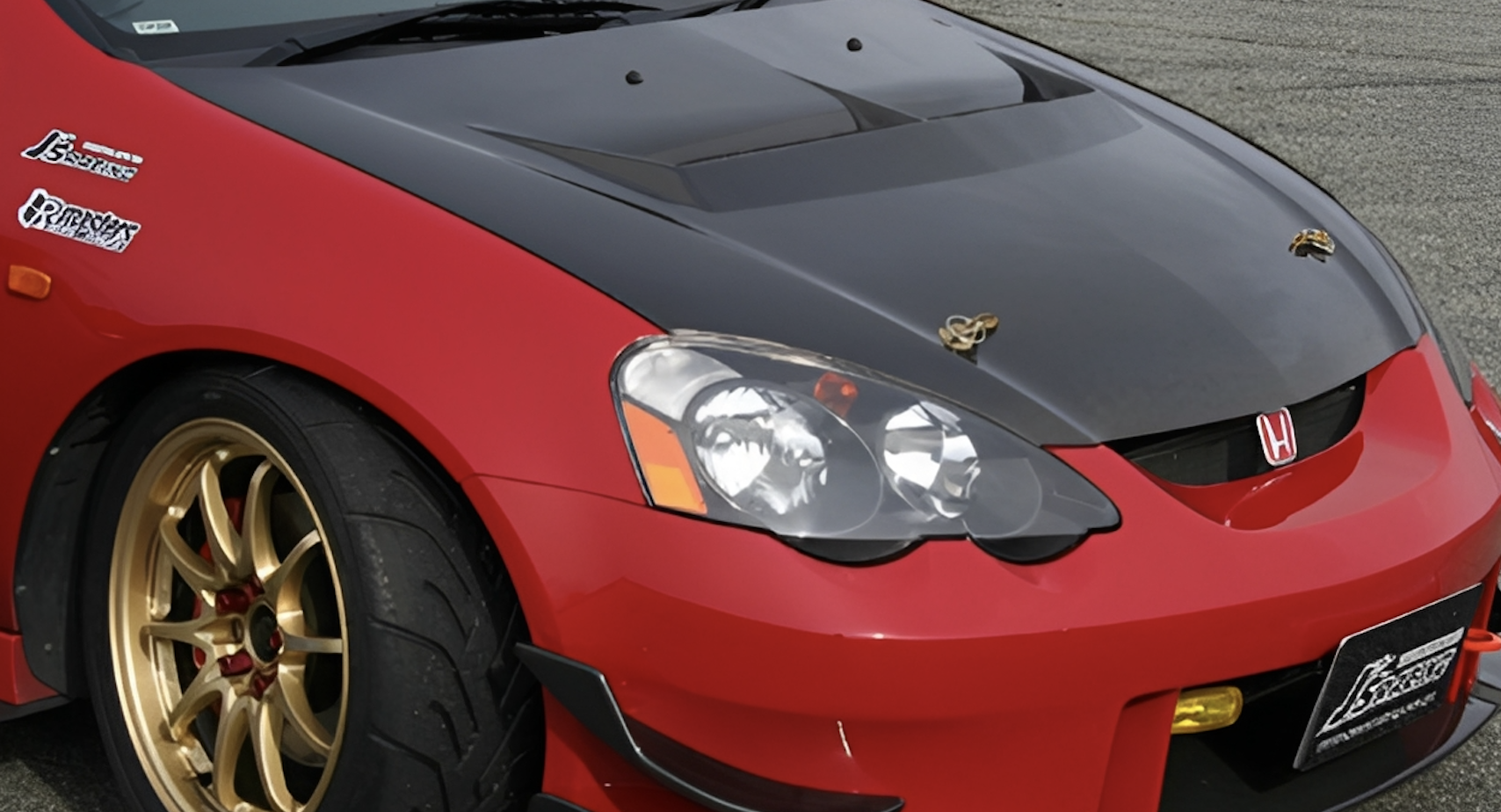
DC5 buyers are a specific type. They’re not shopping for a show hood. They chase lap times, manage engine bay heat, and treat every pound as a variable worth cutting.
J’s Racing Type S CFRP Hood is built for that mindset. At $2,289, it’s the premium option in this segment — and the price holds up. The hood comes with redesigned ducts built for heat dissipation, not just looks. That’s a real difference. On a high-revving K-series pushing heat through a track session, airflow control matters. You’re not just buying carbon fiber. You’re buying a thermal management solution with aerodynamic purpose.
Seibon also offers TS-Style and OE-Style options for the Integra Type-R DC5. These give buyers a lower entry point when the J’s Racing price is out of reach. Both brands build fitment around factory mounting points, so the install stays clean and vehicle-specific.
2023+ New Gen Integra (DE4) — Show-Ready with a Performance Edge
The 2023+ Integra sits on a platform shared with the 11th Gen Civic. Don’t assume the hoods cross over — there is no documented fitment crossover between the two, despite the shared architecture. Buy for your chassis. Full stop.
Right now, Seibon owns this market segment with two options:
Seibon TS-Style Carbon Fiber Hood

– Fits: 2023–2025 Acura Integra (A-Spec and Base trims — does NOT fit Type S)
– Chassis: DE4 | Body: 4-Door Hatchback
– Material: 3K 2×2 twill weave carbon fiber with a fiberglass skeleton bonded underneath for structural support
– Finish: Gloss, show-ready — no painting required
– Reuses OEM install hardware and promotes heat extraction
Seibon OEM-Style Carbon Fiber Hood

– Covers 2024–2025 models
– Same gloss finish, same OEM hardware reuse
– A clean, factory-look replacement — you get the weight reduction without a styled duct
Critical Installation Notes for 2023+ Owners
This is where a lot of buyers get caught off guard. The 2023+ Integra install has three non-negotiable requirements:
-
Replace your stock gas struts right away. OEM dampers are calibrated for a steel hood. Carbon fiber is far lighter. Stock struts can prevent proper closure — or crack the hood under pressure.
-
Install a heat shield. Skip it and engine heat will damage the carbon fiber from underneath over time.
-
Hood pins are required. Not optional. At speed, this is a safety issue.
Get professional installation on both generations. Budget for it upfront — don’t treat it as an afterthought.
Integra Carbon Hood — Honest Assessment
The DC5 aftermarket rewards buyers who put function first. J’s Racing sets the benchmark, and the $2,289 price reflects real engineering — not just a carbon wrap over a stock profile.
The 2023+ market is still in its early phase. Seibon is well-positioned, and their 20+ years of production experience shows in the finish quality. Third-party alternatives are limited for now. Sitting on a DE4 and waiting for more competition to push prices down? That’s a fair call. Watch this space through 2026.
Looking for a precise-fit carbon fiber hood for your Integra? [Shop HyperX Carbon Integra Hoods →]
FAQ: Carbon Fiber Hood for Honda Civic / S2000 / Integra
Here are the questions buyers ask most before pulling the trigger — answered straight.
Q: How long does installation take?
Every hood in this guide is 100% bolt-on with pre-drilled holes. A professional installer wraps it up in 1–2 hours using your existing OEM hardware. DIY works if you’re comfortable with body panels. That said, go with a pro installer. One alignment mistake leads to gap issues — and fixing those costs more than the install itself.
Q: Will this void my factory warranty?
Aftermarket hood changes can affect hood-related warranty coverage. It comes down to your dealer. Check with them before you install. The upside: a carbon fiber hood has zero impact on your drivetrain, suspension, or any unrelated system. Pro installation also works in your favor if a warranty claim ever comes up.
Q: Can I paint it?
Yes. The gloss clear coat finish is show-ready out of the box, but it takes paint. Sand and prime first — good prep locks in adhesion. The clear coat also blocks UV damage, which keeps the carbon in good shape long-term. Got minor surface blemishes? Standard pre-paint prep takes care of them.
Q: What are the real weight savings?
Numbers vary by platform. The S2000 hood saves 7kg / 16 lbs versus OEM. Civic hoods ship at 25–30 lbs and cut 30–50% weight over stock steel. These aren’t marketing numbers — they come from shipped-box measurements and platform-specific comparisons.
Q: Are hood pins required?
Yes — on every carbon fiber hood, no matter how solid the bolt-on fit is. At speed, this is a safety issue. It’s not a style choice. Your OEM hinges and latches carry over fine. What needs replacing: your stock gas struts. OEM dampers are built for heavier steel or aluminum hoods. Run them on carbon fiber and you risk cracking the panel under closure pressure.
Q: Do I need a heat shield underneath?
Yes — it’s required, not optional. Engine heat trapped underneath breaks down the carbon over time. Many vented styles — MG, TS — pull heat out of the engine bay. The fiberglass skeleton on the underside adds structure and acts as a basic barrier. But that’s not enough on its own. You still need a dedicated heat shield.
Q: What materials are used?
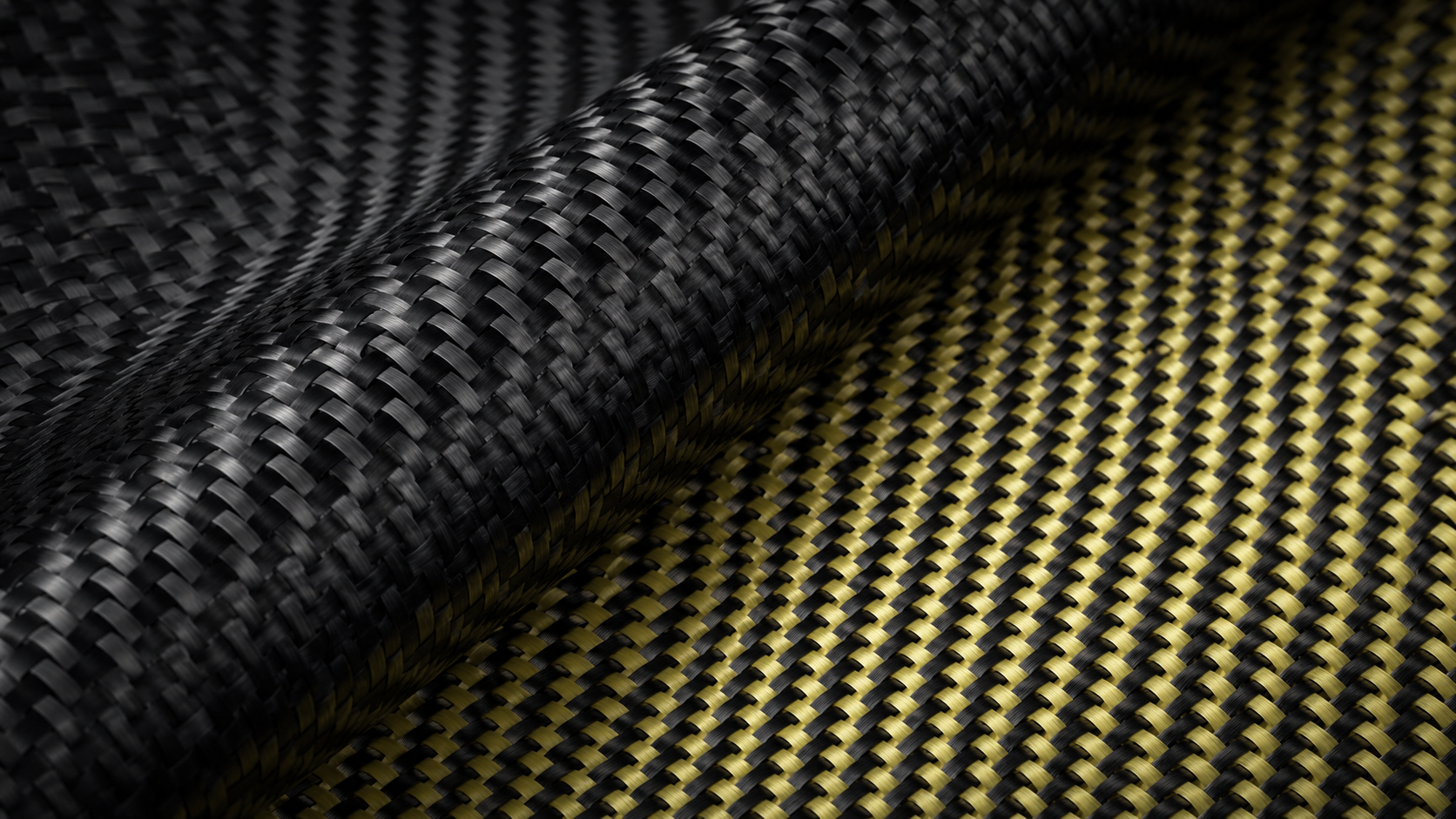
Depends on the product. Charge Speed uses Japanese CFRP with a 1×1 plain weave. Seibon and most mid-tier options use 3K 2×2 twill weave — the pattern you see on most gloss carbon parts. Both use UV-protective clear coats and hand-laid construction. Hand laying keeps resin-to-fiber ratios consistent. That consistency is what gives the hood its stiffness without adding extra weight.
Q: How precise is the fitment for each platform?
-
Civic (10th/11th Gen): Direct OEM replacement fit. Pre-drilled, no gap adjustment needed.
-
S2000 (AP1/AP2, 2000–2009): Full chassis coverage. MG, JS, TS, and VSII styles all fit the complete production run — no separate AP1 or AP2 SKU required.
-
Integra (DC5 / 2023+ DE4): Bolt-on fit confirmed, but chassis-specific. The 2023+ Integra and 11th Gen Civic share a platform — they do not share hood fitment. Buy for your exact chassis.
Q: What’s the return and warranty policy?
No returns on modified or installed products. Serial numbers confirm authenticity. Each product goes through a structural check before it ships. One thing to note: a Prop 65 warning applies — styrene and BPA are present in the resin materials. This is standard across the carbon fiber industry.
Conclusion
Your hood swap decision just got easier.
Building a track-ready 10th Gen Civic? Preserving the soul of an AP2 S2000? Pushing your DC5 Integra into a new era? A lightweight carbon fiber hood does more than look good. It drops real pounds off the front end. It improves balance. It tells everyone behind you exactly what kind of build this is.
The best part? No compromises needed. You get precise OEM fitment. You get race-proven 2×2 weave construction. Dry or vented options cover every build level and every budget in this guide.
Contact HyperX Carbon – Your Trusted Chinese Carbon Fiber Partner
Ready to source high-performance carbon fiber materials or custom forged carbon fiber parts from China?
HyperX Carbon is a leading manufacturer with 20+ years of expertise, specializing in aerospace-grade forged carbon fiber, prepreg, carbon fiber tube, carbon fiber sheet, and lightweight carbon fiber automotive parts/carbon fiber drone components/carbon fiber medical components. We offer:
-
Stable supply chain with premium raw materials (Toray, Mitsubishi, Hengshen)
-
AS9100D certified production for aerospace & UAV applications
-
Rapid prototyping (5-8 weeks) and monthly capacity exceeding 180,000 parts
-
Competitive pricing with 15-18% cost savings on forged carbon solutions
-
Full customization: from T700/T1100G to ultra-high modulus grades
Whether you’re an eVTOL developer, automotive OEM, drone manufacturer, or medical device engineer, HyperX delivers consistent quality, batch-to-batch reliability, and reliable delivery.
Get in touch today for a free consultation, custom quote, or material sample.
📧 Email: [email protected]
🌐 Website: https://www.hyperxcarbon.com/
📞 Phone/WhatsApp: +86 15623270276 (English support available)
Let’s build your next lightweight innovation together – contact HyperX Carbon now and stay ahead in the low-altitude and advanced composites market.