Swapping your factory hood for a carbon fiber camaro hood drops real weight fast. It sharpens your Camaro’s look and tells everyone on the street — or the track — that you mean business.
Here’s the problem: the market is packed with hoods that look carbon fiber in the photos. They arrive feeling like painted plastic. Pick the wrong one and you’re out money, time, and dealing with fitment headaches you never asked for.
That’s why this guide exists. Building a 5th Gen SS sleeper? Running a ZL1 on the track? Or just giving your daily driver a cleaner look? You’ll find ranked picks, a no-fluff comparison breakdown, and the fitment details you need to buy with full confidence.
Best Carbon Fiber Hood for 5th Gen Camaro SS (2010–2015): Top Picks Ranked

Three hoods made the cut. Not because they look great in product photos — because they solve the real problem 5th Gen SS owners deal with: managing a 6.2L V8 that runs hot, cutting real weight, and surviving years of UV exposure without turning yellow.
Here’s the ranked breakdown.
#1 — Anderson Composites Type-TSII Hood

Anderson Composites has built a strong name in the forced-induction and track community. The Type-TSII was built with SS V8 heat extraction as the main goal — the vents are oversized on purpose compared to the standard Type-TS version.
Construction uses vacuum-infused 3K carbon fiber with a polished marine-grade gel coat. UV inhibitors are baked into the finish. It bolts on as a direct OEM replacement for all 2010–2015 SS fitments. No cutting. No adapter plates.
Airflow performance is the top priority here. That’s why the Type-TSII earns its place at #2.
#2 — Anderson Composites Type-TS Hood

The Type-TS uses the same vacuum-infused 3K 2×2 twill carbon fiber and marine-grade UV-protected finish as the TSII. The key difference: smaller vents with lower heat extraction output.
Your 5th Gen SS is a street driver, not a track build? The Type-TS gives you Anderson’s build quality at a lower entry price. It’s a solid upgrade. Just skip it if heat management is your main concern.
#3 — Phastek Performance EOS Hood Insert

This one has a clear fitment limit: compatible with 2010–2013 SS V8 only — not ZL1, not Z/28. The 2014–2015 SS is out of scope here.
The EOS Insert uses 3K twill weave real carbon fiber and targets aerodynamic improvement over venting. It’s in stock (Part #: HS-172-BKCF). So lead time isn’t a concern. That makes it a good pick if you need something fast and functional airflow isn’t your main focus.
The SS Venting Rule Nobody Tells You
Every SS-specific pick above puts functional venting first — and that’s on purpose. The 6.2L V8 pushes out far more underhood heat than the base LS or LT four-cylinder. A non-vented carbon hood traps that heat. That heat buildup shortens component life and hurts performance over time.
The rule is simple: running the SS V8 means choosing a vented hood. CBD or the Type-TSII are your two strongest options. Everything else is a compromise.
Best Carbon Fiber Hood for 6th Gen Camaro SS & ZL1 (2016–2024): Top Picks Ranked
The 6th Gen platform is a different beast from the 5th Gen. You’re dealing with a wider body, revised hood geometry, and — for ZL1 owners — a supercharged LT4 that throws serious heat. These hood options don’t carry over from the previous generation. Fitment goes down to the trim level, so pay attention.
Three hoods made the cut for the 6th Gen. Here’s why each one earned its spot — and what to know before you buy.
#1 — Type-AZ Double-Sided Carbon Fiber Hood

At 15.7 lbs, the Type-AZ is the lightest hood on this list. That number is real. Both the outer skin and the inner structure are carbon fiber — not carbon on top with fiberglass underneath, which is how most aftermarket hoods are built. The Type-AZ is carbon all the way through, bonded skeleton included.
Fitment range covers 2016–2025 LT, RS, SS, ZL1, and ZL1 1LE — the widest of any hood here. Running a ZL1 or ZL1 1LE and want a carbon hood rated for your trim? This is the one confirmed option on this list that covers that full year range.
The “power bulge” design adds visual aggression without going full race-spec cowl. It looks factory-intentional — not like something bolted on as an afterthought.
One hard requirement: install a heat shield underneath. The LT4’s supercharger pushes serious underhood heat. Carbon fiber composites hold up well, but sustained heat without shielding cuts their lifespan short. Also — close this hood with care. Slamming a composite hood is off the table. That’s not a preference, that’s just how composite construction works.
#2 — Anderson Composites Type-T2 Hood
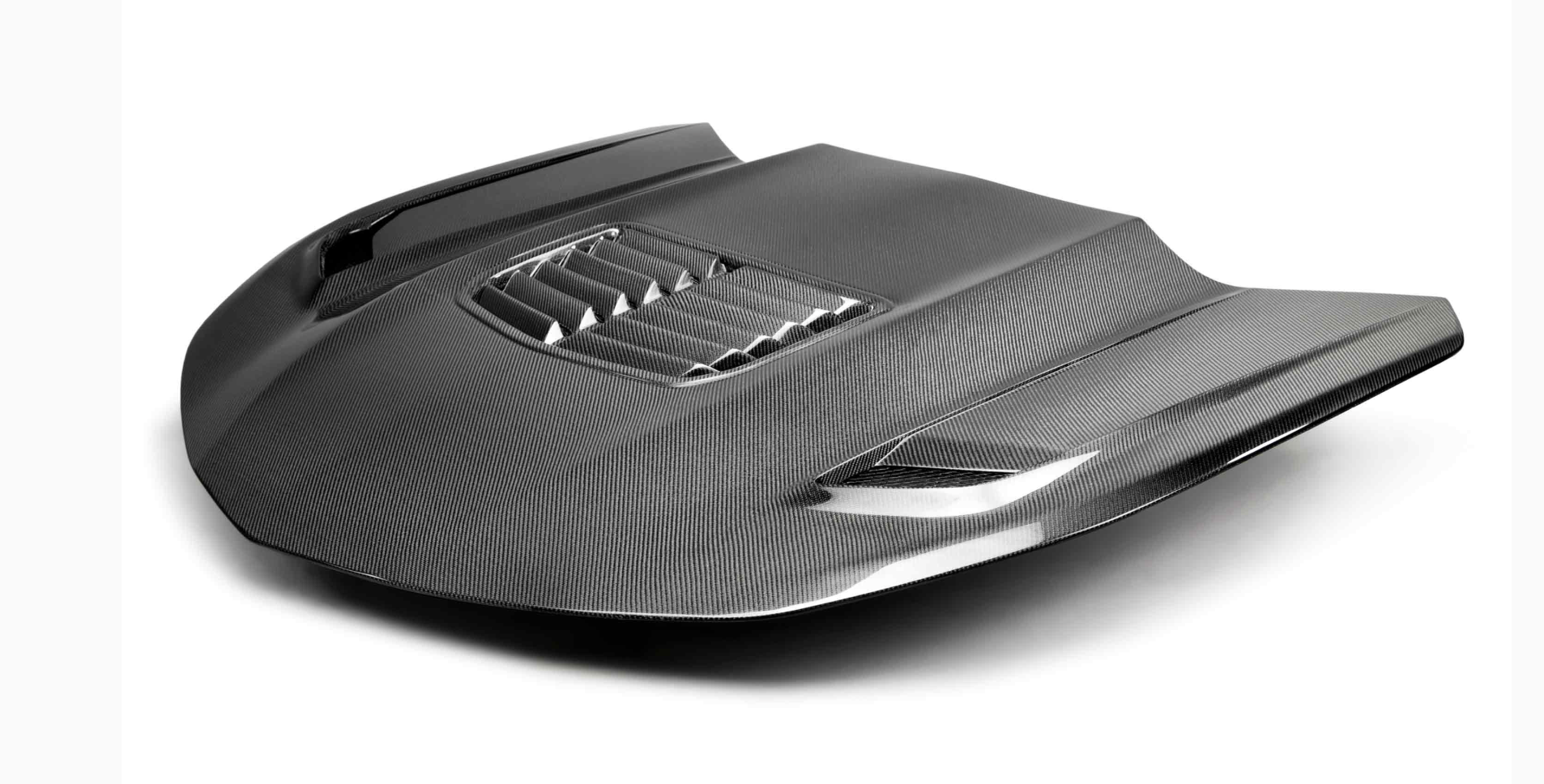
The Type-T2 weighs around 21 lbs and cuts about 21 lbs from your factory steel hood. That’s a solid drop in weight. But what sets the Type-T2 apart from a standard carbon hood is the three-extractor vent layout: one large center extractor with two smaller side extractors flanking it. Hot air gets three exit points instead of one. Push the SS V8 hard on a warm day, and that extra airflow makes a real difference.
Construction uses 3K 2×2 twill carbon fiber with a marine-grade gel coat and built-in UV inhibitors. The glossy black finish holds up over time. Those UV inhibitors aren’t a nice-to-have extra — they’re what separates a hood that still looks sharp at three years from one that starts yellowing at eighteen months.
Fitment covers 2016–2024 LT, LT1, and SS — non-ZL1 only. That’s a hard line. ZL1 owners should go with the Type-AZ above.
Price lands around $1,900. The removable, paintable mesh screens let you dial in the look to match your build — no full hood swap needed.
Critical installation rules for the Type-T2 — none of these are optional:
-
No hood struts. Strut pressure cracks carbon fiber composite at the contact points. This is a known failure mode, not a hypothetical risk.
-
Hood pins required. A non-negotiable safety measure for any composite hood at speed.
-
Heat shielding underneath. Same rule as the Type-AZ. Skip it and you’re cutting your hood’s life short.
#3 — Type-COPO Hood

The Type-COPO is the most aggressive-looking option for the 6th Gen. The cowl bulge design signals race intent straight away — this is not a street-casual look. Construction matches the Type-AZ: double-sided carbon fiber with a bonded skeleton for structural strength.
Fitment covers 2016–2024 across compatible trims. This hood is built for builders who want the boldest visual statement and are ready to back it up with proper heat shielding and hood pin hardware.
The 6th Gen Installation Non-Negotiables
Every 6th Gen carbon fiber hood on this list follows three hard rules:
-
Heat shield installation is mandatory — not a suggestion, not an upsell
-
Hood pins replace struts — struts crack composites
-
Gentle closure only — slamming breaks composite bonds over time
Get all three right and your carbon fiber hood will outlast your time with the car. Miss any one of them and you’re creating a problem that voids your warranty — and it’s one you could have avoided completely.
Fitment Accuracy: How to Match Carbon Fiber Hood to Your Exact Camaro Build
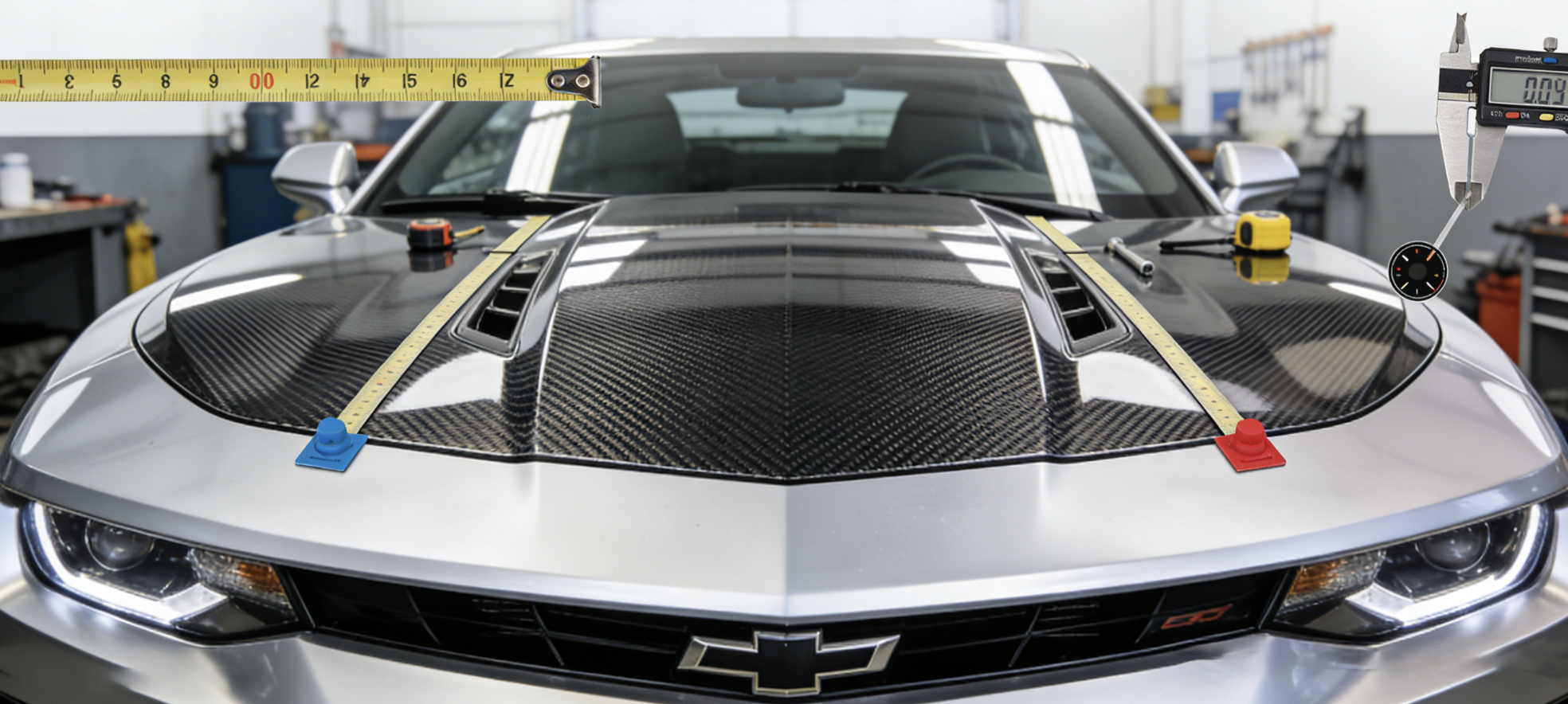
Fitment is what separates a professional carbon fiber upgrade from an expensive mistake. The margin for error is smaller than most people think.
The industry standard is 2–3mm of panel gap alignment. That’s it. Go beyond that tolerance and two problems follow — wind noise at highway speeds and water intrusion along the hood edges. Both compound over time. Neither is cheap to fix.
Here’s what makes fitment work.
Know Your Generation Before You Buy
The 5th Gen (2010–2015) and 6th Gen (2016–2024) platforms do not share hood dimensions. This is the most common — and most costly — buying mistake Camaro owners make.
There is some flexibility within the 6th Gen range. A 2017 SS hood fits 2018–2019 SS builds without modification. Cross-generation swaps are a different story. They require custom fabrication, and that wipes out any cost savings fast.
Lock down your generation first. Then shop.
Match the Hood to Your Weight Goal
Not all carbon fiber hoods cut the same amount of weight. Before you commit to a price point, know exactly what you’re buying:
|
Hood Type |
Weight |
Price Range |
OEM Fit |
|---|---|---|---|
|
Full Wet Carbon |
18–22 lbs |
$900–$1,600 |
Yes |
|
Hybrid Carbon-Fiberglass |
25–30 lbs |
$400–$700 |
Variable |
|
Dry Carbon |
15–18 lbs |
$2,000+ |
Yes (custom) |
Hybrid hoods cost less up front, but OEM fitment isn’t guaranteed. That gap inconsistency is where bubbling clear coat starts — often within one to two years. For precise fitment, full wet carbon or dry carbon are the options worth your money. That’s it.
The Installation Process That Eliminates Guesswork
Reputable manufacturers build using OEM CAD data. Factory hinge positions, latch placement, and weather stripping dimensions are all accounted for before the hood ships. No cutting. No adapter plates. No custom modifications.
Follow this sequence on install day:
-
Verify bolt holes, hinges, and latch match OEM positions before lifting the hood into place
-
Use two people for alignment — hitting a consistent 2–3mm gap solo is not realistic
-
Seal all edges against moisture before final torque
-
Test-fit first, flush against fenders and bumper, before committing to a permanent mount
Before You Finalize the Purchase
Two verification steps protect your investment:
-
Request material specs in writing — fiber weave type and layer count, both
-
Confirm UV coating — brands like APR and Seibon publish OEM-fit guarantees backed by coating spec sheets
Skip either step and you’re trusting a product photo over engineering data. A hood that fits clean, seals tight, and holds its finish into year three is built to spec. It’s not built to look good in an unboxing video.
FAQ: Carbon Fiber Hood for Camaro — Common Questions Answered
Real questions get real answers. Below are the most common things Camaro owners want to know before buying a carbon fiber hood.
How much weight does a carbon fiber hood save?
The numbers depend on the model. The Type-T2 drops 21 lbs. The Type-CP Double-Sided comes in at 18.9 lbs. The Type-OE SS Style pulls 25.6 lbs off your nose. Less weight on the front axle means better handling. That’s just physics doing its job.
How long does installation take?
Plan for about one hour with light to moderate mechanical skill. All Anderson Composites hoods bolt on at OE hardware positions. Hardware is not included — confirm that before install day so you’re not caught short.
Does a carbon fiber hood affect my insurance?
Most insurers treat it as a cosmetic modification. Still, disclose it. Not reporting aftermarket body panels can complicate a claim. Don’t give your insurer a reason to push back.
Which years does this cover?
The primary 6th Gen fitment range is 2016–2024, covering LT, LT1, RS, and SS trims. ZL1 owners should confirm trim-specific compatibility before placing an order.
What warranty protection exists?
Anderson Composites offers a 6-month appearance guarantee. It covers clear finish bubbles larger than 3/8″ in diameter. You’ll need proof of purchase and photo documentation to file a claim. UV damage on uncoated dry carbon falls outside coverage. Put automotive-grade clear coat on right after install — don’t skip that step.
Conclusion
Your Camaro deserves better than a stock hood. Stock hoods add dead weight and no character.
Building a track-ready 5th Gen SS? Pushing a ZL1 to its limits? A camaro carbon fiber hood is more than a looks upgrade — it’s a real performance move. Drop 15–30 lbs from the nose. Tighten your weight distribution. Turn heads before you even start the engine.
This guide covers brands and fitment breakdowns for one reason: to make your decision easy. Stop second-guessing. Start upgrading with confidence.
Here’s what to do next:
-
Cross-reference your exact year and trim with our fitment guide
-
Browse the HyperX Carbon lineup built for your generation
-
Every hood ships with UV-protective clear coat and tight fitment — made for Camaro owners who don’t cut corners
Don’t just drive a Camaro. Drive the version that shows what you can build.
Contact HyperX Carbon – Your Trusted Chinese Carbon Fiber Partner
Ready to source high-performance carbon fiber materials or custom forged carbon fiber parts from China?
HyperX Carbon is a leading manufacturer with 20+ years of expertise, specializing in aerospace-grade forged carbon fiber, prepreg, carbon fiber tube, carbon fiber sheet, and lightweight carbon fiber automotive parts/carbon fiber drone components/carbon fiber medical components. We offer:
-
Stable supply chain with premium raw materials (Toray, Mitsubishi, Hengshen)
-
AS9100D certified production for aerospace & UAV applications
-
Rapid prototyping (5-8 weeks) and monthly capacity exceeding 180,000 parts
-
Competitive pricing with 15-18% cost savings on forged carbon solutions
-
Full customization: from T700/T1100G to ultra-high modulus grades
Whether you’re an eVTOL developer, automotive OEM, drone manufacturer, or medical device engineer, HyperX delivers consistent quality, batch-to-batch reliability, and reliable delivery.
Get in touch today for a free consultation, custom quote, or material sample.
📧 Email: [email protected]
🌐 Website: https://www.hyperxcarbon.com/
📞 Phone/WhatsApp: +86 15623270276 (English support available)
Let’s build your next lightweight innovation together – contact HyperX Carbon now and stay ahead in the low-altitude and advanced composites market.